Fabric
Gingham Linen Fabric: Choose, Sew & Care Tips
You’ve probably had that moment. You spot a lovely check, start picturing a summer top, pyjamas, café curtains, or an apron, and then pause because you are not quite sure how gingham linen fabric will behave once it is washed, cut, pressed, and worn.
That hesitation is sensible. Gingham linen is charming, but it is not foolproof. It can shift a little on the table, it will crease, and if you skip pre-washing, it can punish you later. The upside is that it rewards careful sewing more than many fabrics do. When you handle it well, you get breathable clothes, crisp homewares, and that unmistakable checked finish that always looks settled and useful rather than fussy.
An Introduction to Timeless Gingham Linen
A good piece of gingham linen fabric earns its place quickly. It works for a loose summer shirt that feels airy on a warm day. It works for a pinafore that needs body without heaviness. It works for kitchen textiles because the checks hide daily wear better than a plain cloth and still look fresh hanging by the sink.
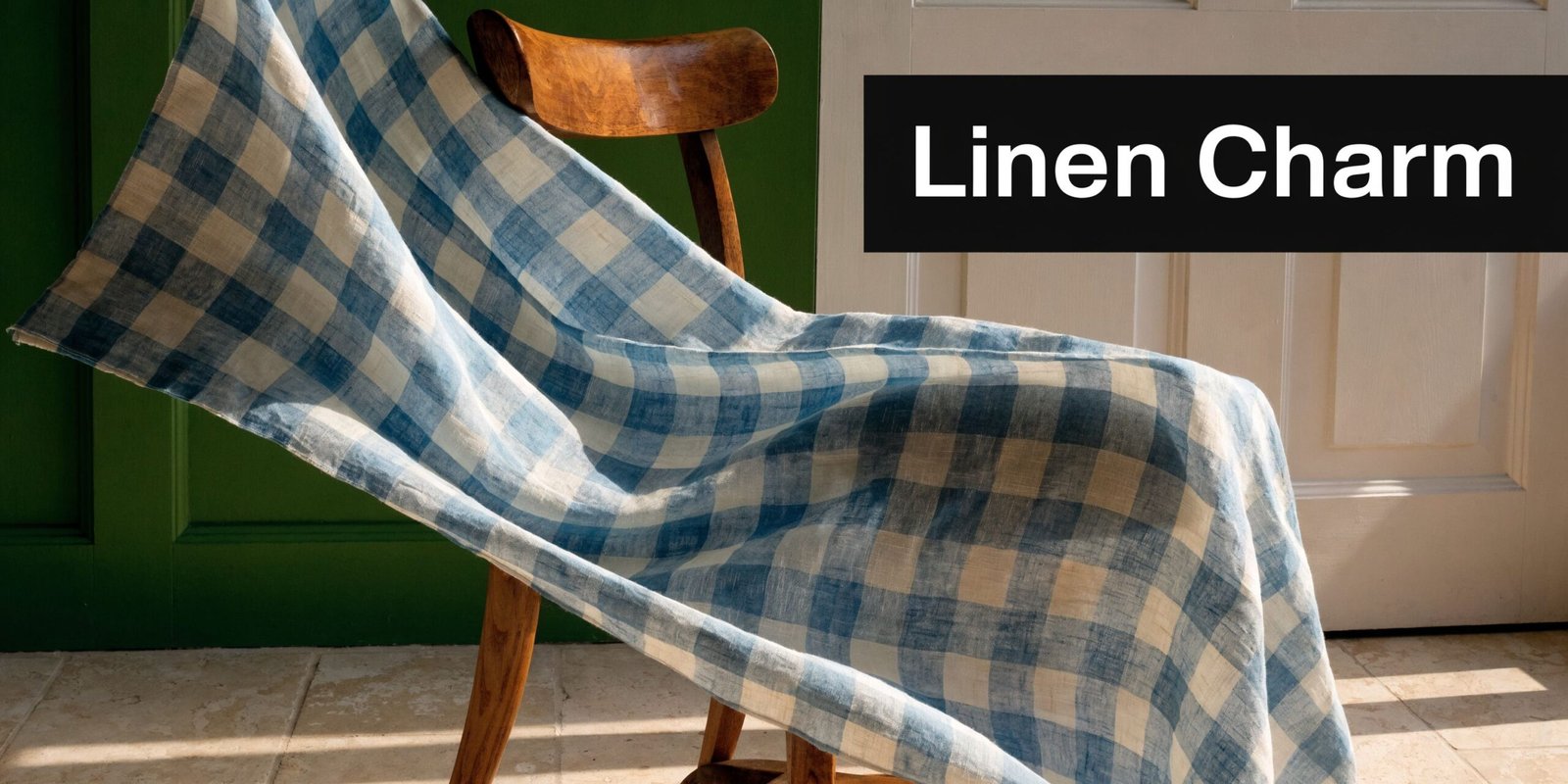
Its appeal is not new. In the mid-18th century, Manchester mills helped shift gingham in Britain from earlier striped versions to the checked design we now recognise, with that transition happening around 1750. By the late Victorian era, striped gingham was rarely produced in the UK, and checks had become the standard for affordable, durable workwear and homewares, as outlined in this history of gingham from Plumager.
That history matters because it explains why gingham still feels practical rather than novelty-driven. This is not a trend fabric pretending to be useful. It has been chosen for everyday sewing because it breathes, wears well, and suits repeated washing.
Why sewists keep returning to it
Some fabrics are bought for one exact project. Gingham linen tends to stay in circulation.
- For garments it gives shape without feeling stiff and synthetic.
- For home sewing it brings order. The checks make hems, seams, and pleats easier to judge by eye.
- For beginners it can be surprisingly helpful because the pattern gives you a built-in visual guide when cutting straight.
A well-chosen gingham linen fabric often looks better after use, not worse. The slight softening is part of the appeal.
There is also something reassuring about its honesty. Linen does not pretend to be crease-free, and gingham does not hide wonky sewing forever. If your pressing is careful and your seams are matched, the result looks polished. If not, the fabric tells on you. That is exactly why many sewists grow to love it.
What Exactly Is Gingham Linen Fabric
The name sounds simple, but three different things are happening at once. Gingham linen fabric is not just “linen with checks”. To choose it well, it helps to separate the fibre, the weave, and the pattern.
The fibre
Linen comes from flax. In practical sewing terms, that gives the cloth a dry, slightly textured handle and a firmness that softens with washing and wear. It usually feels cooler and less clingy than many other dressmaking fabrics.
That is why linen gingham often suits relaxed shirts, pull-on dresses, aprons, napkins, and casual trousers so well. It has presence. Even when it is lightweight, it rarely looks limp.
For home sewists, the main thing to understand is this: the fibre is responsible for much of the fabric’s character. The same check printed onto a different fibre can look similar on the bolt and behave completely differently under the iron.
The weave
Most gingham linen is made in a plain weave. Think of it as a simple over-under structure, repeated evenly. That straightforward construction is one reason it feels stable to sew compared with more slippery fabrics.
Plain weave also explains why gingham often presses crisply and why seam lines can look so satisfying on it. It has enough structure to hold a crease, yet it is not heavy like canvas unless you choose a much weightier version.
A few practical consequences of plain weave:
- Edges can fray, so seam finishing matters.
- Pressing makes a visible difference, especially on collars, facings, cuffs, and hems.
- Grain matters a lot, because the checks will make any off-grain cutting obvious.
The pattern
The “gingham” part comes from the check itself, which is usually created by yarn-dyeing rather than printing. That means the threads are dyed before weaving, so the colour sits within the structure of the cloth rather than on the surface.
This is why good gingham has that neat, balanced look where the pattern feels woven in rather than stamped on. It also helps when matching seams, because the checks act like a built-in map.
Why this matters at the cutting table
If you know these three parts, the fabric becomes easier to predict.
| Element | What it affects in sewing |
|---|---|
| Fibre | Breathability, texture, wrinkling, softening over time |
| Weave | Stability, fraying, pressing response |
| Pattern | Seam matching, visual balance, cutting accuracy |
A sewist who understands the fabric’s construction usually makes better choices before the first cut. You choose a seam finish that controls fraying. You allow for movement and ease. You respect the checks rather than fighting them.
That is the difference between a gingham linen project that looks homemade in the best sense and one that looks slightly off even if the sewing itself is sound.
Gingham Linen Compared to Cotton and Other Ginghams
Not all gingham behaves the same way. The check may look familiar, but the fibre content changes almost everything that matters once you start sewing and wearing it.
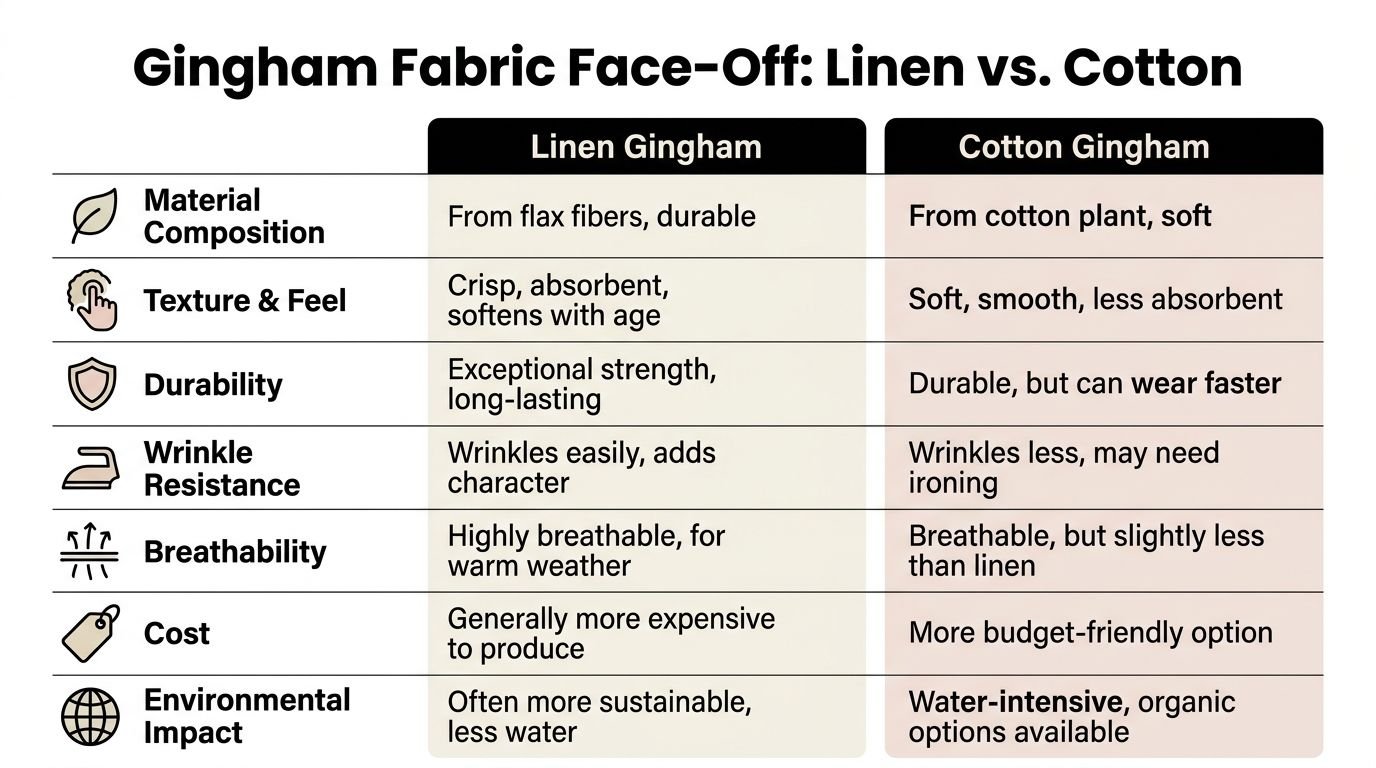
Linen gingham
Linen gingham has a slightly drier handle and more natural texture. It tends to look more relaxed and a touch more refined at the same time. It is especially good when you want a garment with shape that does not feel stiff in an artificial way.
Its trade-off is obvious. It creases. If that bothers you, pure linen may not be your favourite option for heavily fitted garments or anything that needs a perfectly smooth look all day.
Cotton gingham
Cotton gingham is often the easiest entry point. It feels softer straight away, usually presses well, and can be friendlier for children’s clothes, simple tops, gathered skirts, and projects where you want less texture.
It often gives a neater, more traditional finish. What it lacks is some of linen’s airy, slightly slubby personality. If you want a fabric that looks more natural and less uniform, cotton can feel a bit flat by comparison.
Poly-cotton gingham
Poly-cotton gingham is usually chosen for ease. It tends to wrinkle less and can be useful for schoolwear, craft projects, budget homewares, and anything that needs quick washing and quick drying.
The compromise is feel. It often lacks the absorbency, body, and natural finish that make linen and cotton so pleasant to wear and sew.
Gingham Fabric Comparison
| Attribute | Gingham Linen | Cotton Gingham | Poly-Cotton Gingham Blend |
|---|---|---|---|
| Feel | Crisp, textured, softens with use | Softer, smoother, more uniform | Smoother, often less natural in hand |
| Drape | Structured but airy | Softer and often more relaxed | Depends on blend, often slightly flatter |
| Breathability | Strong | Good | Usually lower than natural fibres |
| Wrinkling | High | Moderate | Lower |
| Best for | Dresses, shirts, aprons, café curtains, table linen | Children’s clothes, blouses, pyjamas, patchwork | Schoolwear, easy-care home projects, crafts |
| Sewing experience | Stable but needs careful pressing and matching | Generally easy and forgiving | Usually easy, but less satisfying to press cleanly |
If you want character, choose linen. If you want softness first, choose cotton. If you want low-fuss care, a poly-cotton blend may suit you better.
The best choice depends on the job. A crisp apron, a boxy top, or a curtain panel often benefits from linen’s structure. A soft gathered child’s dress may be nicer in cotton. A quick-make tablecloth for everyday family use might suit a blend.
The check alone does not tell you enough. The fibre does.
How to Choose the Right Gingham Linen Weight
Weight decides whether your gingham linen fabric becomes a floaty blouse, a practical apron, or a sturdier pair of casual trousers. It is one of the first things I would look at before colour.
A lighter cloth gives movement. A heavier one gives shape. Neither is better. The right one depends on whether you want drape, structure, or something in the middle.
Lightweight options
A lightweight gingham linen is the one to reach for when you want softness in motion. Think loose summer shirts, simple tops, scarves, or gathered styles that benefit from airiness rather than volume.
A useful benchmark appears in this gingham linen buying guide, which notes that 125 GSM can be a good weight when you want drape. That same source also notes that a 55% linen and 45% cotton blend can offer a practical middle ground, while higher flax content can raise tensile strength by 20 to 30% over pure cotton gingham, with the trade-off of more stiffness and wrinkling.
Mid-weight cloth
Mid-weight gingham linen is the workhorse. If you only want one answer for dresses, pull-on trousers, tunics, jumpsuits, and many aprons, this is usually it.
It has enough body for a tidy silhouette but does not feel bulky at seams. This is also the range where pattern matching tends to feel most manageable. The fabric is substantial enough to stay put, but not so thick that every intersecting seam becomes a fight.
Heavier choices and when to use them
Heavier gingham linen is useful when the project needs resilience. That could be a pinafore, an over-shirt, a tablier apron, a bench cushion cover, or a tablecloth that you expect to wash often.
The challenge is bulk. Facings, enclosed seams, collars, and pocket edges can quickly become thick if the cloth is on the weightier side.
A few practical checks help before buying:
- Request a swatch if you can. Weight on paper does not tell you everything about softness.
- Scrunch the swatch in your hand. If it springs back enough for your taste, good. If it looks too rigid, save it for homewares.
- Check the scale of the checks. Small checks often suit garments with lots of seams. Larger checks make a stronger statement but demand more matching.
Pure linen or a blend
This decision is less about right and wrong and more about tolerance.
Pure linen gives you the classic dry hand, texture, and relaxed look many people want from gingham linen fabric. A linen-cotton blend can feel slightly easier to wear if you dislike strong creasing or want a softer finish from the start.
If I were choosing by project, I would put it this way:
- Pure linen for crisp shirts, aprons, simple dresses, and home pieces where texture matters.
- Linen-cotton blend for everyday garments that need a little softness and less severity in the crease pattern.
Expert Tips for Sewing With Gingham Linen
The best gingham linen projects are won before the machine is switched on. Most problems come from rushing the preparation, not from the stitching itself.
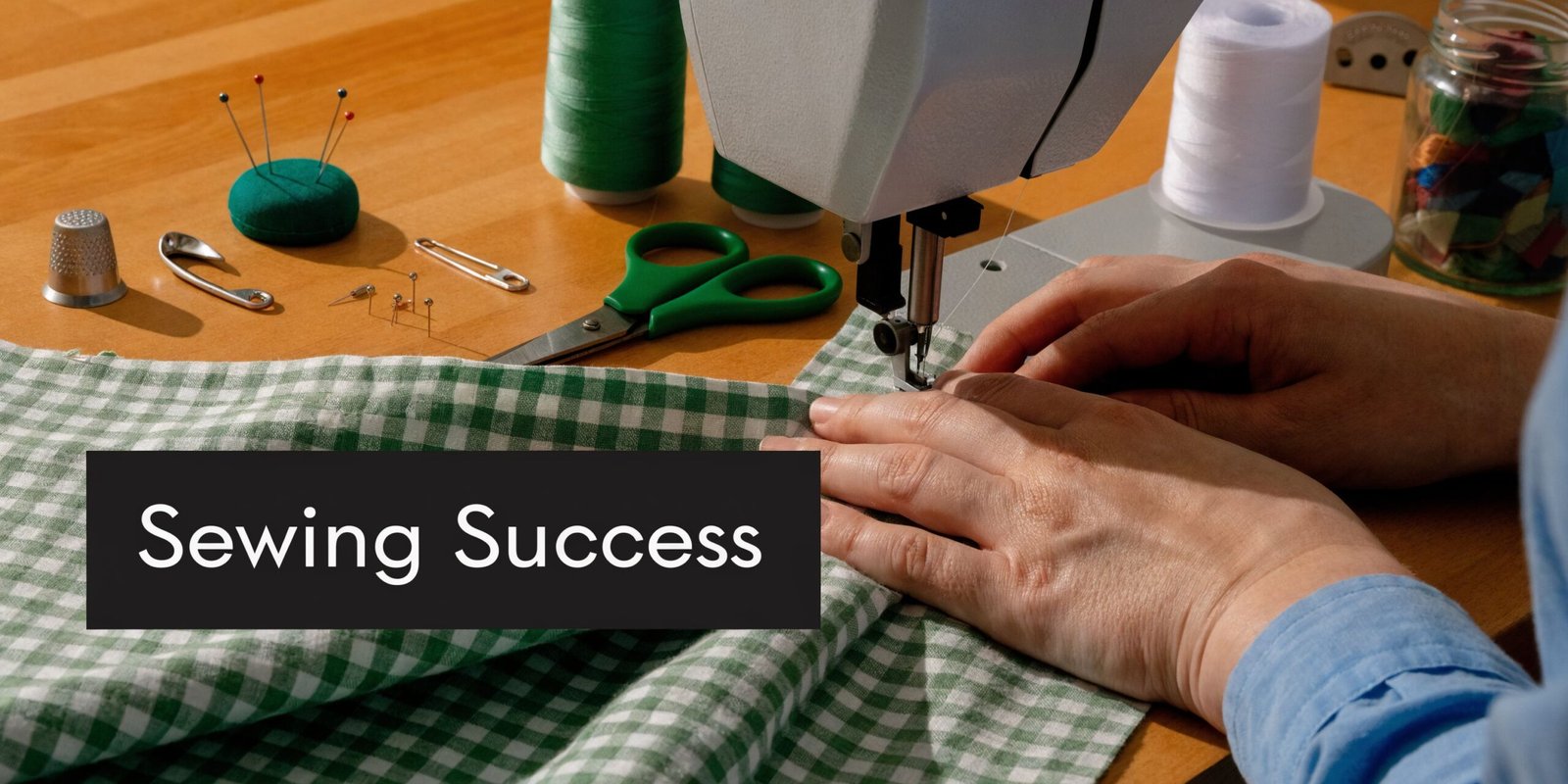
Pre-wash first and cut later
This step is not optional with unwashed linen. According to Linen Tales’ guidance on unwashed red gingham linen, unwashed gingham linen can shrink by 6 to 8%, with some sources indicating up to 10% dimensional loss. The same source states that a 2025 UK Sewing Guild survey found 42% of hobbyists reported fit issues caused by unaddressed linen shrinkage, and it recommends following BS EN ISO 6330:2012 by washing the fabric in the same way you plan to wash the finished garment.
That means if you intend to machine wash the dress, machine wash the yardage first. If you plan to line dry the shirt, line dry the yardage too.
Pre-washing is not just about shrinkage. It also lets the fabric relax, so you are cutting the cloth you will wear, not the cloth as it arrived folded on the bolt.
Use the checks as a cutting guide
Gingham gives you a rare advantage. The pattern can keep you honest.
Lay the fabric flat and check that the horizontal and vertical lines sit square before placing pattern pieces. If one selvedge has drawn in slightly, rely on the checks more than the cut edge. For fronts, sleeves, pockets, and collars, decide early whether you want exact matching or a deliberate contrast in placement.
Good habits here save frustration later:
- Cut single layer for tricky pieces if matching matters.
- Mark notches clearly so the checks meet where they should.
- Keep pocket placement symmetrical. A slightly off pocket on gingham is obvious.
Choose stitches and finishes that suit the cloth
A standard machine setup usually handles gingham linen well. The key is neatness rather than force.
For seam finishes, I would choose by project:
- French seams for lightweight blouses, pyjama tops, and finer shirts.
- Overlocked or zigzag finishes for everyday dresses and looser garments.
- Flat-felled seams where you want strength, such as overshirts, aprons, or casual trousers.
Short pressing sessions matter more than long sewing sessions with this fabric. Press each seam as you go. Press it flat, then press it open or to one side. That is what gives linen projects their clean, deliberate look.
A useful visual demo can help if you are planning your first make with checks:
Handle bulk before it handles you
At collar points, cuffs, waistbands, and pocket corners, reduce layers where you can. Trim seam allowances, grade them if needed, and avoid stacking unnecessary facings on heavier gingham linen.
If the fabric starts to fight back under the presser foot, that is usually a sign to simplify construction rather than push through. Linen rewards restraint. A plain shape sewn neatly often looks better than an overworked pattern with too many details competing against the checks.
Laundering and Caring for Your Gingham Linen Makes
Care starts before the first wear. Linen improves with use, but only if you wash and dry it in a way that supports the fibre rather than roughing it up.
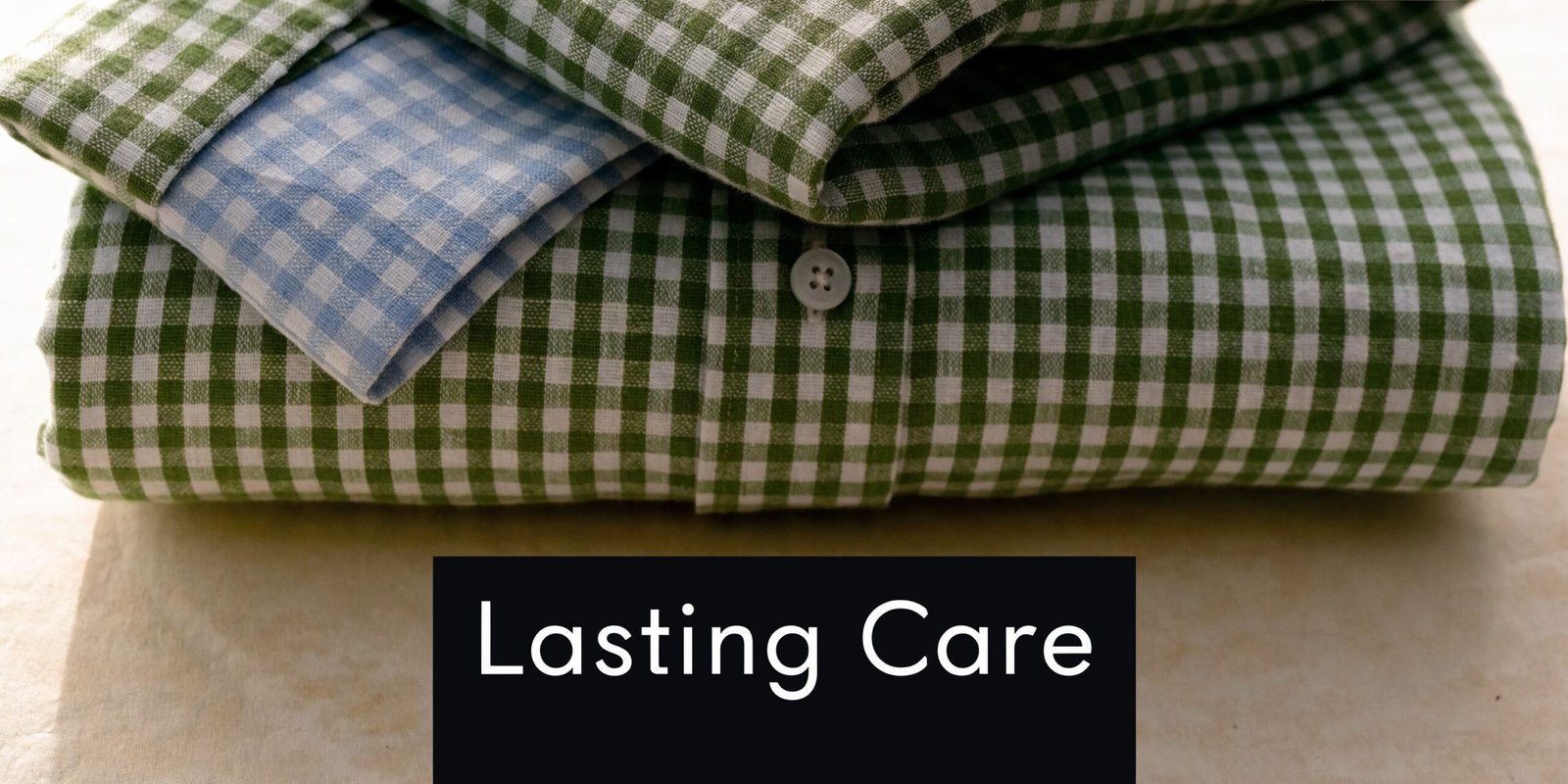
A good starting point is certified cloth. Ray Stitch’s European linen check notes that Oeko-Tex Standard 100 certification means the fabric has been tested free from over 100 harmful substances. The same product guidance recommends washing at 30° to 40°C, notes that the first wash can bring about 5% shrinkage, and states that line-drying preserves the check pattern’s symmetry and reduces wrinkling by up to 25% compared with tumble drying.
A care routine that works
For most gingham linen garments and homewares, this is the practical routine:
- Wash gently on a 30° to 40°C cycle with mild detergent.
- Avoid overfilling the machine so the cloth can move and rinse properly.
- Shake out seams and hems before drying. It helps the fabric dry straighter.
- Line dry where possible. It keeps the checks looking crisp and usually means less ironing.
Ironing without a battle
Linen is easiest to press when slightly damp. If the piece has already dried fully, a steam iron or a light mist of water helps. Press on the reverse first if you are cautious about shine, especially on darker colours.
Two simple habits make the biggest difference:
- Press seams as they are sewn, not all at the end.
- Use a pressing cloth on areas that need repeated heat.
If you want the relaxed linen look, stop before the fabric is pressed flat as paper. Gingham linen often looks best with a clean finish and a little natural texture still left in it.
Tumble drying is not forbidden, but it is rarely the best choice if your goal is a crisp checked finish. For garments with careful seam matching, line drying is the safer habit.
Project Ideas and Styling Inspiration
Gingham linen fabric is one of those materials that can go rustic, polished, playful, or classic depending on the cut. That is why it stays useful across so many types of sewing.
For dressmaking, simple silhouettes usually let it shine. A boxy top, sleeveless shell, pull-on dress, loose shirt, apron dress, or elastic-waist skirt all make sense because they work with the fabric’s structure instead of forcing it into something too fussy. Checks also look excellent on practical pieces such as overshirts, pyjama sets, and kitchen aprons.
Good projects for home sewing
Homewares are often overlooked, but gingham linen is extremely good here.
- Café curtains suit the fabric’s crispness and light-filtering quality.
- Napkins and table runners feel unfussy and welcoming.
- Tea towels and bread cloths benefit from linen’s natural practicality.
- Cushion covers work especially well in medium or larger checks.
Styling that keeps gingham modern
The easiest way to wear gingham linen is to pair it with something plain. A checked blouse with dark denim works. A gingham skirt with a simple knit does too. For home interiors, combine it with solids, wood, painted furniture, or plain crockery rather than mixing it with too many other patterns.
If you like a quieter finish, choose smaller checks and straightforward shapes. If you want more presence, go larger in scale and keep the pattern itself simple.
A useful rule is this: let either the shape or the check do the talking, not both at once.
Why Choose Your Gingham Linen From More Sewing
Choosing a supplier matters more with gingham linen than many people realise. You are not just buying a colour and a pattern. You are buying handle, weight, finish, and reliability. Those details decide whether your project feels satisfying from the first press or frustrating from the first seam.
That is especially true now that buyers are paying closer attention to sourcing. According to this report on linen blend sourcing and transparency, 73% of UK linen imports require sustainability certifications such as GOTS as of January 2025, while relatively few online retailers provide clear traceability. The same source notes 31% growth in demand for eco-deadstock among UK designers, which makes honest product information and trustworthy stock selection far more important than vague descriptions.
A specialist shop earns trust by doing a few things well. It curates fabrics rather than flooding the site with near-identical options. It offers swatches, so you can check drape and colour in person. It helps beginners choose fabrics that are realistic for their skill level. It gives experienced makers enough detail to buy with confidence.
More Sewing fits that role well. The range is aimed at real sewing rather than impulse buying, with quality fabrics, haberdashery, dressmaking kits, and deadstock options chosen for makers who care how a fabric behaves. Swatches are available when touch and drape matter. The shop also backs up that product focus with practical support, including a Worthing base and sewing machine servicing and repairs for local customers.
If you want your gingham linen fabric to arrive with fewer question marks attached, that kind of careful retailing makes a difference.
If you’re ready to start a gingham linen project, browse the curated fabric range at More Sewing. You can order swatches, pick up the haberdashery you need, and find quality materials that make cutting, sewing, and wearing your finished piece far more enjoyable.
Built with the Outrank app
