Uncategorized
Linen vs Cotton: A Sewist’s Complete Fabric Guide
You’ve got the pattern, the thread, and a clear idea of the finished garment. Then the fabric decision stops you.
A summer shirt in linen sounds right until you remember the fraying, the creasing, and that slightly unruly first wash. Cotton feels safer, but not every cotton behaves well either. Some press beautifully and sew like a dream. Others go limp, shift under the presser foot, or never quite give the shape you wanted.
That’s why linen vs cotton is never just a question of comfort or appearance. For sewists, it’s also about what happens before the garment is finished. How the cloth shrinks, how it handles being cut, whether it slides, whether it presses flat, whether your seam finish holds up after repeated washing. Those are the details that decide whether a project feels satisfying or frustrating.
The Ultimate Sewist's Dilemma Linen or Cotton
Most sewists face this choice on the same kinds of projects. A relaxed shirt. A warm-weather dress. Pull-on trousers. Pyjamas. A simple skirt that should be easy, but only is if the fabric matches the pattern.
Cotton usually gets picked first because it feels familiar. In the UK, cotton has long dominated the textile trade, and it still accounts for the majority of natural fabric sales today, while linen represents a smaller proportion. Linen, though, is valued for its 30% superior tensile strength, which is one reason dressmakers still reach for it when they want garments that can last and improve with wear, according to this linen and cotton comparison.
That split makes sense in the sewing room.
Cotton is often the easier first answer. It’s softer straight off the bolt, usually simpler to cut, and more forgiving if your stitching isn’t perfectly even. If someone asks me what to use for a first shirt or a straightforward day dress, cotton is often the practical option.
Linen asks for a bit more from you. It can shift at the edges, crease heavily in your lap while you’re sewing, and fray so quickly that you need to think about seam finishes before you even cut. But it rewards care. A good linen garment has presence. It holds topstitching well, softens with washing, and develops that worn-in look that never seems tired.
What sewists are really choosing between
The core decision isn’t “which fibre is better?”. It’s closer to this:
- Choose cotton when you want an easier sewing experience, softer handling, and fewer surprises.
- Choose linen when you want structure, longevity, and a fabric that settles into itself over time.
- Choose based on the project rather than on principle. A pattern drafted for crisp body will behave differently in cotton lawn than in linen shirting.
Cotton is often easier to start with. Linen is often better when you know exactly what you want the fabric to do.
A fabric can be lovely in theory and still be wrong for the job. That’s where most sewing disappointment starts.
Understanding the Fibres From Plant to Fabric
The reason linen and cotton sew so differently starts at fibre level.
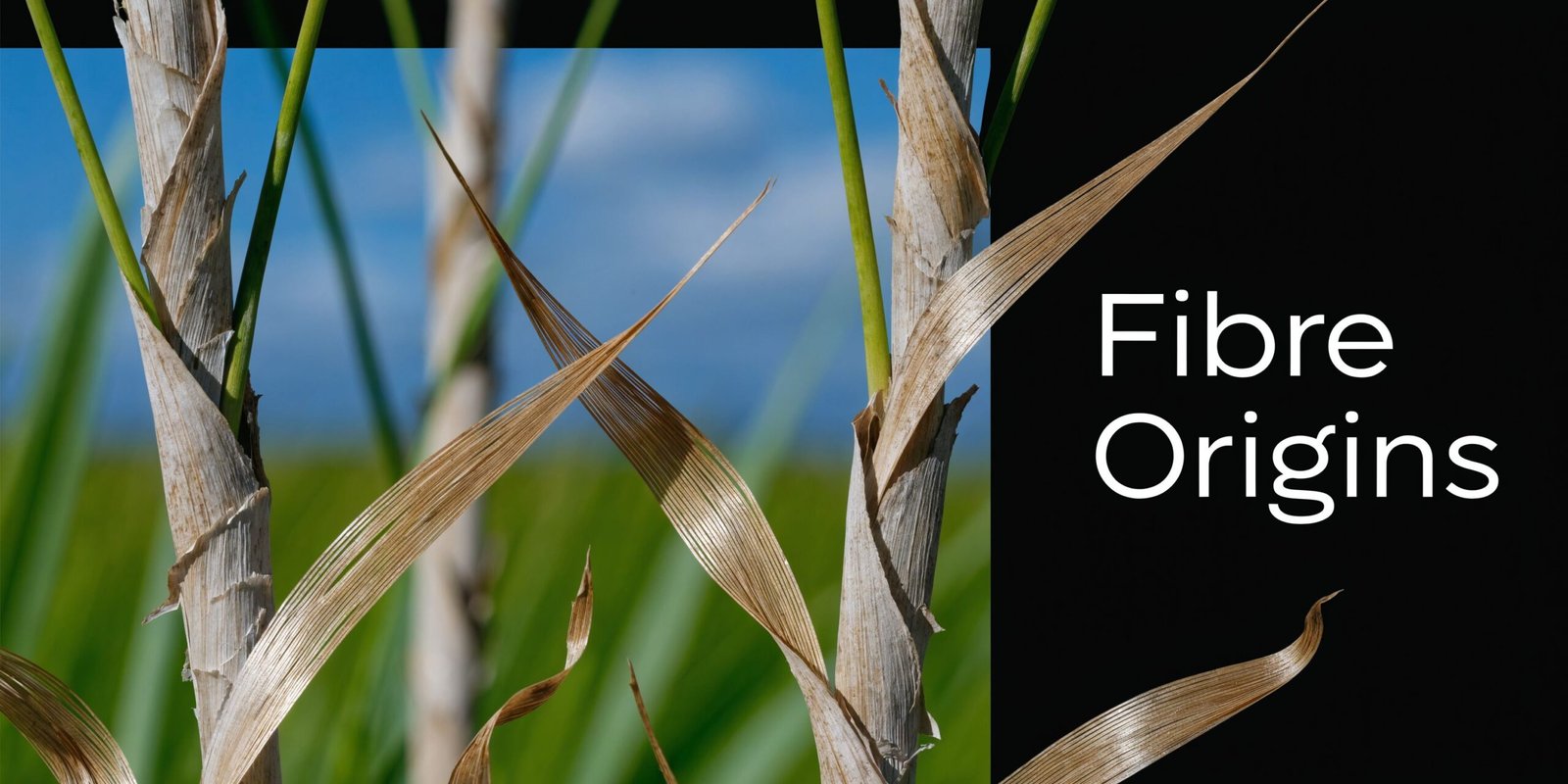
Linen comes from the flax plant. Cotton comes from the fluffy boll of the cotton plant. That basic difference shapes nearly everything you notice at the cutting table and ironing board.
Why flax behaves differently
Flax fibres are long, strong, and slightly crisp. They create a cloth with body, visible texture, and a dry hand that many dressmakers love for shirts, skirts, and trousers.
That strength shows up in testing too. Linen has tensile strength 30 to 40% higher than cotton, and its strength rises by 10 to 20% when wet, according to this fibre comparison for linen and cotton. In practice, that means linen generally copes well with vigorous pre-washing and repeated laundering, even if it feels rigid at first.
The trade-off is familiar. Strong fibres don’t automatically mean easy handling. Linen creases sharply, the cut edge can look untidy almost immediately, and loosely woven linens can distort if they aren’t supported while cutting.
Why cotton feels more immediately easy
Cotton fibres are shorter and softer. They usually spin into yarns that feel smoother and more pliable, which is one reason cotton often feels approachable from the start.
In sewing terms, that tends to mean:
- Softer hand that suits gathers, facings, and curved seams.
- More predictable pressing on many stable weaves such as poplin and quilting cotton.
- Less edge drama on tightly woven cottons compared with open-weave linen.
Cotton’s flexibility is also why “cotton” alone doesn’t tell you enough. A cotton lawn, cotton poplin, cotton twill, cotton denim, and cotton double gauze all sew differently. Linen has variation too, but cotton spans an especially broad range of weights and finishes.
Weave matters as much as fibre
Two fabrics made from different fibres can still share a similar structure. A plain weave linen and a plain weave cotton may look broadly comparable from a distance, but they won’t respond to pressing, topstitching, or washing in the same way because the yarns themselves behave differently.
Use this as a quick rule when assessing a bolt:
| Feature | Linen | Cotton |
|---|---|---|
| Fibre source | Flax plant | Cotton plant |
| First impression | Crisp, textured, slightly dry | Soft, familiar, often smoother |
| Edge behaviour | Often frays quickly | Depends on weave, often steadier |
| Pressing response | Holds a firm press well | Usually presses easily, with a softer finish |
| Common sewing feel | Structured and slightly lively | More forgiving and easy-going |
If a fabric is fighting you on the table, don’t blame the pattern first. Check the fibre, the weave, and whether the cloth was ever a good match for the shape you’re trying to sew.
That small habit saves a lot of wasted effort.
A Detailed Comparison for Dressmakers
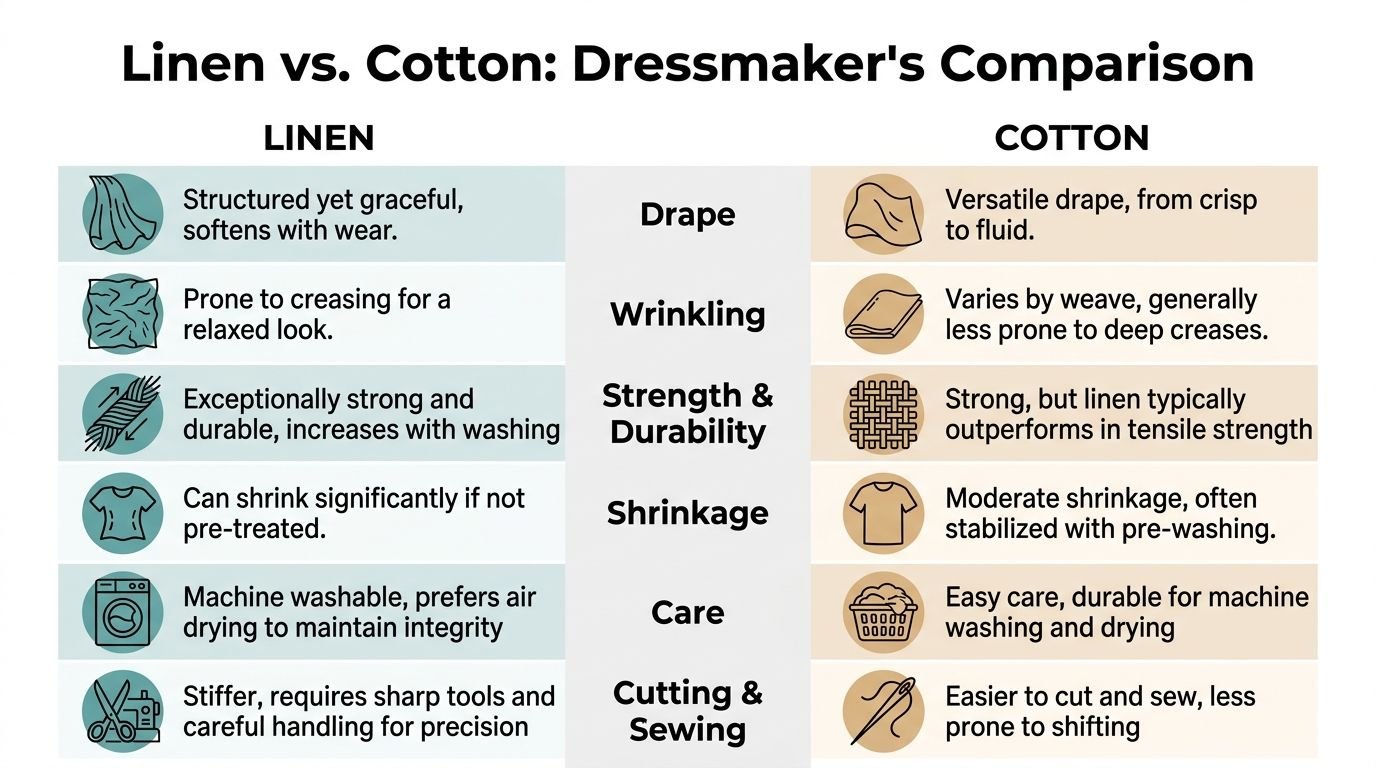
A fabric can look perfect on the bolt and still be a nuisance by the time you have cut a collar, eased a sleeve, and pressed the side seams. For dressmakers, the core linen versus cotton question is how the cloth behaves from pattern layout to regular wear.
Quick comparison at a glance
| Dressmaker's concern | Linen | Cotton |
|---|---|---|
| Drape | Holds shape, then softens with washing and wear | Depends heavily on weave, from crisp to fluid |
| Creasing | Wrinkles fast and shows it clearly | Usually looks tidier for longer |
| Warm-weather wear | Airy and dry-feeling | Breathable, but often less open and breezy |
| Everyday durability | Wears well if the quality is good | Reliable, but performance varies widely by type |
| Sewing behaviour | Frays, shifts, and rewards careful handling | Usually steadier under the needle |
| Best use | Relaxed dresses, shirts, trousers, skirts with ease | Almost anything, especially if you match the weave to the pattern |
Drape and shape in real garments
Linen gives a garment outline. Even soft linen has a certain spring in it, so it tends to stand away from the body more than a comparable cotton. That can be flattering in simple silhouettes, but it also means every design line shows. A wonky topstitched placket or slightly twisted side seam is easier to spot in linen.
Cotton gives you more range. Poplin keeps a shirt looking neat. Lawn works for gathers and softer shaping. Twill adds body without the dry, slightly crisp feel linen often keeps even after pre-washing. That variety makes cotton easier to match to patterns that use terms like "lightweight woven" or "medium woven" without much more guidance.
If you are between sizes or still refining fit, cotton is usually the easier testing ground.
Breathability and comfort on the body
Linen generally feels cooler in hot, sticky weather. The cloth often sits off the skin a little, and that helps air move through the garment. For loose summer dresses, pull-on trousers, and casual shirts, that comfort difference is noticeable.
Cotton can still be excellent in heat, but the result depends more on the weave and finish. A fine cotton lawn can feel lovely in summer. A denser broadcloth can feel closer and less airy, especially in a fitted style with facings, pockets, or multiple layers.
That is the trade-off. Linen often wins on airy comfort. Cotton often wins on polish.
Wrinkles and how much they bother you
Linen wrinkles early in the day and keeps the evidence. Some dressmakers want exactly that. It suits relaxed pieces, especially styles with simple construction and a bit of ease.
It is less forgiving in garments that rely on a sharp line.
A fitted shirt dress, structured skirt, or clean trouser front will look rumpled faster in linen than in many cottons. Cotton still creases, but it usually recovers better and does not hold deep fold lines so aggressively. If you know you will be annoyed by seat creases, elbow creases, or a collapsed waistband after one car ride, cotton is often the safer choice.
How each fabric behaves during sewing
This is the part broad fabric guides often skip. Linen and cotton can produce similar finished garments, but they do not ask for the same handling on the table.
Linen tends to fray sooner, especially at cut edges and seam allowances that get handled a lot during fitting. It also has a lively feel that can make narrow pieces such as facings, sleeve tabs, and collars feel less obedient. I usually allow myself extra time for edge finishing with linen because the cloth tells you quickly when a raw edge has been left too long.
Cotton is usually easier to control, especially in stable weaves. It folds cleanly, accepts marking well, and often behaves better during unpicking and re-stitching. That matters if you are sewing a new pattern, adjusting fit as you go, or inserting details such as zip plackets and set-in sleeves.
For beginners, cotton is usually more forgiving. For experienced sewists, linen is very manageable, but it rewards accuracy.
Durability in practical terms
Both fibres can last well if the fabric quality is sound and the garment suits the cloth. Linen is often the better choice for hard-working summer staples that get washed repeatedly and worn for years. Cotton can also wear beautifully, particularly in good shirtings, twills, and denser dress fabrics, but quality varies more from one cotton weave to another.
That is why fibre content alone is never enough. A good dressmaking decision comes from checking weight, weave, finish, and how much stress the garment will take at elbows, seat, underarms, and closures.
Matching the fabric to the style
If you are comparing swatches and struggling to picture the result, visual references can help. Print and textile resources such as different fabric collections show how much surface texture, print, and finish can change the character of a woven fabric before you even consider the pattern.
That is often the difference between a make you keep wearing and one that stays in the wardrobe. Buy the cloth for the job. Linen suits styles that look better with movement, texture, and a few honest creases. Cotton suits styles that need cleaner handling, steadier sewing, or a crisper finish.
Sewing and Finishing Linen Versus Cotton
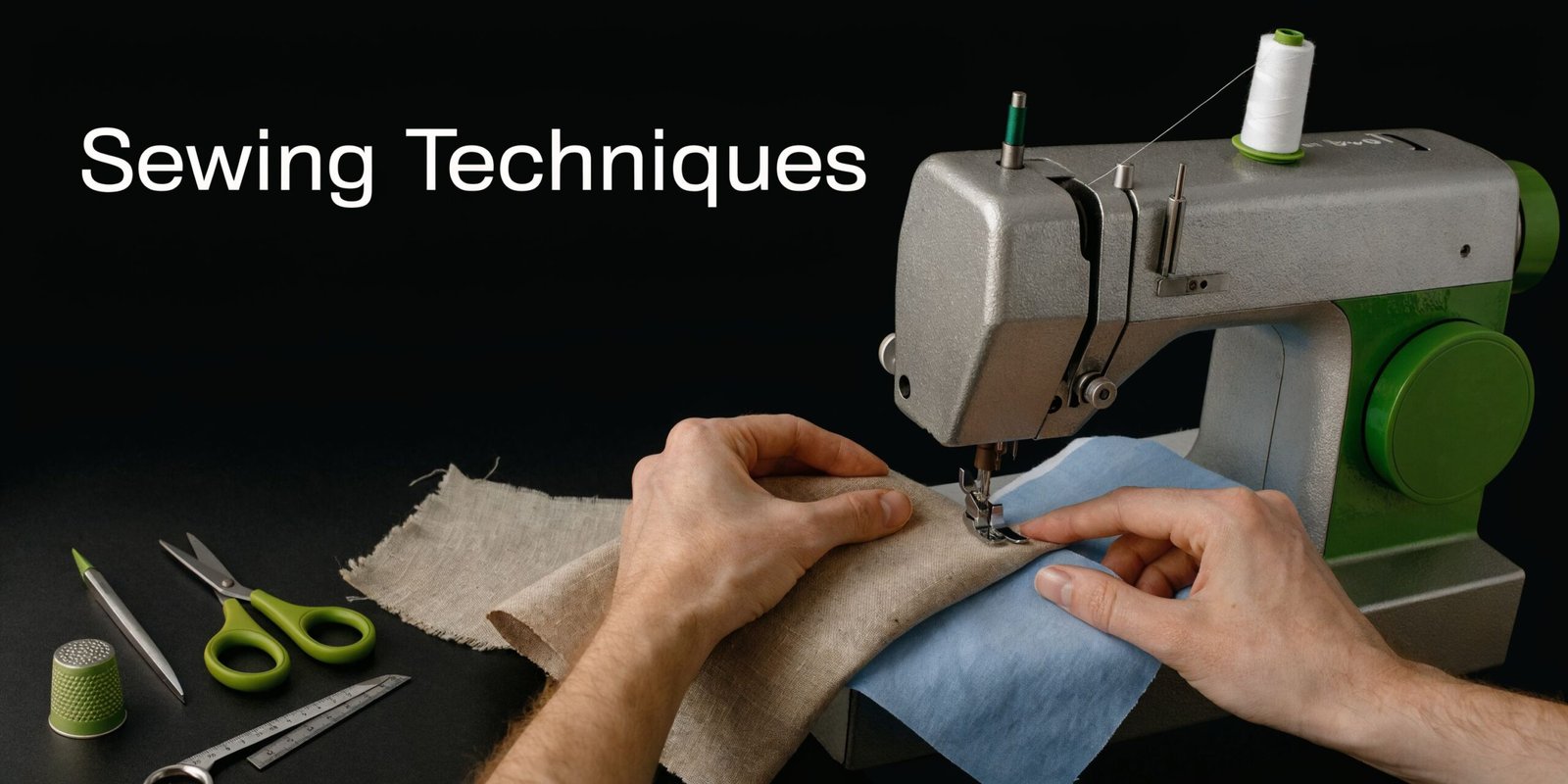
The fastest way to spoil a good fabric is to sew it as though all wovens behave the same. They don’t.
Linen and cotton need different handling from the moment they come into the sewing room. The biggest difference isn’t skill level. It’s preparation.
Pre-washing and pressing before cutting
Linen needs proper pre-treatment. Its strength helps here. Linen’s tensile strength is 30 to 40% higher than cotton’s and increases by another 10 to 20% when wet, which is why it tolerates a firm pre-wash well. That matters because linen may shrink by 3 to 5%, as noted in the earlier linked fibre comparison.
My practical routine for linen is simple:
- Wash it the way the finished garment will be washed.
- Dry it in a way that won’t distort it.
- Press it flat before you even think about laying out pattern pieces.
Cotton should also be pre-washed, but the process is often less dramatic. Stable cotton poplin or shirting usually comes back flatter and easier to manage. Linen often comes back looking like it spent the night crumpled in a basket. Pressing is not optional.
Cutting without distortion
Linen can slide less than slippery synthetics, but it can still move enough to throw off accuracy, especially if the weave is loose or the surface is textured.
These techniques help:
- Use a large cutting surface so the cloth is fully supported.
- Choose a rotary cutter for unstable linen if your shears tend to lift the fabric.
- Single-layer cut when accuracy matters on collars, cuffs, facings, and front bands.
- Check the grain before every major cut because linen can drift more visibly.
Cotton is often easier. On a good poplin or lawn, you can usually fold selvedge to selvedge, square it up, and cut with confidence. That’s one reason cotton is so often recommended for beginners.
Needles, thread, and stitch handling
For linen, I prefer a fresh sharp needle. Dense areas such as plackets, pockets, and hems show every bit of drag from a blunt point.
For cotton, the needle choice depends more on weight and finish. Lightweight cotton lawn behaves differently from denim or canvas, but in general cotton is less likely to punish you for being one needle change late.
A few habits make both fibres sew better:
- Shorten your test cycle. Stitch on scraps, press, then tug the seam.
- Press after each seam instead of waiting until the end.
- Reduce handling on curved or bias-cut areas so edges don’t stretch out.
Practical rule: If linen starts to look messy halfway through construction, stop and press. Trying to “sew through it” usually makes it worse.
Managing fraying and seam finishes
Many linens fray fast enough that a basic unfinished seam allowance is asking for trouble. These aspects mean linen often demands better workmanship.
Good options include:
- French seams for lightweight linen blouses, loose dresses, and semi-sheer cloth
- Flat-felled seams for shirts, pyjamas, and garments that need a durable inside finish
- Overlocking or zigzag finishing for medium-weight casual makes where the inside doesn’t need a couture finish
Cotton gives you more freedom. A tightly woven cotton poplin may be perfectly happy with a simple zigzag or overlocked edge. Quilting cotton can often tolerate straightforward seam finishing if the garment won’t get heavy wear.
Hems, topstitching, and pressing results
Linen loves a deliberate press. If you want a crisp hem or a neat front band, steam and pressure usually reward you. But because the cloth records fold lines so clearly, you need to press accurately. A misplaced crease can linger.
Cotton is more forgiving. It generally accepts pressing well and doesn’t hold accidental marks with the same stubbornness, depending on the weave and finish.
For visible stitching:
| Sewing detail | Linen | Cotton |
|---|---|---|
| Topstitching | Looks excellent, especially on structured garments | Also looks good, often softer in effect |
| Narrow hems | Best on lighter weights with careful pressing | Usually straightforward |
| Curved seams | May need extra clipping and control | Often easier to shape |
| Edge stability | Can fray quickly, finish early | Usually calmer on tighter weaves |
If I’m sewing a linen garment with exposed details, I plan the inside as carefully as the outside. Linen doesn’t hide rushed construction.
Cotton can be polished too, but it gives you more grace while you’re getting there.
Project Recommendations Which Fabric and When
A project can look perfect on the pattern envelope and still become a nuisance at the cutting table. That usually happens when the fabric and the construction details are pulling in different directions. Linen and cotton both make good garments. They just ask for different kinds of sewing.
Choose linen for projects that improve with wear
Linen earns its keep in garments that do not rely on a razor-sharp silhouette all day. It softens, relaxes, and starts to feel better after a few washes, which suits pieces you plan to wear often and mend if needed.
Good linen projects include:
- Relaxed button-up shirts with simple plackets, one-piece collars, or easy camp collars
- Wide-leg trousers with elastic waists, drawstrings, or straightforward fly fronts
- Pull-on skirts and easy dresses with clean seam lines and enough ease to let the cloth move
- Overshirts and light jackets where texture matters more than strict structure
Linen also rewards patient sewing. It is a strong choice when you do not mind pre-washing carefully, cutting on a stable surface, and finishing raw edges before they get too fluffy. I usually point linen toward patterns with fewer fussy facings and fewer tiny turned edges, unless the sewer already knows how to control fray.
Earlier in the article, the cost and lifespan comparison showed the usual trade-off. Linen costs more upfront and often lasts much longer. That makes it a sensible buy for repeat-wear garments, workhorse summer clothes, and pieces you want to keep in rotation for years.
Choose cotton for precision, speed, and lower-risk makes
Cotton is the practical answer for projects that need a calmer sewing experience. It is often easier to pre-wash, easier to square up before cutting, and easier to feed evenly under the presser foot.
It works especially well for:
- Beginner dresses and skirts where stable handling helps with accuracy
- Crisp shirt dresses that need a cleaner outline and neater edge control
- Children’s clothes that will be washed hard and sewn without too much ceremony
- Toiles and student projects where budget matters and mistakes need to be cheap
- Everyday blouses with gathers, facings, collars, cuffs, and smaller details
If a pattern includes sharp corners, narrow bindings, or several matching points, cotton usually saves time. It also gives you more room for correction. Unpicking cotton is often less punishing than unpicking a loosely woven linen that has already started to rough up at the seamline.
Choose a linen-cotton blend when the pattern sits between the two
Some garments need body without stiffness, texture without heavy creasing, or breathability without linen’s full tendency to shift and fray. A blend often handles that middle ground well.
Useful blend projects include:
- Unstructured jackets
- Day dresses
- A-line skirts
- Easy co-ords
- Casual workwear pieces
Blends vary a lot by weave and finish, so I treat them as their own fabric on the cutting table. Pre-wash first, press a test scrap, and sew a few sample seams before committing to hems or topstitching. A good blend can give you linen’s character with less resistance during construction.
If you sew to sell
Fabric choice affects more than the sample in front of you. It changes your pricing, your sewing time, how consistent repeat orders will be, and what customers expect after the first wash. If you are comparing product ideas as well as fabrics, guides on best products to sell on Etsy can help you judge whether a durable linen piece or a lower-cost cotton item makes more sense for your range.
The best fabric is the one that suits the pattern, the sewer, and the life the garment will have. Linen wins some of those jobs. Cotton wins plenty of others.
Your Guide to Care Cost and Sustainability
A good garment keeps proving itself after the sewing is finished. It survives washing, pressing, storage, and real wear. That’s where linen and cotton part company again.
Care after the garment is made
Linen usually rewards gentler drying and a proper press. It likes being shaped with heat from the iron more than being blasted in a tumble dryer. If you let linen dry too crumpled, you’ll spend longer fixing it later.
Cotton is often easier to launder and easier to live with. That convenience matters. A fabric that asks too much in care can end up unworn, however lovely it looked as yardage.
For both fibres, the simple habits are the ones that protect your work:
- Wash according to real use rather than ideal conditions
- Press before storage if the garment wrinkles significantly
- Avoid overcrowding wardrobes so collars, sleeves, and waistbands keep their shape
Cost over time
Price per metre matters, but not by itself.
Cotton is usually the sensible choice when you need volume, want to test a new pattern, or are making trend-driven pieces. Linen costs more upfront, and that can be the right call when you’re sewing a garment you expect to keep and repair rather than replace.
The more useful question is this: will this fabric suit the way the garment will be worn?
If the answer is no, lower cost won’t save it.
Sustainability and sourcing
From a UK sustainability perspective, linen has a clear environmental advantage in the verified data. It uses up to 80% less water than conventional cotton and produces 1.5kg of CO2 per kg of fibre compared with cotton’s 5.7kg, according to this UK-focused sustainability comparison.
That won’t automatically make linen the right choice for every sewist. Cost still matters, and so does access to good-quality cloth. But if you’re trying to build a smaller, longer-lasting handmade wardrobe, linen aligns well with that goal.
A practical way to decide
If you’re still undecided, use this checklist:
- Pick linen if longevity, texture, breathability, and natural character matter most.
- Pick cotton if ease, budget, softness, and sewing confidence matter most.
- Pick according to the garment’s life. A holiday shirt, daily work blouse, student sample, and heirloom dress don’t need the same fabric logic.
The best fabric isn’t the one with the strongest story. It’s the one that helps you finish the project well and keeps the garment in use.
If you're ready to choose fabric for your next make, browse the dressmaking materials, tools, and kits at More Sewing. It’s a solid place to find quality cloth, haberdashery, and practical supplies for both first projects and more ambitious garments.
