Guides
Sewing Labels on Clothes: A UK Maker’s Practical Guide
You’ve finished the hem, pressed the seams, clipped the loose threads, and held the garment up to admire it. Then you spot the little pile of labels still sitting by the machine. That’s usually the moment when many home sewists pause. The dress or top feels done, but not quite finished.
A label seems small until you sew one in well. Then it changes the whole feel of the piece. It adds identity, helps the wearer know what they’re handling, and if you’re making items to gift or sell, it stops being decorative and starts being practical.
I’ve seen this over and over in the workroom. A beautifully sewn garment can look slightly unfinished with a crooked, scratchy, or poorly placed label. On the other hand, a simple woven tag tucked neatly into a side seam can make even a straightforward project feel polished. If you’ve got a stack of labels in front of you and want a sensible starting point, this practical guide to sewing labels on clothes is a useful companion to keep alongside your sewing basket.
The Final Flourish Your Handmade Garment Deserves
Labels do two jobs at once. They finish the garment visually, and they solve a practical problem.
A maker’s label says, “this was made with care”. A care or fibre label says, “this is how to look after it”. If you only think of labels as branding, you miss half their value.
Why this small step matters
The UK has treated clothing labels as more than decoration for a very long time. The legal requirement goes back to the 1887 Merchandise Marks Act, which required manufacturers to give details on materials and origin to protect consumers and British industry from deceptively labelled goods, as outlined in the history of clothing labels.
That history still shapes how sewing labels on clothes works today. Even at home, the decisions you make about label type, placement and finish affect comfort, wash durability and, for resale, compliance.
Practical rule: If a label feels like an afterthought when you pin it in, it will probably look like one after sewing too.
The difference between handmade and half-finished
Think about three common makes.
- A jersey T-shirt needs a label that won’t scratch the neck or distort the fabric.
- A denim overshirt can carry a sturdier woven label or patch and still feel right.
- A viscose dress needs a lighter touch, because a heavy label can drag or ripple the fabric.
That’s why label choice and attachment method should match the garment, not just the look of your logo.
Some sewists hand stitch every label because it gives control. Others machine stitch almost everything for speed and consistency. Both approaches can work well. The trick is choosing the method that suits the fabric, seam construction and intended wear.
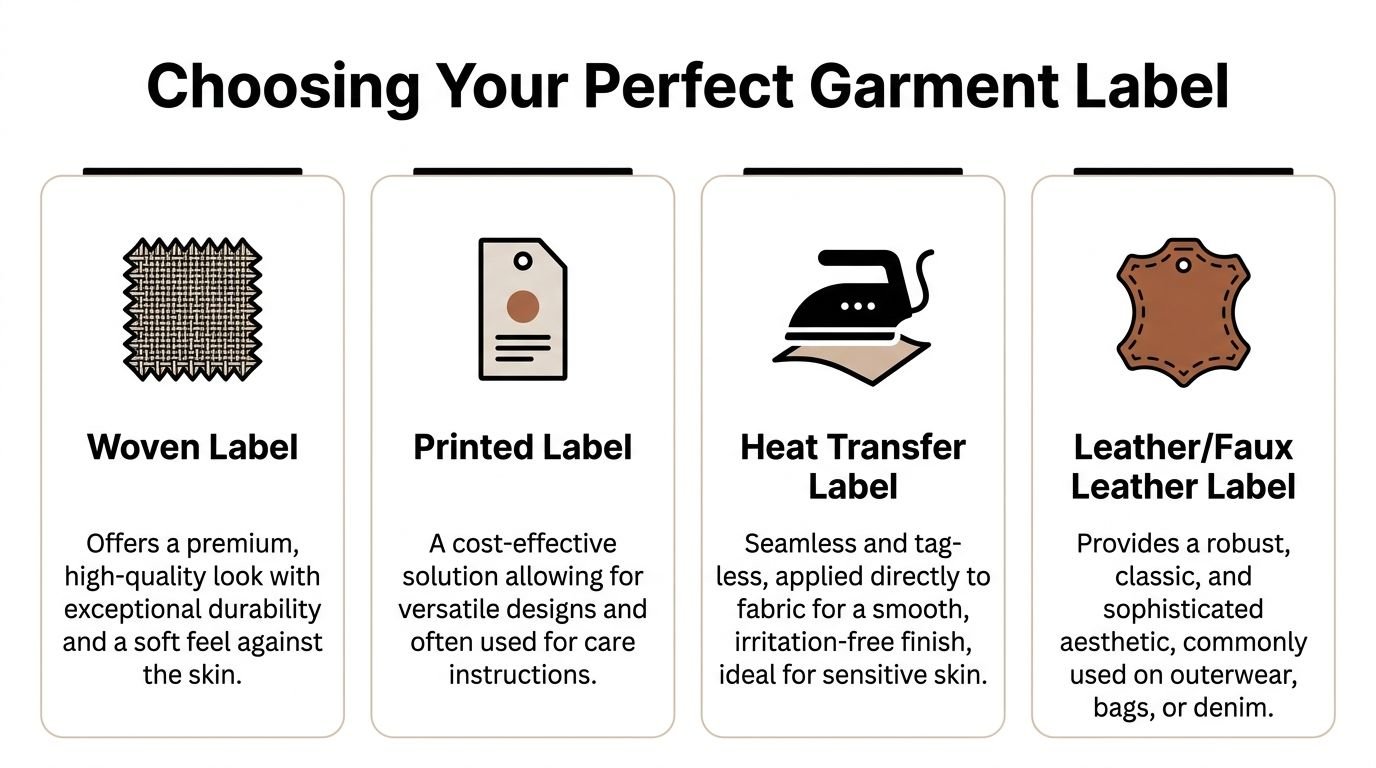
Choosing Your Perfect Garment Label
The best label isn’t always the fanciest one. It’s the one that suits the garment, feels right against the skin, and survives real use.
Woven, printed, heat transfer or patch
Here’s the quickest way I’d compare the main options.
| Label type | Best for | Strengths | Watch for |
|---|---|---|---|
| Woven label | Dresses, shirts, jackets, knitwear | Crisp finish, durable, looks professional | Can feel bulky on very light fabrics |
| Printed label | Children’s wear, lingerie, soft tops, care info | Softer feel, often flatter, easier for detailed text | Print quality matters, edges can fray if unfinished |
| Heat transfer label | Sportswear, sleepwear, close-fitting garments | No physical tag, smooth against skin | Application needs care and may not suit every fabric |
| Leather or faux leather patch | Denim, bags, outerwear | Strong visual detail, good structure | Too heavy or stiff for drapey fabrics |
Woven labels for a polished finish
If you want the garment to look as though it came from a small professional studio, woven labels are usually the safest choice.
Damask-style woven labels are a good option when you want sharper detail in a logo or fine lettering. Satin labels feel softer and can be kinder at the back neck, especially on garments worn without layers.
For a rugged piece, such as a denim chore jacket, a woven label with folded ends works well because it can be caught into a seam cleanly. For a lightweight blouse, I’d avoid anything too dense or heavily woven. It can create a stiff little island in an otherwise fluid garment.
Printed labels for comfort and information
Printed cotton or printed satin labels are often better when the label needs to carry more text, such as care instructions, fibre content or sizing. They can also be a nicer choice for children’s clothing, underwear and soft pyjamas where texture matters more than brand impact.
If a label is going at the centre back neck, softness should be high on your list. People forgive a plain label. They don’t forgive a scratchy one.
The best-looking label is the one the wearer doesn’t notice for the wrong reasons.
Heat transfer labels and when to use them
Heat transfer labels have a place, particularly if you want a tag-free finish. They can be useful on activewear or garments where any seam bulk would annoy the wearer.
But they’re not my first choice for every project. If you’re sewing labels on clothes for frequent washing, rough wear, or fabrics that don’t respond predictably to heat, I’d be cautious. A stitched label is usually the more dependable finish for long-term use.
Why care and content labels matter
At this point, home sewing starts to overlap with professional making. If the garment is for resale, the pretty brand tag isn’t enough on its own.
During World War II, UK rationing made labels especially important. The CC41 utility mark on a sewn-in label showed that a garment met austerity rules, and this period, which saw a 75% drop in non-essential clothing production, helped establish the habit of standardised labels with fibre content and care details, as noted in this history of clothing labels during rationing.
That legacy still matters. If you’re making clothes to sell, the label isn’t just a signature. It’s information the buyer relies on.
Gathering Your Tools and Preparing for Placement
You notice bad label prep the first time a garment comes back from the wash. One corner twists out, the neck label sits a few millimetres off centre, or a side-seam tag rubs because it was caught too high. The stitching usually gets blamed, but the problem often starts earlier, with tool choice and placement.
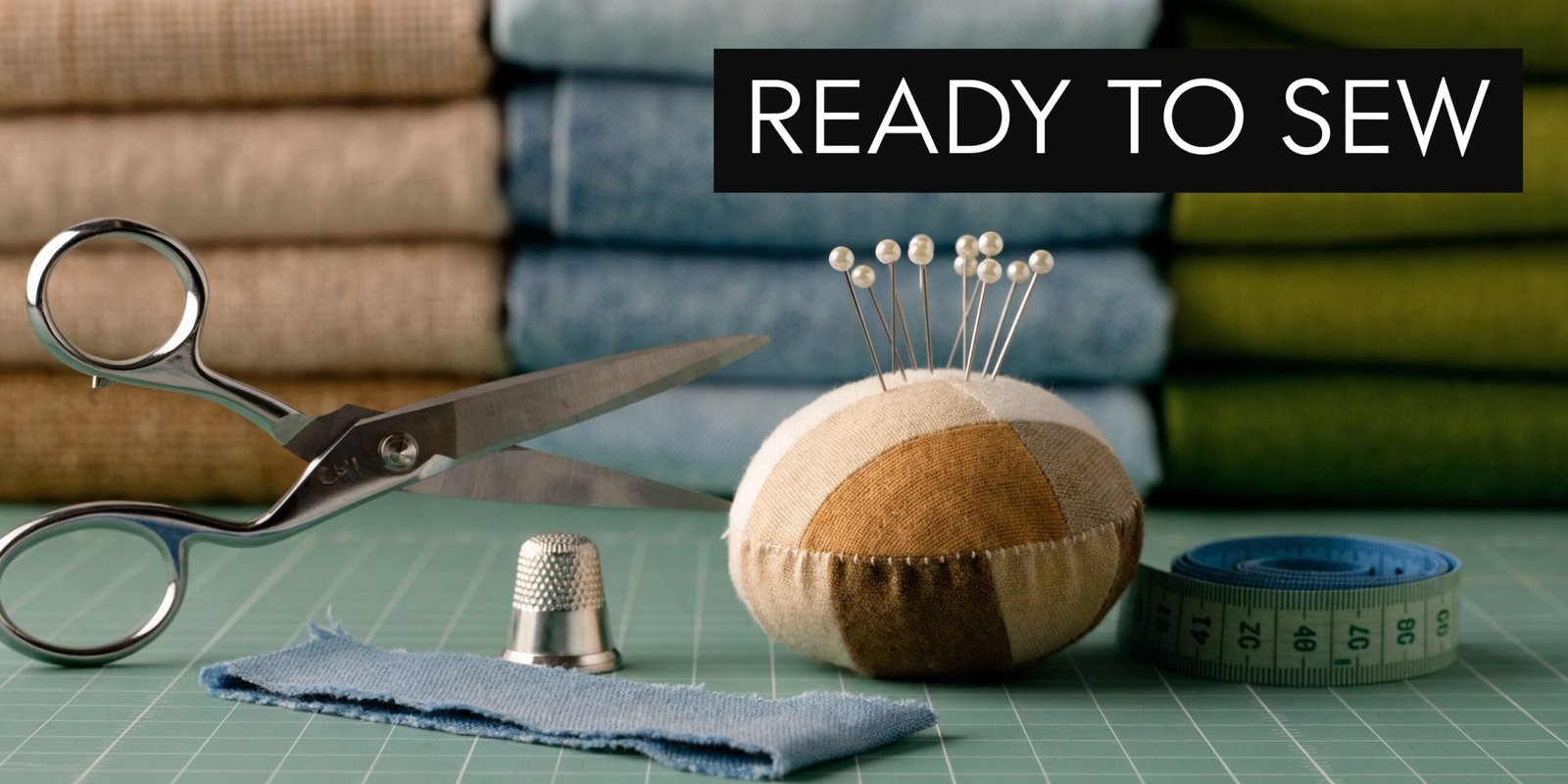
A small setup is enough. The right basics give you a cleaner result and save unpicking.
The basic kit that makes life easier
These are the tools I keep close when adding labels to finished garments or work in progress:
- Fine glass-head pins for stable woven fabrics. They hold a label flat without stretching the area.
- Wonder Clips or small quilting clips for laminated fabrics, sweatshirt fleece, and anything that shows pin marks.
- Small sharp scissors or thread snips to trim thread tails tight to the label edge.
- A hand-sewing needle even if the label will be machine sewn. A quick baste often keeps slippery labels from drifting.
- Matching polyester thread for strength and wash resistance. Gutermann Sew-All is easy to find in the UK and works well for most labels.
- A seam gauge or small ruler to check distance from neckline, seam, or centre back.
- Tailor's chalk or a removable fabric marker for light placement marks.
- A pressing cloth and iron because a wrinkled label rarely sews on straight.
- Temporary fabric glue for jerseys, silks, or awkward small labels where pins do more harm than good.
If you only buy one extra tool, make it a seam gauge. It saves more wonky neck labels than any fancy gadget.
Placement before stitching
Start by deciding what the label needs to do. A brand label at the back neck needs to look balanced and feel comfortable against the skin. A care label needs to stay readable after repeated washing. A decorative side-seam tag needs to catch the eye without dragging the seam out of line.
That difference matters. Hobby sewing often treats labels as a finishing extra, but once a garment is worn often or sold to a customer, placement affects durability, comfort, and, in the case of care and fibre information, whether the garment carries the details the buyer needs.
For folded labels set into a seam, the usual positions are the centre-back neck seam or the left side seam. For flat labels sewn onto the inside, place them where the fabric is stable and the stitches will not show through to the right side too clearly.
Placements that usually work well
These starting points are reliable for most home sewing projects:
- T-shirts and sweatshirts. Centre back neck, tucked just below the neckband seam or into the neckline seam allowance.
- Dresses and skirts. Left side seam, usually a little below the waist seam or underarm so it does not fight with the main neckline area.
- Jackets and coats. Back neck facing, below the hanging loop, or on the inside chest area for a more refined finish.
- Trousers and denim. Waistband seam, back pocket area for a decorative label, or side seam for care information.
- Baby and children's clothes. Side seam often works better than back neck if the child is sensitive to scratchy edges.
Hold the garment up before committing. Drapey viscose, ponte, and lightweight jersey can make a label look straight on the table and crooked on the body.
Preparation that prevents rework
Good prep takes a minute or two. It can save half an hour of unpicking.
- Press the label first if it arrived creased or folded unevenly.
- Trim loose threads so they do not get trapped in the stitching line.
- Check the fold on centre-fold and end-fold labels. If the fold is off, the finished label will sit off balance.
- Mark the centre point of the garment before pinning, especially on necklines.
- Test the placement on a hanger or on the body if the garment shape drops or twists when worn.
- Baste first if the fabric is slippery, loosely woven, or likely to shift under the presser foot.
One practical rule helps here. If a label sits near skin, test the scratch factor before sewing it in permanently. I rub the edge against the inside of my wrist. If it feels rough there, it will usually annoy at the back neck too.
Clean prep gives you more than a neat finish. It helps the label stay put, keeps the garment comfortable, and makes it much easier to meet the standard customers expect from ready-to-wear clothing in the UK.
Mastering Hand-Sewing Techniques for Labels
Hand sewing gives you control that a machine can’t always match. On delicate fabrics, curved areas or finished garments where you don’t want visible topstitching, it’s often the smarter choice.
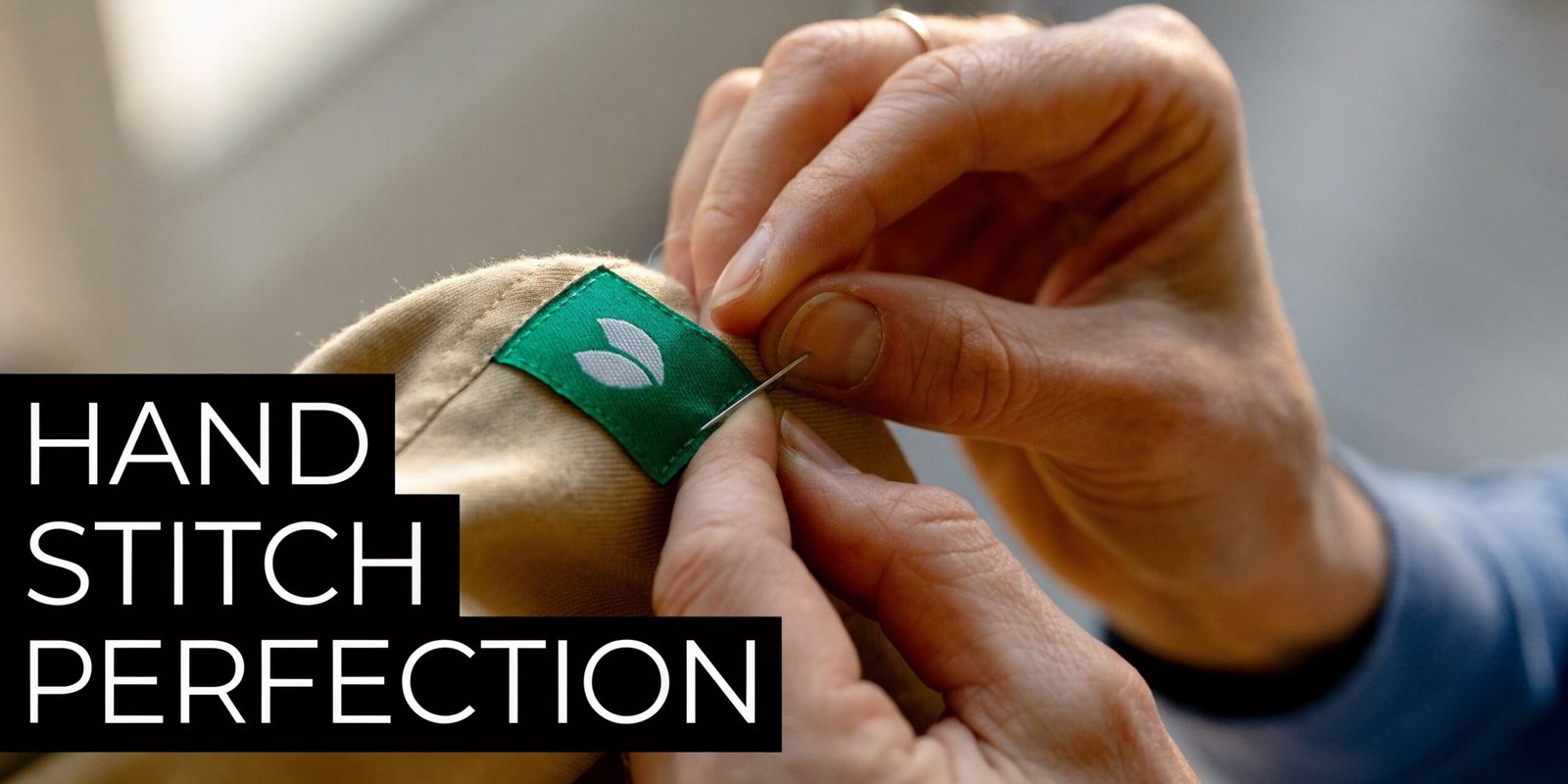
Whip stitch for flat labels
For a flat label sewn onto the inside of a garment, the whip stitch is the dependable everyday option.
Use a fine needle and a thread that blends with either the label edge or the garment. Knot the thread neatly, bring the needle up from underneath the label edge, and make small angled stitches over the edge at regular intervals.
This works well for:
- Printed cotton labels inside children’s wear
- Soft branding labels on jersey tops
- Care labels attached after the garment is fully finished
Keep the stitches small. If they’re long and widely spaced, the corners tend to lift after washing.
Slip stitch for a cleaner invisible finish
Slip stitch is the one I reach for when the label needs to look settled into the garment rather than obviously sewn on.
You catch a tiny bit of fabric from the garment, then a tiny bit from the folded edge of the label, moving back and forth so the thread is barely visible. On a blazer collar or inside a coat facing, where a crisp finish is desired, it gives a very refined result.
A few situations where it shines:
- Curved necklines where machine stitching would look clumsy
- Silk or viscose garments where visible topstitching would interrupt the finish
- Labels inside facings where you want them secure but discreet
Sew the label to the garment that exists, not the garment you wish it were. Slippery viscose and firm denim need different handling.
Running stitch for casual or decorative attachment
Running stitch is not my first pick for every label, but it has its place. If you’re attaching a rustic cotton label to a utility apron, canvas tote or linen pinafore, a visible hand-sewn finish can look intentional rather than improvised.
Use even stitches and keep the spacing consistent. If the thread contrast is high, any wobble will show.
Thread and tension choices by fabric
A few practical pairings help.
- Fine blouse fabrics. Use a finer needle and a single thread to avoid drag.
- Coating, denim or canvas. A stronger thread or doubled thread can help, but don’t overdo it or the stitching looks heavy.
- Stretch knits. Avoid pulling the label edge tight as you sew. Let the fabric rest naturally.
If a label starts tunnelling the fabric into ridges, stop and loosen your handling. The problem is often hand tension, not the stitch type itself.
A useful visual reference
If you like seeing hand placement and stitch rhythm before trying it yourself, this demonstration is worth a look.
When hand sewing is the better choice
Hand sewing is slower, but that isn’t the same as worse. It’s often better when:
- the garment is already fully constructed
- the label sits on a tricky curve
- the fabric marks easily
- you want almost invisible attachment
For one-off garments, hand sewing can also be the calmest option. No wrestling a tiny label under the presser foot. No pivoting around corners. Just control.
Professional Machine-Sewing Methods
You finish a blouse, turn it right side out, add the label in a hurry, and the result looks slightly crooked or puckered. That is usually not a sewing-skill problem. It is a method choice problem.
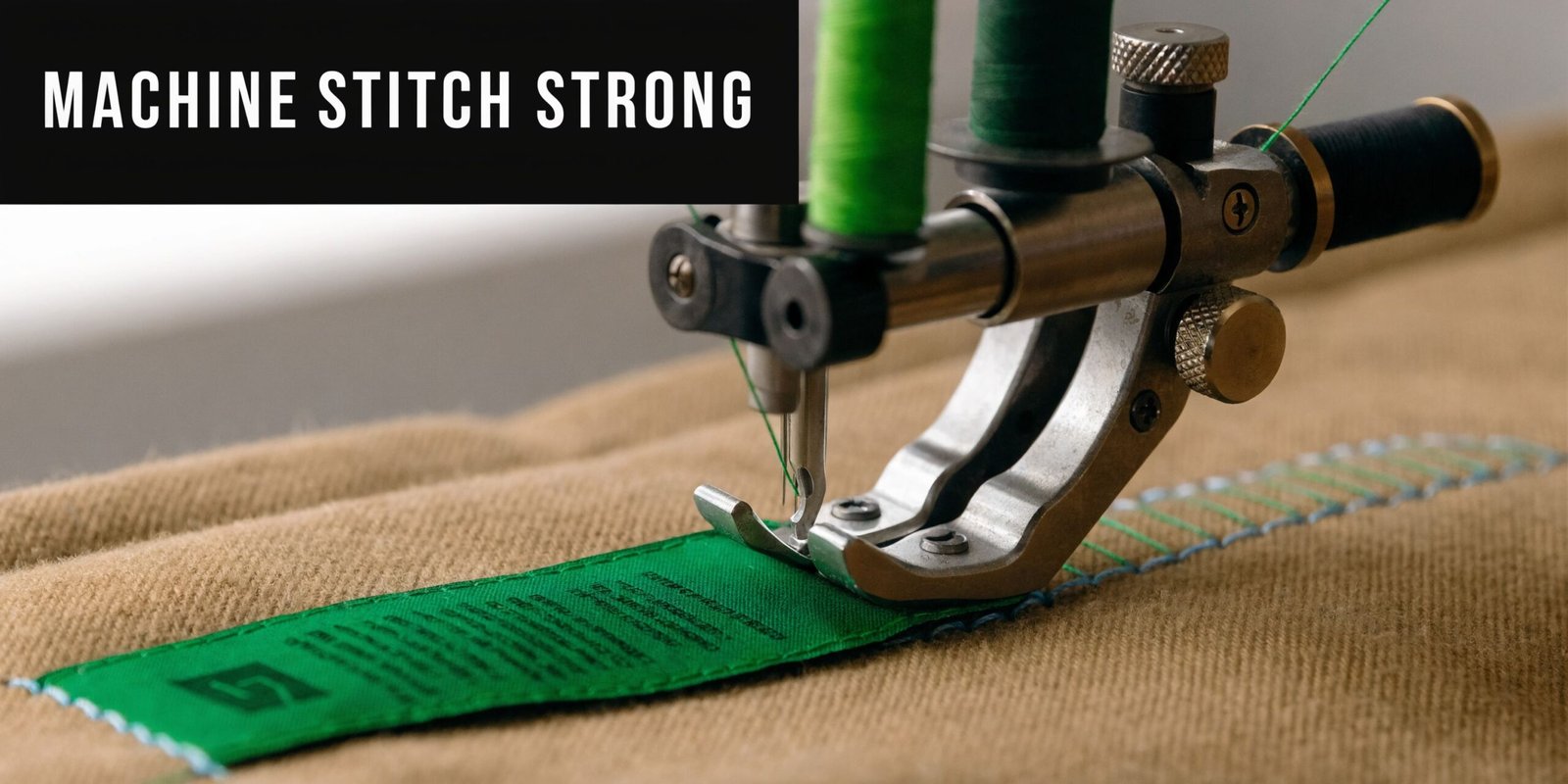
Machine sewing gives labels the clean, retail-style finish many home sewists want, but only if the method suits the garment. A flat top-stitched label is quick and strong. A label caught into a seam is neater, more comfortable against the skin, and often the better option if you plan to sell the garment and want a more professional standard of finish.
Top-stitching a flat label
This is the fastest machine method and the one I use for aprons, bags, utility garments, and many care labels. Position the label, hold it in place with a small dab of washable glue or a quick hand baste, then stitch close to the edge with a straight stitch.
Keep the stitch line even. On a woven label, any wobble shows immediately.
This method suits:
- Care labels
- Flat woven brand labels
- Canvas bags and aprons
- Children’s clothes where wash durability matters more than invisible stitching
The trade-off is visibility. You will see the stitching line, and on fine cotton lawn, viscose, or lightweight shirting, that can look a bit homemade. On heavier fabrics, it usually looks perfectly right.
Stitching in the ditch
If the label sits beside an existing seam, use the seam to hide the stitching. Sew directly in the seam line so the attachment almost disappears from the outside.
This works well on:
- neckbands
- cuffs
- waistbands
- facings
Accuracy matters here. If the needle strays even slightly, it shows. I usually recommend this method to confident beginners only after they have practised on scraps with the same seam thickness.
Seam integration for the cleanest finish
For clothing that will be worn often and washed hard, sewing the label into a seam is usually the best-looking and longest-lasting method. It also solves a common comfort problem. A folded or loop label caught into the side seam or back neck seam has fewer exposed edges to rub the skin.
It is also the method that most clearly bridges hobby sewing and professional finishing. If you want garments to look properly made rather than merely labelled, build the label into construction where you can.
How to sew a folded label into a seam
Choose the seam early
Side seams and back neck seams are the easiest places to start because the label sits naturally there and the bulk stays manageable.Check the fold and orientation
The readable side needs to face the right direction once turned out. Test it before sewing. Nearly everyone gets this wrong once.Place the label right sides together
The loop or folded edge points into the garment. The raw ends line up with the fabric edge at the seam allowance.Baste it in place
This saves time overall. Small labels twist under the presser foot more than people expect.Sew the seam normally
Use your usual seam allowance and secure the seam properly at the start and end.Turn, press, and inspect
Pull the label out, press the seam, and check that the label sits straight and reveals evenly.
A practical rule from the workroom: if the label is going near the neck, test the feel with your fingers before final stitching. Soft satin or printed labels are often better there than stiff woven ones, especially for children’s wear.
Machine settings that usually work
Use a straight stitch with a moderate stitch length for most woven labels. On lightweight fabrics, go a touch finer so the corners do not look clumsy. On jersey or French terry, stabilise the area first or reduce presser-foot pressure if your machine allows it. That helps stop the label edge from stretching the knit and creating a wavy outline.
Needle choice matters too. A universal 70/10 or 80/12 covers most dressmaking fabrics. For knits, switch to a ballpoint. For coated cotton, denim, or thick canvas, go up a size rather than forcing a finer needle through multiple layers.
If you are making school uniform, nursery kit, lunch bags, or children’s clothes, these examples of sew on name labels are useful for judging size, placement, and how much stitching a hard-wearing item can take.
Mistakes that cause trouble
A few habits create the same problems again and again:
- Adding the label after the area has become bulky. It is much harder to keep the stitching straight.
- Skipping basting or glue-basting. Tiny labels shift fast.
- Using thread that is too heavy for the garment fabric. The label stays on, but the surrounding fabric puckers.
- Putting a stiff label on a curved neckline. The label fights the shape and often feels scratchy.
- Sewing too close to the very edge on fraying labels. Leave enough margin for the stitch to hold securely through repeated washing.
If you want the neatest result, attach the label as part of construction, not as an afterthought. That one decision changes both durability and finish.
Finishing Touches and Essential UK Legalities
Once the label is attached, take another minute and finish it properly. This is the point where a neat job becomes a durable one.
Secure the thread tails. Trim them close, but not so close that the stitching loosens. Then give the area a careful press, using a pressing cloth if the label or fabric is heat-sensitive.
Fixing the common problems
Most label issues are repairable if you catch them early.
Puckering around the label
This usually comes from one of three things. The label is too stiff for the fabric, the stitching is too tight, or the label was attached under tension.
Try unpicking and resewing with the garment laid flat and relaxed. On very soft viscose or Tencel blends, a lighter label typically solves the problem better than any stitching adjustment.
Wobbly or uneven stitching
If the stitching line snakes around the label edge, the cause is often poor stabilisation rather than poor sewing.
A simple fix is to baste the label first, or use a dab of washable fabric glue to hold it exactly where you want it. Then sew more slowly than feels necessary.
Scratchy feel at the neck
This is typically a label selection problem, not a skill problem.
Move the label to a side seam, switch to a softer printed label, or sandwich a folded woven label into the seam so only the smoother edge touches the skin.
What UK makers need to know before selling
This is the part many hobby sewists miss. If you’re making clothes only for yourself, you’ve got much more freedom. If you’re selling, even in small batches, labels move into legal territory.
Under the Textile Products (Labelling and Fibre Composition) Regulations 2012, UK makers selling garments need accurate fibre content on a permanent label. Guidance aimed at home sewists notes that lack of awareness is a real issue, and the same source states that non-compliance can lead to fines up to £5,000 per non-compliant item, enforced by OPSS, as discussed in this article on how to sew on clothing labels with UK compliance in mind.
That changes how you think about labels. A decorative tag alone won’t cover you.
What to include if you sell your makes
You should think through these points carefully.
- Fibre content. If the garment is made from mixed fibres, the composition needs to be stated accurately.
- Permanent attachment. A loose swing tag isn’t a substitute for a sewn-in label where the law requires permanence.
- Care information. Practical care guidance helps buyers and can prevent complaints, especially if the fabric needs gentle washing.
- Origin or other required information. Check what applies to your product and materials before selling.
If you use deadstock or mixed-fibre fabric, don’t guess. Keep your supplier information and fabric records organised from the start. That’s much easier than trying to reconstruct fibre details later.
A lovely label can build trust. An inaccurate one can undo it quickly.
Sustainability without greenwashing
Plenty of makers want labels that fit the values of a low-waste or recycled-fabric project. That’s sensible, but the wording still has to be accurate.
If you choose recycled polyester labels, organic cotton labels or low-impact packaging, make sure the claims around the product are specific and supportable. Don’t let the visual style of the label imply more than you can verify.
There’s also a practical side to sustainability. A recyclable-looking label that shrinks, frays or irritates the wearer isn’t a good choice. The most sustainable label is often the one that lasts, suits the garment, and doesn’t force a remake.
The standard worth aiming for
Good sewing labels on clothes do three things at once.
They stay attached. They feel right on the garment. They tell the truth.
That’s the point where home sewing starts to look and behave like professional finishing.
If you’re ready to add better labels, smarter notions and fabric that deserves a polished finish, have a look at More Sewing. It’s a solid UK source for dressmaking fabrics, haberdashery, sewing kits and the practical extras that help handmade clothes feel complete.
