
Fabric
What Is Cotton Percale and How Do You Sew With It?
You know that wonderful, cool, crisp feeling you get from a luxury hotel sheet? That, right there, is the magic of cotton percale.
It's a common misconception, but percale isn't actually a type of cotton. It's all about the way the fabric is woven.
So, What Exactly Is Cotton Percale?
The secret to percale’s famous character is all in its simple, strong weave. Think of a classic checkerboard, with its straightforward one-thread-over, one-thread-under grid pattern. That’s the essence of a percale, or plain, weave.
This technique creates a wonderfully tight, flat surface that has a distinct matte finish. You won't find any of the sheen or gloss you'd see on a fabric like sateen. It’s all about that clean, smooth feel.
For us sewists, this tight structure is a massive plus. When you lay out your pattern pieces, the fabric stays put and doesn't shift or slide around like silks or satins can. It also holds a crease brilliantly, which means you can press incredibly sharp, professional-looking seams and hems with ease. A great suggestion is to use a tailor's clapper after pressing a seam to get an exceptionally flat and crisp finish.
How The Weave Affects The Feel
The most important thing to grasp is how this weave changes the way the fabric performs. Because the threads interlace so frequently and tightly, the structure creates thousands of microscopic air pockets.
These tiny gaps allow air to circulate freely, and that's precisely why percale feels so breathable and cool against your skin. It's a fantastic choice for any project where coolness and structure are key. We often recommend it for:
- Crisp summer shirts and blouses
- Classic, cool pyjamas and nightwear
- Durable and breathable bed linens
- Stable quilt backings that will stand up to plenty of wear
To get an even deeper understanding, the folks at Southshore Fine Linens have an excellent resource, their Percale Cotton 101: The Ultimate Guide.
To help you remember the key points when you're choosing fabrics, we've put together this quick summary.
Cotton Percale at a Glance
Here’s a simple table to give you a quick reference for the main characteristics of cotton percale.
| Attribute | Description |
|---|---|
| Weave | A simple one-yarn-over, one-yarn-under plain weave structure. |
| Feel | Cool, crisp, and smooth to the touch, similar to high-end hotel sheets. |
| Appearance | A flat, matte finish with no sheen or lustre. |
| Breathability | Excellent airflow, making it ideal for warm weather and hot sleepers. |
| Durability | Strong and long-lasting; it softens with washing without pilling. |
Hopefully, this gives you a clear picture of what makes this fabric so special and versatile for all sorts of sewing projects.
How the Weave Creates Percale's Signature Crispness
The secret to cotton percale’s famous cool, crisp feel isn't in the cotton itself, but all down to its brilliantly simple weave. Think of a classic checkerboard pattern; that’s exactly how percale is made. It’s a straightforward one-over, one-under plain weave.
This technique packs the threads tightly together, creating a strong, flat surface with no real texture or shine. This is what gives percale its lovely matte finish.
Because the threads interlace so closely, the fabric is incredibly stable and strong. But, more importantly, this tight structure creates thousands of tiny gaps for air to move through. It’s these microscopic pockets that make percale feel so wonderfully cool and breathable against your skin.
This built-in stability is a massive plus for anyone who sews. When you lay out your pattern pieces, the fabric doesn’t slide about or stretch out of shape like a slippery satin might. It also holds a sharp crease when you iron it, making it easy to get those crisp, professional-looking seams and hems we all want. For example, when making a hem, you can easily press a double-fold hem that will stay in place for stitching, no pins needed.
What Makes the Weave Special
The one-over, one-under method might be the simplest way to make a fabric, but that’s where its strength lies. This grid-like structure means the fabric is perfectly balanced, so it behaves predictably. This results in a material that is:
- Durable: The frequent interlacing of the threads makes the fabric tough and resistant to snags. That’s why it’s such a popular choice for things that see a lot of wear and washing, like bedding and shirts.
- Easy to Handle: Its stable nature makes it a joy to work with, whether you’re a beginner or have been sewing for years. It cuts cleanly and doesn't fray too badly. A practical suggestion is to use a rotary cutter and mat for the most precise cuts.
- Always Crisp: The signature crispness that everyone associates with percale comes directly from how tightly the threads are woven together.
This diagram shows how all of percale's best-known qualities come from this one simple weaving technique.
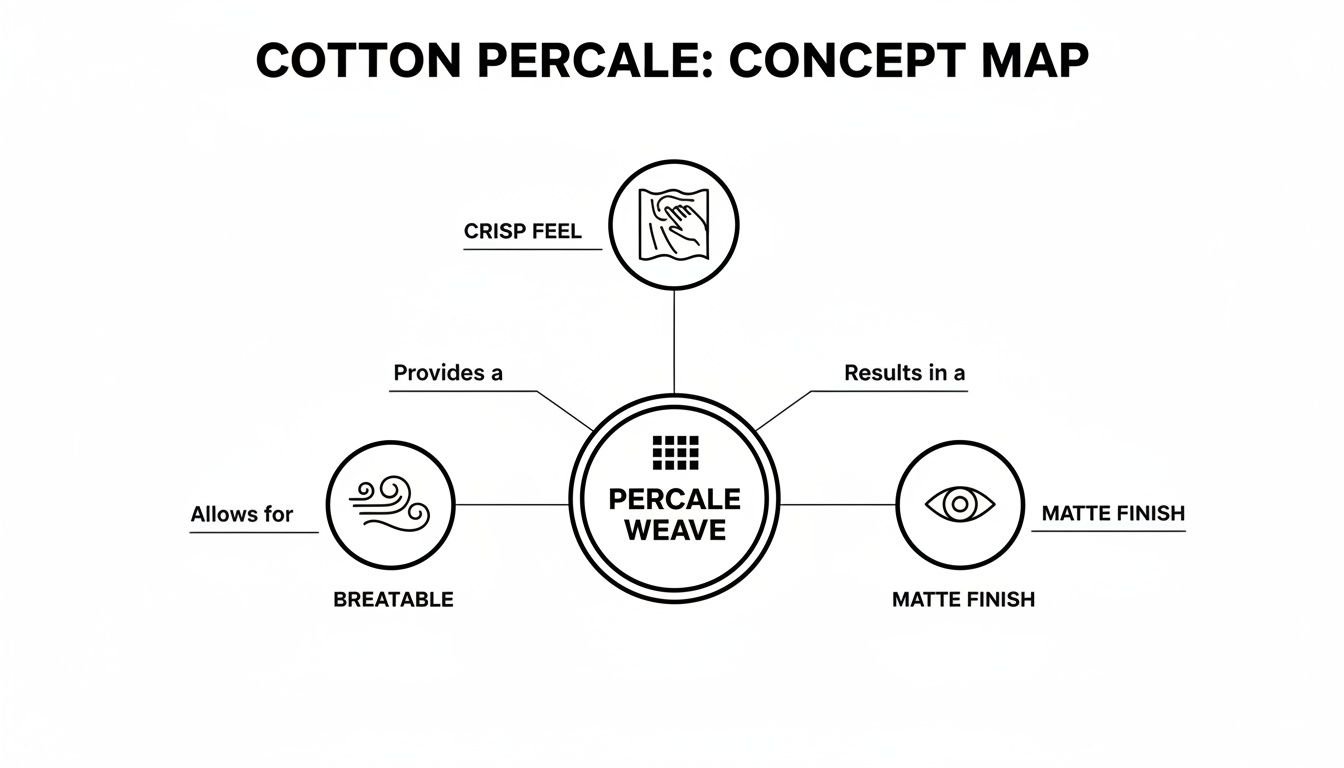
As you can see, the crisp feel, breathability, and matte look all stem from that basic grid.
Key Insight: Unlike weaves such as sateen, which uses 'floating' threads to create a shiny surface, percale's tight, flat grid is all about maximising airflow. This creates a smooth, non-shiny fabric that is the perfect choice for summer clothes or for anyone who gets too warm at night.
So, when we talk about what is cotton percale, it’s really all about the construction. It’s this specific weaving method that gives the fabric its signature feel and reliable performance, making it a must-have in any sewist’s fabric stash.
Percale vs Sateen: A Practical Fabric Showdown
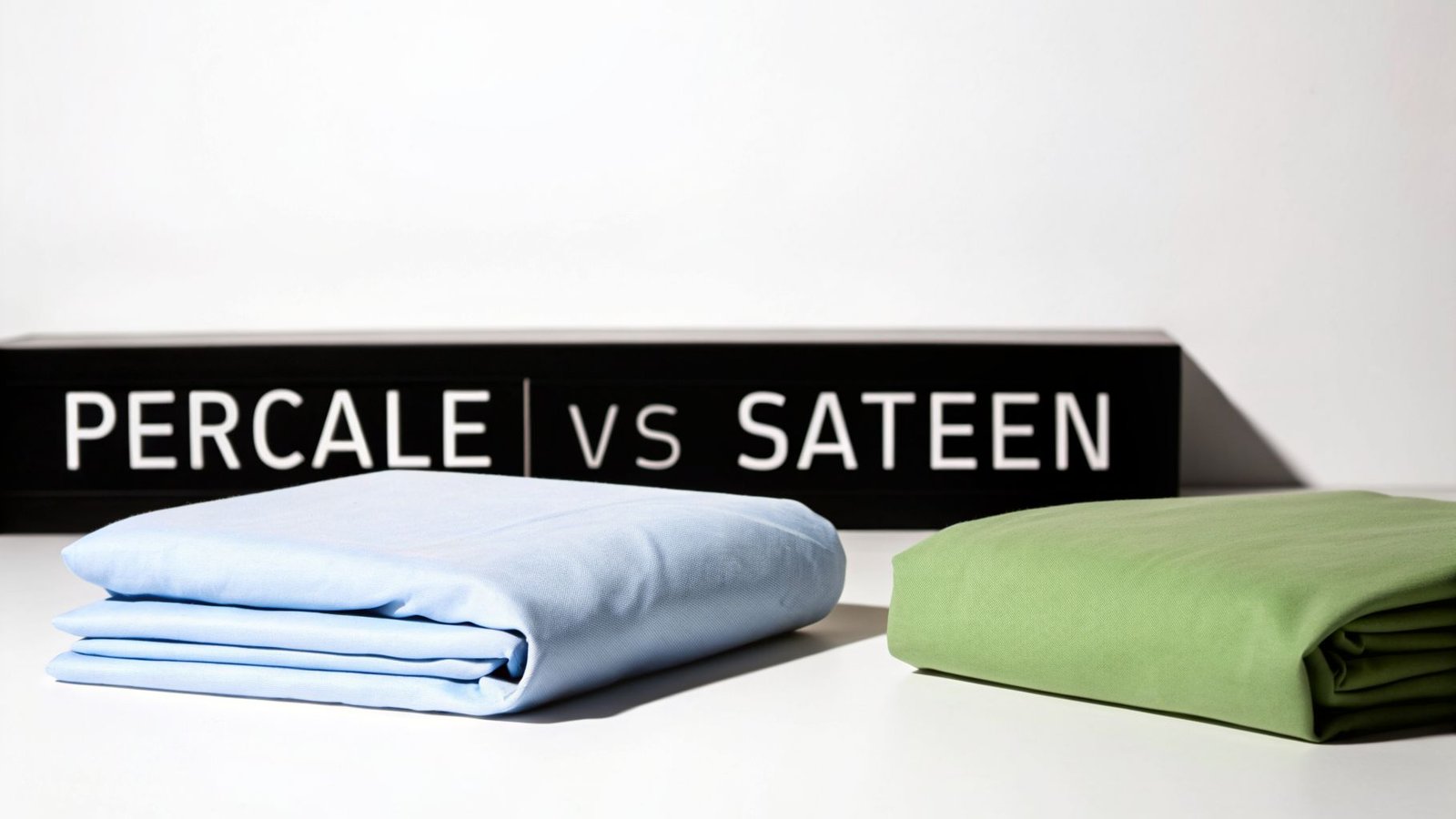
When you’re browsing cotton fabrics, you’ll almost always come across percale and sateen. It’s a classic fabric debate, and for good reason! While they both start life as cotton, the way they are woven makes them feel and behave completely differently.
Choosing the right one really can make or break a project, so it’s a difference worth knowing.
Cotton percale is famous for its cool, crisp feel and smart matte finish. This all comes down to a very simple one-over, one-under grid-like weave. Sateen, on the other hand, gets its signature silky surface and elegant sheen from a one-under, three-or-four-over weave, which lets more threads sit on the surface.
Think of percale as your go-to for a structured summer dress or a sharp-looking shirt that needs to hold its shape. For example, a classic button-down shirt made from percale will have a perfectly crisp collar and cuffs. In contrast, sateen, with its lovely drape and smooth feel, is perfect for a flowing blouse or a silky lining that won't catch on other clothes. A sateen blouse, for instance, will fall gracefully over the body rather than standing away from it.
Which Fabric Is Right for Your Project?
To help you decide, let’s get into their practical differences. Percale is all about crispness and breathability, while sateen is defined by its softness and lustre. Each one has its own strengths that make it a better fit for certain sewing plans.
For instance, if you're making a tailored shirt, you’ll love percale's stability and how beautifully it takes a sharp press. But if you’re dreaming of a drapey skirt with lots of movement, sateen's fluid quality is exactly what you need.
A Practical Tip: Percale is one of those wonderful fabrics that gets softer and more comfortable with every wash, breaking in just like a favourite pair of jeans. Sateen tends to resist wrinkles a bit better from the start, but its longer surface threads (the ones that give it that lovely sheen) can make it more prone to snagging. For this reason, it's a good idea to use a finer needle (like a 70/10) when sewing with sateen to avoid catching the threads.
To make your next fabric choice even clearer, here’s a direct comparison of what to expect.
Comparison of Percale and Sateen
This table breaks down exactly what you can expect from each fabric, helping you choose the best material for your vision.
| Feature | Cotton Percale | Cotton Sateen |
|---|---|---|
| Feel | Crisp, cool, and light. Think of high-end hotel sheets. | Silky, smooth, and soft with a heavier, draping quality. |
| Appearance | A flat, matte finish with no shine. | A lustrous sheen that catches the light beautifully. |
| Wrinkle Resistance | Prone to wrinkling but irons to a very crisp finish. | Naturally resistant to wrinkles, but snags more easily. |
| Best For | Structured shirts, summer dresses, pyjamas, and quilting. | Flowing blouses, luxurious linings, drapey skirts, and special-occasion wear. |
At the end of the day, neither fabric is "better" than the other; they just do different jobs. Once you get to know their distinct personalities, you can confidently pick the perfect one to bring your sewing project to life, just as you imagined it.
How to Judge Quality Beyond the Thread Count
We've all seen thread count plastered over fabric packaging, and it's often the first thing people look at. But when it comes to percale, a super-high number isn't the be-all and end-all. In fact, it can be a bit of a red herring.
For that classic crisp-yet-soft percale feel, the real sweet spot is a modest 200-400 TC (thread count). If you dip below 200, the fabric can feel a bit coarse and might not wear as well over time.
But once you push much higher than 400, the weave becomes so tight that it starts to lose what makes percale great in the first place. It traps heat and sacrifices that lovely breathability, which is the last thing you want for a summer dress or bedding.
Here in the UK, this 200-400 TC range is widely recognised as the perfect balance of smoothness and strength. It's what makes the fabric so versatile for both dressmaking and homewares. In fact, data from 2026 showed that percale in this specific range made up a huge 42% of premium cotton sales in specialist shops like ours. For a deeper dive, there's a great guide on percale quality over at Southshore Fine Linens.
Focus on the Yarn Quality Instead
If you really want to know if you're buying good percale, the quality of the cotton yarn itself is a much better indicator than thread count. The secret to beautifully soft yet strong fabric lies in using long-staple cotton. These longer fibres can be spun into threads that are finer, smoother, and much more durable.
Fabrics made from long-staple cotton feel softer against your skin, are far less likely to pill (those annoying little bobbles), and will simply last much longer. When you're shopping, keep an eye out for terms like "long-staple," "extra-long staple," or "combed cotton."
"Combed cotton" is another fantastic sign of quality. In this process, the shorter, weaker fibres and any little impurities are combed out, leaving only the longest and strongest fibres behind. This creates a superior, noticeably smoother fabric that's a dream to sew with. A simple technique to check for quality in person is to hold the fabric up to the light; a high-quality combed cotton percale will look smooth and even, with no slubs or thick spots.
Look for Quality Finishing Techniques
The final stage that separates good percale from great percale is the finishing. These treatments can make a huge difference to how the fabric looks, feels, and performs. One of the best ones to look for is mercerization.
Mercerization is a process where the cotton is treated with a solution that makes the fibres swell up and straighten out. It sounds technical, but it gives the fabric some brilliant benefits:
- Increased Strength: The treatment makes the yarn itself stronger and more resistant to wear and tear.
- Enhanced Lustre: While percale is known for its matte finish, mercerization gives it a subtle, rich glow rather than a flat look.
- Improved Dye Absorption: The fabric takes on dye much more effectively, meaning you get deeper, richer colours that are less likely to fade in the wash.
By understanding what to look for—the right thread count, the quality of the yarn, and the finishing touches—you can see past the marketing hype. You'll be able to confidently choose a top-quality cotton percale that will sew up beautifully and last you for years to come.
Practical Tips for Sewing and Caring for Percale
So, you're ready to get sewing with cotton percale. The good news is that its stable, crisp nature makes it a dream to work with. It's wonderfully predictable.
A few tips on preparation, sewing, and aftercare will go a long way. Let's make sure your finished projects have that polished, professional look we all strive for.
Before you even think about your pattern pieces, always pre-wash your percale. Like most natural fibres, it’s likely to shrink a little on the first wash. Getting this out of the way first is your best bet for accurate sizing. A cool or warm wash will do the job perfectly. A suggestion is to finish the raw edges with a zigzag stitch or overlocker before washing to prevent excessive fraying.
Sewing with Cotton Percale
Once you're ready to sew, you’ll find percale to be incredibly friendly. Its plain weave means it doesn't slip and slide about, which is a massive help for any project that needs a bit of precision.
A standard all-purpose polyester thread and a universal needle, usually a size 80/12, are the perfect tools for the job. No need for anything fancy here.
Because it’s so stable, cotton percale is a fantastic choice when accuracy is key. It's a joy to use for:
- Topstitching a Shirt Collar: The fabric’s stability helps you get those really neat, even lines. A practical technique is to increase your stitch length slightly (e.g., to 3.0mm) for more prominent and professional-looking topstitching.
- Creating Patchwork: Your pieces hold their shape brilliantly, making it much easier to match up corners.
- Pleats and Tucks: It holds a sharp crease beautifully, giving you crisp, well-defined details.
Whether you're making clothes or something for the home, mastering a few essential sewing techniques will make a huge difference. One of the best things you can do is press your seams open as you go. This simple step cuts down on bulk and keeps that naturally flat, smooth finish that percale is known for.
Key Technique for a Professional Finish: Pressing seams open as you sew is crucial with percale. It spreads the seam allowance out, stopping those bulky ridges from showing on the right side of your garment and keeping that crisp, clean look. For an even flatter seam on collars or cuffs, try grading the seam allowance by trimming one side shorter than the other before pressing.
Caring for Your Finished Projects
Now, the one thing you need to know about percale is its tendency to wrinkle. This isn't a flaw; it's just a natural result of its crisp, 100% cotton structure. Luckily, it’s easy to manage with a simple laundry trick.
The best method is to pull your percale item out of the dryer while it’s still slightly damp. Give it a quick iron straight away, and you’ll get the crispest, smoothest finish you can imagine. Using a spray bottle with water or a bit of starch while ironing can give you an extra-sharp result.
Not a fan of ironing? No problem. You can get a similar effect by smoothing the damp item on a flat surface or hanging it up carefully to finish air-drying. This simple step will drastically reduce creasing and keep your handmade items looking their very best.
Your Common Percale Questions, Answered
To finish up, let's run through some of the most common questions we get asked about cotton percale. Knowing the answers will help you feel much more confident when you're choosing and sewing with this wonderfully crisp fabric.
Even if you're already familiar with percale, these common questions can help clear up some of the finer details.
Does Cotton Percale Get Softer Over Time?
Yes, it absolutely does! This is one of the best things about proper 100% cotton percale. It starts life with that signature crisp, cool feel but softens up beautifully with every wash.
As you wash and use it, the fibres relax and soften. This means you end up with a fabric that feels incredibly soft and lived-in, but without losing its strength or breathability. It's one of those brilliant materials that just gets better with age.
Is Cotton Percale a Good Choice for Beginners?
Yes, percale is a fantastic fabric for anyone new to sewing. Its tight, stable weave means it doesn't slip and slide about when you're cutting or sewing, which is a massive help when you're just starting.
Unlike slinky fabrics like satin or stretchy ones like jersey, it behaves itself under the needle. It also takes a press really well, so you can get lovely sharp, professional-looking seams without a lot of fuss. A great beginner project, for example, would be a simple pillowcase or a pair of pyjama shorts, as the straight seams and stable fabric are very forgiving.
How Do I Stop Percale From Wrinkling So Much?
That crispness that makes percale so lovely does mean it's prone to wrinkling. But don't worry, it's easy to manage. The secret is to take your fabric or garment out of the tumble dryer while it’s still slightly damp.
If you're after that perfectly crisp, hotel-sheet finish, give it an iron straight away. For an easier life, you can just smooth the damp fabric out on a flat surface or hang it up neatly to finish air-drying. This simple trick makes a huge difference and stops deep creases from setting in. Another suggestion is to avoid over-crowding the washing machine, as this gives the fabric more room to move and reduces creasing from the start.
What Is the Difference Between Percale and Poplin?
This is a great question because they are very similar. Both are plain-weave cottons that are smooth and strong, but there's a subtle technical difference in how they're woven.
- Poplin: This often has a very faint ribbed texture you can feel. This is because the warp threads (the ones running lengthwise) are finer than the weft threads (the ones running across).
- Percale: Here, the yarns used for the warp and weft are the same weight and thickness. This gives it a completely smooth, flat surface with no texture at all.
In practice, you can often use them for similar projects, like shirts and dresses. However, percale is generally considered the smoother of the two, which is why it's the gold standard for high-quality bedding.
Feeling inspired to start your next project with this wonderfully crisp fabric? At More Sewing, we offer a curated selection of high-quality cotton percale perfect for dressmaking and homewares. Explore our collection and find your perfect fabric today.
Produced via the Outrank app
