
Fabric
What is Ponte Fabric? Your Ultimate Sewing Guide
You’re probably here because you want one fabric that can do two jobs at once.
You want the comfort of a knit, but you also want enough body for a dress that looks polished, trousers that hold their shape, or a skirt that doesn’t cling in all the wrong places. You may have picked up jersey before, loved how soft it felt, then found it shifted on the cutting table, rolled at the edges, or turned your sewing session into a wrestling match.
That is exactly where ponte earns its place in a dressmaker’s stash. If you’ve ever asked what is ponte fabric, the short answer is this: it’s a stable, structured knit that gives you stretch without the usual fuss. For many home sewists, it is the fabric that makes knit sewing feel manageable.
From Dressmaking Dreams to Reality with Ponte Fabric
A common sewing story goes like this. You spot a pattern for a simple shift dress, a neat pencil skirt, or smart pull-on trousers. You want it to feel comfortable enough for everyday wear, but you also want it to look tidy enough for work, lunch out, or school runs.
Woven fabric can give you structure, but it may feel less forgiving to wear. Slippery jersey can feel lovely on the body, yet much less lovely under the presser foot. Ponte sits in that sweet spot in the middle.
It has enough firmness to support shape. It still stretches, so the garment moves with you. That combination is why so many sewists end up calling it their “safe pair of hands” fabric.
The name Ponte di Roma points to its Italian roots. Textile histories describe it as originating in Italy, where knitters developed its distinctive double-knit structure, and the name itself has long been associated with a stable knit that behaves more calmly than many lighter jerseys. In the UK sewing world, ponte became especially popular after the release of Tilly Walnes’ Coco pattern. Following that launch, UK fabric suppliers reported a 300% increase in ponte fabric inquiries because sewists wanted a knit with stability and non-curling edges that felt beginner-friendly (zelouffabrics.com on ponte’s UK rise and Coco’s influence).
That popularity makes sense when you sew with it.
A beginner can cut out a ponte dress without the fabric slithering off the table. A student can make a first fitted skirt without fighting hems that twist. An experienced dressmaker can turn out workwear separates that look smart but still feel wearable all day.
Why sewists warm to ponte so quickly
- It feels less intimidating than many knits because the edges tend not to curl.
- It suits everyday garments such as dresses, skirts, trousers, jackets, and tops with a bit of structure.
- It helps you sew with confidence because it usually feeds through the machine more predictably than a very soft jersey.
If jersey has ever made you feel clumsy at the machine, ponte often feels like the fabric that lets you get your rhythm back.
Ponte is not magic. It still has stretch, and it still benefits from good sewing habits. But it removes several of the little frustrations that put newer sewists off knits in the first place.
Understanding Ponte's Unique Double Knit Structure
Ponte behaves differently from many knits because it is made differently.
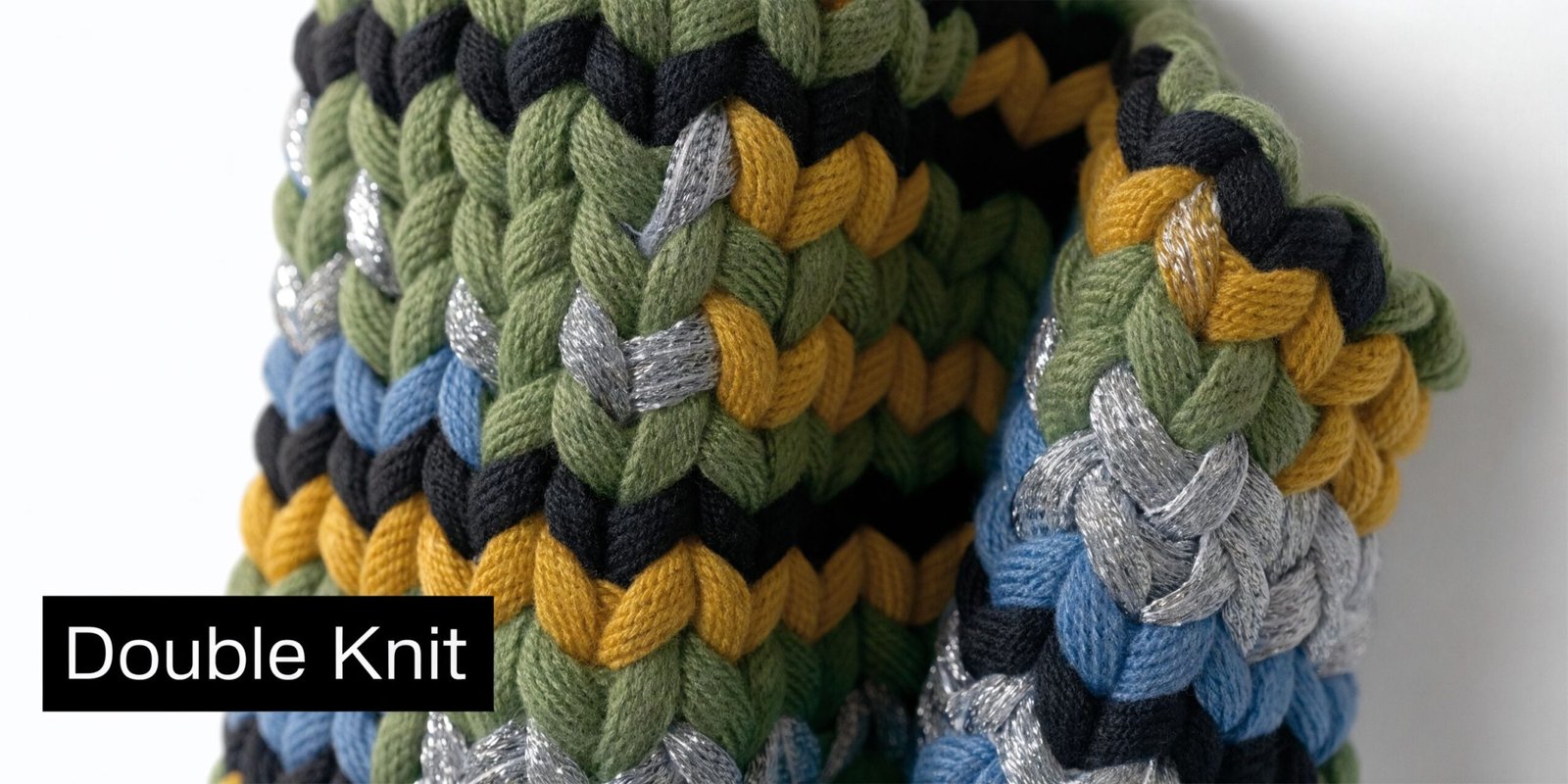
At its core, ponte is a double knit. Instead of one knitted face like a basic jersey, it is formed from two sets of loops knitted together. The result is a fabric with more body, a smoother surface, and a steadier feel in the hand. If single jersey can feel like a T-shirt, ponte often feels closer to a polished dress fabric that happens to stretch.
What double knit means in real terms
For a home sewist, the structure matters more than the terminology.
Because the two knitted layers are linked together, ponte usually feels denser and more balanced. It does not collapse or ripple as easily as a lighter knit, and the cut edge is often much calmer. That is why many sewists find ponte less fussy to lay out, mark, and feed through the machine.
A simple shop test helps here. Hold the fabric across the width and give it a gentle stretch. Ponte usually stretches, but it pushes back. It has a bit of spring, rather than the loose, floppy give you get from some jerseys.
Why the fibre blend matters
Ponte is usually made from a blend, not one fibre alone. In UK fabric shops, you will often see combinations of polyester, viscose or rayon, and elastane, sometimes with nylon in the mix too.
Each part of the blend changes how the fabric feels and how it sews.
| Fibre | What it tends to add | What you notice while sewing and wearing |
|---|---|---|
| Polyester | Strength and crease resistance | The fabric often feels durable and keeps a tidy appearance |
| Viscose or rayon | Softness and drape | The fabric feels smoother on the body and less rigid |
| Elastane or spandex | Stretch and recovery | The garment moves with you and springs back better after wear |
| Nylon | Firmness and resilience | The fabric can feel slightly more structured and supportive |
This is why two pontes can look similar on the bolt but behave quite differently at the cutting table. A viscose-rich ponte may suit a fitted top or dress with a softer line. A nylon or polyester-heavy ponte can be better for cigarette trousers, a neat jacket-style layer, or a structured skirt.
Ponte varies significantly.
That is especially useful to remember when shopping UK deadstock, where fibre content and finish can change from roll to roll. If the seller lists only "ponte knit", ask for the composition, weight, and stretch direction before you buy. Those three details tell you far more than the name alone.
How to recognise ponte in your hands
If you are standing in a fabric shop with a mystery knit, use your fingers before you use your imagination.
Look for a fabric that feels substantial, with both sides fairly similar in appearance. The surface is often smooth rather than slubby, and the fabric usually has more weight than a drapey jersey. When you let the edge hang, it tends to stay fairly straight instead of twisting into itself.
A quick check at the cut edge helps too. Single jersey often curls because of how it is knitted. Ponte usually stays flatter, which is one reason beginners often get on with it so well.
Why structure changes your sewing experience
The structure shows up all through a project.
Pattern pieces are often easier to cut accurately because the fabric does not shift as much. Necklines and hems are usually easier to control. Seams can still stretch, because ponte is a knit, but they are less likely to distort from ordinary handling.
That steady behaviour is what makes ponte such a favourite for practical dressmaking in the UK. It works well for patterns that need comfort but also a clean outline, such as knit dresses, pull-on trousers, school-run skirts, and smart separates that can cope with a full day of wear.
Some pontes feel almost woven-like. Others feel softer and more relaxed. Once you understand the double knit structure, those differences make sense, and choosing the right ponte for your pattern becomes much less of a guessing game.
The Practical Properties of Ponte for Sewists
Once you know how ponte is built, its everyday benefits make much more sense.
This is the part most sewists care about. How does it cut, sew, wear, wash, and live in a wardrobe?
Stability that makes sewing calmer
Ponte’s biggest gift is stability.
When you lay it out, it usually stays put better than lighter jersey. When you transfer markings, it tends not to ripple away from you. When you sew seams, the fabric is less likely to stretch out because you touched it.
That stability is why many sewists use ponte for first knit dresses, slim skirts, and smart lounge pieces. It gives you some of the comfort of a knit without the drama.
A useful example is hemming. On a soft single jersey, the edge may curl while you try to fold and press it. On ponte, you can often do a straightforward turn-up hem with much less fuss.
Moderate stretch that feels wearable
Ponte usually has enough give to make clothes comfortable, but not so much that they cling to every line underneath.
That makes it a strong choice for:
- Work dresses that need to move with you through the day
- Pull-on trousers that want comfort at the waist and seat
- Pencil skirts that still allow you to walk properly
- Simple tops that look neat rather than slouchy
If you dislike fabrics that feel flimsy or reveal every seam of your undergarments, ponte often feels reassuringly balanced.
Recovery that helps garments keep their shape
Stretch matters, but recovery matters just as much. Recovery is the fabric’s ability to spring back after being stretched.
Good ponte usually recovers well, which is why knees, elbows, and seat areas tend to stay neater than they would in some softer knits. That is especially helpful for garments you wear for long days, such as slim trousers, fitted dresses, or school-run cardigans.
For everyday sewing, one of ponte’s best qualities is not what it does on the first wear, but how well it keeps looking like itself after many wears.
Weight that supports a polished silhouette
Ponte often has enough weight to skim over the body rather than collapsing into it.
That gives you practical benefits:
- Better coverage for fitted garments
- Smoother lines over leggings or tights
- Less need for lining in many daywear projects
- More support in styles with simple, clean shaping
A ponte shift dress, for instance, can look much more composed than the same pattern in a floppy knit. A pull-on trouser can read as smart casual rather than pyjama-adjacent.
Comfort and care in real life
Ponte’s fibre blend also affects comfort after the garment is finished. A typical ponte blend of polyester, rayon or viscose, and spandex can absorb up to 15% more moisture than cotton jersey and dry 25% faster, while its wrinkle resistance can reduce ironing time by 50% for hobby sewists (idcustomapparel.com on ponte properties and care benefits).
For day-to-day wear, that can mean:
| Property | Practical effect |
|---|---|
| Moisture handling | More comfortable wear in changeable conditions |
| Quicker drying | Handy after washing and useful for travel wardrobes |
| Wrinkle resistance | Less pressing before wear and after laundering |
Where readers often get caught out
Ponte is stable, but it is still a knit. That means it can still stretch if you pull it while sewing. It still benefits from the right needle. It still needs you to think about stretch direction before cutting out.
It also varies a lot from one bolt to another.
One ponte is brilliant for cigarette trousers. Another is better for a fitted top. One works for a blazer-style cardigan. Another feels too heavy for that job. The answer is not to memorise one rule, but to get into the habit of checking the fabric’s feel, rebound, and drape before matching it to a pattern.
Ponte vs Jersey vs French Terry A Fabric Comparison
If you’ve ever stood in front of a shelf of knits wondering which one to choose, this is the comparison that usually clears things up.
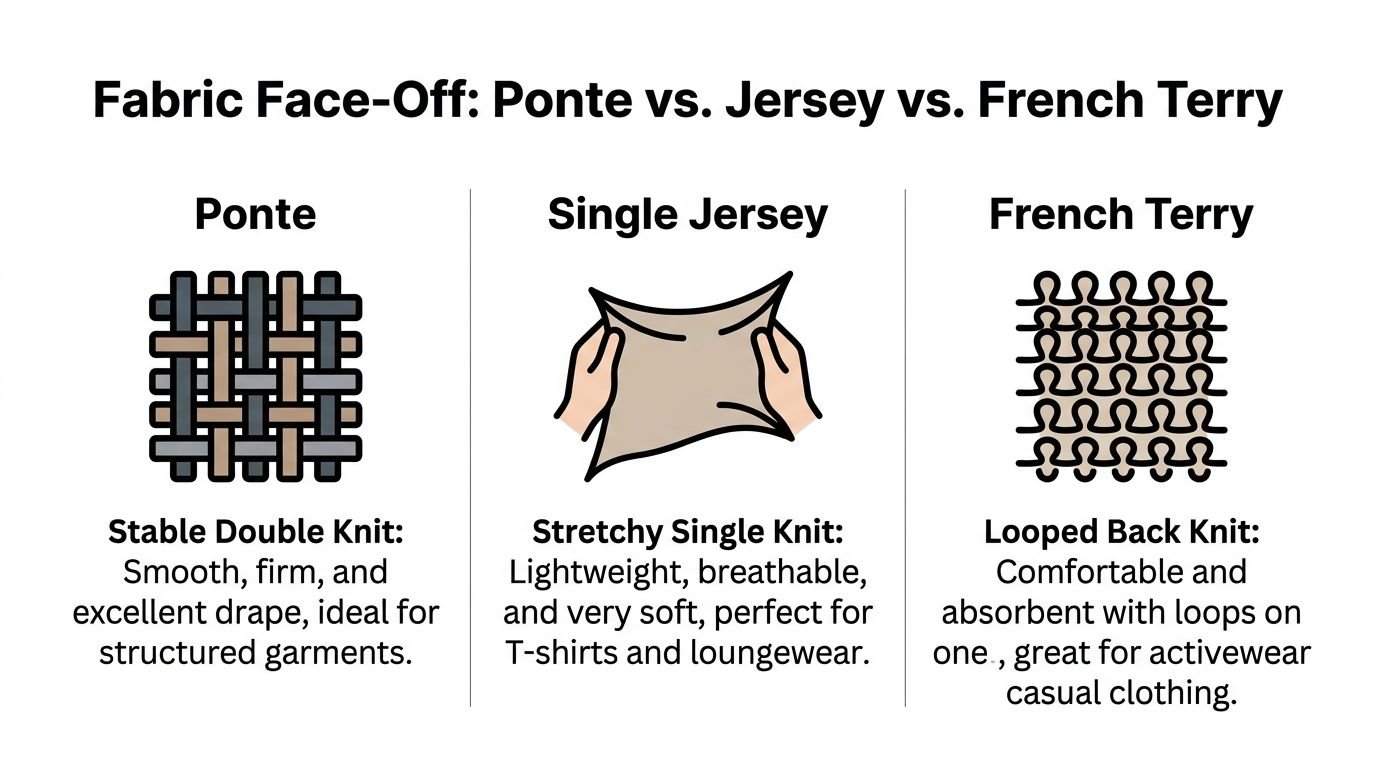
| Attribute | Ponte di Roma | Single Jersey | French Terry |
|---|---|---|---|
| Structure | Double knit | Single knit | Knit with looped back |
| Feel | Smooth, firm, substantial | Soft, light, often fluid | Soft, casual, slightly heavier than jersey |
| Edge behaviour | Usually lies flat | Often curls at the edges | Usually easier than jersey, but bulkier |
| Stretch feel | Moderate and controlled | Often stretchier and more fluid | Comfortable stretch with a sportier feel |
| Recovery | Often strong | Varies a lot | Usually good for casual wear |
| Typical garments | Dresses, trousers, pencil skirts, knit jackets | T-shirts, draped tops, casual dresses | Sweatshirts, joggers, hoodies, casual dresses |
| Beginner friendliness | Very good | Can be fiddly | Good, depending on thickness |
| Overall look | Polished | Relaxed | Casual |
When ponte is the better choice
Choose ponte when you want a knit garment to look tidier and more structured.
Good examples include a sheath dress for work, a fitted skirt that needs support, or pull-on trousers that should feel comfortable but not sloppy. Ponte also suits patterns with simple lines because the fabric itself supplies body.
When jersey wins
Single jersey is the right choice when softness and drape matter more than structure.
If you are making a classic T-shirt, a loose summer top, or a dress with gathers and movement, jersey often gives a softer result. It is lovely to wear, but it asks more of you during cutting and sewing because it can shift and curl.
Where French terry fits
French terry sits in a more casual corner of the wardrobe.
It shines in sweatshirts, lounge dresses, joggers, and children’s wear. It has comfort and absorbency, but it usually does not give the same polished finish as ponte for fitted garments.
A simple rule works well. Choose jersey for drape, French terry for comfort, and ponte for structure with stretch.
If you are still unsure, look at the pattern line drawing. If the garment relies on clean shape rather than floaty movement, ponte is often the fabric to test first.
Your Guide to Sewing Ponte Fabric Flawlessly
You have cut out a knit dress for the first time, sat down at the machine, and braced yourself for curling edges, stretched seams, and a hem that ripples for no clear reason. Then you sew ponte and realise knit fabric does not always have to feel slippery or unpredictable.
That is why so many home sewists in the UK use ponte as their first step into sewing knits. It behaves more like a well-mannered jersey with a bit of backbone. You still need the right setup, but the learning curve is kinder, especially if you are sewing on a standard domestic machine rather than an overlocker.
Start with the right tools
A few sensible choices at the start prevent most of the common problems.
For ponte, I would keep these nearby:
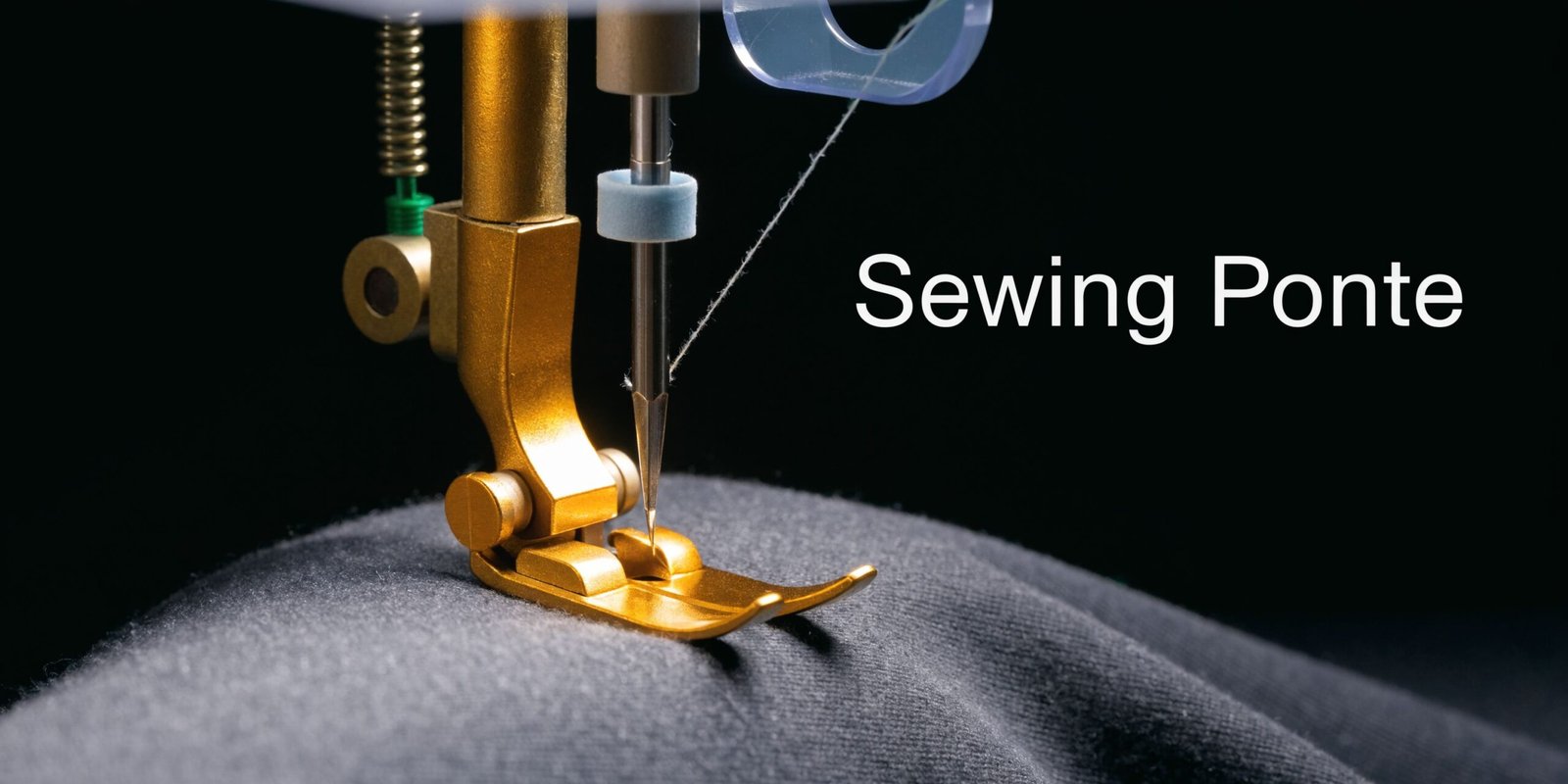
- Ballpoint or stretch needles in 80/12 or 90/14
- Polyester thread
- Clips or fine pins
- A rotary cutter and mat for especially accurate cutting
- A walking foot if your machine shifts knit layers
The needle matters most. Ponte is a knit, so a ballpoint or stretch needle slips between the yarns instead of punching through them. If you have ever seen skipped stitches on knit fabric, a fresh needle is often the first fix.
Polyester thread is a good partner because it has a little flexibility and copes well with everyday wear. Cotton thread can work, but ponte garments usually last longer with polyester in the seams.
Cutting ponte without distortion
Ponte usually stays flatter on the cutting table than lighter jersey, which is a relief when you are matching notches or cutting long trouser pieces. Even so, give it a minute to rest on the table before you place your pattern.
Check the direction of stretch before you cut. Most dressmaking patterns drafted for knits expect the stretch to go around the body, not up and down. If you are using deadstock ponte, which many UK sewists buy for price or fibre quality, do not assume the stretch direction from the listing. Test it in your hands.
Pattern weights help on curves, waistlines, and necklines. On thicker ponte, tailor’s chalk or a washable marker often shows more clearly than a tracing wheel. Small snips in the seam allowance also work well because ponte does not fray like a woven.
Best stitches to use
A regular sewing machine is usually enough for ponte.
Start with scraps first. Sew a few test seams, stretch them gently, and see which stitch springs back nicely without tunnelling or popping. That quick test tells you more than any settings chart.
| Stitch option | Good for | Why it works |
|---|---|---|
| Narrow zigzag | General seams | Keeps a bit of stretch in the seam |
| Lightning bolt stitch | Knit construction | Designed to flex with the fabric |
| Stretch stitch | High-stress seams | Useful where the seam needs more give |
| Straight stitch | Some stable seams | Can work on very stable ponte in low-stress areas |
Shoulder seams, side seams, and waist seams usually benefit from a stitch that can flex. A straight stitch may be fine on a very firm ponte in a low-stress area, but it is a poor bet anywhere the garment needs to stretch over the body.
For extra help with machine settings, skipped stitches, and knit hems, this guide on how to sew stretch fabrics like a pro is worth bookmarking.
Pressing and seam handling
Pressing makes ponte look better fast.
Use a moderate iron setting and press cloth if the surface looks likely to shine. Lift the iron and place it down again rather than dragging it along the seam. Dragging can stretch the fabric out of shape, especially on necklines and pocket edges.
Some seams need support. Shoulder seams on a ponte dress, a waist seam on a heavier style, or the top edge of pull-on trousers often benefit from tape or clear elastic. If you have ever had a neckline grow while sewing, stabilising that edge before construction is usually the cure.
Wavy seams usually come from handling, not from ponte itself. Too much pulling, too much presser foot pressure, or a stitch length that is too short can all cause the problem.
Hemming options that work well
Hems on ponte are usually more cooperative than hems on slinky jersey, and that gives beginners a real confidence boost.
You have a few reliable choices:
Simple turn-and-stitch hem
A folded hem often works well because the edge does not curl much.Twin needle hem
This gives a neat ready-to-wear finish on dresses, sleeves, and tops.Coverstitch hem
Useful if you own the machine, but not necessary for a tidy result.
If the hem stretches a little after stitching, steam often helps it settle back into shape. Test on a scrap first, especially if your ponte contains synthetic fibres that dislike high heat.
A visual walk-through can help if you prefer to learn by watching. This video is a good companion while you sew:
Good first projects in ponte
Choose a pattern where ponte can do some of the work for you. Clean lines, simple shaping, and low-fuss finishing are a good match.
Strong first projects include:
- A simple shift dress
- An A-line or pencil skirt with an elastic waist
- Pull-on trousers
- A boxy top with set-in or simple sleeves
- A cardigan-jacket hybrid
These are all common finds in UK indie pattern catalogues, and ponte suits them because it can hold shape without the stiffness of a woven. If you are browsing pattern envelopes or online listings, look for designs with negative ease kept modest and details kept clean. Ponte shines in garments that skim rather than cling.
Common mistakes and easy fixes
Even friendly fabric has its habits. Ponte is forgiving, but it still rewards small adjustments.
- Skipped stitches: Fit a fresh stretch or ballpoint needle.
- Wavy seams: Stop pulling the fabric and reduce presser foot pressure if your machine allows it.
- Bulky hems: Grade the seam allowance or use a narrower hem turn.
- Neckline stretching: Stabilise the edge with tape or sew it with extra care and minimal handling.
- Seams that pop when worn: Switch from straight stitch to a stitch with more give.
If you are new to knits, ponte is a sensible place to learn. It gives you room to practise without punishing every small mistake, and that is exactly why so many sewists come back to it for dresses, skirts, jackets, and smart everyday separates.
How to Choose and Care for Your Ponte Fabric
Not all ponte behaves the same, so buying well matters just as much as sewing well.
A good choice starts with the project in your mind. Ask yourself what job the fabric needs to do. Should it hold a trouser leg shape? Should it skim the body in a dress? Should it feel soft enough for a cardigan you’ll wear all day?
Match the ponte to the garment
A firmer ponte is usually better for garments that need structure.
Think of styles like:
- Slim trousers
- Pencil skirts
- Simple knit blazers
- Structured day dresses
A softer ponte often suits:
- Easy tops
- Cardigan-style layers
- Less fitted dresses
- Skirts with a gentler shape
If you are shopping online, a sample swatch is one of the best habits you can develop. You can check the hand, thickness, recovery, surface texture, and colour in your own light. That one small step often saves a disappointing purchase.
Check these details before you buy
A product description can tell you a lot if you know what to look for.
- Blend content: Rayon or viscose usually adds softness. Polyester often supports durability and crease resistance. Elastane adds stretch and rebound.
- Drape description: Terms like “structured”, “bottom weight”, or “suitable for trousers” suggest a firmer ponte.
- Colour and finish: Deep shades and smooth finishes can look especially smart in ponte garments.
- Deadstock origin: Deadstock ponte can be a brilliant choice if you like distinctive fabrics and smaller-batch finds.
Sustainable options are also becoming more relevant in UK sewing. Demand for deadstock ponte saw a 42% surge post-2025, and some newer ponte blends now include recycled elastane. Those fabrics benefit from cold washing and low drying to help maintain shape and reduce microplastic shedding, which is a concern for 62% of eco-conscious sewists (americantall.com on sustainable ponte trends and care).
Pre-wash before cutting
Pre-washing is a sensible habit with ponte.
Even if the fabric feels stable straight off the roll, washing it before cutting helps you deal with any change in finish, shrinkage, or surface feel before it becomes a garment. Wash it the way you plan to wash the finished item.
For most ponte, a gentle machine wash works well. If the blend includes recycled elastane or you are trying to minimise fibre shedding, cooler washing is a good choice.
Everyday care that keeps ponte looking good
Ponte is popular partly because it is easy to live with.
A few habits make a difference:
| Care habit | Why it helps |
|---|---|
| Wash with similar colours | Prevents colour transfer |
| Use a cooler wash when possible | Gentler on stretch fibres |
| Avoid very high heat | Helps the fabric keep its recovery |
| Dry low or hang dry | Supports shape and elasticity |
| Press only when needed | Ponte often needs less ironing anyway |
If you’ve made trousers or a fitted dress, hang the garment after wearing. Ponte often relaxes beautifully overnight, and light steaming is usually enough to freshen it.
If you want ponte garments to last, the kindest habit is simple. Wash cooler, dry gently, and skip unnecessary heat.
Your Ponte Fabric Questions Answered
Does ponte fabric fray?
Not in the way a woven fabric does. Because it is a knit, ponte usually does not fray heavily at cut edges. That said, finishing seams still improves durability and neatness, especially in garments that get frequent wear.
Do I need an overlocker to sew ponte?
No. A regular sewing machine is enough. Use a ballpoint or stretch needle, good polyester thread, and a stitch that can flex. An overlocker is handy for speed and seam finishing, but it is optional.
Is ponte breathable enough for summer?
Sometimes, yes. It depends on the fibre blend and the garment style. A rayon-rich ponte in a sleeveless dress may feel perfectly reasonable on a mild day. A heavy ponte trouser may feel better suited to cooler weather. If summer comfort is your priority, pay close attention to the blend and the weight.
How can I tell the front from the back?
Some ponte looks almost identical on both sides. Check the cut edge, the surface finish, and the selvedge if there is one. The “right” side may look slightly smoother or more refined. If you still cannot tell, choose one side and mark it consistently before sewing.
Can I use a woven pattern for ponte?
Sometimes. Ponte’s stability means some simple woven patterns work well, especially those with clean lines and little complicated shaping. Be cautious with patterns designed for crisp woven fabrics with no stretch, because ponte still behaves like a knit in important ways.
What are good first projects in ponte?
A simple dress, pull-on skirt, easy trousers, or a neat top are all strong starting points. Pick a pattern with uncomplicated construction and let the fabric’s structure do the heavy lifting.
If you’re ready to try ponte for yourself, More Sewing is a practical place to start. You can browse quality dressmaking fabrics, deadstock options, sample swatches, and the tools needed to sew them confidently, whether you’re making your first knit dress or planning a whole wardrobe of polished ponte basics.
Generated with the Outrank tool
