Guides
Women Sewing Patterns: Your 2026 Guide to Perfect Fits
You have a blouse pattern open on the table, three tabs open on your laptop, and a tape measure somewhere under a pile of tracing paper. The line drawing looks sensible. The envelope back looks like a tax form. The fabric suggestions sound promising until one pattern asks for “stable knits”, another says “with nap”, and a third lists notions you do not yet recognise.
That feeling is normal.
Many sewists do not struggle because women sewing patterns are too difficult. They struggle because patterns contain a lot of information in a very small space, and nobody explains what matters first. Once you know how to read the envelope, choose the right category, and make a few sensible fit decisions before cutting, the whole process becomes much calmer.
I see this all the time with newer dressmakers. They often think the hard part is sewing the garment. In truth, the hard part is usually choosing well at the start. A simpler pattern in the right fabric nearly always leads to a happier result than an ambitious pattern in the wrong one.
A reliable machine helps too. If you are still figuring out what sort of machine suits your sewing, The Fabric Company’s ultimate sewing machine buying guide is a useful companion read before you commit to dressmaking projects with lots of seam finishes, buttonholes, or heavier fabrics.
Welcome to the World of Sewing Patterns
Women sewing patterns are part instruction manual, part map, and part problem-solving tool. They tell you what shape the garment should be, how the pieces fit together, and what the designer assumed about your body and your fabric.
That last part matters more than many beginners realise.
A pattern may be beautifully drafted and still feel all wrong on you if the cup shape, height range, or fabric type does not match what you are sewing. That does not mean you failed. It means you need to read the clues before you cut.
I often think of patterns as baking recipes. If the recipe is for a light sponge and you use the wrong tin, the wrong flour, and guess the oven temperature, the cake may still be edible, but it will not be what the baker intended. Sewing works the same way.
Here is the reassuring part. You do not need to know everything at once.
You only need to get comfortable with a few key habits:
- Read the whole envelope first: Front, back, line drawings, fabric suggestions, notions, and finished garment measurements all matter.
- Measure your body, not your wardrobe: High-street labels are not a reliable shortcut.
- Match the pattern to the fabric: A crisp cotton and a drapey viscose do very different jobs.
- Test fit before using prized fabric: Even a quick toile can save stress.
The best pattern for you is not the trendiest one. It is the one that suits your fabric, your shape, and your current sewing confidence.
Once those habits click, women sewing patterns stop feeling mysterious. They start feeling useful.
Decoding Your First Sewing Pattern Envelope
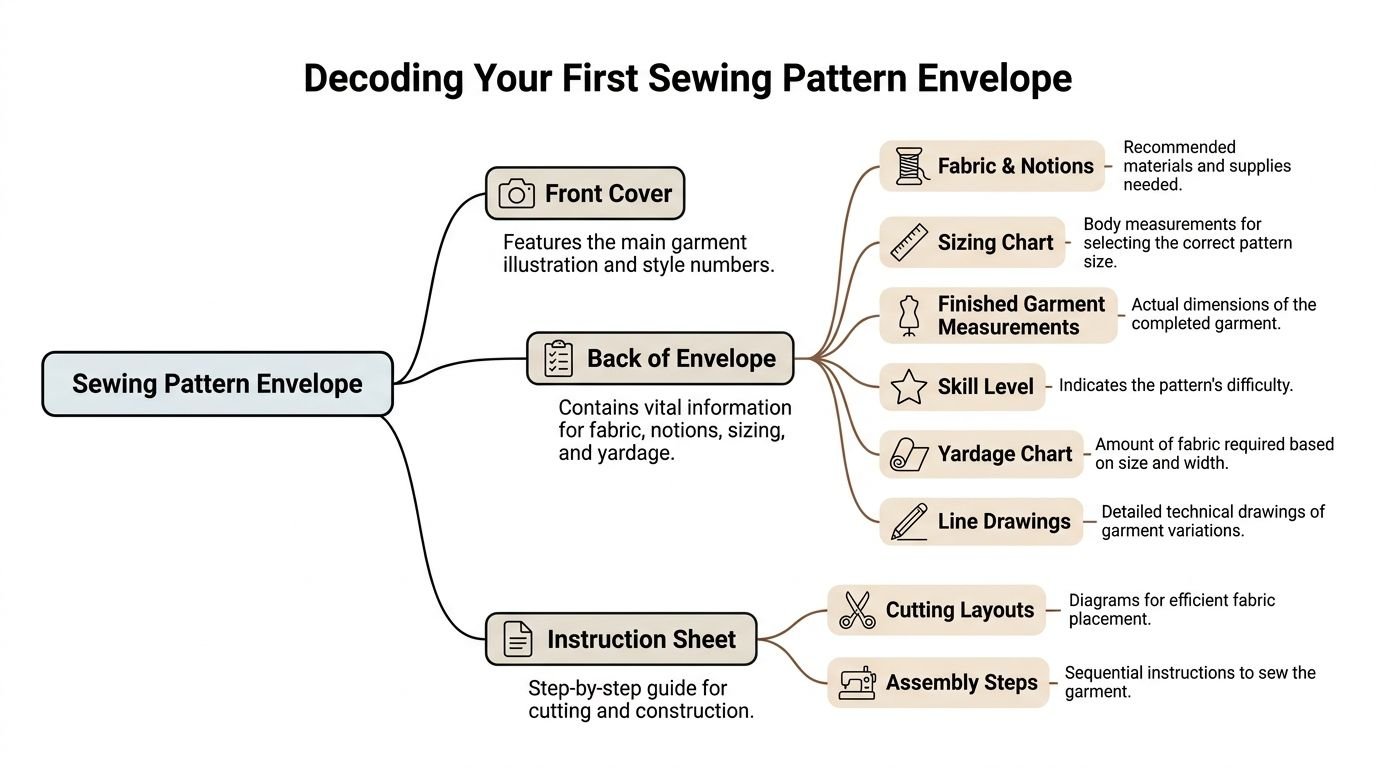
The pattern envelope is small, but it carries a surprising amount of information. If you learn to read it properly, you avoid most beginner mistakes before they happen.
What the front cover tells you
The front is the shop window. It shows the garment in its best light.
Look for the style number, the main silhouette, and the different views. If the envelope shows View A, View B, and View C, those are usually variations such as sleeve length, neckline, skirt length, or pocket options.
Do not choose from the model photo alone. Models stand, pin, and pose in ways that can hide what the garment really does. The line drawings are more honest.
For example, a dress may look fitted in the photo but the drawing may reveal dropped shoulders, gathers, or lots of ease through the waist. That tells you more about the sewing and the fit than the styling photo ever will.
The back is where important decisions happen
Turn the envelope over and slow down.
This side usually includes:
- Suggested fabrics: These tell you what weight, drape, or stretch the designer had in mind.
- Notions: Buttons, zip, elastic, interfacing, thread, hook and eye, and similar extras.
- Body measurement chart: This helps you choose a pattern size.
- Fabric requirement chart: This tells you how much fabric you need, often depending on width.
- Skill level: A rough guide to how involved the construction may be.
The pattern envelope is your project’s blueprint. If you skip it and buy fabric from the front illustration alone, you are sewing half-blind.
Fabric suggestions are not decoration
If a pattern suggests lawn, poplin, chambray, viscose, or light denim, it is giving you clues about shape.
A gathered blouse in viscose will fall softly. The same blouse in stiff canvas may stand away from the body and feel bulky at the seams. Neither fabric is “wrong” in a moral sense, but one will usually suit the drafted design better.
Beginners often get confused by words like drape, structure, and stability. A simple way to think about them:
| Term | What it means in practice |
|---|---|
| Drape | The fabric hangs and moves softly |
| Structure | The fabric holds shape and gives definition |
| Stability | The fabric is easier to control and less likely to stretch out while sewing |
Body measurements versus finished garment measurements
These are not the same thing.
The body measurement chart tells you which pattern size the designer expects for your bust, waist, and hips. The finished garment measurement tells you how big the completed garment will be.
That difference is called ease.
A loose shirt needs room beyond your body measurements so you can move and wear it comfortably. A close-fitting skirt uses less ease. If you miss this distinction, it is easy to sew something much baggier or tighter than you expected.
Why pattern reading matters so much in the UK
The tradition behind home sewing patterns is older than many people realise. In 1808, The Lady’s Economical Assistant was published in England, marking one of the earliest instances of full-sized sewing patterns for home use. Those early patterns were often single-sized and assumed strong sewing knowledge. By the 1860s, mail-order pattern access through magazines helped democratise home sewing in Britain and supported women’s role in the household economy, as outlined in the history of sewing patterns.
That history explains something about modern pattern instructions too. Patterns have long assumed the maker would bring some judgement to the task. Even today, the envelope does not tell you everything. It expects you to interpret.
A quick envelope check before you buy
Use this little checklist in the shop or online:
- Check the line drawing: Does the garment shape still appeal when you ignore styling?
- Read the fabric list: Do you already have something suitable, or will you need to source carefully?
- Look at the notions: An invisible zip, special interfacing, or lots of buttons can change the difficulty.
- Study the measurements: Choose by body measurements, not by the size you buy in ready-to-wear.
- Consider the views: Make sure the version you want is included.
That two-minute check saves a lot of disappointment.
Choosing The Right Pattern For Your Project
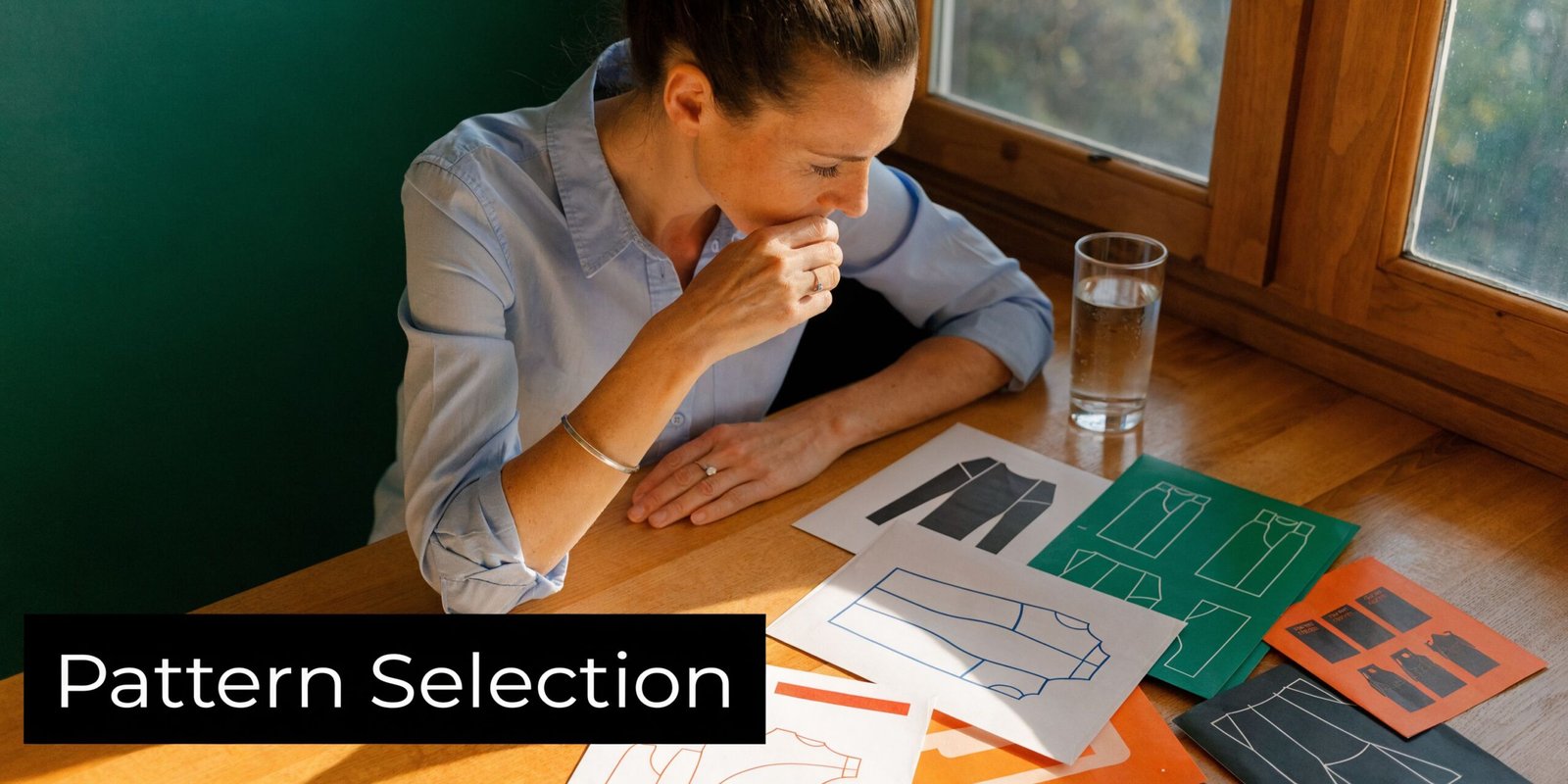
Picking from women sewing patterns gets easier when you stop asking, “What is pretty?” and start asking, “What will work?” The best choice usually sits where three things overlap. Shape, skill, and fabric.
Start with the garment shape
Some patterns win people over with styling, but the important question is whether you will enjoy wearing that shape.
An A-line skirt is often forgiving and beginner-friendly because it skims the body and usually avoids complicated fitting at the thigh. A wrap dress can be adjustable and flattering, but it often needs careful handling at the neckline. Wide-leg trousers can feel comfortable and modern, though they still need attention at the waist and hip. A sheath dress looks simple on the hanger but usually demands more precise fitting than beginners expect.
If you are unsure, look in your wardrobe.
What do you reach for most? Soft blouses, easy dresses, neat skirts, relaxed trousers? Start with a pattern that resembles something you already know you like. Sewing a garment you admire but never wear is an expensive lesson.
Then be honest about skill level
Pattern difficulty labels can be helpful, but they are only part of the story. One “beginner” pattern may still include fiddly bias binding. One “intermediate” pattern may be fine if the instructions are clear.
Instead, look for the techniques involved.
A pattern becomes more demanding when it includes several of these:
- Closures: Invisible zips, button plackets, or hooks
- Shaping details: Darts, princess seams, collars, set-in sleeves
- Precision areas: Fly fronts, shaped cuffs, welt pockets
- Slippery fabric handling: Fine viscose, satin, stretch jersey
If you are building confidence, choose one new challenge per garment. Maybe your next top includes sleeves but no collar. Maybe your next skirt uses a zip but no lining. That steady approach teaches far more than jumping straight into a complex coat.
Fabric is where the pattern comes alive
This is the part many sewists underestimate.
A simple blouse pattern can look crisp and polished in cotton poplin, relaxed in double gauze, elegant in Tencel, or floaty in viscose. The pattern pieces stay the same, but the finished garment can feel like four different designs.
A few practical pairings:
| Pattern type | Fabric that often suits it | What to expect |
|---|---|---|
| Draped blouse | Viscose or Tencel | Soft movement and fluid folds |
| Structured skirt | Denim or sturdy cotton | Shape, body, and clearer silhouette |
| Relaxed tee | Jersey | Stretch and comfort |
| Shirt dress | Cotton lawn or poplin | Definition without too much stiffness |
Sustainable fabric choices matter to many home dressmakers now. A 2025 UK Craft Council survey found 62% of female sewists prioritise sustainable fabrics, and there has also been a 35% surge in plus-size queries on UK sewing forums, while plus-size and gender-neutral patterns designed with UK deadstock in mind remain scarce, according to the source background cited in this discussion of curvy sewing and pattern gaps.
That matters in practical terms. If you sew with deadstock, ex-designer cloth, or limited runs, you need patterns that let the fabric shine and suit the amount available. Sometimes a simple top or skirt is the wisest way to use a special cut. Sometimes a deadstock length is perfect for a statement dress, but only if the pattern pieces fit the width and directional print.
If your fabric is precious, choose a pattern with straightforward fit and clean lines. Let the cloth do the talking.
A simple way to make the final choice
When I help someone narrow down options, I usually ask four questions:
- Where will you wear it most often
- How much fitting does the garment need
- Does your fabric support the pattern’s shape
- Is there one new technique you are happy to learn
If all four answers feel clear, you have probably found the right project.
Getting The Perfect Fit From Your Pattern
Fit is where many dressmakers lose confidence. They assume the problem is their body, when the underlying issue is usually a mismatch between the pattern category, the measurement method, and the expectations built into the draft.
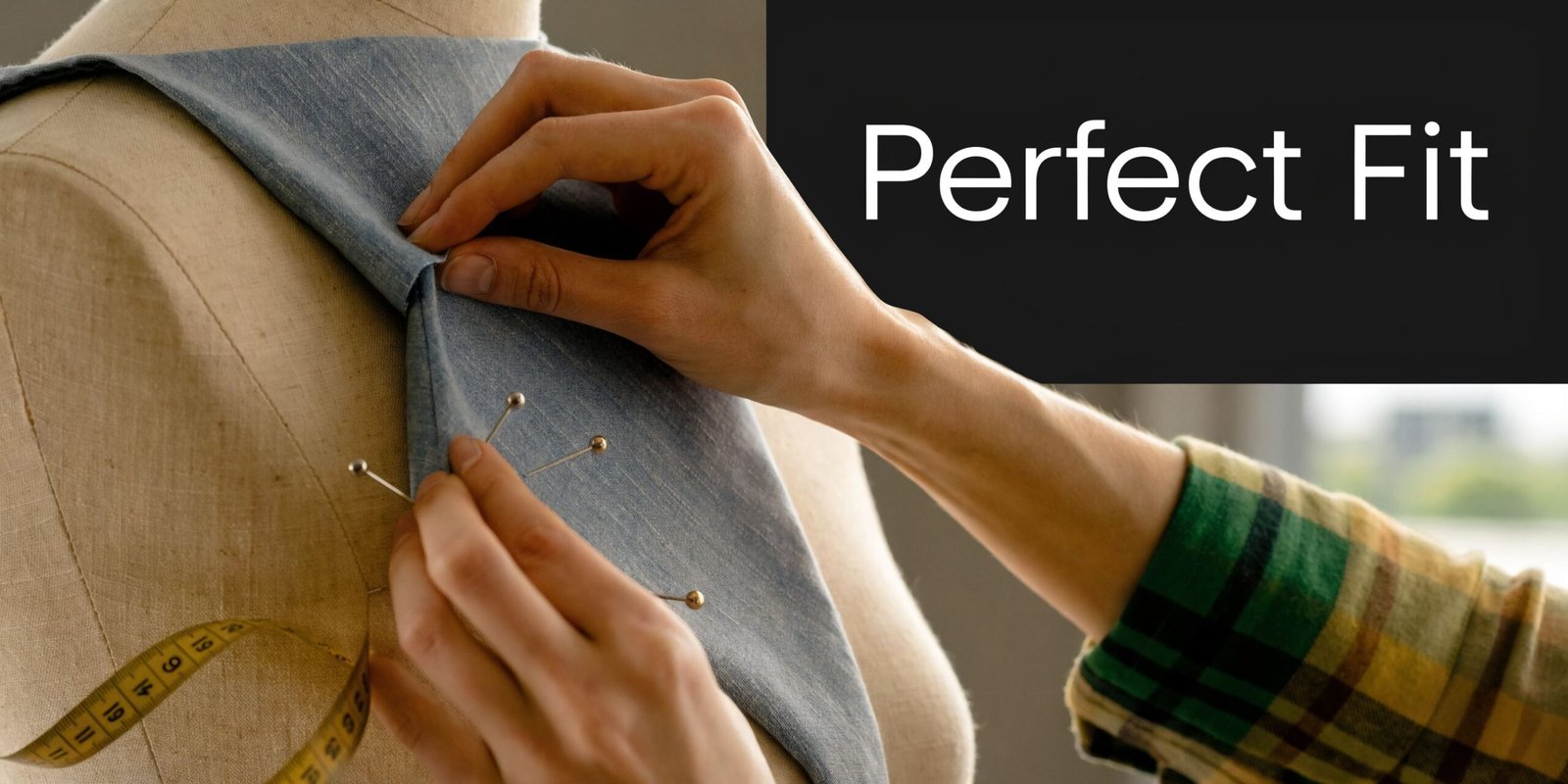
High-street size labels do not help much here. A shop dress marked one size and a sewing pattern with the same number are not speaking the same language.
Take the right measurements first
Use a flexible tape measure and wear close-fitting clothes.
The key measurements for many women sewing patterns are:
- Bust: Around the fullest part
- Waist: Around your natural waist
- Hips: Around the fullest part
- Back-waist length: From the prominent bone at the back of your neck down to your waist
Keep the tape level. Stand naturally. Do not pull it tight and do not add “room” yourself. The pattern already includes the room it expects.
If possible, ask someone to help with back-waist length. That one is easy to misread alone, and it affects bodices, dresses, and jumpsuits more than people think.
Understand the UK pattern categories
This is one of the most useful fit shortcuts available to UK sewists.
UK women’s sewing pattern sizing commonly uses Misses for average proportions at 165 to 167 cm, Women for fuller figures, and Petite for shorter heights at 157 to 162 cm. Choosing the right category can improve fit by 30% versus US standards, and using the wrong one can lead to a 7 to 10 cm torso length mismatch, as explained in this guide to understanding sewing patterns.
That sounds technical, but the everyday effect is simple. If you often find bodices sitting too low, waist seams dropping, or tops feeling long through the torso, the category may be wrong before you even consider any personal alterations.
A Petite pattern is not just a shorter hem. It usually assumes a shorter vertical body balance. That changes where the bust point, waistline, and other shaping sit.
Choose size by your body, then blend if needed
Many people do not match one pattern size all over. That is normal.
If your bust matches one size and your hips another, trace between the lines gradually rather than forcing one single size from top to bottom. This is called blending sizes, and it is one of the most useful basic fitting skills.
For example:
- A blouse may need one size at the shoulders and bust, then a gentle flare to another size at the waist.
- A skirt may fit one size at the waist and another at the hip.
- A dress often needs the most blending because it covers more body landmarks.
Ease is not extra fabric by mistake
People often see a finished garment and think, “That looks bigger than my measurements.” Often, it should be.
There are two kinds of ease to think about:
| Ease type | What it does |
|---|---|
| Wearing ease | Lets you breathe, sit, move, and layer |
| Design ease | Creates the intended style, such as oversized, boxy, or close-fitting |
A relaxed shirt needs more design ease than a pencil skirt. If you cut down several sizes because the finished measurements look “too roomy”, you may ruin the shape the designer intended.
Check fit ideas against real garments
A good way to train your eye is to compare your pattern to clothes that already suit you. Lay a favourite woven top flat and compare key widths to the pattern tissue at bust, waist, and hem. Do the same for shoulder width and sleeve length.
If you enjoy more custom-fit clothing, it can also help to look at how made-to-measure garments handle balance and proportion. This guide to bespoke garment creation for women is useful for seeing how deliberate fit choices shape the final look, even if you are sewing at home rather than ordering a custom-made piece.
Later in the fitting process, a visual walkthrough can help you spot issues more clearly:
A practical first-fit routine
Before cutting your final fabric, do this:
- Trace the size or blend you need
- Mark bust, waist, and hip lines
- Check your back-waist length against the pattern
- Sew a toile or quick test version
- Pin out excess or mark tight spots before changing the paper pattern
A toile is not wasted effort. It is where you learn what the pattern assumes, and where your body asks for something different.
That one habit changes everything.
Common Pattern Alterations You Can Master
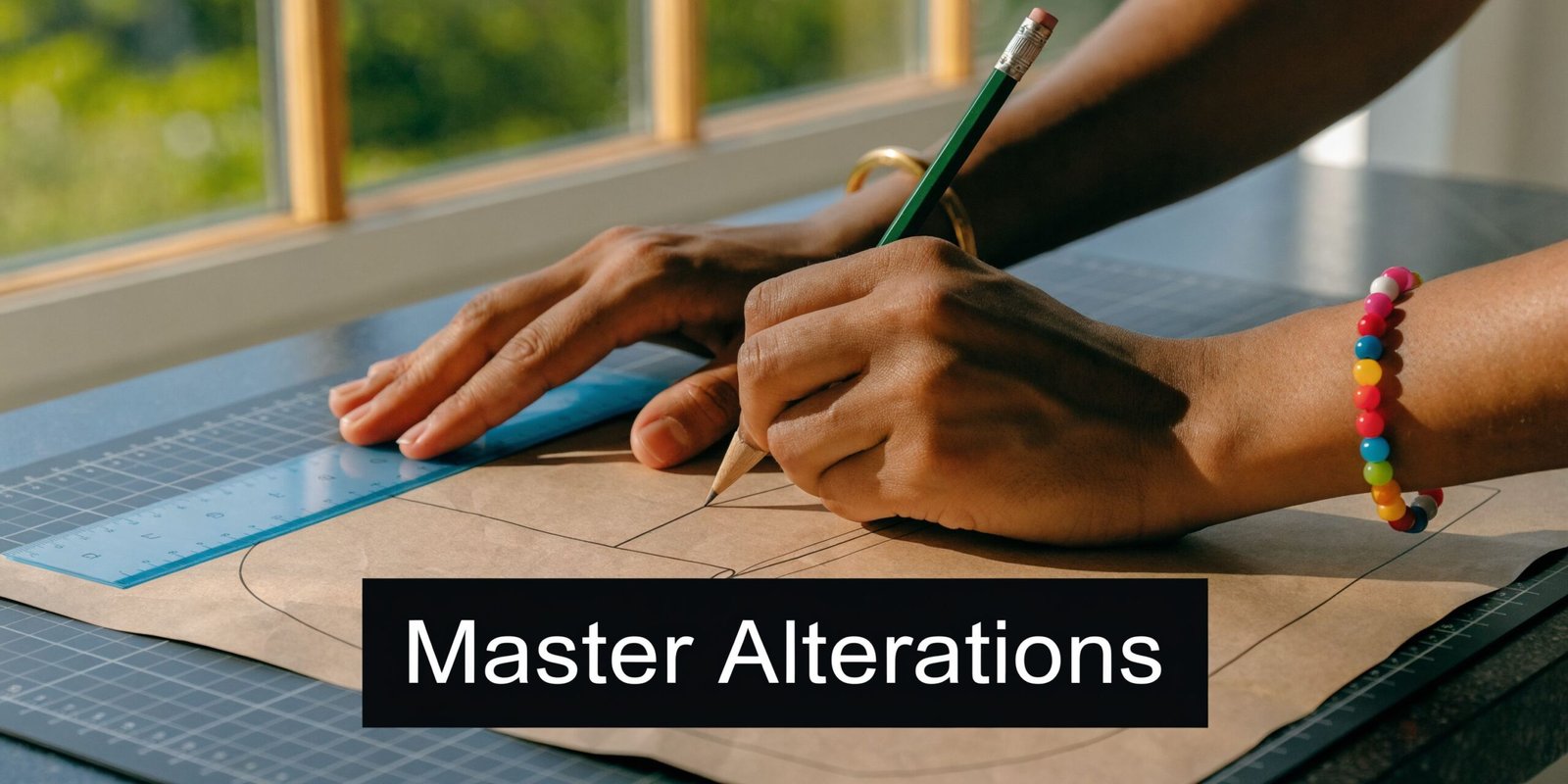
Pattern alterations sound dramatic, but most are small paper changes that solve common problems. Think of them as steering adjustments, not surgery.
Lengthen and shorten in the right place
Many patterns include lengthen/shorten lines. Use them.
If a bodice sits too low or too high, do not hack fabric off the hem and hope for the best. Adjust where the pattern tells you to, so the bust point, waistline, and hip shaping stay in the right relationship.
In UK pattern grading, 6 mm (1/4 inch) is added vertically between the shoulder and underarm for each size up. Applying that principle during home alterations on a toile can reduce fabric waste by up to 25% and achieve 95% fit accuracy on the first try, according to this explanation of grading women’s patterns.
That is especially useful when you size up through the upper body and need a little more vertical room, not just extra width.
A practical example:
- If you are moving up one size through the bodice and the armhole feels slightly high, adding a small amount in the upper body length can help preserve proportion.
- If your back-waist length is shorter than the pattern expects, overlap at the marked shorten line rather than trimming at the waist seam alone.
Bust adjustments solve more than bust problems
A Full Bust Adjustment often helps when fabric pulls across the chest, side seams swing forward, or the bust point sits incorrectly. A Small Bust Adjustment can help if the neckline gapes or the front looks baggy.
The key point is this. Bust adjustments are about shape and space, not judgement.
A simple way to think about them:
- FBA: Adds room and often length where the bust needs it
- SBA: Removes excess where the pattern assumes more fullness than you have
If a woven blouse fits your shoulders but strains at the bust, an FBA is usually better than cutting a larger overall size. Going up a full size can make the neckline, shoulders, and armholes too big.
Sway back and waist tweaks
If fabric pools at the lower back, you may need a sway back adjustment. This removes excess length where your back curves inward more than the pattern expects.
You will often spot this in fitted skirts, trousers, and dresses with waist seams. The back waist may look loose even though the hip fits well.
Try this process:
- Pin out the horizontal excess on a toile at the small of the back
- Measure what you pinned
- Transfer that amount to the paper pattern
- Redraw seam lines smoothly
Small changes matter. Start modestly and test again.
Do not stack several large alterations at once unless you already know your fitting patterns well. One measured change teaches you more than three guesses together.
Sleeve and trouser adjustments
Sleeves and trousers often need straightforward changes too.
A sleeve may need shortening above the elbow rather than at the cuff, especially if it has shaping or a vent. Trousers may need length added above the knee, below the knee, or both, depending on where the lines break on your body.
For trousers, focus on what you see:
| Symptom | Likely issue | First thing to try |
|---|---|---|
| Pooling at lower back | Excess back length | Sway back adjustment |
| Waist fits, hips tight | Need more width at hip | Blend to larger hip size |
| Leg length looks off | Vertical mismatch | Adjust at lengthen/shorten lines |
The more you sew, the more you notice your recurring adjustments. Many people eventually keep a note of them in a notebook or on the pattern envelope itself.
That turns each project into an easier starting point for the next.
Printed Versus Digital Patterns A Practical Comparison
Printed and digital women sewing patterns can both work beautifully. The better choice depends on how you like to sew, store, and prepare.
Some people love opening a tissue pattern and getting started at once. Others prefer the flexibility of printing only the size they need and reprinting pieces if they spill coffee on page twelve.
Here is the practical comparison.
Printed vs. Digital Sewing Patterns
| Attribute | Printed Patterns | Digital (PDF) Patterns |
|—|—|
| Getting started | Ready to open and use | Needs printing and assembling, unless sent to a copy shop |
| Storage | Physical envelopes take space | Files store neatly on a device or cloud folder |
| Sizing use | Often includes several nested sizes on one sheet | Often lets you print only one size or layer |
| Marking and tracing | Tissue can be delicate | Reprint if a piece tears or you want a fresh copy |
| Shopping experience | Easy to browse in person | Instant access online, often from indie designers |
| Preparation time | Less prep before cutting | More prep if printing and taping at home |
| Portability | Easy to tuck into a project bag | Easy to email, save, and organise digitally |
| Re-use | Tissue wears over time if heavily handled | Can be reprinted when needed |
When printed patterns suit best
Printed patterns are handy if you:
- Prefer less screen time
- Like browsing pattern books or shop racks
- Want a more tactile sewing process
- Do not enjoy trimming and taping paper sheets
They also make sense for beginners who already feel overwhelmed. Removing the printing stage can make the project feel much simpler.
When digital patterns suit best
Digital patterns are ideal if you:
- Want instant access
- Sew the same pattern more than once
- Like using only one size layer
- Buy from smaller independent pattern designers
They can also be practical if you often blend sizes or make repeated adjustments. You can preserve the original file and print again after each round of changes.
My own advice is simple. If the project is your first attempt at a garment type, printed can feel calmer. If you know you will customise, reprint, or sew several versions, digital often becomes the more flexible tool.
Your Next Steps Inspiring Sewing Projects
Once you understand women sewing patterns, your next project gets much easier to choose. You stop shopping only by the cover image and start looking for garments that fit your life, your fabric, and your patience level on a Sunday afternoon.
That is when sewing gets properly satisfying.
Good projects for different stages
If you are new to dressmaking, try one of these:
- A simple elastic-waist skirt: Good for learning straight seams, hem finishing, and fabric handling.
- An easy woven top: Useful for practising neckline finishing, darts, or simple sleeves.
- A basic jersey tee: A good introduction to stretch sewing if your machine handles knits well.
If you have a few garments behind you, consider:
- A shirt dress in cotton lawn or poplin
- Wide-leg trousers with a clean waistband
- A wrap-style blouse that teaches fit through the bust and waist
If you want a bigger challenge:
- A lined dress
- A structured jacket
- A coat in wool or structured suiting
Think beyond the standard pattern rack
The future of home sewing should not only be stylish. It should be more inclusive.
There is a clear gap around adaptive sewing. A 2023 ONS report noted that 16 million UK adults live with disabilities, and sewing forums frequently ask for patterns that support needs such as wheelchair use or post-surgery dressing, as discussed in this overview of adaptive pattern offerings and the current gap.
That matters because sewing gives home dressmakers something the mass market often does not. The ability to adapt clothing for real bodies and real routines.
You might choose softer openings, easier fastenings, gentler seam placement, or garments that work better when sitting for long periods. Those choices are not niche. They are thoughtful dressmaking.
Sewing is not only about making clothes. It is also about making clothes work for the person wearing them.
That is a brilliant place to aim next.
Your Womens Sewing Pattern Questions Answered
Should I cut the size I buy in shops
No. Use the pattern’s measurement chart.
Ready-to-wear sizing varies wildly. Pattern sizing follows the designer’s own system, so your tape measure is more useful than the number on your usual clothes label.
Is it better to cut the tissue or trace it
If you are new, tracing is often the safer habit.
Tracing lets you preserve the original size range, makes blending sizes easier, and gives you room to note alterations on the traced copy. Swedish tracing paper, dressmaker’s carbon, or plain pattern paper all work well.
Do I really need a toile
Not for every project, but very often yes.
A toile is especially worth making for fitted dresses, trousers, bodices, and anything cut from expensive or limited fabric. Even a rough test version can show neckline gaping, waist placement problems, or balance issues before they become frustrating.
What if I am between two sizes
Blend between them.
Use the size that matches your upper body where control matters, then draw a smooth line to the larger or smaller size at the waist or hips as needed. This is common and often gives a better result than forcing one size throughout.
How should I store my patterns
Keep each pattern with its instructions, traced notes, and any fit changes you discovered.
Large envelopes, zip wallets, or labelled project folders all work. If you use digital patterns, create folders by garment type and keep a text note with changes such as shortened bodice, adjusted bust point, or sway back removal.
Can I use a different fabric from the one suggested
Often yes, but you need to think about what that change will do.
Ask whether the new fabric has similar drape, weight, stretch, and thickness. A blouse drafted for soft viscose will behave differently in crisp quilting cotton. Sometimes that gives an interesting result. Sometimes it changes the garment so much that the original pattern no longer makes sense.
What does “women” mean on some pattern labels
It does not just mean “for women” in the everyday sense.
On many pattern brands, “Women” is a sizing category distinct from “Misses” or “Petite”. It usually signals a different body proportion or shape assumption, not just a larger version of the same draft.
Why does my handmade garment look different from the envelope photo
Usually one of three reasons. Fabric choice, size selection, or pressing.
The model sample is often sewn in a very suitable fabric, fitted carefully, and styled beautifully. Good pressing during construction also makes an enormous difference. Sew slowly, press each seam, and judge your result once the garment is fully finished.
If you are ready to turn all this pattern knowledge into an actual project, More Sewing is a lovely place to start. You will find quality fabrics, dressmaking kits, haberdashery, and practical supplies for beginners and experienced makers alike, whether you are sewing your first easy top or planning a more structured piece.
