
Fabric
Your Guide to Polka Dot Fabric
Welcome to the world of polka dots, a pattern that manages to be both classic and bang up-to-date all at once. Polka dot fabric is a real workhorse for any dressmaker. It’s incredibly versatile and perfect for everything from fun kids' clothes to a smart blouse for the office. This guide is packed with practical advice, ideas for your next make, and our best tips for sewing with this brilliant print.
The Enduring Appeal of Polka Dot Fabric
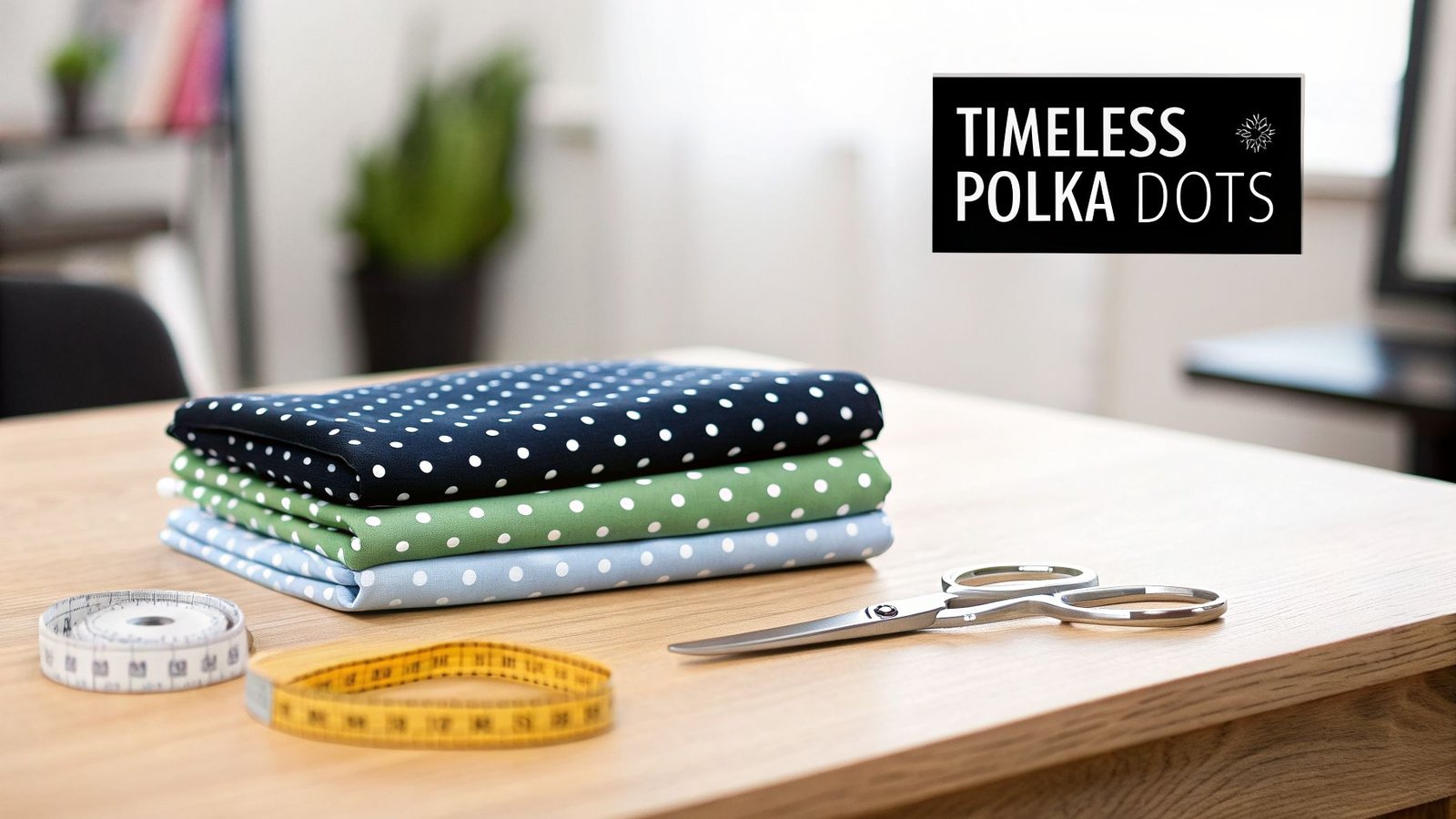
From breezy sundresses to elegant blouses, polka dot fabric has this wonderful way of feeling both nostalgic and completely modern. It’s a print that sewists, no matter their skill level, come back to again and again. And it’s not just because it looks good; it’s because it’s remarkably easy to work with.
Whether you’re a beginner looking for a forgiving first project or a seasoned stitcher making a real statement piece, this pattern gives you so many creative options.
The real beauty of polka dots is in their simple variety. The same bit of fabric can tell two completely different stories. For instance, a crisp navy and white polka dot cotton can become a smart, work-ready shirt dress. But that very same fabric could also be sewn into a fun, retro-inspired apron or a cute set of napkins for your kitchen table.
Why Sewists Love This Classic Print
It’s pretty clear why this print has stuck around for so long. Polka dot fabric lets you inject some personality into your handmade wardrobe without being too loud or overwhelming the garment's design. It provides a structured pattern that’s often much easier to handle than tricky florals or abstract prints, especially when you’re just getting the hang of pattern matching.
Here are a few reasons why this print is a firm favourite in the sewing room:
- Timeless Style: Polka dots have been fashionable for over a century, and they aren't going anywhere. A dress you make today will look just as stylish in five years' time. For example, a simple polka dot A-line skirt can be paired with a modern t-shirt or a vintage-style cardigan and look equally at home.
- Creative Versatility: Just by changing the scale of the dots, the colour, or the fabric base, you can create a look that's either professional and understated or bold and expressive. Think tiny pin dots for a subtle tie, or huge, spaced-out dots for a dramatic maxi skirt.
- Perfect for All Ages: It's one of those rare patterns that genuinely works for everyone, from adorable baby rompers to chic outfits for grown-ups. A small-scale dot on a soft jersey makes a perfect baby sleepsuit, while a large-scale dot on a flowing viscose makes an elegant dress.
In the world of sewing, a great polka dot fabric is like a trusted friend. It’s reliable, brings a touch of joy to any project, and helps you create garments that feel uniquely you.
This guide will walk you through everything you need to know about choosing and sewing with this fantastic material, drawing on the lovely collection we have here at More Sewing.
A Spot of History: Britain’s Love for Polka Dots
While polka dots feel like they’ve been around forever, their journey into our wardrobes is a great story. It's a tale of new technology, post-war optimism, and a little bit of high fashion glamour.
Before the mid-19th century, getting a perfectly even spotty pattern was a nightmare. It was all done by hand-blocking, which was slow and incredibly expensive, meaning only the very wealthy could afford it. The name itself is tied to the Polka dance craze that swept Europe in the 1840s. The dance was so popular that its cheerful name was slapped on everything from hats to puddings, and eventually, this playful print.
It was the Industrial Revolution that really changed the game. New machinery in British mills meant that perfectly round, evenly spaced dots could be printed on a massive scale. Suddenly, polka dot fabric wasn't a luxury item anymore; it was something everyone could enjoy.
The Rise of a Cheerful Print
This new availability came just as people were getting a taste for more playful fashion. Polka dot fabric burst onto the UK scene in the mid-1800s. By 1857, the hugely influential Godey’s Lady’s Book was telling its British readers that polka-dotted muslin scarves were the thing to have for summer.
This seal of approval helped trigger a 40% surge in spotted fabric imports into London's ports between 1855 and 1860. For working-class women, especially in mill towns like Manchester, it was a fashion revolution. They could now buy cheerful polka dot cottons for as little as 2 shillings a yard – a full 30% cheaper than traditional silks. If you fancy a deeper dive, you can learn more about how the pattern took hold by exploring the history of polka dots at Cloth & Stitch.
This affordability meant women could finally move away from drab, purely functional clothes. They could inject a bit of fun and personality into the garments they made, and the polka dot became a small symbol of that new freedom.
From Post-War Optimism to High Street Staple
The pattern’s happy-go-lucky feel saw it become hugely popular again after the war. For a Britain coming out of the gloom of the 1940s, polka dots felt joyful and feminine. They were a little dose of optimism you could wear.
The real turning point came in 1947 with Christian Dior's iconic 'New Look'. His designs, which often featured polka dots, celebrated an hourglass silhouette with full skirts and nipped-in waists. This look heavily influenced British fashion and propelled the playful print into the realm of high-end style.
It wasn’t long before high-street brands started copying these aspirational looks. Polka dot fabric became a must-have for home dressmakers keen to create their own bit of glamour, a trend cemented by film stars and style icons throughout the 50s and 60s.
Today, that rich history is woven into every spot. Whether you're sewing a vintage-inspired tea dress or a simple modern top, you're working with a pattern that’s symbolised joy and timeless style for generations. Knowing this story adds a wonderful layer to your sewing projects, turning a simple print into a piece of wearable history.
Choosing Your Polka Dot Fabric By Fibre
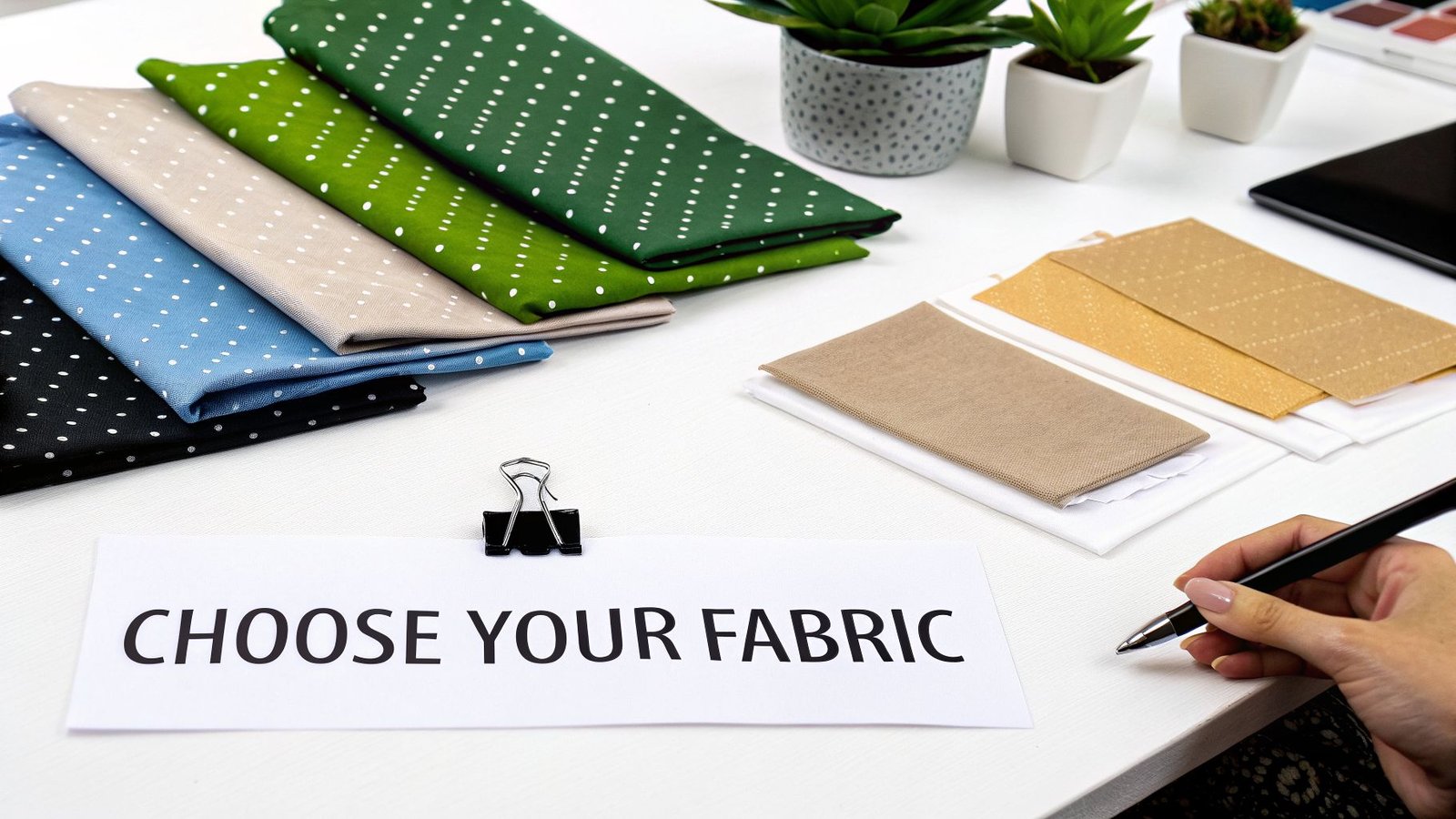
The secret to a brilliant sewing project is all in the fabric choice. A gorgeous polka dot fabric isn't just about the print; the fibre it's made from changes everything. It dictates how the garment hangs and moves (its drape), how it feels on, and, crucially, how it behaves under the needle.
Getting your head around these differences is what lets you pair the perfect fabric with your chosen pattern, making sure your final make looks exactly like the one you pictured. Let's walk through the most common fibres you'll come across in our polka dot collection.
To give you a quick overview, here's a handy table to help you match a fabric type to your next project.
Polka Dot Fabric Types and Their Best Uses
| Fabric Type | Characteristics | Recommended Projects | Sewing Tip |
|---|---|---|---|
| Cotton | Crisp, breathable, stable, easy to press and sew. | Structured shirts, A-line skirts, children's clothing, quilting. | Use a universal needle (size 80/12) and press seams with steam for a sharp finish. |
| Viscose | Fluid drape, soft, silky feel, lightweight and cool. | Floaty blouses, maxi dresses, flowing skirts, wide-leg trousers. | Use plenty of pins or pattern weights as it can be slippery. A microtex needle helps. |
| Jersey | Stretchy, comfortable, soft, moves with the body. | T-shirts, wrap dresses, loungewear, children's leggings. | Always use a ballpoint or stretch needle and a stretch stitch (like a narrow zigzag). |
| Tencel™ | Luxurious drape, very soft, sustainable, wrinkle-resistant. | Elegant blouses, special occasion dresses, drapey trousers. | Treat it like viscose, but enjoy the slightly more stable feel. Pre-washing is a must. |
| Deadstock | Varies by type, often high-quality and unique. | Depends on the fabric base – could be anything from a coat to a dress! | Get a sample if possible and test your stitches, as the composition can be a mystery. |
Now that you've got the basics, let's dive a little deeper into what makes each one special.
Classic Cotton Polka Dot Fabric
For many of us, cotton is the first fabric we think of, and for very good reason. It’s a natural fibre that's breathable, strong, and a dream to press and sew. Think of it as the reliable old friend in your fabric stash.
A Cotton Poplin is a prime example. It’s crisp and lightweight with a stable weave, which makes it perfect for more structured garments. It’s the fabric you want for a smart shirt dress with a sharp collar or a classic A-line skirt that needs to hold its shape.
If you’re after something with a slightly softer touch, have a look at a Cotton Lawn. This fabric is lighter and has a silkier handle than poplin, giving you a bit more drape while still being wonderfully easy to work with. It's a fantastic choice for summer blouses or pretty linings in jackets and dresses.
- Best For: Structured shirts, tailored dresses, quilting, children's clothes, and brilliant for beginners' projects.
- Sewing Tip: A universal needle (an 80/12 is a great place to start) and standard cotton thread will do the job perfectly. Cotton loves a hot iron and plenty of steam, which is how you get those super-crisp, professional-looking seams. A technique is to press your seams open first to 'set' the stitches, then press them to one side.
Fluid and Flowing Viscose
If your pattern calls for lots of movement and a soft, flowing silhouette, then viscose is what you're looking for. Also known as rayon, viscose is a semi-synthetic fibre made from wood pulp. It's famous for having an incredible drape, very much like silk but without the hefty price tag.
When you see a beautiful maxi dress or a floaty blouse with polka dots that seem to dance, it’s almost always made from viscose. Its light weight and cool feel make it a firm favourite for any warm-weather sewing.
Viscose gives the playful polka dot a touch of elegance. It elevates the print from just cheerful to effortlessly chic, making it ideal for those garments that just feel a bit special to wear.
One thing to bear in mind is that viscose can be a bit slippery to cut and sew. Our top tip is to use plenty of sharp pins (or even better, pattern weights) and switch to a microtex needle. They are finer and sharper than universal needles and are much kinder to delicate weaves. For extra stability when cutting, you can lay your fabric on top of tissue paper.
Stretchy and Comfortable Jerseys
For clothes that need to move with you, a polka dot jersey is a perfect pick. Jersey is a knit fabric, which means it’s made from interlocking loops of thread instead of a rigid woven grid. This is what gives it that natural stretch and comfort.
Jerseys are the absolute go-to for comfy, everyday clothes. We’re talking favourite t-shirts, cosy loungewear, and simple wrap dresses. A polka dot jersey brings a bit of classic style to all that comfort, making it a great way to create wardrobe staples that are both practical and pretty.
Key things to know when sewing with jersey:
- Stretch Percentage: Always check the fabric description for this! It's vital for patterns that have been designed specifically for knit fabrics.
- Needle Choice: You must use a ballpoint or stretch needle. A standard universal needle can easily pierce and break the delicate fibres, leading to skipped stitches or, even worse, holes.
- Stitch Selection: You'll need a stitch that can stretch along with the fabric. A narrow zigzag stitch (e.g., 0.5mm width, 2.5mm length) or a special stretch stitch on your machine will work perfectly. If you have an overlocker, it will give you a professional finish, but it's not essential.
Sustainable and Deadstock Choices
Here at More Sewing, we’re always excited to offer more sustainable and unique options like Tencel and ex-designer deadstock. Tencel™ Lyocell is a brand of viscose produced in an environmentally responsible, closed-loop system. It has the most exquisite, fluid drape and a beautifully soft, peachy feel, making it a superb sustainable choice for luxurious-feeling blouses and dresses.
Ex-designer deadstock is simply leftover fabric from fashion houses. These are often high-quality materials that you just won't find anywhere else. Choosing a deadstock polka dot means you’re getting a unique, limited-edition print and helping to reduce textile waste at the same time. It’s a fantastic way to sew a garment that is truly one of a kind.
Right, you’ve picked out the perfect fibre for your polka dot fabric. Now for my favourite part: turning that spotty print into a stunning garment you’ll absolutely love to wear.
How you play with the size of the dots, pair colours, and even mix in other patterns can completely change the feel of what you make. Don't think of it as a set of strict rules. It's more about understanding a few design ideas so you can make choices that feel right for you.
Getting the Look Right: Pairing and Styling Your Polka Dots
Let's walk through how to style your spots with confidence, taking a simple print and making it look chic and completely intentional.
The Power of Dot Size
The size of the dots on your fabric is probably the most powerful tool you have. It has a massive effect on the final look, and different scales just work better for certain projects and body shapes.
Think about a blouse made with tiny pin dots. From a distance, it almost looks like a solid colour, giving it a lovely, subtle texture. It’s a great choice for workwear or anything where you want a more understated look. Now, imagine that same blouse in a fabric with huge, bold dots. The vibe is totally different – it’s fun, confident, and really makes a statement.
A good rule of thumb is to let the scale of the print match the scale of the garment. Big, spaced-out dots look fantastic on large, flowing pieces like maxi dresses or wide-leg trousers, where the pattern has plenty of room to shine. On the other hand, tiny dots are perfect for smaller details like collars, cuffs, or children's clothes.
A Quick Guide to Matching Dot Scale to Garments
To give you a starting point, here are a few practical ideas for matching dot size to your sewing project:
- Tiny Pin Dots (under 0.5cm): These are brilliant for adding subtle texture. Think smart work blouses, men's ties, or even the lining of a jacket. They read as sophisticated and are very easy to wear. They also work wonderfully as a blender fabric in quilting.
- Small Dots (0.5cm – 1.5cm): This is your classic, go-to polka dot. It’s just right for 1950s-style dresses, A-line skirts, and everyday tops. This scale is pretty much universally flattering and has that timeless, cheerful spirit we all love about polka dots.
- Medium Dots (1.5cm – 3cm): We're getting a bit bolder here. This size works really well on simple shapes like shift dresses or simple tops, letting the print do all the talking. It has a modern, graphic feel to it.
- Large Dots (over 3cm): Go big or go home! Large dots are for making an impact. They look amazing on dramatic maxi skirts, simple swing coats, or even fun home projects like cushions. It's best to use them on patterns with minimal seam lines so you don't chop up the dots too much.
Mixing Polka Dots with Other Patterns
The thought of mixing patterns can seem a bit scary, but when you get it right, it looks incredibly stylish. The secret is to find some harmony between the prints, even if they're completely different.
One of the easiest and most successful combinations is pairing your polka dot fabric with stripes. The trick is to have one pattern be the star of the show and the other play a supporting role. For instance, you could wear a skirt made from a medium-scale navy and white polka dot with a classic Breton striped top. The two prints work because they share a colour story (navy and white) and have a similar clean, graphic feel.
Another great trick is to mix two different scales of polka dots in the same outfit. Try wearing a blouse with tiny pin dots tucked into a skirt with larger, more spaced-out dots. As long as the colours are in the same family, the look will feel cohesive and interesting, not chaotic. A cream blouse with small black dots, for example, would look fantastic with a black skirt featuring larger cream dots.
Sewing Techniques for Perfect Polka Dots
Sewing with polka dot fabric is incredibly rewarding, but there's a definite art to getting that perfect, professional finish. It’s those little details that really make a handmade garment sing. We’ll walk through the bits that often trip people up – pattern matching and buying the right amount of fabric – so your project is a success from the very first snip.
Let's be honest, the biggest hurdle with a directional print like polka dots is making sure they flow perfectly across the seams. There's nothing more distracting than dots that suddenly jump out of line at the centre front or a waistband. It can take an otherwise beautiful garment and make it look just a bit… off. The good news is, pattern matching isn't as scary as it sounds.
A Simple Method for Perfect Pattern Matching
The secret to getting your dots to line up beautifully happens right at the cutting table. It does take a little more time and focus than cutting out a plain fabric, but the polished result is absolutely worth the extra effort. Think of it as laying a perfect foundation for your sewing.
Here’s a straightforward way to do it:
- Cut in a Single Layer: This is a game-changer. Instead of folding your fabric in half, lay it out completely flat. This gives you total control over where you place each and every pattern piece.
- Choose Your 'Master' Piece: Start with a key piece that will be front and centre, like one half of a bodice or a skirt front. Place it on your fabric, making sure the grainline is spot on. This is now your guide.
- Mark Your Key Points: Before you even think about cutting, grab a fabric marker or some tailor's chalk. Mark the position of a few crucial dots right on the seam allowance where a match is essential (like the centre front). For example, mark the exact point where a dot crosses the seam line.
- Mirror and Match: Now, take the piece that needs to mirror it (the other half of the bodice, for instance). Lay it on the fabric. To get a perfect match, you can place your already-cut master piece right on top to check that the dots align perfectly before you pin and cut. Alternatively, use a clear ruler to measure from the selvedge to a key dot on your first piece, then replicate that measurement for the second piece.
Taking that extra time to place and cut each piece individually is what ensures your polka dots create a lovely, continuous line across the seams. This one technique is the secret behind that high-end, ready-to-wear look.
Calculating Yardage for Polka Dot Fabric
When you're buying a directional print like spots, you'll almost always need a bit more fabric than the pattern envelope says. That extra fabric gives you the wiggle room you need to shift your pattern pieces around to get the dots matched up. But how much extra is enough?
A good rule of thumb is to add one extra pattern repeat to your total for every major horizontal seam. To work out the pattern repeat, simply measure the distance from the centre of one dot to the centre of the dot directly above or below it.
For example, if you’re making a dress with a waist seam and your dots have a vertical repeat of 10cm, you should buy at least an extra 10-15cm of fabric. If your pattern has set-in sleeves that you also want to match, you might want to add a full pattern repeat just to be safe. Trust me, it’s always better to have a little bit left over than to play "pattern piece Tetris" with your last few scraps.
This simple diagram shows the thought process for styling with polka dots, from thinking about the scale to mixing patterns.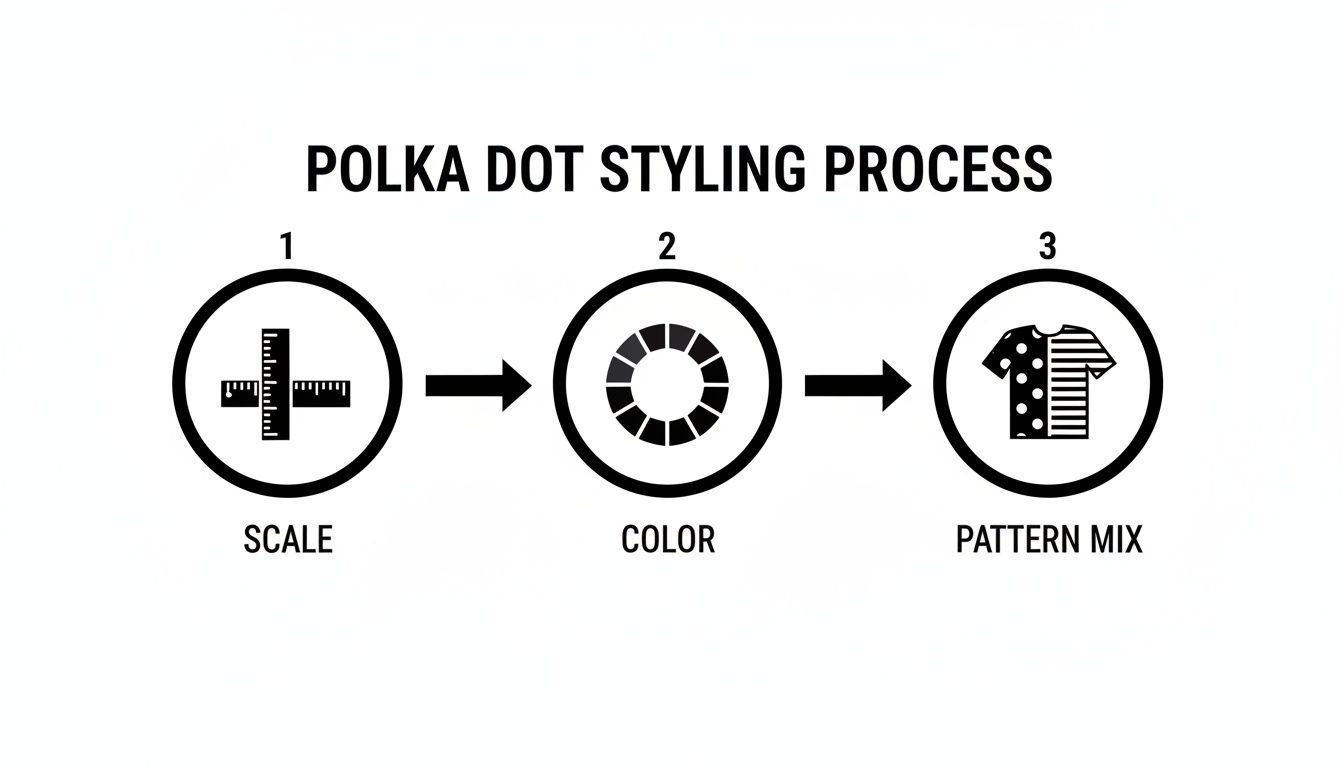
It really breaks down how to build a look, starting with the print itself and then moving on to colour and how it plays with other patterns.
Essential Tools and Pressing Tips
Finally, a few words on the tools and techniques that will protect your fabric and make the whole sewing process smoother. The right needle and a good press are just as important as an accurate cut.
Choose the Right Needle: Your needle choice should always be based on your fabric. For a classic woven cotton, a universal 80/12 needle is your best bet. If you’re working with a slippery viscose or Tencel, switch to a finer 70/10 microtex needle to avoid snagging those delicate threads. For any jersey or knit fabric, it's essential to use a ballpoint or stretch needle. A standard needle can tear the knit fibres and leave you with tiny, permanent holes.
Press with Care: Always, always test your iron's heat on a scrap of your fabric first. Cotton can take high heat and plenty of steam, but more delicate fibres like viscose can be easily scorched or warped. I find it’s a good habit to press seams from the wrong side, often with a pressing cloth, to protect the print and prevent any unwanted shine. Pressing as you go is one of the easiest ways to get a really crisp, professional finish. For curved seams like princess seams, use a tailor's ham to press over, which helps maintain the garment's shape.
Buying Polka Dot Fabric at More Sewing
Hopefully, you're now full of ideas for your next polka dot project. This is the fun part – choosing your fabric! Here at More Sewing, we want to make that an exciting and easy step for you. We’ve put together a collection of spotty fabrics we think you’ll love, from timeless classics to some really special prints.
We know that buying fabric online can feel like a bit of a gamble. That’s why we offer a fabric sample service. There's no substitute for actually holding a swatch in your hands to feel its weight and softness, or to see how the dots look in your own home. It’s the best way to feel the slinky drape of a viscose or the crispness of a cotton poplin before you commit.
More Than Just Fabric
We’re not just here to sell you fabric; we want to help you see your project through from the initial idea to the final stitch.
When you shop with us, you'll find:
- A Hand-Picked Collection: We choose every single fabric ourselves, always with quality in mind. You’ll find beautiful polka dots on sustainable Tencel, classic cottons, and unique ex-designer deadstock fabrics that you just won’t find on the high street.
- Perfect Pattern Pairings: Stuck for what to make? We often suggest specific sewing patterns that we know work beautifully with our fabrics. It takes the guesswork out of planning your next creation.
- Handy Dressmaking Kits: If you want to make things even simpler, our all-in-one dressmaking kits are a brilliant way to start. They come with the fabric, pattern, and all the notions you need, packed up and ready to sew.
Why Choose More Sewing?
The love for this classic print just keeps growing. Polka dots were projected to make up 12% of all printed fabric sales online in 2025, which is a 25% increase since 2021. This is all part of a huge sewing revival that saw over 2.5 million people in the UK take up the hobby, many of whom now rely on trusted online shops like ours. If you're a history buff, you can learn more about this iconic pattern's fascinating past on Wikipedia.
At More Sewing, we're not just selling fabric; we're providing the tools and confidence for your next creative success. We stand behind every metre of fabric with our quality guarantee.
Our friendly team is always on hand to help with any questions you might have. Plus, with our fast delivery and free UK shipping on all orders over £50, you’ll have your hands on your new polka dot fabric before you know it. Have a browse through our collection today and find the perfect spotty material to bring your next idea to life.
Your Polka Dot Fabric Questions Answered
We get asked a lot of questions about working with polka dot fabrics, so we thought it would be a great idea to answer some of the most common ones here. Think of this as a few final tips and tricks to have up your sleeve before you get started on your next spotty project.
Let’s dive in and get you sewing your dots with complete confidence.
How Much Extra Polka Dot Fabric Should I Buy for Pattern Matching?
Our rule of thumb is to always buy at least one extra pattern repeat. For big, bold dots that are spaced far apart, this might mean adding an extra 15-20cm to your fabric order. If you’re working with a smaller, tighter pin-dot, an extra 10cm is usually plenty to be on the safe side.
If you want to be exact, just measure the vertical distance from the centre of one dot to the centre of the one straight above it. That’s your pattern repeat. It’s a smart move to add this amount for every major horizontal seam, like a waistline, and for those trickier spots like set-in sleeves. It's always better to have a little extra than to get to the end and find you're frustratingly short.
Can I Mix Different Sizes of Polka Dots in One Garment?
Absolutely! Mixing different scales of polka dots is a fantastic way to give a garment a modern, designer feel. It shows a real creative flair and can turn a simple pattern into something truly special.
Here are a couple of ideas for mixing dots well:
- For a balanced outfit, you could make a skirt or pair of trousers from a large-scale dot fabric and then create a coordinating top or blouse from a smaller pin-dot material.
- Within a single garment, why not use a larger dot for the main body of a dress, then use a smaller, matching dot for features like the collar and cuffs? This is a great technique for using up smaller scraps, too.
The secret to making this work is to stick to a consistent colour palette. For instance, a navy-and-white large dot paired with a white-and-navy small dot will look deliberate and chic, not chaotic.
What Is the Best Way to Care for My Finished Garment?
The care instructions are all about the fabric fibre, not the print itself. A polka dot on cotton needs different care than one on viscose.
Always pre-wash your fabric before you even think about cutting out your pattern pieces. Make sure you follow the care instructions for that specific fibre. This simple step will save you from the heartache of shrinkage after you’ve spent hours on your beautiful make.
For most cotton polka dot fabrics, a machine wash at 30°C followed by a medium iron will do the trick. For more delicate fabrics like viscose, Tencel, or silk, we’d suggest a gentle cool wash, or even hand washing, to protect the fabric's lovely drape and prevent shrinking. The safest bet is always to check the specific care advice on the More Sewing product page for the fabric you’ve bought. As a general tip, turning your handmade garments inside out before washing can help protect the print and any seams.
Ready to start your next spotty masterpiece? Explore the curated collection of high-quality polka dot fabric at More Sewing and find the perfect material for your project. Discover our full range here.
Refined using the Outrank app
