
You've finished a cotton jacket or tote, the forecast changes, and the first proper shower exposes the weak point. The fabric darkens, the lining feels damp, and water finds its way through the stitching long before the cloth appears to have failed. That's when the question becomes less about finding a magic waterproofing product and more about choosing a finish that suits the cotton, the construction, and the way you'll use and wash it.
Cotton can be made more resistant to rain, but home treatments usually create water repellency rather than fully waterproof construction. Wax, spray-on durable water repellent, wash-in treatment, and laminated cotton all have useful places in a sewing room. They aren't interchangeable, and none of them automatically seals needle holes, zips, hems, or seams.
The Moment Your Cotton Project Meets British Weather
A handmade tote can bead beautifully on its first outing and still soak through during a walk from the bus stop. The face fabric may shed light rain, while the base seam, folded corner, and lines of stitching allow water in. A summer jacket can behave similarly. The treated lawn looks promising in the garden, then sustained rain pushes moisture through the weave and into the garment.
That distinction matters because cotton is naturally absorbent. An untreated cotton fabric may initially shed a few drops because of its weave or surface tension, but it can still wet out as rain continues. A surface finish changes how water behaves on the fibres. It doesn't necessarily create a continuous barrier against pressure.
Repellent is not the same as waterproof
In the UK, the relevant benchmark for resistance to water penetration is BS EN ISO 811:2018. The method applies steadily increasing hydrostatic pressure to one side of a fabric until water appears through the material in three places, as described in the BS EN ISO 811:2018 standard reference.
That test asks a different question from “Do droplets bead?” A sprinkle test measures surface wetting. Hydrostatic testing measures whether water is forced through the fabric under pressure. Seams and construction still need separate attention, because a strong fabric result won't close the holes made by a needle.
Practical rule: Call a home-treated cotton item water-repellent unless the fabric, seams, and finished construction have been tested for hydrostatic resistance.
The intended use should decide the finish. A lightly treated cotton lawn jacket may only need to cope with a short shower while retaining soft drape and breathability. A market bag may benefit from a waxed, more structured hand. An outdoor cushion cover may need a laminate or a construction with sealed seams. Frequent washing changes the decision again, because repeated detergent, heat, flexing, and abrasion gradually challenge many finishes.
The useful question isn't just how to waterproof cotton fabric. It's which level of water resistance your project needs, and what you're willing to trade for it.
Matching the Method to the Project
The method should be chosen before cutting, not after the garment is already assembled. A finish that works well on a heavy canvas bag can make a soft blouse unpleasantly stiff, while a convenient wash-in treatment may distribute poorly over a lined bag with several enclosed layers.
| Method | Best for | Finish feel | Wash durability | Breathability | Repairable |
|---|---|---|---|---|---|
| Wax | Waxed-cotton jackets, sturdy bags, outdoor accessories | Firmer, waxy, sometimes uneven | Needs maintenance after use and washing | Reduced compared with untreated cloth | Good for local touch-ups |
| Spray-on DWR | Lightweight jackets, shirtings, lawn, exposed outer faces | Usually light and flexible | Depends on finish, laundering, abrasion, and exposure | Often preserves more comfort than a heavy coating | Good for targeted reapplication |
| Wash-in treatment | Large flat lengths, simple linings, uncomplicated fabric pieces | Can remain relatively soft, but distribution needs checking | Depends on the product and wash routine | Generally better than a solid laminate | Moderate, with retreatment possible |
| Laminated cotton | Outdoor covers, structured accessories, weather-focused projects | Coated, less textile-like, more intentional weight | Construction can be durable, but washing and folding need care | Lower than untreated cotton | Repairs need compatible tape, patching, or sealant |
What each route does well
Wax suits cotton canvas, waxed jackets, bags, and accessories where structure is welcome. It gives a traditional outdoor finish and can be renewed in worn areas, but it may add odour, stiffness, and a surface that isn't ideal for a drapey garment.
Spray-on DWR is the most adaptable option for a finished cotton jacket or a lightweight outer layer. It lets you target the exposed face and concentrate on folds, seams, and stitch lines. It's still a surface treatment, so it won't turn a loosely constructed garment into certified rainwear.
Wash-in treatments make sense when you're handling a broad, uncomplicated piece of fabric. They're less convenient once a garment has a lining, interfacings, pockets, and different fibre components. The liquid may not reach every outer surface evenly, and a finished item can be harder to rinse and dry consistently.
Laminated cotton is a construction choice rather than a quick aftercare step. It's useful for an outdoor cushion cover or a structured bag where a coated hand is acceptable. You'll need to think about needle holes, seam sealing, handling marks, and how the finished piece will be repaired.
Cleaning knowledge also matters when a project combines fabric with leather handles, trims, or other materials. A practical leather vs. fabric cleaning guide can help you avoid treating every component as though it has the same care requirements.
Prep That Decides Whether the Finish Sticks
Most disappointing waterproofing jobs go wrong before the product is opened. Cotton needs to be clean, fully dry, and free from residues that interfere with adhesion. Wash the fabric first, dry it completely, and skip fabric conditioner. UK guidance specifically warns that conditioner residues can reduce finish adhesion, while also advising makers to treat cotton as water-repellent unless it has been engineered for hydrostatic pressure, as outlined by UK fabric waterproofing guidance.
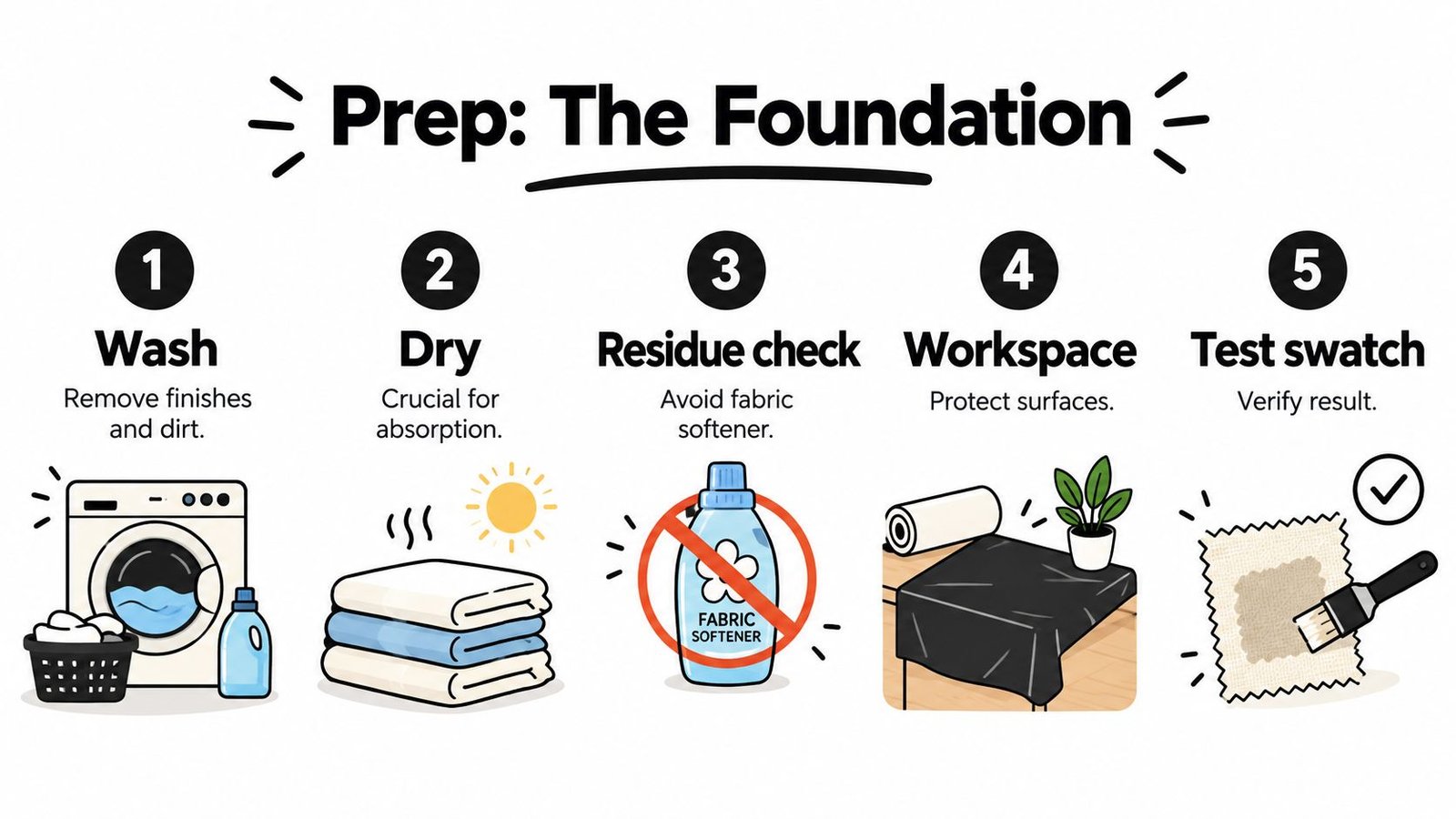
Prepare the material, not just the item
Prewash a curtain panel before treating it, because shrinkage and print bleeding need to happen before the finish is applied. An already-made cushion cover needs more careful inspection. Check the seams, zip, piping, and inner corners, then decide whether the treatment can reach the exposed face without saturating the filling or backing.
Record the fabric's approximate weight, weave, colour, and surface finish. A tightly woven cotton drill will respond differently from an open lawn, even if both receive the same product. A hidden hem or spare offcut is the right place to check colour change, altered handle, shrinkage, print transfer, and odour.
Set up a repeatable test
Protect the table and floor, ventilate the room, and keep the fabric flat where possible. Test the finish on both the face and reverse if both sides may encounter rain. Let the swatch dry fully before judging it, then flex it, crease it, and wash it using the care routine you expect for the finished project.
A small swatch gives you a baseline. If it becomes stiff or changes colour, you can change the method before committing an entire jacket or length of fabric. The application itself is usually straightforward. Preparation is where you protect the fabric, the fit, and the final hand.
Applying Wax, Spray, and Wash-In Treatments
For most home sewing projects, the application route follows the shape and purpose of the item. Use a spray when you need control over the outer face, wax when you want a more traditional coated finish on sturdy cotton, and wash-in treatment when you're working with a simple, washable piece of fabric.
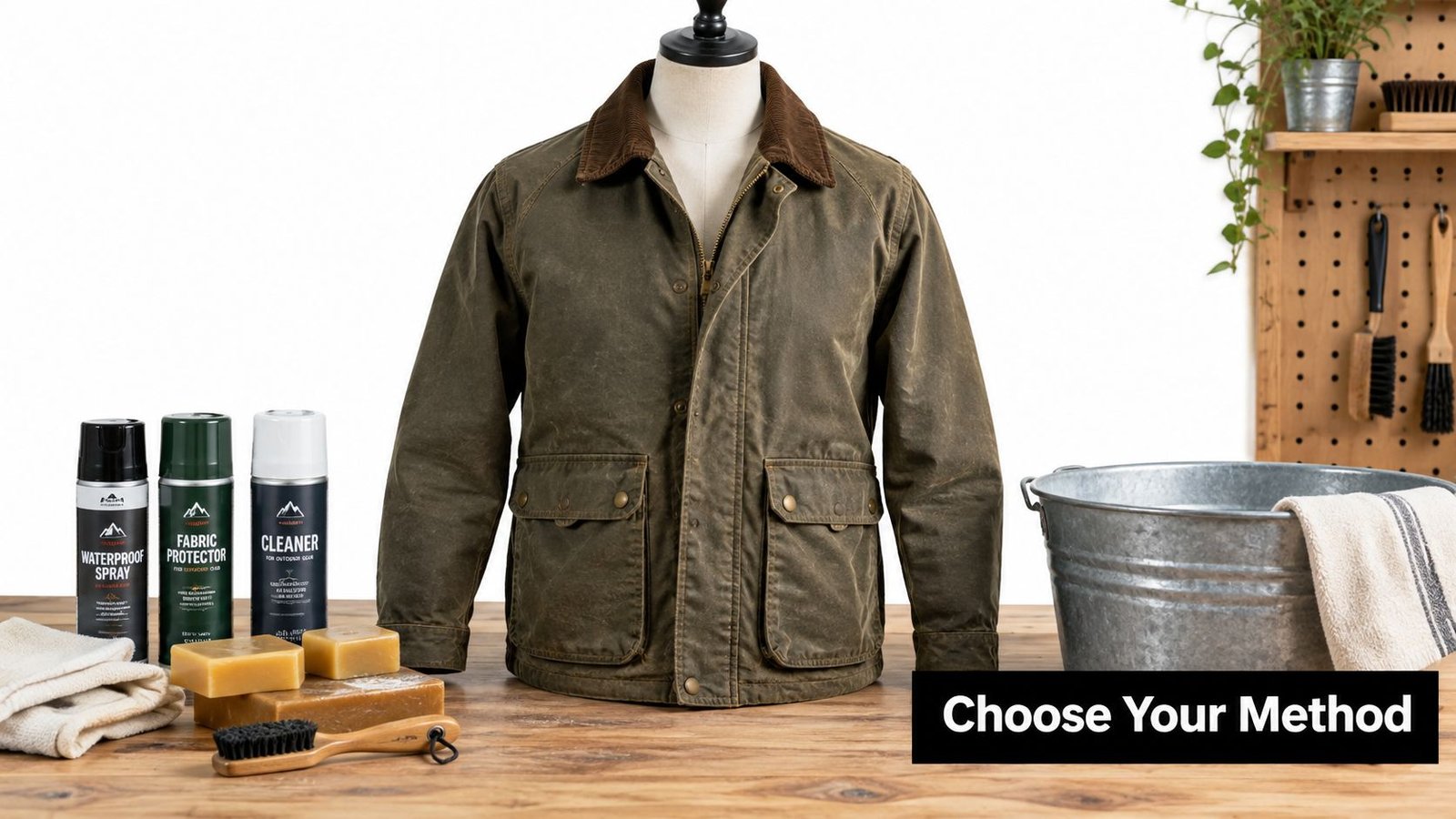
Spray the vulnerable areas first
Start with clean, completely dry cotton. Work in a well-ventilated area and test an inconspicuous section. Hold the spray approximately 15–20 cm from the fabric, then apply slow, even strokes in sections, concentrating on seams, folds, hems, and stitching. This application distance and technique are described in a practical cotton waterproofing method.
A flat-cut summer jacket is relatively easy to treat because you can reach the outer face consistently before assembly. A lined tote is more awkward. The spray may settle on the outer cloth but fail to reach folded seam allowances, the underside of handles, or the base corners. Treating the fabric before construction often gives better coverage, while finished-item treatment is useful for maintenance.
Let the fabric air-dry fully before exposing it to rain. Don't judge success while the surface is still tacky or damp, and don't assume a heavy application is better. Overloading the face can change handle and appearance without fixing the construction's leak points.
For wider outdoor maintenance, the same principles apply to equipment and coverings. Barrons provides a useful waterproofing guide for family campers that puts cleaning, application, and drying into a broader outdoor-care context.
Wax needs an even hand
Wax-based proofing is particularly suitable for cotton items that already have a waxed finish, including jackets, bags, and outdoor accessories. Remove surface dirt, protect the worktop, wear gloves, and apply the product evenly to the clean, wet item from approximately 15 cm away. Spread it with a damp sponge or cloth so the coating doesn't collect in patches.
Leave it for about 2 minutes, then remove surplus product with a damp cloth. Rub in drips and runs, touch up missed sections, and hang the item to air-dry. A waxed cotton jacket may need maintenance at least annually, with heavier use calling for more frequent attention, as explained in waxed cotton proofing guidance.
Choose wash-in for access, not convenience alone
A wash-in treatment can be applied by immersing the item in 6 litres of water for 15 minutes, followed by cold rinsing and drying. An alternative route is a 40°C washing-machine cycle without prewash or softener. Follow the product's care instructions, and use heat only where the fabric and label permit it. One manufacturer recommends ironing before the item is fully dry to enhance the finish.
A wash-in treatment can be sensible for a plain fabric length or simple lining. It's less dependable for a complex finished garment because the treatment may not cover the outside face evenly. Seams and folded sections can still leak, regardless of how thoroughly the fabric itself was soaked.
Curing, Testing, and Reading the Results
Beading immediately after application is encouraging, but it isn't a complete performance test. Give the finish enough time to dry and settle according to the product instructions, then test the face, reverse, seams, hems, and areas that will be rubbed during use.
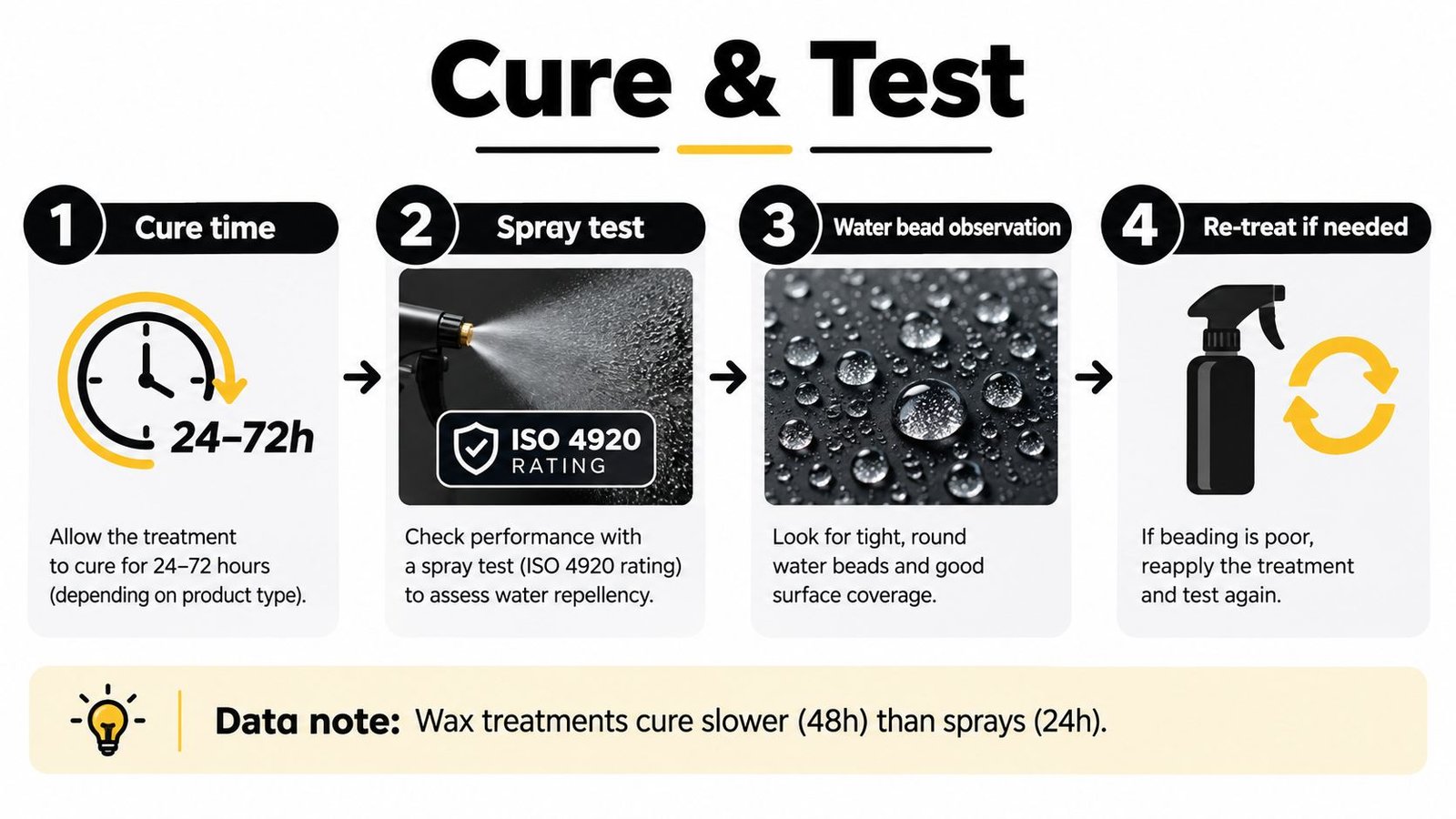
Use a consistent surface test
The BS EN ISO 4920:2012 spray-rating method mounts a specimen at 45°, with the nozzle 150 mm away, and compares the wetting pattern against a standard scale. A British Standard formulation study treats a rating below 4 as a failure, with 5 the maximum rating, as detailed in the spray-rating testing guidance.
You can't reproduce a laboratory test perfectly in a kitchen, but you can make your own checks more useful. Keep the sample at a consistent angle, use a repeatable spray distance, and compare treated and untreated swatches that have experienced the same washing history. A controlled sprinkle from a fixed height is more informative than casually flicking water at one corner.
Watch for water that darkens the fabric, spreads rather than beads, or enters along a seam. Flex the sample while wet, then inspect the stitch holes and folded edges. A face that performs well while flat may leak once a bag corner is bent or a jacket sleeve is creased.
Know what the test can't prove
Spray rating measures surface wetting. It doesn't replace hydrostatic-pressure testing under BS EN ISO 811:2018, so a strong bead pattern shouldn't be described as proof of full waterproofness. For a home project, the useful outcome is a documented comparison, not an impressive first impression.
Record the fabric weight, weave, finish type, curing conditions, washing cycles, spray rating, and any hydrostatic result available. That record helps you repeat a finish that worked and avoid repeating one that only looked successful for a short time.
Durability, Reapplication, and Honest Trade-Offs
A finish that looks excellent on a new swatch may behave differently after washing, bending, carrying, and exposure to outdoor dirt. Detergent, heat, abrasion, ultraviolet exposure, and the chemistry of the wash all affect durability. That's why reapplication should respond to the item's condition rather than an arbitrary calendar promise.
A useful procurement benchmark comes from the EU Ecolabel criteria adopted in 2014. It specified a functionality score of 80 out of 90 after 20 domestic wash-and-tumble-dry cycles at 40°C, or after 10 industrial washing and drying cycles at a minimum of 75°C, using laundering and spray-test methods. The figures are reported in the EU Ecolabel textile criteria. This is a demanding reference point, not an assumption that every home-applied treatment will reach it.
Maintain the item you actually use
A child's rain cape may need frequent inspection because it is flexed, pulled, and washed often. A market-stall apron may suffer more from rubbing against tables and handling stock than from prolonged rain. A waxed bag carried occasionally may need less attention, but its base and strap attachments still deserve local checks.
Reapply when droplets stop beading consistently, when water begins darkening the face, or after the item's wash and use routine has clearly reduced performance. No universal interval is reliable because projects differ in abrasion, detergent, sunlight, and finish chemistry.
The environmental trade-off deserves equal honesty. Evidence submitted to the UK Parliament says many PFAS-based stain-resistant finishes last only 10–20 washes, a shorter period than a typical product lifespan, as recorded in the UK Parliament evidence on PFAS textile finishes. A fluorine-free label doesn't automatically mean a finish is fully waterproof, exceptionally durable, or low-impact. If a short-lived finish needs repeated replacement, the extra product use matters.
A finish is only as responsible as the whole maintenance plan. Choose something you can repair, reapply, wash appropriately, and eventually dispose of without pretending that initial beading tells the whole story.
Wax can be locally renewed but may add stiffness and odour. Water-based repellents can preserve a softer hand but may need retreatment. Laminates offer a more structural barrier, yet repairs need compatible patches, tape, or sealant, and the coated material may be harder to recycle or alter. In every case, seams, zips, hems, and stitching remain the key leak points. No surface finish can waterproof a needle hole by itself.
Picking the Right Finish for Your Project
Commit to the project rather than the product label. For a shower-resistant summer jacket made from lightweight cotton, a tested spray-on DWR is usually the more sensible starting point because it can preserve drape better than wax. Treat the fabric before assembly where possible, test the finished seam allowance, and accept that the result is suitable for light shower protection rather than pressure-rated rainwear.
For a market bag made from sturdy cotton, wax may be the better match. The firmer hand can support the shape, local reproofing is practical, and the finish suits a bag that doesn't need the softness of a shirt. Pay particular attention to the base, handle joins, and folded corners, where water can enter despite good surface beading.
An outdoor cushion cover needs a more structural decision. Laminated cotton or another purpose-built coated fabric may be more appropriate than repeatedly spraying an absorbent cloth, especially where the cover will face regular rain. The seams still need suitable construction and, where appropriate, seam tape, iron-on sealing tape, or liquid seam sealant. For a different kind of exposed fabric surface, the discussion of real-world convertible top care is a useful reminder that cleaning, preparation, protection, and maintenance work together.
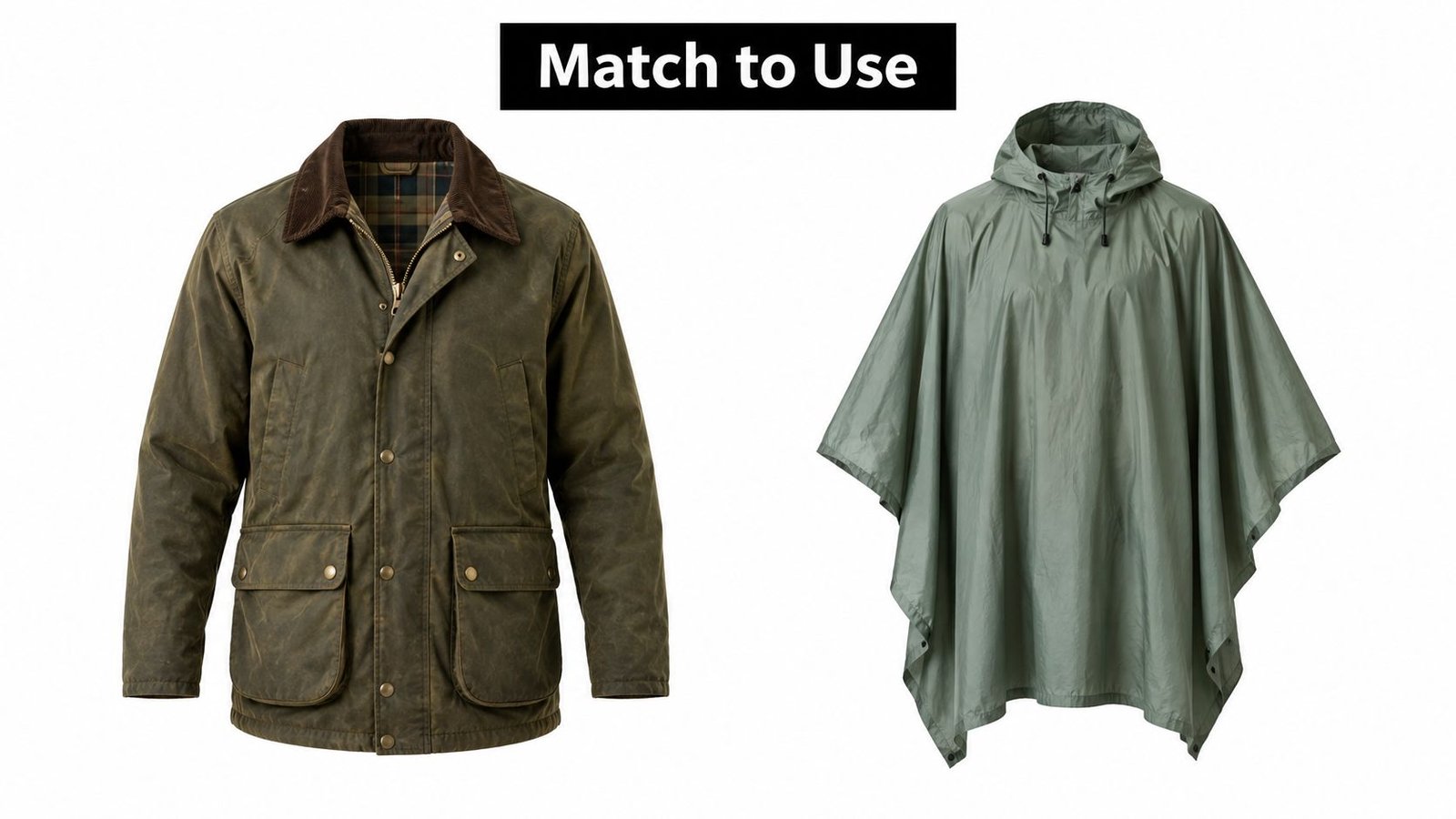
Whichever route you choose, test a swatch, wash and flex it, and record what happened. More Sewing offers cotton fabrics, haberdashery, sample swatches, and practical sewing supplies for testing a finish before you cut into a full project. Visit More Sewing to choose a suitable fabric and gather the tools for a carefully tested, weather-aware make.
