
Dressmaking
Aprons Explained Your Guide to Fabric Selection and Sewing
You've got fabric on the table, a half-finished apron in your head, and probably a choice to make, a quick waist apron for light kitchen jobs or a sturdier bib style that can handle daily use. That choice matters more than most sewing tutorials admit, because aprons do more than cover clothing. They protect, organise tools, and signal what kind of work you do.
Aprons have been part of UK life for centuries, and their meaning has shifted with them. A UK historical source traces them back to at least the 1300s, when they appear in medieval paintings, and shows how they moved from practical cover to social signalling over time (a quick history of aprons). That long history is useful today, because the best apron for a home sewist still comes down to the same basic questions, what needs protecting, what needs carrying, and what kind of fit feels right on the body.
Understanding Aprons and Their Uses
Start with the job, not the style
An apron is easiest to choose when you begin with the mess it has to handle. A baker, a gardener, a ceramicist, and a café server may all wear something that looks similar at first glance, but the work they do asks for different coverage, different pocket placement, and different fabric weight. British historical accounts describe aprons in use by cooks, shopkeepers, carpenters, gardeners, butchers, nurses, servants, and children, with materials chosen for heat, dirt, sparks, water, and wear.
That range tells you why aprons matter. Aprons function as task tools with a visible shape, and their job is to protect clothing while making the work easier to manage. In the past, a washable front layer helped clothing last longer when cloth was expensive, and the same logic still helps home sewists decide what belongs in the design.
Practical rule: choose the apron from the work backwards. If the task creates splash, grit, heat, or friction, let the shape and fabric answer that problem before you think about trims or pretty topstitching.
Why apron design still matters
Aprons also moved between utility and status. Decorative aprons became fashion accessories for European women by the 1500s, while in the 1920s through the mid-1930s flour companies promoted feed-sack and flour-sack aprons as an economical way to reuse packaging. That spread, from workwear to fashion, explains why one pattern can feel useful in a kitchen and still polished enough for gifting.
For home sewists, the right apron is a match between task, fit, and fabric. A slim waist apron may suit serving or tidying, while a fuller bib apron makes more sense for cooking, gardening, or workshop tasks. UK sizing also matters here, because an apron that fits comfortably across the body, through the waist, hips, and bust, is easier to wear for real jobs than one chosen only for appearance. If you are sewing for daily use, cost per wear helps too, since a well-made apron in the right fabric can serve many jobs and outlast cheaper versions that fray, stain, or sit unused in a drawer.
Exploring Apron Types and Their Functions
Match the shape to the hazard
A practical apron starts with the job in front of it. If the work throws splashes, sparks, dust, or constant rubbing at your clothes, the apron shape should answer that risk before you think about decorative details. A bib apron gives broad front coverage, so it suits messy cooking, woodworking, pottery, and tasks where the pockets may need to carry tools.
A waist apron covers less of the body, which leaves the upper body freer for serving, arranging flowers, or moving around a shop. That lighter feel can be useful when the apron needs to sit neatly over clothing and still allow quick access to what you keep in the pockets. A cobbler apron wraps further around the sides, so it helps when spills or marks can arrive from several directions. A pinafore usually reads as softer and more domestic, often chosen for home kitchen use or decorative sewing. A chef apron is built for long wear and steady coverage, while a gardening apron tends to prioritise pockets, wipe-clean surfaces, and easy movement for kneeling, bending, and carrying tools.
A UK historical reference notes that aprons were used by cooks, shopkeepers, carpenters and gardeners, with materials chosen for hazards like heat, dirt or sparks (apron use in British work life). That older pattern still helps home sewists make sense of apron planning now. The pocket layout matters as much as the outer shape. A deep bib pocket can hold pencils and tape measures for a woodworker, while a narrow waist apron pocket may only need to hold a pen, cloth or receipt pad. For makers comparing cloth choices, insights on craft material selection can help frame how texture, durability, and intended use fit together.
Pick the details that support the work
Fabric weight, strap style, and pocket placement all follow from the task. Heavy canvas or denim keeps its shape better for workshops and gardening, while lighter cottons feel better when the apron sits over clothing all day. Cross-back straps reduce pressure on the neck, which helps during long stretches of wear, and ties at the waist make more sense when adjustability matters more than structure.
Small design choices show their value once the apron is in use. If pockets sag, the apron pulls. If the bib sits too low, the body feels exposed. If the ties are too short, the fit becomes annoying by lunch. For UK sewists, inclusive sizing means checking how the apron sits across the bust, waist, and hips, then making sure the straps and ties leave enough room for movement rather than forcing the body into one narrow shape.
Choosing Fabrics from More Sewing Range
Compare the fabric to the apron's workload
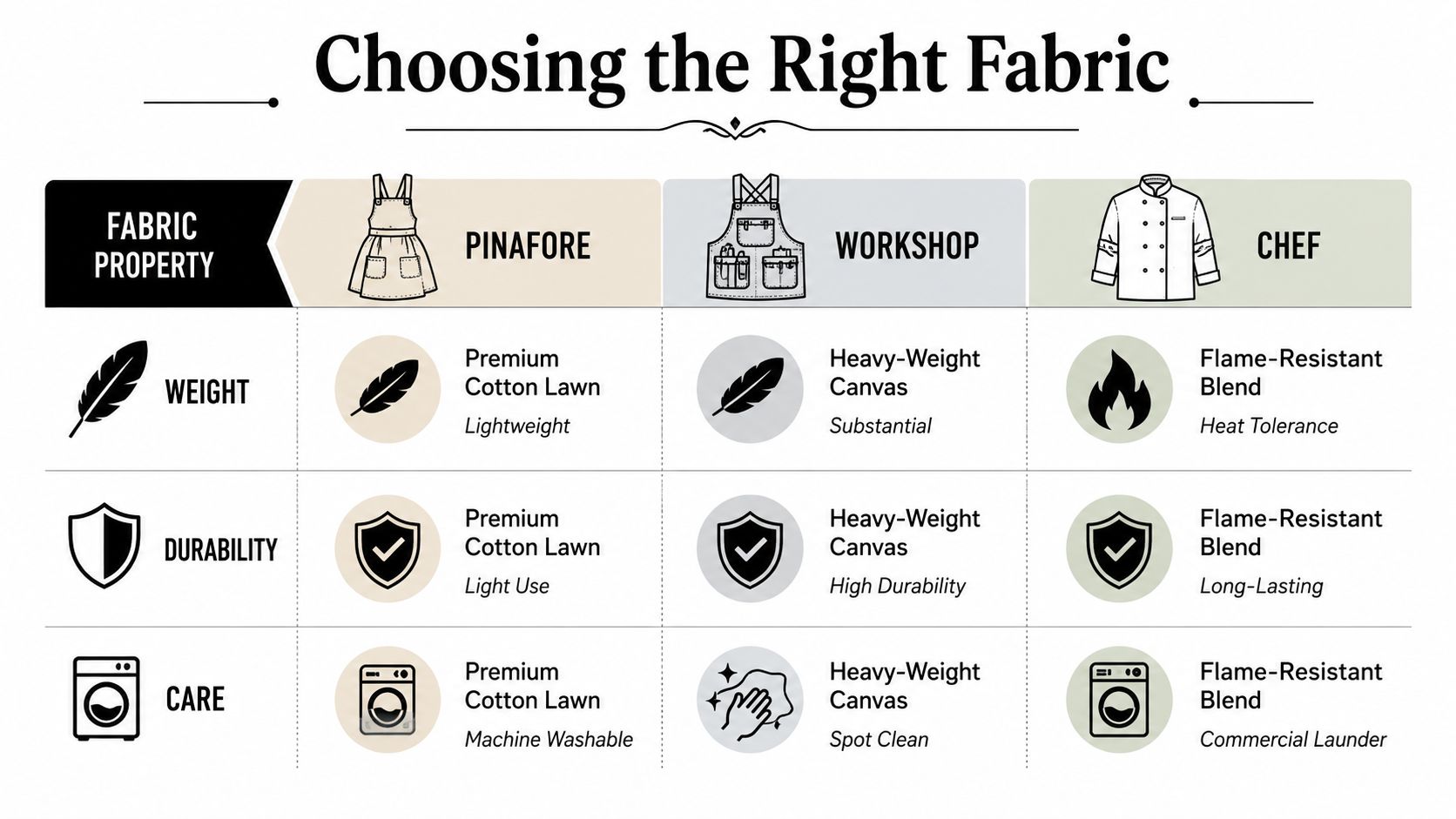
Fabric choice gets easier when you stop thinking in generalities and compare one use case at a time. A premium cotton lawn is a strong match for a light pinafore or a gift apron where softness and print detail matter more than abrasion resistance. It drapes neatly and feels comfortable against clothing, which is useful when the apron is more of a neat layer than a hard-working shield.
For a workshop apron, heavy-weight canvas is the clearer choice because it stands up to repeated friction, tool pockets, and rough handling. Denim is a good middle ground for gardening, since it's tougher than a lightweight cotton but not as stiff as some canvases. For a chef-style apron that sees more spills than scratches, a Tencel blend can bring a smoother hand and pleasant drape, especially when the maker wants something that feels less rigid while still sewing into a proper work apron.
Good fabric logic: if the apron needs to resist wear, choose structure. If it needs to feel pleasant for long hours, choose a fabric with softer drape. If it needs to look special as a gift, deadstock prints can add character without wasting new cloth.
Use deadstock with intention
Ex-designer deadstock cotton is a smart choice for stylish gifting, because aprons don't usually need large amounts of fabric and smaller pieces can still make a complete project. That makes aprons a natural place to use leftovers, sample cuts, and unusual prints. For anyone who likes reading about material decisions beyond sewing, insights on craft material selection is a useful companion read, because the same logic about texture, durability, and appearance applies across craft projects.
The question isn't whether one fabric is “best.” It's whether the fabric suits the job, washing routine, and comfort level. A crisp cotton lawn may be perfect for a pretty kitchen apron, but it's a poor match if the apron will spend most of its life around soil, paint, or splashes. A sturdier fabric may cost more to buy, but it can feel cheaper over time because it survives more wear and more washing.
Pattern Selection and Inclusive Sizing
Choose the block before you tweak the details
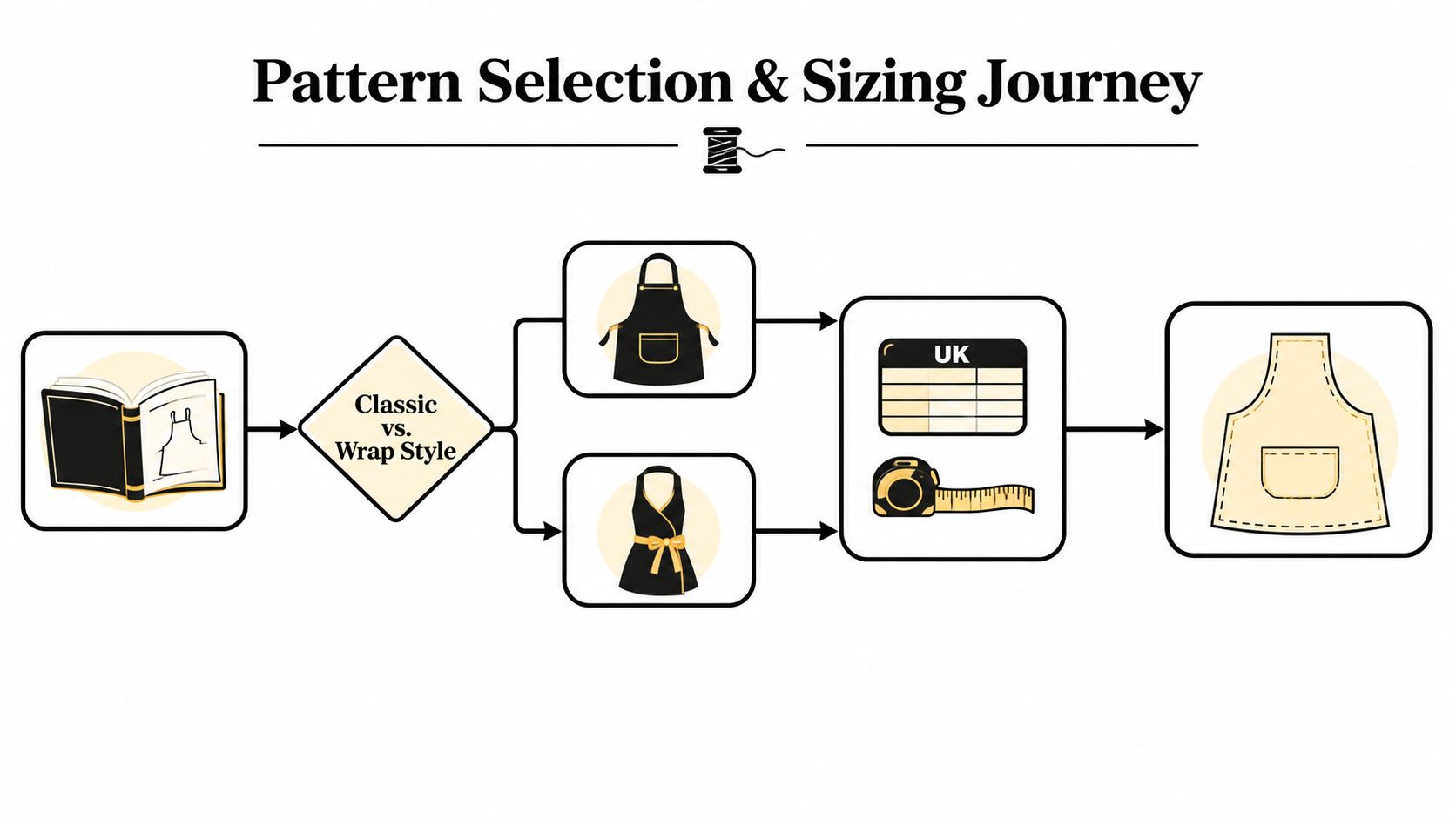
A good apron pattern starts with the body shape it's meant to serve. A classic bib block is the easiest starting point for kitchen use, but a cross-back style is often kinder on the neck because the straps distribute weight differently. Wrap styles add flexibility, which helps when the apron needs to sit over varying layers of clothing or shift between different wearers.
UK sizing still needs more care than many one-size apron patterns allow. Pattern and garment data discussions in the UK show that one-size apron blocks often miss real fit needs, especially for plus-size and tall sewists, so adjustable neck straps, waist ties, and added width matter far more than decorative trim (UK fit variation and apron sizing). A one-size template can be a starting point, not the final answer.
Measure the body, not the assumption
Start with a tape measure at the body's widest practical points, then compare that to the apron's coverage width and length. Add room if the wearer wants the apron to sit over a jumper, overshirt, or work clothes. For taller torsos, the bib needs more vertical reach, or the apron starts to feel like an untucked panel instead of proper coverage.
Measure for comfort in the position the apron will be worn in, not standing stiffly at attention. If the wearer bends, lifts, or reaches, the straps and bib need to move with those actions.
The safest fitting habit is to mock up the shape in scrap fabric before cutting the final cloth. Mark the neck point, waist point, and lower edge, then test whether the armholes or side openings pinch. If the neck feels crowded, switch from a tied neck to a cross-back or lower-placed strap system. If the apron rides up, add length. If it gaps at the sides, add width at the pattern stage rather than hoping the ties will fix it later.
Essential Sewing and Finishing Techniques
Build the apron in the order that avoids strain
Start by assembling the main body panels with a clean seam allowance and a pressed seam. Pressing matters because it sets the shape before topstitching makes that shape permanent. Then add pockets after the front panel is stable, so the pocket placement can be checked against the wearer's hand position instead of being guessed from the table.
Pocket openings benefit from double-topstitching, because the extra line of stitching keeps the edge flat and helps it survive repeated hand entry. At strap anchors, use bar tacks or a small reinforced box with an X through it, which spreads stress instead of letting one stitch line carry the load. Curved hems are easier to manage when you clip or notch the seam allowance before binding or turning, because the fabric can spread without puckering.
Finish the edges so the apron lasts
Bias binding works well on curves and on aprons that need a neat visible finish. It follows the edge without forcing it into a straight line, which is why many sewists prefer it for arm curves, bib edges, and shaped hems. If the fabric is bulky, trim the seam allowance gradually so the layers don't bunch up at the fold.
Needle and thread choices should match the fabric, not the fantasy of a perfect stitch. A sturdier apron body needs a needle that can pass through denim, canvas, or multiple layers without skipping. A lighter apron fabric needs a finer hand so the stitching doesn't look clumsy or pull the weave.
Corrective rule: when a curve puckers, stop trying to smooth it with the iron alone. Clip the seam allowance more carefully, repress the curve, and test the fold again before stitching the final line.
Common problems usually come from rushing the order. Uneven seams start when pieces are not aligned before stitching. Lumpy pocket corners happen when the corner is turned before the seam has been clipped cleanly. A strap that twists often means it was attached before the maker checked the front and back orientation twice.
Care Maintenance and Customisation Ideas
Care the apron by fabric, then repair it early
The easiest way to keep an apron useful is to wash it in the way the fabric wants to be washed. Canvas usually does better with gentle handling and cooler water, while cotton can take a crisper press if the finish should look sharp after laundering. Deadstock prints deserve the same care as any good cloth, because the print may be the feature that makes the apron feel special in the first place.
Repair matters because aprons are small enough to fix without much fuss. Patch worn pockets before they split fully, reinforce the strap joins when stitches start to fray, and re-stitch the stress points before the damage spreads. Extending the life of textile items by nine months can reduce carbon, water and waste footprints by 20–30%, so apron repair and remaking isn't a tiny craft habit, it's a meaningful sustainability choice (textile life extension and footprint reduction).
Make it personal without losing function
Customisation works best when it supports the use. Contrast-stitched monograms can make a gift apron feel considered, while detachable pockets let a maker move the same apron between kitchen and studio. Printed fabric panels add visual interest, and upcycled trims can give a plain apron a second life without changing the pattern.
The best personalised aprons still read clearly from across the room. If the apron is for a cook, keep the front easy to wipe clean. If it's for a maker, make the pockets reachable and the straps adjustable. If it's for gifting, choose one strong feature, a print, a monogram, or a useful pocket, rather than crowding the design with everything at once.
With the right fabric, a sensible pattern block, and finishing that's built for wear, aprons become one of the most satisfying sewing projects in a home studio. If you want quality cloth, practical haberdashery, and ready-to-sew options for your next apron, visit More Sewing and pick fabrics that fit the way you sew and wear.
