
Blog, Dressmaking
Beachwear Sewing Patterns: A Complete Guide for Makers
At least 50% stretch, strong recovery, and 6 mm swim elastic are the practical starting points for beachwear sewing patterns. With the right fabric, stitches, and fitting process, you can make durable swimwear, cover-ups, and beach dresses at home.
You've chosen a pattern, found a striking print, and pictured the finished piece on a sunny beach. Then the fabric arrives: slippery, springy, and far less cooperative than an ordinary jersey. The difference between a swimsuit that stays comfortable through swimming and one that twists, bags, or pulls at the seams usually comes down to construction rather than the pattern illustration.
Beachwear sewing patterns cover more than bikinis. They include one-piece swimsuits, rash vests, cover-ups, kaftans, sarongs, beach trousers, and loose dresses. Each project asks slightly different things of fabric and tools, so a relaxed cotton kaftan shouldn't be approached like a close-fitting swimsuit.
Why Sew Your Own Beachwear
The best moment often comes after the practical work. You pull on a swimsuit or beach dress that fits your torso, stays where it should, and uses a print you chose yourself. A ready-made garment may look appealing on the hanger, but it can't account for every combination of bust shape, torso length, coverage preference, and activity level.
Home sewing also lets you build a complete beach wardrobe rather than relying on one complicated make. A beginner might start with a gathered sarong or an unlined kaftan, then progress to a lined beach dress, a supportive bikini top, or a one-piece with carefully finished leg openings. The same skills, accurate cutting, controlled seams, and thoughtful fabric selection, carry from one project to the next.
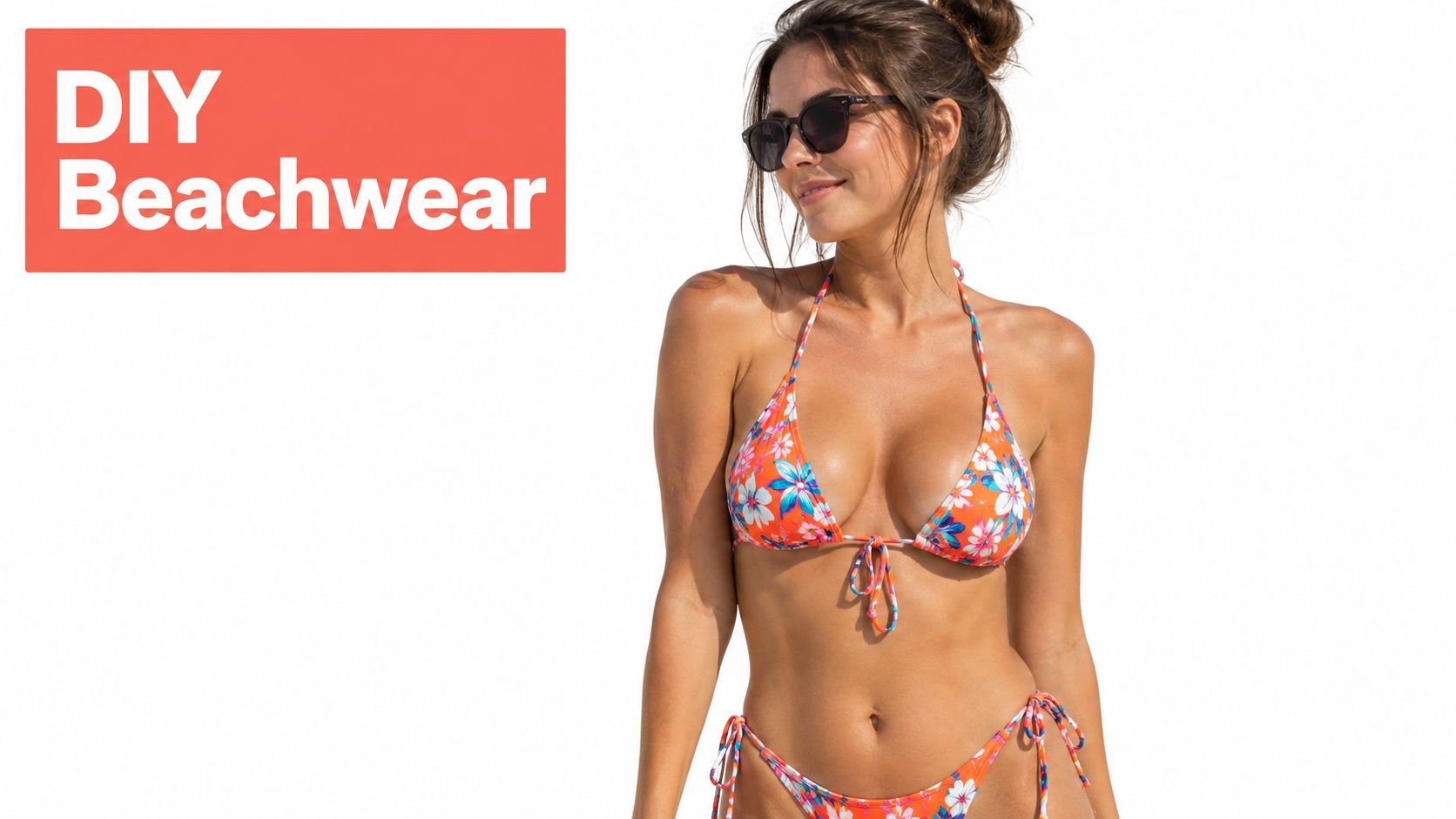
Start with the garment you'll actually wear
A sarong is forgiving because it doesn't need close fitting. A kaftan can showcase a dramatic print without demanding specialist swim construction. A swimsuit is more technical, but it gives you the greatest control over support and coverage when the pattern suits your measurements.
Before buying a pattern, check:
- The intended fabric: Look for swim tricot, nylon or polyester elastane, or another fabric with documented stretch and recovery.
- The construction level: Beginners may prefer a simple cover-up before tackling elasticised openings.
- The finished measurements: Body measurements alone won't tell you how a swimsuit will behave.
- The support details: Wide bands, lining, elastic channels, and adjustable straps can matter more than decorative features.
A well-organised workspace helps too. Use sharp fabric scissors or a rotary cutter, clips or ballpoint pins, a stretch-friendly needle, suitable thread, and scraps for testing. For broader pattern-making habits, The Sofa Cover Crafter's pattern advice is useful for thinking about layout, paper accuracy, and how a flat pattern translates into a three-dimensional item.
The value isn't only financial. You choose the colour, lining, coverage, and finish, while learning how fabric behaves under real conditions. That makes a handmade beach outfit feel considered rather than merely homemade.
Choosing the Right Fabric for Stretch and Recovery
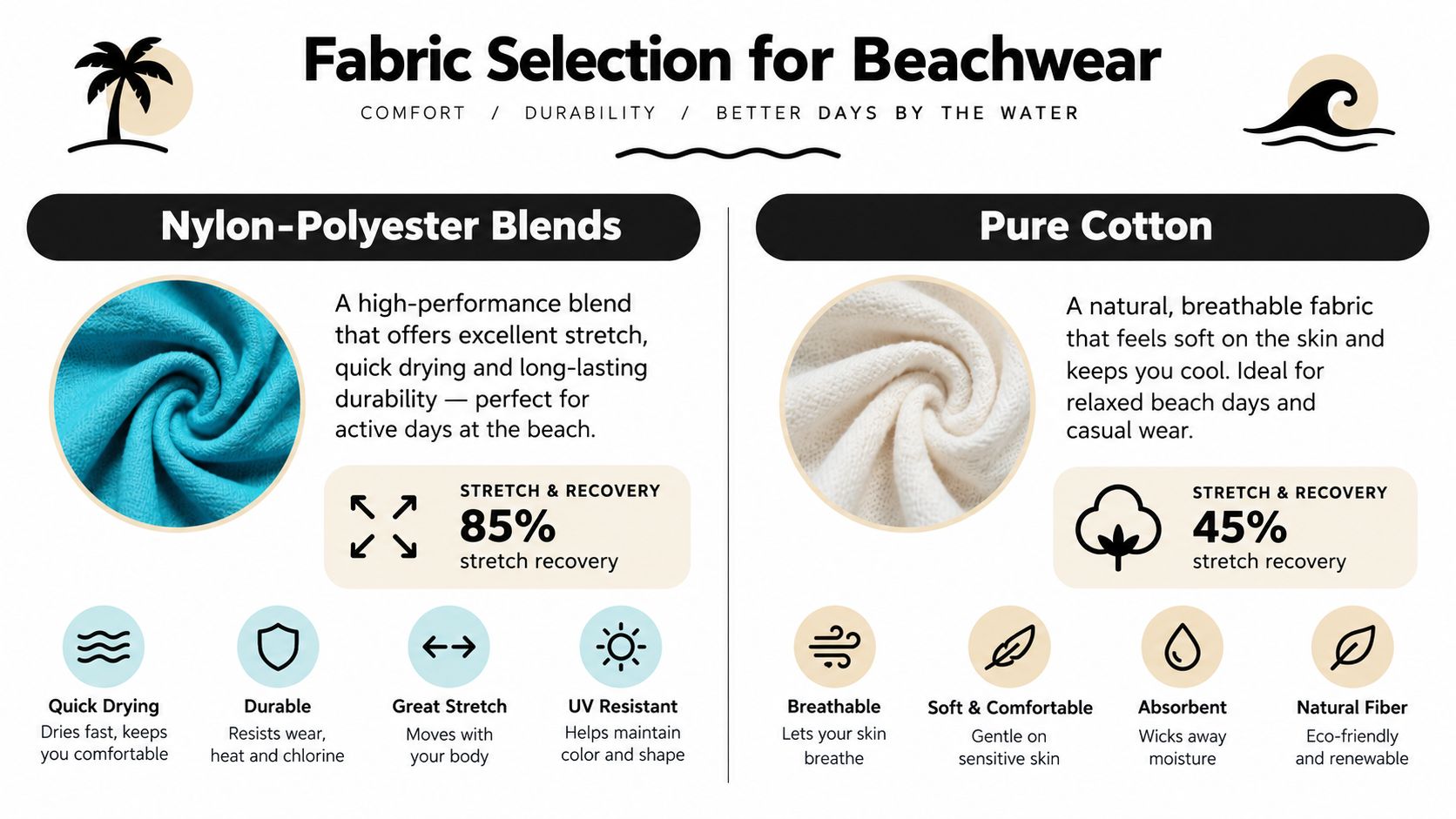
A swimwear pattern can't rescue fabric that stretches out and stays stretched. For close-fitting beachwear sewing patterns, prioritise nylon or polyester swim fabrics blended with elastane. These blends are used in professional swimwear because they combine body-hugging stretch with shape retention and recovery, as outlined in UK swimwear line construction guidance.
Test the cloth before cutting
Don't judge a fabric by stretching one small corner. Test it across the width and length, then release it and watch how quickly it returns. A pattern may specify at least 50% stretch and good recovery, so measure the fabric against the pattern's requirements rather than assuming every shiny knit is suitable.
A simple check works well:
- Mark a section of fabric with two points.
- Measure the relaxed distance.
- Stretch it gently and record how far it extends.
- Release it and inspect whether the marks return close to their starting position.
- Repeat after handling the fabric, because some cloth feels resilient at first but relaxes during cutting.
Look for a stable, even knit without thin patches. Hold the fabric up to the light to check opacity, especially if the garment will be worn without a separate lining. For a bikini or swimsuit, test the fabric doubled if the pattern uses a self-lining. A fabric that looks opaque alone may become transparent when stretched.
Compare fibre choices honestly
Nylon elastane often feels smooth and flexible, making it comfortable for close-fitting swimwear. Polyester elastane can be a practical choice where repeated exposure to pool chemicals is a concern, but the finished fabric still depends on its knit, elastane content, and recovery. Recycled versions of both fibres can make sense for a project with sustainability in mind, yet recycled content doesn't automatically guarantee better durability.
Cotton is pleasant for a loose cover-up, but pure cotton doesn't provide the recovery normally needed for a swimsuit. It can absorb water, lose its shape, and feel heavy when wet. Use it for a dry beach layer unless the pattern specifically supports a different construction.
For UK sourcing, ask whether the fabric is intended for swimwear, whether the seller provides a stretch description, and whether matching lining and elastic are available. Recycled nylon and polyester swim fabrics are increasingly visible in UK retail, but blends containing elastane remain difficult to recycle through current UK systems. That trade-off deserves attention: a durable garment worn repeatedly may be more useful than a fabric chosen only for a recycled label.
Essential Stitch Types for Stretch Fabrics
Stretch fabric needs a seam that moves with it. A conventional straight stitch can break when the garment is pulled over the body, while a suitable stretch stitch allows the seam to extend without opening.
The stretch zigzag and stretch straight stitch are both designed to reinforce stretchy seams. UK outdoor-swimming guidance explains that both stitches double back to lock each stitch, but they behave differently in use. The stretch zigzag is the essential choice for attaching elastic, while the stretch straight stitch can give a neater-looking seam where the fabric itself needs controlled movement. See the UK outdoor-swimming sewing guide for the stitch distinction.
Stretch zigzag
Use a narrow zigzag for side seams, crotch seams, shoulder seams, and elastic application. Its width and movement help the fabric stretch without putting all the strain on a single line of thread.
Before sewing the garment, test the stitch on a layered scrap. Pull the sample firmly. If the thread snaps, adjust the stitch settings or choose a more flexible option. If the fabric tunnels or forms ridges, reduce the width or stabilise the seam while testing.
Only the stretch zigzag should be used for attaching elastic. Sew the elastic to the edge while maintaining even tension, then fold the fabric over and stitch again if the pattern calls for a concealed finish.
Stretch straight stitch
A stretch straight stitch can look cleaner than a zigzag on selected seams. It still provides movement because the machine forms a reinforced stitch pattern rather than an ordinary rigid straight line.
The compromise is flexibility and control. A zigzag is visually more obvious but forgiving around elastic and edges. A stretch straight stitch looks tidier, yet it may be less convenient for enclosing elastic or handling very curved openings.
Practical rule: Test every stitch on the actual fabric, with the same number of layers and elastic arrangement used in the garment.
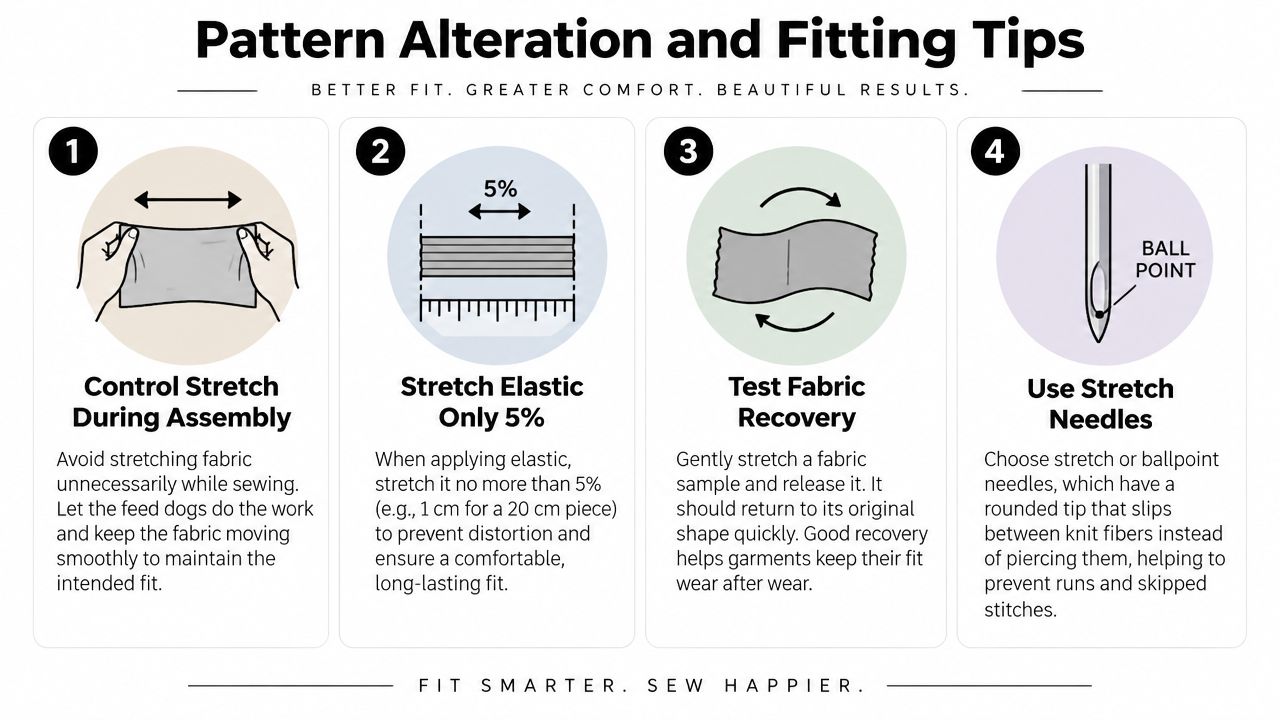
Don't stretch the fabric aggressively as you sew unless the pattern specifically requires it. Let the feed dogs move the layers evenly, and use clips instead of pins where pinholes could remain visible.
Tools and Notions You Need to Get Started
Swimwear construction becomes far less frustrating when the notions match the fabric. Your basic kit should include:
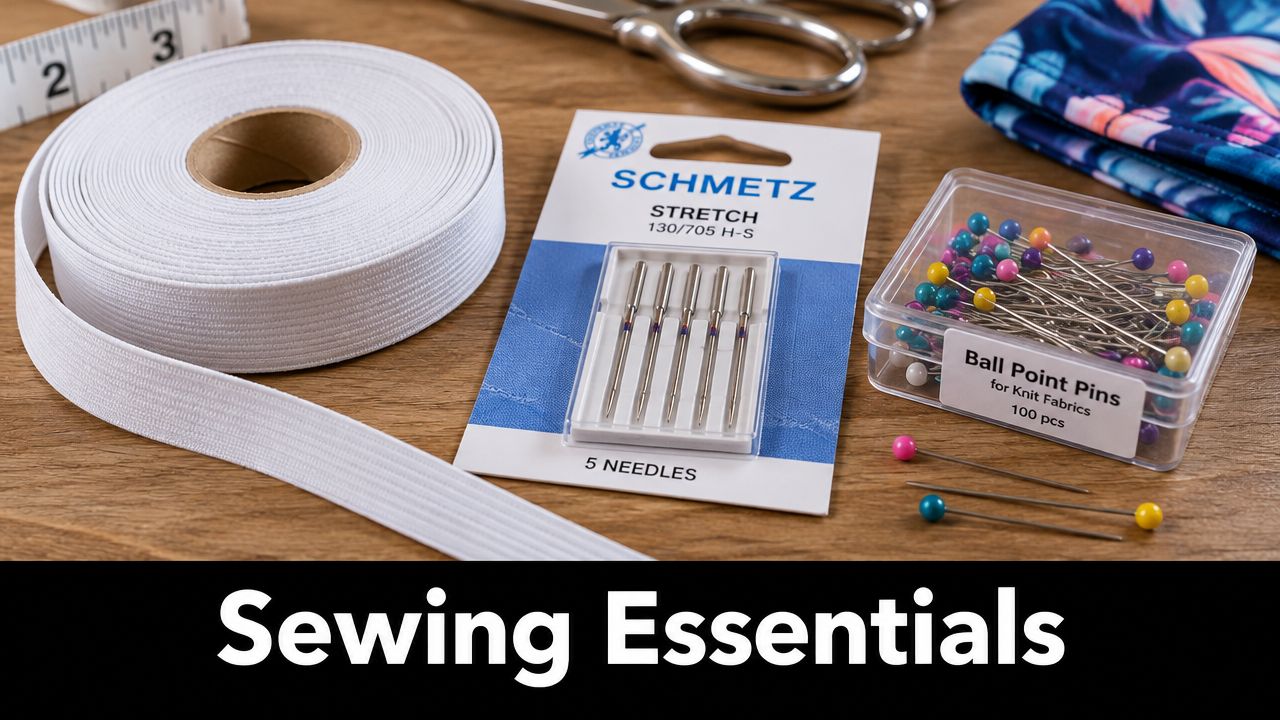
- 6 mm swim elastic: UK pattern guidance identifies this width as a standard edge-stabilising notion for openings such as legs, necklines, and armholes. Choose elastic sold for swimwear rather than general garment elastic.
- Ballpoint or stretch needles: The rounded tip moves between knitted loops instead of cutting through them. Replace a needle that begins skipping stitches.
- Polyester thread: It offers useful strength for garments exposed to moisture and movement. Test the thread with your chosen stitch before cutting.
- Clips or ballpoint pins: Clips keep layers aligned without creating unnecessary holes. If you pin, place pins within the seam allowance.
- Rotary cutter and mat: These help prevent slippery fabric from shifting while you cut. A sharp blade also gives cleaner curves.
- Tape measure and paper weights: Weights are helpful when tracing and cutting fabric that curls or moves.
- A small iron and pressing cloth: Use gentle heat and test first, because elastane can be damaged by excessive heat.
More Sewing is one UK option for sourcing fabrics, haberdashery, sewing kits, and project supplies, with fabric swatches available for checking colour and handle before ordering. A local fabric shop or specialist swimwear supplier can be equally useful when you need to compare recovery in person.
A machine with a stretch stitch is helpful, but an overlocker isn't essential for every pattern. Learn your ordinary machine's stretch options first. Before starting, prepare scraps of the outer fabric, lining, and elastic, then test needle, thread, tension, stitch width, and seam handling together.
This short demonstration can help you visualise the relationship between fabric movement and machine settings:
Keep the test swatches. They become a useful reference when you return to the project after a break or need to diagnose a skipped stitch.
Pattern Alteration and Fitting Tips
A swimsuit toile should test the actual garment problem, not just the paper pattern. Stretch affects torso length, bust support, and leg coverage, so use the fabric you intend to wear whenever possible. A performance swim knit may behave very differently from a generic stretch fabric with around 30% stretch, as explained in this UK swimwear pattern-cutting guide.
Make the toile useful
Cut enough fabric to assess the areas under strain. For a one-piece, include the torso, bust, leg openings, and shoulders. For a bikini, test the top and bottoms separately. A comfortable waistband does not confirm that the leg elastic or bust band will stay flat.
Move in the toile before altering it:
- Bend and sit: Check for riding up or vertical pulling through the torso.
- Lift your arms: Look for armholes that gape or cut into the body.
- Walk and reach: Watch whether the neckline or shoulder straps shift.
- Check coverage: Confirm that the back and leg openings remain suitable for swimming and active use.
- Inspect the bust area: Look for strain lines, collapsing cups, or a rolling band.
Change one area at a time. If the garment pulls vertically, add length through the torso instead of sizing up. For a fuller bust, choose cup options where available, or consider a wider underbust band, lining, or a separate elastic channel. If the waist fits but the hips do not, blend between sizes at the side seams. Altering the centre front or back can change the grain and distort the fit.
Saltwater, chlorine, and repeated rinsing place extra demands on fit. A swimsuit that feels only slightly tight during the first fitting may become uncomfortable once the elastic is stretched in use, so assess support while reaching, sitting, and walking.
Control elastic tension
Apply elastic with only about 5% while sewing, following the practical recommendation in UK swimwear pattern guidance. Excess tension can cause puckering, digging, and distorted openings. Too little tension leaves gaps around the legs, neck, or arms.
Mark quarter points on both the opening and elastic. Match the marks as you sew, then distribute the tension across each section instead of stretching one area and leaving another loose.
Construction Techniques for Durable Beachwear
A swimsuit can fit well and still fail at its seams, elastic, or lining. Test the fabric layers and stitch settings on scraps before cutting the garment. If the pattern includes a lining, cut it with the same directional stretch as the outer fabric and keep both layers aligned. Lining improves opacity and comfort, but it adds bulk, so check that the seam remains flexible.
Use a construction order that leaves openings accessible. For a swimsuit, side seams, crotch, then shoulders keeps the layers easier to handle and avoids closing an opening before you can turn the garment, as outlined in Paper Theory's swimsuit sewing guidance. Follow the pattern instructions if they specify a different order for a particular design.
Build edges that can take movement
Attach elastic in short sections. Mark quarter points on the opening and elastic, match them as you sew, and keep the fabric edge flat. A stretch zigzag secures the first pass. Fold the seam allowance over the elastic and topstitch it if the design calls for an enclosed edge. Pull the elastic, not the whole garment, to distribute tension. Dragging the opening through the machine can create ripples.
Use a channel for extra support in a waistband, underbust band, or side seam. Its finished width must suit the elastic, with enough room for the elastic to move without twisting. Secure the channel ends with bar tacks or a second line of stitching where repeated strain is likely.
Trace and cut in manageable sections
A complete swimsuit cannot be flattened easily. Trace one small area at a time, flattening only the section being copied before moving across the garment. Check the stretch direction, notches, and grainline after each section. Add 1 cm seam allowance to all edges where the pattern does not already include it.
Secure thread ends at crotch seams, strap joins, and other high-stress points. Test each finished edge by stretching it gently. A waving edge usually indicates uneven elastic tension or fabric pulled during stitching. A rigid seam points to unsuitable stitch settings or thread tension, so adjust and retest on a scrap before continuing. Subsequent care should include rinsing after use and drying away from harsh heat.
Project Ideas and Inspiration for All Levels
Choose a project that matches both your sewing experience and the way you spend time near water. A sarong is a good first make because it teaches accurate cutting and neat edge finishing without demanding a close fit. A loose kaftan or beach dress adds more shaping while leaving room to explore colour, print, and drape.
Once those feel comfortable, try a lined cover-up with side slits, a pull-on beach trouser, or a simple rash vest. These projects help you practise stretch seams without immediately managing several elasticised openings. Keep scraps from each make, because they're useful for testing stitches and checking whether a new elastic behaves well with a familiar fabric.
Match the pattern to the mood
Current UK-facing coverage for 2026 describes interest in wearable silhouettes, bold prints, flattering shapes, and nostalgic forms rather than one universal bikini style, as reported by Who What Wear UK's swimwear trend coverage. You can translate those ideas into practical home sewing without copying a runway look.
Try a high-waisted bottom with a comfortable waistband, a one-piece with a square neckline, or a simple beach dress in a bold geometric print. Nostalgia works especially well through shape, such as a fuller brief or a gathered neckline, while a modern fabric can keep the result looking current.
Experienced sewists can combine a supportive top with a separate cover-up, but don't make the bikini your first stretch project if you haven't tested elastic application. A useful way to strengthen general construction habits is to follow a clear step-by-step quilting guide, particularly for learning careful seam alignment and methodical pressing, even though the materials differ.
Start with basic techniques, test every layer, and spend money on the fabric and notions that affect comfort directly. A beautiful pattern is only half the project. Recovery, elastic control, and a toile in the right fabric determine whether you'll reach for the finished garment again.
More Sewing offers UK makers a curated selection of fabrics, haberdashery, ready-to-sew kits, and practical supplies for projects ranging from cover-ups to more technical beachwear. Visit More Sewing to compare suitable materials, request fabric swatches, and choose the tools you need before cutting your first pattern.
