You've picked a pattern. You can already see the finished garment in your head. Then you open a fabric shop page or stand in front of shelves of bolts, and suddenly every option starts to blur together. Crisp cotton, slubby linen, soft wool, smooth silk. They all sound lovely until you have to choose one and sew it.
That hesitation is normal. Fabric choice is where many sewists stall, especially at the start. A pattern envelope might give broad suggestions, but it won't tell you why one linen will press beautifully and another will fight every crease, or why a cotton that feels perfect in your hand might turn into a top that takes ages to dry after washing.
Natural fabrics for clothes are a good place to begin because they teach you how fabric behaves. They come from plants or animals, and they've shaped clothing for far longer than modern synthetics. If you learn how natural fibres feel, move, wrinkle, absorb moisture, and respond to heat, you'll start making better choices in the fabric shop and at the sewing machine.
Your Guide to Natural Fabrics for Clothes
If you're standing at the start of a project and wondering, “What should I buy?”, think like a dressmaker, not just a shopper. Don't begin with colour alone. Begin with use.
Ask yourself a few practical questions first:
- What am I making? A shirt, pyjamas, trousers, a blouse, a coat, a child's dress.
- How should it feel on the body? Cool and airy, warm and cosy, crisp and structured, fluid and soft.
- How much maintenance am I willing to do? Some fabrics forgive a quick wash and basic pressing. Others ask for gentler handling.
- Will I wear it often? Daily wear needs different priorities from a special-occasion garment.
That's where natural fabrics help. They give you a more intuitive relationship with cloth. Cotton often feels familiar and steady. Linen feels dry, fresh, and slightly lively under the iron. Wool has spring and body. Silk glides and shifts unless you support it properly.
Practical rule: If you can describe how you want the finished garment to feel in wear, you're already halfway to choosing the right fabric.
Natural fabrics for clothes also make sense from a sewing perspective. They're the materials many garment techniques were built around, so classic seam finishes, pressing methods, facings, hems, and interfacing choices often make more sense once you understand the fibre.
A beginner doesn't need to memorise every textile term. You just need a usable framework. Learn the two big families first. Then learn how a few common fabrics behave during pre-washing, cutting, sewing, pressing, and everyday wear. Once that clicks, fabric shopping becomes much less mysterious.
The World of Natural Fabrics Explained
Natural fabrics fall into two big families. Think of it as a fabric family tree.
Plant-based fibres
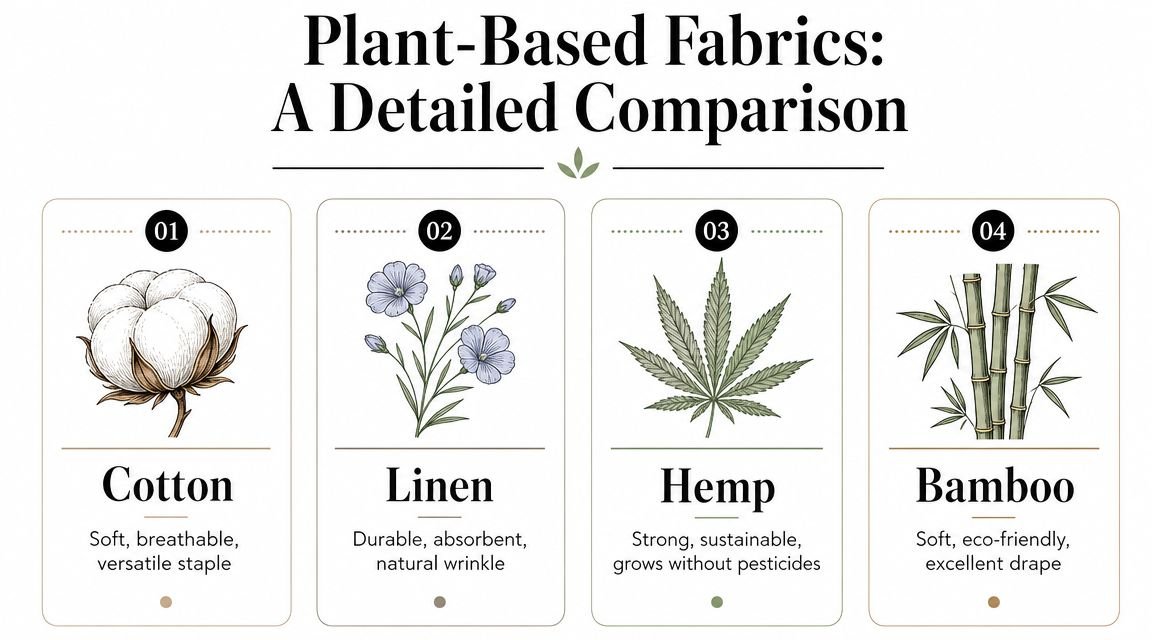
These come from parts of plants such as seed fibres, bast fibres, or other cellulose-rich material. For home dressmaking, the main names you'll meet are:
- Cotton
- Linen
- Hemp
These fabrics often feel breathable and comfortable against the skin. They're common in shirts, dresses, skirts, summer trousers, children's clothes, and casual daywear.
Animal-based fibres
These come from animals and are protein fibres. In clothing, the most familiar examples are:
- Wool
- Silk
These tend to bring warmth, softness, drape, or a more luxurious surface. You'll find them in knitwear, suiting, blouses, scarves, dresses, coats, and occasion wear.
Why this matters to sewists
Before man-made fibres, British dress depended on wool, linen, silk and cotton. Wool use in Britain dates back over 4,000 years, and for centuries the national clothing economy was built on it, long before the first commercial synthetic fibres appeared in the early twentieth century, as noted in this history of natural fabrics in Britain.
That history matters in the sewing room. Many familiar construction techniques were shaped around these fibres. A pressed pleat in wool, a crisp collar in cotton, a fine hem in linen, a delicate seam in silk. None of that is accidental. Garment-making traditions developed because these materials responded in specific ways to needle, thread, steam, and wear.
A simple way to read a fabric
When you pick up any natural fabric, test it in four ways:
| What to check | What it tells you |
|---|---|
| Scrunch it in your hand | Whether it wrinkles easily and how it recovers |
| Let it hang | Whether it drapes softly or holds shape |
| Rub it between your fingers | Whether it feels smooth, dry, fuzzy, crisp, or springy |
| Fold and press with your fingers | Whether it has “memory” and likes structure |
That last point is one beginners often miss. Fabric has a personality. Some cloth wants order. Some wants movement. Some behaves beautifully until you cut it, then slides off the table like it has plans of its own.
Fabrics don't misbehave at random. They behave according to fibre, weave, weight, and finish.
Once you stop expecting every fabric to sew the same way, your results improve fast.
A Closer Look at Plant-Based Fabrics
Plant-based fabrics are often the first natural fabrics for clothes that people sew with, and for good reason. They're widely available, comfortable to wear, and easier to understand once you know what moisture does to them.
The key point is simple. Plant fibres, especially cotton, interact strongly with moisture. Cotton is hydrophilic, which means it absorbs perspiration. That's one reason it feels comfortable in humid weather, but it also means it can take longer to dry, as explained in this overview of natural fibre moisture behaviour.
Cotton
Cotton is often the friendliest starting point for a new sewist. It usually stays put on the cutting table, presses well, and comes in many forms, from crisp poplin to soft jersey and sturdy denim.
How it feels and falls
Cotton can be crisp or soft depending on weave and finish. A cotton poplin often holds shape well, so it suits shirts, shirt dresses, gathered skirts, pyjama sets, and simple tops. A lighter cotton lawn feels smoother and more delicate, making it useful for blouses, baby clothes, and linings.
Breathability and wear
Because cotton absorbs moisture, it often feels pleasant in warm weather and against sensitive skin. That's why it's such a common choice for daywear and children's clothing. If you're comparing fibres for infant garments, this guide on choosing the best fabric for babies is useful for thinking through softness, breathability, and daily laundering.
Sewing advice
- Pre-wash first: Cotton can change after washing, so wash it the way you'll wash the finished garment.
- Use a universal needle: For many woven cottons, that's a practical starting point.
- Press as you go: Cotton rewards regular pressing. Don't save all the ironing for the end.
- Match the fabric to the pattern: A structured blouse pattern wants a different cotton from a drapey summer dress.
A crisp cotton is like good writing paper. It likes a crease, holds a fold, and gives clean edges. That makes it helpful for collars, cuffs, plackets, and beginner-friendly seams.
Linen
Linen comes from flax, and it has a character all its own. It often feels cooler, drier, and more textured than cotton.
Hand and drape
Some linens are crisp and almost architectural. Others are washed to feel softer and more relaxed. Linen tends to wrinkle, but that wrinkle is part of its charm. Think of linen as having a memory. It creases quickly, but it also presses beautifully, and a sharp iron can bring it back into line.
Best uses
Linen suits warm-weather shirts, wide-leg trousers, pull-on shorts, simple dresses, and easy jackets. A heavier linen can also work for pinafores, overshirts, and softly structured trousers.
Sewing advice
Linen often frays more than beginners expect, so seam finishing matters.
- French seams: Good for lighter linens in shirts and blouses.
- Overlocking or zigzagging: Helpful for medium-weight projects.
- Stay-stitch curves early: Necklines and armholes can loosen if handled too much.
- Cut accurately: Linen shows wonky cutting more clearly than some forgiving knits.
If your fabric shop offers washed linen and regular linen, touch both. Washed linen usually feels softer and less rigid straight away. Standard linen may feel firmer and settle after laundering.
Linen rewards patience at the iron. If you press each seam properly, the garment starts looking finished long before the final hem.
Hemp
Hemp is less common on the high street than cotton or linen, but it's worth recognising because it's strong, durable, and often excellent for practical clothes.
What it's like to wear
Hemp fabrics can feel slightly firmer at first. Some soften with washing and wear. Depending on the weave, hemp may resemble linen in appearance, with a dry hand and visible texture.
Good project matches
Try hemp for overshirts, simple workwear-style trousers, aprons, casual jackets, or hard-wearing skirts. If the cloth has been softened or blended, it can also make comfortable tops and dresses.
Sewing advice
Hemp often benefits from the same habits that help with linen:
- Pre-wash to remove stiffness and reveal the true hand
- Use firm pressing to shape seams and hems
- Finish raw edges early if the weave starts to loosen
- Choose simple silhouettes that let the fabric speak
A common beginner mistake is expecting every natural fabric to drape like viscose or silk. Hemp usually doesn't. It tends to do better in garments that need substance rather than fluidity.
A quick comparison in the shop
| Fabric | Best first impression test | Good beginner project |
|---|---|---|
| Cotton | Scrunch and see if it springs back or stays crisp | Pyjama bottoms, shirt, simple skirt |
| Linen | Rub it between fingers for dryness and texture | Pull-on trousers, boxy top, summer dress |
| Hemp | Fold it and feel for firmness and strength | Overshirt, apron, casual jacket |
Exploring Animal-Based Fabrics
Animal-based fabrics behave differently from plant fibres. They often bring warmth, resilience, softness, or sheen, and they usually ask for a more attentive hand during cutting and sewing.
Wool
Wool is one of the most useful fabrics a sewist can learn because it often responds beautifully to shaping. It can hold warmth, recover well from creasing, and take pressing techniques that would flatten or damage other fibres.
Hand and structure
Wool can range from soft suiting to thick coating. Many wool fabrics have a kind of spring. You squeeze them, and they seem to bounce back. That spring is helpful in jackets, skirts, trousers, and coats because it gives the garment body without making it feel stiff.
Sewing techniques that help
Wool usually prefers a calm pace.
- Use plenty of steam: Steam helps wool accept shape.
- Test pressing first: Some finishes mark easily.
- Use a pressing cloth: This protects the surface.
- Consider a walking foot for coatings: Thick layers can shift unevenly.
- Grade seam allowances: That reduces bulk in collars, lapels, and waist seams.
Wool is ideal for projects where shape matters. A structured skirt, relaxed blazer, winter overshirt, or coat all benefit from its ability to mould under heat.
Silk
Silk is strong for its weight, but it can feel slippery and delicate in the sewing room. Many sewists find silk intimidating at first because it moves while cutting and can show every pin mark, pull, and uneven stitch.
How it behaves
Silk often has fluid drape, a smooth surface, and a certain light-catching quality. Some silks are crisp, but many dressmaking silks move easily and don't forgive rough handling.
Think of silk like water on a tray. It settles into soft folds, but if you jolt the tray, everything shifts.
Sewing advice for better control
Small techniques make a big difference
- Cut in a single layer: This improves accuracy.
- Use a fine, sharp needle: It helps avoid visible damage.
- Pin within seam allowances when possible: Silk can show pin holes.
- Shorten your stitch length slightly if needed: Test first on scraps.
- Stabilise key edges: Lightweight interfacing or stay-stitching helps necklines and button bands.
A silk camisole, blouse, scarf, or bias-cut slip can be beautiful, but only if you respect the fabric. Support it while sewing. Don't drag it through the machine. Let the feed dogs do the work.
Handle silk less, not more. The more you fuss, the more likely it is to distort.
Wool and silk compared
| Fabric | What it does well | Watch out for |
|---|---|---|
| Wool | Shape, warmth, recovery, structure | Bulk, surface marking, uneven layer feeding |
| Silk | Drape, softness, elegance, lightness | Slipping, fraying, visible pin and needle marks |
If you're choosing between them for your next project, think about whether the garment needs body or flow. Wool gives presence. Silk gives movement.
Sustainability and Processing of Natural Fibres
Natural doesn't automatically mean simple, low-impact, or easy to judge. A more useful question is this: Is this fibre suitable for the garment I want to make, and will I wear that garment enough to justify the material?
That shift matters because sustainability in sewing isn't only about fibre origin. It's also about durability, laundering, frequency of use, and whether a fabric's processing changes how biodegradable or practical it really is.
Match the fibre to the job
One of the clearest sustainability lessons for natural fabrics for clothes is matching lifecycle to end use. Linen and hemp are often valued for durability and for requiring comparatively little water or pesticides to grow, while cotton is comfortable and versatile but can be more resource-intensive. One source notes that producing a single cotton T-shirt can require up to 2,700 litres of water in this discussion of 100 percent natural fabric choices and impact.
That doesn't mean cotton is “bad” and linen is “good” in every case. It means you should ask better questions.
- Will this garment be worn weekly?
- Does the fabric suit frequent washing?
- Am I choosing it because it's right, or just because it's familiar?
- Is it blended or heavily finished in ways that change how it performs or breaks down?
A linen summer trouser that lasts for years can be a very sensible choice. A cotton tee you wear constantly can also be sensible. The mismatch is what causes problems. Delicate fabric for rough wear, hot fabric for a heatwave wardrobe, or a beautiful cloth that sits unused because it doesn't suit your life.
Processing matters too
Natural fibres still go through spinning, weaving or knitting, dyeing, finishing, and transport. Some finishes improve softness or crease resistance, but they can also change the feel and care needs of the cloth.
That's why labels and product descriptions matter. “Natural” on its own doesn't tell you whether a fabric has been brushed, coated, blended, pre-softened, heavily dyed, or chemically treated for a specific effect.
If you're interested in materials where ethics and processing are part of the decision, it can help to look beyond dressmaking fabrics too. For example, discussions around designing custom shoes with exotic leathers show how sourcing, finish, and intended use all affect the final material choice.
A grounded way to shop more thoughtfully
Instead of chasing perfect purity, try this checklist:
Choose for wear, not fantasy
Buy fabric for the life you live now. Office shirt, school-run dress, weekend trousers, winter layer.Prefer durability where friction is high
Trousers, overshirts, and everyday summer garments often benefit from sturdy fibres like linen or hemp.Read the fibre content carefully
A “linen look” fabric may not behave like linen at all.Think about care before purchase
If you won't hand wash it or steam it properly, that's part of the decision.
A sustainable fabric is one you'll sew, wear, care for, repair, and keep.
That's not a slogan. It's practical dressmaking wisdom.
Sewing and Caring for Your Natural Fabrics
Good results with natural fabrics for clothes usually come from what you do before the first seam. Pre-washing, pressing, needle choice, and storage often matter as much as your pattern skills.
Before you cut
Wash or treat the fabric the way you plan to treat the finished garment. If the dress will be machine washed, pre-wash the fabric that way. If the wool will only ever be steamed and aired, don't throw it into a standard wash out of habit.
Then press it flat before laying out your pattern. A slightly twisted or rumpled fabric can throw off grainlines and give you pieces that look accurate on paper but don't sew together cleanly.
A short checklist helps:
- Pre-wash appropriate fabrics: Especially cotton, linen, and hemp.
- Dry them fully before cutting: Damp cloth can distort.
- Straighten the grain if needed: Pull gently or press back into alignment.
- Check for fraying edges: Secure them before washing if the weave is loose.
Needle, thread, and stitch choices
You don't need dozens of specialty tools, but matching the basic setup to the fabric saves frustration.
| Fabric type | Helpful needle direction | Useful note |
|---|---|---|
| Woven cotton and linen | Start with a universal or sharp needle | Test on scraps for skipped stitches |
| Silk and very fine fabrics | Use a fine sharp needle | Helps reduce pulls and visible damage |
| Wool coating or thick layers | Choose a needle suited to heavier cloth | Test for neat penetration through layers |
Use good quality thread and test tension on leftover fabric first. If your stitches pucker, don't blame yourself immediately. The machine setup may need adjusting.
Pressing and finishing
Press every seam after sewing it, then press it open or to one side. That one habit can lift the look of a handmade garment more than almost anything else.
If you're caring for wool at home, broader textile care guides can be useful too. Advice on proper care for artisan wool blankets overlaps with garment care in sensible ways, especially around gentle cleaning, drying, and storage.
Here's a useful visual guide to fabric care and handling in practice:
After the garment is finished
Store natural-fibre garments with the fibre in mind. Hang shirts and dresses if the fabric supports hanging well. Fold heavier wool knits so they don't stretch. Air garments between wears when possible instead of washing after every single use.
Small repairs matter too. A loose hem, a popped stitch, or thinning seam is easier to fix early. Natural fabrics often reward that effort because they can stay in use for a long time when looked after properly.
How to Choose and Buy Fabrics at More Sewing
The easiest way to buy fabric well is to stop asking, “What fabric should I get?” and start asking, “What does this garment need?” The answer usually comes down to three things. Drape, weight, and daily use.
If your pattern is a structured shirt, look for a fabric with some body. If it's a floaty blouse, you need movement. If it's trousers for repeat wear, durability jumps higher up the list. This sounds obvious, but it saves a lot of costly mismatch.
A simple fabric-buying method
Take your pattern and work through this short filter:
Check the suggested fabrics
Treat them as clues, not commands. If the pattern suggests linen, ask whether it wants crispness, breathability, or visible texture.Think about the finished garment in motion
Will it swish, skim, stand away from the body, or sit neatly under a cardigan?Consider your tolerance for care If you dislike ironing, don't buy fabric whose charm depends on careful pressing unless you love the look enough to do it.
Order or request a swatch if you're unsure
Photos rarely tell you the whole story. Colour, opacity, surface texture, and drape are all easier to judge in person.
What helps when buying online
The strongest online fabric choices usually happen when you combine pattern knowledge with tactile checking. That's where sample swatches can save you from buying the wrong cloth for a blouse, dress, or pair of trousers.
Shops that carry a mix of everyday dressmaking fabrics and more unusual stock are useful because they let you compare familiar staples with more distinctive options. A source like More Sewing offers fabric by the metre, sample swatches, haberdashery, dressmaking kits, and ex-designer deadstock, which can help if you want to test ideas before committing to a full project.
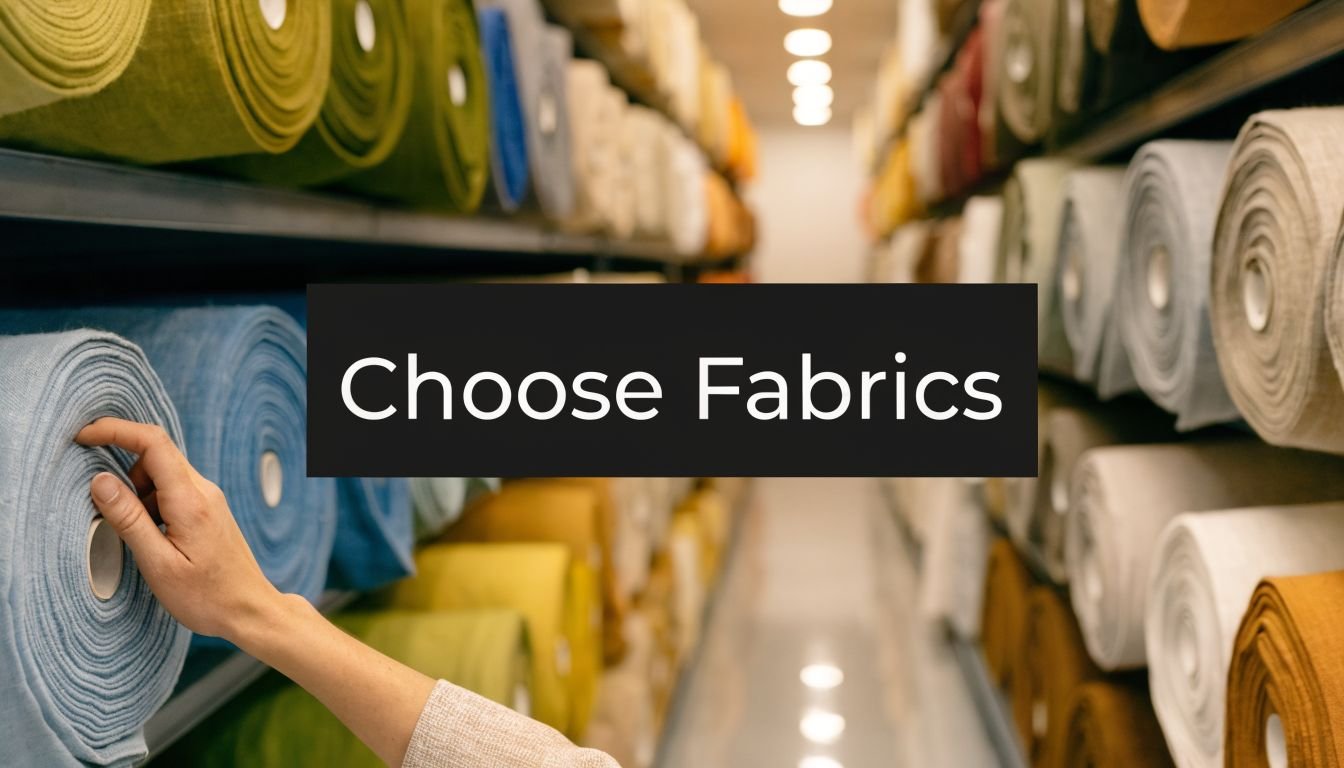
Good habits in the fabric shop
- Touch before deciding: If you can't touch, get a swatch.
- Buy for the pattern you have: Not the imaginary project you might sew one day.
- Check width and care details: Those details affect how much you need and how practical the garment will be.
- Plan the notions too: Buttons, thread, interfacing, and elastic can change the final result.
The right fabric doesn't just look right on the bolt. It behaves right through cutting, sewing, pressing, and wearing.
That's the true test.
If you're ready to turn ideas into finished clothes, More Sewing is a practical place to start. You can browse dressmaking fabrics by the metre, order swatches to compare hand and drape, pick up the haberdashery needed to finish a project properly, or try a ready-to-sew kit if you want a simpler route into garment making.
