
Guides
Polyester vs Cotton Thread: Which to Use and When
You're in the thread aisle with a length of fabric over your arm, trying to choose between two reels that look almost the same. One says polyester. One says cotton. The colour match is right on both, the prices are close enough, and now you're wondering whether this choice matters.
It does.
Thread isn't the finishing touch. It's part of the structure. The wrong thread can leave a jersey top with popped stitches after the first wash, a school skirt hem that won't hold, or a quilt seam that doesn't press as neatly as it should. The right thread makes sewing easier at the machine and gives the finished piece the kind of wear you expect from handmade clothes and home projects.
Most home sewists get told the short version. Polyester is stronger. Cotton is natural. That's not wrong, but it's nowhere near enough to help when you're sewing school uniform trousers, repairing a canvas tote, piecing a cotton quilt, or trying to work out what on earth to use with a bit of ex-designer deadstock that came with no fibre label.
In practice, polyester vs cotton thread comes down to three things. How the fabric behaves, how the item will be used, and what sort of pressing and washing it needs to survive. If you get those three right, the choice gets much easier.
Choosing Your Thread The Most Important Sewing Decision
A lot of sewing problems get blamed on the machine. Skipped stitches, puckered seams, thread snapping, hems that ripple. Quite often, the machine isn't the actual issue at all. The trouble started earlier, when the thread was chosen by habit rather than by project.
Take three common jobs from an ordinary week of sewing. A child's school pinafore needs a side seam repaired. A cotton patchwork quilt needs piecing. A stretch jersey top needs overlocking and topstitching. If you sew all three with the same thread just because it's already on the stand, one of those projects will usually complain.
That's why thread choice matters so much. It affects how the seam forms, how the fabric feeds, how the stitches react to washing, and how the finished piece looks from the outside. Cotton thread has a traditional place for good reason. It behaves beautifully on stable woven fabrics and takes pressing well. Polyester thread earns its place because it copes with wear, movement, laundering, and everyday strain.
Practical rule: Choose thread for the life the project will live, not for the five minutes it spends on the sewing table.
For UK home sewists, this becomes especially useful with real-life makes rather than sample swatches. School wear gets washed hard. Tote bags get dragged, stuffed, and overloaded. Deadstock can be unpredictable. Quilts often need crisp pressing at every stage. A thread that behaves well on one job can be the wrong choice on the next.
If you've ever wondered why a cotton blouse sews nicely with one thread while a pair of leggings seems to fight you with the same spool, that's the answer. The fibre in the thread has to work with the fibre in the fabric, the stress on the seam, and the care routine afterwards.
Polyester vs Cotton Thread at a Glance
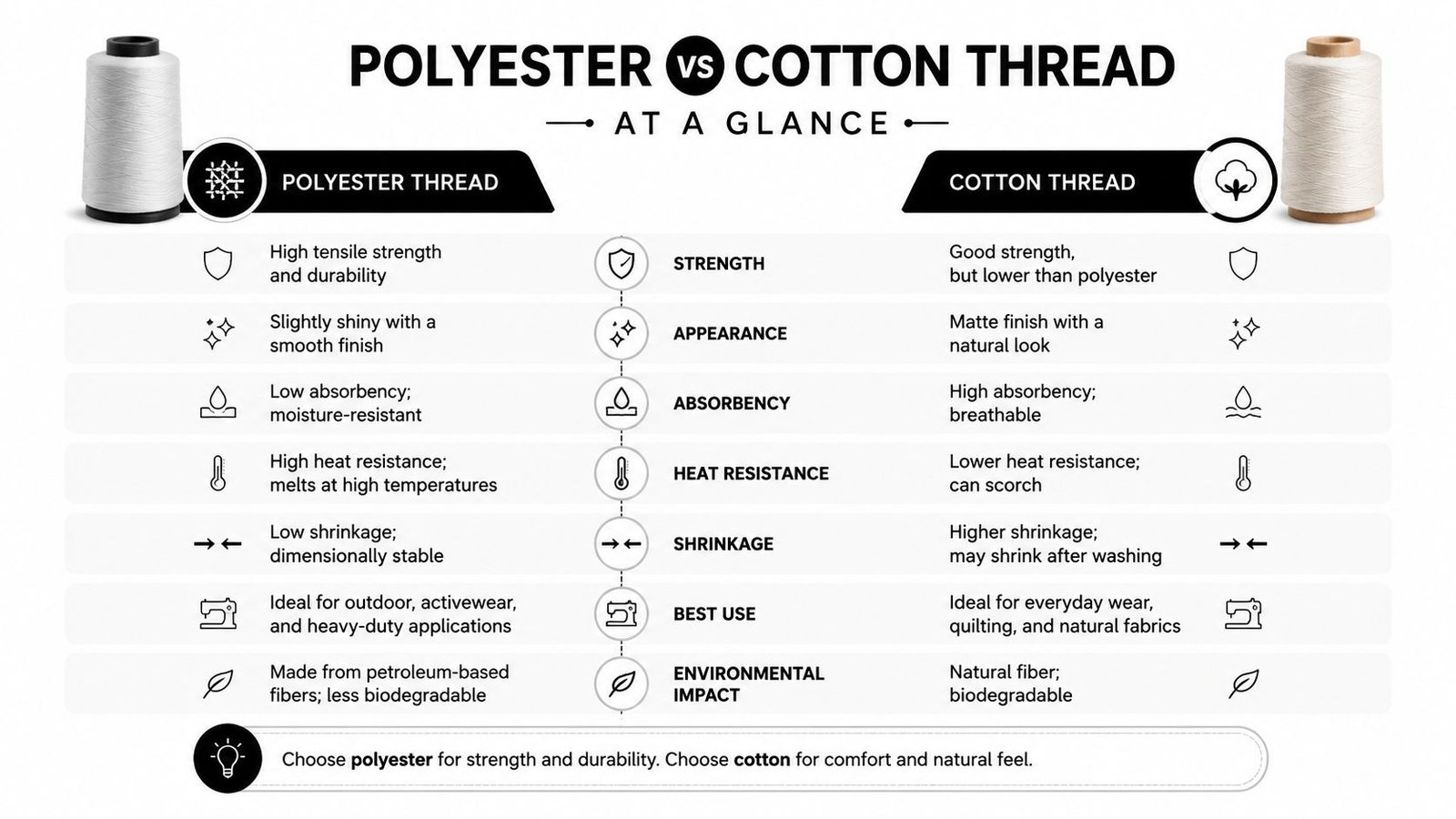
| Property | Polyester Thread | Cotton Thread |
|---|---|---|
| Strength | Stronger and better for high-wear seams | Less suited to heavy seam stress |
| Stretch | Has some give, useful on knits and activewear | Essentially rigid, better for stable woven fabrics |
| Heat tolerance | Less suitable near very high iron temperatures | Better for frequent hot pressing |
| Finish | Often smoother, can look slightly more polished | Matte, traditional finish |
| Washing performance | Better for repeated machine washing and tumble drying | Better where pressing matters more than wash durability |
| Shrinkage | Lower shrinkage | More likely to react to laundering |
| Best uses | Everyday apparel, uniforms, bags, upholstery, repairs | Quilting, tailoring, heirloom sewing, pressed seams |
| Typical problem if misused | Can be a poor choice where a fully non-melting thread is needed | Can cause issues on stretchy or hard-wearing projects |
If you want the shortest answer, here it is. Polyester is the workhorse. Cotton is the specialist.
Polyester thread suits many everyday sewing projects. Clothes that get washed often. Seams that need to flex a little. Repairs on workwear. Cushions, bags, and items that see friction. It's the thread I'd point most beginners towards for general dressmaking because it covers a lot of ground safely.
Cotton thread still matters. It's the better pick when the fabric is stable, the pressing is important, and you want the seam and surface to behave like a natural fibre project from start to finish. Quilting is the obvious example, but so are some structured woven garments, shirtmaking, and traditional repairs on older cotton or linen items.
The fast decision
Choose polyester if the item will be worn hard, washed often, stretched in use, or made from synthetic or mixed fibres.
Choose cotton if the fabric is a stable woven natural fibre and the project involves plenty of firm pressing.
Pause and test if you're working with deadstock, coated cloth, unusual blends, or anything with an uncertain care label.
If the fabric needs to move, the thread usually needs to move with it.
That simple distinction will sort out most projects before you even thread the needle.
A Detailed Fibre by Fibre Breakdown
Strength and abrasion
A thread usually proves itself after the project leaves the sewing room. A school jumper repair, a PE kit bag, or the side seam on work trousers will show very quickly whether the thread can cope with rubbing, pulling, and repeated washing.
Polyester is the harder-wearing option. Industry guidance notes that polyester thread is about 30% stronger than pure cotton thread, and, as explained in this technical guide to cotton vs polyester thread, some abrasion tests place cotton at a baseline of 3, compared with 12 for spun polyester, with continuous-filament polyester higher again. In practice, that matters on bag straps, underarm seams, crotch seams, apron ties, seat repairs, and cushion covers that get dragged about by children and pets.
For UK home sewists, this is often the deciding factor on utility projects. If you are making a book bag, mending school trousers at the knee, or sewing deadstock canvas into a market tote, polyester gives you more margin before the seam starts to fray or snap. Cotton can manage light-duty woven projects well, but it is less forgiving where the fabric and thread are both under constant friction.
Storage is part of the same picture. The same guide also cites up to 200 years for properly stored polyester thread versus roughly 50 to 100 years for cotton. That does not mean an old cotton reel is automatically useless. It does explain why a bargain box of inherited cotton thread often gives lint, weak spots, and random breakage on the machine sooner than a similar polyester spool.
Stretch and seam behaviour
Seam behaviour matters just as much as raw strength.
Polyester has some give, so it copes better when the finished item has to flex in use. That helps on jersey dresses, children's leggings, sweatshirt hems, and mixed-fibre school uniform knits that look stable on the table but stretch once worn. On those jobs, cotton thread can stitch neatly enough at first, then start popping once the garment is pulled on and off a few times.
Cotton stays more fixed. That can be useful. On patchwork, shirt collars, pyjama facings, and crisp woven dressmaking, a stable seam often sits exactly where you put it after pressing. If I am helping someone sew with lightweight poplin or a vintage cotton lawn, I want the thread to support accuracy rather than spring back against the iron.
Deadstock fabrics need a bit more judgement. Many UK sewists buy end-of-roll cloth without a full fibre label, and the handle can be misleading. If the fabric looks like cotton but has hidden synthetic content and a touch of stretch, polyester thread is usually the safer starting point. Sew a test seam, press it, tug it, then decide.
Heat, finish, and day-to-day handling
Cotton thread still earns its place because it behaves well under a hot iron and gives a softer, more traditional finish on natural fibres. Quilters value that because repeated pressing is part of the build, not an optional extra. The same applies to some structured details, heirloom sewing, and visible topstitching where a matte look suits the cloth better than a slightly shinier synthetic thread.
Polyester is less fussy for everyday use. It handles washing, abrasion, and general wear better, which is why it is usually the practical choice for casual dressmaking, household sewing, and repairs that need to last through normal family life. If you are curious about how fibre choice changes the feel and performance of textiles more broadly, there's useful background in more from KAIYI SILK.
One practical point that many blogs skip is machine setup. Cotton thread often benefits from a slightly cleaner thread path, a fresh needle, and a lower stitch speed because lint builds up faster, especially on older domestic machines. Polyester usually runs more easily, but on slippery deadstock linings or bag-making synthetics, reducing top tension a touch and using the right needle can stop puckering and skipped stitches before they start.
What this means on the sewing table
| Project feature | Better fit |
|---|---|
| Bag-making, school uniform repairs, high-friction seams | Polyester |
| Repeated firm pressing on stable woven natural fibres | Cotton |
| Matte visible stitching on quilting cotton, lawn, or linen | Cotton |
| General dressmaking, household sewing, and hard-wearing use | Polyester |
How to Choose the Right Thread for Your Fabric
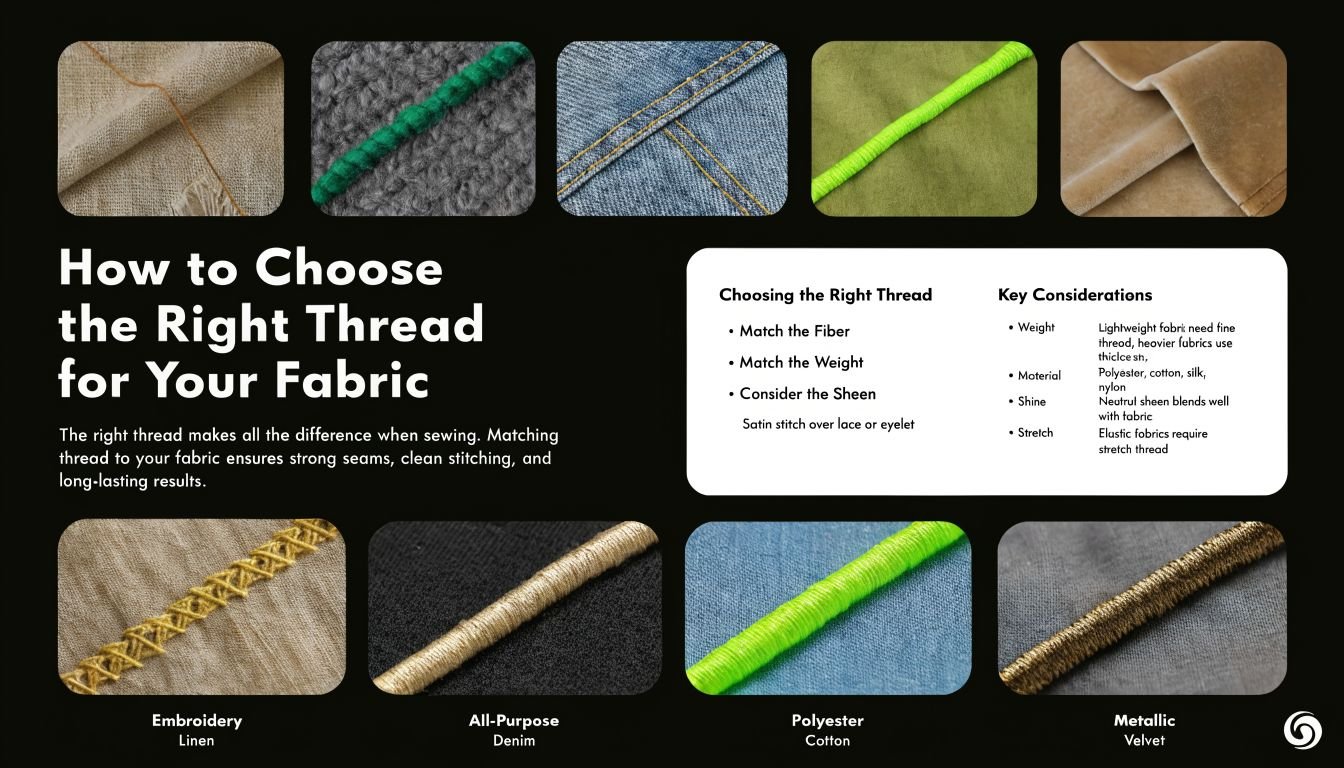
You are halfway through a school uniform repair, the child is due out the door tomorrow morning, and the seam you have just stitched on a polo shirt starts popping as soon as you tug it. That is thread choice in real life. The right spool depends less on rules and more on how the fabric will be worn, washed, pressed, and pulled.
The old guideline of matching fibre to fabric is a useful starting point, especially for stable woven fabrics and traditional sewing. A separate expert guide to choosing thread for your project explains the broad difference well. Polyester gives more, cotton gives less. For home sewing, the better question is simple. What does this seam need to put up with?
If you're sewing cotton lawn, poplin, shirting, or quilting cotton
Cotton thread suits fabrics that are stable, press sharply, and are meant to keep a soft, natural finish. Shirts, pyjamas, patchwork, pillowcases, and simple woven children's clothes are all good examples.
Choose cotton thread if the job calls for:
Flat, well-pressed seams
A matte stitched finish
Little or no stretch in the fabric
Accurate piecing rather than maximum seam strength
This matters in quilting and dressmaking alike. A patchwork block benefits from thread that behaves predictably under the iron and does not add extra spring into the seam. A crisp cotton blouse also tends to look better with a thread that blends into the cloth rather than catching the light.
If you're sewing jersey, rib knit, ponte, or activewear
Polyester is usually the practical answer.
Knits move in wear, not just on the sewing table. A T-shirt neckline, a pair of school sports leggings, or a ponte work dress all need the seam to flex repeatedly. If the thread has no give, the fabric may survive but the stitching can crack first.
For UK home sewists, this comes up often with school basics and everyday wardrobe sewing. Polo shirts, supermarket jersey, rib cuffs, and children's knit uniforms all take hard use and frequent washing. Polyester holds up better in that cycle.
A seam that looks neat before the first wash is not the same as a seam that still holds after ten wears.
If you're sewing denim, canvas, bags, and aprons
Use polyester for the construction seams in most cases. It copes better with abrasion, strain, and repeated handling.
This is the area where thread choice saves time later. Bag handles pull against the stitching. Box corners rub. Apron ties get yanked. Denim hems take knocks from shoes and laundry drums. Cotton thread can work on these projects, but if the item is meant to be hard-wearing, polyester is usually the safer choice.
That applies to plenty of practical UK makes:
School uniform repairs, especially knees, hems, and side seams
Shopping totes and book bags
Utility aprons and lunch bags
Dead useful household bits such as peg bags, cushion covers, and storage baskets
On heavier fabrics, do not judge thread in isolation. If the seam is struggling, the problem may be a fine needle, a short stitch length, or too much top tension rather than the spool itself.
If you're sewing deadstock and mystery blends
Deadstock often needs a more cautious approach because the label rarely tells the full story. One piece behaves like cotton until the iron touches it. Another looks like linen but has enough synthetic fibre to change how the seam sits and how the fabric recovers.
Test first on a scrap:
Press it carefully and see how much heat it will take
Pull it on grain and cross-grain to check whether the seam needs any give
Wash and dry a sample if the finished piece will be laundered
For many mixed or uncertain dressmaking fabrics, all-purpose polyester is the safer default because it works across a wider range of fibres. If the cloth is clearly a firm woven natural fibre and the project depends on crisp pressing, cotton thread may still give the better finish.
This is especially useful with market finds, remnant bundles, and older stash fabric where fibre content is anyone's guess.
When it makes sense to break the rule
Good sewing is about judgement, not purity.
A cotton garment that gets hard wear can be repaired with polyester if strength matters more than matching fibre. A utility quilt that will be washed every week may benefit from polyester construction thread even if the top is all cotton. Decorative topstitching can also justify a different choice if the colour, texture, or finish is right for the job.
I usually tell customers to choose for the seam's job, not the fabric's label alone. If the project needs resilience, use the thread that will hold up. If it needs sharp pressing, a softer visual finish, or precise piecing, use the one that behaves better under those conditions.
Machine Settings and Sewing Techniques
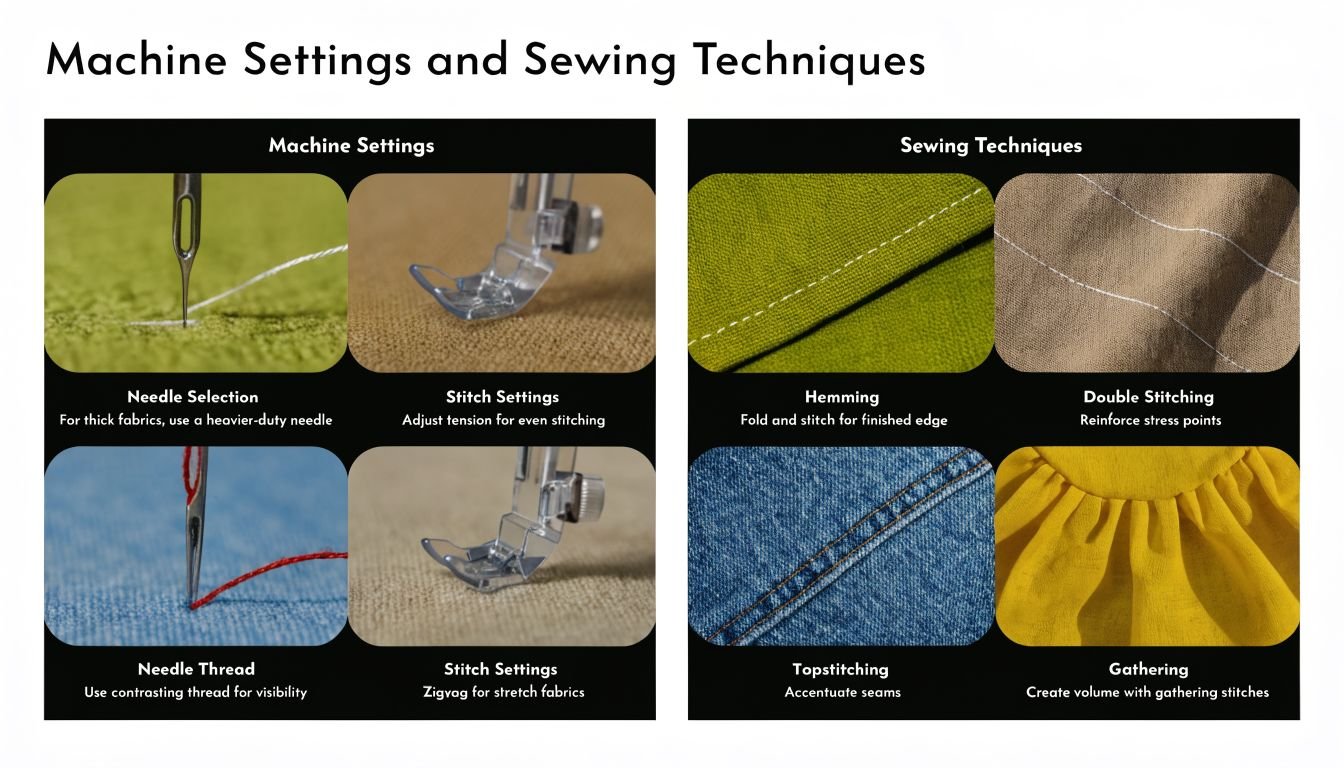
A good thread can still sew badly if the machine setup is off. Most problems blamed on the spool are a combination of thread, needle, tension, and fabric handling.
Start with the needle
Thread and needle need to suit each other. If they don't, the thread frays, the stitch forms badly, or the fabric gets marked.
A practical approach:
For general polyester sewing on woven dress fabrics use a Universal needle.
For cotton thread on tightly woven cottons a Sharp needle often gives a cleaner result.
For knit fabrics with polyester thread use a ballpoint or stretch needle so the needle slides between fibres instead of damaging them.
For denim or canvas step up to a denim needle rather than asking ordinary thread and a general needle to force their way through bulk.
If the thread starts shredding, change the needle before you blame the reel. A slightly burred or blunt needle can wreck both cotton and polyester thread.
Tension and stitch balance
Cotton thread often prefers a gentler setup than polyester. Polyester tends to tolerate a bit more strain and is usually more forgiving on everyday machines.
Watch the fabric, not just the stitches. If the seam looks tight and the fabric tunnels or draws up, reduce the tension slightly and test again. If the underside loops, rethread completely before making any dramatic adjustments.
Here's the order I use:
Rethread with the presser foot raised
Insert a fresh needle
Sew on the actual fabric layers
Adjust tension in small steps
That order fixes a surprising number of “thread issues”.
Sewing techniques that suit each thread
Cotton thread shines when accuracy and pressing matter. Polyester shines when reinforcement matters.
Useful pairings include:
Cotton thread for patchwork piecing because stable seams are easier to press and align
Cotton thread for temporary basting that will be pressed where you want heat tolerance during shaping
Polyester thread for bar tacks and stress points on pockets, apron ties, drawstring openings, and bag straps
Polyester thread for overlocking everyday garments because it copes well with wear and movement
Test your thread on the thickest seam in the project, not the flattest one. That's where setup problems usually show first.
Don't ignore lint and cleaning
Cotton thread can leave more fluff behind in the machine than polyester. That means hook area cleaning matters more if you're piecing a quilt all afternoon or doing lots of cotton topstitching.
A quick brush-out after a cotton-heavy session saves trouble later. If your machine suddenly starts sounding rough, stitching unevenly, or dropping fluff around the bobbin case, clean it before changing settings you didn't need to touch.
Common Thread Problems and How to Fix Them
A lot of sewing frustration becomes manageable once you stop treating every fault as random. Thread problems usually leave clues. Look at the seam, think about the fabric, then ask whether the thread choice made sense for the job.
Guidance on laundering performance notes that polyester thread has superior abrasion resistance, better colour retention, and lower shrinkage, and that its higher elongation helps reduce seam puckering in repeated wash cycles. The same guidance points out that using cotton thread on high-stretch fabrics is a common cause of post-laundry seam issues, as explained in this guide to choosing the right polyester or cotton thread.
The seam puckers after washing
If this happens on a knit garment, the first suspect is cotton thread. The garment may have sewn up nicely, but the thread didn't have enough give for the way the fabric behaves in wear and laundering.
Fix it by unpicking the affected seam and resewing with polyester. Also check whether the stitch type suits the fabric. A narrow zigzag, stretch stitch, or overlocker seam will often behave better than a straight stitch on jersey.
The thread keeps snapping while you sew
This can happen with either fibre, but the causes differ.
With cotton thread, the common issues are:
The seam is too demanding for the thread, such as heavy denim or thick canvas
The tension is too high
The thread is old or weakened
With polyester, snapping often points to machine setup:
Needle damage
Poor threading path
Tension that's too tight
Heat from friction at speed if the needle is wrong for the fabric
Start with the simple checks. Fresh needle. Rethread. Lower the top tension slightly. Test on scraps with all layers included.
The stitches look fine, but the repair fails quickly
That's common with household mending. A neat-looking mend on a school jumper cuff, coat pocket, or trouser knee can still fail if the thread wasn't chosen for strain.
For high-use repairs, polyester is usually the better choice. It stands up better to repeated wear, especially on elbows, inner legs, pocket corners, and bag linings. If the item also needs heavy pressing, work carefully with the iron afterwards rather than choosing the weaker thread for the whole repair.
Don't judge a repair by how it looks just after sewing. Judge it by whether it survives use, washing, and the next bit of strain.
The machine gets messy and starts stitching badly
If you've been sewing with cotton thread for a while, lint build-up may be the culprit rather than the thread itself being faulty. Clean the bobbin area, remove stray fluff, and check the needle plate area before changing spool, needle brand, or machine settings out of frustration.
The topstitching looks wrong for the fabric
Sometimes the problem isn't strength. It's appearance. Polyester can look too smooth or slightly too bright on a rustic cotton, washed linen, or traditional quilt. Cotton can look soft and right on the surface but be the wrong choice in the seam itself.
The solution doesn't have to be all one or all the other. You can choose the thread for the job being done. Construction and visible stitching don't always need to serve exactly the same purpose, as long as you test the result first.
Environmental Impact and Modern Alternatives
A thread choice can be the greener option on one project and the wasteful one on another. It depends on whether the seam lasts, whether the fabric can cope with the care routine, and whether you are likely to unpick and resew the item after a few wears.
That matters for UK home sewing more than many articles admit. A school shirt that gets hot washed every week, a PE bag that is dragged about by one strap, and a deadstock cotton poplin blouse that needs plenty of pressing do not ask the same thing from a thread. Cotton being natural and polyester being synthetic is only the starting point. The better question is whether the thread suits the life that garment or item is going to have.
A practical way to judge impact
Before buying another spool, ask:
Will the item be washed often and used hard? If so, polyester often creates less waste in real use because the seams are less likely to fail early.
Will the fabric need repeated hot pressing, or is it a traditional natural-fibre make where appearance matters on the surface? Cotton can still be the better fit there, especially on quilts, shirts, and some dressmaking projects.
Am I matching the thread to this fabric, or just reaching for the usual spool? A poor match often means skipped stitches, weak seams, or visible topstitching that looks wrong, which usually leads to redoing the work.
Longevity counts.
A school uniform hem repaired once with a suitable polyester thread is often the lower-waste outcome than sewing it twice with a softer cotton thread that cannot cope with strain at the knee or cuff. On the other hand, if you are piecing and quilting a cotton quilt that will be pressed heavily and you want the finish to sit smoothly into the fabric, cotton may still make better sense.
Modern alternatives worth considering
The good news is that the choice is no longer only standard cotton versus standard polyester.
You can now find:
Organic cotton thread for natural-fibre sewing where fibre content matters to you
Recycled polyester thread for repairs, bags, sportswear, and other hard-use makes
Project-led buying instead of keeping one thread type for everything
That last habit makes a bigger difference than many sewists expect. I often see home sewists blame themselves for a disappointing result when the actual problem was using the same all-purpose spool on every job, from quilting cotton to slippery deadstock twill. Matching the thread to the project first time usually means fewer failed seams, less unpicking, and fewer half-finished items pushed to the back of the cupboard.
For deadstock fabrics, test before committing. Fibre content is not always labelled clearly, and the cloth may have been finished for a different end use than your project. Sew a few lines, press them as you plan to press the garment, then check for puckering, shine, seam strength, and lint build-up in the machine. That small test can save a lot of wasted fabric.
If you keep both cotton and polyester in the sewing box, keep them for different jobs. Cotton suits many quilts, shirts, and pressed woven garments. Polyester earns its place for school wear, bags, repairs, workwear, and clothes that get hard laundering. Most UK home sewists will get better results, and waste less, by treating thread as part of the project plan rather than an afterthought.
If you're weighing up polyester vs cotton thread for a current project, More Sewing is a practical place to source fabric, haberdashery, and sewing essentials in the UK. It's especially useful when you want to match thread choice to the actual fabric in front of you, whether that's quilting cotton, jersey, denim, or deadstock that needs a bit of testing before you commit.
