
Blog, Dressmaking
Sewing Knit Fabric How to Get Stretch Seams Right
You've cut a lovely piece of jersey, matched the notches, and started sewing what should be a simple T-shirt seam. Then the hem turns wavy, the neckline stretches, or the seam pops the moment you pull the garment over your head. That frustrating result usually isn't a lack of sewing ability. The fabric, fibre content, needle, stitch and handling method all need to work together.
Sewing knit fabric becomes much more predictable when you choose and test the fabric before cutting. Stretch tells you how far it can extend, recovery tells you whether it returns to shape, and fibre content affects drape, growth and stability. Once those decisions are right, domestic-machine settings become far less intimidating.
Why Knit Fabric Behaves Differently and What to Expect
The classic moment is a hem that looked straight under the presser foot but develops little waves as soon as you lift it from the machine. You may have sewn carefully, used the correct seam allowance and never touched the stitch length. The problem is often that the feed dogs stretched the lower layer while the presser foot held the upper layer, or that the fabric was pulled through by hand.
A woven fabric gets much of its stability from threads crossing at right angles. A knit fabric gets its flexibility from interconnected loops. Those loops can extend, recover, curl at a cut edge and shift under pressure. The same movement that makes a jersey T-shirt comfortable can make a shoulder seam crack, a neckline grow or a hem ripple.
Practical rule: Treat knit fabric as something you guide, not something you force into place.
The presser foot needs to move over the fabric while the feed dogs do their job. Pulling from behind or pushing from the front changes the fabric's length as it enters the machine. UK guidance for sewing with knits recommends testing scraps in both grain directions, using a suitable needle and stitch, and allowing the feed dogs to move the fabric naturally. This practical knit-sewing guidance also identifies distortion and skipped stitches as common failures.
Stretch seams need room to move
A straight stitch can look neat on a relaxed seam, but it has little ability to extend. Put that seam through a fitted sleeve, neckline or hip, and the threads may snap even though the fabric itself is fine. A narrow zigzag or stretch stitch gives the seam enough flexibility to follow the garment.
Over-stretching causes a different problem. If you hold the fabric taut while sewing, the seam may relax into waves afterwards. The fix isn't always a different machine. Often, it's removing your hands from the fabric and reducing drag.
The UK knitwear sector's long decline also provides useful context. An academic review records employment falling from 159,000 in 1973-74, to below 100,000 in the early 1980s, and to about 50,000 by the mid-1990s, reflecting the movement from mass domestic manufacturing towards smaller, specialised production. The historical review of UK knitwear production notes that official coverage was partial, which makes careful benchmarking important when studying knit-related production.
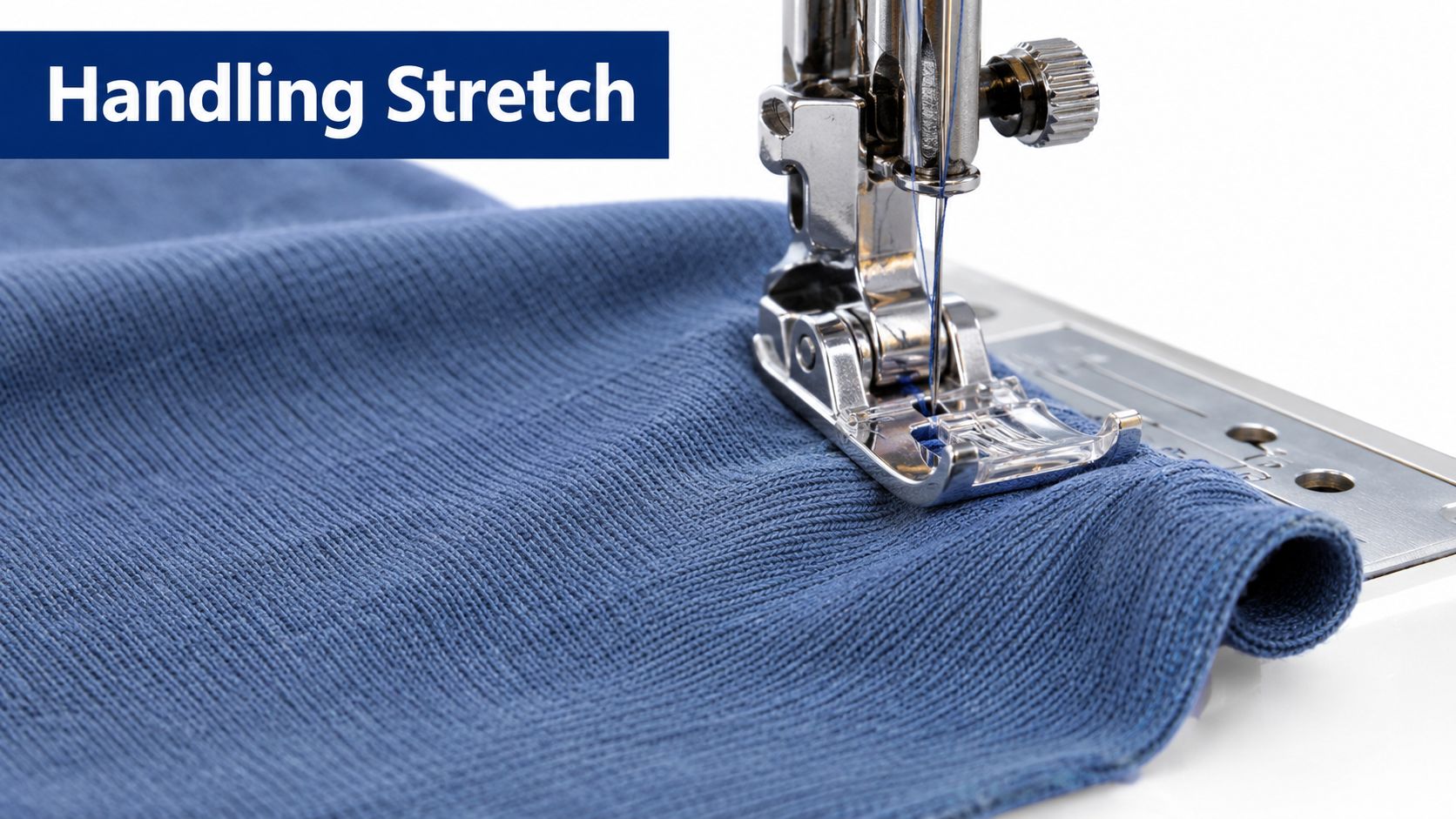
A scrap test saves the garment
Before sewing a neckline or cutting an expensive length, make a test using the actual fabric, folded exactly as the seam will be sewn. Stretch the stitched sample gently. A good seam extends with the fabric, doesn't crack, and returns without a row of loose loops or puckering.
That small test gives you a calm workflow:
- Identify the fabric's stretch and recovery.
- Test needle, thread and stitch on scraps.
- Stretch the sample in the direction the garment will need to move.
- Adjust one variable at a time.
- Cut only when the sample behaves properly.
You're not trying to control the knit as if it were a stable woven cloth. You're creating conditions in which the knit can move without being distorted.
Choosing the Right Knit for Your Project
A fabric labelled “jersey” tells you the general construction, but it doesn't tell you whether it will suit your pattern. Two jersey fabrics can differ sharply in stretch, recovery, thickness and drape. The useful buying decision is whether the fabric behaves well enough for the garment you want to make.
Start with a 10cm section across the direction of greatest stretch. Mark or measure the section without pulling it, then extend the fabric comfortably and note how far it reaches. Older extension-style guidance also emphasises measuring stretch across a fixed section and checking recovery before cutting. This guidance on evaluating stretch and recovery supports testing the fabric's performance rather than relying on a generic label.
Recovery is the second half of the decision. Release the fabric and watch whether it returns close to its original width or stays visibly longer. A fabric with modest stretch and strong recovery may suit a fitted T-shirt better than a very stretchy fabric that grows during wear. A soft, low-recovery knit may work beautifully for a relaxed top but need a pattern designed to accommodate movement.
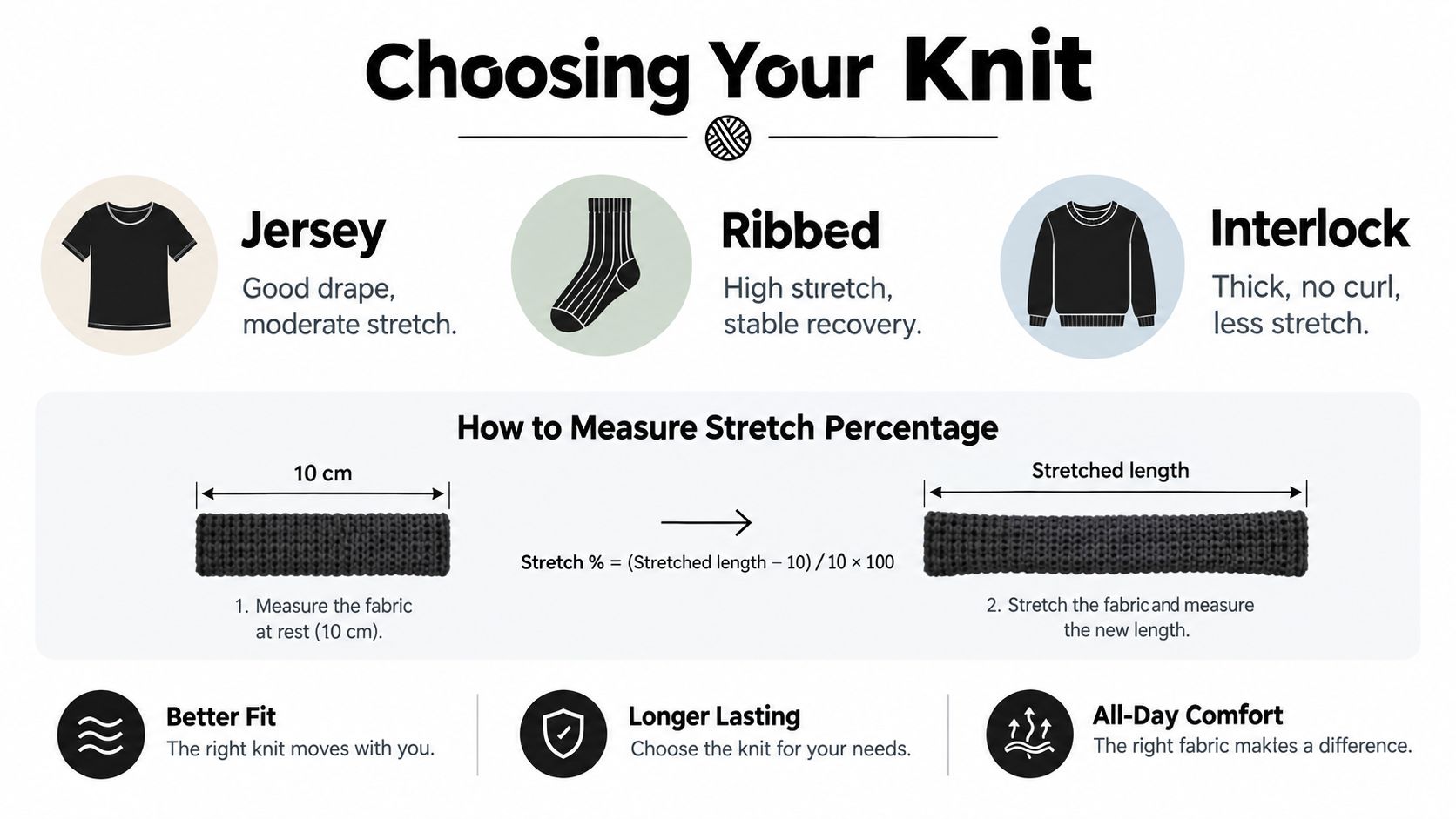
Fibre content changes the result
Cotton jersey often has a familiar T-shirt hand and can feel straightforward to sew, especially when it has moderate structure. It may still curl at the cut edge and can behave differently after washing, so prewashing and pressing matter.
Viscose and Tencel blends usually bring a softer hand and more fluid drape. That makes them lovely for a drapey dress or flowing top, but the fabric can shift and lengthen under its own weight. A walking foot, careful support and a restrained cutting process become more valuable.
Polyester blends can feel springier and may retain their shape differently from a soft cotton or viscose knit. They're often useful for active or close-fitting garments when the pattern calls for dependable movement, but the surface, thickness and recovery still need testing.
For textured fabric, consider the visual effect as well as the mechanical behaviour. A resource on the warmth and style of cable knit is useful when you're deciding whether a pronounced knitted texture suits the shape and purpose of a garment.
Match Knit Stretch and Fibre to Your Project
| Stretch and Recovery | Fibre Example | Best For |
|---|---|---|
| Moderate stretch with reliable recovery | Cotton jersey with a stable hand | Everyday T-shirts and simple tops |
| High stretch with strong snap-back | Polyester blend or elastane-containing knit | Leggings, fitted tops and close-fitting layers |
| Soft stretch with lower recovery | Viscose or Tencel blend | Drapey dresses, relaxed tops and fluid skirts |
| Limited stretch with a firm structure | Interlock or stable ponte-style knit | Structured tops, cardigans and relaxed trousers |
| High crosswise stretch with visible ribs | Rib knit | Neckbands, cuffs and fitted garments |
Use the pattern's fabric requirements as your starting point, then compare them with your own test. A fitted pattern needs enough stretch to pass over the body and enough recovery to avoid becoming loose. A relaxed pattern can tolerate less stretch, but an overly fluid knit may still change the silhouette.
Essential Tools Needles and Thread for Knit Success
Most domestic-machine knit problems come from a small mismatch in the sewing kit. A universal needle can pierce some knits successfully, but it may also push loops aside or create skipped stitches. Cotton thread can look attractive in the reel but may break when a seam needs to extend.
Start with a ballpoint or jersey needle for ordinary jersey. Its rounded tip moves between the loops rather than cutting through them. If the fabric is very stretchy, fine or tightly knitted, a stretch needle may perform better. Change the needle when you see skipped stitches, a damaged surface or inconsistent penetration. A fresh needle is often more useful than endless tension adjustments.
Use polyester thread for seams because it has enough flexibility for ordinary knit movement and withstands repeated wear. Match the thread weight to the fabric. Fine jersey needs a neat, fine thread, while a heavier knit may need a stronger-looking construction.
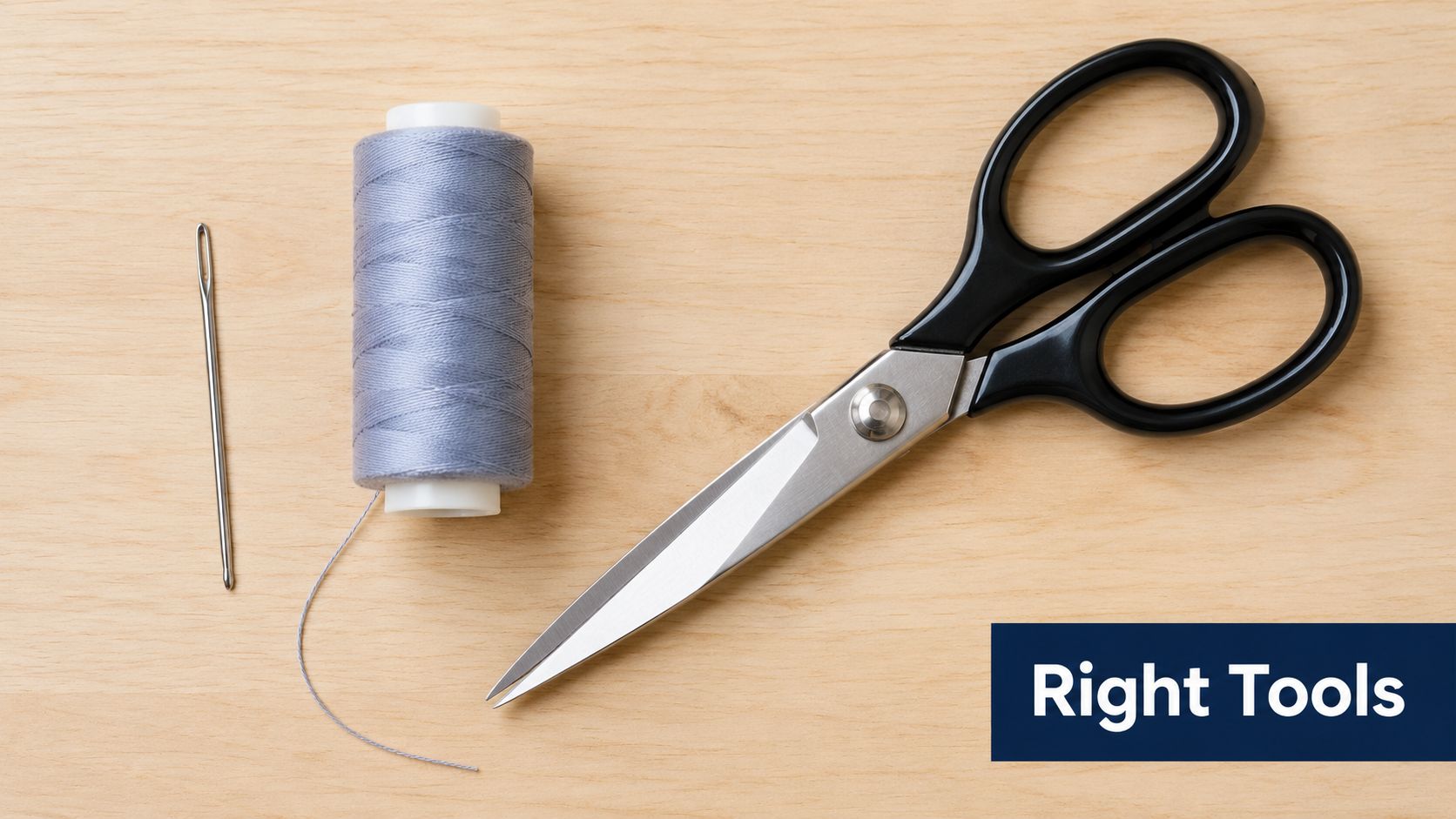
Build a small kit that solves real problems
- Ballpoint, jersey and stretch needles: Keep all three types available, then let the scrap test decide which one gives the cleanest stitches.
- Polyester thread: Choose it for seams that need to bend and extend rather than relying on brittle thread.
- Walking foot or dual-feed foot: These feet help the layers travel more evenly, particularly with slippery viscose jersey or thicker knits.
- Clips: Clips hold bulky or delicate layers without creating extra holes. Pins can still work, but place them within the seam allowance and avoid stretching the edge.
- Twin needle: Use one for hems and some necklines when you want two parallel lines on the outside and a flexible zigzag underneath.
- Spray starch or Best Press: A light application can settle a rolling edge before stitching. Test first, especially on dark or delicate fabric.
- Scrap fabric: Keep enough to test the folded seam, hem and any stabiliser you plan to use.
More Sewing stocks sewing fabrics, haberdashery and ready-to-sew kits, including stretch-related supplies such as Gutermann Maraflex Stretch Thread. Its range can be useful when you're assembling a knit-specific project kit rather than buying notions one at a time.
A universal needle often gives a deceptively good first row of stitches, then skips as the knit becomes more elastic. Cotton thread can produce an attractive seam that fails during a fitting. The better approach is to test the complete combination of fabric, needle, thread and stitch before committing.
A short visual demonstration can help you compare the movement of different feet and stitches. Use it alongside your own scrap tests rather than treating any setting as universal.
When a cut edge rolls, press the fabric before sewing rather than trying to flatten it with your fingers as it enters the machine. A walking foot or dual-feed foot can reduce layer movement, while a twin needle gives a hem room to stretch without replacing the need for a stable seam.
Machine Settings That Make Knits Sew Smoothly
Domestic machines can sew most everyday knit garments, but the right setting depends on the fabric in front of you. Don't begin by copying a dial position from another project. Begin with a folded scrap, the same seam allowance and the same direction of stretch that the garment will use.
UK sewing guidance recommends testing scraps in both grain directions. One direction may feed smoothly while the other skips, stretches or curls more noticeably. The test should include the seam, a short hem and a gentle stretch of the finished stitching.
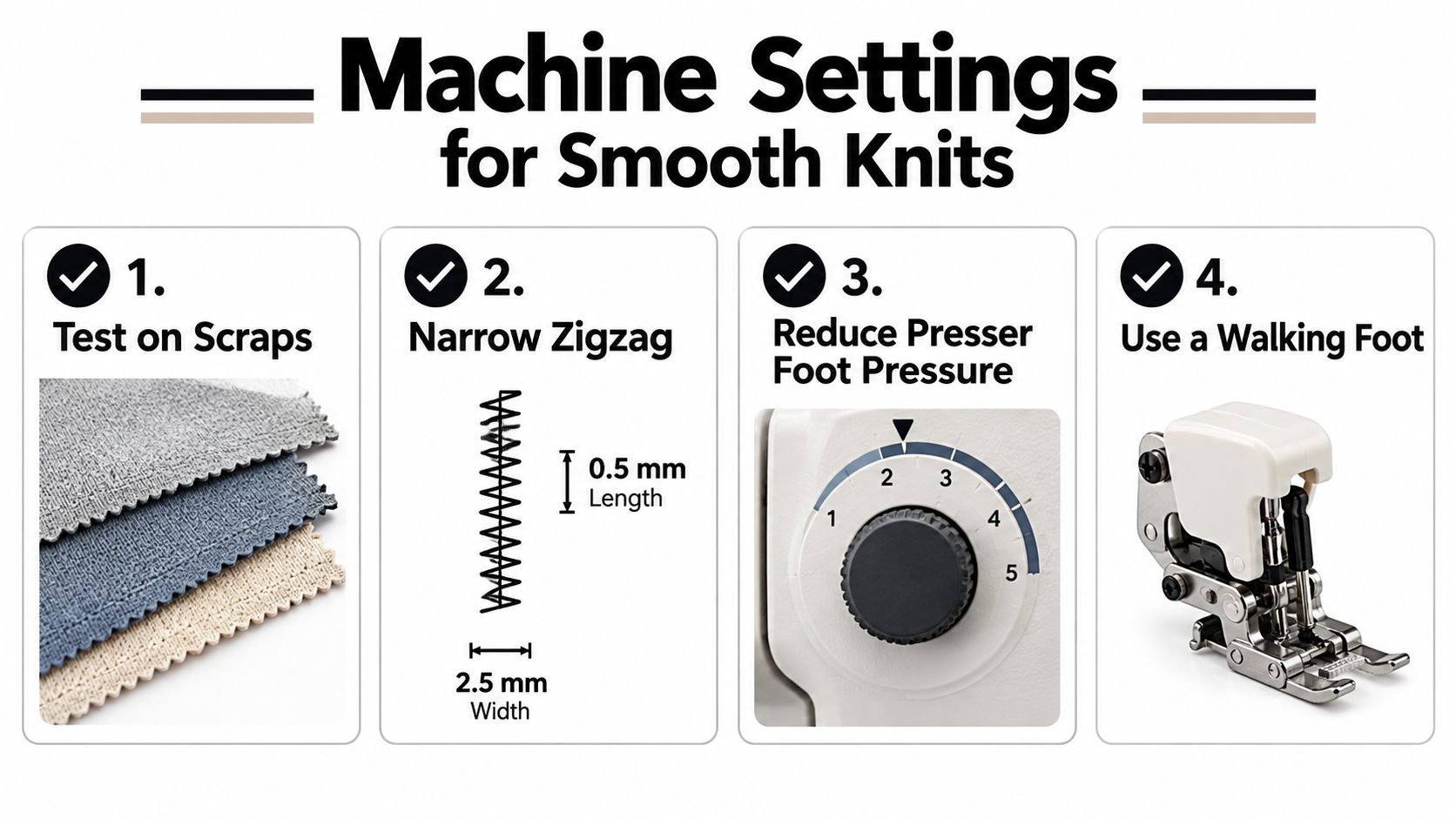
A repeatable setup
- Test on scraps. Sew across both directions, then stretch the samples gently. Check for skipped stitches, thread breakage, puckering and uneven feeding.
- Choose a narrow zigzag or stretch stitch. One UK guide suggests a slight zigzag of about 0.5mm width, while another gives joining-seam settings of around 1 to 1.5mm wide by 2 to 2.5mm long. Compare those starting points in the UK guidance on sewing knit and jersey fabrics, then adjust for your fabric.
- Balance tension and stitch density. Dense stitching can draw the seam tight and create puckers. Loose or poorly balanced stitching can leave the seam grinning when stretched. The correct sample lies flat and extends without cracking.
- Reduce drag. Support a heavy garment on the table, keep the needle area clear of bulk and don't pull the fabric through.
- Try a walking foot. It can help when the top layer creeps ahead of the bottom layer, especially on long shoulder, side or hem seams.
Let the feed dogs move the fabric. Your hands should guide the direction, not determine the speed.
Read the sample, not just the dial
Stretch the stitched sample in the same way the finished garment will be worn. A side seam needs sideways extension, while a neckline needs enough flexibility to pass over the head and then recover. If the threads pop, use a more flexible stitch or check the needle and thread. If the seam waves, stop pulling and investigate pressure, feeding and fabric support.
The hem deserves its own test. Sew a short folded section, press it, and inspect it from the right side. A successful hem remains smooth rather than forming ridges or waves. Technical guidance for stretch garments stresses that seams should extend under reasonable pressure and recommends checking stitch density and tension to prevent seam grinning or puckering. The UK manufacturing guidance for stretch garments also supports using twin needles or a faux coverstitch for flexible hems.
Write down the setting that works for the specific fabric. A slightly different knit can need a different needle, pressure or stitch length, so a small note attached to the fabric saves repeated guesswork.
Core Techniques for Stable Seams and Professional Hems
The most successful knit garments are stabilised where the fabric needs help and left flexible where the body needs movement. A neckline, shoulder seam and hem each have a different job. Treating them all with one stitch and one handling method is what often creates avoidable distortion.
Start with the shoulder seams. On a loose T-shirt, a strip of clear elastic or stay tape can prevent the shoulder from stretching out during construction and wear. Sew it into the seam without pulling the fabric. The tape should support the seam, not gather it.
Necklines need control before they need decoration. Stay-stitching can help on suitable patterns, especially when the neckline edge is vulnerable, but stitch only within the seam allowance and avoid stretching the curve. If the pattern uses a neckband, measure and join it carefully, quarter both the band and neckline, and distribute any difference rather than forcing one section to fit.
Press before you stabilise
Rolling edges are easier to manage after a light press. For a delicate or very fluid knit, use a small amount of spray starch or Best Press on a test area first. Let the fabric cool and settle before cutting or sewing.
A walking foot can keep the neckline or shoulder layers aligned. It doesn't remove the need to guide the fabric, but it reduces the tendency for the top layer to creep. Clips are particularly useful where several layers meet, such as a neckband join or a cuff.
For ordinary seams, sew a narrow zigzag or stretch stitch and keep the seam allowance consistent. A domestic machine can produce a durable result when the seam has enough extension and the fabric isn't dragged. Test the finished seam by stretching it gently. It should move without audible thread cracking and should lie flat when released.
Overlockers and domestic machines
If you own an overlocker, a four-thread or five-thread overlock construction is well suited to stretch fabrics. The extra threads create a flexible, enclosed finish, but tension and stitch density still need balancing. A professionally finished edge can still wave if the fabric is stretched into the machine.
Without an overlocker, sew the seam with a stretch-capable stitch, then trim carefully if the pattern allows. Don't trim before you know the seam is secure and stable. On lightweight knits, excess handling can distort the edge more than the stitching itself.
Hems that stay flexible
For a T-shirt hem, press the turn-up evenly and use a twin needle if your machine and fabric combination handle it well. The two lines on the right side give a familiar ready-to-wear appearance, while the bobbin thread forms a zigzag that allows movement.
A faux coverstitch made with a suitable stretch stitch can provide a similar flexible finish when a twin needle isn't producing a clean result. Test the hem from the right and wrong sides, then stretch it gently. Good stitching won't tunnel heavily, break or pull the fabric into waves.
Sleeve hems and necklines need the same check. A neat appearance while flat isn't enough. Pull the fabric as the garment will be worn, release it and look for broken threads, stretched openings or ripples. If the edge waves, remove the pressure from your hands, stabilise the fabric and retest rather than continuing over a long garment section.
Troubleshooting Common Issues and Easy Project Ideas
Skipped stitches usually point to the needle first. Replace a universal needle with a ballpoint, jersey or stretch needle, then retest using the same thread and stitch. If skipping continues, check that the fabric isn't being pulled and try a fresh scrap in the opposite grain direction.
A wavy hem often means the fabric has stretched while feeding. Press the edge, support the garment's weight, use a walking foot if available and let the feed dogs move the layers. A twin needle may improve the finish, but it won't correct a hem that was stretched during sewing.
Popping seams need more room to extend. Use a narrow zigzag or stretch stitch, check the stitch density and stretch the sample before sewing the garment. Curling edges respond better to pressing and gentle stabilisation than to forceful pinning or pulling.
Choose a first project that teaches one skill
- Beanie: Use a stable, stretchy knit and practise curved seams without a long hem.
- Headband: Test recovery and learn how much the fabric can extend before it feels tight.
- Simple T-shirt: Cotton jersey gives you practice with shoulder seams, a neckline and a twin-needle hem.
- Joggers: A stable knit lets you practise waistbands, cuffs and longer seams.
- Drapey top or dress: A viscose blend introduces fluid handling, pressing and careful support.
For each project, keep a small offcut after cutting. Mark the needle, thread and stitch used, then wash the finished garment according to the fabric's care instructions. Pressing helps restore shape after washing, while folding rather than hanging a heavy, drapey knit can reduce unwanted lengthening.
UK industry data still describes knitted and crocheted fabric manufacturing as a compact but persistent manufacturing niche. One dataset estimates 3,591 businesses in 2024, a £7.7bn market size in 2026, and a 5.9% CAGR decline between 2019 and 2024, while ONS extracts show smaller counts for enterprises directly classified as knitted and crocheted fabric manufacturers. The UK industry data reinforces that knit fabric remains a meaningful specialist material, even though it isn't a mass domestic manufacturing market.
Start with scraps, test stretch and recovery, and only then cut into your favourite fabric. That short pause is what turns sewing knit fabric from a battle with wavy edges into a controlled, repeatable process.
More Sewing offers jerseys, cottons, viscose and Tencel blends, haberdashery, stretch-sewing materials and ready-to-sew kits for projects like these. Visit More Sewing to choose fabric with sample swatches and pick up the needles, thread and stabilising supplies for your next knit garment.
