
Blog, Dressmaking, Guides
How to Preshrink Fabric Before You Cut and Sew
Your new fabric is unrolled on the table, the pattern is weighted down, and you're itching to cut. That pause before the scissors is where How to Preshrink Fabric decisions are made. Skip the test and you're gambling with hems, bust darts and sleeve length. Run a measured swatch first and you'll cut to the fabric's real behaviour, not your best guess.
Why Preshrinking Matters Before You Cut
A bodice can fit perfectly at the final fitting, then come out of the wash shorter through the body and tight across the bust. I learned that the hard way. Water, agitation and heat can change fabric dimensions after seams have fixed the garment's shape.
What the EU Ecolabel Limits Measure
The UK-hosted EU Ecolabel dimensional change criteria set maximum dimensional changes for certified products under a defined laboratory test. The limits are ±3.0% for woven cotton and cotton-mix fabrics, ±2.0% for woven wool-mix and synthetic fabrics, ±4.0% for knits, ±5.0% for interlock and ±6.0% for chunky knits. These are certification limits, not typical results from one home wash, and the test conditions differ from household laundering. Don't use them as cutting allowances.
For scale, a 2.0% change across a 150 cm width equals 3 cm. That much movement can shift a centre front, reduce a hem allowance or pull a sleeve up the forearm. On a fitted bodice, it can also distort darts or make buttonholes strain.
The practical point is to match preparation to the garment's future care routine. A fabric that will be machine-washed and tumble-dried needs a different preshrink treatment from one that will be hand-washed and laid flat. Woven fabrics may still move enough to affect a close fit; knits can relax and recover differently because of their looped structure. Bulky knits need checking for width as well as length.
Treat the fabric as the finished garment will be treated, then cut. A measured swatch should record lengthwise and crosswise change separately. One overall allowance can hide a difference between the two directions, leaving pattern pieces too short or too narrow.
Testing a Swatch Before You Commit
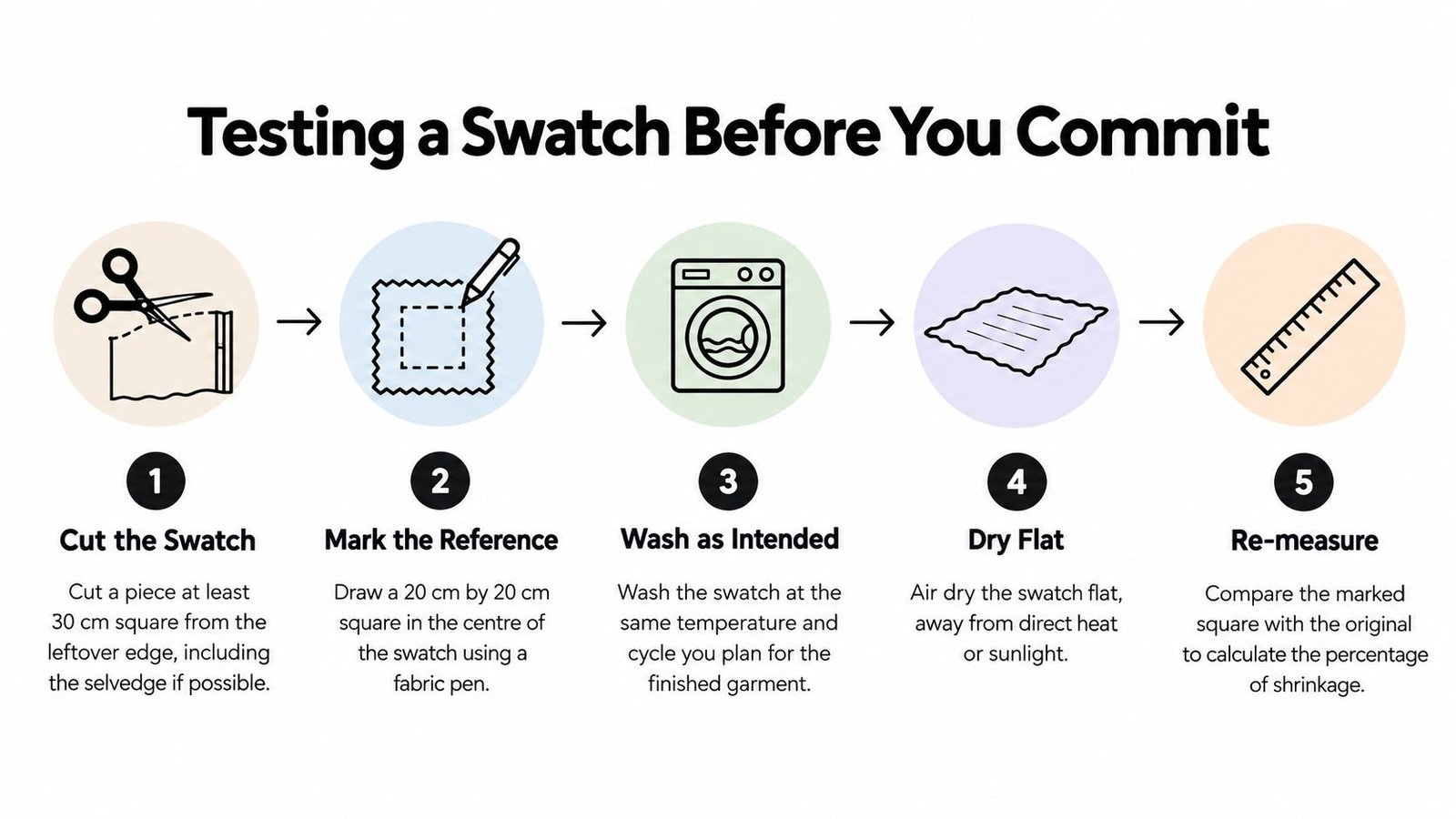
A bodice cut before its fabric has been tested can come out shorter or tighter after the first wash. Test a piece from the same roll before cutting the garment. Use a swatch at least 30 cm square, including the selvedge if practical. If the weave frays, zigzag or overlock the raw edges so loose threads do not distort your measurements.
Mark, Measure and Wash as Intended
- Mark the reference: Draw a 20 cm by 20 cm square in the centre using fabric pen or tailor's chalk. Align one side with the straight grain.
- Record starting size: Measure the square lengthwise and crosswise. Note the swatch's full dimensions, stretch, drape and surface condition.
- Wash as intended: Match the temperature, cycle, detergent and spin you expect to use for the finished garment. The hottest setting is not automatically the right test.
- Dry and press as intended: Air dry flat, hang evenly or tumble dry on low, depending on your care routine. Press lightly once dry.
- Re-measure: Measure the marked square in both directions and record each change separately.
For example, if the marked length shrinks while the width stays nearly the same, allow for the change in hems and sleeve length. The crosswise pattern layout may still be usable. If both dimensions shift, test a larger piece from the full length before choosing a layout. Your pattern should reflect how this fabric behaves, not a generic shrinkage allowance.
The linked EU Ecolabel textile criteria, retained in UK law refer to dimensional-change testing using EN ISO 6330 and EN ISO 5077. They set criteria for textile dimensional change; they do not establish the particular three-wash, tumble-dry routine described in some testing guidance. At home, repeating your planned wash and dry routine can show whether the cloth continues to relax. A single rinse may not reveal later movement.
Label the swatch with the fabric name, supplier, wash settings and lengthwise and crosswise results. Keep it with your pattern envelope. If the same base cloth comes in another colour, retest it rather than assuming the finish and shrinkage will match.
Machine, Hand and Steam Methods Compared
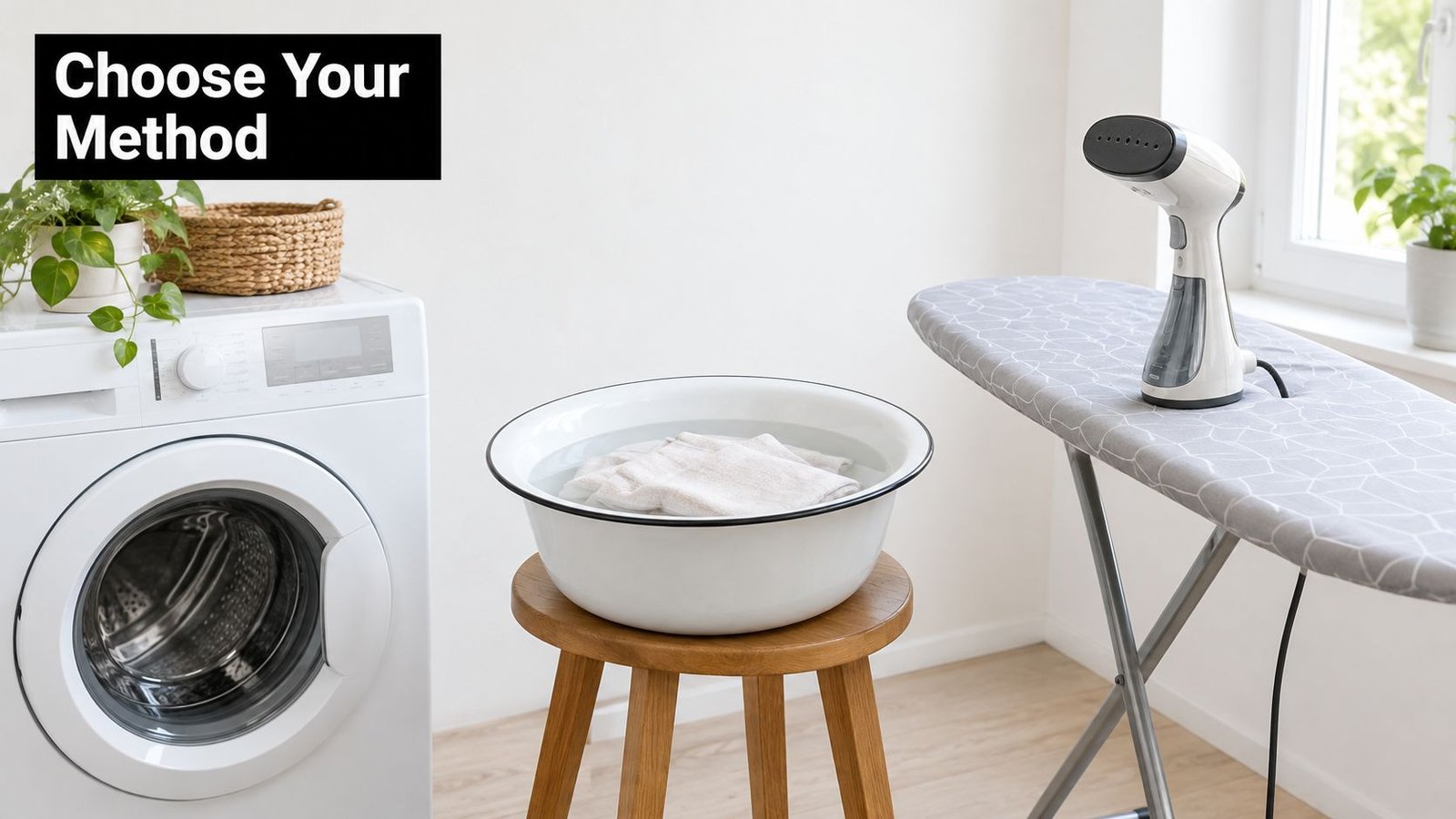
A fabric can behave very differently under a machine cycle, a basin wash or steam. Choose the method that matches how the finished garment will be cared for, then measure lengthwise and crosswise change separately. A single shrinkage percentage can hide a change that affects a hem but not the garment's width.
Machine Washing
For everyday clothes, a machine wash gives the closest test of routine care. Open the fabric out, avoid overloading the drum and use a small amount of mild detergent. Skip fabric softener, which can affect pressing and absorbency. Put loosely woven or fraying cloth in a mesh laundry bag.
Use the temperature and cycle specified for the finished garment. Hotter, longer cycles can increase shrinkage and colour loss, so a harsher wash is a poor test if the garment will be washed gently. If you plan to use a 30°C or 40°C cycle, test the fabric at the temperature on its care label and record the lengthwise and crosswise results separately. The two directions may respond differently.
Hand Washing in a Basin
Hand washing suits silk, fine lawn, lace and cloth you would not machine wash as a finished garment. Fill a basin with lukewarm water and suitable detergent. Submerge the fabric and squeeze gently; wringing can distort it. For light cotton lawn, roll the wet piece in a clean towel to remove excess water, then dry it flat.
This method will not reproduce machine agitation. Use it only if hand washing is also how you intend to care for the finished garment.
Steam and Pressing
Steam can help test fabric that should not be immersed, such as some coating wools and dry-clean-only cloth. The demonstration below shows steam being applied to fabric. Hover a steam iron above the surface or use a handheld steamer, then let the cloth dry and rest flat before checking it. Steam may relax fibres and reveal movement, but it cannot replace washing for fabric that will be washed, such as cotton or jersey.
Drying is part of the test. Water weight can stretch jersey lengthwise on a line, so dry knits flat on a towel or rack if that matches your care routine. Low tumble drying may suit hard-wearing cottons that will be dried that way. High heat is unnecessary when the finished garment will never encounter it.
Practical rule: Match washing, drying and pressing to the garment's future care. Measure both directions after the fabric is dry, and cut to its actual behaviour rather than a generic shrinkage estimate.
Fibre-Specific Steps for Cotton, Viscose, Jersey and Denim
Cotton
Woven cotton, lawn and poplin usually suit a 30°C or 40°C machine wash, full spin according to the care label, then air drying or low tumble drying. Measure warp and weft separately because woven cotton doesn't have to move evenly in both directions. Press with steam once dry, then let it rest before you check the grain.
For quilting cotton that will be washed as a finished quilt, test the main fabric, backing and binding under the same routine. Mixing a preshrunk top with an unwashed backing invites puckering later, unless you want that crinkled finish deliberately.
Viscose and Tencel Blends
Treat viscose as weaker when wet. Use a cool, gentle cycle or hand wash, reduce agitation, and support the weight of the wet fabric as you lift it out. It can feel stiff or boardy while damp and then soften again after drying flat and pressing on a moderate setting. Don't judge drape until it's completely dry.
- Avoid hanging by one edge: Water weight can drag one side longer than the other.
- Reshape while damp: Smooth it flat on a towel and coax the grain square with your hands.
- Press on the reverse: Use low to medium heat if the blend includes synthetic fibres.
Jersey and Other Knits
Don't skip preshrinking jersey. Wash on the garment's usual cycle, then dry flat or tumble dry on low if that's your routine. Hanging a wet knit from pegs stretches the length and narrows the width, giving you a false cutting shape. Once dry, fold it neatly and leave it to rest before laying out pattern pieces.
Check stretch recovery as well as dimensions. Stretch the swatch widthwise, release it, and see whether it returns or stays baggy. A swimsuit or leggings fabric that loses recovery in the test wash isn't suitable for negative ease, however accurate your measurements are.
Denim
Unfold denim completely before washing and use the label routine, inside out for finished garments to limit abrasion. Raw or dark indigo denim may need a rinse-only first test if you want to preserve colour, but jeans that will be machine washed need a proper machine test. Pre-washed fashion denim usually needs less adjustment, still test the exact length.
Preshrink Settings by Fabric Type
| Fabric | Main Shrinkage Risk | Preshrink Approach | Drying Note |
|---|---|---|---|
| Cotton | Uneven warp and weft movement | Machine wash at intended temperature, measure both grains | Air dry evenly or tumble dry on low |
| Viscose | Distortion and weakness when wet | Cool gentle wash or hand wash, support wet weight | Dry flat and reshape while damp |
| Jersey | Length change and stretched width | Machine wash as garment will be washed, check recovery | Dry flat or tumble dry on low, never peg by one edge |
| Denim | Length contraction and dye loss | Full machine test for washable jeans, rinse test for raw indigo | Air dry unfolded, press with steam |
Handling Deadstock, Mixed Fibres and Pre-Shrunk Fabric
A fibre label gives you a clue, not a reliable shrinkage result. Manufacturing tension and finishing vary, so two cotton lengths with the same fibre content can behave differently. Test the exact roll you plan to cut, especially deadstock or ex-designer fabric without a care label.
Deadstock with Unknown Finishing
Take a swatch from an inconspicuous end. Measure its length and width separately, and check for colour transfer by pressing a white cloth against it while damp. An unlabelled remnant has no dependable care history, so choose a test wash based on how you intend to launder the finished garment.
Use the care-label routine you expect to follow, including its temperature and drying method. If you will wash the garment at a low temperature, test the swatch that way rather than using a hotter wash that could change the fabric differently. Record the lengthwise and crosswise measurements before and after washing. That gives you a practical basis for adjusting the pattern to this roll, not a generic shrinkage allowance. Check the fabric's texture and stretch recovery too, since a wash can affect how it feels and behaves even when its dimensions barely change.
Wool, Elastane and Blends
Wool can felt when exposed to warm water, agitation and alkaline detergent. Try steam with a pressing cloth first, or test a small piece on a wool cycle with wool detergent if the finished garment will be washed. For elastane blends, avoid high dryer heat and check whether the fabric returns to shape after washing. Different fibres in one cloth may shrink at different rates, leaving ripples that the fibre percentages alone cannot predict.
A pre-shrunk label is no guarantee that your particular length will stay put. If the test swatch moves, follow its result and wash the full length before cutting. Fabric sample swatches and labelled ranges from More Sewing offer a low-cost way to test before buying a full length, alongside offcuts and remnants.
Fixing Uneven Shrinkage and Other Common Problems
Shrinkage gets blamed for everything, but a troubled swatch can have several different faults. Diagnose the symptom before you apply more heat or water.
Skewed Grain and Uneven Movement
If one direction has moved more than the other, dampen the fabric lightly, lay it on a gridded cutting mat, and pull gently on the bias diagonal to bring the grain square. Steam press, weight the corners, and let it rest completely dry before measuring again. Don't force it. Fabric pulled into shape while wet can creep back after sewing.
Puckered areas after a hot tumble dry point to heat and agitation, not simple contraction. Rewash a second swatch cooler, dry it flat, and compare. If the gentler version stays smooth, change the garment's care routine and preshrink the full length that way.
Dye Bleed, Pilling and Surface Change
- Dye in the rinse water: Wash dark or saturated fabric separately, add a colour-catcher sheet, and check a white swatch pressed against it while damp.
- Surface pilling: Reduce spin and agitation, turn textured fabric inside out, and avoid washing it with lint-shedding towels.
- Too stiff after washing: Viscose and linen can feel harsh while damp. Dry fully, press with steam, then judge the handle.
- Too limp after washing: A removed factory finish may have supplied the body. Consider interfacing, lining, or choosing a pattern with more structure.
A failed swatch is cheap information. A failed garment is an expensive lesson in the same subject.
If colour, texture or recovery changes more than you're willing to accept, change the project or the care plan. Don't sew first and hope the iron will negotiate a settlement later.
Your Pre-Cutting Checklist and Next Steps
Keep the routine boring. Boring is repeatable, and repeatable is what protects your cutting table when a beautiful length arrives and patience runs thin.
Before the First Cut
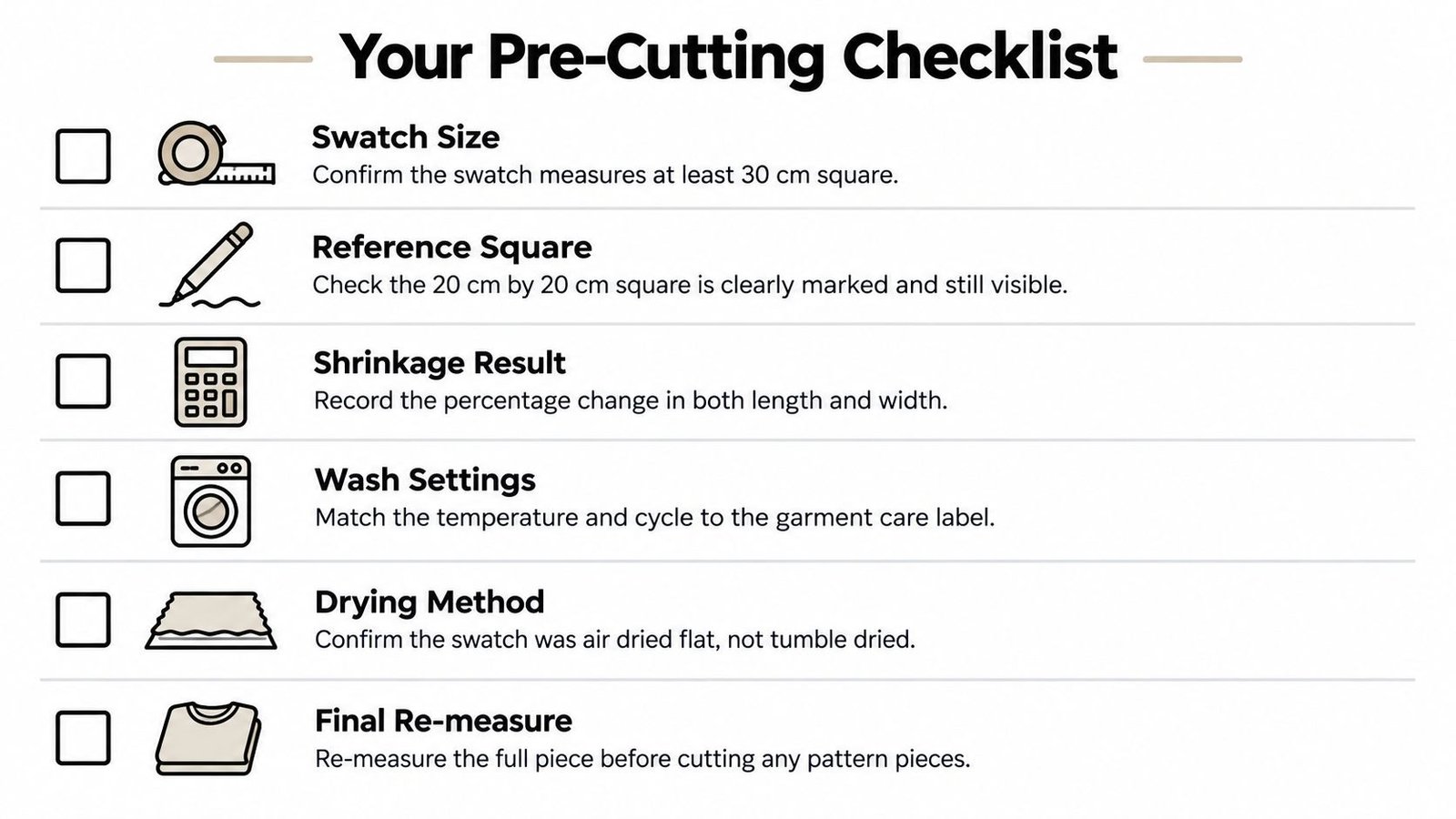
- Swatch size: Confirm you've tested a piece at least 30 cm square from the exact roll.
- Reference square: Check the marked square is visible and aligned to the straight grain.
- Shrinkage result: Record lengthwise and crosswise change separately, plus stretch, colour and surface notes.
- Wash settings: Match temperature, cycle, detergent and spin to the finished garment's care label.
- Drying method: Repeat the same air drying, flat drying or low tumble drying you'll use later.
- Final re-measure: Press, check the grain on your mat, re-measure the full piece, then lay out the pattern.
Add a small extra margin to hems and sleeves only when your swatch gives you a reason. Blanket allowances waste irreplaceable deadstock and can leave one direction too long while the other is still short. Let the fabric rest flat after pressing, particularly knits and loose weaves, and fold or roll it for storage if you're not cutting straight away.
Stick the labelled swatch and its results in the pattern envelope or a fabric notebook. When you reorder, compare batch, handle and width before trusting the old numbers. If you haven't bought the full length yet, order a sample first, mark it, wash it through your real routine, and only then decide how much yardage the pattern truly needs.
It's a slower start than washing hot and hoping. It's also the difference between a garment that survives its first wash looking intended and one that comes back as a smaller relative of itself.
Order a fabric sample swatch before you buy the full length, run the measured test above, and cut with the results in front of you. You can browse cottons, viscose and Tencel blends, jerseys, denims and ex-designer deadstock, with a Quality Guarantee and free shipping on orders over £50, when you visit More Sewing.
