
Guides
Outdoor Water Resistant Fabric: A Complete Sewist’s Guide
You've got the fabric in your basket, the garden chair looks tired, and the forecast says drizzle again. That's usually the moment sewists start asking the same question, what kind of outdoor water resistant fabric will work once it's cut, stitched, and left outside in British weather?
The answer isn't just about picking a material with a tough-sounding label. It's about understanding how water moves through cloth, where seams fail, and which finishes still make sense after a few rounds of rain, sun, and use. A good choice can make the difference between a cushion that stays smart through the season and one that soaks through at the first shower.
Your Guide to Sewing for the Great Outdoors
A customer once came in wanting to make seat pads for a small patio set, and she'd already bought fabric that looked “weatherproof” online. It felt sturdy enough in her hand, but she wasn't sure whether that meant it would shrug off rain, dry quickly, or just survive a few splashes. That confusion is common, because outdoor textiles get described with words that sound similar but behave very differently once the sky opens.
The good news is that the technical side gets much easier when you think like a maker instead of a marketer. A water-resistant fabric helps in light damp conditions, water-repellent fabric sheds moisture from the surface, and waterproof fabric aims to block water far more completely. The trick is matching the cloth to the job, because a garden bench cushion, a showerproof shell, and a tool cover all need different levels of protection.
Technical outdoor fabrics aren't new, either. British textile history has long been tied to wet weather, from Charles Macintosh's bonded rubber cloth in 1823 to Thomas Burberry's gabardine in 1879, and later the waterproof-breathable era that took off with Gore-Tex in 1976 after Robert W. Gore converted PTFE into a porous membrane. In plain sewing terms, that long history exists because the UK has always needed fabrics that keep rain out without making the wearer or user feel clammy. The evolution of the waterproof jacket shows how practical that problem has been for generations.
Practical rule: if the item will sit outside, get wet repeatedly, or need real rain protection, start with the performance level first, then choose the look and handle second.
Understanding Water Resistance Ratings
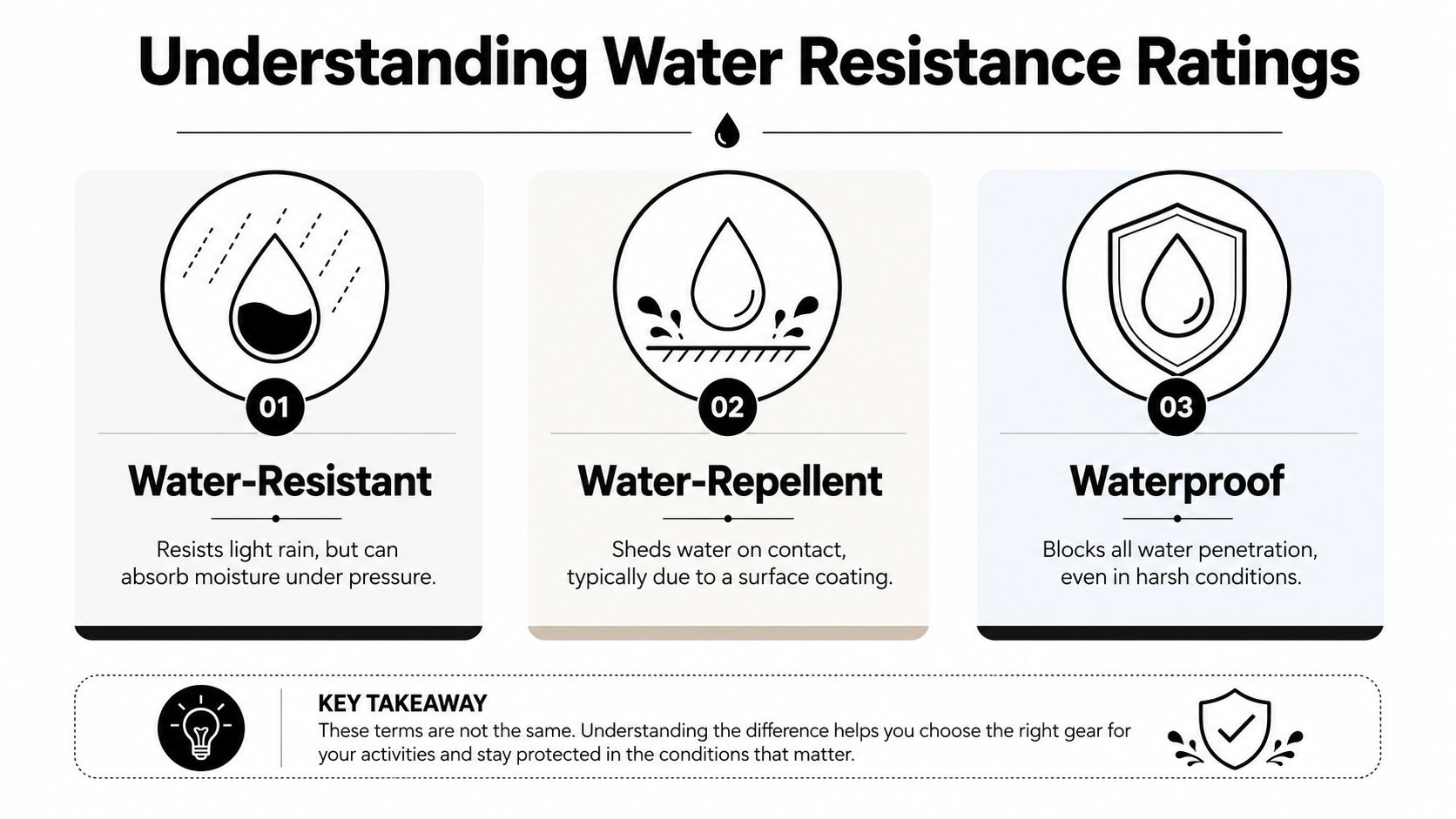
The easiest way to cut through fabric jargon is to think in layers of protection. Water-resistant fabric offers some defence against moisture, usually light rain or brief exposure. Water-repellent fabric makes water bead and roll off the surface, often because of a finish on top. Waterproof fabric is built to stop water penetration far more completely, often with membrane or coated construction.
For buying and sewing, the number that helps most is the hydrostatic head rating. It measures how much water pressure a fabric can take before it leaks, so it gives you a real comparison instead of a vague promise on a product page. British guidance cited by Snow+Rock says 1,500mm is the minimum for waterproof performance, 10,000mm or higher is a good benchmark for most outdoor activities, and 20,000mm+ suits heavy rain or harsher conditions. Snow+Rock's waterproof ratings guide is useful when you want a clean explanation of those thresholds.
Reading the label like a sewist
If a seller says “weatherproof” or “showerproof” without a millimetre rating, ask for the actual test figure and the standard used. That matters because a fabric can sound strong in a description and still be too light for exposed seating or a rain cover. A higher number doesn't make every project better, but it does mean the cloth can resist more sustained pressure from water.
A helpful resource on the difference between waterproof and water-resistant bedding protectors also makes the same basic point about using the right term for the right level of protection, and it's worth a quick look if you've ever felt the two labels blur together: understanding bedding protector differences.
A fabric's label tells you very little on its own. The rating, seam construction, and intended use tell you much more.
For outdoor sewing, many people encounter challenges. A cloth may pass a lab test but still fail in real life if the seams leak, the coating wears off, or the project gets more weather exposure than the fabric was designed for. That's why it helps to think in use cases rather than in buzzwords.
A Tour of Outdoor Fabric Types
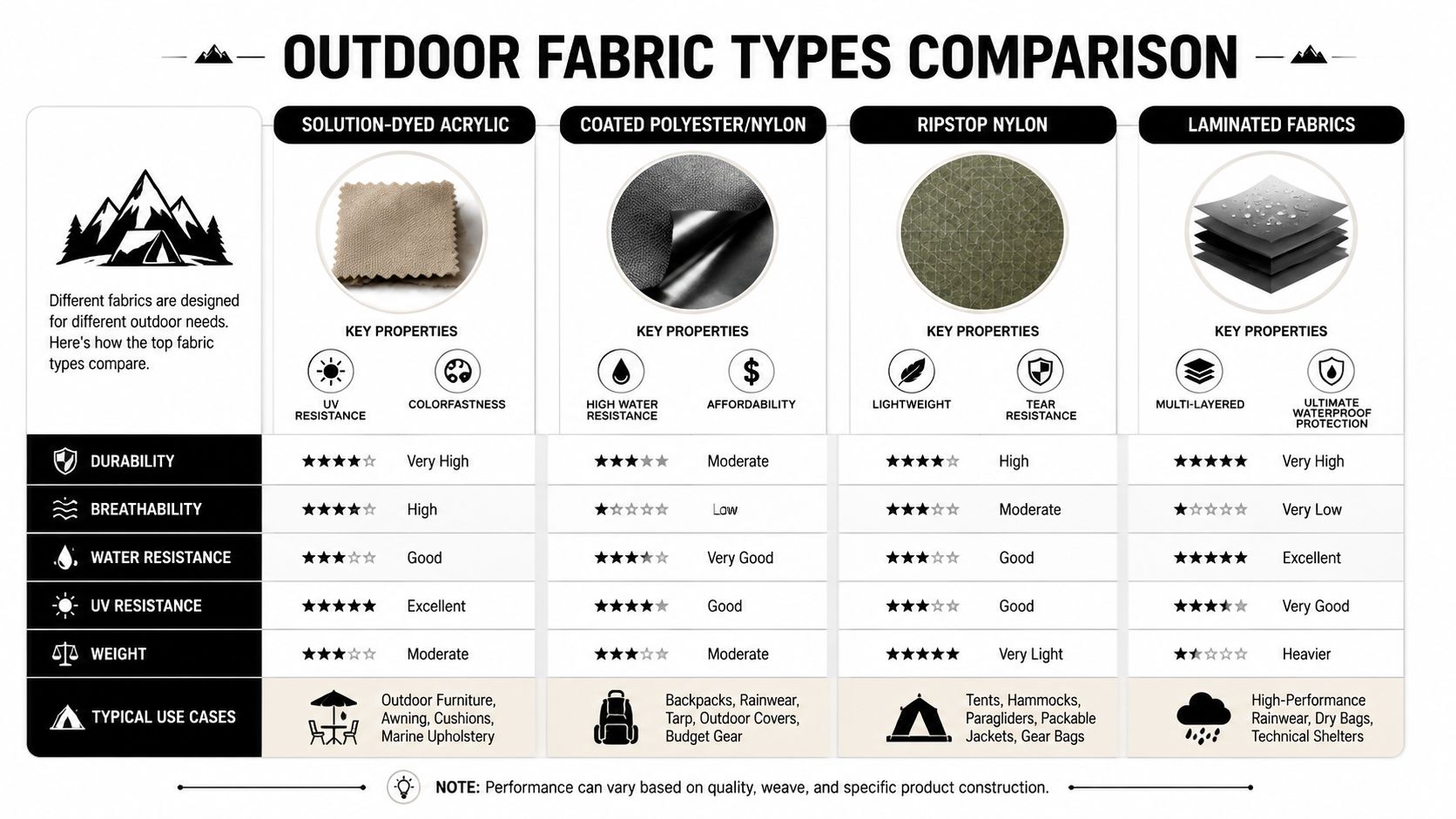
A fabric aisle can make everything sound interchangeable, but the feel in your hand usually tells a different story. Solution-dyed acrylic feels more like a furnishing fabric than a technical shell, which is why it's often chosen where colour stability and outdoor comfort matter more than total rain blocking. Coated polyester tends to feel more utilitarian, with a firmer hand and a slicker surface, which suits covers and practical accessories. Ripstop nylon feels light and crisp, often used where packability matters. Laminated fabrics sit at the more technical end, with visible layers and a firmer structure designed for stronger weather protection.
What each fabric does well
Solution-dyed acrylic is a sensible pick for awning panels, outdoor cushions, and furniture covers that need weather resistance and strong colour retention. A useful source on outdoor textiles notes that makers often weigh UV resistance, colour fastness, and abrasion alongside water resistance, because sunshine and wear can matter as much as rain. Outdoor fabric specifications and testing guidance is a handy reminder to check the claims behind those features.
Coated polyester and coated nylon are the practical middle ground. They're often a good match for temporary covers, tote bags, simple rain capes, and utility storage, especially when you want a lighter fabric that still handles wet conditions better than everyday dressmaking cloth. If you've got a project where softness matters less than function, this is often where people land.
Ripstop nylon is the fabric many sewists reach for when they want light weight and tear resistance without bulk. It works well for packable pieces, small pouches, and some outdoor accessories where every gram and fold count. Laminated fabrics, by contrast, make sense for projects that need a stronger barrier, especially where water exposure is more serious and a neat outer face matters.
Use-case rule: furniture, awnings, and exposed accessories usually benefit from firmer outdoor furnishing textiles, while portable items often sew better in lighter coated or laminated cloth.
Choosing by comfort, not just protection
Some outdoor projects need more than one quality at once. A solution-dyed acrylic can feel better for sitting and leaning, while a laminated technical fabric may protect better but feel less forgiving under the needle. That trade-off matters for home sewists, because a fabric that behaves beautifully outdoors can still be awkward to sew if it's too stiff, too slippery, or too tightly laminated.
For casual use, a water-resistant fabric can be the smarter choice when breathability and softness matter more than storm protection. For exposed outdoor items, go firmer and more technical. For a covered porch cushion, that might mean one thing. For a bag left in the car boot or a cover that faces side rain, it may mean another.
Essential Sewing Techniques for Outdoor Fabrics
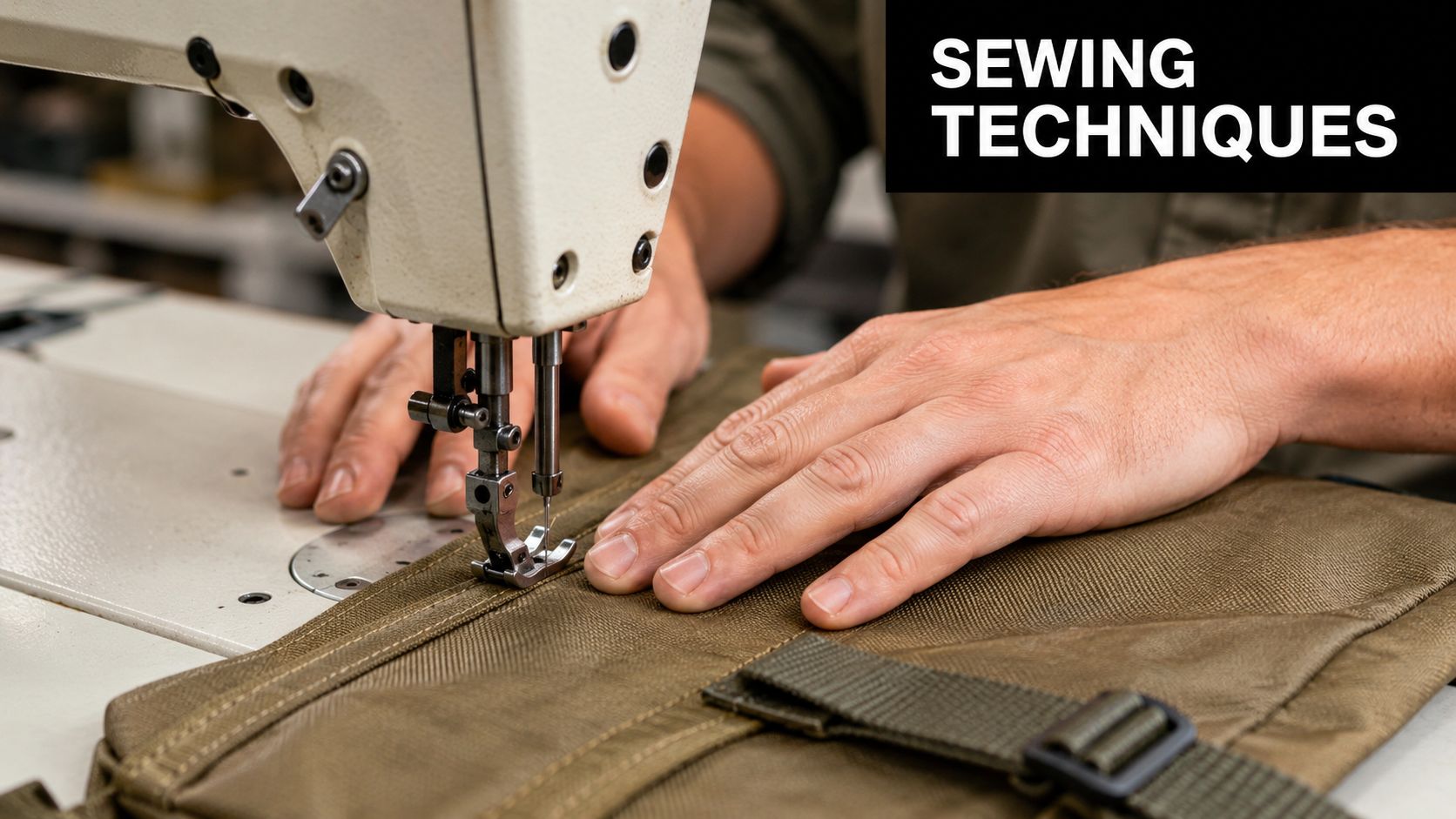
The fabric only behaves as well as the stitching lets it. A good needle, the right thread, and a sensible seam finish can turn a difficult project into a manageable one. A bad setup can leave you with skipped stitches, puckered seams, or tiny leak paths that don't show up until the first real downpour.
Start with the needle. Microtex or sharp needles are a sensible first choice for many outdoor fabrics because they pierce cleanly rather than forcing a large hole through the cloth. That matters on coated or laminated textiles, where every unnecessary hole can become part of the problem later. Polyester thread is the dependable choice for most outdoor work because it copes better with moisture and weather exposure than threads that don't like being outdoors for long.
Machine setup that keeps you sane
A slightly longer stitch length often looks neater on technical cloth and puts less stress on the fabric edge. Test on scraps before committing to your final seam line, because a setting that works on a soft coated polycotton can behave differently on a stiff laminated piece. Lowering tension a touch can also help if the fabric starts tunnelling or dragging under the presser foot.
Keep the feeding smooth. A walking foot can help with layers that want to shift, especially on cushions, covers, and laminated pieces. If the fabric surface is sticky, a little patience and a few scrap tests are worth more than forcing the job through the machine.
Seams that resist leaks
Seam choice matters just as much as stitch choice. For some items, a French seam can be cleaner and more protective than a simple raw-edge finish, especially where the inside of the item will be visible or lightly exposed. For other projects, an overlocked edge is fine for tidiness but not enough on its own for weather resistance.
Useful habit: reduce needle holes wherever you can, because every hole is a possible entry point for water if the seam is left untreated.
The good article on seam failure in waterproof-breathable fabrics points out that taped seams stop water from working through stitched lines, and that untreated seams are often where waterproofing breaks down first. Event Fabrics' guide to waterproof breathable fabrics makes the case clearly, and the same logic applies to home sewing. For exposed items, seal the seam. For less demanding pieces, at least keep the construction neat and minimal.
Later in the sewing process, a video demonstration can be useful for seeing how the cloth feeds and how the stitch line sits on the surface.
Sealing and finishing that hold up
Use seam tape, iron-on sealing tape, or a liquid seam sealant where the project needs the extra barrier. The choice depends on the fabric and the access you have to the seam line. If you're making a rain cover or a high-exposure outer layer, treat the seams as part of the waterproof system, not as an afterthought.
A couple of small sewing habits make a big difference. Trim bulky allowances where appropriate, press carefully without damaging the coating, and avoid decorative topstitching in places where water could pool. The aim isn't just to make it look polished. It's to make the seams behave like part of the fabric rather than a weak point in it.
Care and Maintenance for Longevity
A handmade outdoor item usually lasts longer when you treat it like technical gear, not everyday cotton. Regular detergent can strip the water-repellent finish from some fabrics, so harsh washing is the quickest way to lose performance on a garment or cushion that once worked perfectly. The surface may still look fine, but the beading can fade long before the cloth itself gives up.
For cushions and covers, a practical cleaning routine matters. If you want a straightforward external reference on outdoor cushion care, SwiftJet's cleaning tips for cushions gives a useful starting point for gentle cleaning habits that suit outdoor soft furnishings. Keep the focus on removing dirt without grinding the finish away, then let the item dry fully before storage.
Re-proofing and storage
When water stops beading, re-proofing can restore some of that performance. Use the product recommended for your fabric type, then let the item cure properly before putting it back outside. That won't turn a lightly resistant cloth into a heavy-duty storm barrier, but it can bring back useful everyday protection.
Storage is the other half of the job. Damp folding encourages mould and mildew, so make sure cushions, covers, and garments are dry before they go away for the season. If you're storing anything for months, choose a cool, dry place with airflow rather than a sealed, damp corner.
Small repairs help too. Restitch loose seams early, patch worn spots before they spread, and check the edge of taped seams if a project starts to lose its weather resistance. A little upkeep keeps a handmade piece useful much longer than leaving minor damage to grow into a full failure.
How to Choose and Buy the Right Fabric
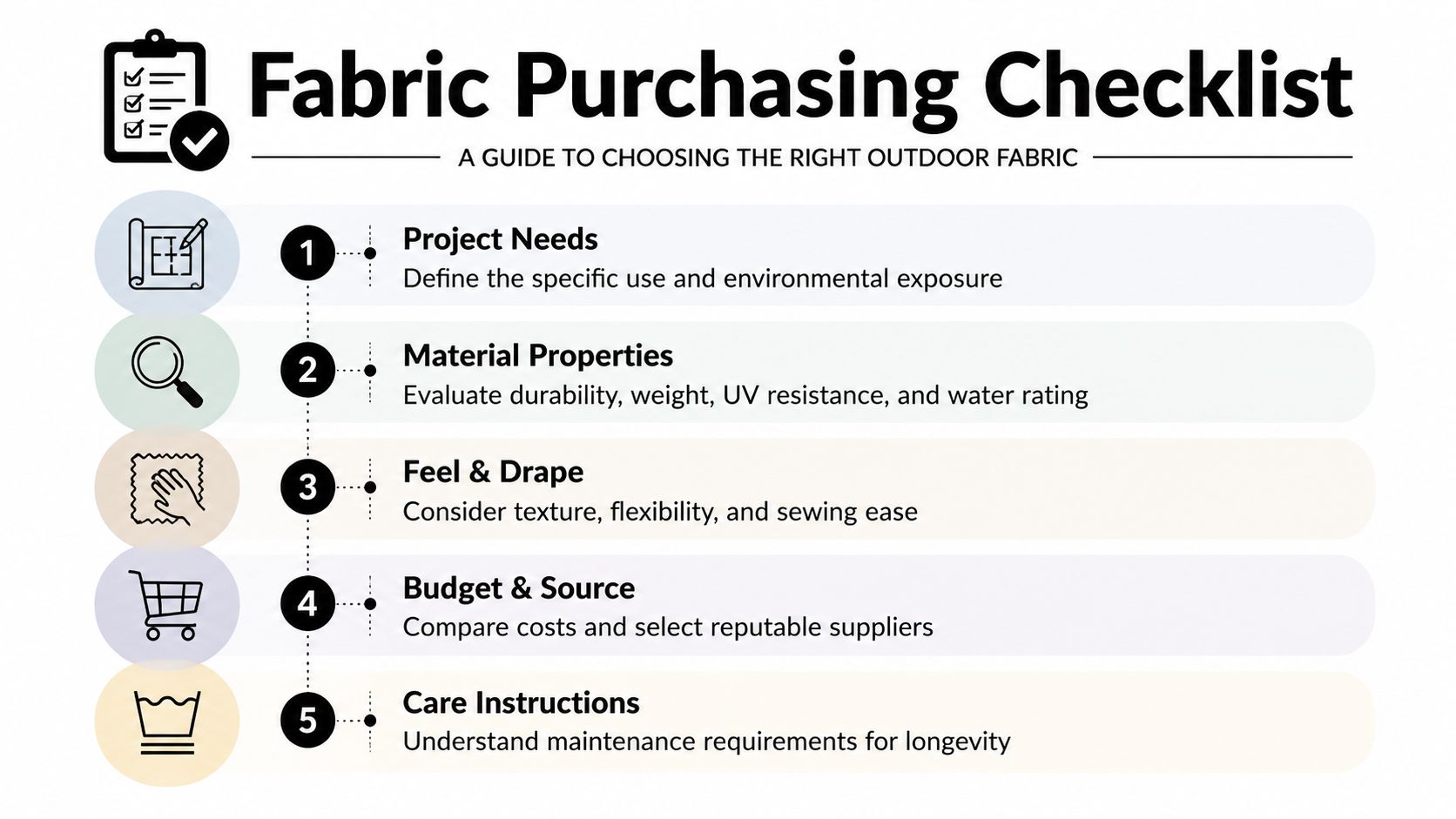
Buying well starts with one simple question, what is the item going to face? A showerproof apron, a rain cover for a pram, and a sheltered seat cushion do not need the same fabric. Once you define the use, the rest of the choice becomes much easier.
The checklist that keeps you from guessing
- Project needs. Match the fabric to the exposure. A cover left in the open needs more protection than a decorative cushion under a porch roof.
- Material properties. Ask for the water rating, durability, weight, and any UV or abrasion information the seller can give you. The hydrostatic head figure is especially useful here, because it gives you a consistent way to compare cloth.
- Feel and drape. Touch matters. A fabric can look ideal online and still feel too stiff, too slippery, or too noisy once you start sewing and using it.
- Budget and source. Buy from suppliers who tell you exactly what the cloth is. Clear descriptions beat vague promises every time.
- Care instructions. If the fabric needs special cleaning or re-proofing, decide whether that maintenance fits the project and the person who'll use it.
The market context matters too. A recent industry report values the global outdoor waterproof fabrics market at USD 2.03 billion in 2024 and projects 5.9% CAGR, which shows how large the supply side has become for outdoor textiles more broadly. At the same time, a technical review says PFAS-based DWR treatments, used widely since the 1950s, are now under pressure and brands are exploring fluorine-free alternatives such as ePE and polyurethane. The outdoor waterproof fabrics market overview is one of the clearer sources on that shift.
For a home sewist, that means the label is no longer just about rain performance. It's also about comfort, durability, and the chemistry sitting on or inside the fabric. A newer finish may sound ideal, but the better choice is the one that fits your project, your values, and your willingness to maintain it.
Ask for samples when you can. Feel the cloth, fold it, and test a small swatch at home before buying enough for the whole project.
That sample step is especially useful with outdoor fabric because the hand, stiffness, and surface coating often change how the item sews. A swatch also tells you more than a product photo ever will, especially if you want to compare coated polyester against laminated cloth or a more furnishing-like acrylic.
Start Your Next Outdoor Project with Confidence
Outdoor sewing gets much simpler once you separate three things, the fabric's weather resistance, the seam's ability to stay sealed, and the level of care the finished item will need. Choose the right rating, match the cloth to the job, and use sewing techniques that respect the way technical textiles behave under the needle. That's how a project goes from promising on the cutting table to useful outside.
You don't need to guess your way through the fabric aisle. You just need to ask the right questions, check the numbers where they exist, and test a sample before you commit to metres of fabric.
If you're ready to put that into practice, More Sewing can help you find fabric and notions that suit real sewing jobs, not just nice-looking photos. Visit More Sewing to browse ideas, compare options, and start planning your next garden, bag, or rainy-day project with more confidence.
