
Guides
Ric Rac Trim: A Practical Guide for Home Sewists
You spot ric rac trim on a Sunday evening when you're half-watching a sewing reel and half-thinking about the dress, cushion, or child's top still waiting on your table. One video shows it on a pinafore, the next on a tote, then it appears again on a cushion cover, and suddenly that little zigzag braid feels like the detail your project has been missing. It's small enough to feel approachable, but it can change the mood of a make fast, which is why it keeps turning up in modern sewing feeds.
That pull isn't random. Ric rac has a long decorative life, it reads as playful without being childish, and it bridges vintage charm with cleaner contemporary finishes. The trick is not just choosing it because it looks lovely, but learning how to pick the right width, the right fibre, and the right finish so the outside looks good and the inside feels considered too.
Why Ric Rac Keeps Showing Up in Your Sewing Feed
A sewist scrolling through Instagram on a quiet Sunday evening sees the same little trim three times in ten minutes. First it's a child's pinafore with a neat contrast edge, then a market tote, then a cushion cover with a bolder wave that makes the whole thing look designed rather than improvised. That's usually the moment people start wondering whether ric rac trim should be cut for their own project.
The answer is tied to fashion memory and maker culture. Ric rac has been around in recognisable form since around 1880, after earlier documented versions in the 1860s were known as “waved crochet braid” or “waved lacet braid” Wikipedia's history of ric rac. In Europe, it was already being used by the late 1880s for collars, cuffs, and decorative lace edging Wikipedia's history of ric rac. That heritage gives it the easy vintage feeling people respond to now, especially when a simple garment needs one sharp, lively detail.
Why it feels current again
Ric rac works well in the kinds of projects home sewists like to share, because it looks handmade without demanding advanced shaping. It suits the current taste for visible finishing, contrast edges, and small decorative interventions on otherwise plain makes. It also fits the indie aesthetic, where a single trim can make a basic dress, cushion, or bag look more considered.
Practical rule: if a project looks clean but slightly plain, ric rac can give it a line, a rhythm, and a bit of lift without changing the whole pattern.
The other reason it keeps appearing is that it solves a common problem. A sewist wants decoration, but doesn't want fussy appliqué, complex embroidery, or heavy embellishment. Ric rac gives that in one strip, and once you know how to choose it and attach it neatly, it becomes a dependable finishing tool rather than a novelty.
What Ric Rac Trim Actually Is
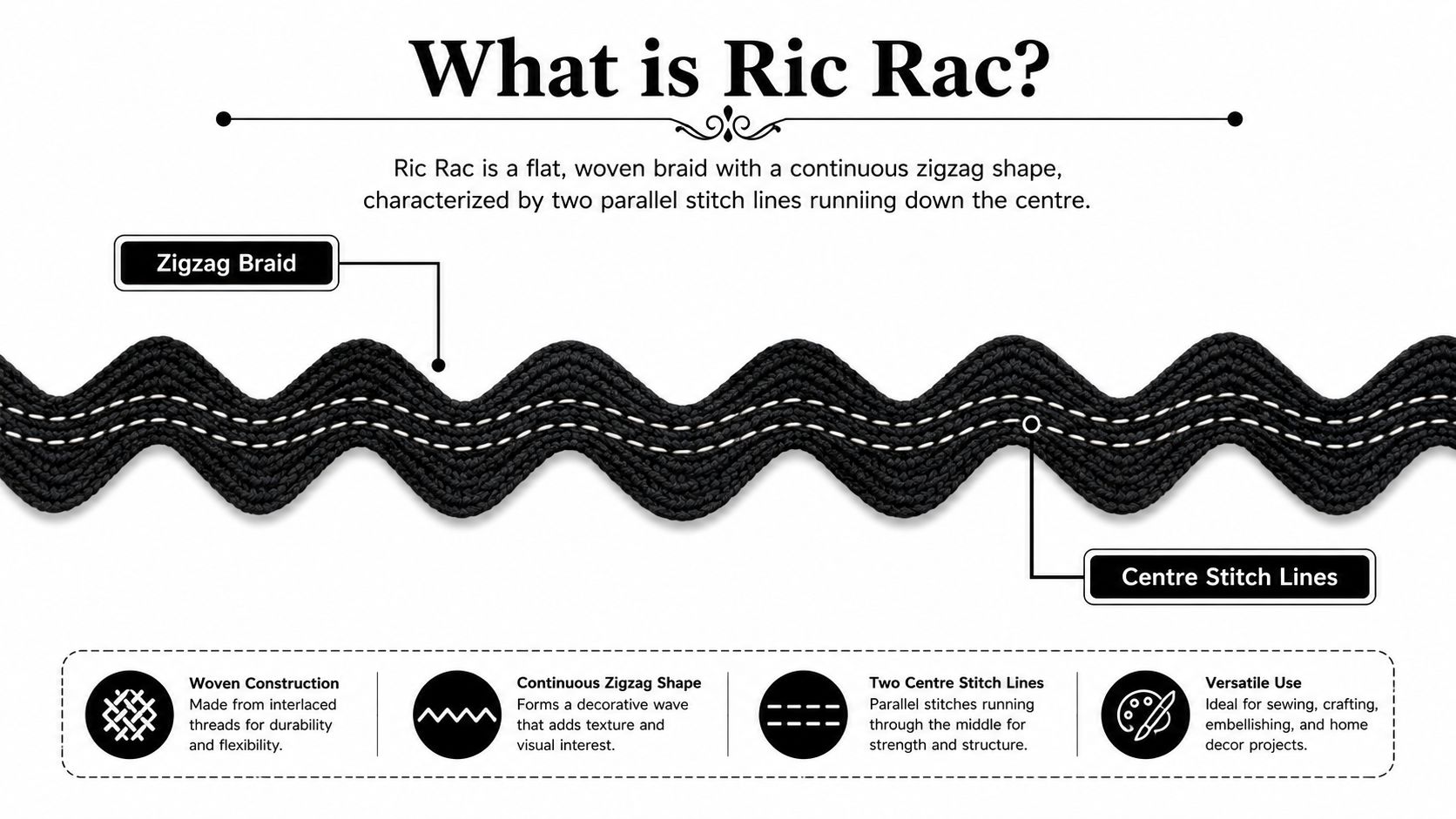
Ric rac trim is a flat woven braid shaped into a continuous zigzag. The defining feature is the way the braid holds its wave, so it can sit on fabric without behaving like a loose cord or a bulky ruffle. In practice, that means it lays neatly and gives you a strong decorative line.
What to look for in the trim itself
The centre of ric rac usually has two parallel stitch lines running through it, and that structure is what makes it easy to anchor. Those stitch channels help the trim flex around curves while still lying flat once stitched. That's why it feels friendlier than some trims when you're working on hems, collars, cuffs, or pocket edges.
It's also easy to confuse with other finishing materials, so a quick mental comparison helps. Braid is generally straighter, bias tape is folded rather than waved, pom-pom trim adds texture instead of shape, and ric rac is the one with the rhythmic zigzag profile that repeats across the length. The spelling often shifts between ric rac and rickrack, but the trim itself is the same family of thing.
A useful habit is to look at the centre channels before you buy. That's where your stitching will usually travel, and that's what keeps the braid behaving on the fabric rather than twisting away from it. Once you can spot those channels, ric rac stops being a vague decorative thing and starts looking like a very practical tool.
The centre stitching channels matter because they give you a built-in guide. If you can see them clearly, you can stitch more confidently and shape the trim more cleanly.
You'll also see it sold in different materials, including cotton, polyester, and polycotton blends in the wider market, which changes both the feel and the finish. That choice matters more than expected, especially once the project is going to be washed and pressed.
Choosing the Right Width, Material, and Colour
A good ric rac choice starts with three questions. How big is the garment, how often will it be washed, and do you want the trim to blend in or stand out? If the scale is off, the trim can look like an afterthought. If the fabric choice is off, it may not sit neatly after laundering.
Width sets the mood first. A narrow trim can disappear on a roomy dress, while a broad wave can overpower a small neckline. UK retail listings show common widths around 8 mm, 15 mm, and 22 mm, and some suppliers also sell 25 m reel formats for trade and repeat sewing Frumble's ric rac trim listings. Wider or longer stock changes how much fabric edge you need to plan for, and it matters if you are making several matching pieces from the same trim.
A simple way to think about width
Narrow ric rac works well on lighter garments and small details. Medium widths suit dress hems, cuffs, and homewares. Wider trims read more boldly, so they suit projects where the zigzag is meant to be seen clearly.
| Ric Rac Selection at a Glance | ||
|---|---|---|
| Width | Typical Material | Best Suited To |
| Narrow widths around 4 mm to 7 mm | Cotton or fine polyester | Delicate seams, children's clothes, fine necklines |
| Medium widths around 8 mm to 12 mm | Cotton, polyester, polycotton | Dress hems, cuffs, cushions, everyday homewares |
| Wider widths around 14 mm to 18 mm and above | Polyester or cotton-feel polyester | Bags, outerwear details, statement borders |
Material changes how the trim behaves after sewing. UK product data also shows ric rac sold in polyester, cotton, and cotton-feel polyester versions, and some suppliers describe machine-washable, colour-fast polyester trims that lie flat. That makes a practical difference on items that will be washed often, because the trim is more likely to keep its shape and sit neatly at the edge Rickety Rose's large ric rac listing.
Colour needs the same kind of thought. A tone-on-tone trim gives shape without drawing the eye away from the fabric, while a contrast colour makes the wave read from across the room. On a busy print, a quieter ric rac can steady the overall look. On plain cloth, a brighter trim can provide the decorative line the fabric does not have on its own.
Practical rule: match the trim to the garment, not the packet. A wide border on a small child's neckline can feel heavy, while a narrow line on a long skirt may vanish.
For UK sewists, the safest choice is the one that suits the final use. Laundry, fabric weight, and the width of the edge all matter more than a shade that only looks good on screen. If you are unsure, order a short length first and press it beside the fabric before you commit.
Three Reliable Ways to Sew Ric Rac On
Ric rac behaves best when it's anchored along its centre, because that keeps the zigzag even on the front and stable on the back. Most sewists start with a machine stitch, but there are a couple of other dependable routes if the fabric is delicate or the placement is curved.
Straight machine stitching
The simplest method is to place ric rac on the right side of the fabric and stitch directly down the centre. A straight stitch is the usual choice, and a size 70/10 or 80/12 needle is generally sensible for everyday dressmaking fabrics, because it keeps the stitching neat without punching large holes through the braid. A shorter stitch, around 2.5 mm, helps the line stay steady on standard trim.
A practical habit is to start with a couple of backstitches in the middle of a wave, not right on the edge of an end. That gives you a cleaner start and helps the first stitches disappear into the pattern. At corners, slow down and pivot gently, letting the trim fold naturally rather than forcing the wave flat.
Twin-needle topstitching and hand sewing
Twin-needle topstitching gives you two neat parallel lines, which can look especially crisp on visible edgings. It helps when you want the trim to feel disciplined and graphic, rather than softly stitched. Keep the fabric well supported and test the line on a scrap first, because the spacing needs to suit the width of the braid.
Hand-stitching is useful for delicate fabrics, tight curves, or places where a machine foot feels clumsy. A small catch stitch or tiny running stitches can hold the centre channels without squashing the braid. It takes longer, but it gives you more control when the placement needs to be exact.
Practical rule: if the ric rac starts to pucker, reduce speed, ease the fabric more gently, and press it flat before deciding the trim is the problem.
For curves and corners, the basic move is patience. Let the waves shift a little as you feed the fabric through, and don't tug the trim to force a shape it doesn't want. If the line begins to wobble, lift the presser foot, realign, and carry on slowly. That's usually enough to keep the braid clean and even.
A helpful video reference for the motion of stitching ric rac is here, especially if you're working visually:
Making the Inside Look as Good as the Outside
The cleanest ric rac finish is the one that feels planned from the inside as well as the outside. If the inner edges are tidy, the trim reads as part of the garment, not something added at the last moment. That matters on pieces that will be worn, washed, and pressed often.
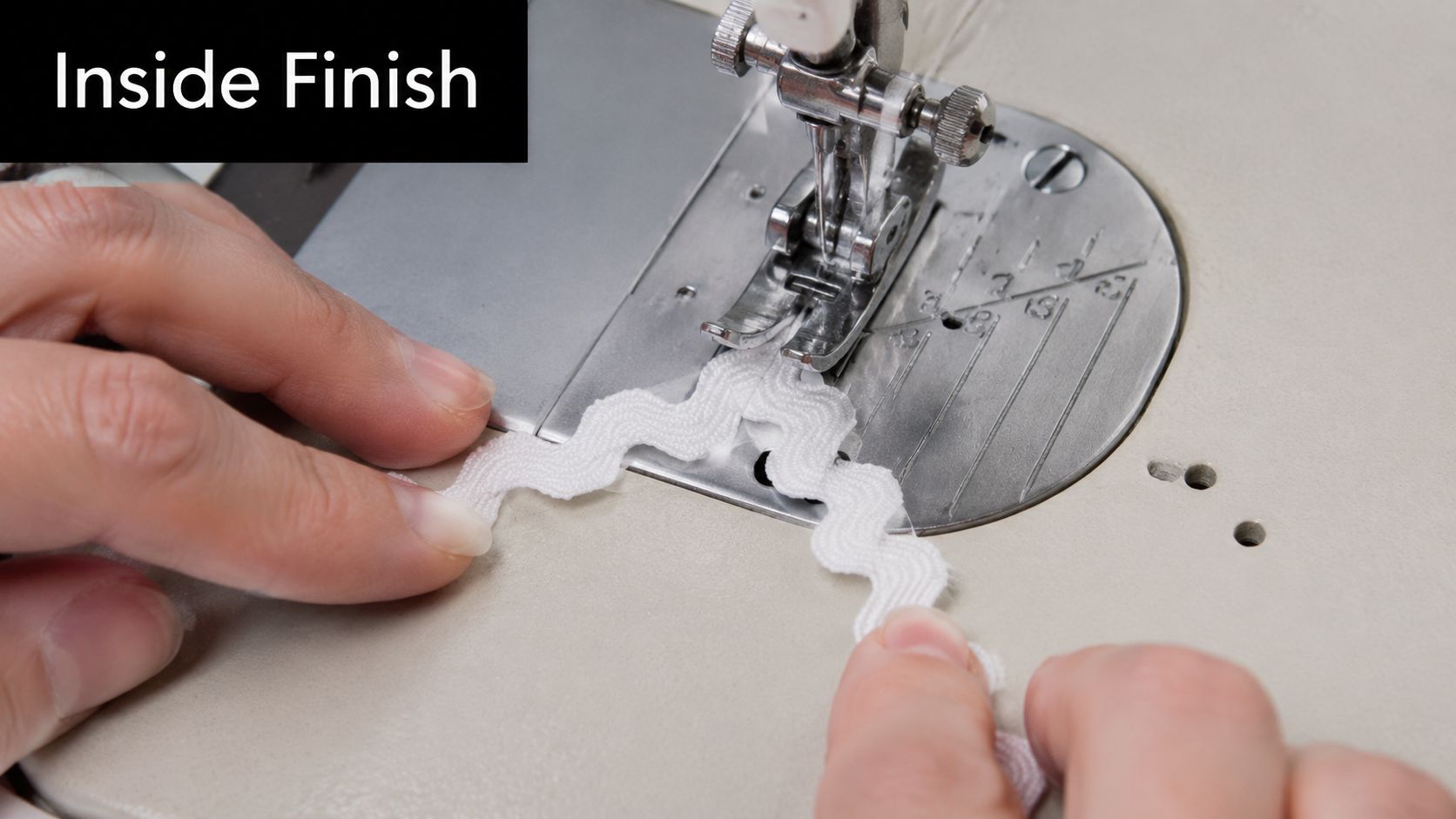
Hide the joins where the waves help you
Ends are easier to disguise between the peaks, where the zigzag shape breaks up the line. A small overlap inside a seam or a neatly turned-back raw edge gives you a finish that stays calm instead of flashing a blunt cut end. That simple choice makes the inside read more carefully made.
On collars and cuffs, stitching the ric rac into the facing keeps the layers behaving as one unit. The facing does the hidden work, while the trim keeps its shape at the edge. For items that will be washed a lot, a light strip of interfacing can help the braid lie flatter and keep its shape.
Think about seam allowances and pressing
Remove extra seam allowance where the trim turns through the garment, so the edge does not become stiff or bulky. Then press the seam in the direction it naturally wants to sit. Forcing the braid flat usually creates ripples later, especially once the piece has been worn and laundered.
A seam finish and a facing serve different jobs. If the ric rac sits in a seam, it should feel enclosed and secure. If it sits beside a facing, the facing should carry the hidden structure while the trim marks the visible edge. In both cases, the inside should look deliberate, not hurried.
That same habit matters in other soft furnishings too. A service such as professional curtain cleaning is a useful reminder that decorative textiles last longer when their finishes are chosen with washing, pressing, and handling in mind.
Project Ideas Worth Cutting Into
Ric rac works best when it's tied to a real make, not just a scrap tray impulse. A narrow trim on a neckline can tidy a simple jersey top, especially when the fabric itself is calm and the trim does the visual lifting. On a plain linen shift dress, a contrasting hem band can make the whole garment feel sharper without adding bulk.
Clothes that suit a bit of movement
Children's clothing is a natural home for ric rac because the trim already carries a playful rhythm. A drawstring bag with chunky ric rac on the flap or a pinafore with a bright edge can look finished quickly, even if the pattern is simple. It's also a good place to try colour contrast, because the trim can handle being the loudest thing in the outfit.
For home sewing, cushions and tea towels are reliable testing grounds. The trim sits at the edge, the scale is forgiving, and you can see immediately whether the width matches the project. A fabric basket rim can also work well, provided the trim isn't so heavy that it pulls the structure down.
When a small production run needs a clear decision
Independent makers often use ric rac as a signal detail, not just decoration. The important choice is whether the trim weight suits the base cloth, because a light fabric can go limp if the trim is too heavy or too wide. A crisp cotton poplin or sturdy linen usually supports a fuller wave better than a slinky cloth.
If you're thinking in terms of product range, one way to shop is to compare the trims available from dedicated haberdashers such as More Sewing, alongside other UK notion suppliers, and look at how the trim sits beside the fabric rather than in isolation. That keeps the choice grounded in the final object, which is where ric rac either works beautifully or feels overdone.
Care, Storage, and Smart Buying in the UK
Treat ric rac like a small strip of fabric, not an afterthought. Polyester ric rac usually copes well with a gentle machine wash in a mesh bag, while cotton ric rac is safer with hand washing or a cool delicate cycle to reduce shrinking at the points, as set out in Rickety Rose's care guidance. That matters if the trim is going on clothing or homeware that will be washed often.
Iron it along the points on a low setting with a press cloth. Keep the iron off the troughs, because pressing across them can flatten the wave and leave the braid looking tired.
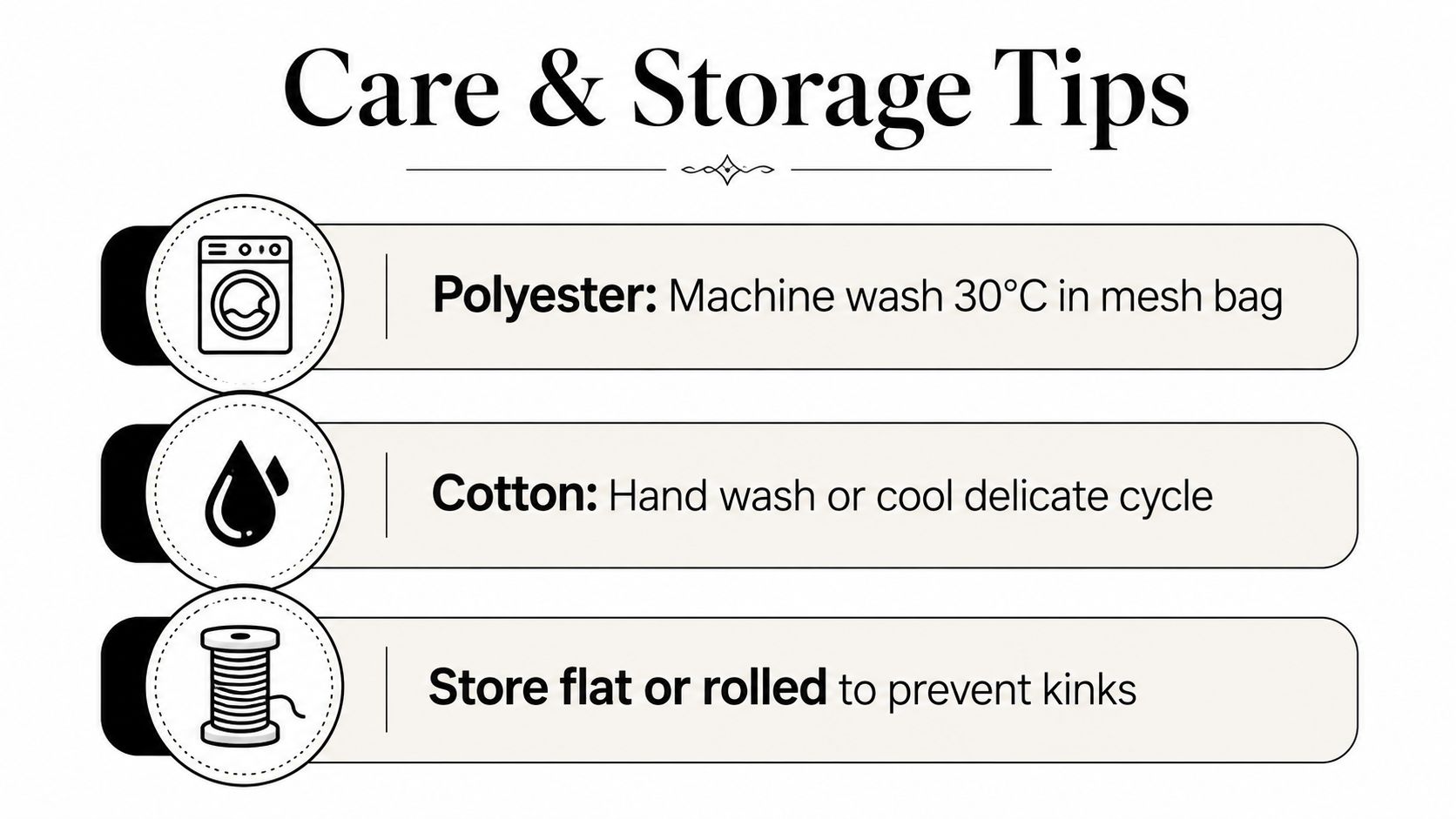
Store it wound flat on card or in a zip bag, away from direct sunlight, so the colour stays even over time. If the trim is part of a curtain or other larger make, the same gentle approach helps keep the finish tidy, much like the care used in professional curtain cleaning.
Buying well in the UK
Compare widths and materials across UK haberdashers, and ask for swatches when colour is doing most of the work. The useful question is whether the trim will still look calm after washing and pressing, not only whether it looks nice on the reel.
If you're organising trims, bobbins, and sample lengths, a practical storage guide such as Endless Storage craft organization ideas can help you set up a tidier system for keeping small notions visible and usable. Clear storage saves time when you need to match trim to fabric rather than rummaging through mixed pieces.
Your Ric Rac Checklist Before You Cut
Before you reach for the scissors, check the swatch in good light and press it first. Make sure the width suits the seam, pocket, or hem you've planned, and that the braid lies flat instead of rippling after pressing. If it already distorts on the table, it'll be more awkward on the garment.
Choose the stitch with the finish in mind. For standard trim, a stitch length around 2.5 mm usually sits well, and the thread should either blend with the trim or deliberately contrast with it. Decide whether you're stitching by machine, catching it by hand, or tucking it into a seam or facing.
Finish the ends before you start sewing in earnest. You might turn them under, fold them into a seam, or bind them with a tiny strip of self-fabric, but don't leave that decision until the last minute. And make sure you've got enough length, with a little extra for turning at each end, so the trim doesn't come up short when you're ready to sew.
If you want more fabric, trims, and making supplies chosen for dressmaking, visit More Sewing and browse the haberdashery that supports neat finishes as well as creative ones. It's a useful place to start when you're pairing ric rac with the right cloth, the right thread, and the right project.
