Dressmaking, Guides
Tortoise Shell Buttons: A Practical Guide for Sewers
You're standing at a market stall with a button turning slowly between your fingers. Its amber and brown pattern catches the light beautifully, and you can already see it on the cardigan waiting at home. Then the practical questions arrive. Is it genuine tortoiseshell? Is it legal to buy? Will it survive being worn, washed, and handled?
Those questions matter because tortoise shell buttons can describe several very different materials. A button may be genuine historical shell, another natural material with a similar glow, or a modern acrylic imitation made specifically for dressmaking. The surface can look remarkably alike, while the care requirements, ethical position, price, and UK paperwork differ completely.
Why Tortoise Shell Buttons Still Capture Sewers
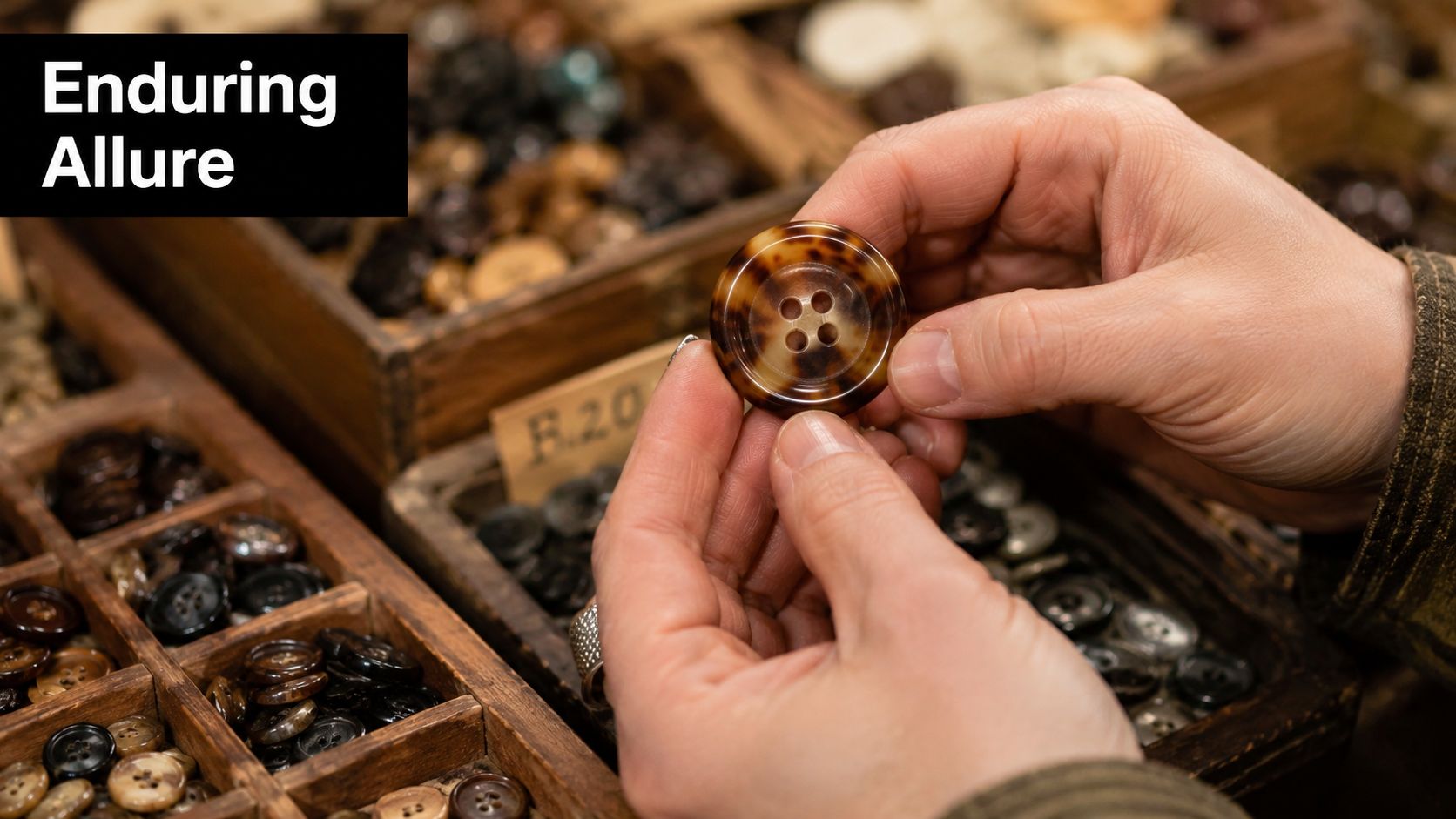
At the stall, the sewer places the button against a scrap of oat-coloured wool. The pairing works immediately. The mottled brown is warmer than black, more interesting than plain tan, and polished without looking flashy. One button has enough character to lift a simple garment without embroidery, braid, or complicated construction.
That visual appeal comes from the variation within the material. Real or vintage shell can show layered amber, honey, chestnut, and deep brown tones, with translucent areas that seem to change as the button moves. Basic plastic often gives a flatter impression, especially when its pattern is printed only across the face. Modern manufacturers can produce excellent imitations, but the best effect still depends on convincing depth rather than a simple swirl.
A single large button can change the mood of a garment. Try one on a collar tab, a pocket flap, or the centre of a shawl-collar cardigan. On a blazer or coat, a row of matching buttons creates a more settled, structured finish. On a plain dress, smaller tortoise-effect buttons can add contrast while keeping the fabric itself as the main feature.
The quiet luxury of a useful fastening
The appeal isn't only decorative. A good button gives your hand a satisfying point of contact, sits securely in its buttonhole, and makes a homemade garment feel deliberately finished. That's why the choice deserves attention even when the button is small.
The rest of the decision is practical. You'll need to distinguish materials, match the diameter and back style to the fabric, choose a suitable thread, understand care, and check UK rules before buying anything described as genuine tortoiseshell. Once those points are clear, you can enjoy the look without relying on guesswork.
Practical rule: Treat “tortoiseshell” as a material question, not just a colour description.
Real Tortoiseshell, Vintage Shell, and Modern Lookalikes
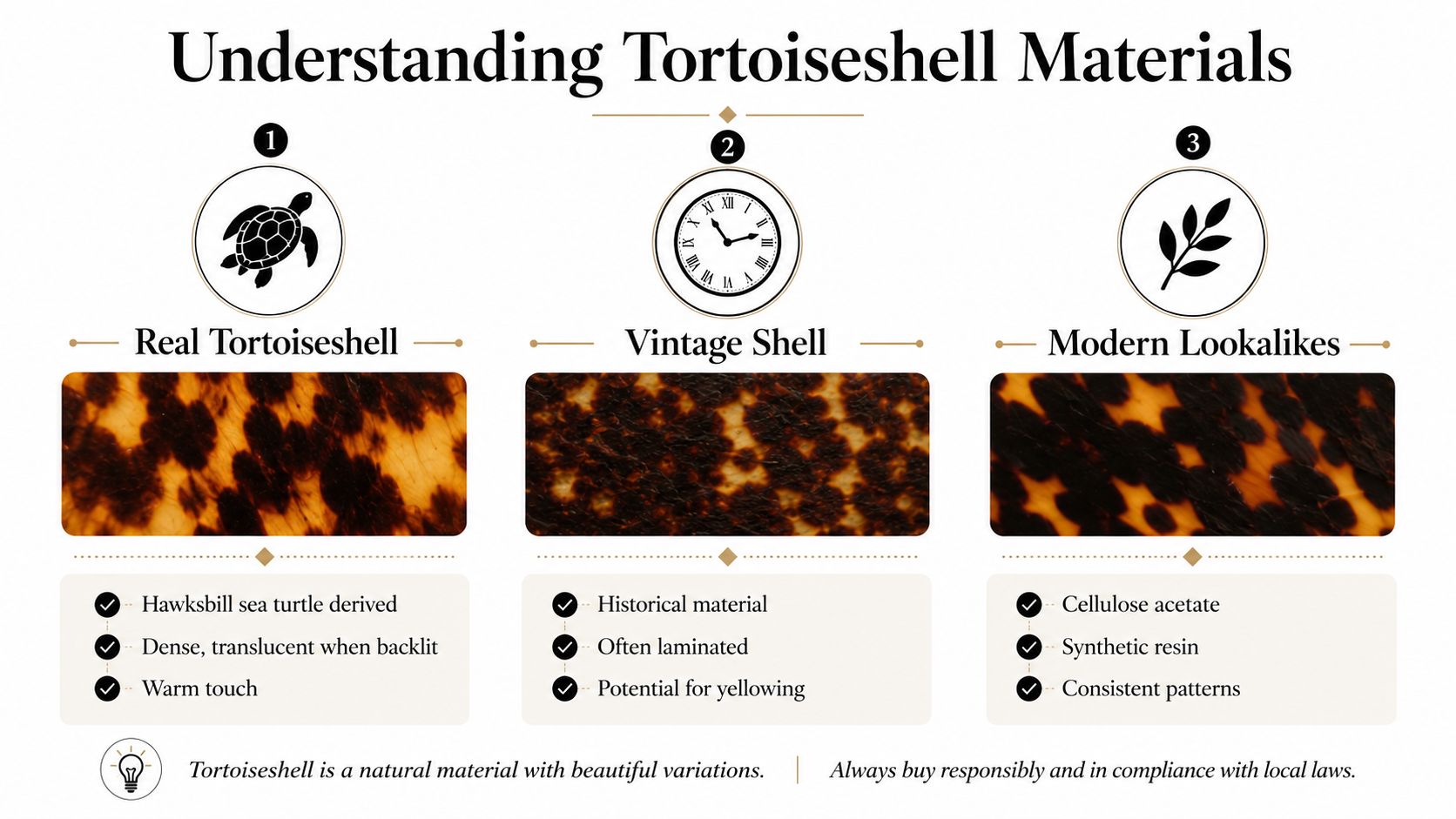
Start with the original material. Historical tortoiseshell buttons were made from hawksbill turtle shell, valued for its colour and ability to take a high polish, as explained in this account of tortoiseshell and other button materials. Makers used the shell for solid buttons, veneer, and inlaid decoration. It can look dense yet slightly translucent when held near a light, with irregular amber and dark brown markings rather than a perfectly repeated print.
That material is the rarest and most legally sensitive category. Genuine pieces usually appear as inherited, antique, or specialist-dealer items rather than ordinary haberdashery stock. The attractive surface doesn't remove the need to establish age, provenance, and permission for commercial activity.
A useful material progression
The next group includes vintage buttons made from other materials. Horn and bone can have natural variation and a warm surface, while early casein or galalith plastics may imitate shell with impressive depth. Some older shell buttons were laminated or combined with other components, so the word “vintage” alone doesn't tell you what you're holding.
These materials can feel heavier or more substantial than lightweight acrylic, but touch isn't a reliable test by itself. Look at the back, edges, and holes as well as the face. Natural variation tends to continue around an edge, while a moulded imitation may show a seam or a pattern that stops abruptly.
Modern acrylic, cellulose acetate, and resin buttons form the most accessible group. They're available in consistent sizes, can be produced with two-hole, four-hole, or shank backs, and usually offer the lowest practical risk for an everyday sewing project. Their patterns may repeat, but a good finish can still provide the warm, glossy effect most dressmakers want.
Compare before you buy
| Category | Typical feel and appearance | Practical sewing position |
|---|---|---|
| Genuine historical tortoiseshell | Dense, warm, polished, and sometimes translucent | Rare, provenance-sensitive, and subject to UK controls |
| Vintage horn, bone, casein, or galalith | Irregular colour and an older surface, sometimes with edge wear | Useful for vintage projects, but ask what the material is |
| Modern acrylic or resin | Consistent sizing, repeatable pattern, and dependable availability | Straightforward choice for new garments and samples |
Ethics matter alongside appearance. Genuine tortoiseshell comes from a protected animal material, so a beautiful button isn't automatically an acceptable purchase. A clearly labelled modern lookalike gives you the visual result without placing a new demand on wildlife-derived material.
Sizes, Shanks, and Button Types Explained
The right button begins with the buttonhole, not the button display. Measure the existing buttonhole or make a test hole in a fabric scrap. The button should pass through with a little resistance, but it shouldn't stretch the cloth or force the surrounding stitches apart.
For common dressmaking projects, 10mm to 20mm buttons suit many blouses and shirts, while 25mm to 35mm options create more presence on coats, cardigans, and statement outerwear. These size ranges are practical starting points rather than rules. A narrow placket needs a smaller button, and a heavy coat needs a button that looks proportionate to its fabric and construction.
Pick the back style for the fabric
A shank button has a loop or moulded stem on the back. That raised section creates room for thicker cloth, such as wool coating or denim, to sit beneath the button without pulling the garment surface into a tight ridge.
A flat sew-through button sits closer to the garment. Two-hole versions give a clean, restrained finish, while four-hole buttons allow stronger anchoring and a choice of sewing patterns. Vintage shell buttons may also have a recessed metal shank, which can be sturdy but deserves close inspection for looseness or corrosion.
| Button Size | Shank Type | Best Garment |
|---|---|---|
| 10mm to 14mm | Flat two-hole | Lightweight blouse, shirt, or cuff |
| 14mm to 20mm | Flat four-hole | Medium-weight shirt, dress, or cardigan |
| 20mm to 30mm | Raised or domed shank | Wool jacket, substantial knit, or denim |
| 25mm to 35mm | Deep shank | Coat, overshirt, or statement outerwear |
Count the buttonholes on the pattern before ordering. A short cardigan may need only a small row, while a longer coat needs more fastenings and a spare for future repairs. Buy enough for the planned row plus a replacement, but don't assume every garment needs dense spacing. Wider spacing suits a bold coat button, while closer spacing works better on a narrow blouse placket.
Pairing Tortoise Shell Buttons With Different Fabrics
A button should relate to the weight, colour, and texture of the cloth. Tortoise-effect patterns are especially useful because warm brown can soften a stark neutral or give a solid fabric a small point of movement.
Denim
For a chunky mid-wash denim chore coat, choose a matte horn-style button or a subdued tortoise-effect finish. The less glossy surface sits comfortably against the indigo weave, while a flat or lightly raised back avoids an overly dressy result. Use strong polyester thread in a brown, tobacco, or muted navy shade, and reinforce the button area if the denim is stiff.
Linen
Medium-weight linen in oat, putty, or natural flax works beautifully with a flat two-hole button showing amber variation. The mottling adds interest to a simple summer blouse without competing with linen's relaxed texture. Sew a small sample first, because a high-gloss button can look too formal if the linen has a very rustic slub.
Wool
Undyed or charcoal wool melton can carry a larger button confidently. A 20mm to 30mm domed shank with deeper brown veining gives a winter coat enough visual weight, particularly where the cloth is thick and the placket is broad. Match the thread to the darker part of the button if you want the fastening to recede, or use a warm contrast if the buttons are the coat's feature.
Knitwear
Fine-gauge knitwear in cream or rust needs a lighter choice. Smaller buttons reduce strain on the stitches and keep the front from sagging. Add a small piece of interfacing or a backing button behind the buttonhole area where the knit feels delicate, and leave a suitable thread shank so the fabric isn't compressed.
Fabric test: Lay the button on the finished cloth, then place it beside the buttonhole. If the button looks wider than the placket or heavier than the fabric can support, choose a smaller or lighter style.
Caring for Tortoise Shell Buttons on Finished Garments
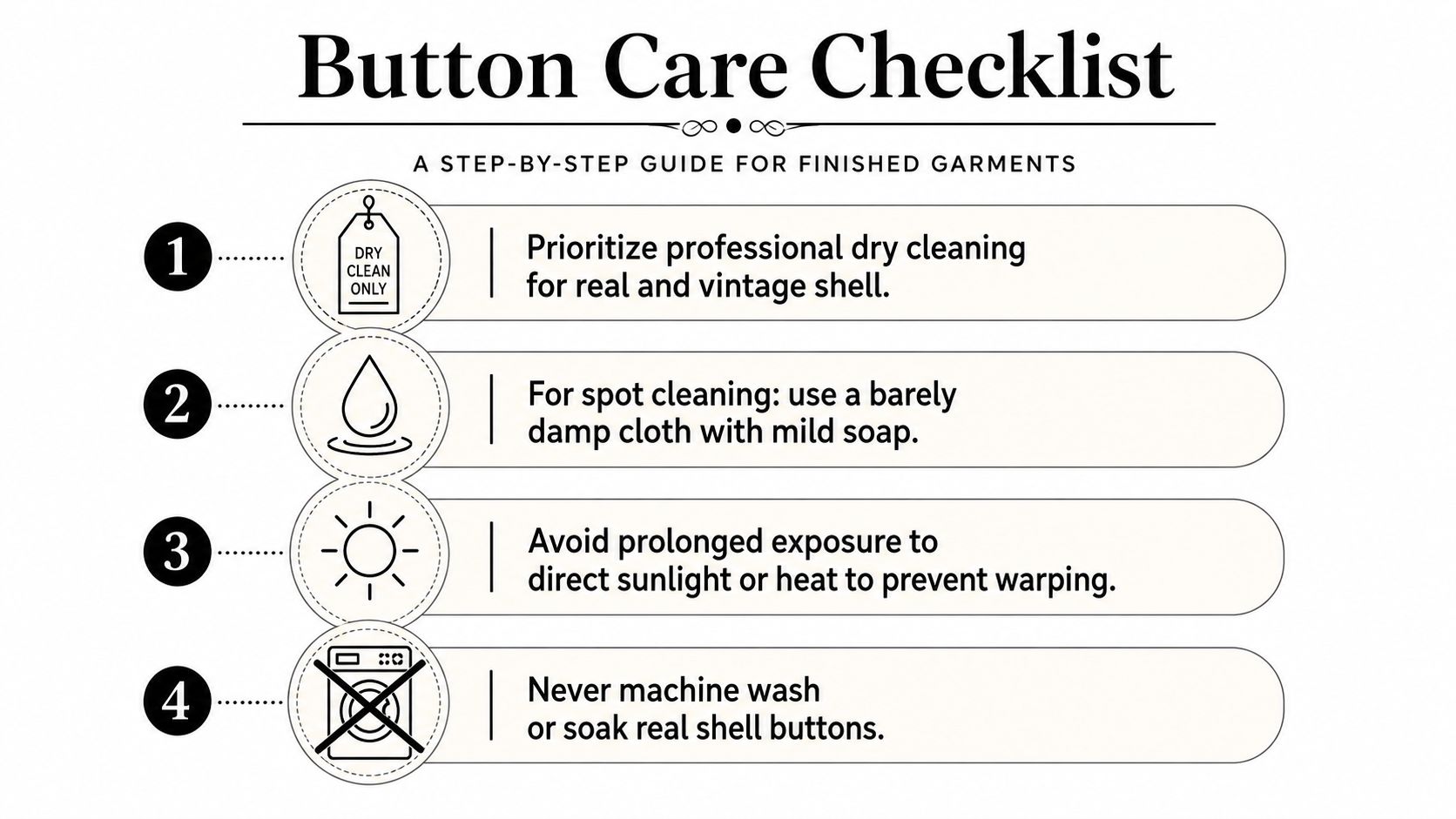
Care starts with avoiding unnecessary water. For real or vintage shell, professional dry cleaning is generally the safer option, particularly on a fitted coat or a garment with older buttons. If you're dealing with a small mark, use a barely damp cloth with a little mild soap, then wipe gently and dry the surface promptly.
Older shell can warp after prolonged soaking. Modern acrylic has a different weakness. Acetone and alcohol-based products may dull or damage its surface finish, so keep nail-polish remover, strong stain treatments, and solvent cleaners away from the buttons.
Storage and garment reinforcement
Store treasured buttons away from direct sunlight and heat. Sun can fade a surface, while heat and uneven moisture can affect older materials. Avoid sealing them in an airtight plastic bag if dampness could be trapped inside. Acid-free tissue offers a gentler wrap for loose vintage buttons and keeps them from rubbing against harder objects.
On the garment, reinforce the fastening rather than over-tightening it. A button with a shank needs a thread stem, while a sew-through button should have firm but flexible stitches. Knitted fabrics benefit from interfacing behind the buttonhole or a backing button on the reverse.
If a button loosens, replace the thread before replacing the button. Retire a button when it has a sharp chip, a spreading crack, a badly weakened hole, or an unstable shank. A damaged fastening can catch skin, snag yarn, or fail when the garment is under pressure.
UK Legal Status and Common Misconceptions
A brown mottled button isn't automatically tortoiseshell. The genuine historical material came from hawksbill turtle shell, and UK trade controls treat tortoiseshell as a wildlife-trade material. In England and Wales, CITES is enforced through the Control of Trade in Endangered Species (Enforcement) Regulations 2018, and the sale or import of new tortoise-shell products is illegal unless the item qualifies as a documented antique or another exemption, as summarised in this UK-focused overview of tortoiseshell jewellery law.
The practical distinction is between new material, an antique, and an item that has been reworked. UK guidance states that a worked specimen of an endangered species, including tortoiseshell, may not need an Article 10 certificate for commercial use when it was significantly altered before 3 March 1947 and hasn't been reworked afterwards. Antiques predating 1947 can also fall within the relevant exemption, but age alone isn't a substitute for evidence.
The UK guidance on worked specimens and endangered-species items makes the paperwork question central. If an item has been reworked, a certificate may be needed. UK guidance also says a CITES certificate is required before sale for regulated tortoiseshell items, and commercial activity can include selling, offering for sale, transporting for sale, or buying an item claimed to be made from protected tortoiseshell. For cross-border movement, documentation has been required between Great Britain and Northern Ireland, and between Great Britain and the EU, since 1 January 2021, according to UK antique trade guidance on tortoiseshell documentation.
What the button can and can't tell you
| Material | Origin | UK Legal Status | Visual Cues |
|---|---|---|---|
| Genuine tortoiseshell | Hawksbill turtle shell | Controlled wildlife-trade item, with exemptions requiring evidence and documentation where applicable | Deep mottling, possible translucency, polished surface |
| Vintage horn, bone, casein, or galalith | Animal horn, bone, or historical plastic | Depends on the actual material, age, and any separate controls | Natural variation, edge wear, older moulding details |
| Modern cellulose acetate or acrylic | Manufactured imitation | Usually sold as a modern synthetic button, but the label must be honest | Repeated swirls, mould seams, consistent sizing |
UK trade classification adds another layer. Tortoiseshell and articles made from it fall under commodity code 9601, while buttons are separately classified under commodity code 9606, as shown in the UK trade classification for chapter 96. A tortoiseshell button can therefore be more than a haberdashery purchase when moved across a UK border.
Ask direct questions. “Is this genuine shell, and what evidence supports the date?” is better than “Is this vintage?” If the seller gives a vague answer, offers no provenance, or suggests that all old buttons are automatically legal, leave it behind. For lower-impact household choices while caring for garments, you may also find useful ideas in these green home cleaning solutions.
Where to Buy and What to Check Before You Commit
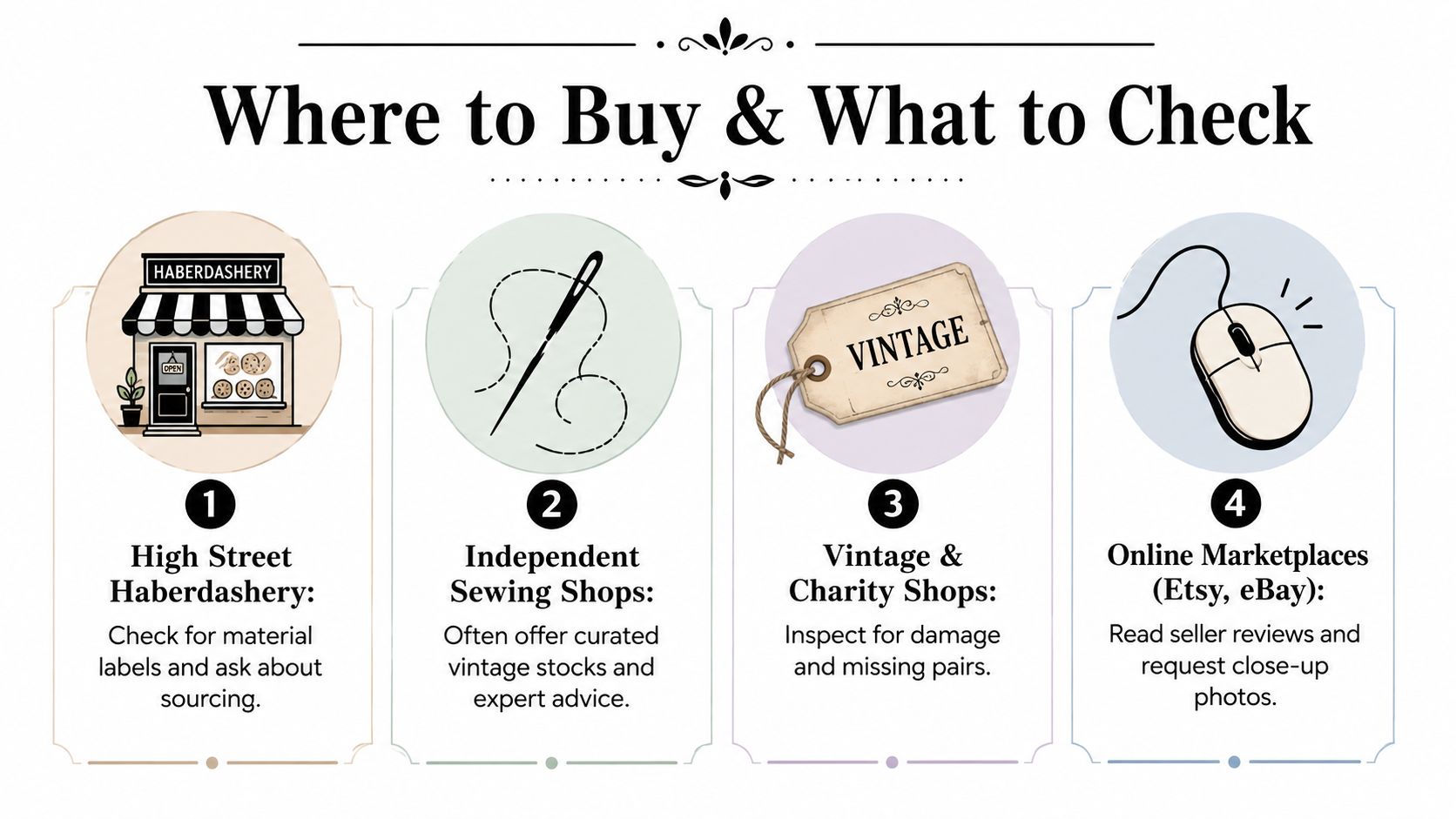
A high street haberdashery counter is the easiest place to find modern tortoise-effect acrylic and cellulose acetate buttons. Staff can often help you compare size, finish, and shank depth, but ask whether “tortoiseshell” describes the pattern or the material.
Independent sewing shops may carry curated vintage stock alongside current haberdashery. Their advantage is conversation. You can take a fabric swatch, compare the button in daylight, and ask whether the seller knows its composition.
Vintage and charity shops can produce charming mismatched finds, particularly for a one-off pocket or decorative detail. They're less reliable for complete sets, and you'll need to inspect every button for chips, loose shanks, and missing pairs. Online marketplaces such as Etsy and eBay offer the widest choice, but photographs can hide seams, cracks, and colour shifts. Read the description carefully and request close-up images of the front, edge, and back.
A short pre-purchase check
- Match the size: Measure an existing buttonhole and compare the diameter, thickness, and shank height.
- Inspect in daylight: Tilt the button to find cracks, cloudy areas, worn coating, and edge damage.
- Check the back: Look for a secure shank, clean holes, and any metal component that has loosened.
- Ask plainly: Confirm whether it's genuine shell, another vintage material, or modern acrylic.
- Request documents: If the seller claims genuine tortoiseshell, ask for relevant CITES, Article 10, provenance, or supplier paperwork before paying.
For broader context on evaluating older accessories and supplier questions, this wholesale vintage jewellery sourcing guide can help you think about provenance and condition, although a jewellery guide doesn't replace UK wildlife-trade advice.
A sensible buying order keeps the sewing enjoyable. Start a new project with a modern acrylic imitation, upgrade to vintage shell or another verified historical material once the garment fits well, and reserve genuine tortoiseshell enquiries for licensed antique dealers who can discuss the evidence.
Choosing With Confidence for Your Next Make
Return to the garment on your table, whether it's a quickly assembled toile or a winter coat waiting for its final fastenings. Three decisions will keep the choice manageable: confirm the material, match the size and back style to the fabric, and check UK rules for anything sold as genuine or antique tortoiseshell.
The button is small compared with a whole garment, but it sits where the eye naturally lands. Ten extra minutes spent placing it against the fabric can reveal that a glossy amber button overwhelms a fine blouse, or that a tiny flat style disappears on heavy melton. Make a sample buttonhole, sew one button temporarily, and view it at a normal distance before committing to the full row.
A practical default
For everyday makes, modern acrylic or cellulose acetate gives you the tortoise effect with consistent sizing and straightforward sourcing. For a special vintage-inspired garment, verified worked shell or another clearly identified historical material may provide the irregular depth you're seeking. Anything claimed to be genuine tortoiseshell deserves caution, documented provenance, and a UK legal check before money changes hands.
You don't need to turn every button purchase into a collecting project. Choose the finish that supports the cloth, use a strong thread and suitable reinforcement, then test the fastening before the garment leaves your sewing room. This week, sew one button onto a scrap or your next project and judge it in real fabric. The right choice usually becomes obvious once it's holding something together.
If you're ready to put these ideas into practice, browse the fabrics, haberdashery, and ready-to-sew kits at More Sewing to find a suitable base for your next buttoned garment. Visit the Worthing shop or explore online for practical supplies, fabric swatches, and finishing touches that make choosing your tortoise-effect buttons easier.
