
You're standing at the cutting table with a shirt pattern in one hand and a folded length of cloth in the other. The colour is lovely, the stripe looks smart, and it feels fine in the shop. Then the finished shirt goes on and something's off. The collar won't sit cleanly, the body feels stuffy, or the whole thing creases by lunchtime.
That's why fabric for shirting deserves more thought than “I like this print”. A shirt is worn close to the body, washed often, pressed often, and expected to behave. It needs to hang well, feel comfortable, and still look like a shirt rather than a crumpled craft project. The good news is that you don't need a textile degree to choose well. You just need a simple way to look at fibre, weave, and weight together.
Why Your Shirting Fabric Choice Matters More Than You Think
You can cut the right pattern and still end up with the wrong shirt. At the cutting table, that usually shows up in small disappointments. The collar looks bulky instead of sharp, the body feels see-through in daylight, or the shirt creases after one sit down.
What changes when the cloth changes
Shirting fabrics can sit in the same shop basket and behave like completely different materials once you sew them. One holds a crisp placket and presses into a tidy collar point. Another drops softly, shifts under the iron, and wants a looser shape. The pattern has not changed. The result has.
That is why fabric choice matters before you even thread the machine. Fibre affects comfort and crease recovery. Weave affects surface, strength, and how clearly a stripe or check shows. Weight, often given as GSM, affects drape, opacity, and whether the shirt feels right for a July train platform or a damp January school run.
A light poplin can make a shirt feel neat and cool, but it may need checking for opacity, especially in pale colours. An Oxford usually feels more substantial and forgiving, which suits casual shirts and overshirts. A cotton blend may come out of the wash looking less rumpled. A drapier cloth can soften a blouse pattern beautifully, but it may not give you the clean collar stand you expected.
For UK sewing, this matters more than many beginners expect. Our weather changes quickly, our shirts often sit under cardigans or jumpers, and most handmade shirts get washed and pressed often. A fabric that feels pleasant folded on the bolt can turn clammy indoors, crease badly after commuting, or feel too crisp for all-day wear.
A practical way to choose
At the counter, I suggest matching the cloth to real use rather than to the label that says "shirting."
Ask yourself:
- Will this shirt need structure or softness? A classic button-up with a stand collar needs different support from a loose holiday shirt.
- Do I want coverage or lightness? Fine shirting can be lovely in summer, but stripes, bras, and seam finishes may show more than you expect.
- How much pressing am I willing to do? Some fabrics spring back neatly after laundering. Others crease the moment you wear them.
- Will I wear it in warm, cool, or mixed weather? That answer often settles the choice faster than colour does.
If you buy striped shirting, do one extra check. Unroll enough to see whether the stripes are straight and whether both selvedges match. That tiny pause can save a lot of frustration later when you are matching a button band, pocket, or yoke. Pre-washing matters too, because many shirt fabrics tighten up a little in the first wash, and that changes both handle and size.
If you enjoy sharing your finished makes, pattern tests, or fabric combinations with a wider sewing community, you might also like to start the gifted maker collaboration from High Country Quilts. It's a useful example of how makers connect practical sewing with creative projects.
A calm, useful fabric choice makes the whole project easier. You cut with more confidence, press with fewer surprises, and end up with a shirt that suits both the pattern and the day you plan to wear it.
Understanding Shirting Fibres From Cotton to Blends
A shirt can be cut from two fabrics that look almost identical on the bolt and still wear very differently by lunchtime. One stays fresh enough for the office. The other creases across the elbows, turns a bit warm on the train, or feels too limp for the collar your pattern needs. Fibre is often the reason.
When people say “shirting”, they often mean cotton first. That makes sense. Cotton became a major everyday textile in Britain during the late eighteenth and early nineteenth centuries, and one historical source notes that cotton shirting only began to seriously take market share from linen after 1825, including Edward Baines' 1829 observation that “cotton fabrics have of late come much into competition with linens, and one article in particular, cotton shirting is now very much in request” in this historical study on British textile change.
Why cotton still leads
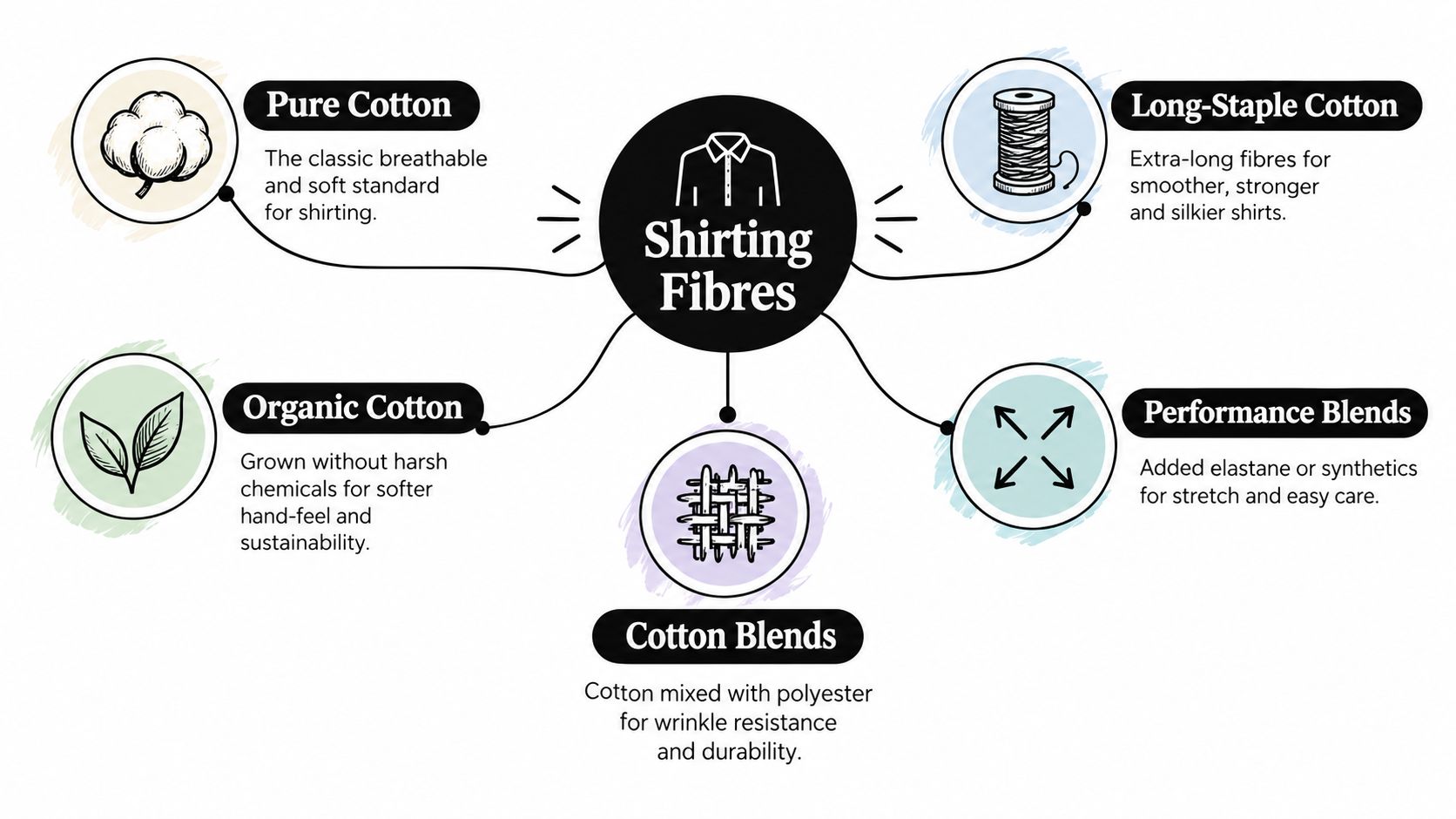
Cotton remains the baseline for shirting because it is usually breathable, pleasant against the skin, and cooperative under the iron. It also covers a wide range. One cotton shirting can feel crisp enough for a smart collar and tower placket, while another feels soft enough for a relaxed weekend shirt. The fibre is the same, but the yarn, weave, and finish change the result.
Long-staple cotton often gives a cleaner, smoother cloth. The reason is simple. Longer fibres spin into finer, tidier yarns, which can make the surface look neater and feel a touch more polished. If you have ever handled one striped shirting that looks sharp and clear beside another that looks slightly fuzzy, fibre length is often part of that difference.
Organic cotton tells you more about production than performance. It may feel crisp, papery, smooth, or soft depending on how it is woven and finished. At the cutting table, treat it as cotton first, then judge the actual cloth in your hands.
What blends change in practice
Blends change how a shirt behaves in real life. Fibres work like pastry ingredients: butter changes flake, flour changes structure, and water changes handling. With shirting, each added fibre nudges the fabric in a certain direction.
- Cotton and polyester usually crease less and dry a bit faster, which suits work shirts and school shirts that need frequent washing.
- Cotton with elastane adds stretch, often helpful in fitted styles where movement matters across the back, bust, or sleeve.
- Cotton with viscose or Tencel lyocell tends to drape more softly, so the shirt falls closer to the body and feels less crisp.
- Cotton with wool can add warmth and a softer hand, which can be useful for cooler UK months if you still want a shirt shape rather than a heavy overshirt.
This is the point many makers find confusing. A blend does not automatically mean lower quality. It means trade-offs. Polyester may improve crease recovery but reduce that dry, cool cotton feel. Viscose may improve drape but can make a fabric more prone to shifting while cutting. Elastane can improve comfort, but pressing needs more care because too much heat can flatten or damage the stretch.
That matters when you match cloth to pattern details. A sharply shaped collar stand, neat cuffs, and a clean button band usually benefit from a fibre mix that still has some body. A softer blend can be lovely for an oversized shirt dress or an easy camp collar shirt, but it may need firmer interfacing if the pattern relies on structure.
Fibre choice and everyday UK sewing decisions
For UK sewing, fibre choice often comes down to four plain questions: Will it show through? Will it crease badly? Will it feel comfortable in mixed weather? Will it still look tidy after a damp day, a car journey, or a long sit at a desk?
Pure cotton usually feels fresher in warm weather, but some lightweight cotton shirtings can be more transparent than expected, especially in pale shades or fine stripes. A cotton polyester blend may feel less airy in heat, yet hold a smarter look through a full day. Cellulosic blends such as viscose or lyocell can feel lovely and fluid, though they may cling a bit more and can take longer to line up neatly if you are matching checks or stripes.
Analysts in this seasonal trend report highlight premium organic cotton, long-staple cotton, fine poplins, glazed percales, and cotton wool shirting blends for wrinkle resistance and thermal comfort. Trend forecasts are not sewing rules, but they do reflect what many dressmakers already notice. Fibre affects comfort, crease recovery, and how polished a shirt still looks after wear.
Read the label before you buy
In the UK, textile products must be labelled with the name and percentage by weight of all constituent fibres in descending order under the Textile Products Labelling Regulations. That label is more useful than it looks.
Start with the first fibre listed. It usually gives the clearest clue about breathability, shrinkage, and pressing response. If cotton comes first and elastane appears in a small percentage later, you are still mainly sewing a cotton fabric, but you should pre-wash it gently, avoid very high iron heat, and let the fabric rest flat before cutting.
For striped shirting, labels help with preparation too. A cotton rich stripe may tighten slightly in the first wash, which can pull the stripe off perfectly square if the cloth was finished under tension. Wash the full length before cutting, press it back into shape with steam, and then check the stripe line against the selvedge before laying out your pattern pieces. That small habit can save a lot of trouble when matching a pocket, yoke, or centre front.
If you'd like a plain-language overview of how cotton mixes alter fabric character, this guide on luxury cotton blend fabrics Atlanta gives a handy comparison from a retail fabric point of view.
Shirting Weaves Explained and How They Change the Look
If fibre tells you what the cloth is made from, weave tells you how it's built. This is the part many makers skip, and it's often the part that explains why one shirt feels crisp and clean while another feels relaxed and textured.
Plain weaves for crispness and clarity
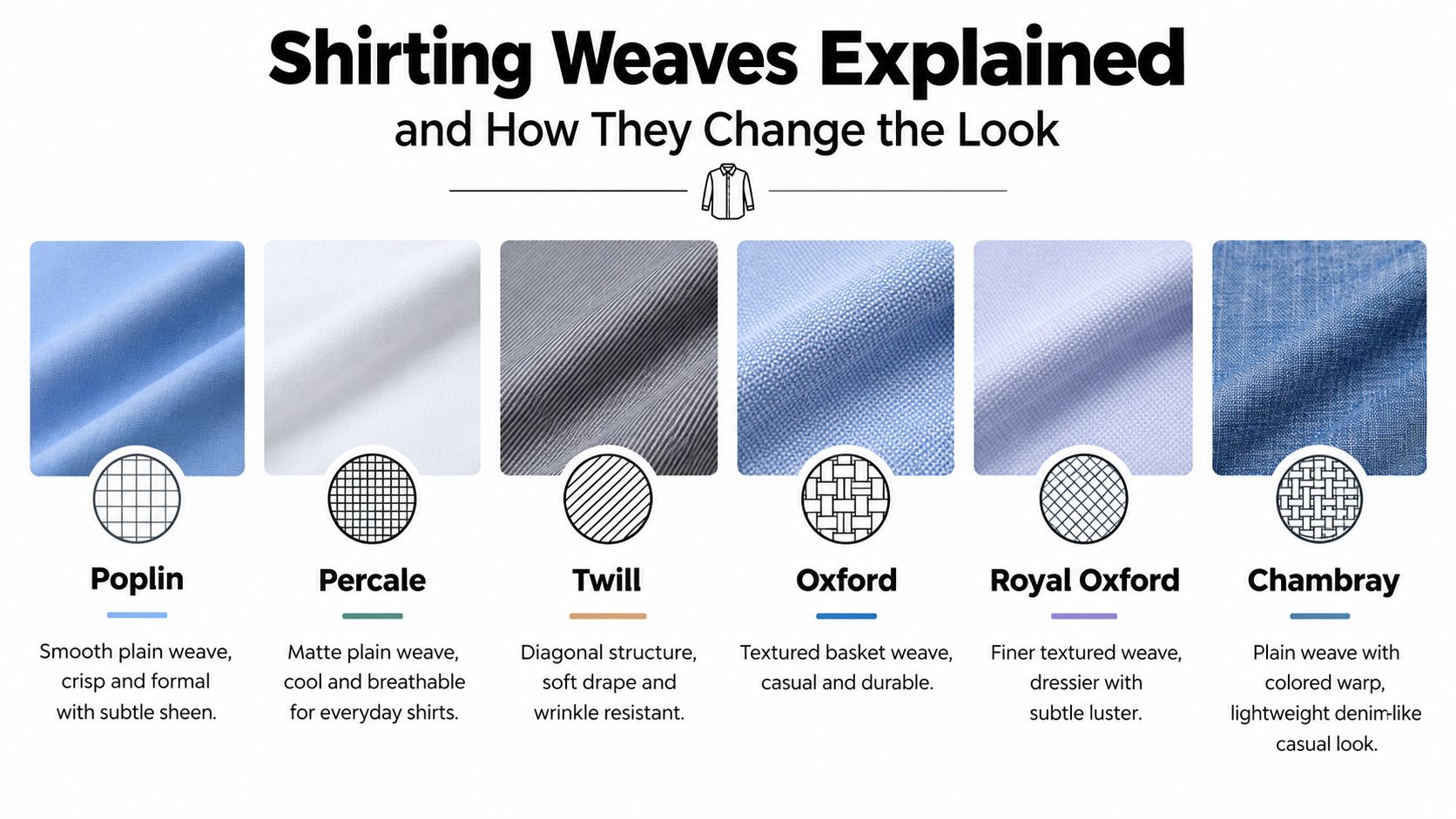
Poplin and percale are good starting points because they're easier to understand in the hand. They tend to feel smooth and balanced, like paper laid flat on a table. That makes them popular for shirts that need neat seams, crisp collars, and a tidy front.
Poplin often reads a touch dressier because the surface looks clean and refined. Percale tends to feel cool and straightforward. If you want a shirt that behaves itself under the iron and doesn't fight back while topstitching, these are friendly choices.
Glazed percale is worth watching if you like a slightly sharper finish. It's one of those fabrics that can make a simple shirt pattern feel more deliberate.
Weaves with texture and movement
Twill is easy to recognise once you know what to look for. It usually shows a diagonal structure. That diagonal build often helps the fabric drape more softly and recover a bit better from creasing than a very flat plain weave.
Oxford has more texture. It's a weave that gives many shirts that familiar button-down look, slightly more casual, slightly more durable, and comfortable with a bit of rumple. Royal Oxford is finer and dressier, with a more polished surface than standard Oxford.
Chambray is useful when you want a casual shirt that still feels light enough to wear as a shirt rather than a jacket. It has that easy, everyday quality that works well for relaxed shapes and overshirts.
A quick way to compare them
| Weave | Surface look | Usual feel | Good use |
|---|---|---|---|
| Poplin | Smooth, neat | Crisp | Smart everyday shirts |
| Percale | Matte, tidy | Cool, plain | Simple shirts and blouses |
| Twill | Diagonal texture | Softer drape | Business shirts, softer tailoring |
| Oxford | Basket texture | Structured | Casual button-downs |
| Royal Oxford | Fine texture | Refined | Dressier shirts |
| Chambray | Casual, yarn-dyed look | Easy and light | Relaxed shirts and overshirts |
A useful test in the shop is to scrunch a corner in your hand, then let it fall. The way it opens tells you more than the shelf label sometimes does.
Weave also affects opacity. A tightly woven smooth cloth can still be surprisingly sheer if it's light in weight and pale in colour. A textured weave may look chunkier yet still breathe well. That's why it helps to hold the fabric up to the light and also let it hang over your hand. One test shows coverage. The other shows attitude.
Choosing the Right Weight and GSM for Every Season
GSM means grams per square metre. It sounds technical, but for fabric for shirting it's a clue to how light or substantial the cloth is.
For practical shirting, a helpful benchmark is that most quality shirting sits around 120 to 160 GSM, with around 120 GSM favouring drape and breathability for summer shirts, while around 160 GSM gives more structure and wrinkle resistance for business wear or cooler weather, as set out in this shirting weave and weight guide. The same guide gives real examples from UK listings, including a lightweight Oxford at 134 GSM and a Royal Oxford at 114 GSM.
What GSM feels like in real life
Low numbers don't automatically mean flimsy, and higher numbers don't automatically mean better. GSM only makes sense when you combine it with fibre and weave.
A lighter plain weave in a pale colour may feel lovely in summer but need thoughtful layering because of opacity. A slightly heavier Oxford can feel reassuringly shirt-like and hold shape better at the collar and cuff.
Shirting Weight Guide by Season and Use
| GSM Range | Best For | Drape and Feel |
|---|---|---|
| Around 114 GSM | Dressier lightweight shirts | Light, airy, refined |
| Around 120 GSM | Summer shirts and blouses | Breathable, soft drape |
| Around 134 GSM | Everyday Oxford shirts | Balanced, lightly structured |
| Around 160 GSM | Cooler-weather or business shirts | Firmer, more structured, better crease resistance |
How to use the number at the bolt
Use GSM like you'd use coat warmth ratings. It's not the whole story, but it narrows the field quickly.
- For hot weather choose the lower end of the shirting range if you want airflow and a softer fall.
- For office shirts aim nearer the middle if you want a cleaner collar and fewer rumples.
- For overshirt style makes look not just at GSM, but at whether the weave gives enough body to support patch pockets, plackets, and topstitching.
If a shop doesn't list GSM, handle the cloth with those same questions in mind. Does it collapse softly over your hand, or does it stand a little? Can you see your fingers through it when it's held to the light? Those two checks often tell you whether the weight suits your pattern.
Matching Shirting Fabrics to Garments and UK Weather
Choosing fabric for shirting gets easier when you stop asking “Is this shirting?” and start asking “What shirt am I making, and what weather will it live in?”
A crisp work shirt is not a soft blouse
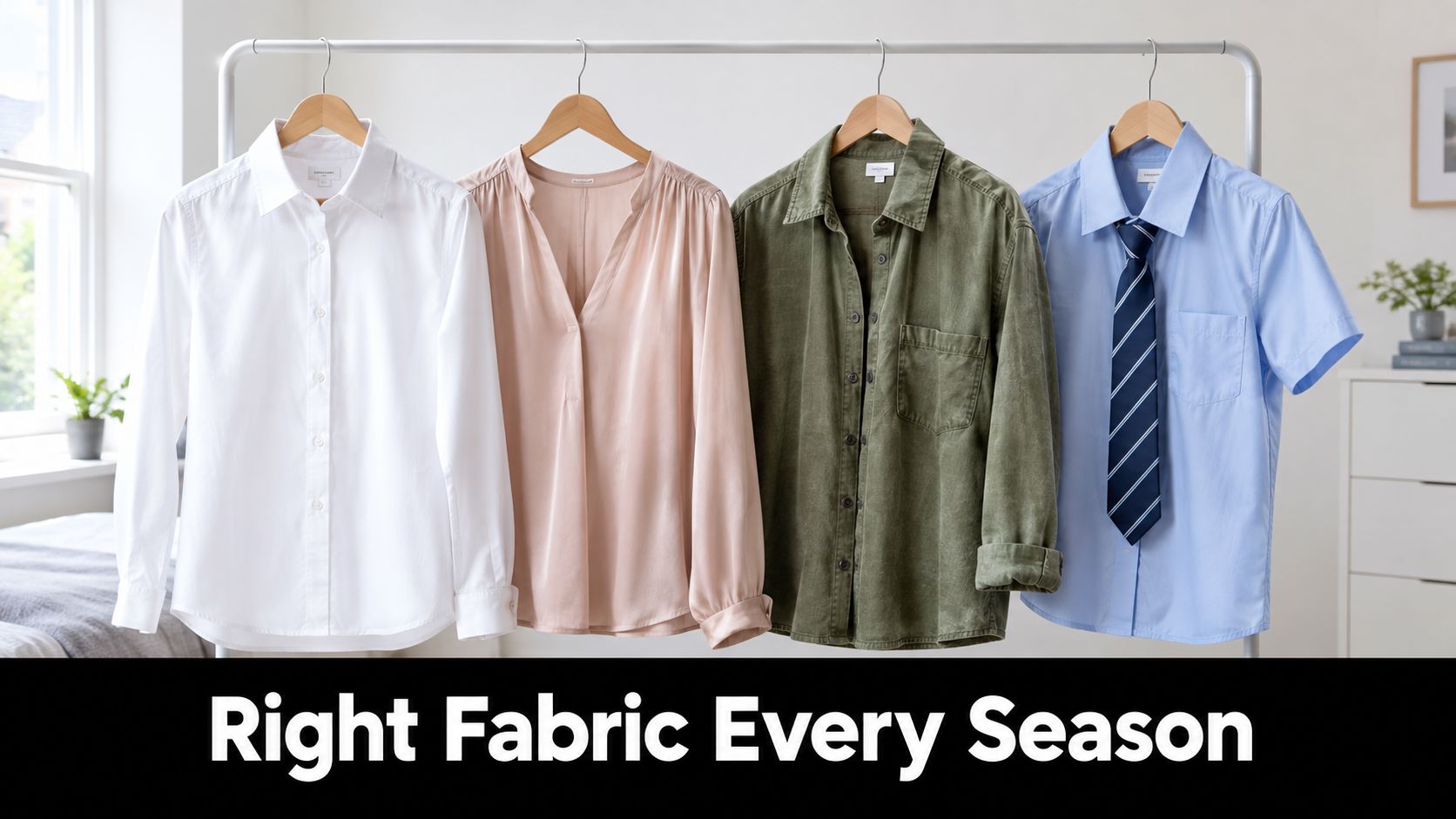
A formal shirt usually wants a fabric with enough body to support the collar, cuffs, and placket. Smooth cotton poplin, a neat percale, or a finer Oxford often suits that job. You want clean lines, reliable opacity, and a finish that responds well to pressing.
A soft blouse shape needs different behaviour. Viscose blends and Tencel blends can work beautifully when you want gentler folds and less stiffness through the body. If your pattern has gathers, a softer cloth will usually show them more gracefully than a firm one.
A casual overshirt sits somewhere else again. It can handle more texture, more body, and a slightly more relaxed crease pattern. Chambray, Oxford, or a firmer twill can all make sense here, depending on season.
Think like a UK wardrobe, not a holiday wardrobe
UK weather changes quickly, sometimes within one day. A shirt for April in Worthing needs different qualities from a shirt for a still, warm day in August or a layered school shirt in November.
The best shirt fabrics aren't only nice on day one. They still make sense after washing, line drying, and a quick press before work.
Modern UK trade data also gives a practical clue about what's common in the market. An industry report says imports of woven cotton fabric peaked at 36 million square metres and fell to 14 million square metres in 2024, while import value peaked at $319 million in 2014 and dropped to $184 million in 2024. In 2024, the largest imported type was woven cotton fabric containing 85% or more cotton and weighing not more than 200 g/m2, valued at $106 million and accounting for 57% of total imports in this UK cotton fabric market overview. In plain terms, lightweight high-cotton woven cloths are still central to what people use for shirts and similar garments.
Cellulosic options matter too. UK textile-fabric imports were still running at roughly £444 million in June 2025 in this UK import trends monitor, and makers are increasingly looking for alternatives such as Tencel and viscose that still work for shirts. If you want one example of that type of cloth, More Sewing lists a Cotton Tencel Fabric described for shirting, dressmaking, and light tailoring projects.
A practical shortlist
- For school or work shirts look for stable woven cottons with enough opacity and a sensible pressing response.
- For weekend shirts textured weaves like Oxford or chambray often feel relaxed without looking sloppy.
- For a blousey shirt dress or softer shirt consider a drapier blend where the body falls rather than stands.
- For mixed seasons choose cloth that layers well under knitwear and won't feel stifling indoors.
Essential Techniques for Cutting Sewing and Pressing Shirting
Good shirting fabric still needs careful handling. Shirts are full of places where small inaccuracy shows up fast. A twisted placket, a bubbling collar, or stripes that drift off line can spoil a beautiful cloth.
Pre-wash the way you'll live in it
A very common mistake is washing the fabric gently before sewing, then washing the finished shirt more firmly afterwards. Better to prep the cloth the way the shirt will be treated.
Guidance for striped cotton shirting recommends pre-washing before cutting and washing the fabric the same way you expect to wash the finished garment, then pressing it flat before cutting in this striped cotton fabric sewing guide. That's sensible because it removes surprise shrinkage before your collar pieces and front bands are already stitched in place.
Try this order:
- Wash first using the routine you expect for the finished shirt.
- Dry in a matching way so the cloth settles before cutting.
- Press flat before laying pattern pieces down.
- Check grain before pinning or cutting anything important.
Keep stripes and checks under control
Stripes make excellent shirts, but they show every tiny wobble. Pressing technique matters here. The same guidance suggests using steam along the grain instead of dragging the iron sideways across stripes, which helps reduce distortion and keeps pattern matching more accurate.
If you're matching a yoke, pocket, or button band:
- Start with the dominant line and decide which stripe must match most visibly.
- Use a single layer layout for tricky pieces if the fabric shifts.
- Transfer notches carefully because one missed mark can throw the whole front off.
- Baste key seams when the pattern repeat is obvious.
Shirting rewards patience more than speed. Ten extra minutes at the ironing board can save an hour of muttering at a crooked placket.
Match tools to the cloth
Fibre content helps here. UK legislation also sets official methods for determining fibre composition, which means blend claims are meant to be verifiable under these textile composition rules. For sewists, that matters because pure cotton and stretch blends often want different treatment.
Pure cotton shirting usually behaves well with standard shirtmaking techniques, crisp pressing, and stable interfacing. Stretch blends often benefit from gentler handling, lighter pressure under the iron, and testing interfacing first so the collar doesn't fight the body fabric.
For broader clothing structure and cloth handling ideas, Display Guru's fabric tips are aimed at another garment category but still offer useful thinking about how fabric character affects shape.
Caring for Shirting and Making Your Next Fabric Choice With Confidence
The nicest shirt in your wardrobe is often the one that keeps earning its place. It washes well, presses without drama, and still feels right after repeated wear. That starts with buying carefully, but it continues in the laundry room.
A simple care routine that helps shirts last
One UK cotton-care guide recommends washing cotton shirts at 30°C, keeping whites separate from colours, avoiding fabric softener, and air drying rather than tumble drying in this cotton shirting care guide. It also recommends ironing while the shirt is still damp, using low heat or steam when freshening luxury cotton items, and ironing in an order that starts with areas such as the collar, sleeves, yoke, and body.
That's good practical advice because shirts take frequent laundering. A gentler wash and a thoughtful press help preserve shape and finish.
What to check before you buy your next piece
At the bolt, pause for a short checklist:
- Read the fibre label and note the fibres in descending order.
- Handle the fabric to judge whether it falls or stands.
- Hold it to the light to assess opacity.
- Scrunch and release to get a feel for creasing.
- Think about season and whether you'll wear it alone or layered.
If you're torn between two fabrics, choose the one that suits your real life. The shirt you'll wash, wear, and reach for is more useful than the shirt that only looked impressive folded on the shelf.
A good fabric choice doesn't guarantee perfect shirtmaking, but it makes the whole process kinder. Your seams behave better, your pressing works harder for you, and the finished shirt feels more like something you'll wear.
If you're choosing fabric for shirting and want to compare cottons, viscose blends, Tencel options, and practical dressmaking supplies in one place, More Sewing makes that process much easier. You can browse cloth with real garment use in mind, order swatches for a closer look, and explore the wider range of tools and haberdashery for shirtmaking at More Sewing.
