You've bought a sewing machine, or you're about to, and now you're staring at rows of sewing kits online wondering why a box of needles, thread and scissors can vary so much. Three browser tabs later, you still don't know whether you need a hand-sewing set, a dressmaking bundle or a machine-accessory pack.
The sensible answer is to buy for your first actual project, not for an impressive-looking box. A good kit fills the practical gaps that can leave a new machine unused, while a cheap bundle packed with decorative extras often leads to another order soon afterwards. This guide cuts through the noise with clear recommendations, UK fabric pairings and honest advice about where spending more helps.
Finding Your Way Around the Beginner Sewing Aisle
Start by naming what you want to make. “I'd like to learn sewing” is too vague for shopping. “I want to hem trousers”, “I want to make a cotton bag” or “I want to sew an elasticated skirt” gives you a useful buying test.
A beginner sewing kit for UK projects should support four jobs: measuring, cutting, stitching and correcting. If an item doesn't help with one of those tasks, it probably isn't a priority for your first purchase. Decorative buttons, ribbons and novelty notions can wait until you know which kind of sewing you enjoy.
Buy around a project
A hand-sewing kit is enough for replacing buttons, closing small tears and shortening a hem. It won't give you the cutting control or machine accessories needed for dressmaking. A dressmaking starter kit makes more sense for a cotton poplin cushion cover or drawstring bag, while someone planning pyjama trousers will need machine-compatible needles, bobbins and a reliable thread supply.
This project-first approach also helps you choose fabric sensibly. Stable cotton poplin is far easier for a first machine project than a slippery satin or stretchy jersey. The University of the Arts London beginner sewing guidance recommends avoiding slippery fabrics at first and points beginners towards woven materials such as chambray and cotton canvas.
Practical rule: If you can't name the first project, buy a modest hand-sewing kit and a small piece of stable cotton before committing to a larger bundle.
Look for a kit with usable tools rather than the highest piece count. Sharp scissors, correctly labelled needles, good thread and a seam ripper will teach you more than a case full of flimsy accessories. The right kit should make your first session easier, not give you more decisions to make.
What a UK Beginner Sewing Kit Should Actually Contain
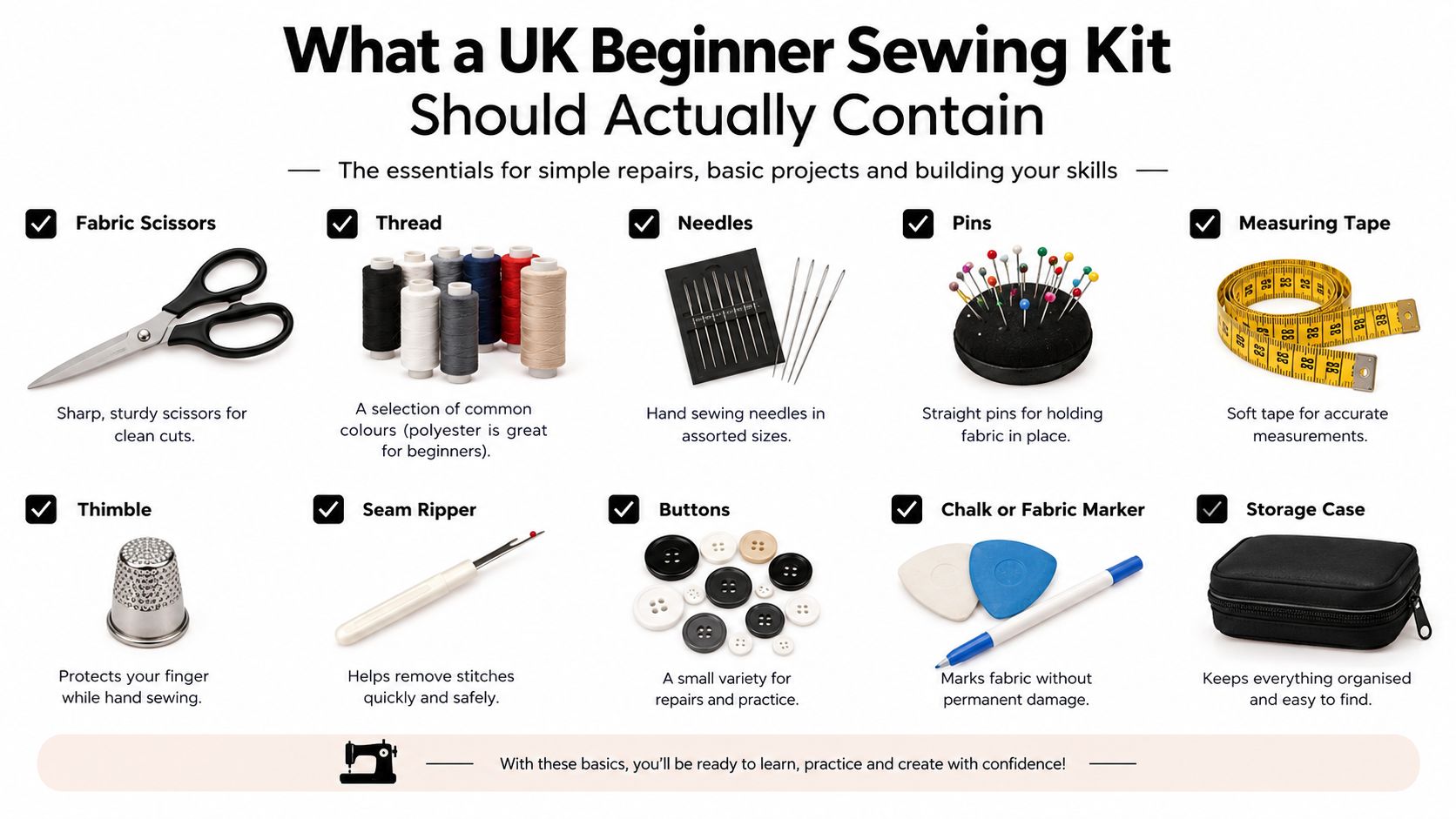
A useful kit is organised by task. You need to know not just what belongs in the box, but what each item does when fabric is on the table.
Measuring and marking
Begin with a retractable tape measure, ideally one that reaches 150cm, for body measurements, hems and fabric checks. Add a clear 30cm ruler for seam allowances and pattern marks. A seam gauge is even handier for repeated hems because its slider lets you mark the same depth consistently.
Tailor's chalk or a washable fabric pen marks darts, fold lines and button positions without relying on guesswork. Test any marking tool on a fabric offcut first, especially on dark or delicate cloth.
Cutting cleanly
Buy fabric shears and reserve them for fabric. Paper dulls the blades, and blunt scissors make beginners push and pull the cloth instead of cutting along the intended line. Small thread snips then deal with loose ends without forcing large shears into awkward spaces.
For a poplin drawstring bag, ordinary sharp dressmaking shears are enough. A rotary cutter can wait until you're cutting repeated shapes or several layers, and it should be used with a proper cutting mat.
Stitching and setup
A starter kit needs assorted hand-sewing needles, a needle threader, pins and general-purpose polyester thread. The UK beginner kit guidance from Hobbify Skills highlights all-purpose polyester thread, glass-headed pins, hand-sewing sharps, a seam gauge or ruler, marking tools and an iron as a practical minimum.
Choose universal machine needles that fit your machine and fabric. A spare multipack is sensible because UK sewing-machine safety guidance recommends switching the power off before threading or changing needles, keeping fingers away from moving parts and ensuring lighting is adequate for safe threading. The Health and Safety Executive sewing-machine guidance also explains why a bent or badly fitted needle can deflect, break or damage fabric and the needle plate.
Correcting mistakes
A quick-unpick, also called a seam ripper, is not an admission of failure. It lets you remove a crooked seam or misplaced stitch without attacking the cloth with scissors. Add a thimble for controlled hand sewing and a small pin cushion or secure pin container so loose pins don't disappear into the carpet.
Replace machine needles after around 6–8 hours of sewing, or sooner when stitches deteriorate, as advised in the HSE guidance above. A spare universal-needle multipack prevents a small problem from stopping your project.
Matching Kit Types to Your First Real Projects
The best kit depends on whether you want to maintain clothes, make household items or produce garments. More pieces don't automatically mean better value.
| Kit type | Typical contents | Starter project | Indicative price |
|---|---|---|---|
| Basic hand-sewing set | Needles, thread, scissors, pins and tape measure | Hemming trousers, replacing buttons or small repairs | Under £15 |
| Dressmaking starter kit | Shears, tape, pins, thread, seam ripper and starter pattern book | Tote bag, cushion cover or elasticated skirt in cotton poplin | £25–£60 |
| Machine-and-accessory bundle | Sewing machine, bobbins, universal needles and basic presser feet | Pyjama trousers or a simple shirt | £80 upwards |
Choose the hand-sewing option for repairs
A small hand-sewing set suits someone who wants practical clothing maintenance. You can sew on a button, close a split seam and practise a slip stitch on a cotton lawn facing without buying machine accessories you won't use.
Check that it contains several needle types and sizes, not just one blunt-looking needle. The Prima UK sewing-kit guide lists needles and thread, scissors, tape measure, seam ripper and pins as core items for a beginner kit.
Choose dressmaking tools for a first make
A dressmaking starter kit is the sensible middle ground for a named project such as a tote bag or cushion cover. Pair it with cotton poplin, which stays stable under the presser foot and makes straight seams easier to control.
Don't buy this type of kit because the pouch looks professional. Buy it because the contents cover cutting, marking and correcting, and because the included tools are good enough to use repeatedly.
Choose a machine bundle only for machine-led plans
A machine bundle makes sense when you specifically want to sew garments or several household projects. Before paying, confirm that the bobbins and presser feet suit the planned machine, and buy a spare set of universal needles.
A simple chambray top or loose cotton trousers is a better first target than a fitted jacket. Pick the kit that supports that project, not the kit with the longest contents list.
Best Fabrics for UK Beginners and Why Structure Beats Slippery
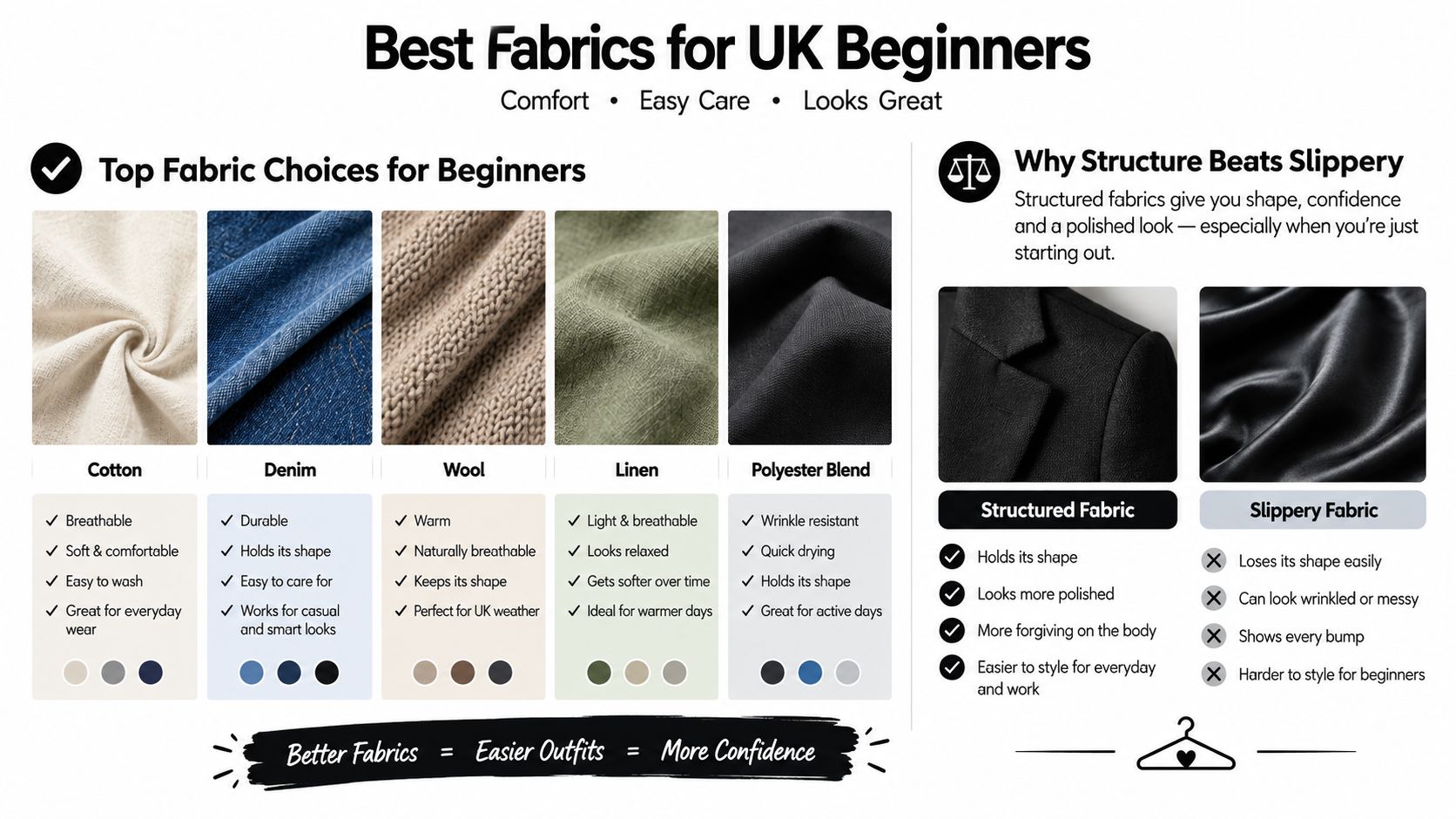
Fabric choice can make a beginner feel capable or defeated before the first seam is sewn. Start with cloth that stays put, presses neatly and shows you what the needle is doing.
Cotton poplin is my first recommendation. It has a stable plain weave and is forgiving when your seam wanders slightly. Use it for a simple tote, pillowcase or drawstring bag. It also works well for practising seam pressing, turning a corner and sewing an even topstitch.
Cotton lawn is lighter and smoother, so it suits a gathered scarf, blouse detail or facing practice once you've handled poplin. It's still a stable woven choice, unlike a slippery satin that can shift as you cut and sew.
Learn to read structure and weight
GSM means grams per square metre, a useful guide to fabric weight. You don't need to memorise fabric specifications, but a more substantial cloth generally gives a beginner a steadier base. Liberty's beginner fabric guidance identifies stable, crisp and tightly woven lightweight fabrics as easier to handle, and specifically recommends cotton lawn and cotton poplin.
For a stronger project, choose cotton canvas. It works for a structured tote, apron or cushion back and gives your seams a clear shape. A canvas with a higher weight, around 200gsm, provides the sturdier base recommended for beginners in the available UK guidance.
Chambray gives you a denim-like appearance without denim's bulk. Use it for a boxy top, simple shirt or loose trousers, provided the pattern suits a stable woven fabric.
Prepare fabric before cutting
Order a swatch when you're unsure about drape, thickness or colour. Check whether the pattern calls for a stable woven, drapey woven or stretch knit, then buy cloth that matches rather than forcing the wrong material into the project.
Wash and press a test piece before cutting the full project. That small step lets you see how the fabric behaves and helps prevent shrinkage from changing the finished shape. For a first make, I'd choose cotton poplin, a matching polyester thread, universal needles and a pattern with straight seams.
Slippery fabric doesn't make you a more advanced sewist. It only makes the learning curve steeper.
UK Sewing Kit Price Bands and Where the Money Really Goes
Price bands are useful only when you understand what changes between them. A cheap kit can be perfectly adequate for repairs, while a larger bundle can still contain poor scissors and thread.
Under £20
This band usually covers a basic hand-sewing set with scissors, thread, needles, pins and a tape measure. It suits hemming, button replacement and occasional repairs. Pair it with a small piece of cotton lawn for hand-sewn edging practice, or cotton poplin for a simple repair sampler.
£20 to £50
This is the practical sweet spot for many new dressmakers. You may find a stitch ripper, tracing wheel, tailor's chalk, bent-handle shears and more useful notions, giving you a proper foundation for cutting and marking cotton poplin.
Spend this money on sharp scissors and an accurate tape measure, not on novelty accessories. A good seam ripper and reliable pins will be used far more than decorative trims.
£50 to £100
This tier can add better scissors, a pin cushion, more reels of thread, pattern paper and a basic rotary cutter. It becomes worthwhile if you're cutting repeatedly, working with heavier cotton canvas or building a more complete machine setup.
A rotary cutter is only useful when you also have a safe cutting surface and intend to use it. Otherwise, put the money towards fabric and a dependable iron.
Above £100
At this level, you're usually paying for branded tools, a more extensive bundle or a sewing machine included in the purchase. That makes sense when you don't already own a machine and have a clear plan to sew regularly.
Spending rule: Go beyond £50 only when your project needs heavier fabric, repeated cutting or a machine you don't already own.
How to Judge Kit Quality Before You Click Buy
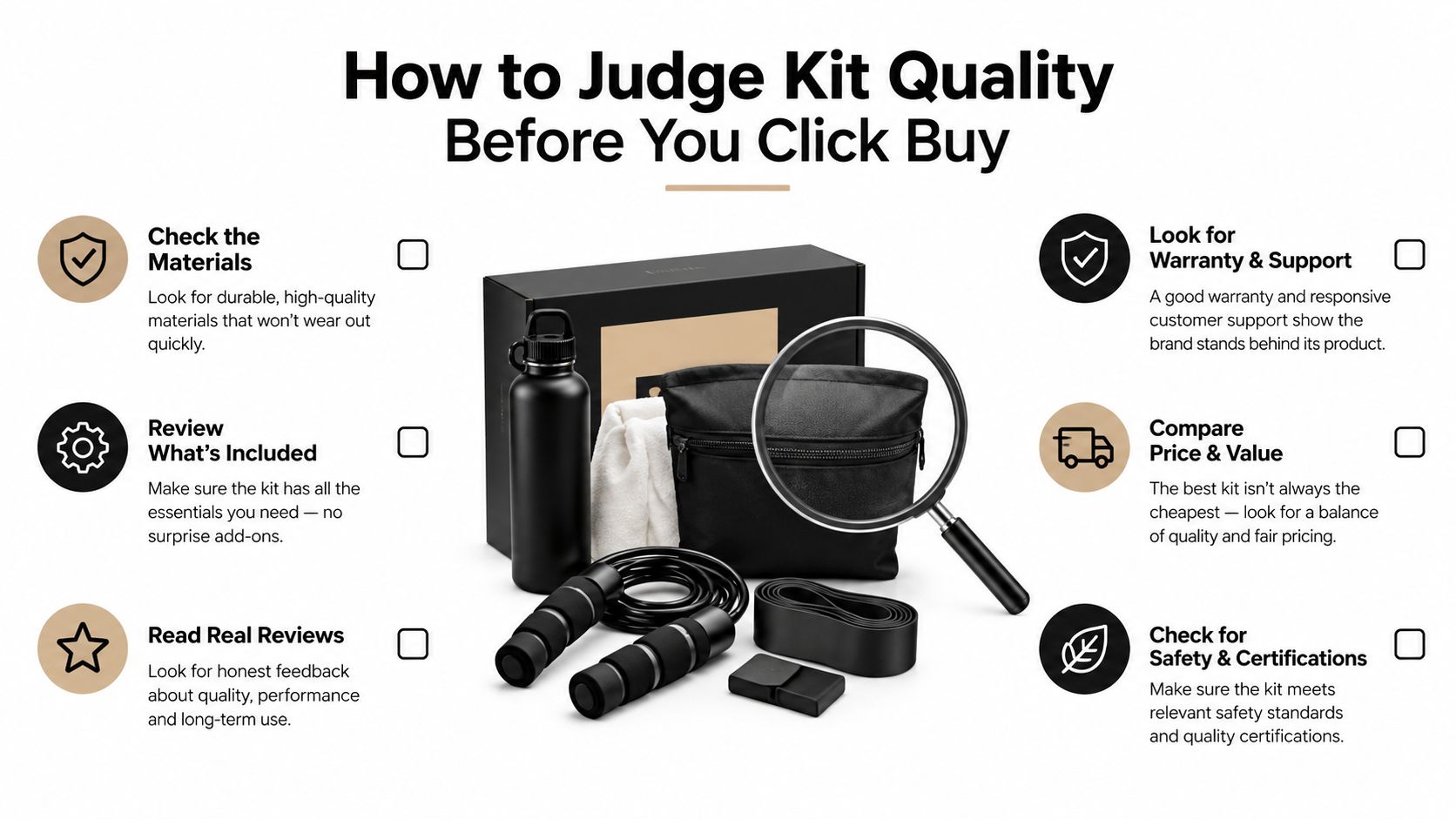
Product photos hide the details that matter. Read the contents list carefully and treat missing specifications as a warning rather than assuming the kit is complete.
Inspect thread and needles
For general dressmaking, look for all-purpose polyester thread. It handles common cottons and light dressmaking fabrics without creating the unnecessary tension problems that poor thread can cause. You don't need every colour immediately. Black, white and grey cover many early projects, then you can add a matching shade for each new fabric.
Machine needles should show both the needle system and size. A beginner-friendly universal needle is commonly labelled 80/12, but confirm compatibility with your machine. A kit that says only “assorted needles” leaves you guessing when a stitch problem appears.
Judge scissors by action
If you can visit a shop, open and close the shears several times. The blades should meet smoothly, without wobbling or catching, and the handle should sit comfortably in your hand. For a first cotton poplin project, poor scissors create more frustration than an uncomplicated pattern.
Online buyers should look for clear product dimensions, material details and return terms. A close-up photograph of the blades is more useful than a picture of a full storage case.
Check what teaches you to sew
A starter kit should include a basic pattern, downloadable instructions or a stitch guide. Without project guidance, a beginner owns tools but still has no route from fabric to finished object.
Run this quick mental checklist before clicking buy:
- Thread variety: Is there suitable all-purpose polyester thread?
- Needle labelling: Are the types and sizes clearly stated?
- Scissor action: Do the photos and description support confident cutting?
- Pattern support: Is a project, guide or stitch reference included?
- Storage: Will the pouch or case keep sharp tools organised?
A kit that passes these checks is more useful than one that just claims to contain more pieces.
Where UK Beginners Buy Sewing Kits and Supplies
The right shop depends on how much guidance you need. A marketplace is convenient, but a sewing shop lets you judge tools and fabrics in a way a product photograph can't.
| Retailer | Category | Beginner-friendly strengths | Watch out for |
|---|---|---|---|
| Independent sewing shop | Specialist retailer | Advice, fabric handling, swatches, workshops and machine support | Selection may be more curated |
| Hobbycraft or John Lewis | High-street chain | Accessible locations and familiar haberdashery ranges | Advice and fabric choice vary by branch |
| Supermarket | General retailer | Convenient basic hand-sewing purchases | Limited technical choice |
| Amazon or eBay | Marketplace | Quick comparison and broad availability | Contents, quality and compatibility need careful checking |
| Specialist online retailer | Online sewing supplier | Focused fabrics, patterns and notions | You can't handle cloth before buying unless swatches are available |
Use an independent shop for decisions
A local specialist is especially useful for scissors, fabric weight and machine compatibility. At More Sewing, beginners can order free swatches, visit the Worthing shop to handle fabrics and try scissors, and later use the in-house machine servicing option if they buy a sewing machine. The shop also offers free UK shipping on orders over £50, as stated in the supplied store information.
That kind of support matters when you're choosing between cotton poplin, chambray and canvas, or when you aren't sure whether a bobbin fits your machine. More Sewing also stocks ready-to-sew and dressmaking kits intended to reduce guesswork for first projects.
Use general retailers for low-risk tests
A high-street chain is reasonable if you want a basic set quickly. A very cheap hand-sewing kit can help you find out whether you enjoy repairing a hem or sewing on buttons before investing in dressmaking equipment.
Marketplaces work for replacement needles, thread or a tape measure once you know precisely what you need. I wouldn't make them my first choice for an unknown machine bundle or unbranded shears. Pair an independent shop with one convenient general retailer, and you'll have both informed guidance and easy top-ups.
Your First Sewing Project and the One Habit That Prevents Most Mistakes
Start with a simple cotton drawstring bag. Make it from cotton poplin or quilting cotton, and you'll practise straight seams, pinning, turning a corner and creating a casing without wrestling with zips, buttons or stretch fabric.
The project needs only a compact set of tools:
- Sharp fabric scissors: Cut the bag pieces cleanly.
- Pins: Hold the seams in alignment.
- Tape measure: Check dimensions and casing depth.
- Hand needles or size 80/12 machine needles: Match the setup to your method.
- Matching polyester thread: Sew secure, even seams.
- Seam ripper: Remove a crooked line without cutting the bag.
Mark the seam allowance with chalk, pin the sides and sew slowly. At the corners, stop with the needle down, lift the presser foot and turn the fabric. That small technique keeps the stitching line controlled and helps you build confidence before trying a curved seam.
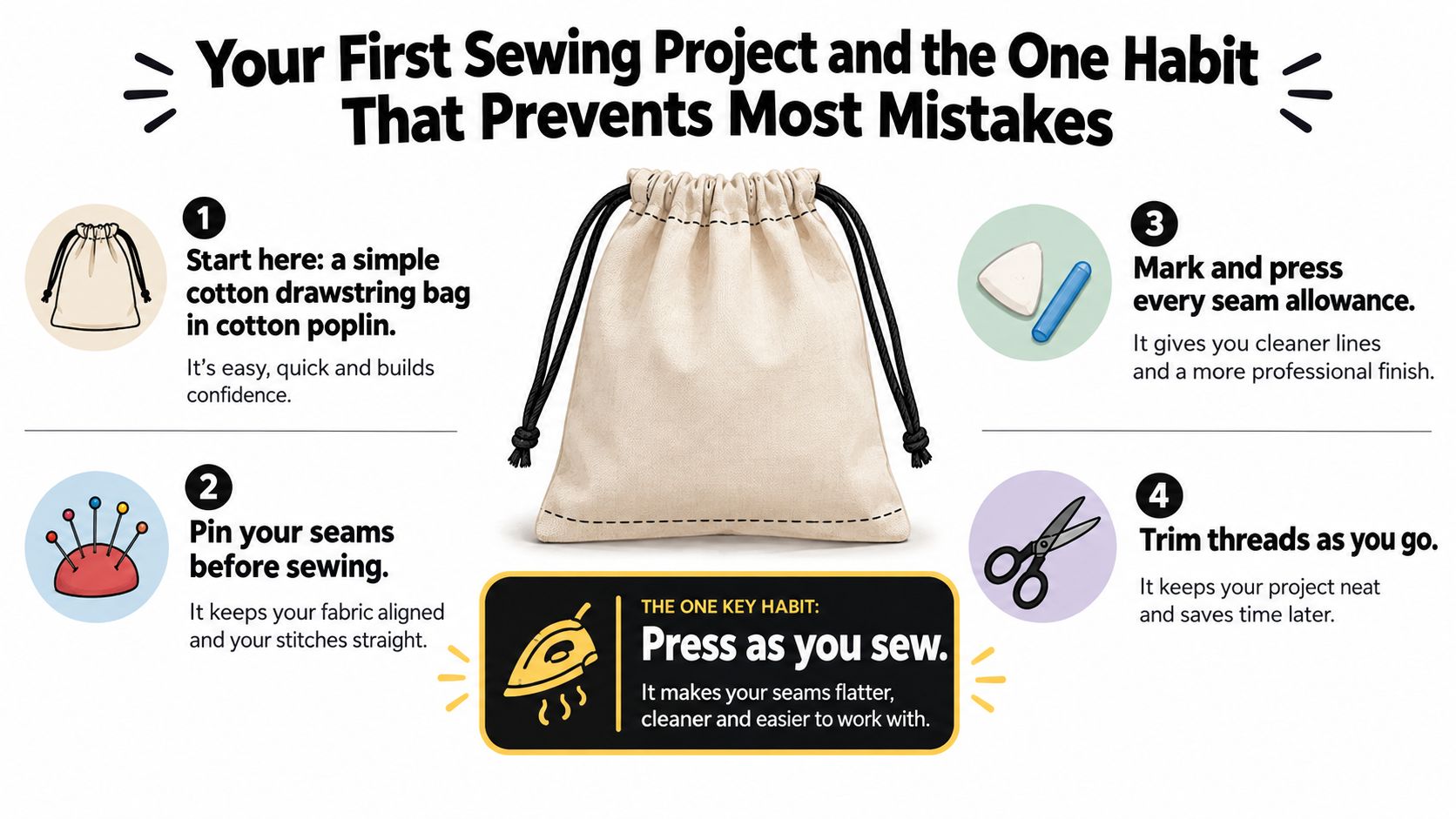
The one habit that prevents most beginner frustration is simple: press every seam as you sew. Use an iron after each seam, not just when the item is finished. Pressing sets the stitches, flattens bulky seam allowances and makes the final piece look deliberately made rather than hurriedly assembled.
Watch the technique in action before starting your bag:
Choose the smallest kit that supports the project, match it with stable cloth and press as you go. That combination will teach you more than a large box of unused notions.
More Sewing offers fabrics, haberdashery, ready-to-sew dressmaking kits, free swatches and practical support for UK beginners, with a Worthing shop and machine servicing available as your sewing develops. Visit More Sewing to choose your first cotton, assemble the tools for a drawstring bag and order supplies that match the project you want to make.
