
Dressmaking, Fabric, Guides
Sewing with French Terry for Loungewear Made Simple
You've got the fabric on the table, the jogger pattern folded open, and that familiar pause before you cut. French terry looks easy enough, but the wrong weight, the wrong needle, or a rushed hem can turn a cosy set into something you won't reach for twice. The good news is that sewing with French Terry for loungewear gets much simpler when you choose the cloth first, then match the machine setup to it.
French terry suits that kind of project because it sits in a very usable comfort zone. It's soft without feeling flimsy, it breathes better than many heavier knits, and the looped reverse gives gentle warmth without the bulk that can make indoor clothes feel overbuilt. UK sewing guidance consistently treats it as a favourite for loungewear, leisure wear, sweatshirts, joggers, and relaxed tops, which is exactly why it keeps showing up on home sewing tables. The fabric's usual midweight range also explains its appeal, especially for garments you want to wear from the sofa to the school run without feeling overdressed or underprepared, as noted in UK sewing content on French terry and loungewear use. French terry fabric guidance from a UK sewing source
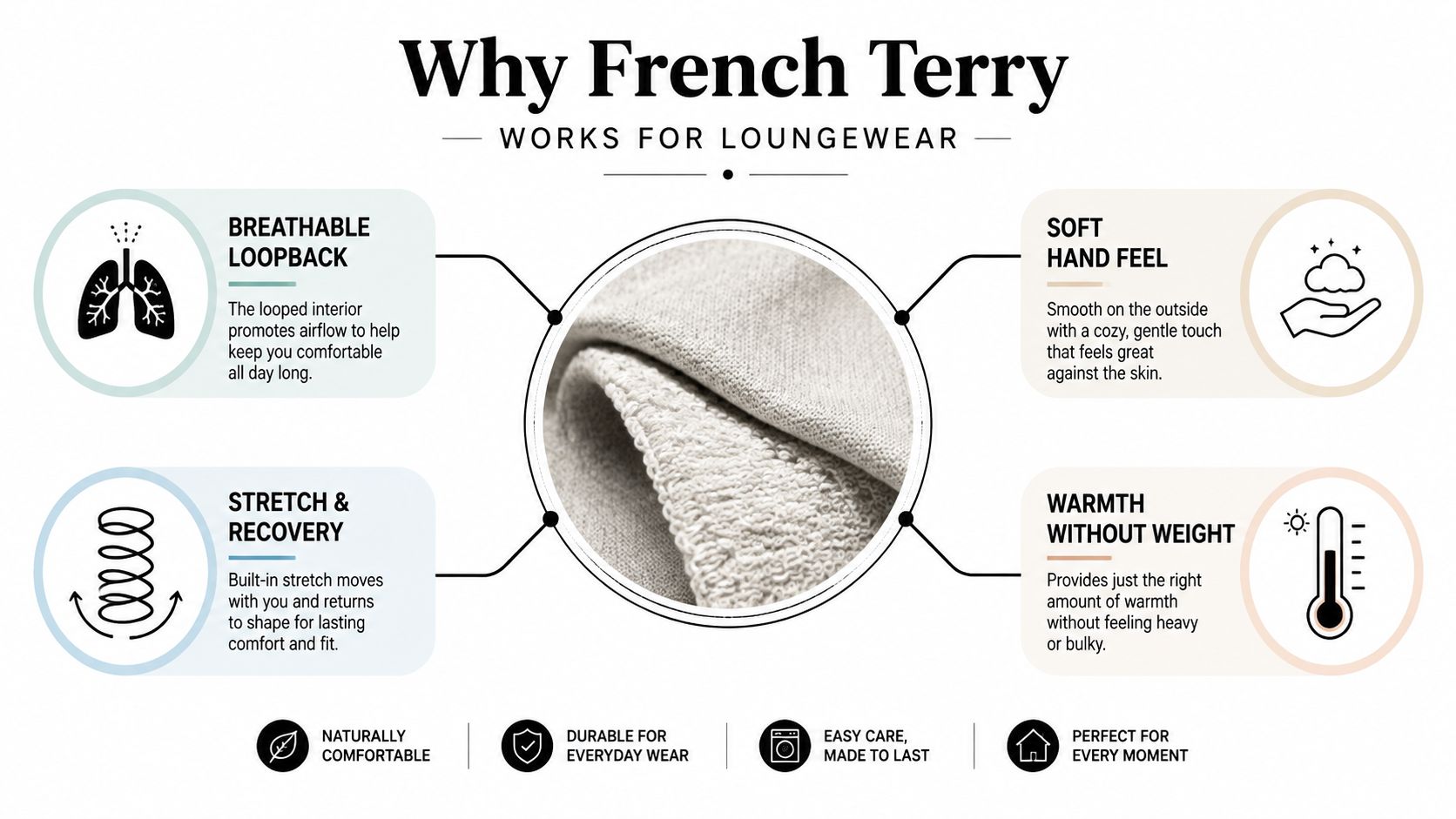
A fabric like this is useful because it looks composed on the outside and feels easy on the inside. That's the balance most home dressmakers are after when they're weighing a lounge set on the cutting table.
If you've been comparing sleepwear and relaxed-homewear ideas, get comfortable with Get Spliced is a handy read alongside this kind of project planning, because the same comfort questions come up whether you're making a set for evenings, weekends, or hybrid-work days.
| Property | What it means | Loungewear relevance |
|---|---|---|
| Smooth face | The outer side looks tidy and wearable | Good for tops and sets that leave the house |
| Looped back | The reverse side is textured rather than brushed | Adds gentle warmth and a relaxed feel |
| Knit stretch | The fabric moves with the body | Helps with comfort in joggers and sweats |
| Midweight body | It has more presence than a thin jersey | Gives structure without feeling stiff |
| Breathable handle | Air can still move through the cloth | Better for year-round indoor wear |
Why French Terry Works So Well for Loungewear
A lot of people reach for French terry because it feels like the middle ground they've been trying to find for years. Jersey can be lovely, but it can cling or feel too light for joggers. Brushed-back sweatshirting can feel indulgent, but it can also tip into too much warmth for a kitchen, a home office, or a lounge set you'll wear in spring and autumn.
The fabric feels calm, not fussy
The smooth face gives French terry a neater look than many casual knits, so a sweatshirt or lounge top doesn't immediately read as sleepwear. The looped back adds texture and soft warmth, which is why it behaves so well for garments that need to feel cosy without becoming sweaty or bulky. That balance is what makes it a regular in relaxed clothing, not just in dedicated activewear.
Practical rule: if a fabric feels soft but still has some body in your hand, it usually has more loungewear mileage than a very drapey knit.
For a weekend set, that usually means you can cut a sweatshirt that doesn't collapse at the cuffs and joggers that hold their shape at the knee. For a lounge tee, it means the fabric sits a little more like a polished casual top than a pyjama vest. If you want a fabric that makes the garment feel intentional rather than improvised, French terry tends to deliver that.
It sits between fleece and jersey
Brushed-back sweatshirting is warmer, but the brushed side can add thickness where seams already stack up, especially at pockets and waistbands. Jersey is lighter and often easier to fold, but it can lack the relaxed substance many sewists want in loungewear. French terry sits between the two, which is why it works for year-round casual layers rather than only winter wear, as UK fabric guides describe.
For anyone comparing options at a fabric shop, that middle position matters. It means the garment can handle a little structure, a little warmth, and still stay comfortable on the body. That's the sweet spot for pieces like lounge sets, simple sweatshirts, and pull-on trousers that need to survive the washing machine and still feel pleasant next time you wear them.
What to expect before you cut
Expect the fabric to behave like a knit, not like woven cotton. It has stretch, it can drift under the presser foot if you're heavy-handed, and its finish is only as good as the needle and stitch you choose. Once you accept that, the rest becomes a lot more predictable.
Choosing the Right French Terry for the Garment
The biggest mistake with French terry usually happens before the machine comes out. Someone buys a bolt because the colour looks nice, then discovers the cloth is either too warm for an indoor top or too light for joggers that need shape. The better question is simple: which French terry suits the garment you plan to wear?
Start with the back side, loopback or brushed-back
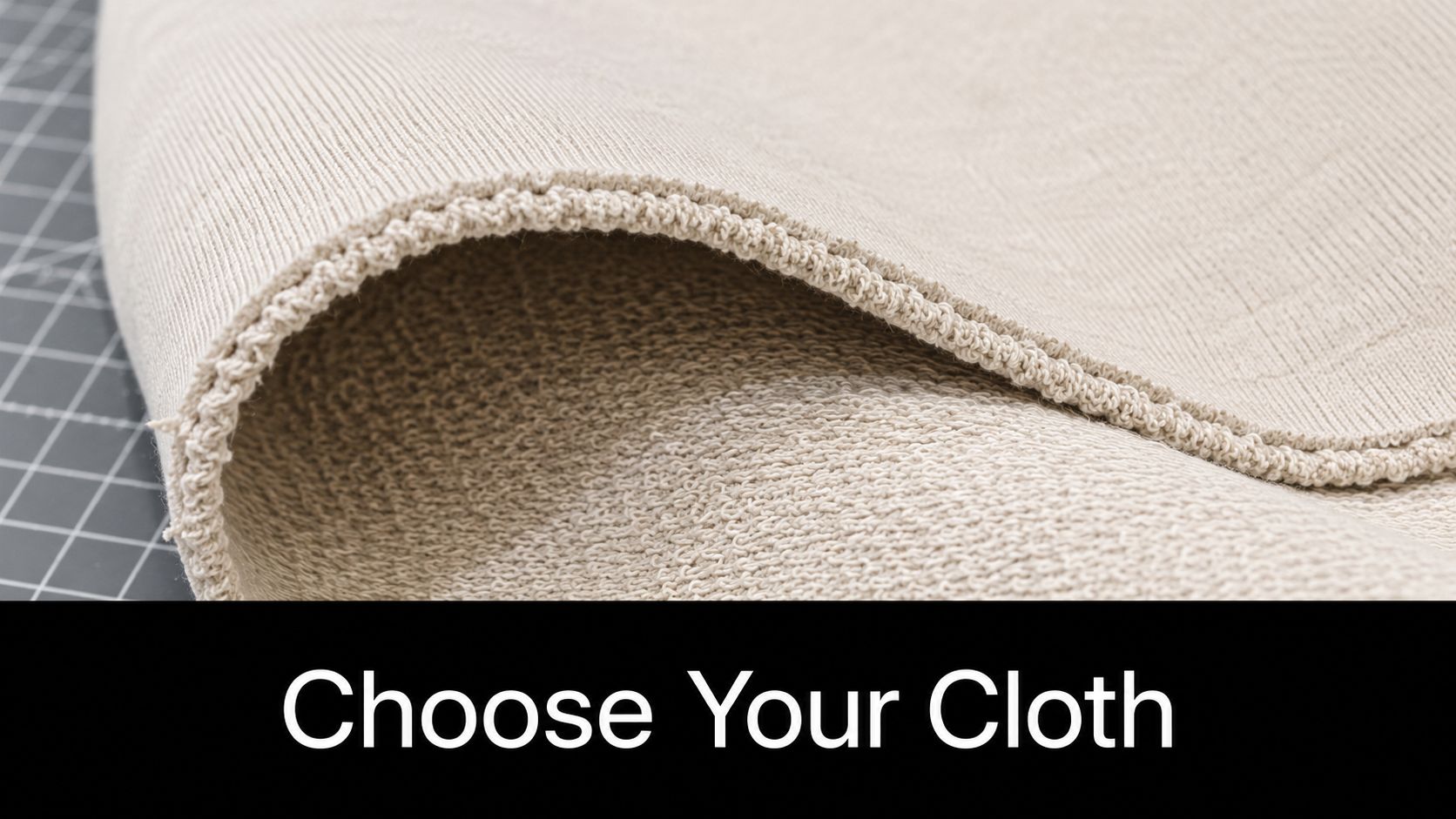
Loopback French terry is the safer everyday choice for most loungewear. It's breathable, comfortable, and usually easier to handle because the reverse has a lower pile and less bulk. Brushed-back French terry feels cosier and softer against the skin, but that extra fluff can make waistbands, cuff joins, and pocket areas feel denser and less forgiving.
If you're making a sweatshirt or lounge top for indoor wear, loopback often gives the cleaner result. If you want a hoodie or a winter set that feels warmer straight away, brushed-back can make sense. The trade-off is simple, the cosier side usually asks for more patience at the seams.
Match GSM to the garment, not to the label
Industry fabric guides place typical French terry in the 200–350 GSM range, with lighter loungewear versions often around 180–220 GSM and common jogger or loungewear weights around 230–280 GSM. That spread matters because weight changes how the garment hangs, how warm it feels, and how much bulk you'll fight at the machine. UK sewing discussion of French terry weight and loungewear use
A practical way to consider this:
- 180–220 GSM works well for indoor lounge tees and warmer-evening tops.
- 230–280 GSM suits joggers, lounge pants, and midweight sweatshirts.
- 200–350 GSM is the broader band that makes French terry useful beyond one season.
That's why French terry isn't just a winter cloth. The midweight body means you can choose a lighter version for spring and a denser one for cooler months without leaving the same fabric family.
Check stretch and recovery in the shop
Hold the fabric across the width and stretch it gently, then let it relax. You're not looking for dramatic give, you're looking for recovery that brings the cloth back without obvious rippling or sagging. If it feels sluggish to snap back, that's a warning sign for waistbands and cuffs.
For home dressmakers, hybrid working and indoor routines have kept demand around comfort-first clothing, which is why the weight decision matters so much. The right cloth for a boxy sweatshirt isn't always the right cloth for joggers. A quick stretch check at the counter saves more disappointment than any fancy pattern adjustment.
A good French terry sample should feel like it wants to return to shape, not stay stretched out in your hand.
If you're comparing supplier descriptions, verify cotton sweatshirt suppliers alongside the fabric spec sheet, because the useful details are usually the same ones you want for loungewear, fibre mix, weight, and enough stretch to behave properly in wear.
Machine Setup, Needles and Stitches for French Terry
French terry is kind enough to sew, but it still punishes lazy setup. If the needle is wrong or the stitch can't move with the fabric, you'll get skipped stitches, popped seams, or hems that tunnel the first time the garment is washed. A clean result starts with a setup that respects the knit structure.
Choose the needle for the weight, not the habit
For lighter French terry, a ballpoint or jersey needle in 70/10 to 80/12 is usually the right starting point. For denser lounge pant weights, stepping up to 90/14 gives the needle more authority without forcing the fabric. Sewing guidance also supports heavier needles like 90/14 or 100/16 for thicker terry constructions, especially where bulk builds at joins. Sewing advice for terry fabric, including needles and seam handling
A fresh needle matters more than you might think. On loopback terry, a blunt point can drag the knit and make the machine sound slightly unhappy long before the seam looks wrong. If the first sample stitch is inconsistent, change the needle before you touch the garment pieces.
Use a stitch that can move
A stretch stitch or zigzag stitch is essential on a standard home machine. A medium zigzag works, a three-step zigzag adds flexibility, and a lightning stitch can be useful if your machine has one. Overlock stitches, whether from a serger or an overcast function, are excellent for finishing edges neatly, but they don't replace the need for seam stretch where the garment takes strain.
For hems, a twin needle gives a convincing coverstitch look on a standard machine. Two top-thread spools and a twin needle can produce a neat, professional finish on cuffs and lower hems, especially when the fabric is stable enough to feed cleanly. If the cloth is drifting, a walking foot or dual-feed foot helps stop one layer racing ahead of the other.
Keep the thread and tension sensible
All-purpose polyester thread is the better choice for most French terry loungewear because it holds stretch recovery better than cotton thread. It also stands up better to the repeated wash-and-wear cycle that lounge garments get. Sewing advice for knit garments regularly points to polyester for exactly that reason. French terry sewing guidance on stitch and thread choice
A useful test seam takes two minutes. Sew a scrap, stretch it, look at the back, then adjust tension if the seam looks too tight or the zigzag doesn't sit cleanly. That tiny swatch test saves more time than ripping out a waistband after the whole set is assembled.
Cutting and Layout Tricks for Loungewear Sets
French terry behaves like a calm knit until you start cutting it. Then it shifts, the layers slide, and a relaxed pattern can suddenly look crooked if you rush the layout. The fix is not more force, it's better preparation.
Prewash first, then compare the fabric
Prewashing isn't optional with this fabric. Technical sewing guidance recommends testing a swatch before cutting because shrinkage can be enough to change the finished fit if you ignore it. One useful habit is to wash one swatch and keep one unwashed, then compare handle and dimensions before you commit to the full length. French terry handling and prewash guidance
That comparison tells you two things. First, whether the cloth tightens up after washing. Second, whether the texture still feels right for the garment you want to make. A lounge set should stay comfortable after laundering, not only on the day it comes off the machine.
Lay out for stretch direction
On joggers, place the greatest stretch around the body so the trousers move with you when you sit, kneel, or stretch. On a sweatshirt, the greatest stretch usually works best across the back and chest so the top feels easy over the shoulders. That grainline choice matters more than in woven sewing because French terry is a knit and the stretch direction affects wear comfort directly.
A boxy lounge tee can be cut with a little more ease, but it still benefits from the same logic. If you put the pattern pieces on the cloth without checking the stretch direction, you may end up with cuffs that fight the wrist or a waistband that feels oddly tight before it's even hemmed.
Cut cleanly and mark gently
Use pattern weights rather than a forest of pins, because pins can distort the knit before you ever get to the seam. Mark with tailor's chalk or thread tacks instead of pen. Sharp fabric shears on a flat surface give the cleanest edge, especially if the cloth wants to nudge around under its own weight.
Useful habit: match stripes or colour blocks before you cut, because careless side seams are the fastest way to make good loungewear look homemade in the wrong sense.
For joggers, aligning side seams and pocket edges pays off. For tops, matching the waistband or hem band to a stripe repeat keeps the whole garment looking deliberate.
Seams, Hems and Waistbands on a Home Machine
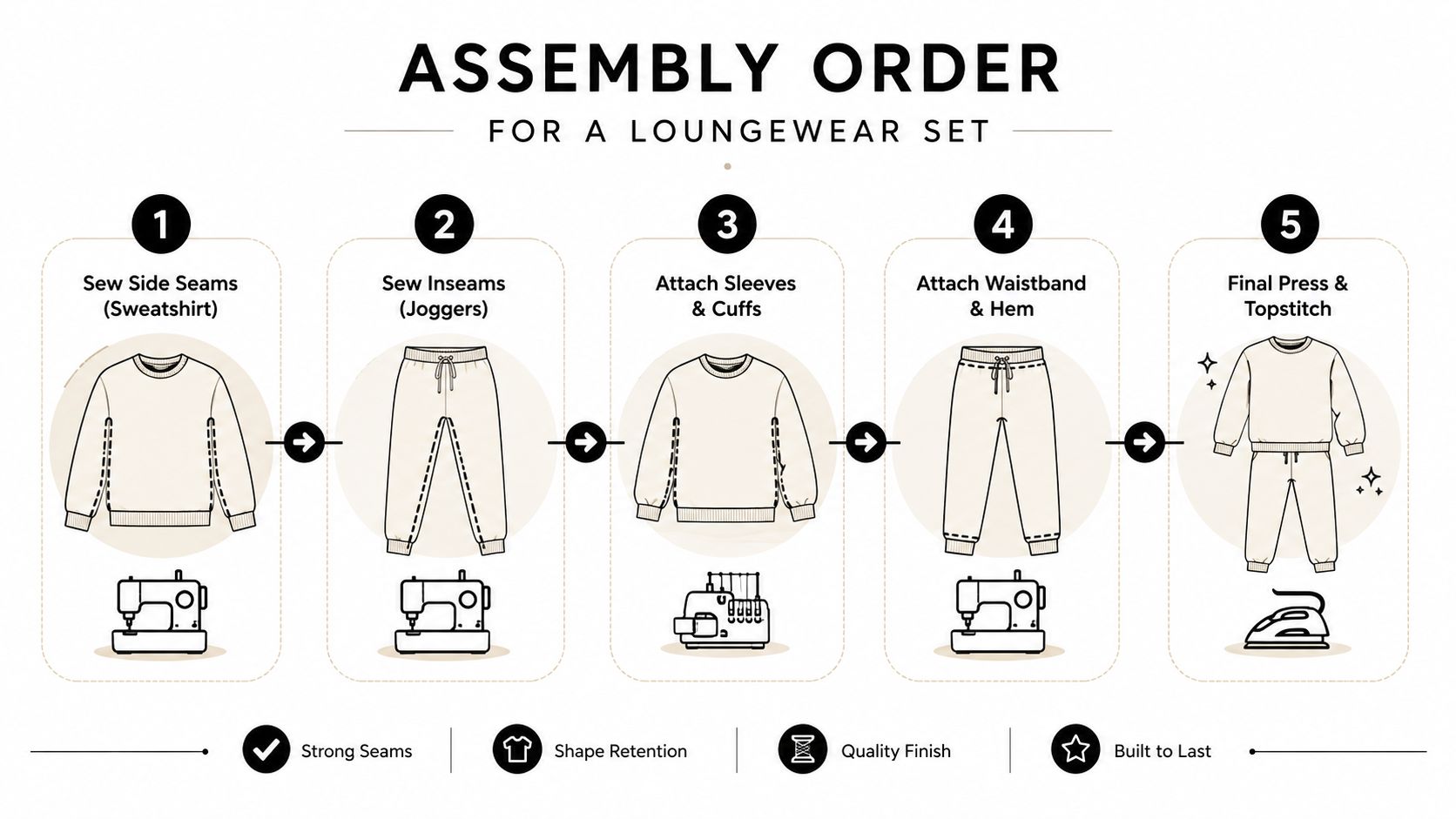
A French terry set comes together best as a sequence of small, controllable joins. Start with the seams that hold the shape, then move to the edges that finish it. Side seams first, hems last, because stable panels are far easier to handle than loose pieces flopping around the machine.
Build the garment in a sensible order
Start with the sweatshirt side seams. On joggers, sew the inseams first, then join the legs at the crotch once both tubes are ready. After that, attach sleeves, cuffs, waistbands, and hems in the order that keeps the bulk under control and the fabric feeding evenly.
For thicker loungewear seams, a seam allowance around 1/2 in, 2 cm gives room for the joins to sit neatly without crowding the edge. That extra space helps at pocket corners, waistband joins, and anywhere several layers stack up. As a rule, terry fabrics behave better if you give them a little breathing room rather than crowding the stitch line. Sewing terry fabric guidance on seam allowance and bulky joins
If a seam starts to feel heavy, press the allowance to one side instead of forcing it open. That keeps the bulk flatter at places that take the most strain, especially waistband joins and pocket edges. On a home machine, less wrestling usually gives a cleaner result than trying to make every join perfectly flat.
Choose the finish that suits the seam
A zigzag finish works on a standard machine and is fine for many inside seams. A twin-needle hem gives a tidy look on cuffs and lower edges, especially if you want a ready-to-wear finish without a coverstitch machine. An overlocked edge is the neatest option if you have a serger, and it works well on raw seam edges that will be washed often.
For a sweatshirt hem, a twin needle usually gives the cleanest home-made finish. For jogger cuffs, overlocking the edge first and then topstitching can reduce fraying and help the cuff keep its shape. For bulky waistband joins, a simple zigzag seam and careful pressing often work better than a fancier finish that adds extra thickness. The best finish is the one your machine handles without pushing the fabric out of line.
Press like the loops matter
Use low heat and avoid aggressive steam blasts that can flatten the loops and make the fabric look tired. Press the seam, let it cool, then move on. That slower rhythm matters around cuffs and waistband channels, where the garment can distort if you rush or drag the iron across the knit.
A small home iron habit makes a real difference here, because French terry shows careless pressing quickly. If the loops look crushed, stop and let the fabric recover before you continue. YouTube demonstration on construction order and finishing can help if you like to see the sequence before you sew.
Common French Terry Loungewear Problems and Real Fixes
Most French terry problems are not mysterious. They come from a needle that's past its best, a seam that's too tight for the fabric, or a garment that wasn't prewashed before cutting. The trick is reading the symptom before you chase the wrong fix.
Read the problem by where it shows up
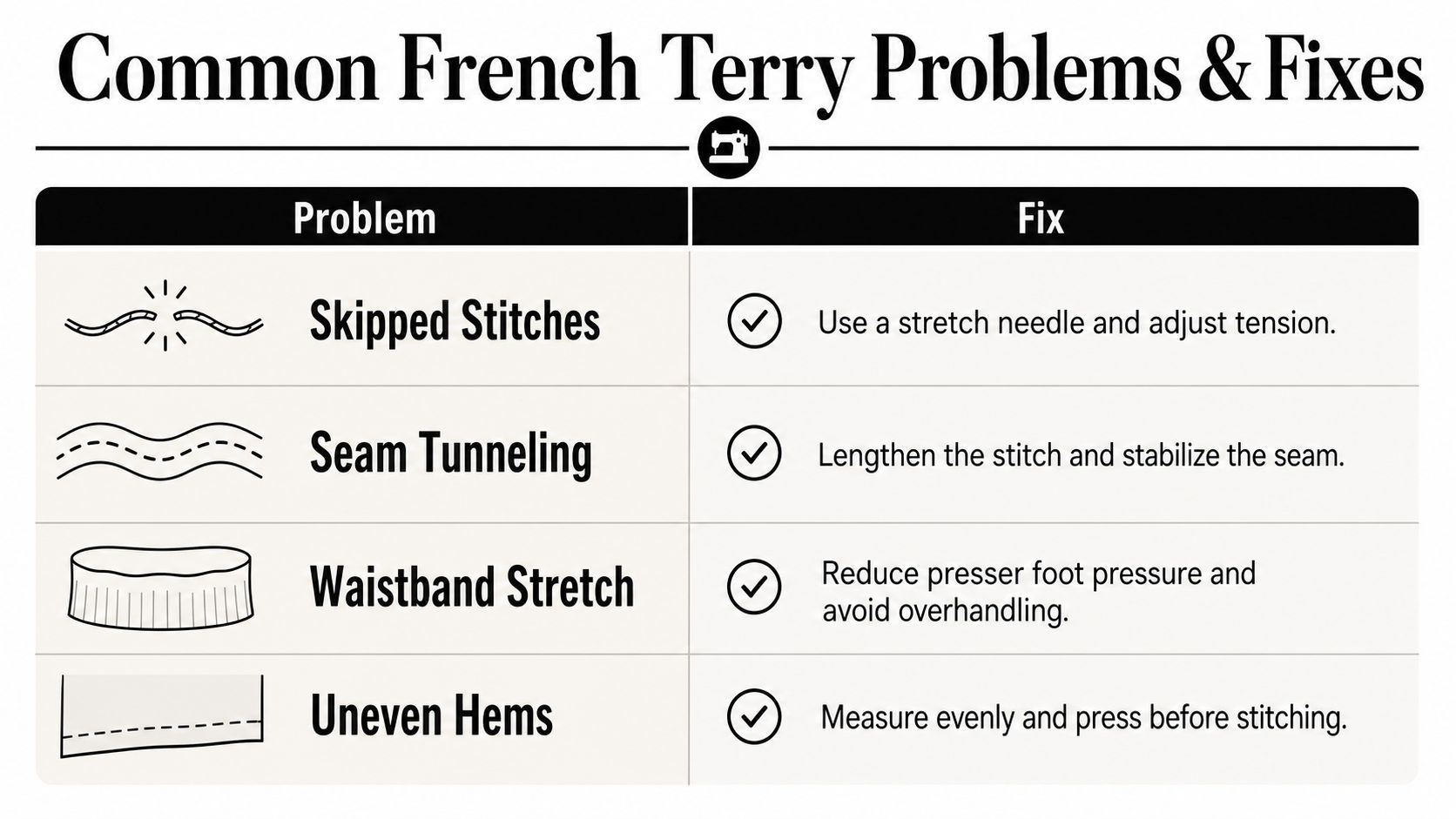
If the issue is on the surface, check the needle and presser foot first. Skipped stitches often improve fast when you swap in a fresh ballpoint needle and ease the top-thread tension slightly so the stitch can form cleanly in the knit. Uneven loops catching under the foot usually point to handling, not bad fabric, so slow the feed and let the machine do the work.
If the problem lives in the seam structure, look at stitch choice and seam allowance. Seam tunnelling on hems often means the stitch is pulling one layer too hard, so a twin needle or a slightly longer stitch can help. A seam that feels weak at the waistband may need more allowance, a better press, or a stitch that stretches more willingly.
Fix what changes after washing
If the garment looks fine before laundering but goes out of shape after its first wash, check prewashing and waistband support. Shrinkage can distort the fit if the cloth wasn't washed first, and a waistband that lacks enough stability can relax more than you want. That's where careful fabric choice and sensible construction matter more than a quick visual check on the day you sew it.
Use a quick decision tree
- Surface symptom: change the needle, then check the presser foot and tension.
- Seam symptom: change the stitch, then review seam allowance and seam finish.
- Post-wash symptom: revisit prewashing, then check whether the waistband or cuff needs better support.
- High-friction wear zone: inspect inseams for pilling, because repeated rubbing is where a weak fabric choice shows first.
A few habits prevent most of these headaches. Prewash every piece, keep a fresh pack of ballpoint needles nearby, test stitches on scraps, and don't push the fabric through the machine. That routine is boring in the best possible way, because boring sewing is usually successful sewing.
Project Ideas, Patterns and Care for the Long Term
A solid French terry project starts with the garment, not the stitch choice. If the fabric weight, loop structure, and intended wear do not match the pattern, the finished piece ends up in the “almost right” pile instead of regular use. That is the decision worth making first.
Three projects that suit different weights
A relaxed-fit sweatshirt works well in 230–280 GSM loopback terry with ribbed cuffs. That weight gives enough body for a clean shape without making the top feel heavy indoors. A pair of joggers usually does better in a slightly heavier terry, especially if you want an elastic waistband and drawstring channel that sit securely and do not sag when the fabric has been worn a few times.
For warmer evenings, a lightweight lounge tee or pyjama top in 180–220 GSM can be the better choice. That lighter end keeps the garment comfortable when you want softness without extra heat, and it suits simple patterns with clean necklines and relaxed sleeves. Brushed terry can feel cosier, but loopback keeps a bit more stability, so the pattern should match the surface as well as the warmth.
If you like reworking existing clothes, cozy DIY sweater upcycle ideas can be a useful companion read. It is especially handy if you want to think about comfort layers and texture before cutting into fresh fabric.
Care that keeps the loops looking good
Wash French terry at 30°C, avoid fabric softener because it can flatten the loops, and tumble cool or dry flat if the garment needs a gentler finish. Store it folded rather than hung, because hanging can stretch the shoulders over time. Those habits are simple, but they make a clear difference to how the fabric feels after repeated wear.
Always prewash before cutting. Most French terry settles a little in the first wash, and if you skip that step the fit can shift after the garment is finished. For care guidance, I would still check the maker's advice for the exact cloth you bought, and a supplier like More Sewing is the kind of place that usually points you in the right direction for both fabric and notions.
The five habits that make the project work
- Choose the right weight: match GSM to the garment, not the remnant bin.
- Prewash every cut: test shrinkage and handle before you cut pattern pieces.
- Use the right needle: ballpoint or jersey for most projects, heavier when the fabric asks for it.
- Match stitch to stretch: zigzag, stretch stitch, or twin needle depending on the seam.
- Press gently and store well: low heat, no harsh steam, folded storage after washing.
That short list covers the habits that save the most trouble on the bench. It keeps the project practical from the first cut through to the first wash, which is where French terry shows whether the fabric choice was right.
