
You're standing in front of a haberdashery shelf, holding two nearly identical white spools and wondering which one belongs on your viscose dress. The label says “all-purpose”, but that doesn't tell you whether the thread will cope with a stretchy seam, a fine fabric, repeated washing or a heavier needle.
Thread is the quiet partner in every project. Choose well and it supports neat seams, comfortable movement and reliable repairs. Choose poorly and you may see skipped stitches, puckering, breakage or a thread that looks out of place on the finished garment.
By the end, you'll be able to match thread fibre and weight to fabric, understand how needle and tension settings change with that choice, and develop the useful habit of reading the spool label before buying. “All-purpose” is a starting point, not a rule, particularly for stretch fabrics, silk and heavyweight cloth.
Why Choosing the Right Thread Changes Your Sewing
A sewing machine forms a stitch by drawing the top thread and bobbin thread together inside the fabric. The thread needs to pass smoothly through the needle eye, form a loop at the right moment and withstand the movement expected from the finished item. A fine thread can disappear beautifully into lawn, while the same choice may look weak or become difficult to see against dense denim.
For everyday dressmaking, polyester is a durable, slightly stretchy option that suits many fabrics. UK sewing guidance recommends it for garment sewing, synthetic fabrics and stretch knits, while 100% cotton is better suited to cotton, linen and quilting because it has limited elasticity and may shrink or wear through more quickly in washing. The UK sewing thread guide from The Sewing Directory explains this practical distinction in more detail.
A good choice affects three parts of your sewing:
- Seam behaviour: A little flexibility helps a seam move with a jersey or fitted garment.
- Surface appearance: A thread that's too heavy can create visible ridges, while one that's too fine may look insubstantial.
- Machine performance: The needle, thread and tension must work together rather than being selected separately.
Practical rule: Match the thread first to the fabric's weight and movement, then check the needle and tension before sewing the final seam.
The numbers on UK thread labels provide another useful clue. You'll encounter the traditional cotton count, written as ne, and modern linear-density systems such as Tex and Nm, which help makers compare thread specifications across suppliers. Once those systems make sense, the shelf becomes much less mysterious.
Understanding Thread Weights and UK Sizing Systems
UK sewing thread labels can use more than one numbering system, so the first point to remember is the direction of the numbers.
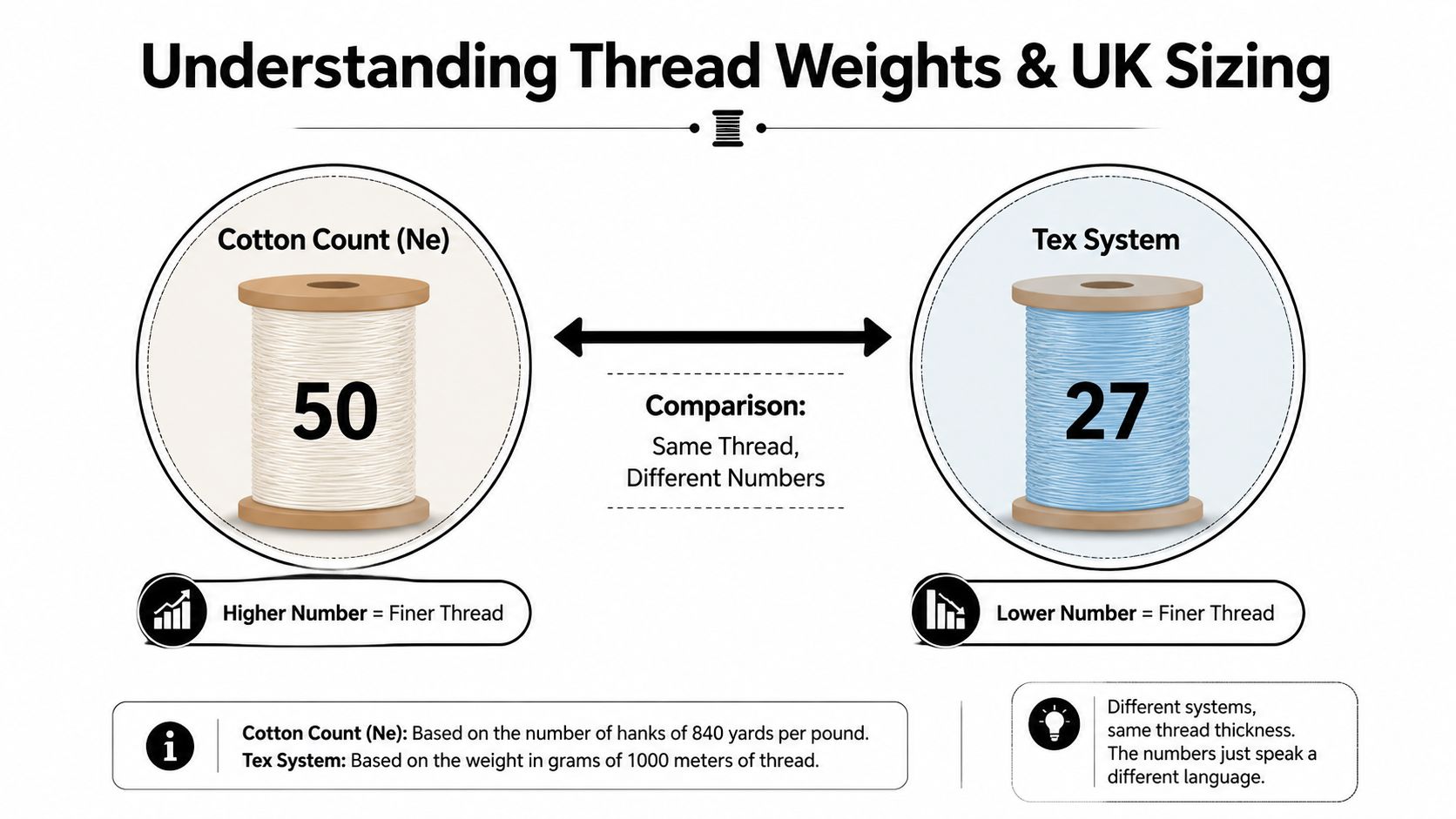
In the English cotton count system, written as ne, the number describes how many 840-yard hanks of yarn equal one pound. A higher ne number means a finer thread, as explained in this UK guide to choosing needle and thread. Tex works in the opposite direction. It's defined as grams per 1,000 metres, so a higher Tex number means a thicker thread. Nm describes metres per gram, which means a higher Nm indicates a finer thread, as set out in this UK thread measurement reference.
Think of the systems as a layered cake. A 100ne thread is a delicate, thin top tier, while 40ne is a chunkier base tier. In Tex terms, Tex 30 is a lighter slice and Tex 80 is a much thicker wedge. You don't need to memorise every conversion. You need to know which direction the scale runs.
A practical fabric comparison
UK guidance gives a useful hierarchy:
- 60ne cotton suits lighter fabrics such as cotton lawn and organdy.
- 40–50ne cotton or linen works for general dressmaking fabrics, including linen and crafting cotton.
- 40–50ne or waxed linen is appropriate for heavier materials such as denim, canvas, tweed and gabardine.
You may also see lighter thread around Tex 25–30 for lawn and voile, medium choices around Tex 35 for shirting, and a heavier option around Tex 50 for denim and furnishing fabrics. Treat these as working comparisons, not rigid rules. Fabric structure, stitch length and whether the stitching is structural or decorative still matter.
For a quick conversion, Tex 25 means 25 grams per 1,000 metres, while Tex 70 means 70 grams per 1,000 metres. Denier is calculated as Tex multiplied by 9, so the larger value represents the thicker thread. This thread weight conversion guide shows how that comparison works.
Polyester Thread for Everyday Garment Sewing
Polyester is the dependable spool many home dressmakers reach for first. It has durability, slight stretch and useful resistance to abrasion, which makes it suitable for garments that move and are washed regularly. It's commonly recommended for synthetic fabrics and stretch knits, and its slight sheen often blends neatly into modern dressmaking cloth.
Scenario one, a stretch jersey top
Suppose you're sewing a jersey top on a standard sewing machine. A fine polyester thread, such as a 60ne choice, paired with a ballpoint or jersey needle can move through the knit without cutting across the yarns. The thread's small amount of give helps the seam tolerate movement, particularly around a neckline or armhole.
Use a test scrap first. Sew a short seam, gently stretch it across the stitching and inspect whether the thread snaps, the fabric tunnels or the machine skips stitches. If the seam needs more movement, a stretch stitch or narrow zigzag may be more suitable than a straight stitch, depending on your machine and pattern instructions.
Scenario two, a cotton lawn blouse
For a crisp cotton lawn blouse, polyester can still be a sensible everyday option. A fine thread can sit neatly in the seam allowance, while a sharp needle suited to tightly woven fabric helps keep the stitches flat.
Polyester isn't perfect for every project. It can be damaged by prolonged contact with a very hot iron, and its appearance may feel too synthetic on an heirloom silk blouse where a soft, lustrous natural thread is part of the finish. It's also worth separating ordinary all-purpose polyester from the wider polyester category. Commercial thread ranges include filament, spun, modified elastic and core-spun variants, so the label can tell you more than the fibre name alone, as reflected in UK market reporting on thread segmentation.
Cotton Thread for Traditional and Quilting Projects
Cotton thread has a soft, natural character and usually a matte finish that sits comfortably against cotton and linen. It's a particularly pleasing choice when you want the thread and fabric to behave as one material rather than introducing a noticeable synthetic sheen.
Common UK cotton counts include 40ne, 50ne and 60ne. A finer 60ne thread can suit lighter cottons, while 40ne and 50ne are practical for general dressmaking and quilting. Mercerised cotton has been treated to improve smoothness and sheen, so a product such as Coats Dual Duty may give a more polished surface than unmercerised cotton.
Two useful cotton projects
For a fitted cotton poplin shirt, a 50ne mercerised cotton thread can give a traditional appearance and blend naturally with the fabric. The thread won't provide the flexibility of polyester, so check that the garment's design doesn't demand stretch at the seam.
For a simple patchwork cushion, 40ne quilting cotton thread is a natural pairing. Cotton thread against cotton layers helps the pieced seams sit smoothly beneath the quilt top, making it a strong choice when the stitching should support rather than compete with the patchwork.
Cotton has clear limits. It has little give, can snap on knit fabrics and may shrink in hot washing if it hasn't been pre-shrunk. A size 80/12 or 90/14 universal needle is a useful starting point, with balanced top tension and a test seam on the actual fabric.
| Cotton thread weights at a glance | Needle size | Best fabric pairing | Typical project |
|---|---|---|---|
| 60ne | 80/12 universal | Lawn, organdy and lighter cotton | Fine blouse or summer top |
| 50ne | 80/12 universal | Poplin, shirting cotton and linen | Fitted shirt |
| 40ne | 90/14 universal | Quilting cotton and firmer woven cloth | Patchwork cushion or sturdy seam |
Silk, Nylon and Woolly Nylon for Specialist Finishes
Some sewing jobs need a thread with a very specific behaviour. Silk, nylon and woolly nylon each solve a different problem, so it's more useful to compare their finish and movement than to rank them as better or worse.
| Thread type | Sheen | Stretch | Recommended needle | Best project |
|---|---|---|---|---|
| Silk | Fine, natural lustre | Limited give | 70/10 or 80/12 | Silk blouse, chiffon or fine wool |
| Nylon | Smooth or clear appearance | Flexible | Ballpoint or stretch | Swimwear, lingerie elastic or sheer curtain hems |
| Woolly nylon | Soft, lofted surface | Noticeable stretch | Overlocker needle suited to fabric | Jersey cuffs, necklines and hems |
Silk for delicate cloth
Silk thread is fine, strong and lustrous. It's a thoughtful choice for lightweight silk, chiffon and fine wool where the stitch should nearly disappear into the fabric. Try a fine 70 or 80 weight with a 70/10 or 80/12 needle, then loosen the machine tension by one or two notches if the test seam shows puckering.
Nylon for flexibility
Nylon is clear or lightly coloured, flexible and strong, which makes it useful for swimwear, lingerie elastic and hemming sheer curtains. A ballpoint or stretch needle helps prevent damage when you're sewing elastic or knitted fabric. Nylon can degrade under ultraviolet exposure, so it isn't the automatic choice for projects that will remain outdoors.
Woolly nylon for soft overlocker seams
Woolly nylon is a textured polyester thread with a soft, expanded surface. It stretches readily and fills the overlocked edge, making it comfortable inside jersey cuffs, necklines and hems. Feed it carefully, check the looper threading and test the tension, because its loft behaves differently from a smooth cone.
Serger and Overlocker Thread Varieties
“Overlocker thread” describes a group of products rather than one single thread. The cone you choose should match both the machine's speed and the finish you want at the edge.
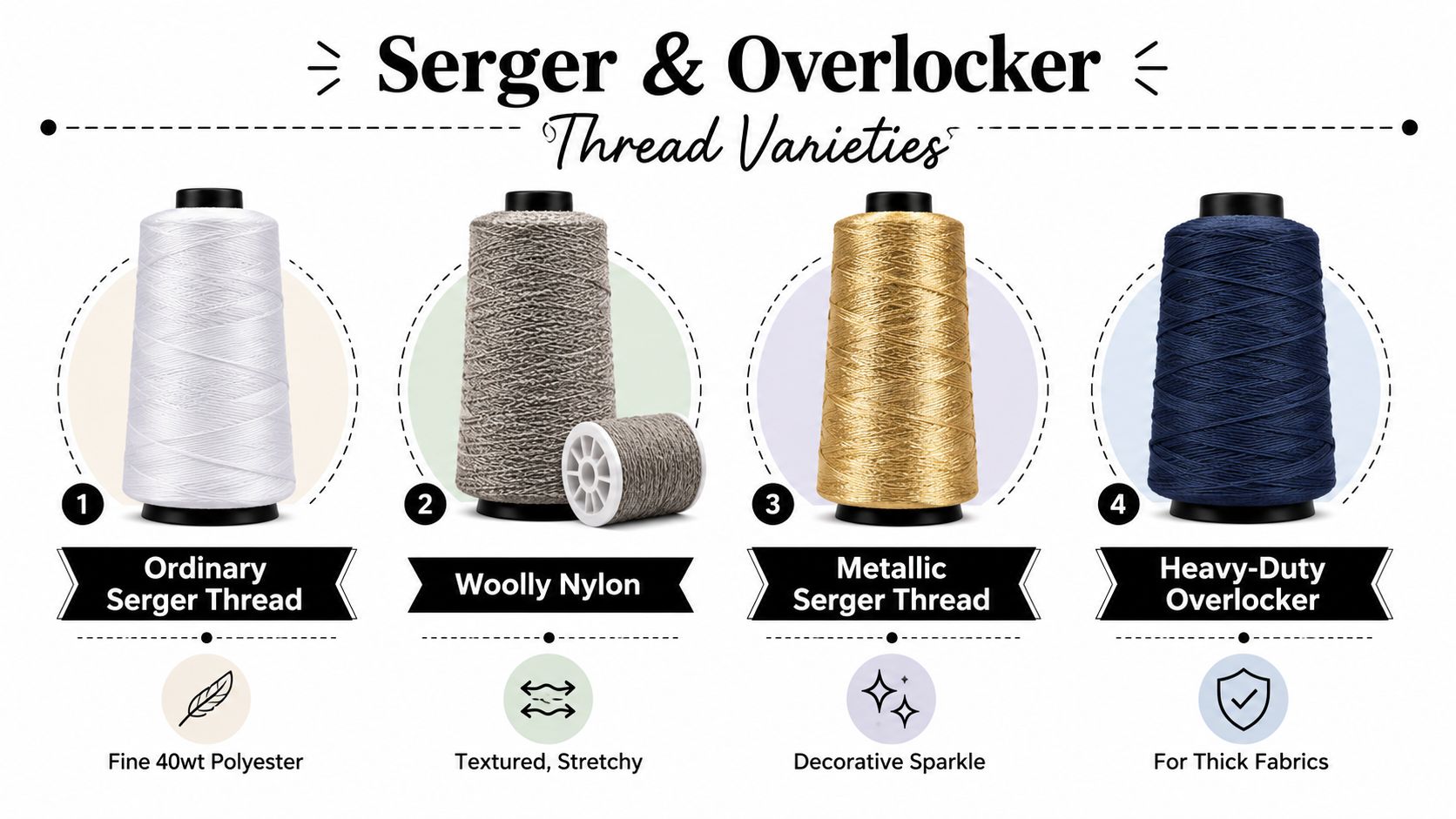
Ordinary serger thread is a fine, smooth polyester thread supplied on large cones. It's suitable for general overlocking on woven fabrics and stable knits, and most machines use several cones together. For a jersey T-shirt, this is the practical everyday option for enclosing seam allowances and tidying raw edges.
Woolly nylon is softer and more elastic. It's especially useful in loopers for cuffs, collars and hems on knit garments, where a firm ordinary thread could feel scratchy or restrict movement. Use it for a comfortable finish on an activewear top or a soft jersey dress.
Textured nylon, sometimes called bulky or fuzzy thread, creates a raised, soft edge. It works well in a single needle position for picot or blanket-style edging on towels, flannels and fleece. A fleece throw with a gently raised edge is a good project for testing this effect.
Metallic and decorative serger threads add sparkle to picot hems and party wear. A metallic needle, looser tension and slower sewing speed can help prevent shredding. Use a decorative metallic thread on a christening gown edge only after testing the route through the machine, since a delicate fabric may need a softer finish.
Matching Thread to Needle and Tension
Thread, needle and tension form a mechanical set. A fine thread needs an eye that doesn't create unnecessary friction, while a thicker thread needs enough room to pass cleanly without shredding.
For a light fabric such as cotton lawn, you might begin with 60ne cotton, an 80/12 needle and a standard tension setting. Sew a sample, inspect both sides and adjust only after checking that the machine is threaded correctly.
For denim, move up to a 40ne thread and a 90/14 jeans needle. The larger eye and stronger needle suit the heavier thread and dense fabric. Rather than copying a tension number blindly, reduce or increase the dial in half-step increments until the stitches balance on a scrap.
UK needle guidance gives fabric-specific pairings:
- Ballpoint or jersey needles suit jersey, interlock and rib knits.
- Stretch needles suit Lycra, spandex, swimwear and highly elastic knits.
- Microtex or sharp needles suit silk, microfibre, tightly woven cotton and vinyl.
- Denim or jeans needles suit denim, canvas, heavy twill and thick layers.
A ballpoint needle can skip on a woven fabric, while a microtex needle can damage knit fibres. Re-thread the top and bobbin whenever you change thread, lift the presser foot before threading and test on the project scrap.
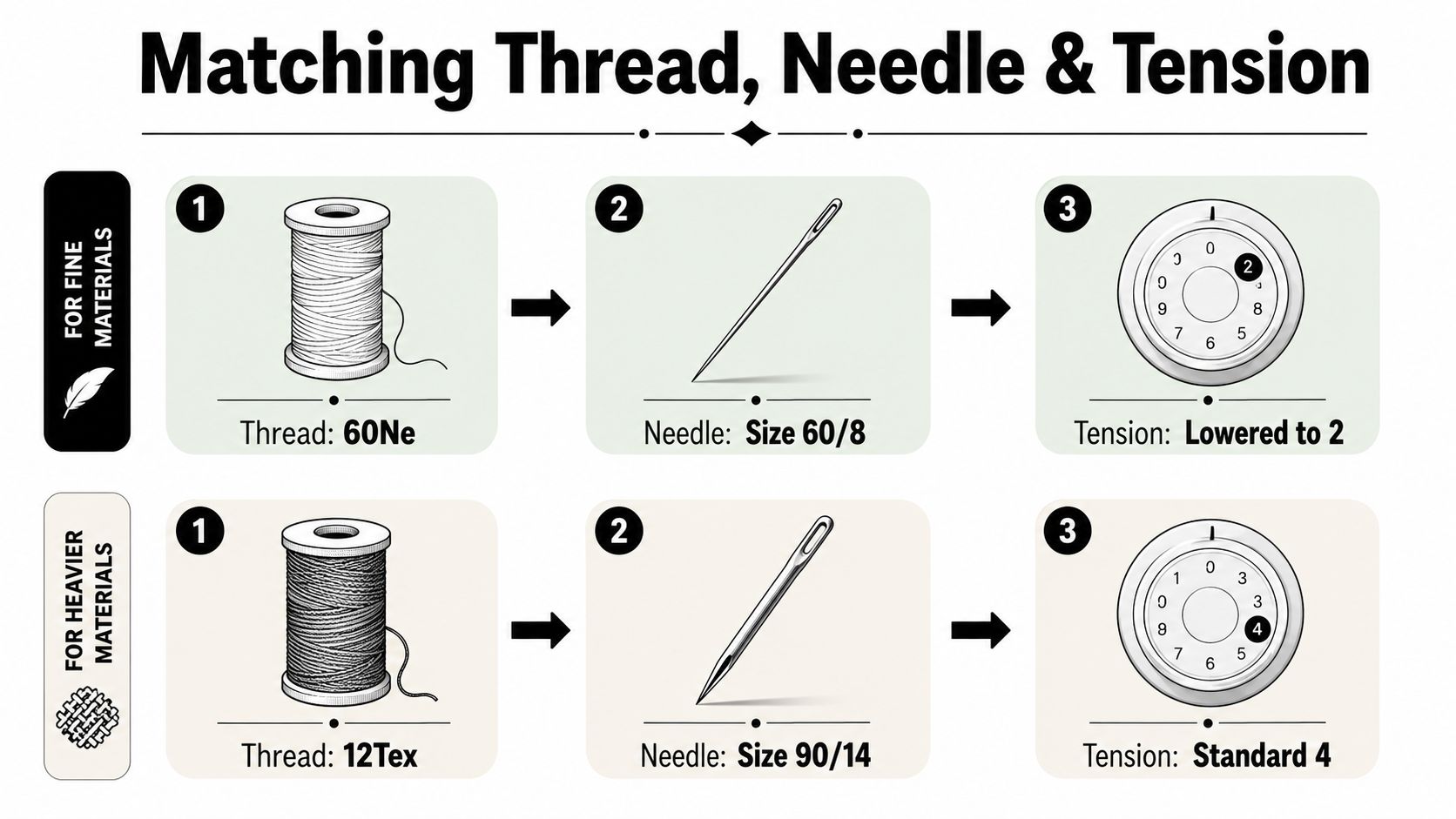
This short visual guide demonstrates the relationship between thread, needle and tension:
Thread Storage and Long-Term Care
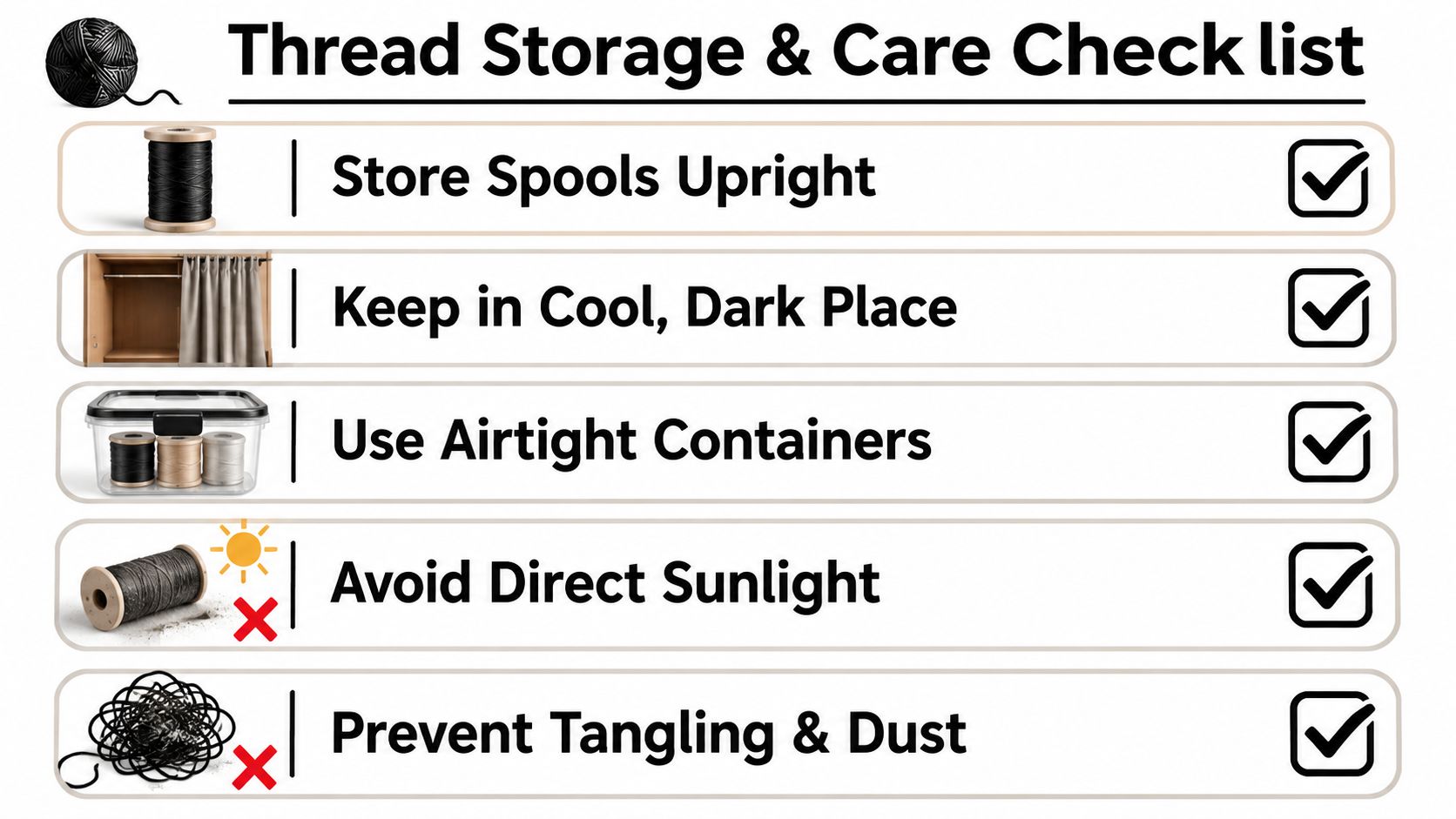
Good storage prevents many thread problems before the spool reaches the machine. Keep spools upright, preferably in a drawer or lidded box in a dry room rather than on a shelf beside a sunny window. Direct sunlight can affect polyester and cotton dyes, while dust and humidity can interfere with smooth feeding.
A simple routine is enough:
- Keep colours organised: Rotate frequently used colours every six months so older stock doesn't sit unnoticed at the back.
- Check older spools: Give the thread a gentle tug. If it feels brittle, breaks easily or sheds heavily, use a fresh spool for construction seams.
- Clean bobbins: Remove lint before winding, and wind off old thread rather than repeatedly filling over a messy or uneven layer.
- Protect wound bobbins: Store them in their original cases or a covered organiser to reduce tangling and unwanted transfer of machine oil.
Don't pull a loose end aggressively from a tangled spool. Find the outer strand, unwind a little by hand and secure the end in the spool's notch when you stop sewing.
Quick Fixes for Common Thread Problems
Start with the needle, threading path and bobbin before changing several settings at once. Most faults become easier to diagnose when you alter one thing, sew a test line and inspect both sides.
- Skipped stitches: Check that the needle matches the fabric and thread. A ballpoint needle can help on jersey, while a microtex or jeans needle is more appropriate for tightly woven or heavy cloth.
- Snapping thread: Re-check tension, the needle eye and the thread's condition. Old stock may have become brittle, and a thread that's too thick for the needle can rub until it breaks.
- Looping underneath: Re-thread the upper path with the presser foot raised, then inspect whether the bobbin is wound evenly.
- Looping on top: Lift the presser foot before pulling the thread through the take-up lever and tension discs. Missing one guide can leave the top thread loose.
Keep a small scrap of the project fabric beside the machine. After every adjustment, sew a short test seam and look for balanced stitches, puckering and damage to the fabric.
Changing a worn needle regularly also prevents trouble. A practical habit is to replace it after six to eight hours of sewing, as recommended in the sewing guidance supplied for this guide. Don't wait until the needle visibly bends or breaks.
Thread Pairing Reference at a Glance
A spool labelled 50–60ne may suit an everyday cotton shirt, while a fine silk thread belongs with a smaller needle and lighter fabric. Use the table as a shopping prompt, then choose within the suggested range according to the fabric, finish and machine.
| Thread type | Best fabric | UK weight | Needle | Tension start |
|---|---|---|---|---|
| Polyester | Everyday woven garments, synthetics and jersey | 50–60ne or a fine-to-medium Tex | Universal for wovens, ballpoint or stretch for knits | Standard setting, then adjust from a scrap |
| Cotton | Cotton, linen and quilting fabrics | 40–60ne | 80/12 or 90/14 universal | Balanced setting |
| Silk | Silk, chiffon and fine wool | Fine 70 or 80 weight | 70/10 or 80/12 | One to two notches looser if needed |
| Nylon | Swimwear, lingerie elastic and sheer hems | Fine-to-medium specialist nylon | Ballpoint or stretch | Test for smooth feeding |
| Woolly nylon | Knit cuffs, necklines and hems | Textured specialist thread | Overlocker needle suited to the knit | Adjust loopers gradually |
| Standard serger thread | Wovens and stable knits on an overlocker | Fine 40-weight polyester | Overlocker needle suited to fabric | Machine default, then test |
Within one fibre type, choose a finer weight for delicate cloth, close-fitting seams or less visible stitching. A medium polyester thread is more suitable for a hard-wearing everyday garment, whereas a finer version can reduce bulk in a lightweight blouse. For a soft knitted cuff, woolly nylon earns its place because its texture helps the overlocked edge stretch. Keep a fabric scrap beside the project for any final check, and label spare spools with their ne or Tex equivalent. That small note makes future shopping easier, especially when packaging uses a different sizing system.
Thread Questions Home Sewists Ask Most
Is recycled or repurposed thread safe to sew with?
It can be suitable if it's smooth, strong and free from damage, but inspect it before using it for a structural seam. UK recycling guidance says sewing thread can be reused, donated or recycled through textile collection banks and reuse centres when it's no longer in good condition, so disposal needn't mean putting every spool in general waste. The UK guidance on sewing thread reuse and recycling is a useful reference.
Should I choose polyester or cotton for garments I'll sell?
Choose according to the garment's fabric, movement and care requirements rather than the selling price or label. Polyester is often the practical choice for everyday garments that need durability and slight flexibility, while cotton may suit a cotton or linen garment where a natural appearance matters.
What's the difference between serger thread and regular sewing thread?
Serger thread is commonly supplied on a larger cone and is made to run smoothly through an overlocker at speed. It's often fine polyester, whereas ordinary machine thread is usually presented on smaller spools for the needle and bobbin. Check the thread's weight and construction, not just the cone shape, because specialist overlocker threads such as woolly nylon behave very differently from smooth serger thread.
Can I use ordinary thread in an overlocker?
You can use a suitable smooth thread if the cone feeds reliably and the machine tension balances, but an overlocker often needs several cones at once. For a jersey T-shirt, ordinary serger thread is usually the straightforward choice, while woolly nylon is better reserved for soft, stretchy loopers and decorative finishes.
More Sewing offers fabrics, haberdashery and ready-to-sew kits for projects where the fabric and thread need to work together, including jerseys, cottons, denims and viscose or Tencel blends. Visit More Sewing to browse suitable materials, thread options and practical sewing supplies for your next garment.
