
Fabric
Best Fabric for Baby Sheets A UK Sewist’s Guide
Sewing baby sheets sounds simple until you’re standing at the fabric shelf with six good-looking options in your hands and no clear answer. One feels lovely but slippery. Another looks sturdy but slightly coarse. A third is labelled organic, which sounds right, but you still need to know whether it will sew cleanly, wash well, and sit snugly on the mattress.
That’s where most advice falls short. Buying a ready-made sheet and sewing one are different jobs. As a sewist, you’re not only choosing what touches a baby’s skin. You’re choosing what cuts accurately, behaves under the presser foot, copes with hot washing, and still fits properly after repeat laundering.
The best fabric for baby sheets usually comes down to a balance of skin comfort, breathability, certification, and sewability. Fibre matters. Weave matters just as much. Finish matters too. A crisp organic cotton percale sews very differently from a drapey bamboo viscose jersey, even if both feel soft in the hand.
Choosing the Perfect Fabric for Handmade Baby Sheets
A handmade baby sheet is one of those projects that looks modest and carries a lot of meaning. You want it to feel gentle, wash beautifully, and hold up to the sort of use baby bedding gets. That means frequent laundering, quick remakes after leaks, and a fit that stays secure on the mattress.
For most sewists, the first decision is whether to prioritise easy sewing or premium feel. If you’re making your first fitted cot sheet, a stable woven cotton will usually give you fewer problems than a slippery regenerated fibre or a stretchy knit. If you’ve sewn garments or worked with drapier cloth before, your options widen.
Safety also changes the way you shop. For baby bedding, softness alone isn’t enough. Breathability, chemical certification, and secure construction all matter. If you want a broader parent-focused overview alongside the sewing advice here, this guide to choosing breathable sheets for cribs is a useful companion read for understanding why airy, snug-fitting fabrics are preferred.
A practical way to choose is to ask four questions before buying any fabric:
- Will this sit close and smooth on the mattress? Very stiff or very slinky fabrics can make corners awkward.
- Can I wash it repeatedly without fuss? Baby sheets need low-drama care.
- Is it pleasant to sew? Fabric that shifts, curls, or stretches unpredictably can turn a quick project into a frustrating one.
- Does it suit the baby and the room? Cooler sleepers, warmer nurseries, and sensitive skin all affect the best choice.
Practical rule: If you want the safest starting point, begin with a certified woven fabric that presses well, cuts cleanly, and doesn’t rely on stretch to fit.
A Quick Comparison of Top Baby Sheet Fabrics
Some fabrics are lovely to sleep on but awkward to sew. Others are delightfully obedient at the cutting table but less refined in use. For a baby sheet, the best result usually comes from choosing the fabric that matches both your sewing skill and the nursery conditions.
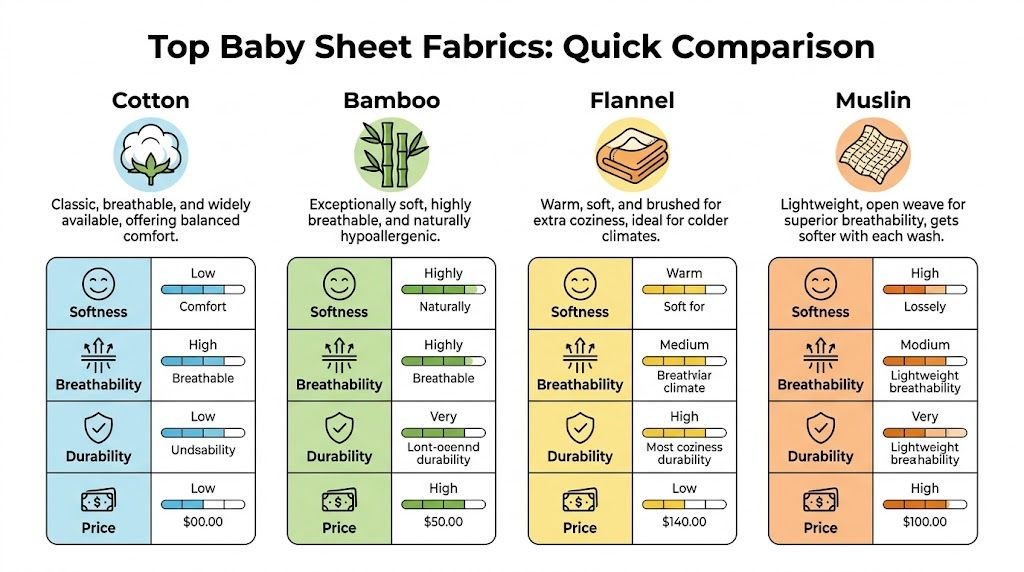
Baby Sheet Fabric Comparison
| Fabric Type | Softness | Breathability | Durability | Ease of Sewing | Best For |
|---|---|---|---|---|---|
| Organic cotton woven | Soft, especially after washing | Very good | Very good | Easy | First sheets, everyday use, sewists who want control |
| Bamboo viscose | Very soft, silky hand | Very good | Good if handled well | Moderate to tricky | Sensitive skin, smooth luxury feel |
| Tencel lyocell | Smooth and cool | Very good | Good | Moderate to tricky | Warm sleepers, refined drape |
| Cotton muslin | Softens with washing, slightly textured | Excellent | Moderate | Moderate | Lightweight sheets, airy feel |
| Jersey knit | T-shirt soft | Good | Good | Easy to moderate | Snug fitted sheets, beginners comfortable with knits |
| Flannel | Brushed and cosy | Lower than lighter weaves | Good | Easy | Cooler rooms and winter rotation |
The table gives the quick answer, but the trade-offs matter. Organic cotton is usually the safest all-round recommendation for sewists because it behaves predictably, presses flat, and suits everyday fitted sheets. Bamboo viscose and Tencel feel luxurious, but they can slide during cutting and ripple if your machine tension is even slightly off. Muslin breathes beautifully, though its open structure can distort if you handle it roughly. Jersey is forgiving on fit because stretch helps it hug the mattress, but it needs knit-friendly handling. Flannel is easy to sew and cosy, but it isn’t my first pick for warmer nurseries.
If you’re also comparing what makes a ready-made fitted sheet safe and practical, this guide on choosing the perfect fitted crib sheets, focusing on safety and materials is worth reading for its material and fit perspective.
What tends to work best in practice
Three combinations come up again and again in sewing rooms:
- For the easiest make: woven organic cotton
- For the softest finish: bamboo or Tencel, if you’re happy to stabilise and sew slowly
- For the stretchiest fit: jersey knit with fully enclosed elastic
What usually causes trouble
Not every fabric marketed for babies is pleasant to sew into fitted sheets.
Slippery fabric plus tiny mattress corners is where many otherwise confident sewists lose patience.
Watch for these common annoyances:
- Loose open weaves: They can shift off grain during cutting.
- High-drape viscose blends: These often grow and slide before you’ve even pinned the casing.
- Very thick fabrics: They create bulky corners and a lumpy elastic channel.
The Natural Choice Exploring Cotton Fabrics
A parent buys "100% cotton" expecting an easy win, then the sheet shrinks hard on the first hot wash or the corners turn bulky and stubborn under the presser foot. That is the issue with cotton. The fibre itself is usually a safe starting point, but the weave, finish, and fabric quality decide whether the sheet is pleasant to sew and comfortable to use.
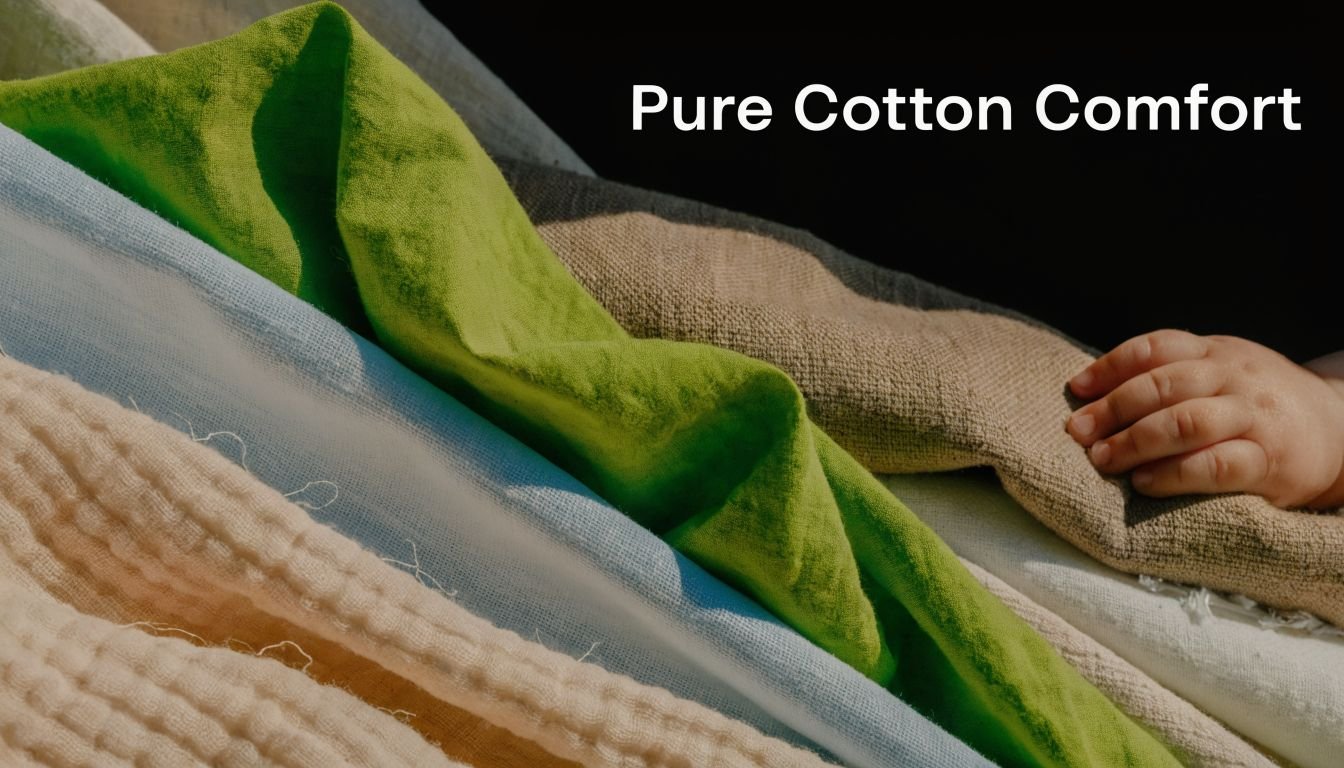
For handmade baby sheets, cotton earns its place because it is breathable, washable, and usually forgiving at the machine. Still, "cotton" is too vague to guide a sewing project well. Organic cotton, conventional cotton, percale, poplin, muslin, and brushed cotton can all behave differently once you start cutting mattress corners and feeding elastic casings.
The most dependable choice for many sewists is organic cotton, especially with a recognised certification such as GOTS. I recommend it often because it tends to be a sensible combination of softness, stability, and easy care. Parents also often prefer organic cotton for babies with sensitive or reactive skin, but the practical sewing benefit matters too. A good woven organic cotton usually stays on grain better than cheaper, loosely finished cottons and presses into sharp, accurate folds.
Conventional cotton versus organic cotton
At the machine, both can sew well.
The bigger difference is consistency. Organic cotton sold for bedding is often finished with more care, so you are less likely to run into fabric that feels stiff on the bolt, thins out after washing, or pills sooner than expected. Conventional cotton can still be excellent, but it varies more from one supplier to the next.
For baby sheets, I look for cotton that does three things well:
- Washes without dramatic shrinkage
- Presses flat without scorching or glazing
- Holds a corner seam without fraying excessively
If a cotton fails one of those tests, it is not my first pick for crib bedding, no matter how pretty the print is.
Cotton percale for a crisp fitted sheet
Percale is the cotton I suggest most often to newer sewists making fitted baby sheets. It has a plain, crisp feel, cuts cleanly, and does not slump around the mattress shape while you sew. That matters more than many guides admit. A stable fabric saves time at every stage, from squaring the grain to threading elastic through the casing.
Percale also gives a tidy finish with basic equipment. A universal needle in a medium size is usually enough, and standard stitch lengths work well without much testing. If I want neat corners with minimal fuss, percale is usually where I start.
Useful habits with percale include:
- pre-wash and dry it the same way the finished sheet will be laundered
- press before cutting so the grainline is easier to see
- mark notches lightly, since heavy chalk can drag on tighter weaves
- trim corner seam allowances to reduce bulk before turning or enclosing edges
Cotton muslin for softness and airflow
Muslin feels softer and lighter, and many parents like that relaxed texture. For sewing, it is less obedient. The open weave can shift off grain, and repeated handling can stretch the edge enough to throw off a fitted corner.
It can still make a lovely baby sheet if you treat it carefully. I prefer a slightly denser muslin rather than the gauziest version on the shelf, especially for fitted sheets that will be washed often.
If you are sewing muslin, these techniques help:
- Cut in a single layer if the fabric will not stay aligned.
- Use a fresh sharp needle so the weave is pierced cleanly.
- Press straight down and lift the iron rather than sliding it.
- Finish raw edges well, because muslin can fray faster than percale.
- Check your measurements again after pre-washing, since muslin can draw up noticeably.
A walking foot is often useful here. It helps keep the layers feeding at the same pace, which is especially helpful around curved mattress corners.
Cotton can be easy to sew, but only if the weave suits the job.
What works best, and what usually disappoints
For most fitted cot sheets, woven organic cotton percale is the safest recommendation. It is stable enough for accurate cutting, soft enough for daily use, and sturdy enough to handle regular washing. That balance is hard to beat.
A few cotton options tend to cause problems:
- Very thin quilting cottons, which may feel crisp at first but wear out faster in bedding use
- Heavy brushed cottons, which can make elastic casings bulky and sleep warmer
- Shiny sateens, if your priority is airflow and easy handling rather than a smoother surface
If the goal is the best fabric for baby sheets from both a comfort and sewing point of view, cotton remains the benchmark. The trick is choosing the right cotton, not stopping at the fibre label.
Sustainable and Silky Bamboo and Tencel Explained
A parent often notices these fabrics at 2 a.m., when a baby is hot, unsettled, and every small comfort matters. A sewist notices them earlier, on the cutting table, where softness and drape can either make a beautiful sheet or turn simple corners into a fussy job.
Bamboo viscose and Tencel lyocell both appeal for the same reason. They feel smooth from the start, stay cool against the skin, and give a more fluid finish than most cottons. That comfort comes with a sewing trade-off. These are not the easiest fabrics to cut, keep square, or feed evenly, especially in fitted-sheet shapes where accurate corners matter.
Parents often choose bamboo for its soft hand, and many people describe it as gentler-feeling than standard woven cotton. For sewing, though, the bigger question is stability. If the fabric shifts while cutting or grows along an edge, the finished sheet can twist or sit unevenly on the mattress.
Bamboo viscose in the sewing room
Bamboo viscose feels lovely underhand. It can also skate across the table, distort if it hangs off the edge, and show ripples if the presser foot pressure is too high.
Good results usually come from slowing the whole process down.
Helpful techniques include:
- Use a microtex needle for cleaner penetration on fine woven bamboo fabrics.
- Spray starch lightly before cutting if the cloth is too limp to hold a straight line.
- Cut in a single layer when the fabric refuses to stay aligned folded.
- Use a rotary cutter and pattern weights to avoid lifting and shifting the cloth.
- Test stitch length on scraps first so the seam lies flat without puckering.
- Reduce machine speed around corners and elastic openings.
For fitted sheets, bamboo jersey is often easier to live with than woven bamboo viscose because the stretch forgives small fitting errors. The trade-off is edge curl and a greater chance of wavy seams if you pull while sewing.
Tencel lyocell and why sewists like it
Tencel lyocell has some of the same cool, smooth feel, but it is often a little more predictable under the needle. I still treat it as a drapey fabric, not a crisp one, yet it usually behaves better during pressing and topstitching than low-stability viscose blends.
That extra control matters on bedding. A baby sheet has long edges, repeated washing ahead, and no room for a corner that was cut slightly off grain.
Tencel works well if you want to:
- sew a sheet with a polished, premium finish
- keep a smooth surface without the fluff of brushed fabrics
- make bedding for a warmer room or a baby who sleeps hot
- spend a bit more time on prep for a cleaner result
Let Tencel rest flat before measuring and cutting. Press with a cloth and moderate heat, especially if the finish marks easily. If I am sewing a fitted sheet in lyocell, I mark corner notches clearly and stay-stitch any area that looks ready to stretch before I attach elastic.
Bamboo versus Tencel for baby sheets
The better choice depends on whether you care more about feel, budget, or ease at the machine.
| Fabric | Feel | Sewing behaviour | Best use |
|---|---|---|---|
| Bamboo viscose | Silky and very soft | Slippery, can distort and stretch off grain | Soft, fluid sheets for experienced sewists |
| Tencel lyocell | Smooth and cool | Drapey but often more controlled | Premium fitted sheets with cleaner handling |
Handling the slippery factor
Most trouble starts before stitching begins.
Workshop note: If the fabric slides while you are measuring, correct that first. Elastic will only magnify the problem.
A few habits help:
- Square the fabric before marking anything.
- Support the full length on the table so the grain does not drop and stretch.
- Use fine pins or clips sparingly because too much handling can shift the edge.
- Press each fold in the elastic casing before sewing so the topstitching has a firm path to follow.
- Check both corner pieces against each other before joining. Small cutting errors show up fast on a fitted sheet.
For a first baby-sheet project, I would still hand a beginner a stable woven cotton before bamboo or Tencel. For sewists who already know how to control drape, both fabrics can make beautiful bedding. Tencel usually gives the smoother sewing experience. Bamboo usually gives the softer, slipperier one.
Weave and Texture Jersey Percale and Flannel
A baby sheet can be cut from the same fibre and still sew like a completely different fabric. That comes down to construction. Knit stretches, woven cloth holds its shape, and brushed surfaces add warmth and bulk. If you sew, those differences matter as much as softness.
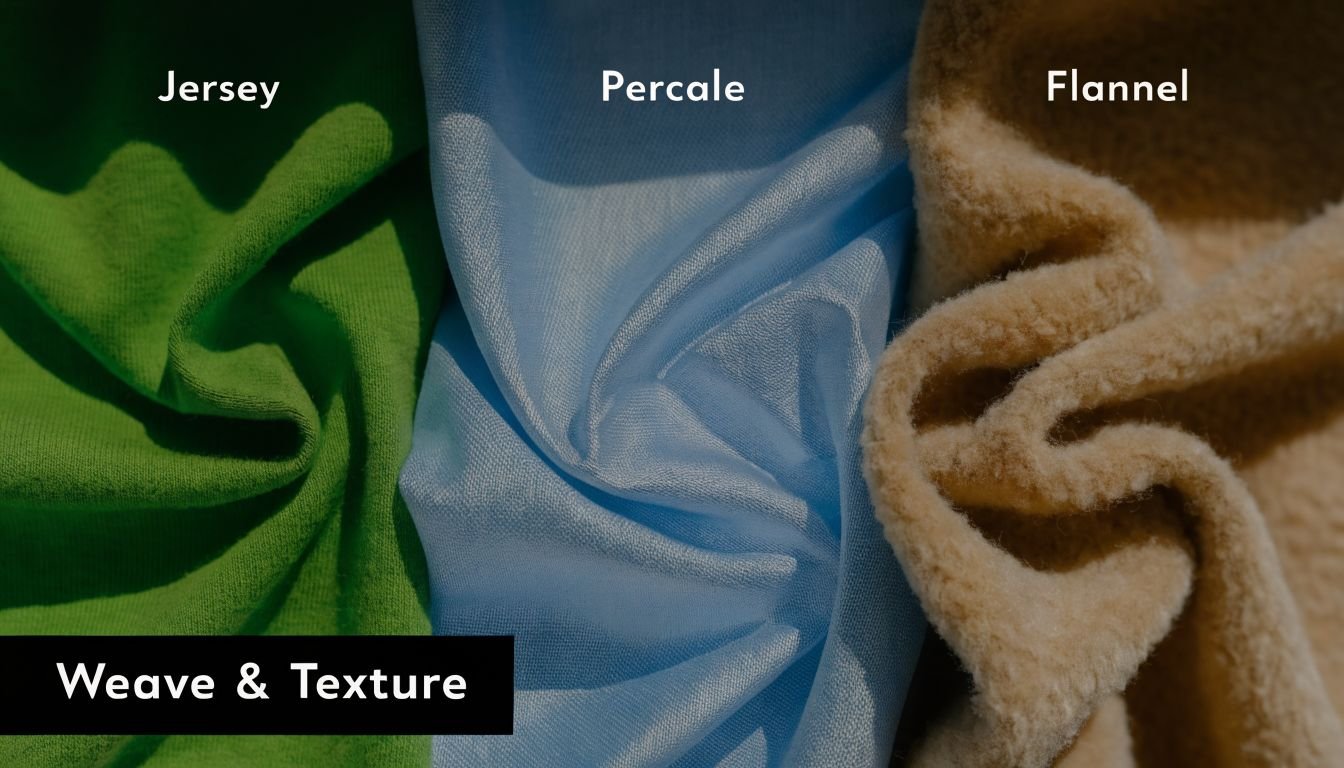
Jersey feels like a favourite T-shirt
Jersey knit stretches around the mattress, so it is forgiving if your corner depth is slightly off. That makes it appealing for first-time fitted sheets, especially on mattresses that vary a little from the label size.
It also asks for better handling at the machine. Cut edges tend to curl, long strips can grow if they hang off the table, and a straight stitch can pop if the seam has to stretch. Use a ballpoint needle, support the fabric while sewing, and avoid dragging it from the back of the machine. For the elastic casing, I prefer a narrow zigzag or another stitch with a little give.
Jersey suits sewists who want a soft, close fit and do not mind slower cutting and prep.
Percale feels crisp and cool
Percale is a plain-weave cotton with a smoother, more structured hand than jersey. It usually feels cooler against the skin, presses cleanly, and stays cooperative from cutting mat to ironing board. For baby sheets, that crispness is useful. You can square it accurately, mark corners clearly, and stitch an elastic channel without the edge rolling or shifting.
From a comfort point of view, percale is a strong choice for warmer rooms because the weave feels breathable rather than dense and glossy. From a sewing point of view, it is one of the easiest fabrics to recommend to beginners. It frays a bit, so finish raw edges neatly if your fabric is loosely woven, but it behaves well in almost every other step.
If you are checking mattress dimensions before cutting, this Cot Bed Fitted Sheets Sizing and Material Guide is a useful reference for fit planning.
Flannel feels warm and brushed
Flannel brings warmth fast. The brushed surface feels soft in a cosy way, and it has enough grip that it usually stays put while you cut and pin. That grip is helpful for accurate corner seams.
The trade-off shows up in the bulk. Thick flannel can make fitted-sheet corners lumpy, and folded casings get heavy if the fabric is dense. I trim seam allowances aggressively on flannel corners and grade the layers if needed. A good press with steam helps flatten the joins before elastic goes in.
For cold months, flannel earns its place. For year-round use, it is harder to treat as the default.
How construction changes your sewing choices
The same baby-sheet pattern needs different handling depending on the cloth. Here is the practical version.
| Construction | Needle choice | Main issue | Best fix |
|---|---|---|---|
| Jersey knit | Ballpoint | Stretch and curling | Support fabric fully and use a stitch with some give |
| Percale woven | Universal | Light fraying | Press often and finish edges cleanly |
| Flannel woven | Universal | Bulk at corners and casing | Trim and grade seam allowances before pressing |
The best fabric for baby sheets depends on season, mattress fit, and how much control you want at the machine. For clean cutting and crisp corners, percale is hard to beat. For stretch and flexibility, jersey works well. For winter warmth, flannel does the job if you account for the extra thickness.
Safety Certifications and Sewing a Perfect Fit
At the cutting table, this is the point where a baby sheet stops being a simple rectangle and starts becoming bedding that needs to wash well, fit properly, and stay secure night after night. Soft fabric alone is not enough. For a project this small, the details matter a lot.
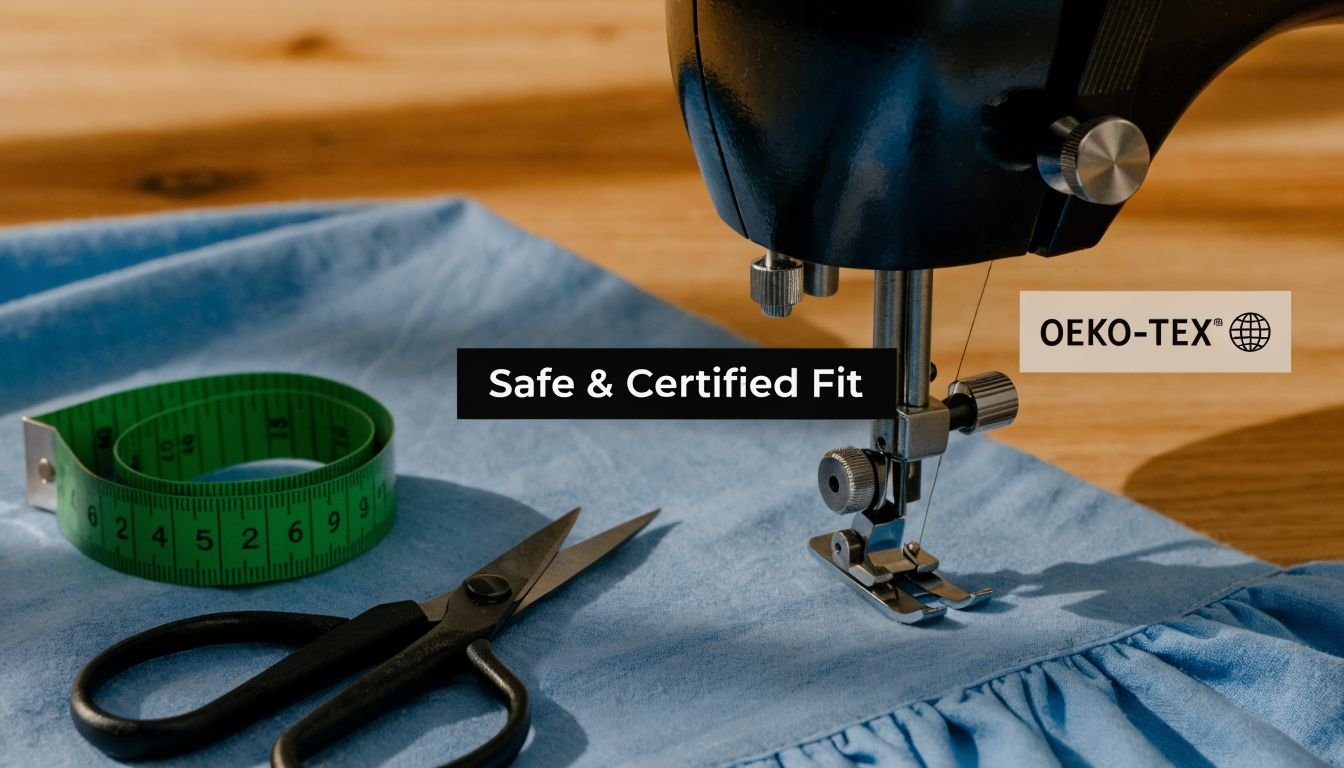
The first check is fabric safety. If you are sewing for a newborn or for a baby with reactive skin, I would skip vague labels such as “eco,” “natural,” or “baby soft” unless the seller states an actual certification for that exact fabric. Marketing copy does not tell you how the cloth was processed or tested.
What the main certifications actually tell you
The two labels sewists will see most often are GOTS and OEKO-TEX Standard 100 Class I.
GOTS covers organic fibre content and sets standards for processing. That matters if you want organic cotton and want more than the supplier’s word for it.
OEKO-TEX Standard 100 Class I means the finished textile has been tested for harmful substances to a standard intended for babies and very young children.
They do different jobs. GOTS is about the fibre and production chain. OEKO-TEX is about testing the finished material. Either one is more useful than a generic product title, and if a listing only names the brand certification without tying it to the actual fabric base, I treat that as incomplete information.
Sewing for a close, secure fit
Fit is the other half of the job. A baby sheet should sit flat across the sleep surface and stay anchored under the mattress, even after repeated washing. Loose corners, shallow pocket depth, and exposed elastic are sewing problems, not small cosmetic flaws.
If you need an extra reference for dimensions and fit logic, this Cot Bed Fitted Sheets Sizing and Material Guide is useful for checking the thinking behind mattress depth and fitted-sheet construction.
For woven fabrics, this method gives the cleanest result:
Pre-wash and machine-dry the fabric first
Baby sheets get washed often. Pre-washing removes finish, shows shrinkage, and tells you how the fabric will behave before you cut.Measure the actual mattress
Use a tape measure on the mattress itself. Record length, width, and depth. Manufacturer sizing can be close without being exact.Add enough depth for full wrap-under
The cut size has to cover mattress depth, seam allowance, and enough extra to hold under the edges. Cutting too tight is the fastest way to make a sheet that pops off.Mark and sew boxed corners accurately
I mark all corners before heading to the machine. On baby sheets, a few millimetres off can show up fast as twisted or baggy corners.Finish the edge before the elastic casing if the fabric frays
A serger, zigzag, or clean overlock keeps repeated laundering from chewing up the raw edge inside the casing.Enclose the elastic fully
Elastic should run in a closed channel with the join stitched securely. No loose ends, no openings left half-finished.
One practical note from the sewing side. Stable woven cotton is the easiest place to learn fitted-sheet construction because it presses sharply and stays where you put it. Slipperier fabrics can still make beautiful sheets, but they punish rushed cutting and uneven casing width.
Construction mistakes worth avoiding
These are the problems I see most often in homemade baby sheets:
- Corners cut too shallow: the sheet pulls free after washing or with normal movement
- Too little wrap-under allowance: the edge reaches the mattress but does not stay underneath it
- No pre-wash: the finished sheet shrinks out of size
- Uneven casing width: elastic gathers irregularly and corners twist
- Bulky seam intersections: the corners feel stiff and are harder to press flat
A good finished baby sheet looks plain, smooth, and firmly made. That is exactly what you want.
Your Essential Baby Sheet Fabric Checklist
Choosing the best fabric for baby sheets gets easier when you stop asking for one universal winner and start matching fabric to the actual project. Use this checklist before you buy.
Ask about the baby first
Is the baby’s skin especially reactive?
Look first at certified organic cotton, bamboo, or Tencel.Does the nursery run warm?
Prioritise breathable, lighter options such as percale or muslin.Is this for winter rotation in a cooler room?
Flannel can make sense as a secondary seasonal sheet.
Ask about your sewing confidence
Do you want the easiest possible make?
Choose a stable woven cotton.Are you comfortable with slippery cloth?
Then bamboo viscose or Tencel may be worth the extra effort.Do you already sew knits?
Jersey fitted sheets are practical and forgiving on fit.
Ask about maintenance
Will this need frequent hot washing?
Pick something sturdy, easy to press, and not overly delicate.Do you mind ironing?
If not, percale rewards pressing. If yes, jersey is lower fuss.Do you want a sheet that improves with age?
Muslin and many cottons soften beautifully over time.
Final buying filter
Before you commit, check these points:
| Question | If yes | If no |
|---|---|---|
| Is it certified for baby-safe use? | Good sign | Keep looking |
| Does it feel stable enough to sew neatly? | Better for beginners | Expect more handling tricks |
| Will it suit the room temperature? | More likely to be used often | It may end up in the drawer |
| Can you imagine washing it constantly? | Practical choice | Probably not the right sheet fabric |
If you want the most dependable answer, go with certified organic cotton percale. If you want a softer, silkier finish and have the patience to handle drape, bamboo or Tencel can be excellent.
Frequently Asked Questions About Sewing Baby Sheets
What thread should I use for baby sheets
Use a good all-purpose polyester thread. It handles repeated washing well and keeps its strength in fitted-sheet seams, especially around the elastic casing and corners where the fabric is under constant pull.
I use polyester thread for baby bedding because it is dependable, easy to tension on most domestic machines, and less likely to give you trouble after the sheet has been washed again and again.
How much fabric do I need for a standard UK cot sheet
For a standard UK cot mattress, 115 cm wide fabric usually means buying around 2 metres to cover the top, the mattress depth, and the elastic casing. If the mattress is deeper than average, measure it before you cut. A few extra centimetres matter here.
Directional prints need more care. Check that the motif runs the right way once the sheet is on the mattress, and allow extra fabric if you need to reposition pattern pieces.
What needle should I use for different baby sheet fabrics
Match the needle to the fabric structure, not just the fibre:
- Woven cottons and percale: a universal needle works well
- Jersey knit: use a ballpoint or jersey needle
- Bamboo viscose or Tencel wovens: a microtex needle often gives a cleaner seam
- Muslin: use a fine sharp needle and avoid rough handling
Test on a pre-washed scrap first. A fabric that stitched neatly straight off the bolt can behave quite differently once it has softened or tightened in the wash.
Should I pre-wash fabric before cutting
Yes. Always pre-wash.
Baby sheets need to fit after laundering, not just when they come off the ironing board. Pre-washing also tells you how the fabric will behave at the machine. You will spot shrinkage, twisting, fraying, loss of body, and colour bleed before any of that ends up in the finished sheet. For very soft or loosely woven fabrics, I also recommend pressing after washing so you cut from a flat, settled piece of cloth.
Is deadstock fabric safe for baby sheets
Sometimes, but only if you can confirm what it is and how it has been finished. Deadstock can be excellent value, but baby bedding is not the place to guess.
Check fibre content, fabric finish, and any available certification or supplier information. If the cloth has a strong chemical smell, a heavy coating, or no clear background, use it for another project instead. For baby sheets, traceability and washability matter as much as softness.
If you’re ready to sew your own baby sheets, More Sewing is a practical place to start for quality fabrics, haberdashery, and the tools that make neat, safe construction easier. Whether you want a stable cotton for a first fitted cot sheet or a softer drapey fabric for a more advanced make, you can build the project properly from fabric choice through to thread, elastic, and finishing supplies.
