You've got the pattern open in one tab, fabric tabs multiplying in another, and a project in your head that already feels finished. Maybe it's a shirt dress you want before the next warm spell, or a pair of easy trousers that won't feel stuffy by lunchtime. Then the fabric question stops everything. Cotton or linen?
That sounds simple until you start looking properly. Cotton lawn, cotton poplin, brushed cotton, linen chambray, washed linen, linen blends. Two fabrics can sit side by side, both look right on the screen, and behave completely differently once they're cut.
Most sewists don't need a grand fibre debate. They need to know which fabric will press sharply, which one will shift while cutting, which one will crease at the bus stop, and which one will still be comfortable when the weather changes halfway through the day. That's where cotton and linen fabrics become much more interesting than the usual “soft versus breathable” summary.
A good choice starts with the project, not the label. A pyjama top, a fitted shirt, wide-leg trousers, a summer sundress, cushion covers, napkins, a child's simple elastic-waist skirt. Each one asks something different from the cloth.
Your Next Project Starts Here
A home dressmaker usually meets cotton and linen fabrics at exactly the wrong moment. You're ready to buy. The pattern is chosen. You can picture the garment. Then the fabric description pulls you into second-guessing.
A classic example is the summer dress that needs enough body to hold its shape, but not so much stiffness that it stands away from the body like a lampshade. Cotton poplin might give you a clean outline and tidy seams. Linen might give you the cooler, airier wear you were hoping for. A cotton and linen blend might ultimately be the better answer than either extreme.
The same thing happens with shirts. If you want a collar that looks crisp and a sleeve placket that behaves itself, cotton often feels reassuring. If you want that relaxed look that gets better the more it's worn, linen starts calling your name. Neither choice is wrong. The trouble is that the fibre name alone doesn't tell you enough.
Practical rule: Don't ask “Is cotton better than linen?” Ask “What does this garment need the fabric to do?”
That question changes everything. A gathered skirt needs a fabric that will gather without becoming bulky at the waistband. Trousers need enough substance to avoid looking limp in the seat and knees. A blouse needs drape or crispness, depending on the style lines. Home textiles need wear, washability, and seam stability.
For most UK sewists, there's another layer to consider. Clothes have to cope with changing conditions. A morning can feel cool, an afternoon suddenly close, and an evening damp again. Fabric choice isn't just about appearance. It affects whether the garment becomes a favourite or gets pushed to the back of the wardrobe after two wears.
That's why it helps to look at cotton and linen fabrics as working materials. Under the needle. On the ironing board. On the body. In the wash. Once you see them that way, the choice gets much clearer.
From Plant to Bolt Understanding Cotton and Linen Fibres
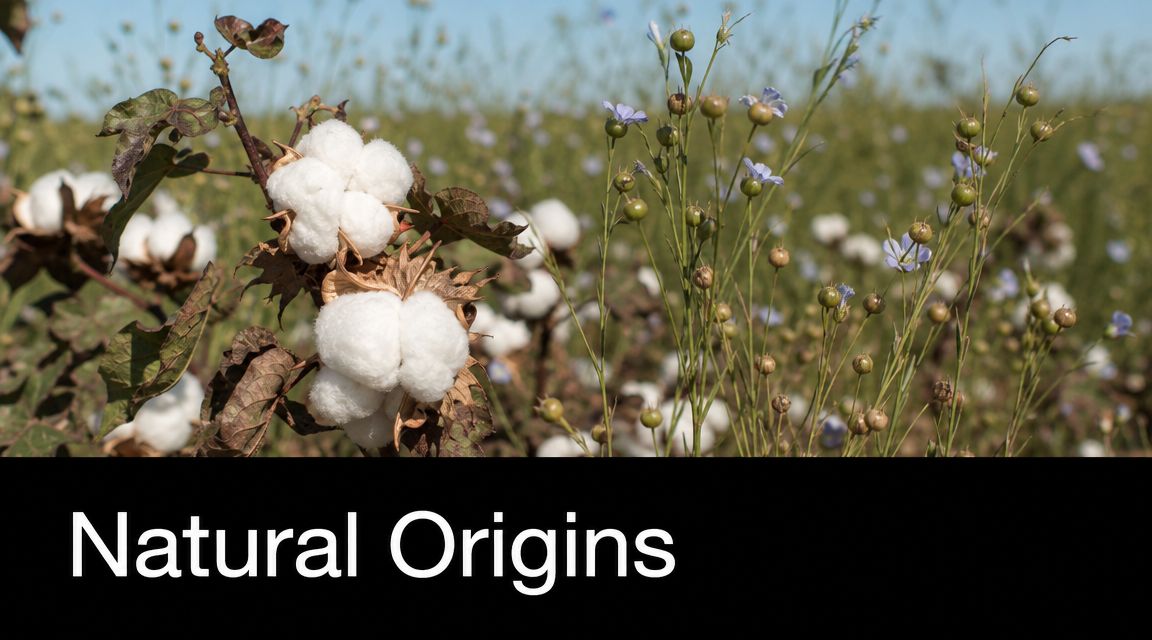
Cotton and linen fabrics begin with two very different plants, and that difference explains most of what you feel in the finished cloth.
Cotton comes from the soft fibres around the seed of the cotton plant. Linen comes from flax, and the useful fibre is taken from the stalk rather than a fluffy boll. That botanical difference matters because it affects fibre length, strength, surface feel, and how the yarn behaves once woven.
Why the fibres feel so different
A useful way to think about it is this. Cotton fibres are more like soft tufts that spin into yarns with a familiar, pliable hand. Linen fibres are more like long structural strands. They produce yarns with more crispness and a firmer, drier touch.
That's why cotton often feels immediately friendly. It bends easily, presses nicely, and suits projects where you want softness or a smoother hand from the start. Linen usually arrives with more personality. It can feel slightly crisp, sometimes slubby, and often more textured in the hand.
That texture isn't a flaw. It's part of linen's appeal. In sewing, it gives a garment presence. Seams can look beautifully defined, topstitching shows well, and simple shapes often look more expensive in linen than they do in a soft, ordinary cotton.
Why history still shapes how we shop
Historically, linen was a staple everyday cloth in Britain until the cotton gin in 1793 and later industrial spinning made cotton cheaper to process, as outlined in this brief history of linen. Cotton became the mass-market all-rounder, while linen kept its reputation for durability, breathability, and a more premium feel.
That background still shows up in the modern sewing room. Cotton is everywhere, in prints, solids, shirtings, quilting fabrics, poplins, lawns, twills, denims and more. Linen still feels a little more considered. People often choose it deliberately for warm-weather clothing, relaxed tailoring, table linens, and garments where texture is part of the design.
A few fibre-level traits show up again and again in practice:
Cotton tends to feel softer earlier and usually folds, gathers, and turns more easily.
Linen tends to feel crisper and can hold a clean edge beautifully when pressed.
Cotton often suits intricate details such as narrow facings, fine bindings, and compact collars.
Linen often suits simpler shapes where the fibre's natural character can do some of the design work.
Linen doesn't need much decoration. A plain cut in a good linen can carry the whole garment.
For a sewist, the fibre story isn't abstract. It tells you why one shirt looks neat and polished, while another looks easy and lived-in. It tells you why one skirt swishes softly and another hangs with a straighter line. That understanding becomes even more useful once you add weave, weight, and drape.
A Guide to Fabric Weave Weight and Drape
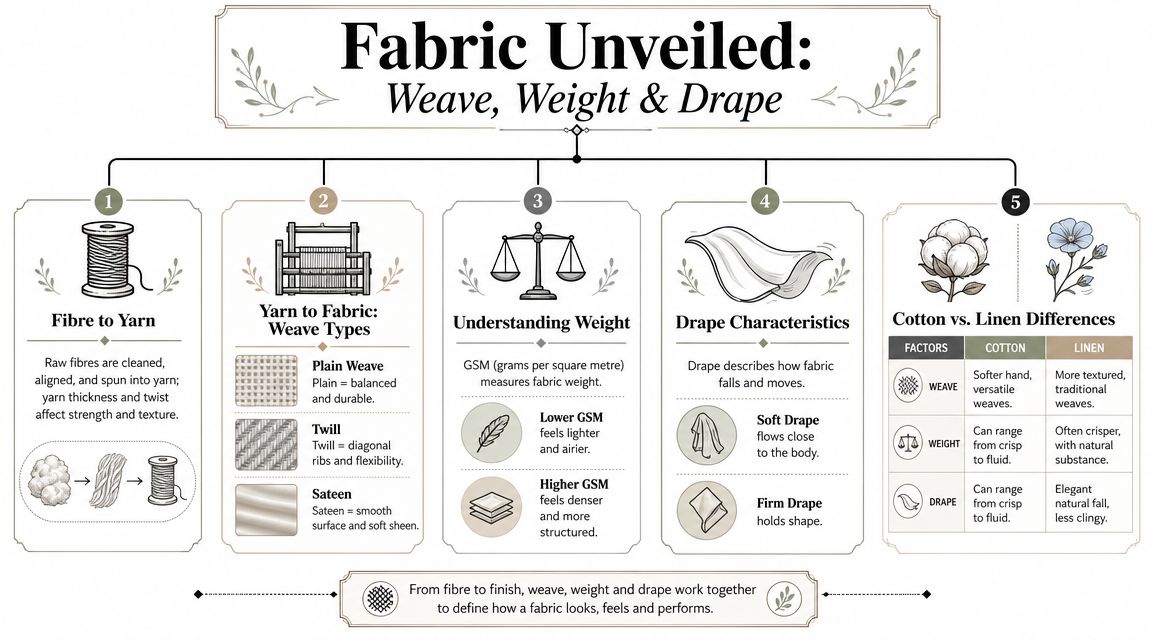
Fibre is only the starting point. The behaviour of cotton and linen fabrics depends just as much on weave, weight, and drape. Two fabrics made from the same fibre can sew and wear like completely different materials.
Weave decides the fabric's character
If you've ever wondered why one cotton works for a blouse and another works for workwear trousers, weave is usually part of the answer.
A plain weave is straightforward and balanced. It often gives you crisp, stable fabrics such as poplin, lawn, chambray, and many linens. These are usually easier to cut accurately and often easier for beginners to control.
A twill weave creates the familiar diagonal line seen in denim, drill, and many trouser fabrics. Twills usually feel stronger, denser, and more forgiving in garments that need structure.
A few practical examples help:
Cotton lawn suits blouses, linings, and soft gathered details.
Cotton poplin works well for shirts, shirt dresses, and projects needing a neat press.
Cotton twill is better for trousers, overshirts, aprons, and skirts with more body.
Linen plain weaves often shine in dresses, tunics, shirts, and relaxed trousers.
Linen chambray can give a softer, slightly more fluid look than a firmer plain linen.
If you enjoy fabric in the home as much as in clothing, the same principles show up in décor. The weave and surface of cotton canvas, for example, affect how clearly images print and how structured the finished piece feels. This guide to stunning wall art from photos is a good example of how fabric construction changes the final result beyond clothing.
Weight tells you what the fabric can hold
In shops, weight may appear as a description rather than a figure. Lightweight, midweight, heavy, airy, substantial. Think of weight as the answer to a simple question: what can this fabric support?
Light fabrics suit gathers, soft sleeves, and warm-weather tops. Midweight fabrics often handle dresses, skirts, and everyday trousers. Heavier fabrics support outer layers, aprons, and more structured garments.
When checking a listing or feeling a swatch, ask yourself:
Will it show every seam allowance? Fine fabrics often do.
Will it bulk at facings and cuffs? Dense cloth can.
Will it collapse without support? Very soft fabrics may need interfacing in key areas.
Will it stand away from the body? Crisp cloth often creates shape even in simple cuts.
Drape decides how the garment moves
Drape is the way fabric falls. Its quality often dictates the success or failure of many project choices.
A dress with tiers, gathers, or a softly tied belt usually wants fabric that moves. A boxy shirt, apron dress, or utility skirt can benefit from more body. If you ignore drape, the garment may fit technically but still feel wrong.
Quick test: Hold a swatch over your hand. If it folds in soft ripples, it has fluid drape. If it forms firmer bends and keeps a straighter line, it has more body.
That's why “cotton” is never enough information. A cotton lawn and a cotton twill won't substitute for one another. The same goes for a floaty linen blend versus a weightier linen with a dry, crisp hand. Once you start shopping by weave, weight, and drape, your success rate improves dramatically.
Cotton Versus Linen A Head to Head Comparison
You can feel the difference at the cutting table before you stitch a single seam. One fabric settles flat, presses obediently, and gives you a fairly clear idea of the finished garment. The other has more surface character, more spring, and often more opinion about how it wants to behave. For a UK home sewist, that matters as much as any broad claim about comfort.
| Characteristic | Cotton | Linen |
|---|---|---|
| Feel in the hand | Usually softer and more familiar | Usually crisper and drier |
| Warm-weather comfort | Comfortable, depends heavily on weave and weight | Airy, breathable, and often quicker to feel dry again |
| Pressing | Often presses neatly and holds detail well | Presses sharply but creases more readily in wear |
| Best look | Clean, tidy, polished or casual depending on weave | Relaxed, textured, airy, quietly elegant |
| Detail work | Excellent for collars, cuffs, plackets, piping | Good, but bulk and fray can need more control |
| Everyday tolerance | Often easier for mixed-season use | Excellent in heat, less ideal if you dislike visible creasing |
Comfort in changing UK weather
British weather rarely gives you one clear season. A shirt may need to cope with a cool morning, a warm train carriage, and a damp walk home. In practice, that is where the cotton versus linen choice becomes more specific.
Linen usually feels cooler and less clingy in muggy weather. Cotton often feels easier across a wider spread of temperatures, especially if you are sewing garments that need to layer well under cardigans, jackets, or knitwear. I often point customers toward linen for loose summer trousers and simple dresses, but toward cotton poplin, chambray, or lawn for shirts they want to wear through more of the year.
The weave still decides a lot. A lightweight cotton lawn can feel far airier than a dense linen canvas. A soft linen handkerchief weight will behave very differently from a heavier suiting linen. Fibre gives you part of the answer. Fabric construction gives you the rest.
For a sleeveless summer dress, linen often earns its place. For a blouse that needs to work under a jumper in April and on its own in August, cotton is often the easier pick.
Handling, softness, and surface character
Cotton tends to feel immediately approachable. It is often smoother under the hand, easier against the skin from day one, and more forgiving in styles with turned collars, narrow facings, and tidy topstitching. That is one reason beginners usually get better early results from cotton shirting, poplin, or lawn than from a loosely woven linen.
Linen brings a different quality. It has texture, slight irregularity, and a dry hand that gives simple garments more presence. A plain boxy top or camp shirt can look more finished in linen because the cloth itself carries some visual interest.
That difference becomes clearer if you compare muslin and linen. Softness is not one fixed trait. Openness of weave, fibre length, finish, and weight all change how the fabric feels and how close it sits to the body.
Durability depends on the cloth, not just the fibre
Linen has a well-earned reputation for strength, especially in garments that are cut with a bit of ease and worn often. It stands up well to repeated washing, and many linen garments improve after use because the fabric softens without going limp.
Cotton is harder to summarise neatly. Cotton twill, denim, needlecord, and canvas can take serious wear. Cotton lawn and double gauze cannot be judged by the same standard. For sewing, that means fibre-only comparisons are too blunt to be very useful.
I usually advise customers to match the project to the exact cloth, not the fibre label. For example:
Cotton poplin suits shirts, pyjama sets, and children's clothes where you want clean seams and easy laundering.
Cotton chambray is good for everyday dresses and tops that need softness without too much floppiness.
Midweight linen works well for pull-on trousers, aprons, overshirts, and relaxed dresses.
Heavier linen blends can be excellent for skirts and jackets, but seam bulk needs checking before you commit to details like patch pockets or bound plackets.
The wrinkle question, in real life
Linen creases. Customers sometimes ask that as if it were a fault to work around. It is really a style choice.
If you like an easy, lived-in look, linen wrinkles often read as part of the garment. If you want a sharp shirt front or a neat fitted bodice that still looks pressed by lunchtime, cotton usually gives fewer surprises. This is particularly relevant in the UK, where many garments need to transition from sitting at a desk to wearing under outer layers and back out into damp air again.
Cotton wrinkles too, especially lighter weaves, but usually in a softer and less insistent way. If visible creasing bothers you, choose cotton first, or choose linen for looser shapes where the creases look natural rather than messy.
Which one is better?
Neither. The better fabric is the one that suits the garment, the season, and your tolerance for pressing, texture, and wear.
Choose cotton if you want crisp detail, easier all-round wear, or a fabric that behaves predictably in shirts, blouses, children's clothes, and many first-time dressmaking projects. Choose linen if you want breathability, texture, and a garment that looks better with a bit of movement and a bit of rumple.
The sustainability question belongs here too, but the practical answer is simple. A garment you sew well, wear often, and keep for years is a better outcome than one bought for a fibre label alone.
Practical Tips for Sewing Cotton and Linen
The best fabric choice can still turn into a frustrating project if you handle it badly on the table. Cotton and linen fabrics aren't difficult, but they do reward slightly different habits.
Prepare the fabric before you cut
Pre-washing matters with both fibres. Don't skip it because the fabric “feels fine” fresh off the bolt. You want any initial movement, softening, or surface change to happen before cutting out your pieces.
For cotton, pre-washing helps reveal whether the fabric will soften, tighten slightly, or lose some finish. For linen, it also tells you how much the handle will relax. A linen that feels a bit board-like can become much friendlier after washing and pressing.
A few workshop habits save trouble:
Press before laying out the pattern so you're cutting the cloth in its true state.
Straighten the grain if needed on fine cottons and looser linens.
Use weights and a rotary cutter if the fabric shifts, especially with softer linen blends.
Mark lightly because some tailor's chalks drag on dry linen surfaces.
Match your tools to the cloth
Needle choice changes the result more than many beginners expect. Fine cotton lawn usually prefers a finer, sharper needle than a textured midweight linen. If the needle is too heavy, delicate cotton can show marks or slightly enlarged holes. If it's too fine for a sturdier linen, you may get skipped stitches or resistance.
Thread choice is simpler. A good all-purpose polyester thread works well for most garment sewing in both fabrics. It's reliable, easy to tension, and practical for everyday wear. If you want visible topstitching on linen, test first. The texture can make decorative stitching look lovely, but uneven thread weight can also exaggerate wobble.
Test topstitching on scraps after pressing, not straight off the machine. Natural fibres change character once heat hits them.
Seam finishes that actually suit the project
Linen often frays more readily than many cottons, so seam finishing deserves thought. French seams look beautiful in lightweight shirts, pyjama sets, and simple dresses. On heavier linen, they can become bulky. In that case, overlocking or a neatly pressed-and-stitched finish may be better.
Cotton gives you more range. Fine cottons can take French seams beautifully. Poplin and shirting can handle clean overlocked seams or even flat-felled seams if you want a classic shirt interior.
A few pairings work especially well:
Fine cotton lawn with French seams for blouses and nightwear.
Cotton poplin with flat-felled or overlocked seams for shirts.
Midweight linen with overlocked seams, bias-bound seams, or pressed open seams where bulk matters.
Linen blends with finishes chosen by fray level, not by fibre label alone.
For a quick, useful small project that lets you practise neat hems, corners, and pressing, this tutorial on how to make a kid's handkerchief is a smart place to build accuracy.
A practical demonstration can help if you want to see handling and stitching in motion:
Pressing is part of the sewing
Linen rewards firm pressing. Cotton often rewards precise pressing. Those sound similar, but they're not the same.
Linen likes steam and a confident hand. Press seams flat first, then open or to one side. Cotton, especially in shirts and dresses with detail, benefits from pressing as you go with a tailor's clapper or point presser if you have one.
If you're sewing for warmer weather, keep the end use in mind while you work. Linen's moisture management and faster drying make it especially useful for garments you'll wear in heat, so don't fight the fibre into a structure it doesn't want. Let it be what it is.
Caring for Your Finished Garments
You finish a shirt on Sunday, wear it on Tuesday, and by Friday it has been through the wash, dried on the line, and reached the ironing board. That is when the fabric choice keeps proving itself. Good care is not an afterthought for cotton and linen. It is part of whether the garment keeps its shape, colour, and comfort after twenty wears instead of five.
As noted earlier, keeping clothes in use for longer matters. For home sewists, that starts with habits that are easy to keep up. Wash gently, press properly, and deal with small repairs while they are still small.
Washing and drying habits
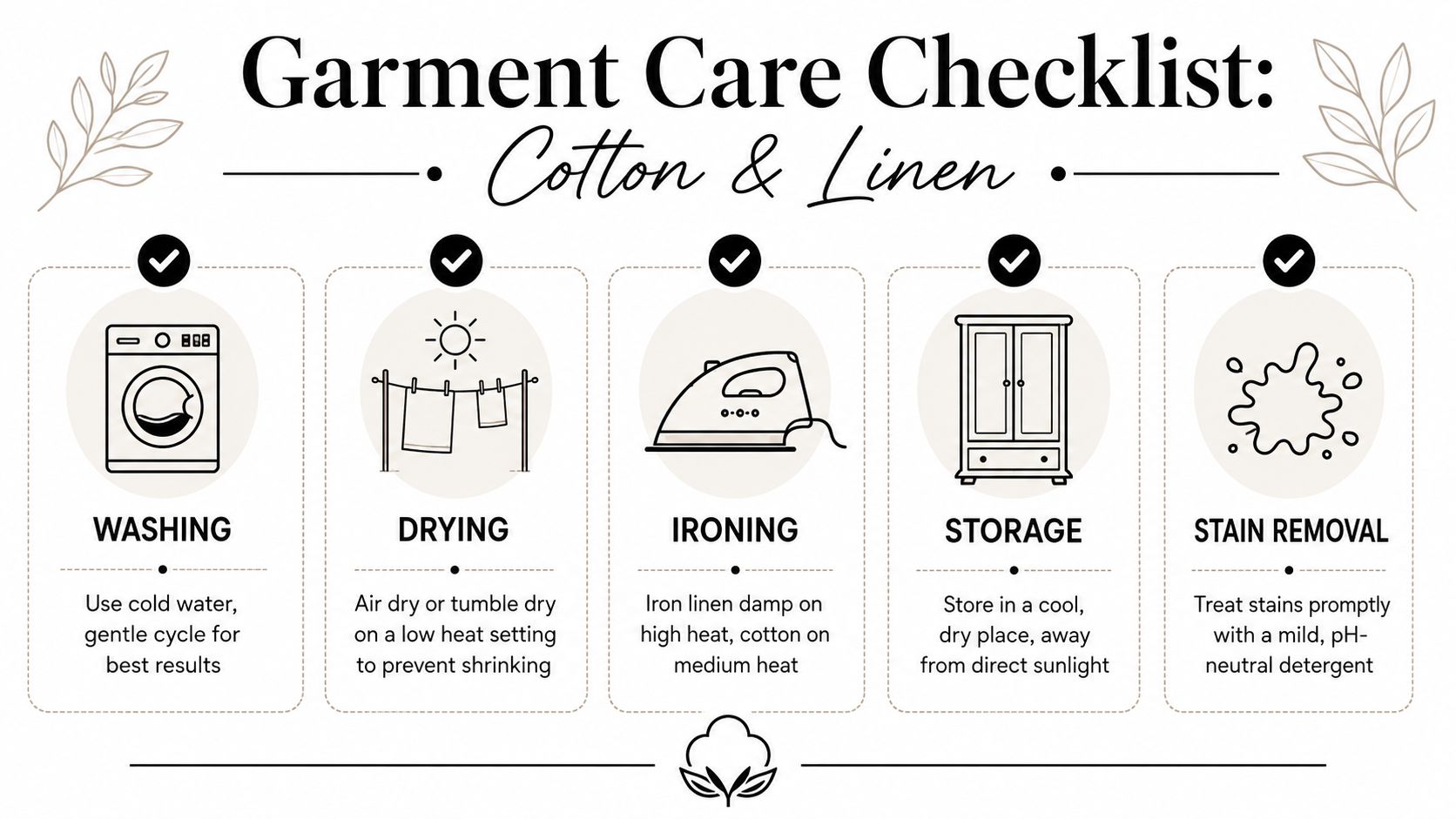
Both fibres prefer a calmer wash than many ready-to-wear garments get. Hot washes, crowded drums, and long tumble drying cycles age fabric quickly. You see it first at the edges. Collars soften too much, seam allowances start to fuzz, and the surface loses that clean finish you worked for at the cutting table.
A practical routine looks like this:
Wash with similar weights so heavy towels or jeans do not twist lighter shirts and dresses out of shape.
Turn printed or darker cottons inside out to reduce surface wear.
Keep the drum loosely filled so creases do not set as hard in the wash.
Use line drying or an airer when you can, especially for linen, which recovers better with a little smoothing by hand.
Skip over-drying. Cotton can feel harsh and linen can set deep creases if you leave either fibre to bake bone dry.
In a UK climate, line drying is rarely the same all year. Summer breezes can leave linen crisp in an hour. A damp autumn day may mean finishing indoors. If you use an airer, give collars, plackets, waistbands, and hems a quick pull back into shape while the garment is still damp. That small step makes pressing easier later.
Ironing and storage
Linen usually presses best with steam while it still holds a trace of moisture. Cotton is more variable. A smooth poplin shirt can take a sharper finish than a brushed cotton pyjama top, and a printed lawn often wants lighter heat and a pressing cloth to protect the surface.
Storage changes how much wear a garment takes between washes. Heavy linen trousers do better folded along their natural crease or hung from the waistband with proper support. Cotton shirts and dresses usually earn their keep on hangers, especially if they have collars, facings, or sleeve heads you do not want crushed.
| Care task | Cotton | Linen |
|---|---|---|
| After washing | Smooth collars, plackets, seams, and hems back into place | Smooth firmly by hand to reduce hard creases before drying |
| Ironing | Good for crisp detail, but check heat on prints and fine weaves | Best with steam, usually while still slightly damp |
| Hanging or folding | Hang shirts and dresses if space allows | Hang relaxed styles or fold carefully to avoid sharp set-in creases |
| Repair approach | Mend early at buttonholes, underarms, and seam strain | Mend early at seat, inner thigh, elbows, and seam stress |
A garment lasts longer when you repair the first loose stitch, not the torn seam six months later.
Treat handmade clothes like favourites
The garments that stay in rotation are usually the ones that get quick, ordinary care. Sew a button back on before it pulls the placket. Restitch a hem before it drags and frays. Add a small patch on the inside of linen trousers when thinning starts, because linen often shows wear at friction points before the whole area fails.
Cotton and linen both reward that kind of attention, but in different ways. Cotton often keeps a tidier appearance with regular pressing. Linen often looks better with wear, provided you stop abrasion and seam stress from getting ahead of you. Care is where a well-chosen fabric keeps paying you back.
Choosing Your Perfect Fabric at More Sewing
When you're ready to buy, don't stop at “cotton” or “linen” in the product title. Filter by the kind of project you're making, then read for behaviour. Look for clues in the description: crisp, washed, airy, structured, fluid, slubby, tightly woven, suitable for shirts, ideal for trousers, good for dresses with gathers.
If you want a soft blouse or lightweight summer top, start with cotton lawn, voile, or a softer linen blend. If you're making a shirt dress or pyjamas, cotton poplin and lighter linen both make sense, but they give very different finishes. For easy trousers and loose dresses, linen often comes into its own. For utility skirts, overshirts, and more sturdy makes, cotton twill or a weightier linen can do excellent work.
Blends deserve close attention. In cotton and linen fabrics, the ratio isn't a minor detail. It changes the way the cloth behaves. A 55% linen and 45% cotton fabric will behave more fluidly and be less crease-prone than 100% linen, while still outperforming pure cotton on breathability in hot-weather garments, according to this guide to recognising and using linen blends. That makes the composition label worth reading every time.
A swatch is often what settles the question. Screen images can show colour, but they can't tell you whether a fabric feels cool and dry, soft and smooth, crisp and papery, or fluid and relaxed. Drape, opacity, surface texture, and density are much easier to judge in the hand.
If you're between two choices, use a short checklist:
What garment am I making?
Do I want crispness or softness?
Will I happily wear visible creases?
Do I need this to work in mixed weather?
Would a blend solve the problem better than a pure fibre?
Those questions usually point to the right fabric faster than any trend or rule of thumb.
If you're choosing between cotton and linen fabrics for your next make, More Sewing is a practical place to start. You can browse quality dressmaking fabrics by type, compare blends and weights, and order swatches so you can check drape, texture, and colour before committing. That extra step makes a big difference, especially when you want the finished garment to become one you wear again and again.
