Guides
Ultimate Guide to Beginner Sewing Kits
You've probably done the same thing most new sewists do. You spot a lovely fabric, save a few project ideas, then realise you've no idea what you need to begin. Do you buy scissors first? Needles? A machine? A kit with everything? And once you've got the tools, what are you meant to make that won't end in a tangled thread nest and a lot of frustration?
That's exactly where beginner sewing kits help. They take the guesswork out of starting. But the best kit isn't the one with the most bits in it. It's the one that matches how you want to sew, what you want to make first, and the fabric you'll enjoy working with.
What's Inside a Beginner Sewing Kit
In the UK, all-in-one sewing kits have become a practical starting point because sewing is a mainstream hobby and new sewists often want a simple way to begin without buying each tool separately. That's why many starter kits bundle the core essentials such as needles, thread, pins, scissors, a measuring tape, and a seam ripper, so you can start straight away rather than building a kit item by item, as noted by Gathered's beginner sewing supplies guide.
The key thing to understand is this. A good starter kit isn't trying to impress you with quantity. It's trying to cover the jobs you'll do over and over: measuring, marking, cutting, pinning, stitching, and correcting mistakes.
The tools you'll use from day one
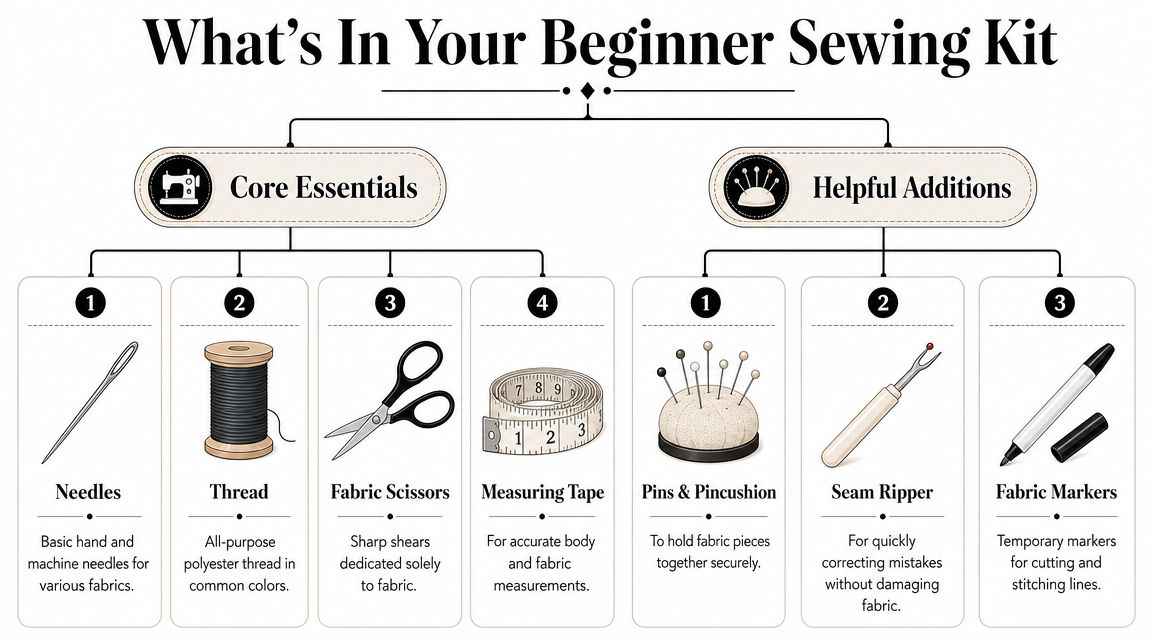
Most beginner sewing kits include some version of these essentials:
- Dressmakers' shears or fabric scissors help you cut clean edges. If your fabric shifts or frays while cutting, the whole project becomes harder. Sharp scissors matter more than most beginners expect.
- Pins hold layers together before stitching. On simple seams, they stop slipping. On curved edges or hems, they keep the shape under control.
- Hand-sewing needles are useful even if you plan to sew by machine. You'll still use them for quick tacking, a hook and eye, or a small repair.
- Thread sounds basic, but a decent all-purpose thread saves a lot of trouble. Cheap thread sheds fluff, snaps more easily, and can make machine stitching less smooth.
- A tape measure is one of the tools beginners reach for constantly. You'll use it for body measurements, checking hems, measuring elastic, and confirming pattern pieces.
- A seam ripper is not a sign that you've failed. It's a normal sewing tool. Everyone uses one.
Practical rule: If a kit gives you better cutting, better measuring, and an easy way to unpick mistakes, it's covering the right ground.
Helpful additions that earn their place
Some tools aren't strictly the first things you need, but they become useful quickly:
- A pincushion or magnetic pin dish keeps pins from vanishing into the sofa.
- A fabric marker or chalk pencil helps you transfer notches, darts, fold lines, and placement marks.
- A seam gauge or small ruler is excellent for hems, seam allowances, and short repeated measurements.
- Bobbins matter if you're sewing by machine and want a smoother start without hunting for compatible ones.
One thing beginners often get wrong is buying lots of specialty tools before learning the basics. You don't need pattern weights, a rotary cutter, or niche rulers to sew your first tote bag or cushion cover well. If your measuring tape is accurate, your scissors are sharp, and your seam ripper is close by, you can do a surprising amount.
What works and what doesn't
What works is a small, sensible kit you can understand. What doesn't is a cluttered set full of gadgets you won't use for months.
A useful beginner kit should feel like a compact workbox. Everything in it should solve a real problem at the table. If you pick up a tool and can't imagine using it on your first project, it can wait.
Finding the Right Type of Kit for You
Not all beginner sewing kits are trying to do the same job. Some are basic tool kits. Some are project kits with fabric and a pattern. Some are ideal for hand sewing on the sofa, while others are meant to sit beside a machine.
That's where beginners often get stuck. They buy a “universal” starter set, then realise half of it doesn't suit what they want to do.
Hand sewing and machine sewing are not the same start
Many beginner guides lump everything together, but the needs are different. A hand-sewing kit can stay very small, focusing on needles, thread, marking tools, pins, and scissors. Machine sewing, on the other hand, doesn't require a feature-heavy machine at the start. One beginner guide notes that a machine with a straight stitch and zig-zag stitch is enough for early projects, while extras like decorative stitches and automatic threaders aren't necessary at first, as discussed in this guide to hand sewing kits and what's needed.
That difference changes what you should buy.
Beginner Sewing Kit Comparison
| Kit Type | Best For | Includes | Good to Know |
|---|---|---|---|
| General haberdashery kit | Someone who wants core tools first | Scissors, needles, thread, pins, tape measure, seam ripper | Good if you're still deciding what to make |
| Hand-sewing starter kit | Mending, simple crafts, sewing away from home | Hand needles, thread, pins, small scissors, marker, ruler | Easy to store and ideal for short projects |
| Machine sewing starter kit | Garments, bags, home sewing | Core tools plus machine needles, bobbins, machine accessories | Keep it lean. You don't need lots of machine features |
| All-in-one garment kit | Someone who wants one clear first make | Fabric, pattern, and often matching notions | Good for avoiding decision fatigue |
| Toy or sampler kit | Learning basic skills in a simple format | Pre-cut pieces, instructions, thread, basic tools | Best if you want quick wins and low pressure |
| Needlecraft-style kit | Decorative handwork rather than dressmaking | Needles, thread, fabric, hoop or project materials | Not always suitable if your goal is garment sewing |
Which type usually suits which beginner
If you want to learn sewing as a practical life skill, start with a haberdashery kit or small hand-sewing set. You can mend, shorten, repair, and practise stitches without committing to a big make.
If you know you want to make clothes, an all-in-one garment kit can be far less overwhelming. You're not just buying tools. You're buying a route from start to finish.
A beginner does better with one clear project than with ten vague possibilities.
If your main aim is using a sewing machine confidently, look for a simple machine setup and a basic tool kit rather than a bundle built around novelty features. Fancy extras won't help if you're still learning seam allowance, threading, and fabric control.
A common buying mistake
Many people buy the biggest kit they can find because it feels safer. In practice, it often means duplicate tools, poor-quality scissors, and confusion about what to use first.
A better approach is to buy for your first three tasks, not your imaginary future sewing room. If those tasks are hemming trousers, making a cushion cover, and trying a tote bag, your kit can stay straightforward.
How to Choose Your First Sewing Kit
The easiest way to choose a kit is to stop asking, “What does a beginner need?” and ask, “What do I want to make first?” The answer narrows everything down very quickly.
A person making pyjama trousers needs a different setup from someone repairing a school uniform hem by hand. A person learning on a machine needs a different kit from someone who just wants a neat little workbox for occasional mending.
Start with the first project
Use this simple filter before you buy:
- Pick your first make
- Decide whether you'll sew by hand or machine
- Choose tools that support that method
- Leave specialist extras for later
If your first make is a tote bag, apron, cushion cover, or simple skirt, a basic machine-friendly kit makes sense. If it's occasional repair work, go smaller and hand-focused.
Check the measuring and cutting tools properly
One technical detail matters more than beginners expect. A good starter kit should fit standard UK sewing practice, which means a tape measure marked in both centimetres and inches, ideally in a 150 cm or 60-inch length, as explained in this beginner sewing kit guide.
That matters because patterns, tutorials, and fabric shops don't all use the same system consistently. If your tape measure only gives you one scale, you'll constantly convert or second-guess yourself.
Also check for these points:
- Separate hand and machine needles because needle choice affects stitch quality and fabric damage risk.
- Fabric-only scissors because cutting paper with them dulls the blades and makes textile cutting noticeably worse.
- A seam gauge or small ruler if you want cleaner hems and more accurate repeat measurements.
The wrong needle often looks like a sewing problem when it's really a tool problem. Skipped stitches and puckering are common signs.
Spend where it makes the biggest difference
If your budget is tight, put more of it into the tools that affect accuracy:
- Scissors
- Tape measure
- Needles
- Seam ripper
You can add clips, pattern weights, and extra notions later. The early wins in sewing usually come from clean cutting and reliable measuring, not from owning more accessories.
There's a useful parallel in other craft hobbies too. If you've ever looked at starter printing kits, you'll have seen the same trade-off between buying everything at once and buying what suits the work you want to do. This breakdown from Raccoon Transfers on screen printing costs is a good example of how method and budget shape the right starter setup.
Three quick buying routes
Here's the short version:
- Choose a basic haberdashery kit if you're curious and want flexibility.
- Choose a project kit if you want one guided first success.
- Choose a hand-sewing kit if your real goal is repairs, travel sewing, or simple making without a machine.
The best beginner sewing kits don't promise everything. They make your first project easier.
Your First Project and Getting Started Checklist
The first project should teach you something useful without punishing every small mistake. That rules out anything slippery, heavily fitted, or full of tricky closures.
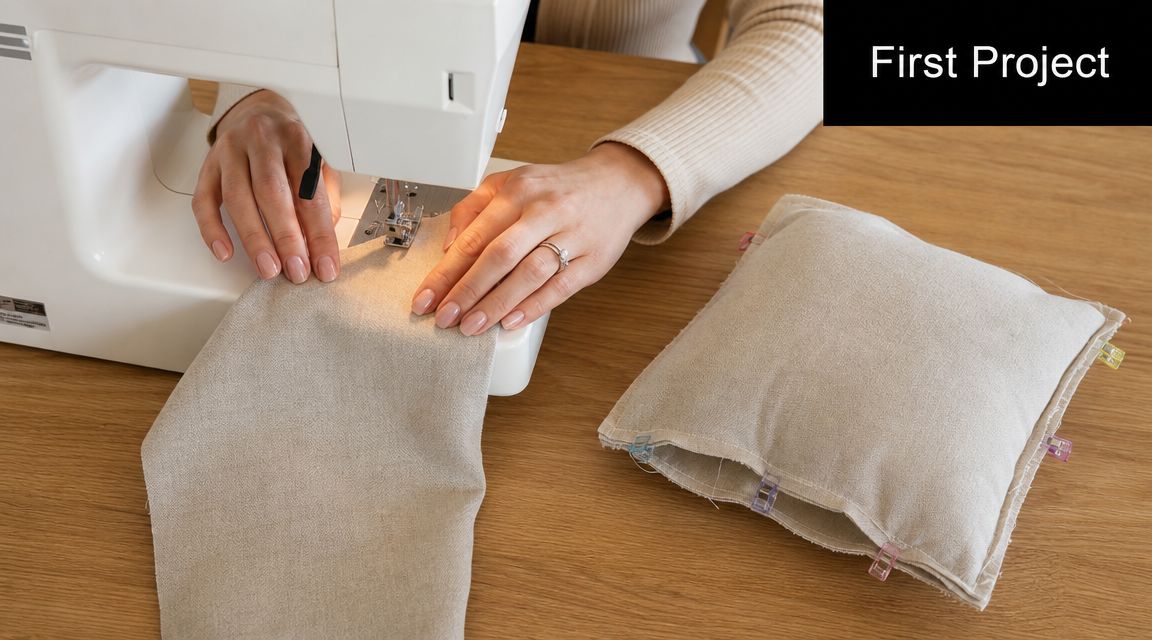
For most beginners, a strong first make is something flat, practical, and forgiving. A cushion cover, tote bag, simple pyjama bottoms, or elastic-waist skirt gives you real sewing practice without too many moving parts.
Good first projects and why they work
A cushion cover teaches straight seams, corner turning, pressing, and simple closure methods.
A tote bag gives you practice with seam allowance, topstitching, handles, and working with medium-weight woven fabric.
Pyjama trousers introduce garment construction without the stress of a fitted bodice or zip.
If you want a soft nursery or gift project later on, it's worth seeing how fabric changes the process. This guide to sewing a minky baby blanket is a useful reminder that plush fabrics behave very differently from crisp cottons, which is why they're usually better once you've done a simpler woven project first.
Getting started checklist
Before you sew a single seam, run through this list:
- Open the kit and identify every tool. Don't leave anything sealed in packaging and hope it makes sense later.
- Wash and dry your fabric if the project calls for it. This helps avoid surprises after the first wash.
- Press the fabric before cutting. Creases distort measurements and pattern placement.
- Read the instructions through once before doing anything irreversible.
- Check the grain and direction if your fabric has a print, nap, or obvious weave.
- Lay out the pieces carefully and pin or hold them steadily before cutting.
- Mark notches and key points with a fabric-safe marker or chalk.
- Thread the machine slowly if you're using one. Rushing machine setup creates half the problems beginners blame on themselves.
- Test on a scrap first before sewing the main pieces together.
- Keep the seam ripper nearby and expect to use it.
Small mistakes at the cutting stage become bigger mistakes at the sewing stage.
A simple way to approach your first session
Break the project into stages rather than trying to “finish it tonight”.
Session one
Prepare fabric, cut accurately, and mark everything.
Session two
Sew the main seams and press as you go.
Session three
Finish edges, hems, straps, elastic, or closure details.
That pace keeps things manageable. It also lets you stop while you still feel positive instead of pushing into tired mistakes.
For a visual walkthrough before your first proper session, this video is a helpful place to settle your nerves and see the basics in action.
What beginners often regret
They choose a project because it looks lovely on social media, not because it matches their current skills.
You'll learn more from a well-made tote bag in stable cotton than from a half-finished satin blouse that spends months in a basket. Early sewing should build confidence and accuracy. Once you've got that, the more ambitious makes become far more enjoyable.
Pairing Your Kit with the Right Fabric
Many beginner sewing kits fall short. They tell you what tools to buy, but not what fabric will help you succeed with those tools.
That gap matters. The same scissors, pins, and machine can feel easy on one fabric and maddening on another. Sewing success for beginners depends heavily on fabric choice, and beginner-friendly advice consistently recommends starting with stable woven fabrics while avoiding slippery or stretchy materials. Solids and small prints are also more forgiving because they make uneven stitching less obvious, as explained in Sabrina Lee's beginner sewist FAQs.
Fabrics that make learning easier
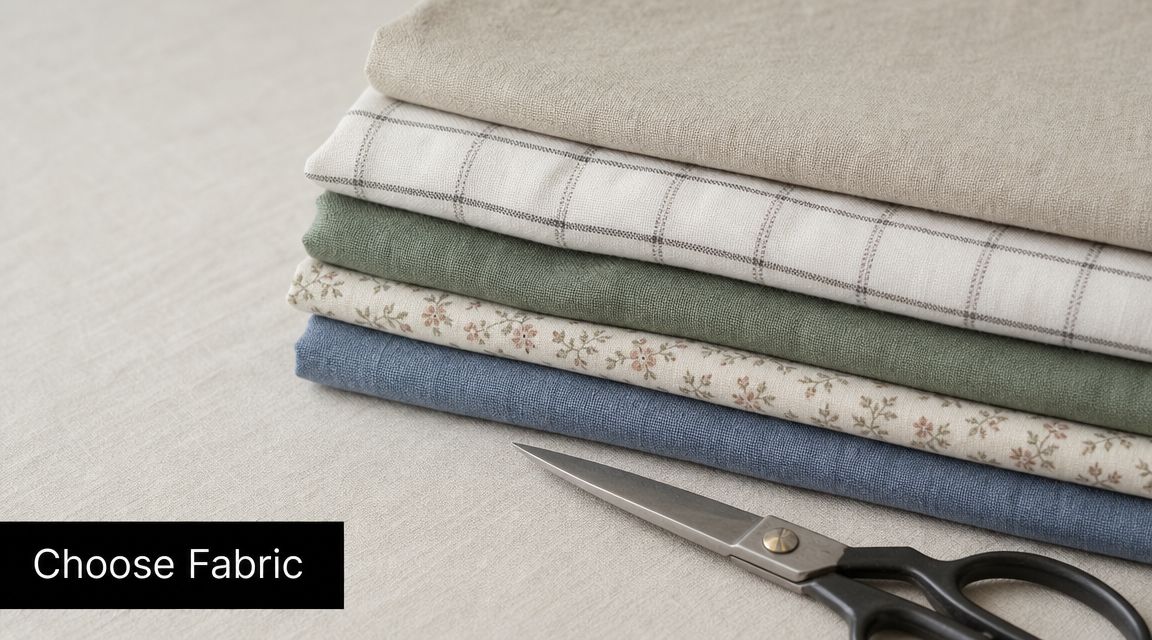
Start with fabrics that hold their shape on the table.
Good early choices include:
- Cotton poplin
- Cotton lawn with a bit of body
- Chambray
- Linen blends that aren't too loose or drapey
- Stable craft cottons for simple bags and home projects
These fabrics are easier to measure, pin, mark, and cut. They don't slither away from the presser foot. They also make it easier to see what your stitching is doing.
Fabrics that can wait
These often frustrate beginners:
- Chiffon and other sheer fabrics
- Slinky viscose
- High-stretch jersey
- Very thick denim or canvas for a first machine project
- Anything shiny and slippery
None of these are “bad” fabrics. They just ask more of your cutting, pinning, pressing, and needle choice. If you're still learning basic seam control, they can make sewing feel harder than it really is.
Choose a fabric that stays where you put it. That one decision solves a lot of beginner problems.
Matching fabric to project
A few practical pairings work especially well:
| Project | Beginner-friendly fabric |
|---|---|
| Tote bag | Cotton canvas, stable cotton, chambray |
| Cushion cover | Cotton poplin, furnishing cotton, linen blend |
| Pyjama bottoms | Soft cotton poplin, brushed cotton, stable woven viscose blend if not too slippery |
| Apron | Cotton drill, chambray, medium-weight linen blend |
| Simple skirt | Poplin, chambray, stable linen blend |
If you're trying to understand fabric behaviour before buying, Spark Blank Textiles' fabric guide is useful background for learning how fabric weight affects feel and use, especially when you're comparing options that look similar in photos.
A note on deadstock and remnants
Many UK beginners are drawn to deadstock and remnant fabrics for good reasons. They can be interesting, sustainable, and full of character. But not every remnant is a smart first buy.
Look for deadstock that still behaves like a stable woven. If the label or listing suggests drape, stretch, slinkiness, or uncertainty about fibre content, pause and ask whether that's what you want for your first project. A bargain length of difficult fabric is only a bargain if you can use it well.
The best pairing is simple. Match a sensible beginner kit with a fabric that cuts cleanly, presses well, and forgives a slightly wonky first seam.
How More Sewing Supports Your Journey
A good sewing start isn't about collecting tools for the sake of it. Historically, the sewing workbox centred on a small set of essentials such as shears, pins, needles, thread, and a tape measure. The modern beginner kit follows that same logic. It works best when it's carefully curated around what you'll genuinely use, as outlined in Moda Fabrics' guide to the basic sewing kit.
That's also the difference between an overwhelming sewing start and a steady one. You don't need a room full of equipment. You need the right tools, the right fabric, and somewhere reliable to turn when you're unsure.
Quality helps beginners more than it helps anyone else
Experienced sewists can often compensate for awkward fabric, blunt tools, or a poor match between project and material. Beginners usually can't yet, and they shouldn't have to.
That's why fabric quality matters. Better cloth is often easier to cut, easier to press, and easier to sew accurately. The same goes for haberdashery. Reliable needles, decent scissors, and well-chosen notions remove a lot of the friction that makes people think they're “bad at sewing” when the underlying issue is poor setup.
Support matters after the purchase
The first sewing hurdle is often small. Which fabric suits this pattern? Is this deadstock too slippery for a beginner? Do I need a different needle? Should I pre-wash this?
Those are the questions that shape whether a first project feels calm or chaotic. Having access to practical help makes a real difference, especially when you're learning at home and trying to build judgement as well as skill.
A sewing shop should make progress easier
What most beginners need from a good shop is straightforward:
- Curated fabrics that are worth sewing with
- Swatches so you can judge texture and weight before committing
- Haberdashery focusing on essential basics
- Project-friendly kits that remove unnecessary decisions
- Machine servicing and repairs when your equipment needs proper care
- Helpful human advice when you hit a sticking point
A shop that offers all of that becomes more than somewhere to buy supplies. It becomes part of how you keep going.
Sewing gets more enjoyable once the basics feel familiar. Then your kit grows naturally. You add tools because you've earned a reason for them, not because a giant starter bundle told you to.
If you're ready to build a sensible sewing setup, explore fabrics, haberdashery, kits, and practical support at More Sewing. We're here to help you choose tools and materials that suit your first real project, not just fill a basket.
