A standard UK fat quarter is approximately 50 cm x 56 cm, or about 19 x 22 inches. It's cut to be broader and more square than a traditional long quarter, which is exactly why sewists find it so useful.
If you're standing in front of a neat stack of folded prints and wondering how big is a fat quarter, you're in very good company. It's one of the most common questions in a fabric shop, especially when you're trying to judge whether one little folded piece will be enough for a pouch, a quilt block, a cushion front, or that idea you've been saving on your phone for weeks.
What catches people out isn't usually the amount of fabric. It's the shape. A fat quarter isn't special because it contains more fabric than another quarter cut. It's special because the width and height are arranged in a way that gives you more practical cutting options.
That one detail changes everything. It affects whether you can cut a decent square, whether a large print fits nicely, whether a directional design ends up sideways, and whether your project feels easy or frustrating from the very first cut.
Your First Foray into Fat Quarters
Walk into any sewing shop and the fat quarters are often the first fabrics that pull you in. They're folded, colour-matched, easy to handle, and far less intimidating than buying a larger cut from the bolt. If you're new to sewing or patchwork, they can feel like the friendliest place to start.
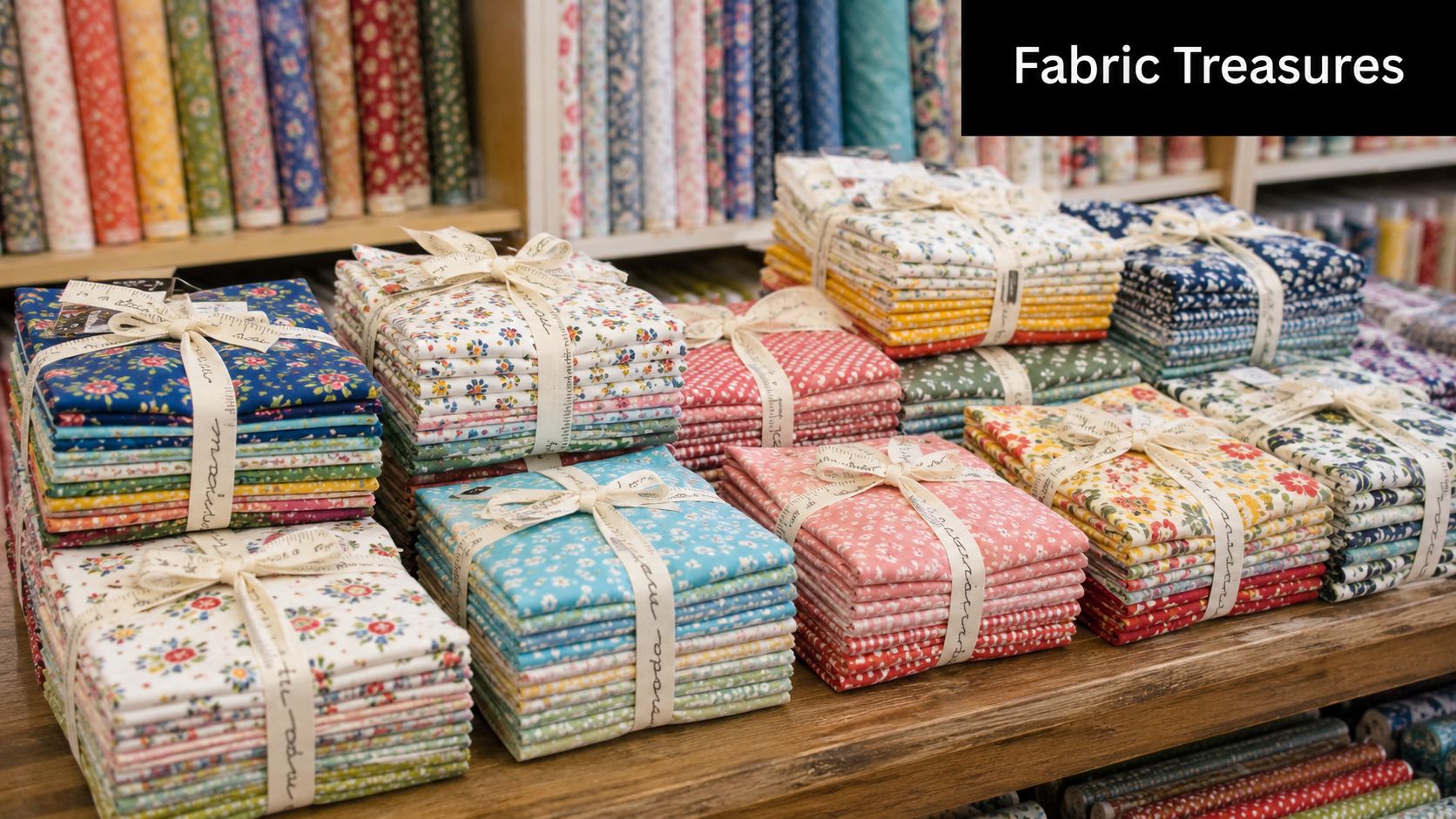
A fat quarter earns its place in a sewing stash because it gives you a manageable piece of fabric with enough width to do something useful. You can test a new colour palette, try a print you love without buying much more than you need, or gather a bundle for patchwork without ending up with loads of leftovers from full metres.
Why beginners love them
For many sewists, fat quarters solve two early problems at once.
- Choice without overwhelm. You can buy several prints for variety instead of committing to one larger cut.
- Enough fabric for small projects. A fat quarter often suits patchwork, appliqué, pockets, facings, small accessories, and toy-making.
- Easy storage. Folded fat quarters sit neatly in drawers, baskets, or on shelves.
- Less fear when cutting. New sewists are often more willing to cut into a smaller piece than a larger, more expensive length.
That last point matters more than people realise. Sewing improves quickly when you stop being afraid to use the fabric.
Practical rule: If your project needs width more than length, a fat quarter is often the smarter buy.
Why experienced sewists keep buying them
Even if you've been sewing for years, fat quarters stay useful. They're handy for contrast panels, linings, patch pockets, scrappy quilting, visible mending details, and those “I just need a bit of something lovely” moments.
They're also excellent for building a stash with intention. Instead of buying random remnants that don't work together, you can collect prints and solids that play nicely in future projects.
The appeal is simple. A fat quarter feels small enough to be approachable, but useful enough to become something finished.
What Exactly Is a Fat Quarter Cut
The easiest way to understand a fat quarter is to stop thinking about the name and start thinking about the cut. It's called a quarter because it uses the same amount of fabric area as a standard quarter cut. It's called fat because the shape is wider and less skinny.
How the cut is made
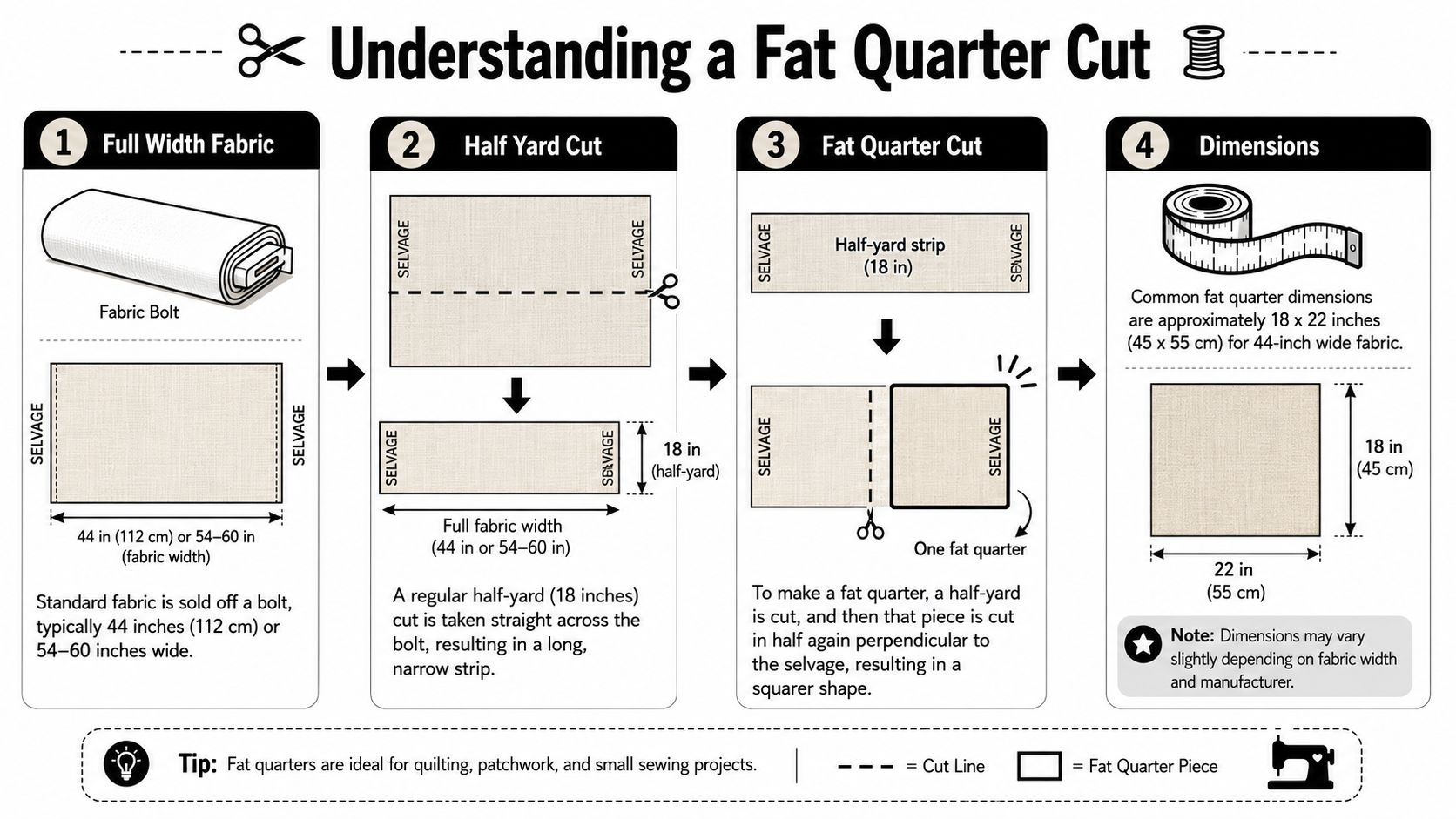
Think of a piece of fabric coming off the bolt. A standard long quarter is cut straight across the width, which gives you a narrow strip. A fat quarter is cut differently so you end up with a shorter, broader rectangle.
A UK sewing guide from The Fabric Fox on understanding fat quarters notes that in UK quilting a fat quarter is typically 50 cm x 56 cm (19 x 22 inches), while a long quarter is about 25 cm x 112 cm. The same guide explains why the shape developed in the first place. It gives patchworkers more useful, squarer pieces from the same amount of fabric.
That's the key idea. Same fabric area, better shape.
Here's a visual explanation if you like to see the cut in action before trying it yourself.
Why the shape matters so much
If you've ever tried cutting quilt pieces from a long, narrow strip, you'll know the problem straight away. You run out of width before you run out of fabric.
A fat quarter gives you more room for:
- Patchwork squares for blocks
- Rectangles for small bags and purse panels
- Appliqué shapes that need turning room
- Fussy cutting around a motif you want to feature
- Pocket pieces for dressmaking and aprons
The value of a fat quarter isn't just in how much fabric you get. It's in how many more useful shapes you can cut from it.
UK and US sizes are close, but not identical
Another point that causes confusion is that UK and US fat quarters are often described as though they're the same. They're close, but not quite. The Fabric Fox guide explains that a UK fat quarter is often slightly larger than a standard US fat quarter, which is typically about 45 cm x 55 cm (18 x 22 inches).
For everyday sewing, that difference may not matter much. For precise cutting, pattern drafting, kits, or repeat projects, it can matter a lot. If you're trying to squeeze out exact pieces, those small differences can decide whether something fits or doesn't.
Comparing Fat Quarters to Other Pre-Cuts
Once you understand the shape, the next useful question is this. When should you choose a fat quarter, and when should you buy something else?
The answer depends on the project. Some jobs need width. Others need a long continuous strip. Some need flexibility more than exact size.
Fabric pre-cut comparison
| Cut Name | Typical UK Dimensions (cm) | Typical UK Dimensions (inches) | Best For |
|---|---|---|---|
| Fat quarter | 50 x 56 | 19 x 22 | Patchwork, appliqué, small bags, cushion fronts, mixed-print projects |
| Long quarter | 25 x 112 | 9 x 44 | Binding, narrow strips, sashing, trims, long continuous pieces |
| Fat eighth | About half a fat quarter | Varies | Tiny projects, appliqué, scrappy piecing, stash building |
| Half metre | Varies by bolt width | Varies by bolt width | Garment details, larger bag pieces, linings, coordinated sets |
Fat quarter versus long quarter
This is the comparison that clears things up fastest. According to Bloomerie Fabrics' guide to pre-cut fabric sizes, a long quarter at roughly 9 x 44 inches and a fat quarter at roughly 18 x 22 inches contain the same total area, about 396 square inches. The fat quarter is about twice as wide and half as long, which makes it more useful for cutting squares, rectangles, and placing motifs.
If you're making a patchwork block, that wider cut is usually what you want. If you're making binding or very long strips, the long quarter can be the better tool.
How to choose in real sewing situations
Use a fat quarter when you want flexibility.
- Quilt blocks. You can cut several smaller shapes without wrestling awkward leftovers.
- Zipped pouches. Front and back panels fit more naturally in a wider piece.
- Tote bag pockets or contrast bases. You need shape, not length.
- Feature prints. A wider cut makes motif placement much easier.
Choose another cut when the project needs continuity.
- Binding and sashing often suit a long quarter better.
- Garment pieces usually need larger, uninterrupted sections.
- Linings for bigger bags may need more depth or length than a single fat quarter offers.
If your pattern asks for strips, think long. If it asks for pieces, think fat quarter.
This is also where good project planning saves money. Many sewists buy fat quarters because they're attractive, then discover the project really needed continuous yardage. The opposite happens too. Someone buys a quarter metre, then struggles because the shape is awkward for the pieces they need.
Inspiring Projects for Your Fat Quarter Stash
A fat quarter really shines when you match it to the right kind of project. Not every sewing idea suits one, but many useful and giftable makes do.
Projects that suit one or two fat quarters
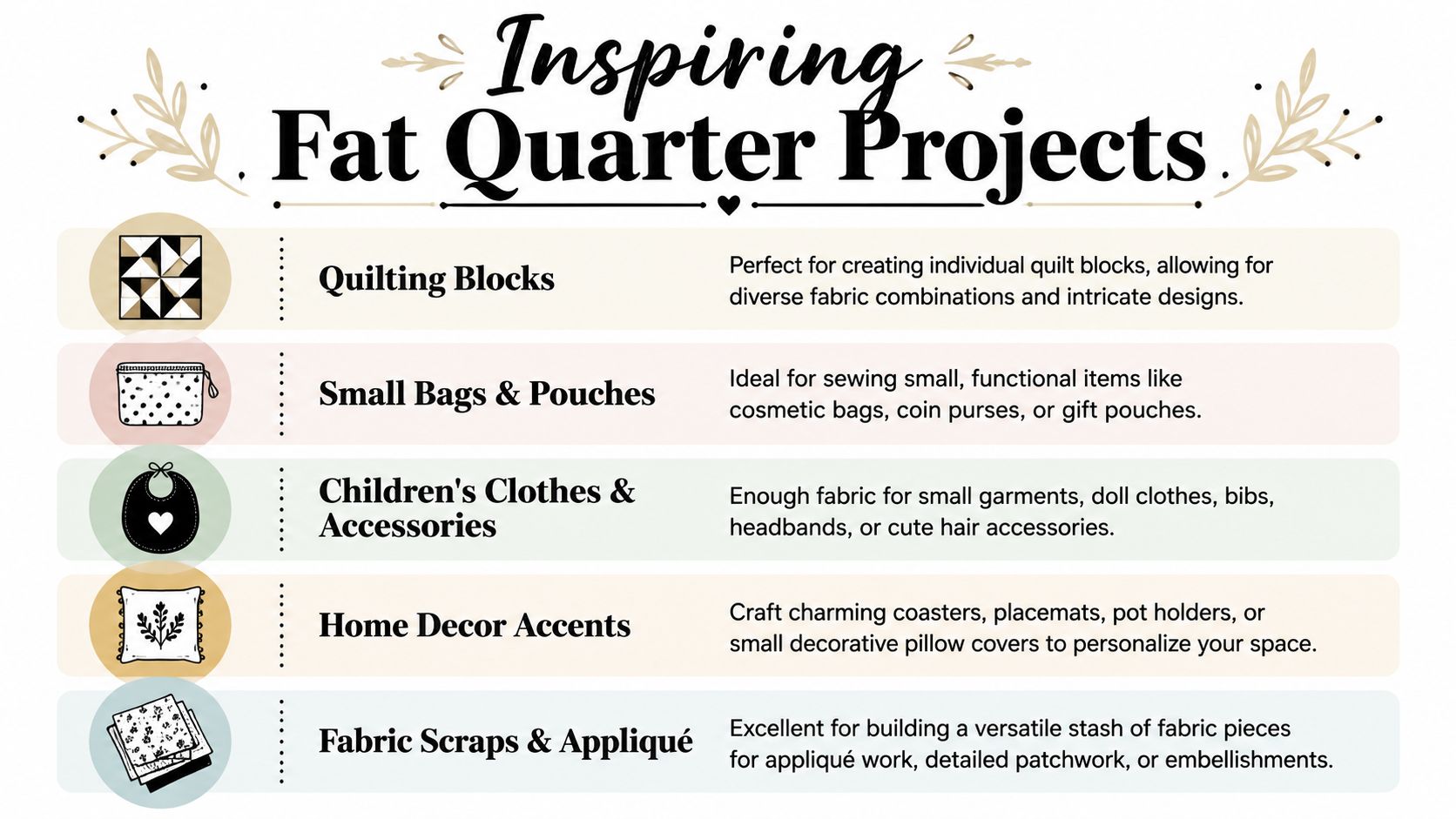
One fat quarter can go a surprisingly long way when the pieces are compact.
- Zipped pouch. Great for practising interfacing, zip insertion, and neat topstitching.
- Patchwork cushion front. Use one print or combine several pieces from your stash.
- Children's bibs or doll clothes. Small pattern pieces make fat quarters ideal.
- Fabric baskets or organisers. Add a sturdy interfacing and you've got a useful desk or sewing-room storage piece.
With two or three fat quarters, your options widen nicely. A lined tote bag, a set of placemats, or a coordinated set of storage pouches all become realistic.
Good techniques to try with fat quarters
Because the pieces are manageable, fat quarters are excellent for learning.
Try them for:
- Fussy cutting when you want a bird, flower, or motif centred neatly
- English paper piecing using smaller, portable shapes
- Appliqué for wall hangings, children's items, or personalised gifts
- Scrappy piecing when you want variety without cutting into larger lengths
- Quilt block practice before committing to a full quilt
Some of the best teaching fabric is a fat quarter. It's enough to learn from, but not so much that a mistake feels disastrous.
If you sell handmade items
Fat quarters are also practical for makers who produce small sewn goods to sell. They let you test combinations, make limited runs, and create variation without investing in large lengths of every print. If you're exploring product ideas for a handmade shop, MerchLoom's Etsy selling insights can help you think through categories that suit smaller sewn items such as accessories and giftable pieces.
That's especially useful if you like working with bundles, leftovers, or one-off fabrics. A fat quarter can become the front panel of a pouch, the feature section of a bag, or the contrast detail that makes a product feel distinctive.
The best stash isn't the biggest one. It's the one you use.
A Smart Sewist's Guide to Buying and Cutting
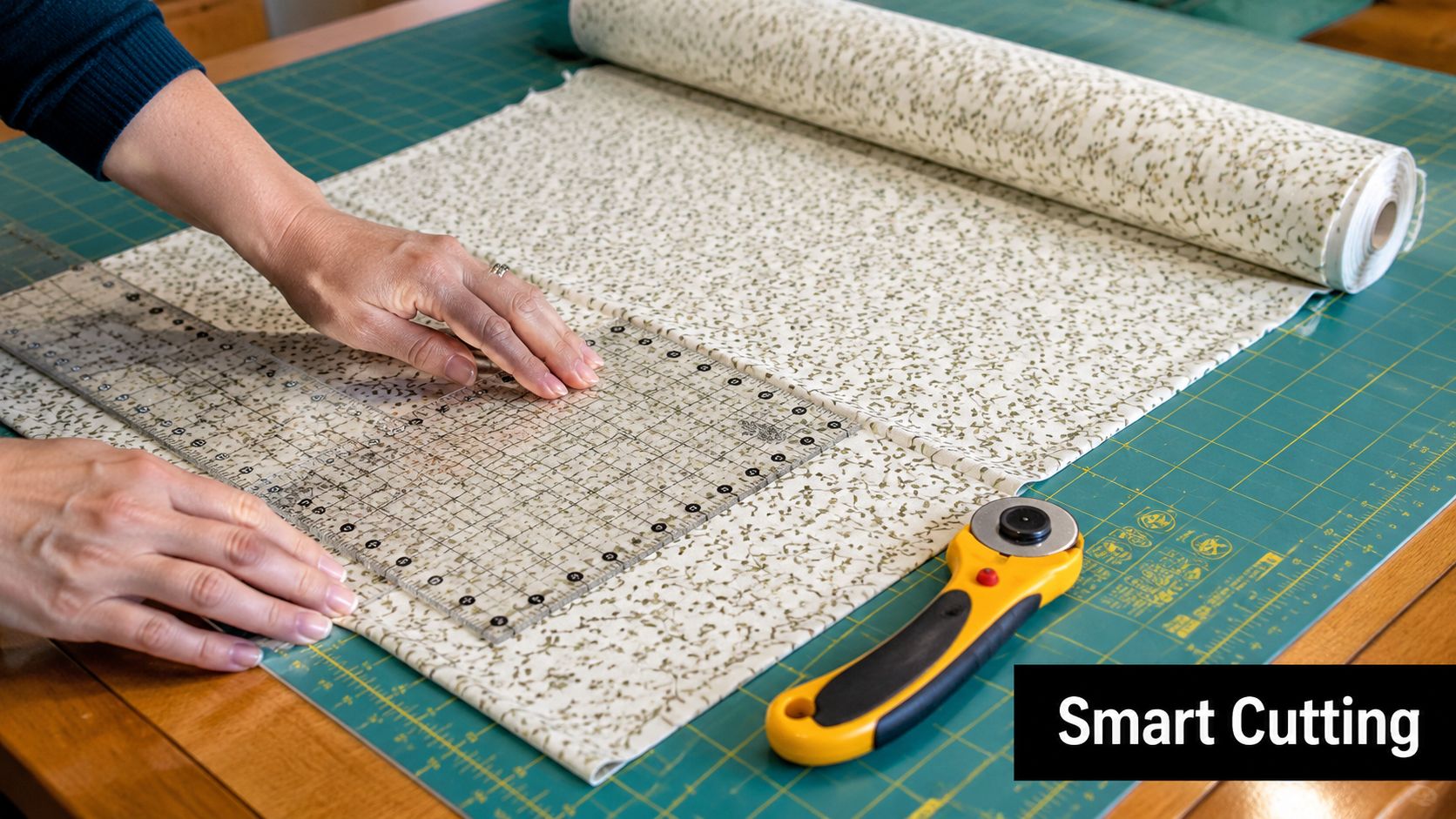
Here's the part many people only learn after a frustrating cutting session. Not every fat quarter finishes at the same size. The width of the original fabric matters.
Always check the bolt width
A guide from Hello Sewing on what affects fat quarter size explains that a fat quarter cut from 44-inch wide quilting cotton will be about 18 x 22 inches, while the same style of cut from a narrower 36-inch fabric gives about 18 x 18 inches. That difference is critical when you're calculating yield.
This matters even more when you buy varied fabrics rather than standard quilting cotton. Deadstock, ex-designer cloth, linen blends, and some dressmaking fabrics can come in different widths, and the final cut can look quite different from the fat quarter you had in mind.
What to ask before you buy
If you're shopping online or buying a mixed bundle, get into the habit of checking a few things first.
- Fabric width. This tells you whether the cut will be roomy or tighter than expected.
- Print direction. Directional prints can end up upside down or sideways if you don't plan your layout.
- Fabric type. Quilting cotton behaves very differently from drapey viscose or loosely woven cloth.
- Project shape. Think about the actual pattern pieces you need, not just the total area.
A fat quarter of stable cotton is a very different creature from a fat quarter of slinky or shifting fabric.
Cutting tips that save fabric
If you want to make every bit count, cut with a plan rather than diving in.
- Press first. Creases steal usable space and distort measurements.
- Square one edge before measuring. A wonky starting edge causes trouble all the way through.
- Cut the largest pieces first. Handles, tabs, and patchwork fillers can come from leftovers.
- Place motifs deliberately. Centre standout prints before cutting backgrounds or linings.
- Keep offcuts sorted by size. Larger leftovers become pockets or facings. Tiny pieces are perfect for appliqué or scrappy blocks.
Buy for shape, not just area. That's the habit that separates a useful stash from a disappointing one.
Bundles are lovely when you want harmony and variety. Single cuts are better when you need one exact print to do one exact job. Neither is more “correct”. The smart choice is the one that matches what you plan to sew.
Frequently Asked Fat Quarter Questions
Do I need to pre-wash fat quarters
It depends on the project and your sewing style. If you're making something that may shrink, bleed, or be washed often, pre-washing can make sense. If you need the fabric crisp for precise patchwork cutting, many sewists prefer to cut first and wash later.
How many fat quarters make a metre
Think carefully here, because this question mixes area with linear measurement. Fat quarters are cut shapes, not merely straight lengths. In practice, sewists usually work from the pattern requirement rather than trying to convert fat quarters into exact metres.
Are fat quarters only for quilting
Not at all. They're popular in quilting because the shape suits blocks so well, but they're also useful for pouches, bunting, patch pockets, toy clothes, fabric baskets, purse linings, appliqué, and small home décor projects.
Can I get a fat quarter in any fabric
You can get fat quarter cuts in many fabrics, but they're most common and most practical in quilting cottons and other stable woven fabrics. With very drapey, slippery, stretchy, or narrow-width fabrics, the cut may be less useful for the kinds of projects people usually associate with fat quarters.
Why does my fat quarter seem smaller than expected
Usually it comes down to fabric width, shrinkage, or trimming. Some fabrics are cut from narrower bolts, and pre-washed fabric can lose a little size and squareness. Always measure before cutting if your project is tight on fabric.
What's the biggest mistake beginners make with fat quarters
They assume every fat quarter is interchangeable. It isn't. The shape, fabric type, print direction, and final dimensions all affect what you can cut successfully.
If you're ready to turn that fat quarter curiosity into an actual project, More Sewing is a handy place to browse quality fabrics, haberdashery, and sewing supplies for both beginners and experienced makers. Whether you're after quilting cotton, dressmaking fabrics, or the practical tools that make cutting easier, it's a dependable UK shop to keep bookmarked.
