
Guides
How to Prevent Fabric from Fraying: A Complete Guide
You cut your pieces neatly, line them up for sewing, and by the time you reach the machine the seam allowances already look furry. A crisp cotton starts shedding threads. A viscose blouse piece seems to unravel if you so much as pick it up. Denim may look sturdy, but the cut edge can still roughen and weaken if you leave it raw too long.
That’s why learning how to prevent fabric from fraying is one of the most useful dressmaking skills you can build early. It isn’t just about tidiness. It affects accuracy, seam strength, washing performance, and whether a project still looks good after a few wears.
The good news is that there isn’t one “best” finish for every fabric. The right choice depends on three things. The fabric itself, what the finished item has to cope with, and the tools you have on hand. A pair of pinking shears may be enough for a simple cotton craft project. A zigzag stitch can make a basic machine work much harder than people expect. For a delicate blouse or hard-wearing jeans, the seam structure often matters more than any quick fix.
Why Stopping Fabric Fraying Matters
You can lose accuracy before the first seam is sewn. Cut a blouse front in viscose, carry it from the cutting table to the iron, and the edge can already start loosening. Do the same with a firm cotton and you may only lose a few threads, but even that can throw off a narrow seam allowance, a notch, or a point that needs to match cleanly.
That is why fraying matters in real sewing, not just in neatness. It changes measurements, weakens seam allowances, and makes pressing, pinning, and stitching less reliable.
What fraying costs in practice
On a washable cotton project such as children’s pyjamas or an apron, loose edges can keep shedding in the wash until the seam finish is doing far more work than it should. On a drapey viscose blouse, the bigger problem often shows up earlier. The cut edge shifts, curls, and drops threads while you are still trying to sew accurately. Denim brings a different challenge again. It looks tough, but a raw edge inside a skirt or overshirt can grow bulky, rough, and worn with repeated friction.
Confidence is part of it too. A project feels much harder when seam allowances keep shrinking and matching points stop lining up.
Practical rule: Stop fraying as early as possible. Once the edge starts breaking down, every later step becomes less precise.
End-use matters just as much as fibre. A cushion cover, a lined bodice, and workwear-style trousers can all be cut from woven fabric, but they do not ask the same thing from a seam finish. One may only need the edge kept tidy during construction. Another needs to survive frequent laundering. Another has to cope with strain at the hip, seat, or armhole. Good results come from choosing for wear, washing, and stress, not from treating every raw edge the same.
A better approach than one default method
A common early habit is to rely on the one finish you already know, whether that is pinking shears, a basic zigzag, or a bottle of fray sealant. That works on some jobs and disappoints on others. Pinking can be perfectly serviceable inside a stable cotton pouch. It is far less convincing on a garment that will be washed every week. A liquid sealant can help in a small, high-risk area such as a buttonhole edge or cut opening, but it is rarely the best-looking answer for long seam allowances. Zigzag stitching is useful on many home machines, though the stitch width and length need to suit the cloth or the edge will still tunnel, ripple, or shed.
The most useful question is not, “What stops fraying?” It is, “What will hold this fabric together for this project, with the tools I have?” If you are sewing by hand, that answer may be a turned edge or a bound seam. With a standard machine, it may be zigzag or an overcast stitch. With a serger, speed and coverage improve, but even then the seam structure still has to suit the garment.
Choose by fabric, by end-use, and by equipment. That is the habit that keeps cottons tidy, viscose manageable, and denim durable.
Quick and Simple Fray Prevention Methods
You cut out a blouse on the dining table, and by the time you reach the second seam, the viscose has already started shedding threads. Or you are making a cotton tote and want the inside kept neat without pulling out the machine for every edge. These are the moments for simple fray-control methods that match both the fabric and the tools on hand.
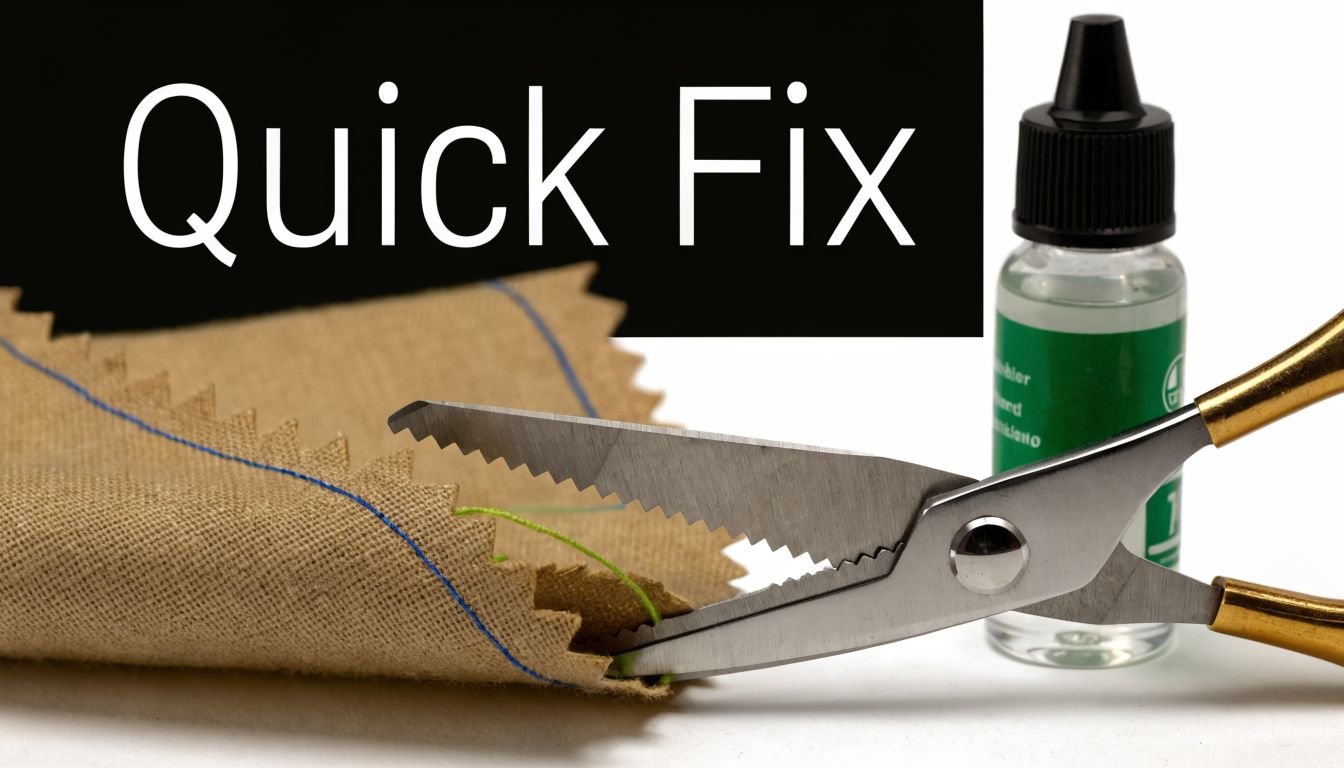
Use pinking shears for stable woven fabrics
Pinking shears are the quickest option for fabrics that are not eager to unravel. They cut a sawtooth edge, which breaks up the thread path and slows fraying better than a straight cut.
They suit stable wovens such as cotton poplin, broadcloth, lighter canvas, and many printed dressmaking cottons. They can also be useful on some denims if the project is casual and the seam is not under constant strain. On a simple apron, a pocket bag, or the inside of an unlined cotton pouch, pinking is often enough.
They work best when:
The fabric has a firm weave: Quilting cotton, shirting cotton, and crisp skirt-weight cotton are good candidates.
The project will not be stressed hard: Facings, pocket edges, children’s craft projects, and home accessories usually cope well.
You need speed and have no machine ready: A clean cut with sharp shears is much faster than stitching each edge.
They are less convincing when:
The fabric is soft or slippery: Viscose, rayon challis, and open weaves can still fray past the points.
The item will be washed often: Repeated laundering gradually softens the edge.
The seam allowance is narrow: There is less room for wear before the edge creeps back.
One workshop rule saves trouble here. Sew the seam first, then pink the seam allowance. If you pink pattern pieces before assembly, curved edges can shift off shape and small pieces become harder to handle accurately.
Try liquid seam sealant for small, high-risk areas
Liquid anti-fray products such as Fray Check are best used in tight, targeted spots where stitching would be awkward or bulky. Buttonholes, clipped corners, the end of a narrow tie, a pocket corner, or a cut opening in fine fabric are all sensible places for it.
This is especially handy if you are sewing without an overlocker, or without a machine at all. A tiny drop can hold a delicate edge together long enough to finish the job neatly. On a drapey viscose facing or a fine lining that wants to feather as soon as it is cut, that bit of control can make construction much easier.
Use it carefully:
Test on a scrap first. Some sealants dry darker, shinier, or stiffer than expected.
Apply a very small amount. The goal is control, not a hard ridge.
Let it dry completely. Pressing too soon can gum up the iron or mark the fabric.
Keep it local. Long seam allowances usually look and feel better with a stitched or structural finish.
A sealant is a precision fix. It is rarely the best answer for every raw edge in a garment.
When these simple methods are enough
Match the method to the job. Pinking shears are often enough for stable cottons in low-stress projects, especially if you are sewing casually and want a tidy finish fast. Liquid sealant earns its place on small problem areas, especially on delicate fabrics or where you cannot get stitching in neatly.
For a cotton shopping bag, pinked seam allowances may hold up perfectly well. For a viscose blouse that will be worn and washed often, these quick methods are better treated as temporary help or spot solutions. For denim, they can work inside pockets or facings, but main seams usually need something stronger.
Choose these methods when the project, the fabric, and your available tools make them sensible. That is how quick finishes stay useful instead of becoming false economy.
Essential Machine Stitches for Clean Edges
You have cut out a viscose blouse, sewn one seam, and the seam allowance is already shedding threads onto the table. That is the point where machine finishing earns its keep. A domestic machine can stop that mess quickly, and if you match the stitch to the fabric, the garment, and the tools you own, the result can be tidy and durable.
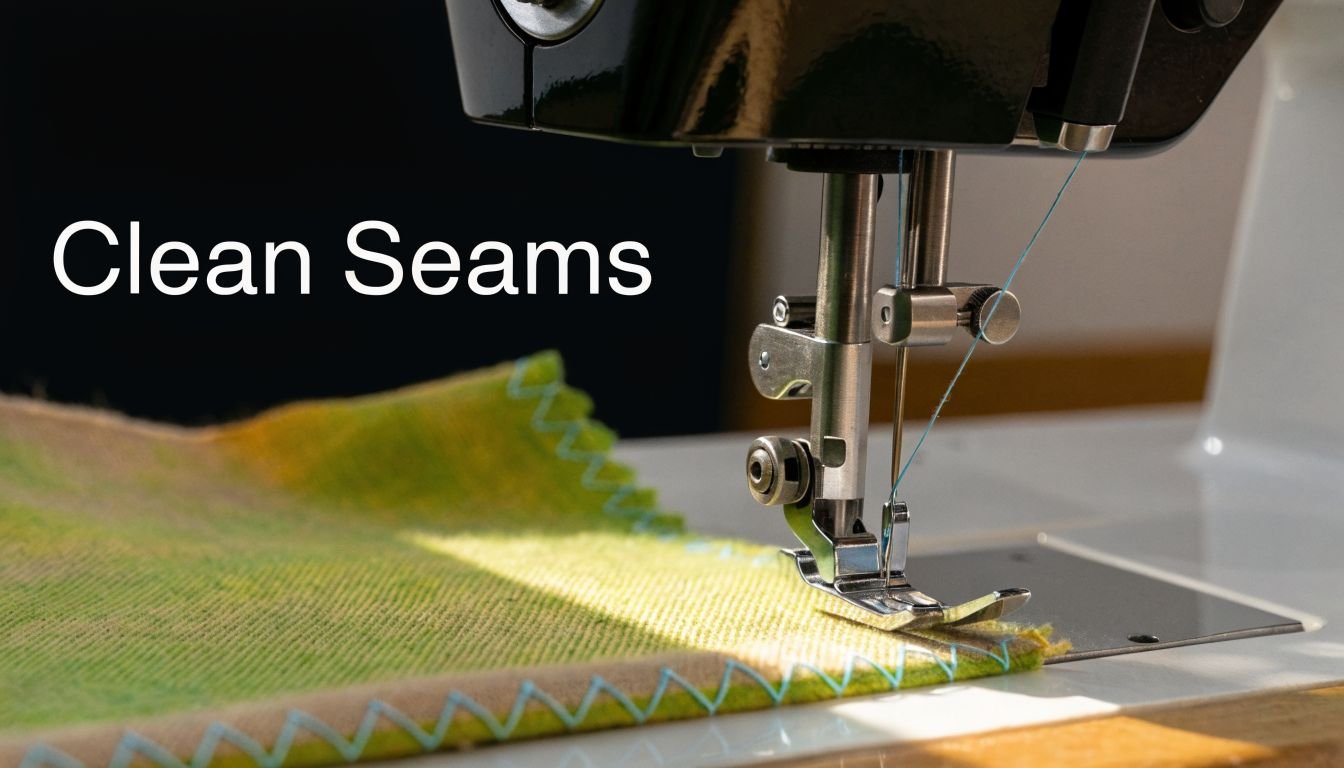
Zigzag stitch for most woven fabrics
A zigzag stitch is the workhorse finish on a standard sewing machine. It suits sewists who do not have a serger, and it handles a wide range of fabrics well, from stable cotton poplin to soft viscose and lighter denims.
The exact setting depends on the cloth and on how the finished item will be used. A blouse in drapey viscose needs a finer, less bulky finish than a utility apron in denim. Start with a medium zigzag, test on a scrap, then adjust from there. If the edge tunnels, shorten the width. If threads are escaping between stitches, widen it slightly or shorten the stitch length.
Two methods are worth keeping in regular use:
Stitch on the cut edge: Best for stable cottons, shirting, linen blends, and projects that do not mind a visible finished seam allowance inside.
Stitch just inside the edge, then trim back: Better for viscose, rayon, and any fabric that puckers or gets pushed into the needle plate when you sew directly on the edge.
That second method is one I use often on slippery fabrics. It gives the feed dogs more fabric to hold, and the trimmed edge usually looks cleaner.
Needle choice matters here. On cotton lawn or viscose challis, a fine sharp needle often gives a neater result than a universal needle. On denim, use a denim needle and avoid making the zigzag too dense, or the seam allowance can turn hard and bulky.
Overcast stitch when you want a neater machine finish
An overcast or overedge stitch is a good step up if your machine offers it. Paired with an overcast foot, it keeps the fabric edge from curling and wraps the threads more evenly than a plain zigzag. It is slower than a serger, but it can look very respectable inside an everyday garment.
This finish suits projects where the inside will show in wear or washing, and where bulk needs watching:
Denim skirts, overshirts, and workwear-inspired pieces where durability matters but thick seam allowances become uncomfortable
Cotton dresses and shirts that get frequent laundering
Simple unlined garments where a neater inside finish makes the whole piece feel better made
If your machine does not have an overcast stitch, try a three-step zigzag on fabric that frays quickly. It spreads the thread across the edge more gently, which can help on soft viscose or loosely woven cottons.
A standard zigzag is often enough. An overcast stitch usually looks cleaner. A serger is faster, but it is not the only route to a reliable finish.
Match the stitch to the project and your tools
Choose with the finished use in mind, not just the fibre content.
For a cotton pyjama set, a simple zigzag on each seam allowance is usually plenty because the fabric is stable and the garment is low stress. For a viscose blouse that will be washed often, use a narrower finish and test whether separate seam allowances behave better than finishing both together. For denim tote bags or children’s clothes, strength matters more than delicacy, so a wider zigzag or overcast stitch is often the better choice.
Tool limits matter too. If you only have a basic machine, get good at zigzag placement and pressing. If you have an overcast foot, use it on fabrics that want to curl or shred. If you also own a serger, save it for long production seams and use the sewing machine where precision matters more, such as curved facings, small armholes, or awkward corners.
A sensible order of work
For most garments, this order gives a cleaner result and avoids chasing loose threads later:
Sew the seam
Press the seam allowance flat to set the stitching
Choose whether to finish the allowances together or separately
Finish the raw edge
Trim loose threads and press again
Finish both allowances together for quick construction on casual skirts, loose shirts, and simple dresses. Finish them separately when the seam needs to press open, especially at centre backs, fitted areas, and places where bulk will show through the right side.
Here’s a visual walkthrough of edge finishing on a standard machine:
Common mistakes with machine edge finishing
The stitch itself is only part of the job. Timing and handling matter just as much.
Do not let seam allowances fray badly before you finish them. On loosely woven viscose or brushed cotton, even a good stitch can end up trapping a ragged edge rather than securing a clean one. Cut accurately, sew promptly, and finish before the edge has a chance to unravel.
Watch bulk as well. Dense zigzag on heavy denim can create a ridge that is harder to press and uncomfortable in wear. On the other hand, a very shallow zigzag on soft viscose may look neat at first and fail after a few washes. Clean edges come from balancing security, softness, and the tools on hand.
Stitch first, then trim close on awkward fabrics. That small change often gives a cleaner finish than changing machines.
Machine stitches sit in a very useful middle ground. They are accessible, reliable, and adaptable, especially when you choose them according to the fabric, the job the garment has to do, and the machine sitting in front of you.
Structural Seam Finishes for Professional Results
A blouse that is meant to skim the body asks for a different seam finish than children’s trousers that will be washed every week. Structural seam finishes work best when you choose them for the fabric, the job the garment has to do, and the tools you have on the table. They build fray protection into the seam itself, which often gives a neater result than finishing raw edges after sewing.
French seams for delicate and sheer fabrics
French seams suit fine woven fabrics that fray quickly and show every detail on the inside. I use them most often on cotton voile, lawn, soft viscose, and light blouse fabrics, especially when the garment sits close to the skin or the fabric is slightly translucent.
The order matters:
Sew wrong sides together with a narrow first seam.
Trim the allowance evenly.
Press the seam flat, then to one side.
Fold so the right sides are together.
Stitch again to enclose the raw edge.
Done well, a French seam feels light, looks tidy, and stops those wispy threads from creeping out after washing. It is a very good choice if you only have a basic sewing machine, because accuracy and pressing matter more here than special equipment.
It does have limits. French seams fight back on tight curves, clipped corners, and thick fabric. In denim, brushed cotton, or any seam that meets a zip, cuff, or waistband, the extra turn of fabric can create a hard lump that never presses properly.
Flat-felled seams for strength and heavy wear
Flat-felled seams are the workhorse option. They are built for garments that need real strength, repeated washing, and a finish that stays flat instead of fluffing up inside.
You’ll see them in jeans, work shirts, utility dresses, overshirts, and children’s clothes because they do three jobs at once. They enclose the raw edges, reinforce the seam, and add visible topstitching that suits casual or workwear styles.
Choose them when:
The seam will take strain, such as inside leg seams, side seams on workwear, and shirt sleeves
The fabric has body, like denim, chambray, drill, twill, and stable cotton
You like the look of topstitching, because the finish becomes part of the design
A flat-felled seam can be sewn on an ordinary machine, but it is easier if you can control the bulk well and press accurately at each stage. On soft viscose or drapey dress fabric, it usually feels too stiff. The seam starts to lead the garment instead of supporting it.
Bound seams for unlined garments
Bound seams are often the right answer when the seam allowances need to stay open and the inside of the garment will be seen. Unlined jackets, dressing gowns, occasionwear, and skirts with movement all benefit from this finish.
Bias binding covers the raw edge cleanly without forcing the seam into a closed tube, which is why it works so well on thicker cloths or shaped seams. It is also one of the best options for a fabric that frays badly but would become bulky in a flat-felled seam.
There is a trade-off. Bound seams take time, and they use extra material. The payoff is a polished interior that still behaves well in wear. On a plain cotton jacket, a printed binding can add character. On wool or denim, a lightweight cotton binding keeps the finish tidy without adding too much stiffness.
If you sew by hand or on a simple machine, bound seams are still within reach. Pre-made binding saves time. Self-cut bias gives a better colour match and often bends around curves more gracefully.
Which structural finish to choose
Use the project first, then the fabric, then your tools.
Choose French seams for light cottons, fine viscose, and semi-sheer fabrics where a soft, discreet inside finish matters.
Choose flat-felled seams for denim, work shirts, children’s wear, and garments that need strength and frequent laundering.
Choose bound seams for unlined pieces, heavily fraying fabrics, and seams that need to press open neatly.
If a sewist owns a serger, that does not automatically make it the best finish. A French seam on a viscose blouse often looks better. A bound seam inside an unlined jacket often wears better. The professional result comes from matching the finish to the garment’s use, the fabric’s behaviour, and the tools you are happy to use accurately.
Choosing the Perfect Fraying Solution
The best finish is the one that suits the fabric, the life of the garment, and the machine you own. A fast answer that’s “good enough” for a craft cotton isn’t always right for a washed-to-death pair of trousers or a delicate blouse seam.
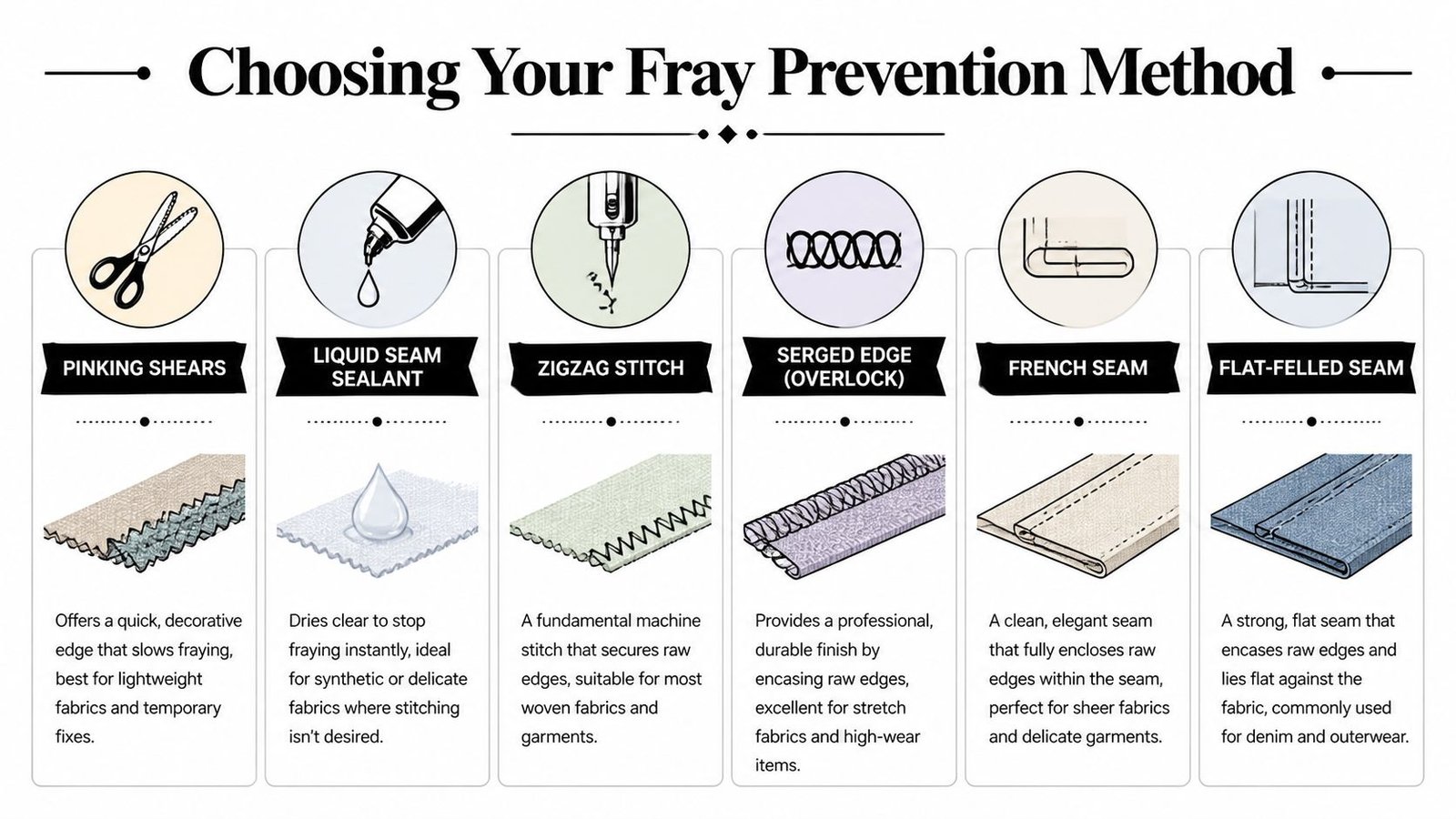
Questions to ask before you choose
Run through these points before finishing the first seam:
How much washing will it get
Pyjamas, children’s clothes and everyday skirts need stronger finishes than an occasional blouse.Will the inside be visible
Unlined jackets, wrap garments and garments that drape open benefit from prettier seam finishes.Does the fabric want to drape or hold shape
Viscose and Tencel often prefer lighter finishes. Denim and canvas can handle more structure.What tools do you have today
The best method is useless if it depends on equipment you don’t own or don’t enjoy using.
Fray Prevention Method by Fabric Type
| Method | Best For Fabrics Like… | Pros | Cons |
|---|---|---|---|
| Pinking shears | Stable cottons, light canvas, simple craft wovens | Fast, low-cost, no machine needed | Not strong enough for heavy washing or loose weaves |
| Liquid seam sealant | Delicate spots on viscose, linings, buttonholes, corners | Precise, useful where stitching is awkward | Can dry stiff or show on some fabrics |
| Zigzag stitch | Cotton poplin, Tencel blends, general woven dress fabrics | Versatile, accessible, durable enough for many garments | Can pucker or look untidy if poorly set |
| Overcast stitch | Denim, stable jersey, everyday garments | Neater than a basic zigzag, good on domestic machines | Slower than a serger, still visible inside |
| French seam | Sheer fabrics, fine cottons, lightweight viscose | Elegant, enclosed, comfortable against skin | Unsuitable for bulky fabrics and some tight curves |
| Flat-felled seam | Denim, workwear cotton, children’s wear | Strong, enclosed, excellent for heavy use | Adds bulk and takes more time |
| Bound seam | Unlined jackets, robes, special garments | Beautiful interior, good for open seams | Slowest option and uses extra materials |
| Serged edge | Jersey, woven garments in production sewing | Fast and tidy, excellent for repeat sewing | Requires a serger and careful setup |
A simple matching guide
If you’re sewing with no machine, start with pinking shears or a targeted sealant. If you have a basic domestic machine, zigzag and overcast will cover most everyday needs. If the garment deserves a more polished interior, switch from edge finishing to a structural seam such as a French or bound seam.
The key is not chasing the fanciest method. It’s choosing the finish that your fabric, project and tools can all support.
Troubleshooting Common Fraying Issues
Even the right method can misbehave if the setup is off. Most fraying problems come down to timing, tension, bulk, or using a finish that doesn’t suit the cloth.
When the zigzag tunnels or puckers
This happens often on lightweight viscose, soft Tencel, and fine cottons. The stitch pulls the fabric into a ridge instead of sitting flat.
Try this:
Use a finer needle: A smaller, sharper needle usually pierces cleanly with less drag.
Test on a scrap first: Reduce width or length slightly if the edge feels stiff.
Stitch just inside the edge: Then trim close after sewing, rather than letting the needle swing off the cloth.
Support the fabric: A tear-away stabiliser can help on very soft fabric.
When fabric still sheds after finishing
Sometimes the finish is sound, but the edge was already too far gone before you stitched it. On very fray-prone fabrics, it helps to work in a tighter sequence. Cut, stay organised, and finish the seam allowance soon after construction.
If you’re using a serger and still seeing whiskery threads, check the knife, thread path and fabric feeding. A blunt blade or poor threading can leave the edge partly trimmed rather than properly enclosed.
Don’t judge a finish only by how it looks straight off the machine. Press it, trim loose threads, and then decide.
When the finish feels too bulky
This often shows up at side seams, underarms and hems on denim or layered cotton projects. In that case, use different finishes in different parts of the same garment. Flat-fell the major seams, but use a simpler overcast finish where several layers meet. There’s no rule saying one garment must use only one seam finish.
The cleanest sewing often comes from flexibility. A blouse might use French seams at the side seams, a narrow turned hem at the sleeve, and a tiny spot of sealant at a buttonhole. That mix is often smarter than forcing one technique everywhere.
More Sewing is a practical place to start if you need quality cottons, viscose, Tencel blends, denim, haberdashery or an easy-ready dressmaking kit for your next project. You can browse fabrics and sewing essentials at More Sewing, and Worthing locals can also make use of their sewing machine servicing and repairs to keep everyday tools stitching cleanly.
