
Guides
Quilting Cotton Fabric: A UK Sewist’s Complete Guide
You’re standing in front of a shelf of fabric, or scrolling through pages of prints online, and one category keeps calling to you. Florals, geometrics, tiny ditsy patterns, bold modern designs. It all looks lovely. Then the practical question lands. Is quilting cotton fabric right for what you want to make?
That hesitation is completely normal. Quilting cotton is one of the most familiar fabrics in sewing, but it’s also one of the most misunderstood. Many beginners assume it’s only for quilts. Many dressmakers buy it because they love the print, then feel disappointed when the finished garment hangs differently from what they expected. And plenty of confident sewists still wonder why one quilting cotton feels crisp and cooperative while another feels papery, soft, or awkward under the needle.
The good news is that quilting cotton is far easier to understand once you connect the technical facts to the way it feels in your hands. That’s where confidence starts. Not with jargon, but with knowing why the fabric cuts neatly, why it presses well, why it can hold a boxy shape, and why some projects suit it better than others.
Your Guide to a Sewing Staple
A customer choosing quilting cotton fabric often starts in exactly the same way. She spots a print she loves, imagines it as a skirt, a child’s pinafore, a tote bag, or a quilt backing, and then pauses because she’s not sure how the fabric will behave once she gets it home.
That pause matters. Quilting cotton is forgiving in many ways, but it still has a personality. It isn’t floaty like a blouse fabric. It isn’t heavy like bag canvas. It sits in a very useful middle ground, and that’s why so many home sewists keep coming back to it.
What makes it such a staple is its balance. It’s stable enough for accurate cutting and piecing, but still soft enough to become comfortable with washing and wear. It can handle careful patchwork, simple home décor, and a surprising range of structured garments.
Quilting cotton rewards neat sewing. If you mark, cut, press, and stitch carefully, it usually gives that care straight back to you.
For beginners, that stability is reassuring. If you’ve ever tried to cut a slippery fabric and watched it shift off grain the moment you touched it, quilting cotton can feel like a relief. For experienced sewists, it offers control. Crisp corners, clean topstitching, tidy pleats, and reliable pressing all become easier.
A lot of the confusion disappears once you stop thinking of quilting cotton fabric as a category of prints and start thinking of it as a workhorse woven cotton with a specific handle. Its feel, structure, and finish tell you what it wants to become. When you learn to read that, fabric shopping gets much simpler and much more enjoyable.
Decoding Quilting Cotton Fabric
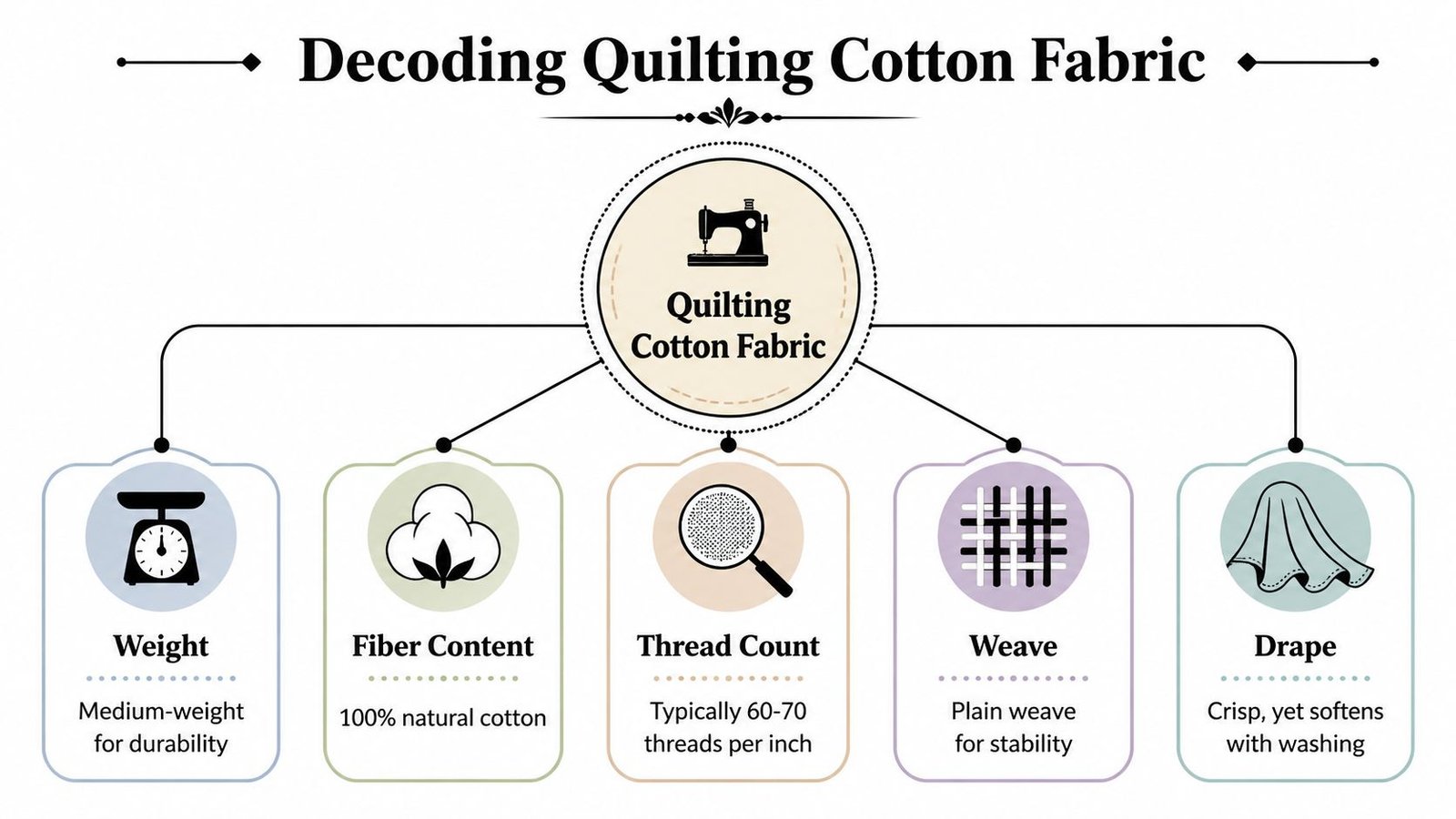
Quilting cotton starts to make sense the moment you handle it. Hold a length over your arm and you will usually see a soft fold with a bit of body, not a liquid drape. Scrunch a corner in your hand and it tends to spring back with some shape still left in it. Under the needle, that feel matters just as much as the label on the bolt.
The weave that gives it control
Most quilting cotton is 100% cotton woven in a tight plain weave. Fabric Fabric describes it as a fabric with a 68-120 thread count per square inch, a typical weight of 120-135 gsm, strong yarn support, low stretch, and around 3-5% shrinkage before washing in its guide to what quilting cotton is and how it is constructed.
A plain weave is the familiar over-under structure. Simple, but very useful. Because the threads cross in an even grid, the cloth tends to stay square and behave predictably. This is the primary reason patchworkers like it. Your cut pieces keep their shape more readily, corners match more neatly, and seams are less likely to wander off grain.
You can feel that structure with your fingers. The surface is usually smooth rather than heavily textured, and the fabric has a gentle crispness that helps it feed evenly through the machine. If you are sewing accurate seams, pressing small hems, or matching stripes and prints, that stability feels like having a bit of quiet cooperation from the fabric.
What weight and thread count mean in real sewing
Technical terms are only useful if they explain behaviour.
With quilting cotton, GSM tells you how much body the fabric has, while thread count gives you clues about density and surface feel. A medium-weight quilting cotton often feels substantial enough to cut cleanly and press sharply, but not so thick that ordinary seams become clumsy. That balance is why it works for so many projects around the home sewing table.
Here is a practical way to read it. If the cloth holds a finger-pressed crease for a moment, forms tidy pleats without fighting you, and does not slide all over the cutting mat, you are dealing with the stable handle quilting cotton is known for. If you gather it, the fullness tends to look rounded and structured. If you topstitch it, the stitches usually sit visibly on the surface instead of sinking in.
That same handle also explains a few limits. A dress made in quilting cotton can look charming if the design suits a fabric with shape, such as a shirt dress, pinafore, simple skirt, or child’s sundress. The same fabric can feel too crisp for a blouse meant to skim and drape softly. The cloth is telling you what it wants to do.
Useful test: Fold a corner of quilting cotton over itself. Good quilting cotton usually makes a clean fold line and stays easy to control without feeling stiff or papery.
Another point that often confuses newer sewists is softness. Quilting cotton does soften with washing, but it rarely turns into a floaty fabric. A good comparison is a freshly ironed cotton pillowcase. It can become more comfortable and supple over time while still keeping a clear, woven structure.
Why the handle matters so much
Many fabric guides stop at fibre content and weight. For sewing, the handle is what joins those facts together.
A tight plain weave and medium weight give quilting cotton its familiar personality. It cuts with accuracy, presses well, accepts quilting lines and topstitching cleanly, and holds shape in finished pieces. That is why it suits patchwork, craft sewing, children’s clothes, aprons, simple skirts, cushion covers, and linings for more structured projects.
Once you learn to recognise that feel, fabric shopping gets easier. You are no longer choosing only by print. You are choosing by how the cloth will behave in your hands, under your presser foot, and after a few trips through the wash.
Quilting Cotton Versus Other Cottons
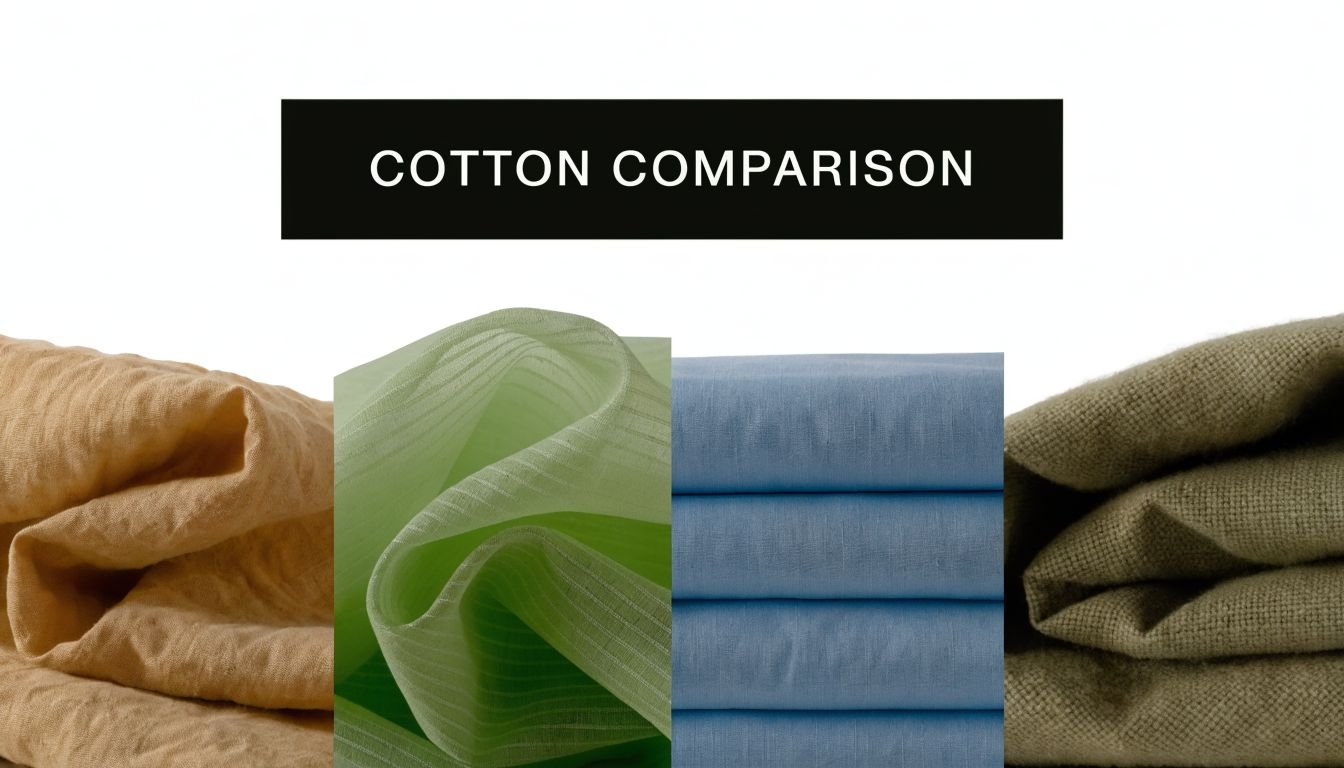
The easiest way to avoid choosing the wrong fabric is to compare it with the cottons it’s most often mistaken for. Quilting cotton, lawn, poplin, and canvas can all sit under the broad “cotton” umbrella, but they don’t behave the same way once you cut into them.
A common sewing disappointment goes like this. Someone buys a print they adore, sews a blouse pattern meant for a softer fabric, and ends up with sleeves that stick out and a bodice that feels stiff. The sewing may be perfectly good. The issue is fabric choice.
How they differ in real use
Quilting cotton has a crisp, stable handle. Cotton lawn feels lighter, finer, and more fluid. Poplin often sits somewhere between garment cotton and craft cotton, with a smooth, polished surface. Canvas is the sturdy option that steps in when you want firmness and strength more than softness.
Here’s a practical side-by-side view.
| Fabric Type | Weight (GSM) | Weave | Drape & Feel | Best For |
|---|---|---|---|---|
| Quilting cotton | 120-135 | Tight plain weave | Crisp, stable, smooth, softens with washing | Quilts, patchwork, aprons, children’s clothes, simple skirts, home décor |
| Cotton lawn | Lighter than quilting cotton | Fine plain weave | Soft, silky, fluid, more delicate to handle | Blouses, linings, summer tops, soft gathered garments |
| Poplin | Varies | Woven cotton, often smooth and compact | Crisp but often sleeker and less “crafty” in feel | Shirts, dresses, skirts, some home projects |
| Canvas | Heavier than quilting cotton | Strong woven structure | Firm, robust, often quite stiff | Bags, covers, storage baskets, upholstery-style projects |
When quilting cotton is the better choice
Choose quilting cotton fabric when you want control. It’s particularly good for projects that need accurate cutting, matching seams, clear pressing lines, and a shape that holds.
It suits:
Patchwork blocks because the fabric doesn’t shift too easily.
A-line skirts because the fabric gives the silhouette some body.
Aprons and pinafores because it stands up to regular use.
Cushion covers because corners and edges look neat.
Simple tote bags because it’s easy to interface and topstitch.
If you like very crisp pleats, visible topstitching, or a project where print is the star, quilting cotton often makes life easier.
When another cotton may suit you better
There are times when quilting cotton is not the best answer. If you want a blouse that skims and drapes close to the body, lawn usually behaves more gracefully. If you’re making a shirt dress and want something tidy but a little finer, poplin can be a good fit. If the item needs to carry weight, stand upright, or take hard wear, canvas makes more sense.
A good question in the fabric shop is this. Do I want this project to hold its shape, or flow around the body? Quilting cotton is usually on the shape-holding side.
A quick decision guide
Use quilting cotton if your priority is:
Print clarity
Easy cutting
Beginner-friendly handling
Neat pressing
Light structure
Look elsewhere if your priority is:
Fluid drape
A silky finish
A very soft blouse weight
Heavy-duty bag strength
That comparison alone solves a lot of project frustration. Most sewing mishaps blamed on “bad fabric” are really about choosing a fabric with the wrong handle for the pattern.
Inspiring Projects and Print Selection
You spot a quilting cotton print you love, take it home for a dress, and then wonder why the finished piece feels a little more crisp than you expected. That usually comes down to handle. Quilting cotton has enough body to hold a shape, keep a pocket edge tidy, and show off print clearly, so the best projects are the ones that benefit from that slightly paper-like control under the needle and after pressing.
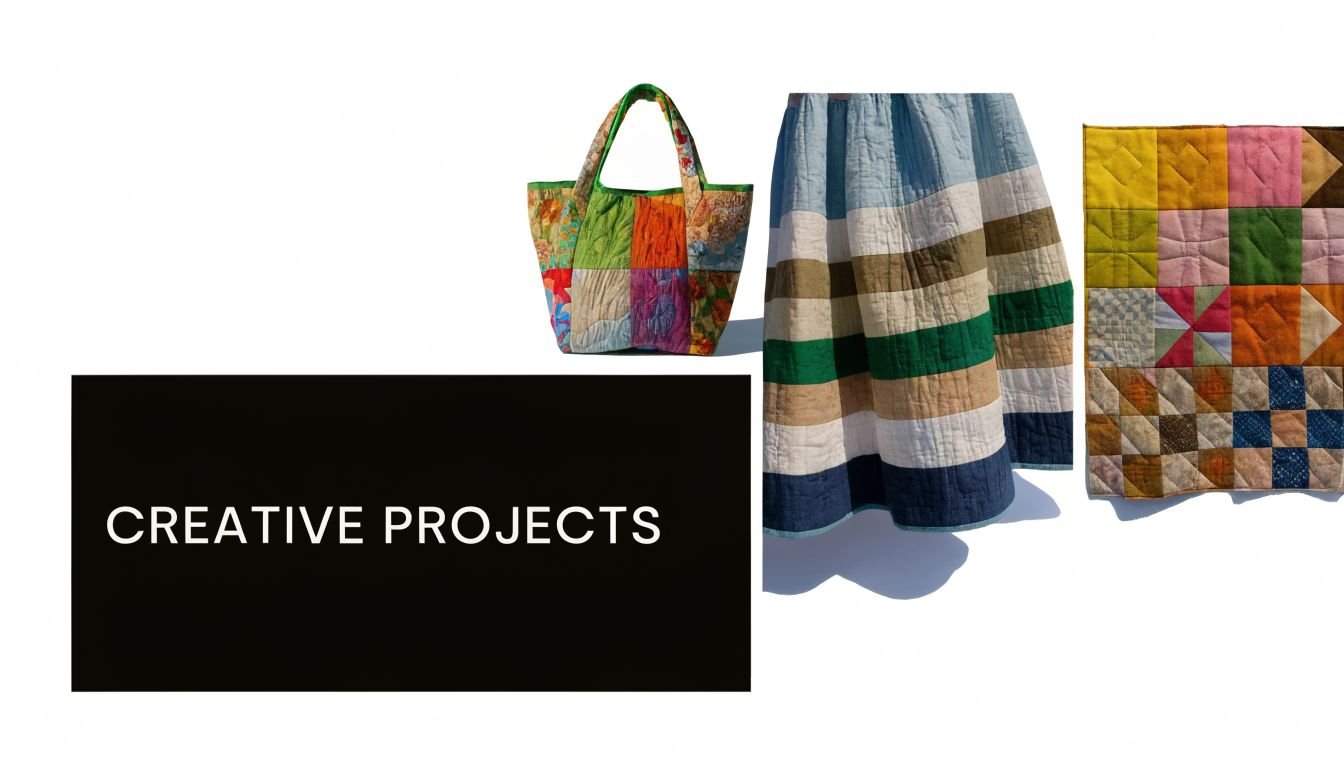
A useful way to judge a project is to scrunch a corner of the fabric in your hand, then let it fall. If it drops in a soft ripple, it may suit a fuller skirt or simple top. If it springs back and keeps a crease, it will usually shine in projects with corners, pleats, facings, bindings, or topstitching. GSM and tight weave sound technical on the bolt, but in practice they tell you how the fabric will behave. Will it feed evenly? Usually yes. Will it press into a sharp hem? Very likely. Will it drape like lawn or viscose? Usually not.
Projects that suit the fabric beautifully
Tote bags are often the first project that makes quilting cotton click. The fabric stays flat while you cut it, the seams are easy to line up, and the print reads clearly across a broad panel. Add interfacing and you get extra body without turning the project into a wrestling match at the machine.
Children’s clothes are another good match, especially styles that want a little shape. Pinafores, elastic-waist shorts, peasant tops, and simple pyjamas all benefit from a fabric that presses neatly and handles frequent washing well. Small pieces are also less fiddly to cut from quilting cotton because the cloth does not slither about on the table.
Around the home, quilting cotton earns its keep in practical makes that need to look crisp rather than floppy. Good examples include:
Cushion covers with piped, boxed, or zipped edges
Aprons that need regular laundering
Placemats and napkins
Fabric baskets with stabiliser or wadding
Table runners
Zip pouches and wash bags with a light interfacing
For clothing, choose patterns that welcome structure instead of fighting it. A-line skirts, shirt-style tops, shift dresses, loose summer pyjama bottoms, and relaxed overshirts can all work nicely. If a pattern photo shows soft folds clinging close to the body, quilting cotton may feel too firm unless the style is very loose.
Matching print to project
Print choice is not only about colour. Scale changes how the finished piece feels.
Large prints need space, much like a framed picture needs a wall big enough to see it properly. A bold floral can look lovely on a tote bag, skirt front, quilt backing, or simple boxy top because the eye has room to take in the design. Slice that same print into tiny pattern pieces and it can start to look accidental rather than striking.
Small prints are easier to place and easier to sew with. Ditsy florals, tiny checks, scattered stars, and little spots still make sense when broken up by seams, gathers, facings, or patchwork. They are often the safer choice for beginners because you do not have to worry so much about cutting around one perfect motif.
A few practical rules make fabric shopping easier:
Large pattern pieces suit large prints
Detailed garment shapes usually suit smaller prints
Directional prints need extra fabric and careful layout
Stripes and geometric prints show cutting mistakes quickly
High-contrast prints can hide minor seam wobbles
If you are unsure, hold the bolt at arm’s length. Then imagine it as finished pattern pieces rather than a full uninterrupted length. That small pause saves a lot of disappointment.
Thinking beyond quilts
Quilting cotton is also lovely for gifts and comfort-led home projects because it is easy to care for and pleasant to handle. If you enjoy pieced sewing for the home, you might also like ideas for cotton throw blankets, especially if you want something decorative that still feels practical in daily use.
Some of the best makes are the simple ones. A striped apron with contrast binding. A pair of patchwork cushion covers. A zip pouch that lets the print do the work. A summer skirt with patch pockets and a tidy pressed hem. Quilting cotton shines in projects where its clean finish, easy handling, and gentle structure are part of the design rather than something you need to work around.
Essential Techniques for Sewing Quilting Cotton
A lot of sewists first notice quilting cotton at the machine. It feeds in neatly, holds a crease well, and feels reassuringly stable in your hands. Then a hem ripples, a seam puckers, or two patchwork points miss each other by a thread. Quilting cotton is forgiving, but it rewards careful handling.
Part of the reason is its feel. Quilting cotton is usually a plain weave with a fairly crisp finish, so it behaves more like paper than drapey lawn or slippery viscose while you cut and stitch it. That crispness is useful. It lets you mark, fold, and press accurately. It also means the fabric shows small mistakes quite clearly, especially on straight seams, corners, and topstitching.
If you have seen GSM listed on a product page and wondered whether it matters, its practical implications become clear. A lighter quilting cotton often feels softer and a touch less firm under the presser foot. A heavier one tends to feel more substantial, with a little more body in pleats, pockets, and facings. Neither is automatically better. You are really choosing how much structure you want to feel in your hands and see in the finished project.
Start with preparation
Pre-washing is usually a sensible first step, especially for garments, accessories, and anything you expect to wash often. Cotton can shrink, and some prints soften noticeably after the first wash. It is better for that change to happen before you cut your pieces.
Press the fabric properly once it is dry. A steam iron helps the weave settle back into shape, and that makes a real difference when you are matching edges or cutting long strips. If the fabric still feels slightly lively or wobbly after washing, a light spray starch can make it easier to control. This is particularly helpful for patchwork, bias edges, and narrow bindings.
For cutting, use the tool that suits the job:
A rotary cutter and self-healing mat for strips, squares, and patchwork
Sharp dressmaking shears for garment pieces and curves
Pattern weights for fabric that is lying flat and well pressed
A quilting ruler for checking grain and keeping edges straight
Set up your machine to suit the fabric
Quilting cotton does not ask for anything unusual, but it does like a clean, sensible setup. A fresh universal 80/12 needle is a reliable starting point for many projects. If the fabric feels particularly fine or tightly woven, test on a scrap first and see whether a slightly finer needle gives a cleaner result.
Thread changes the feel of the stitching more than many beginners expect. Cotton thread often gives a neat, traditional finish for patchwork and quilting. Good quality all-purpose polyester thread is also a sound choice for general sewing, especially for bags, aprons, and everyday garments. The goal is not to find one perfect thread for all quilting cotton. The goal is to match the thread to the project and make sure it runs smoothly with your needle and tension.
A few common problems are easier to solve when you know what they feel like:
Skipped stitches often mean the needle is dull, bent, or the wrong size
Puckering can come from tight tension, a blunt needle, or fabric being pushed and pulled as you sew
Wavy seams usually point to stretching during handling, especially on the bias
Messy topstitching often improves with a longer stitch length and firmer pressing before you sew
Guide the fabric lightly with your fingertips. Let the feed dogs move it through. Quilting cotton is stable enough that you do not need to wrestle with it, and pulling usually creates the very distortion you are trying to avoid.
For anyone who likes a visual demonstration before testing settings, this walkthrough is a helpful companion:
https://www.youtube.com/watch?v=YBWWwpgjM4Q
Sew accurately and press as you go
Quilting cotton is one of the clearest teachers of sewing accuracy because it holds its shape so well. If your seam allowance is consistent, the pieces usually fit beautifully. If it is a little off, the fabric rarely hides it for long.
For patchwork, a 1/4 inch seam allowance is standard. For dressmaking, follow the pattern, and many UK patterns use 1.5 cm. The important part is consistency rather than speed. Sewing a touch slower often gives better results than trying to race through.
Pressing matters at every stage. Press before cutting. Press after stitching each seam. Press facings, pocket folds, hems, and bindings before they become bulky. Quilting cotton responds quickly to the iron, and that is one of its nicest qualities. A few seconds of pressing can make a slightly homemade finish look much more polished.
These habits help:
Test stitch length on a scrap before starting your project
Check seam allowance with a guide if your machine markings are hard to see
Chain piece patchwork sections to keep handling even and efficient
Use starch on strips or bias edges if you want sharper control
Trim loose threads regularly so units stay flat and accurate
Techniques that suit quilting cotton well
This fabric is especially satisfying for methods that rely on stability and a clean press. Topstitching sits neatly on the surface. Pleats and tucks stay crisp. Patch pockets hold their shape. Binding folds accurately because the weave is balanced and predictable.
It is also a good fabric for building sewing confidence. If you are practising corners, edge stitching, simple gathers, or quilting in straight lines, quilting cotton gives clear feedback without sliding away from you. It behaves much like a notebook page compared with softer, drapier cottons. You can fold it, crease it, and line it up with far less fuss.
If a project starts to feel awkward, pause and check the fabric in your hands. Does it feel too crisp for the drape you want? Too soft for the sharp finish you need? Quilting cotton usually works best when the pattern suits its natural body. Once those two are in agreement, it is a pleasure to sew.
Caring For Your Creations and Solving Problems
Once your project is finished, quilting cotton is generally straightforward to live with. That’s one of the reasons sewists return to it so often. It tends to wash well, press well, and settle into a softer handle over time.
For regular care, wash finished items in cool to moderate water with similar colours, then either line dry or tumble dry on a gentle low setting if that suits the project. Press with steam while the fabric is still slightly damp or after a light spritz of water. That usually brings the crispness back nicely.
Everyday care habits that help
A few simple habits keep quilting cotton looking good for longer:
Turn garments or bags inside out before washing if the print is dark or vivid.
Avoid over-drying because baked-dry cotton can feel harsh and crease more sharply.
Use a pressing cloth on darker prints if you’re worried about shine from the iron.
Store quilts and finished makes dry and clean so folds don’t set in with moisture trapped inside.
When raw edges fray more than expected
Some fraying is normal with any woven cotton, especially if pieces are handled a lot before assembly. If edges seem to fluff aggressively, the first fix is practical rather than dramatic. Handle pieces less, cut accurately, and finish seams earlier.
You can try:
A zigzag finish on seam allowances
An overlocker if you have one
Pinked seam allowances on suitable low-stress projects
French seams for smaller accessories or lightweight garment areas
If the project puckers after washing
Puckering usually has a cause. It doesn’t mean you’ve ruined the item or that the fabric was wrong. Most often, the issue comes from uneven seam allowances, skipped pre-washing, or a bit of stretching during sewing.
Check these points:
Did all the fabrics get pre-washed the same way?
Were some seams sewn with more drag than others?
Did bias edges stretch while being handled?
Was the pressing more of a push-and-slide than a lift-and-press?
A quilt or garment that puckers slightly after the first wash often improves with a proper steam press. Cotton can relax and settle once it’s pressed back into shape.
If the fabric feels stiff
Fresh quilting cotton can sometimes feel firmer than expected, especially straight off the bolt. That doesn’t always mean it’s poor quality. A wash and press often soften the handle noticeably.
If you’re making clothing and the fabric still feels too crisp after pre-washing, think about changing the pattern rather than fighting the cloth. The same fabric that feels too stiff for a draped blouse may be perfect for a skirt, apron, or structured top.
The most reassuring truth is this. Small issues with quilting cotton are usually fixable. Better pressing, more accurate cutting, a fresh needle, or a more suitable seam finish often changes the whole experience.
How to Choose and Buy From More Sewing
You spot a print online and love it at once. Then the fabric arrives, and it feels much crisper than you expected, so the blouse in your head suddenly looks better as a tote bag or a boxy top. That is why choosing quilting cotton starts with handling in mind, even when you are shopping from a screen.
Begin with the job you need the fabric to do. Quilting cotton usually has a stable plain weave and a firmer hand than many dressmaking cottons, but there is still plenty of variation from one print to another. A smoother, slightly denser cloth often feeds neatly under the needle and holds corners, pleats, and topstitching well. A softer one may still work beautifully, but it will feel different in gathers, facings, and finished seams.
Product descriptions matter here. Clear fibre content, width, and fabric weight give you useful clues, but the most helpful shops also describe the handle in plain language. Words such as crisp, smooth, firm, soft, or lightly structured tell you far more about how the fabric will behave than a pretty photo ever can.
A sensible buying checklist
Before you add fabric to basket, check:
Project match so the fabric has the right amount of body for what you plan to sew
Print scale so motifs still look right once pieces are cut out
Handle description so you can judge whether it will feel neat and structured or a little softer
Fibre details so you know exactly what you are buying
Colour accuracy and samples if you need the shade and feel to be right first time
A quick example helps. If you are making bunting, patchwork cushions, or a child’s pinafore, a quilting cotton with a crisp handle is often a pleasure to sew because it stays put, presses sharply, and keeps its shape. If you are making a loose summer shirt, the same fabric may feel a bit too firm unless the pattern is designed with structure in mind.
Why a swatch service helps
Swatches answer the question product photos cannot. How does it feel in the hand?
That small sample lets you scrunch the fabric, fold it, and see how quickly it springs back. You can feel whether it is papery and crisp, smooth and compact, or softer after handling. You can also hold it against zips, linings, paint colours, or other fabrics in your stash, which is especially useful for quilts and coordinated home projects.
For online fabric shopping, that tactile check often prevents the wrong purchase. It links the technical side of the fabric to the sewing experience itself. You are not just buying a print. You are choosing how the cloth will feed, press, fold, and sit in the finished project.
If you want a well-chosen range of fabrics, practical sewing supplies, and the option to order samples before committing, More Sewing is a helpful place to start.
