
Fabric
A Sewist’s Guide to Boiled Wool Fabrics
You're probably here because you've found a boiled wool coating or knit that feels wonderful in the hand, and now you're wondering whether it will be a dream to sew or an expensive mistake. That's a familiar moment. Boiled wool often looks slightly mysterious on the bolt. It can seem like a knit, handle like a coating, and tempt you with the promise of clean raw edges.
It earns that reputation. Boiled wool fabrics are some of the most practical winter dressmaking textiles I handle. They're warm without feeling stiff and heavy, forgiving under the machine, and ideal for garments that need to work hard through long, damp, chilly months. If you're already thinking about overall winter comfort, this guide on the best ways to keep feet warm is a useful companion read, because fabric choice is only one part of dressing well for cold weather.
Introducing Boiled Wool The Cosiest Fabric
A good boiled wool jacket has a particular kind of usefulness. It's the piece you throw on over a jumper for the school run, the market, the train commute, or a walk along the seafront when the wind has turned sharp. It feels soft and easy to wear, yet it still looks polished enough for everyday outerwear.
That's why sewists come back to it. You can make a simple coatigan, a clean-lined cropped jacket, a long cardigan, or a neat vest and get a lot of wear from it. It doesn't demand the full tailoring ceremony that some coatings do, and it doesn't behave like a floppy winter knit either. It sits in a very useful middle ground.
Boiled wool often gives you the warmth and comfort people want from handmade winter clothes, without the fussy handling that can put them off sewing outerwear.
For home dressmakers, the appeal is practical. The cloth usually has enough body to look intentional, enough softness to stay comfortable, and enough stability to make sewing far less intimidating than a traditional lined coat in a slippery woven.
What Is Boiled Wool and How Is It Made
Boiled wool starts as wool fabric that is then fulled. In plain terms, that means the cloth, often knitted and sometimes woven, is worked in hot water with agitation so the fibres tighten, lock together, and become denser. If you've ever seen a wool jumper shrink and firm up after the wrong wash, you already understand the basic idea. Boiled wool is that process done deliberately and under control.
From open cloth to compact fabric
Before fulling, the base cloth has more visible structure and more space between fibres. After fulling, the surface looks more integrated and compact. The fabric becomes denser, the edges become more stable, and the finished cloth usually has that familiar lightly felted hand that sewists recognise straight away.
Technical references describe boiled wool production as fulling woven or knitted wool in hot water, and note that the cloth can shrink by 20 to 50%, with a typical final basis weight of about 300 to 600 g/m². The same description links that process to a denser structure, improved wind resistance, and better thermal insulation, while also noting that boiled wool is water-resistant rather than waterproof and is better suited to light rain, mist, and snow than prolonged downpour, as described in this technical overview of how boiled wool is made and worn.
What that means at the cutting table
For a sewist, the manufacturing matters because it explains the handling. The finished fabric is no longer a loose, stretchy knit in the usual sense. It has more body, more grip, and more resistance to fraying.
That's also why boiled wool fabrics suit garments with simple shapes so well. The cloth itself does a lot of the visual work. Even a straight-cut jacket with patch pockets can look refined because the surface is dense and the edges stay tidy.
A few practical consequences follow from the fulling process:
Expect less drape than a regular wool jersey: It will bend and mould, but it won't slouch in the same way.
Expect more stability while sewing: Pieces are less likely to ripple or curl at the cut edge.
Expect some variation by supplier: Some boiled wools feel almost spongy and soft, while others are crisp and coating-like.
The Unique Characteristics of Boiled Wool
Boiled wool fabrics stay popular because they solve several winter dressmaking problems at once. They're warm, practical, and often much easier to sew than they first appear.
Warmth without cumbersome bulk
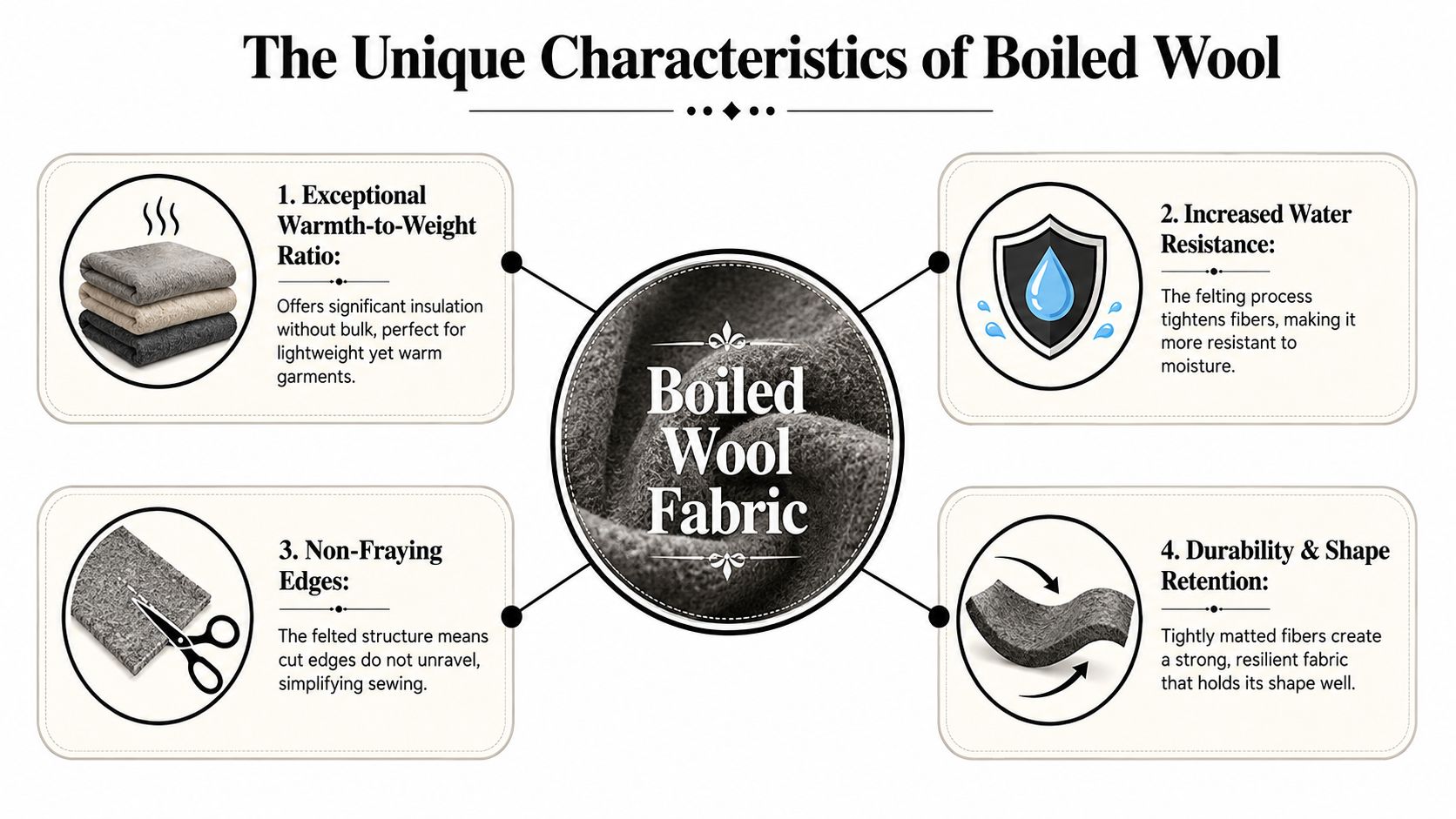
The primary appeal is its comfort. Boiled wool traps warmth well because the fibres are packed together after fulling, yet the fabric usually doesn't feel as cumbersome as some classic winter coatings. That's why it works beautifully for coatigans, overshirts, cape-style jackets, and easy outer layers that need to move with you.
A heavyweight example often cited for project planning is 415 GSM at 56 inches wide, which explains why many boiled wools feel substantial enough for structured autumn and winter garments, as noted in this boiled wool fabric benchmark discussion.
Edges that behave well
For dressmakers, the edge behaviour is one of the biggest advantages. Because the fibres have interlocked so thoroughly, boiled wool usually doesn't unravel the way ordinary woven coatings do. That opens up very attractive construction options.
You can use that in several ways:
Raw hems: Good for modern jacket and coat styles with clean vertical lines.
Raw facings or bands: Useful on waterfall cardigans and simple wrap shapes.
Reduced seam finishing: Often the inside can stay much simpler than with a fraying fabric.
Practical rule: Test a cut edge before you commit to a raw finish. Some boiled wools are nearly non-fraying. Others remain stable but still look better with topstitching or a turned edge.
Moisture handling and weather performance
Boiled wool is a very sensible cloth for UK weather because it manages dampness well. Fabric references note that wool can absorb nearly one third of its weight in liquids, and that the fulling process makes boiled wool less likely to shrink or tear further. Those qualities help explain why it remains such a practical choice for cool, wet conditions and durable outerwear, as described in this boiled wool fabric reference.
That doesn't make it a raincoat fabric. It copes well with mist, drizzle, and cold air. It doesn't enjoy a soaking. If you need true storm protection, boiled wool is a layer, not a substitute for waterproof outerwear.
Boiled Wool Compared to Felt and Wool Knits
Confusion usually starts with appearance. A boiled wool fabric can look felt-like, and if it began life as a knit, people often assume it should be sewn exactly like jersey. Neither assumption is quite right.
True felt is made by matting loose fibres together. Boiled wool begins as an actual fabric, usually knitted and sometimes woven, and only then goes through fulling. That earlier structure matters. It gives boiled wool more flexibility and garment potential than craft felt, while making it more stable than an ordinary wool knit.
If you've ever looked at accessories made with premium leather and felt sleeves, you've probably noticed the compact, structured character that felt can have. Boiled wool can share some of that visual neatness, but it usually has more softness and movement, which is why it works so much better for wearable garments.
Fabric Comparison
| Attribute | Boiled Wool | Craft Felt | Wool Knit (Jersey) |
|---|---|---|---|
| How it starts | A knitted or woven wool fabric that is then fulled | Loose fibres matted together | A knitted wool fabric left unfulled |
| Surface feel | Dense, softly felted, often slightly lofty | Flat, compact, often firmer | Softer, more open, more obviously knitted |
| Stretch | Usually limited mechanical give | Very little give | Noticeable stretch |
| Cut edges | Often stable and suitable for raw finishes | Stable | Can curl or distort |
| Drape | Moderate. Depends on weight and fulling level | Stiffer | More fluid |
| Best uses | Jackets, coats, vests, cardigans, berets, scarves | Crafts, appliqué, structured accessories | Jumpers, tees, draped knit garments |
What works in practice
Use boiled wool when you want a garment to hold a shape without becoming rigid. It's especially good for patterns with fronts that need to sit neatly, collars that need a bit of body, and hems that look intentional without heavy interfacing.
Use wool jersey when you want softness, stretch, and a more body-skimming fit. Use felt when you're making non-garment projects or highly structured accessories.
If a pattern relies on drape and cling, boiled wool may feel too firm. If a pattern needs shape and warmth with easy sewing, it often lands in the sweet spot.
Your Essential Guide to Sewing with Boiled Wool
A lot of home sewists fall for boiled wool on the bolt, then choose a pattern that asks too much of it. The cloth usually behaves best when the design is simple, the shaping is controlled, and the seams are allowed to stay clean rather than bulky.
Start with pattern choice
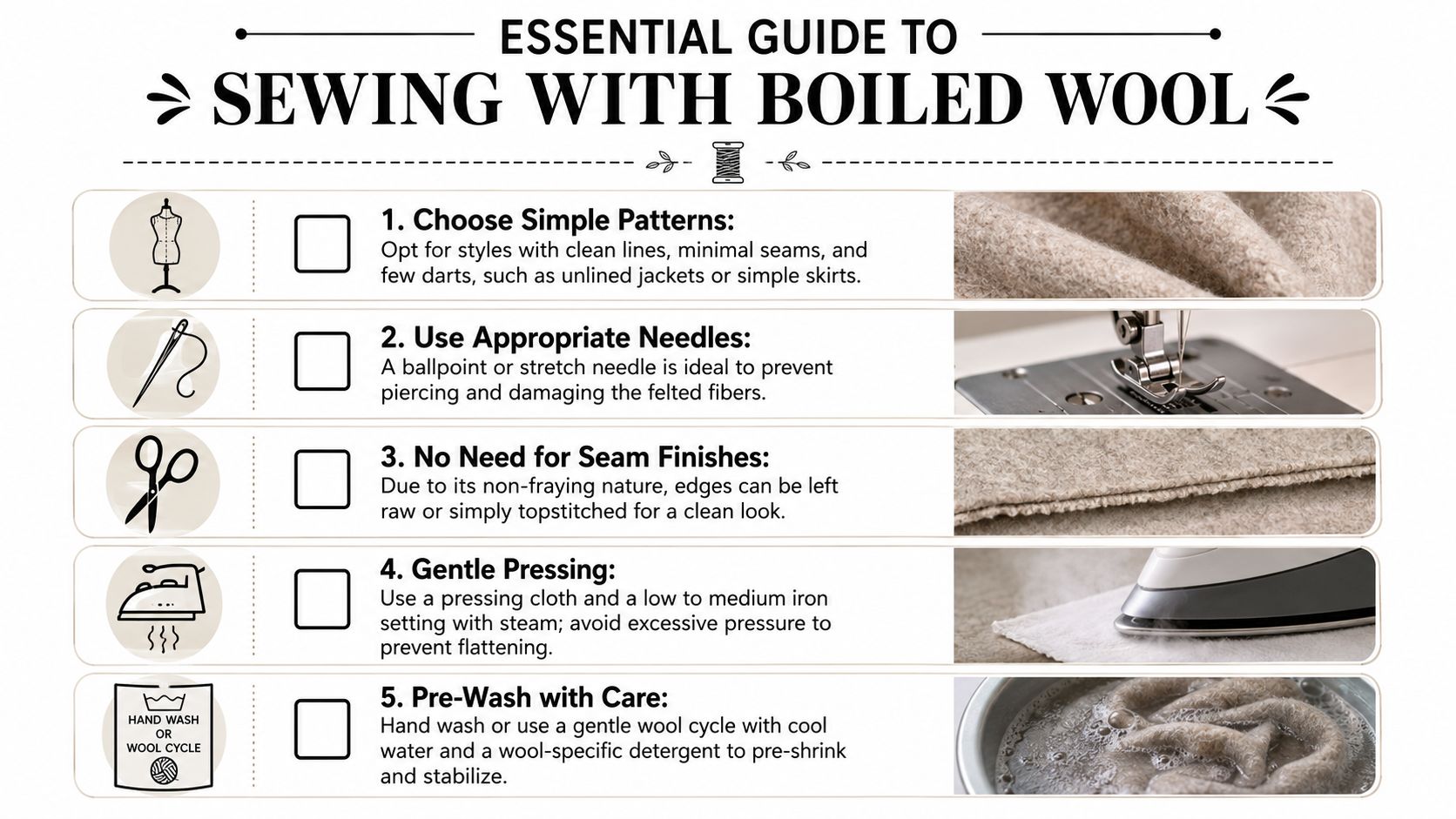
For UK home sewing, boiled wool earns its keep in garments you will reach for. Unlined jackets, easy coatigans, simple wrap layers, gilets, and neat collarless coats all make good use of its warmth and body. It is also excellent for practical pieces such as berets, scarves, mittens, and house layers that need comfort without fussy finishing.
Patterns with too many small panels, sharp curves, or enclosed details can turn a pleasant sew into a wrestling match. Clean fronts, patch pockets, dropped shoulders, and uncomplicated sleeves usually give a smarter result. More fitted styles can still work, but plan ahead for bulk at princess seams, armholes, collar stands, and any spot where several layers meet.
If you are sewing for a More Sewing style wardrobe, start with projects that sit between knitwear and outerwear. That is where boiled wool often shines.
Cutting and marking
Give yourself room on the table. Boiled wool can stretch off grain while you are handling it, especially in longer lengths or heavier qualities. I usually cut single layer for coats and jackets if the front edge, nap, or pocket placement needs to match neatly.
A rotary cutter and mat are useful for long visible edges, particularly on raw-edge styles where every cut line shows. Sharp shears still work well for smaller pieces and tighter corners, but blunt scissors can drag the surface and leave an untidy edge.
Mark lightly and test first. Tailor's chalk, wax chalk, and thread tracing are all safer choices than aggressive tracing methods that can bruise the fabric. Some boiled wools spring back. Others keep every press line and pin mark longer than you expect.
Here's a practical demonstration before moving to machine setup:
Needles, stitches, and machine handling
There is no single perfect setup because boiled wool varies a lot from one cloth to the next. Start with a universal needle and test. If the fabric still has a visible knit base or the stitches skip, switch to a ballpoint or stretch needle and try again on a folded scrap.
All-purpose polyester thread is usually the easiest option for jackets, gilets, and accessories. It holds up well in seams and copes with regular wear. For visible topstitching, increase the stitch length a little so the line does not disappear into the texture.
These adjustments help on most domestic machines:
Use a straight stitch for the main construction on stable boiled wool
Lengthen the stitch slightly so bulky seams feed more evenly
Fit a walking foot if layers shift at hems, pockets, or front edges
Stitch a test seam through full thickness before committing to collar points or cuffs
I also suggest reducing unnecessary seam intersections at the cutting stage if you can. A small change to a facing, hem turn-up, or pocket treatment can save a lot of frustration later.
Managing bulk cleanly
Good boiled wool sewing is often about what you leave out. Heavy facings, duplicate seam finishes, and enclosed details can make the garment stiff and lumpy, even when the pattern looked simple on paper.
Grade seam allowances where layers stack up. Trim one side narrower than the other, and clip only where the shape needs it. On unlined garments, I often choose construction methods that keep the inside tidy without adding extra thickness.
These finishes work well in practice:
Pressed-open seams with topstitching for jackets, coatigans, and simple outer layers
Lapped seams for a flatter finish and a slightly more contemporary look
Neatly trimmed raw allowances on relaxed garments where the fabric is stable and the inside will be visible
Raw-edge hems and edges can be a real advantage with boiled wool, not a shortcut. They suit the fabric, reduce bulk, and give many modern patterns a cleaner line.
One final practical point. If you are making an everyday winter layer, remember that care matters as much as construction. Gentle washing products and low-waste laundry refill choices can help you maintain wool garments without being too harsh on the fibre.
Boiled wool rewards straightforward sewing. Choose a pattern that respects the fabric, keep the seams purposeful, and let the cloth provide the structure.
Pressing Finishing and Caring for Your Garment
Pressing boiled wool is less about flattening and more about shaping. If you press too hard with a hot dry iron, you can crush the surface and leave the garment looking tired before it's even worn. Steam, patience, and a pressing cloth do much better work.
Press with moisture and restraint
Use a wool setting if your iron has one, and always test first. Hold the iron just above the cloth to steam when possible, or lower it gently with a pressing cloth between iron and fabric. Finger-pressing after steaming can be surprisingly effective on boiled wool because the cloth often responds well to heat and moisture without needing force.
A tailor's clapper is especially useful after steaming a seam. Press, lift the iron, apply the clapper briefly, and let the seam cool. That helps the seam settle flat while preserving the fabric's loft better than repeated hard ironing.
Choose a finish that suits the style
The inside finish depends on the garment. Not every boiled wool project needs bound seams or enclosed edges. In fact, over-finishing can add unnecessary stiffness.
These options work well:
Leave edges raw: Best on modern unlined jackets and simple cardigans.
Topstitch seam allowances down: Good for stability and a sporty finish.
Bind key seams: A nice choice on special garments where you want a cleaner inside without full lining.
Catch hems by hand: Useful when you want an invisible finish on a denser edge.
One caution. If you use fusible interfacing, test thoroughly. Some boiled wools bubble, flatten, or develop a cardboard-like feel when fused. Sew-in support is often the safer choice for collars, fronts, and hanging loops.
Airing out does a lot of the maintenance work for wool garments. They don't always need a full wash after normal wear.
Care that helps the garment last
Spot cleaning is usually the first line of defence. A cool, damp cloth can deal with small marks, and hanging the garment in fresh air often refreshes it well. For deeper cleaning, handle it gently and avoid rough agitation.
If you're rethinking your wash routine more broadly, these low-waste laundry refill choices are worth a look, especially if you're trying to match handmade clothing with gentler garment care habits.
When in doubt, choose the least aggressive cleaning method that will do the job. Wool rewards restraint.
Buying Boiled Wool and Project Inspiration
You spot a lovely boiled wool on the bolt, picture it as a smart winter jacket, then get it home and realise it is better suited to a relaxed coatigan. That usually comes down to choosing by colour alone. With boiled wool, handle matters just as much as shade.
Start by treating the fabric like a finished garment, not just a length on the shelf. Scrunch it lightly in your hand, let it drop, and look at the surface. Good boiled wool should recover neatly and feel evenly fulled across the width. If one area feels spongier or looser than another, it can give you trouble at hems, fronts, and any edge you plan to leave exposed.
What to look for on the bolt
A few checks in the shop save a lot of second-guessing later.
Surface consistency: Look for an even, settled finish without thin or patchy areas.
Drape and body: A softer cloth suits cardigan jackets, easy coats, and simple layers. A firmer one holds shape better in boxy jackets, overshirts, and sculptural collars.
Cut-edge behaviour: If the edges stay tidy when handled, the fabric is a good candidate for raw hems, exposed seams, and simple unlined styles.
Bulk in layers: Fold it over several times to judge cuffs, facings, collar points, and pocket edges. Some boiled wools feel light in the hand but become bulky fast once seam allowances stack up.
For UK home sewists, this matters more than it may with lighter coating fabrics. Many popular independent patterns are drafted for approachable construction, and boiled wool can be a very forgiving match if the pattern shape is simple and the seam detail is deliberate. The best results usually come from giving the cloth enough room to behave like itself rather than forcing it into sharp, heavily structured shapes.
Britain's long wool tradition also helps explain why this fabric feels so at home in a handmade winter wardrobe. This overview of boiled wool's uses and the UK wool base gives useful background on its place in cold-weather garment making.
Project ideas that genuinely suit boiled wool
The easiest win is a pattern with clean lines and modest shaping. Boiled wool shines in garments where the fabric can do some of the design work for you.
Tessuti Oslo Coat: A strong choice for a simple outer layer with enough presence to show off the cloth.
Grainline Studio Morris Blazer: Best in a boiled wool with decent body and a polished surface.
Friday Pattern Company Ilford Jacket: Suits a casual wardrobe and works well if you like visible topstitching and practical patch pockets.
Cape, gilet, and swing vest patterns: Good options if you want warmth and a quick sew without set-in sleeve complexity.
Berets, scarves, slippers, and simple bags: Very good use of leftovers, especially if you want to test the fabric before cutting a larger garment.
For a first project, I usually point sewists toward a collarless jacket, an open-front coatigan, or an easy overshirt. You get to learn how the fabric feeds, presses, and layers without adding the extra demands of pad stitching, heavy interfacing, or precise structured lapels. That is where boiled wool feels most enjoyable to sew.
Boiled Wool Fabrics Frequently Asked Questions
Do I need to pre-wash boiled wool before cutting
It's wise to pre-treat, but the method matters. Rather than giving it an enthusiastic ordinary wash, many sewists prefer careful steaming or another gentle method based on the supplier's care guidance. Test an offcut first if you can.
Does boiled wool have stretch
Usually a little, but not in the same way as a standard jersey. Most boiled wool has mechanical give rather than obvious elastic stretch, and some qualities feel almost woven once fulled.
Can I use an overlocker to sew boiled wool
Yes, you can, but you often don't need to. Many seams are better sewn on a regular machine because you have more control over bulk, seam placement, and topstitching.
Should I line a boiled wool jacket
Only if the design needs it or you want extra slip over other clothes. Many of the nicest boiled wool garments are unlined, especially when the inside is tidy and the seams are thoughtfully finished.
Are raw edges always the best option
No. They're one option. Raw edges suit minimalist garments, but some boiled wools look smarter with topstitched hems, facings, or bound seams.
If you're ready to sew with boiled wool fabrics, More Sewing is a great place to start. You'll find quality dressmaking fabrics, helpful tools and haberdashery, and the kind of practical support that makes choosing a winter fabric far less daunting.
