Dressmaking, Guides
Converting Metres to Yards: A Sewist’s Guide
You've found a lovely American pattern online, added it to your basket, and then hit the fabric requirement. It's listed in yards. Your local fabric shop sells by the metre. Suddenly a simple sewing project feels more fiddly than it should.
That's a familiar problem in UK sewing. Fabric labels are often metric, while older patterns, imported patterns, and some specialist drafting references still use imperial measurements. The maths itself is simple enough, but what usually catches people out isn't the formula. It's the practical decision that comes after it. Do you buy the exact converted amount, round to the nearest cut size, or add a bit extra so you're not short when you lay out the pattern?
That's where a sewist needs more than a calculator. You need judgement. You need to know when precision matters, when a quick estimate is fine, and when buying a touch more fabric is the safer choice.
I see the same sort of mixed-measurement confusion in other making jobs too. Even outside sewing, details like custom branding for your business often depend on choosing the right dimensions and format from the start. Fabric buying works in much the same way. A small measurement decision early on can make the whole project easier.
Introduction
You're in a UK fabric shop with an American pattern in your hand, the fabric is sold by the metre, and the pattern calls for yards. That's a routine sewing problem, but it can still catch out experienced makers when you need to buy with confidence and avoid coming up short.
For sewing, the conversion matters because buying fabric is rarely as neat as the number on a calculator. A pattern may give a yardage that converts neatly on paper, yet the actual decision is whether that amount still works once you allow for shrinkage, nap, directional prints, or a slightly tight layout on a wider or narrower cloth.
The basic relationship is simple. One metre is a little more than one yard, so metre amounts always convert to a slightly larger number in yards. At the cutting table, that usually matters less for the arithmetic than for the judgement that follows. Sewists in the UK deal with this mixed-unit market all the time, especially with imported patterns, vintage instructions, and online fabric shopping.
I tell customers to treat conversion as the first step, not the buying decision itself. If your project is close on fabric, round with care. If it includes matching stripes, one-way prints, or fussy pattern pieces, buy with a margin you can live with. A small extra cut is often cheaper than losing an afternoon trying to squeeze out a missing sleeve or facing.
The same principle shows up in other making work too. Even details like custom branding for your business go more smoothly when you choose the right dimensions at the start. Fabric buying works the same way. Good measuring saves hassle later.
The Core Conversion Formula and Factors
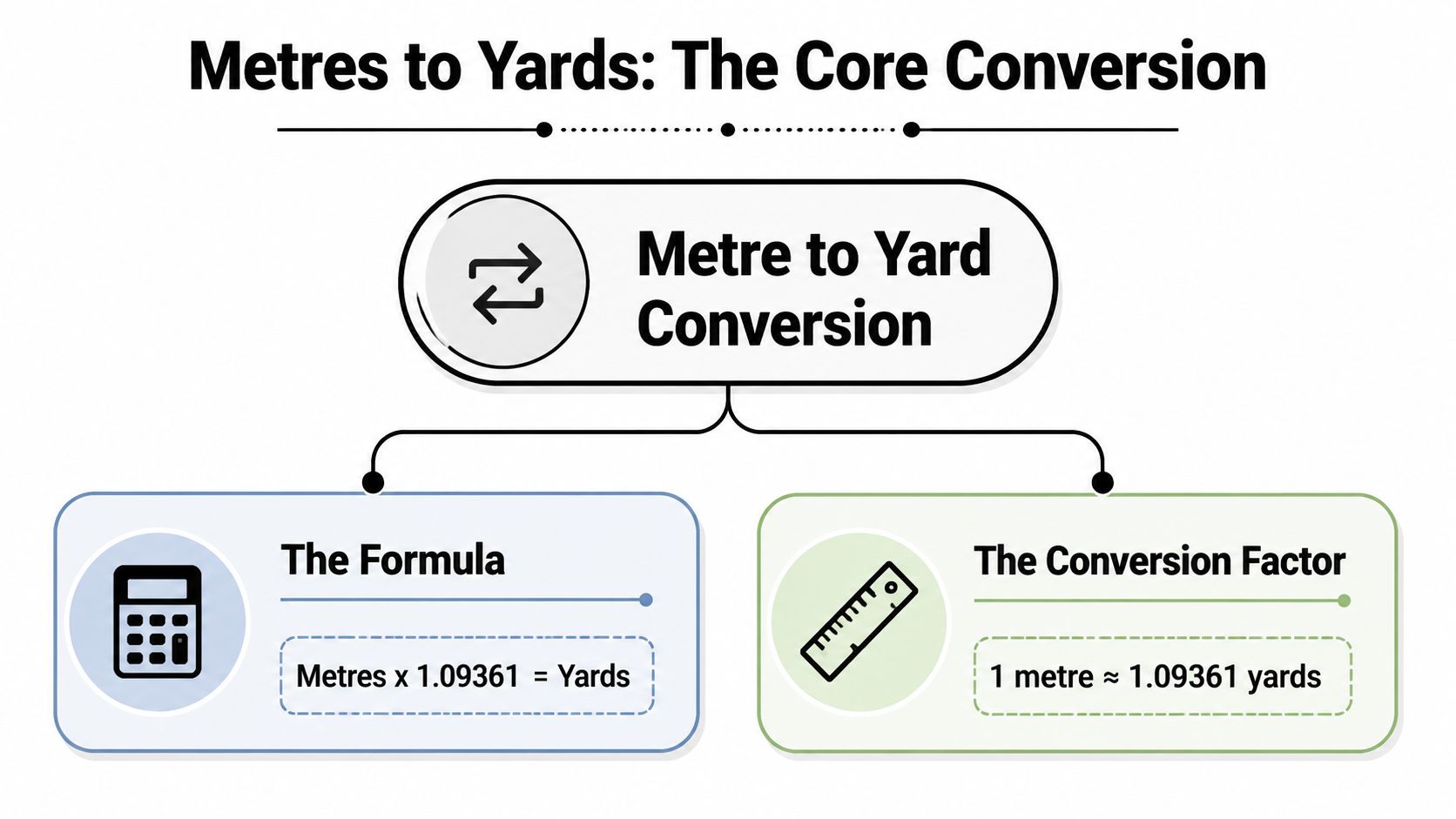
The working formula is simple:
metres × 1.09361 = yards
For fabric buying, that number gives you the true conversion before you decide whether to round up for the realities of the project.
What that means at the cutting table
A metre is slightly longer than a yard, so the yard figure will always come out a bit higher than the metre figure. In a UK sewing shop, that matters because patterns, fabric bolts, and online listings do not always speak the same unit. The maths is easy enough. Choosing what to buy is where sewists can get caught out.
Use the exact factor first, then make the sewing decision. If a pattern calls for 2 metres, the direct conversion is 2.18722 yards. If it calls for 3.5 metres, that becomes 3.827635 yards. Those decimals are not what you ask the cutter for, but they show whether you are safely over a requirement or uncomfortably close once seam layouts, shrinkage, or a directional print are in play.
One small slip can matter. A few missing inches may be the difference between cutting a full sleeve on grain and having to piece a facing from leftovers.
Exact conversion versus shop-floor shorthand
At the counter, I use two levels of accuracy.
Use 1.09361 when you need to be precise:
- checking an imported pattern that gives yardage only
- comparing a remnant label in metres against a pattern in yards
- recording fabric use for a make you plan to repeat
- ordering online where there is no chance to inspect the bolt or ask for advice
Use a rougher mental estimate when you only need a quick sense-check:
- deciding whether a bolt probably holds enough
- comparing two similar lengths in a sale bin
- working out whether it is worth asking for an extra quarter metre
That distinction saves money and disappointment. Exact maths tells you the true equivalent. Practical sewing judgement tells you whether that amount is enough for your actual project.
Clear measurement standards help in other workshop jobs too. If you also print pattern pieces, class handouts, or drafting sheets, understanding legal paper specifications is another reminder that small dimension differences can cause annoying problems once you start cutting.
Your Quick Metres to Yards Conversion Chart
If you're in a fabric shop without a calculator, a short chart is often more useful than a formula. Save this to your phone, or jot the common ones onto a note card and keep it in your project bag.
Below are the fabric lengths people ask for all the time. They're the sort of amounts used for tops, skirts, simple dresses, linings, and useful remnants.
Metres to Yards Fabric Conversion
| Metres (m) | Yards (yd) |
|---|---|
| 0.5 | 0.546805 |
| 1 | 1.09361 |
| 1.5 | 1.640415 |
| 2 | 2.18722 |
| 2.5 | 2.734025 |
| 3 | 3.28083 |
| 3.5 | 3.827635 |
| 4 | 4.37444 |
| 4.5 | 4.921245 |
| 5 | 5.46805 |
A handy shortcut sits behind this chart. Converting metres to yards gives you an increase of 9.361%, so adding roughly ten per cent gets you very close in ordinary fabric shopping. That's why a metric amount nearly always turns into a slightly bigger number in yards.
Standing at the counter, I'd rather a sewist recognise the shape of the answer than fumble for perfect arithmetic. If the yard figure is only a little higher than the metre figure, you're on the right track.
For familiar benchmark conversions, 1.5 metres equals 1.640415 yards, 2 metres equals 2.18722 yards, and 5 metres equals 5.46805 yards. Those are especially useful lengths to remember because they come up often in dressmaking and student buying.
Mental Maths for Fabric Shopping
When you're shopping in person, speed matters more than elegance. You don't want to stand at the cutting table doing long multiplication in your head. You want a quick check that's close enough to stop mistakes.
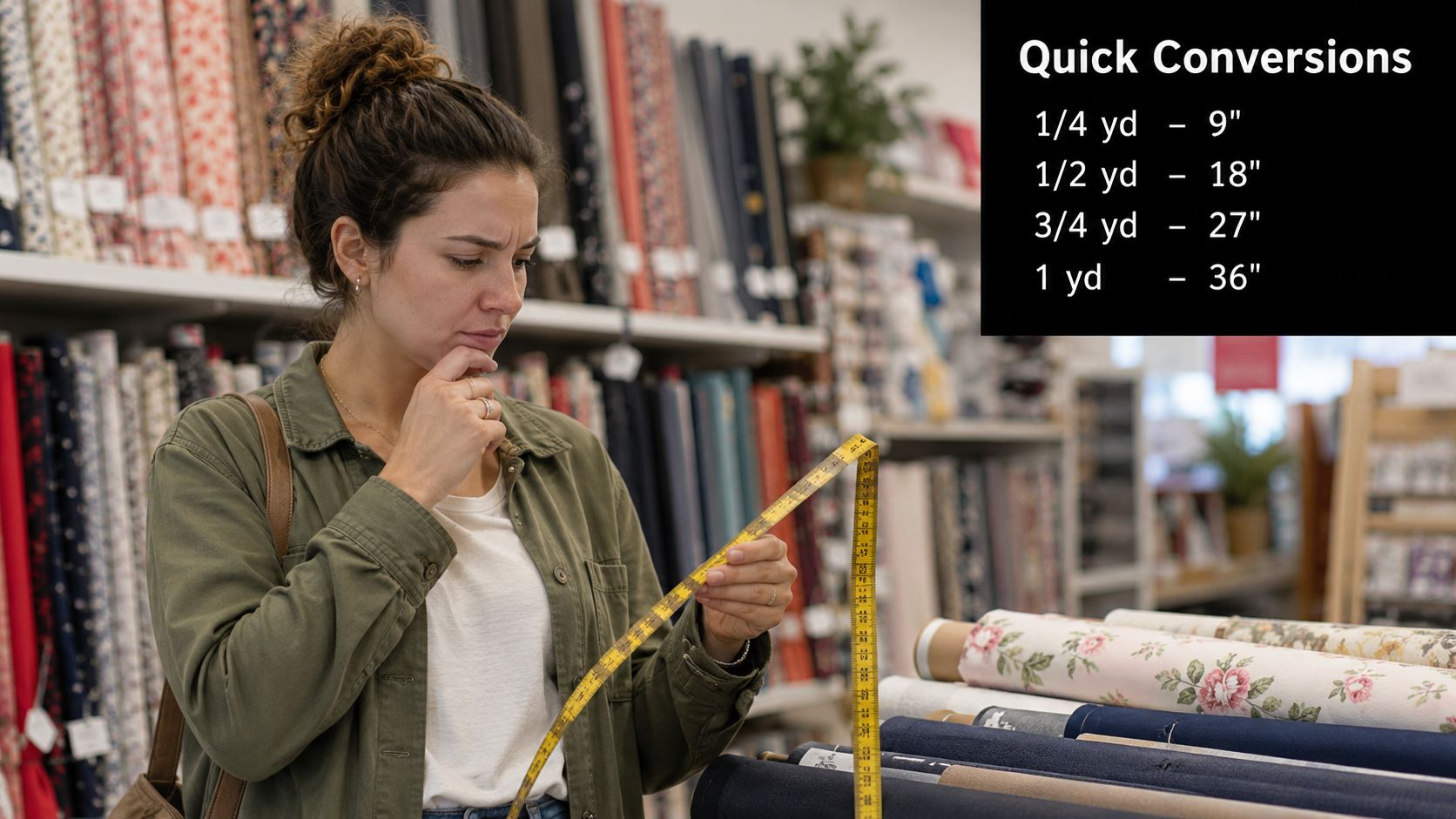
The easiest habit is this. Add about ten per cent to the metre amount. It works well because the practical increase from metres to yards is 9.361%, and in UK sewing that small margin is often enough to keep your estimate safe. A commonly used example is 1.5 metres becoming 1.64 yards in practice, which is why older imperial patterns and metric fabric labels can still work together once you know the relationship (practical sewing conversion note).
The add ten per cent trick
If you've got 2 metres, ten per cent is easy to picture. Add a small extra amount and you'll land close to the true yard figure. That gives you a fast answer without needing exact decimals.
This works best for:
- Comparing bolts quickly
- Checking whether a remnant is in the right range
- Estimating before you confirm with exact numbers
It works less well when:
- You're buying a tight quantity for a fitted garment
- The fabric has a directional print
- You're already close to the minimum requirement
Two common shop problems
A sewist often needs to solve one of two problems.
First, a pattern gives a requirement in yards, but the shop sells in metres. In that case, use the quick estimate to judge whether the quantity sounds sensible, then check the exact amount before buying if you're close to the limit.
Second, you've found a remnant marked in metres and need to know whether it's enough for a project listed in yards. The mental trick gives you a yes-or-no sense quickly. If the answer is close, don't gamble. Check properly or choose a different project for that piece.
Quick maths is for confidence. Exact maths is for commitment.
Practical Application for Patterns and Projects
The true test isn't whether you know the formula. It's whether you can make a good buying decision for an actual garment.
When the pattern and the fabric speak different languages
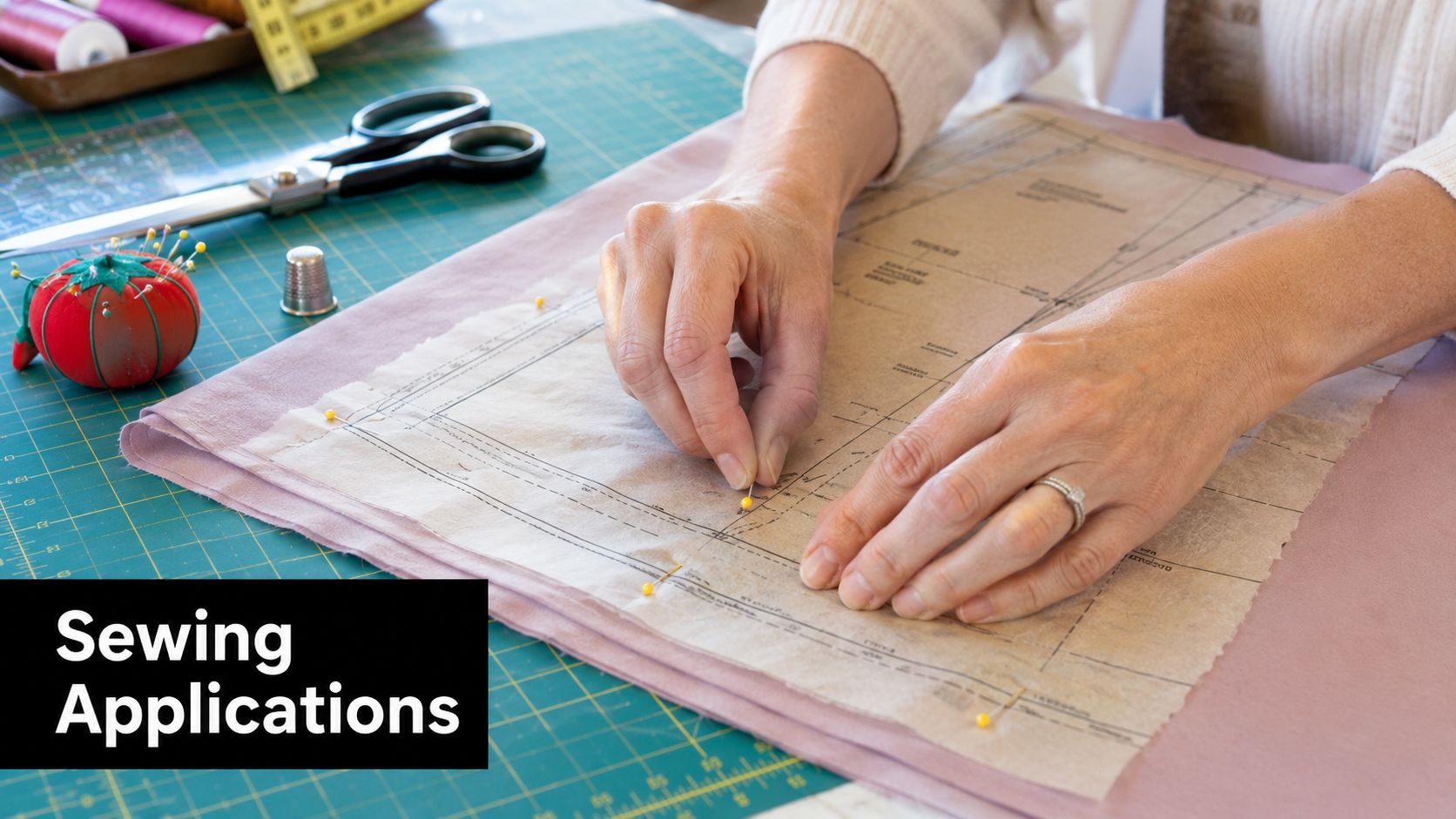
Say you're using a pattern drafted in yards, but every fabric listing you're comparing is in metres. Don't panic and don't round too aggressively at the start. First, convert the required amount so you know the true minimum. Then ask a second question. Is this a project where the minimum is safe?
That depends on the fabric and the layout.
A simple pyjama trouser in a plain stable cotton is forgiving. A fitted dress with facings, sleeves, and careful grain placement is less forgiving. If the fabric has nap, stripes, or a one-way print, the neat mathematical conversion may not leave enough freedom for sensible cutting.
Why smart rounding is part of professional sewing
Buying exactly the converted amount sounds efficient, but it often creates the avoidable kind of stress. A little extra fabric functions as project insurance.
That matters because real sewing involves more variables than a unit converter can see:
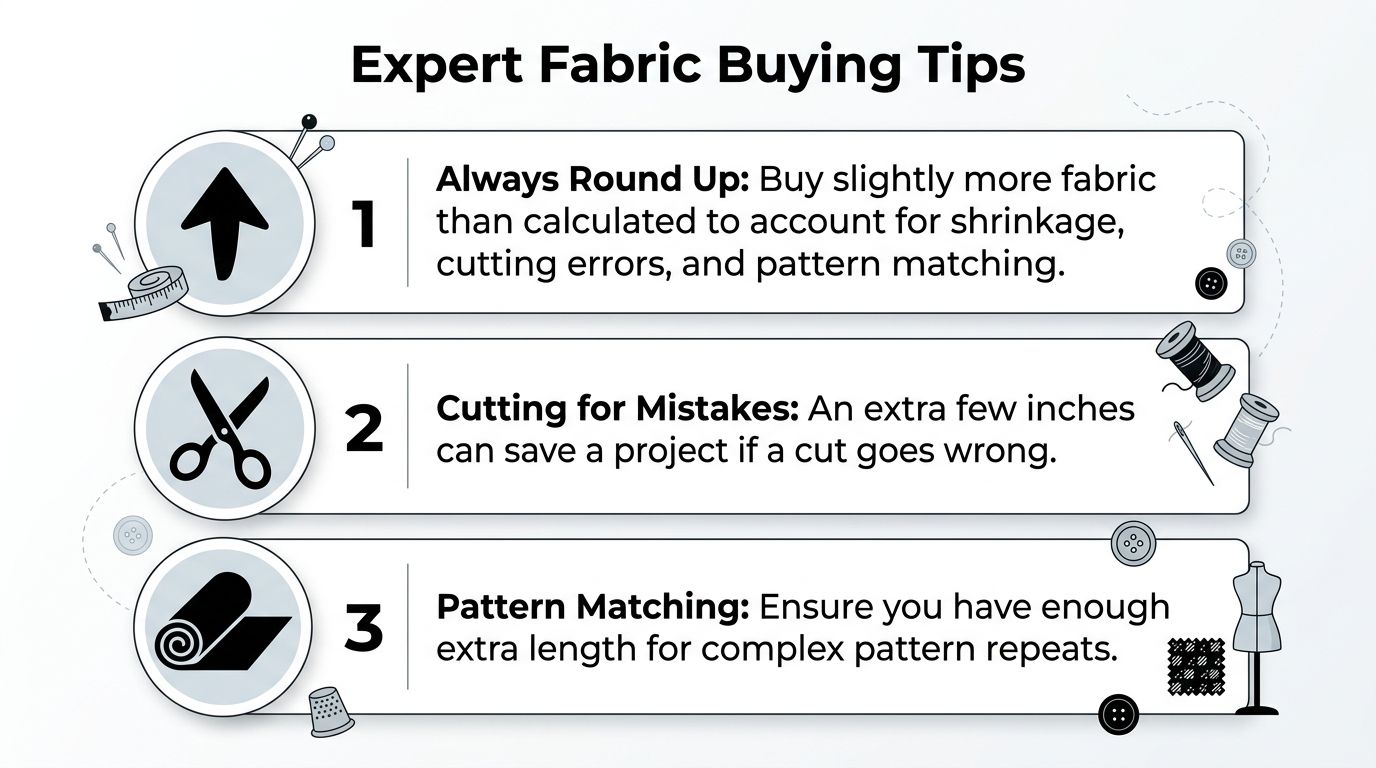
- Shrinkage after pre-washing can change your available length before you cut
- Pattern matching may force you to shift pieces to keep stripes or motifs aligned
- Directional prints stop you from flipping pieces to save space
- Cutting mistakes happen, even to experienced sewists
- Testing stitches or pressing is easier when you've got scraps to spare
A calculator only tells you equivalence. It doesn't tell you risk.
If you're working from an imperial pattern and buying metric fabric, many sewists find it helpful to convert first, then round up to a practical cut length sold by the shop. That's usually a calmer approach than ordering the bare minimum and hoping the layout behaves.
Use the pattern envelope, then apply judgement
Pattern yardages are usually based on a suggested layout, not the only layout. Sometimes you can do better. Sometimes your fabric width, print, or garment size means you'll do worse. That's why I never treat the printed requirement as sacred. I treat it as a planning baseline.
This short video gives a useful visual feel for fabric planning and conversion in practice.
If you're working with remnants, be stricter. A remnant that looks generous on the table can become surprisingly tight once you account for straightening the cut edge, squaring the grain, and keeping major pattern pieces on grain. In that situation, converting metres to yards helps you compare the numbers, but the safer question is still, “Can I lay this out comfortably?”
Smarter Fabric Buying Rounding and Cutting Tips
The most useful question isn't “What's the conversion?” It's “How much should I buy?” That's where many simple conversion pages stop too early.
The awkward real-world example is familiar. 1.5 metres is 1.64 yards, but that still leaves the practical buying choice. Do you buy the exact equivalent, or go up a little? In sewing, that answer depends on things like shrinkage and pattern repeats, especially in the UK where fabric is often metric while patterns may still be imperial (practical rounding problem for sewists).
When rounding up is the right call
If the conversion lands on an awkward amount, rounding up is often the better sewing decision.
Use that approach when:
- You plan to pre-wash and the fabric might change before cutting
- The print needs matching across seams, bodices, or skirt panels
- You're making a first version of a pattern and expect a little trial and error
- The cloth frays easily and you may lose some usable edge
- You want leftover fabric for facings, bias binding, patching, or small matching details
This isn't wasteful. It's careful. Sewists who buy with a little margin tend to have more options and fewer stalled projects.
Buy the amount that lets you cut calmly, not the amount that forces you to negotiate with every pattern piece.
What works and what doesn't
Some habits make mixed-unit buying much easier.
- Keep a short conversion list on your phone. You don't need every possibility. Just the common lengths you buy most often.
- Check the fabric width before you decide. Length alone doesn't tell the full story.
- Look at the print size. A tiny floral behaves differently from a bold repeat.
- Ask yourself whether the pattern pieces can be rotated. If not, your cutting plan needs more room.
Some habits cause trouble fast.
- Buying the bare minimum for drapey cloth. Slippery fabrics rarely reward optimism.
- Ignoring nap or direction. Velvet, cord, brushed cotton, and one-way prints need respect.
- Trusting a tidy conversion more than your layout. The layout wins every time.
If you're choosing between fabric types as well as quantities, resources like That Blanket Co fabric recommendations can be useful for understanding how different materials behave before you commit to yardage or metreage.
The best routine is simple. Use the exact factor when you need a true conversion. Use the quick chart when you're shopping. Use the mental shortcut when you need speed. Then make a sewing decision, not just a maths decision.
If you're ready to buy fabric with less second-guessing, More Sewing is a reliable place to start. You'll find quality dressmaking fabrics, haberdashery, kits, and practical support for real projects, whether you're working from metric labels, imperial patterns, or a mix of both.
