
You find a lovely cotton lace online, add it to basket, then pause. Will it itch? Will it snag the moment it goes under the presser foot? Will the finished blouse look elegant, or homemade in the wrong way?
That hesitation is common, especially if you've sewn plenty of cotton poplin or linen but haven't yet tackled lace. Cotton lace looks delicate because it is delicate in some ways, but it isn't mysterious. Once you know what the fabric is good at, where it needs support, and how to cut and sew it without fighting the openwork, it becomes far more approachable.
Your Introduction to Sewing with Cotton Lace
Many of us first come to cotton lace through a garment we want to copy. A summer top with scalloped sleeves. A child's dress with a neat eyelet hem. A lined skirt that looks airy without being flimsy. The appeal is obvious. Cotton lace gives texture, pattern, and softness all at once.
What makes cotton lace especially approachable in the UK is that lace here isn't only tied to formalwear or museum pieces. Britain has a long lace-making history, and that changed sharply during the Industrial Revolution. Britain's first machine lace was made towards the end of the 18th century, which marked the start of large-scale mechanised production and made lace, including cotton varieties, more accessible than before, as outlined by the Lace Guild's history of lace.
That matters at the sewing table today. The cotton lace fabric UK dressmakers buy is often intended for real, wearable projects. Blouses, overlays, trims, collars, children's wear, panels, and warm-weather dresses. Not just precious “special occasion” sewing.
Why sewists hesitate
Usually it comes down to three worries:
The fabric feels open and unstable. You can see daylight through it, so you assume it will misbehave.
The motifs make cutting feel risky. You don't want to chop through the pretty bits.
The finishing feels unclear. Ordinary seam choices don't always give the neatest result.
Practical rule: Cotton lace rewards planning. If you choose the right project and support it properly, it's often easier to sew than slippery synthetics.
The good news is that cotton lace has a natural, familiar handle compared with shinier or more brittle laces. It still asks for care, but it doesn't need fear. A lined shell top, a yoke insert, or a scalloped hem border is well within reach for a home sewist with a sharp needle, a pressing cloth, and a bit of patience.
What Makes Cotton Lace a Unique Fabric
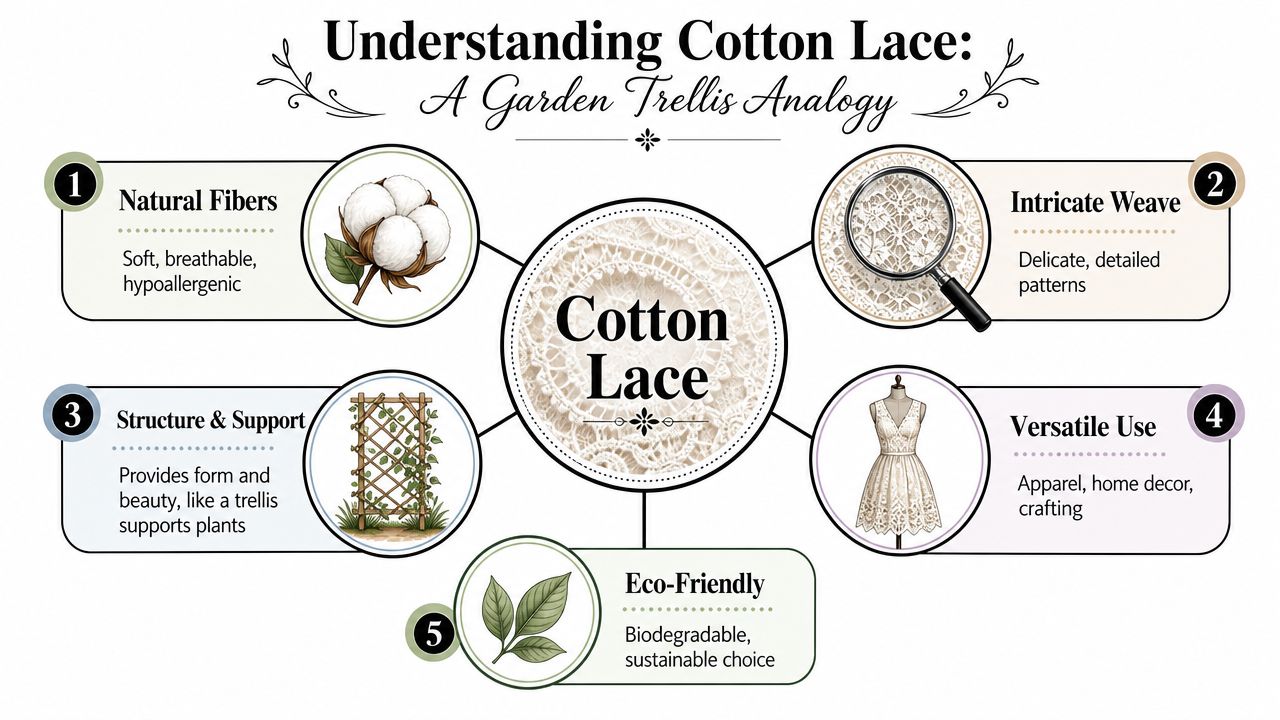
Cotton lace works best when we stop expecting it to behave like ordinary woven fabric. It isn't a stand-alone workhorse for stress points, close-fitting seams, or heavy wear areas. It's closer to a decorative textile with structure built into the pattern, not into a dense cloth.
A useful way to think about it is a garden trellis. The trellis gives shape, rhythm, and beauty. But it isn't the wall. In the same way, cotton lace adds visual interest and lightness, while another layer often provides support, coverage, and stability.
Why it behaves differently
In dressmaking, cotton lace is typically treated as a specialist decorative textile. Its openwork construction gives it high breathability, but that same openness lowers seam stability. In practice, UK garment sewing with lace usually depends on pairing it with a stable lining or underlay to prevent distortion and improve opacity, as explained in Sewport's guide to lace fabric properties and uses.
That single point clears up a lot of frustration. If your lace bodice stretches out, tunnels at seams, or droops oddly, the problem often isn't your sewing. It's that the lace was asked to do a lining's job.
What cotton adds
Cotton brings a few qualities sewists tend to like immediately:
A softer hand than many fully synthetic laces
Breathability that suits warm-weather garments
A less shiny finish, which often reads more relaxed and wearable
Comfort against the skin, especially for tops, children's clothes, and sleeve details
Cotton lace can also take pressing more predictably than some synthetic alternatives, though you still need a gentle approach and a pressing cloth.
Where it shines and where it doesn't
Cotton lace is excellent for:
Overlay panels on skirts and dresses
Sleeves and yokes where you want airiness
Borders and hems with scalloped edges
Collars, cuffs, and inserts that add interest without bulk
It's less suitable on its own for:
Areas under strain, such as fitted waist seams without support
Garments needing crisp structure, unless underlined
High-abrasion use, such as pieces that rub constantly against bags or outer layers
If you can imagine the fabric carrying weight, resisting friction, and holding shape by itself, cotton lace probably needs help.
That help may be a full lining, an underlining, a facing backed with a stable woven, or even just local support at zips, necklines, and button areas. The fabric isn't weak. It has a specific role, and garments look better when we respect it.
Common Cotton Lace Types and Measurements
Walk into a fabric shop or browse online, and “cotton lace” can cover several quite different fabrics. Some are airy and sweet. Others are bold and graphic. Some suit a loose summer blouse. Others are far better for an overlay skirt or a statement sleeve.
Three common types you'll see
Broderie Anglaise usually has embroidered eyelets and often comes with scalloped borders. It's the cotton lace many sewists start with because it feels familiar. You can treat it a bit like an embellished cotton for simple tops, gathered skirts, children's wear, pyjama details, and relaxed dresses.
Guipure-style cotton lace tends to look more connected by bars or bridges, with motifs that feel denser and more sculptural. It often suits overlays, boxier tops, special-occasion skirts, and places where you want the lace pattern itself to be the star.
Cluny-style lace often appears as trims, insertions, edging, or narrower decorative bands. It's useful when you don't want full-yardage lace but still want that handmade-looking cotton finish on cuffs, necklines, plackets, hems, or pockets.
What the shop listing should tell you
When buying cotton lace in the UK, a practical specification to look for is width. For dressmaking, comparable lace categories are commonly sold in widths around 130 cm, and many quality crocheted laces are 97% cotton and 3% nylon. That small synthetic fraction improves recovery and durability while keeping the cotton feel, according to the Testex lace fabric purchasing guide.
That fibre blend catches some sewists off guard. They assume “pure” is always better. In lace, a small nylon content can be useful. It helps the open structure bounce back and reduces the tendency for threads to give way during cutting, sewing, and wear.
Comparing common cotton lace fabrics
| Lace Type | Appearance & Feel | Common Weight | Best For |
|---|---|---|---|
| Broderie Anglaise | Eyelet pattern, often soft and airy, sometimes with scalloped edge | Light to medium | Summer tops, children's wear, skirts, casual dresses |
| Guipure | Bolder motifs, more sculptural look, less floaty | Medium to heavier feel | Overlays, occasionwear details, statement sleeves, structured tops |
| Cluny | Trim-like, often narrower, decorative and traditional in look | Light to medium | Collars, cuffs, insertions, hems, pocket trims |
How width affects cutting
A lace can be listed at a usable dressmaking width, but that doesn't mean every centimetre is equally useful. Scalloped edges, border designs, and large repeats change how you place pattern pieces.
A few habits save fabric and disappointment:
Measure the usable field. If both selvedges are decorative or distorted, don't count them as plain cutting space.
Check motif direction. A floral repeat may look upside down on one piece if you flip pattern pieces to save cloth.
Use single-layer cutting for key pieces. This matters most for fronts, sleeves, collars, and any visible panel.
Plan around scallops early. If you want the scalloped edge at hem or cuff, build that into your layout before cutting anything else.
The prettiest part of lace is often the least forgiving part to place. Decide first where you want the eye to land.
If you're buying for a full garment, think in layers. Main fabric, support fabric, and trim opportunity. Cotton lace nearly always behaves better when the project is planned as a fabric system, not a single fabric decision.
Creative Project Ideas Using Cotton Lace
A lot of people jump straight to “all-lace dress” and then decide cotton lace is too intimidating. In reality, some of the most successful projects use it in smaller, smarter doses.
Insert a back panel into a plain blouse
Take a simple woven blouse pattern with a straight back and replace the upper back section with cotton lace. Keep the lower body in lawn, poplin, or lightweight linen blend. That gives you the look of lace without asking it to support the whole garment.
For a clean result, draft the panel with generous seam allowance, stay-stitch the surrounding blouse pieces, and use a narrow seam finish. If the lace is very open, back the seam line with strips of lightweight stable fabric so the stitches have something reliable to bite into.
Add a scalloped hem border to a skirt
This is one of the nicest ways to use Broderie Anglaise or border lace. Instead of cutting the skirt from lace, make a plain skirt in a stable woven and apply or insert a deep lace band at the hem. The effect is polished, and the sewing is much more manageable.
Good options include:
A straight gathered skirt with a broad lace border
A simple A-line with the lace used as a lower panel
A child's skirt where the scallop becomes the design feature
Keep the skirt base uncomplicated. Let the edge do the work.
Make statement cuffs or sleeve bands
Cotton lace cuffs can transform an ordinary shirt or top. Use lace as an extension band at the wrist, or sandwich a narrower Cluny-style insertion between sleeve and cuff. This works especially well on garments you already own patterns for, because you're adding detail without reinventing fit.
A few practical choices make this easier:
Pair the lace with a plain woven cuff facing
Stabilise the joining seam before stitching
Repeat the lace elsewhere, such as the collar stand or pocket edge, so it looks intentional
Small lace placements often look more expensive than large ones, because they feel deliberate rather than overwhelming.
If you're building confidence, start with one of these. They let you practise matching motifs, sewing an open fabric, and finishing neatly without committing to a fully lined lace garment on your first try.
Essential Techniques for Sewing Cotton Lace
Sewing cotton lace goes well when you treat it as a fabric with open areas, uneven density, and a decorative edge that often matters as much as the pattern piece. The sewing itself is not difficult. The problems usually start at the cutting table or with the wrong support underneath.
Prepare the fabric before cutting
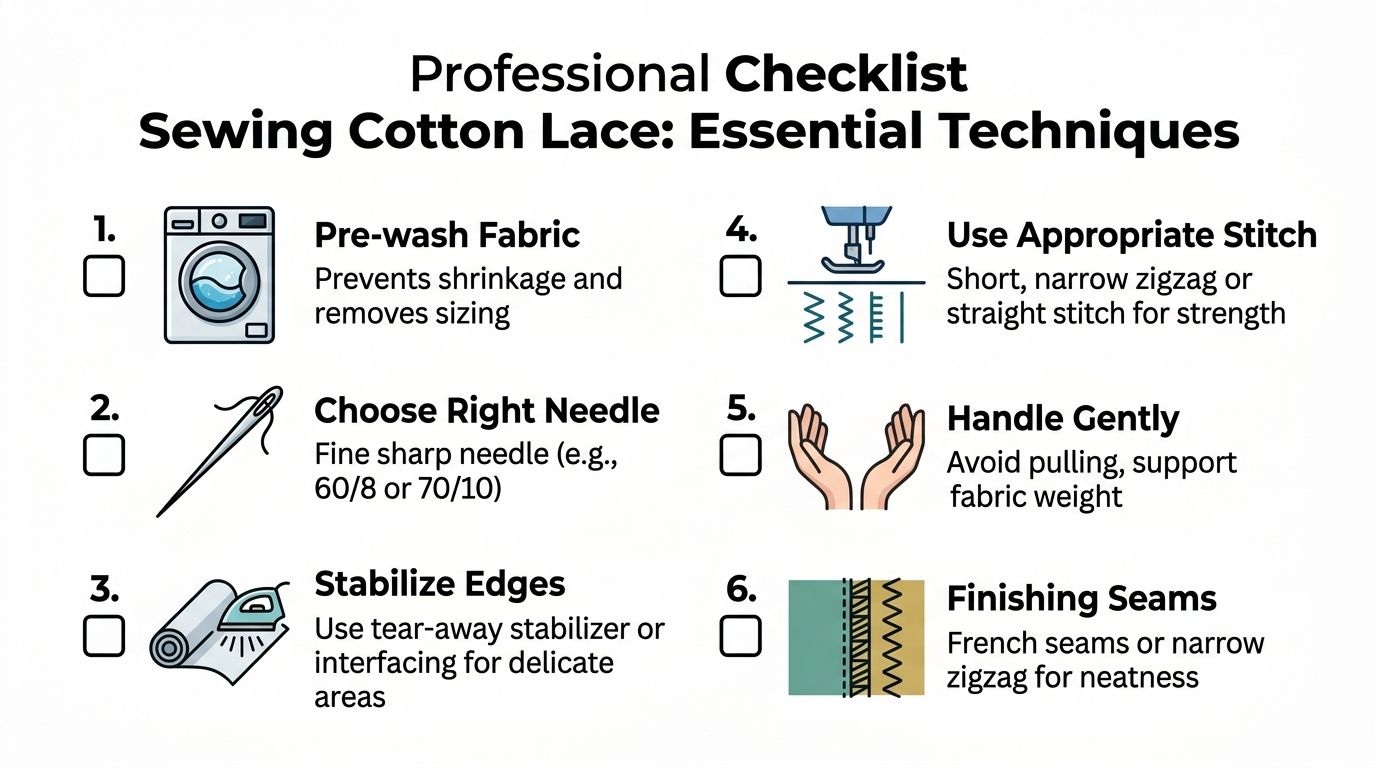
Wash it first if the finished garment will ever be washed. Cotton lace can relax, draw in slightly, or soften after that first laundry cycle, and you want those changes to happen before you cut your pieces.
Then lay it out flat and inspect the whole length. Check for pulled threads, uneven scallops, off-grain repeats, and patches where the embroidery or weave feels thinner. With lace, small inconsistencies are easy to miss until one lands in the centre front of a blouse.
A light press helps. For very soft lace, a little spray starch can give you cleaner edges while cutting, but test it on a scrap. Too much makes delicate lace brittle and unpleasant to handle.
Cut with support, not speed
Single-layer cutting is usually the safest choice, especially if you want mirrored motifs on sleeves, fronts, or cuffs. Folded cutting saves time, but it often gives a mismatched result that looks homemade for the wrong reason.
Keep the full area supported on the table so nothing stretches under its own weight. A rotary cutter and weights are useful here, though sharp shears work well too if the fabric is not hanging off the edge.
This routine avoids many common problems:
Lay the lace flat without any part dropping off the table
Match the visible motifs before you worry about the selvedge
Place pattern pieces with scallops or border edges in mind
Mark in firm areas using fine pins or tailor's tacks
Clip outward notches where possible to protect the seam line
For paired pieces, cut one side first and use it to mirror the second. That extra few minutes often makes the garment look far more considered.
Stitch for the actual structure of the lace
Needle, stitch length, and seam choice depend on how open the lace is. A fine sharp needle is a good starting point, but always test with the exact layers you plan to sew. Cotton lace stitched alone can behave very differently once it is underlined or laid over lining.
Useful options include:
Straight stitch for stable areas with enough fabric under the seam
Narrow zigzag where the lace has larger openings or needs a little flexibility
French seams on fine lace with low bulk
Narrow turned hems on soft edges that are not using a scallop
If a seam falls across a row of large eyelets or very open motifs, shift it slightly into a denser area if the design allows. I do this often on side seams and sleeve seams. It gives the stitching more to hold and helps the garment last.
Here's a useful demonstration to watch before you start stitching delicate lace seams and finishes:
Choose support based on the job the garment needs to do
This decision changes everything. If the lace is acting as the main fabric in a fitted bodice, skirt, or zip area, underlining usually gives the cleanest result. You attach the lace to a support fabric and treat both as one, which improves control during sewing and helps the seams behave.
If you want the lace to stay soft and airy, a separate lining often works better. That suits looser tops, casual dresses, and sleeves where you want movement rather than firmness.
Colour matters, but function matters more. A support fabric should match the weight and purpose of the project. Fine lawn, voile, batiste, or a lightweight cotton sateen can all work, depending on how much body you need.
For necklines, armholes, button bands, and zip openings, add local support at the seam line. A narrow strip of lightweight woven interfacing or seam tape is often enough.
Press gently and finish with as little bulk as possible
Press from the wrong side where you can, and use a pressing cloth. Lift and lower the iron instead of dragging it. If the lace has raised motifs, press over a towel so you do not flatten the texture you paid for.
Finishing should protect the seam without making the inside clumsy. Good choices include:
French seams for fine lace and light garments
Bound seams where you want a tidy interior and do not mind extra work
Lining-enclosed seams for dresses and skirts with a full lining
Trimmed allowances with a narrow zigzag on less visible areas
The neatest cotton lace garments usually come from restraint. Let the lace do the decorative work, and keep the construction methods clean, light, and deliberate.
How to Buy Quality Cotton Lace Fabric in the UK
Buying cotton lace well is half the battle. A beautiful photo online doesn't tell you whether the fabric has body, whether the motifs are crisp, or whether the “cream” is butter yellow when it lands on your doormat.
The UK market is also fragmented. Some lace is sold as made in England, while much is imported. That makes practical checks important. Ordering samples, understanding landed cost where relevant, and reading delivery and returns policies are all part of getting value for money, as noted in this discussion of UK lace provenance and buying practicalities.
What to check before you buy
Start with the listing, but don't stop there. For cotton lace fabric UK shoppers are considering for garments, these details matter most:
Fibre content. You want to know whether you're buying mostly cotton, and whether there's a small synthetic content for recovery.
Width. This affects yield immediately, especially for full-width garment pieces.
Edge finish. Scalloped, straight, bordered, or both-sided decorative edges all change your layout.
Transparency. Product photos rarely tell the full story.
Handle. Crisp, soft, dry, lofty, or slightly springy all sew differently.
If samples are available, order them. Hold the lace over the lining you intend to use. That one test tells you more than ten product photos.
How to spot quality by eye and touch
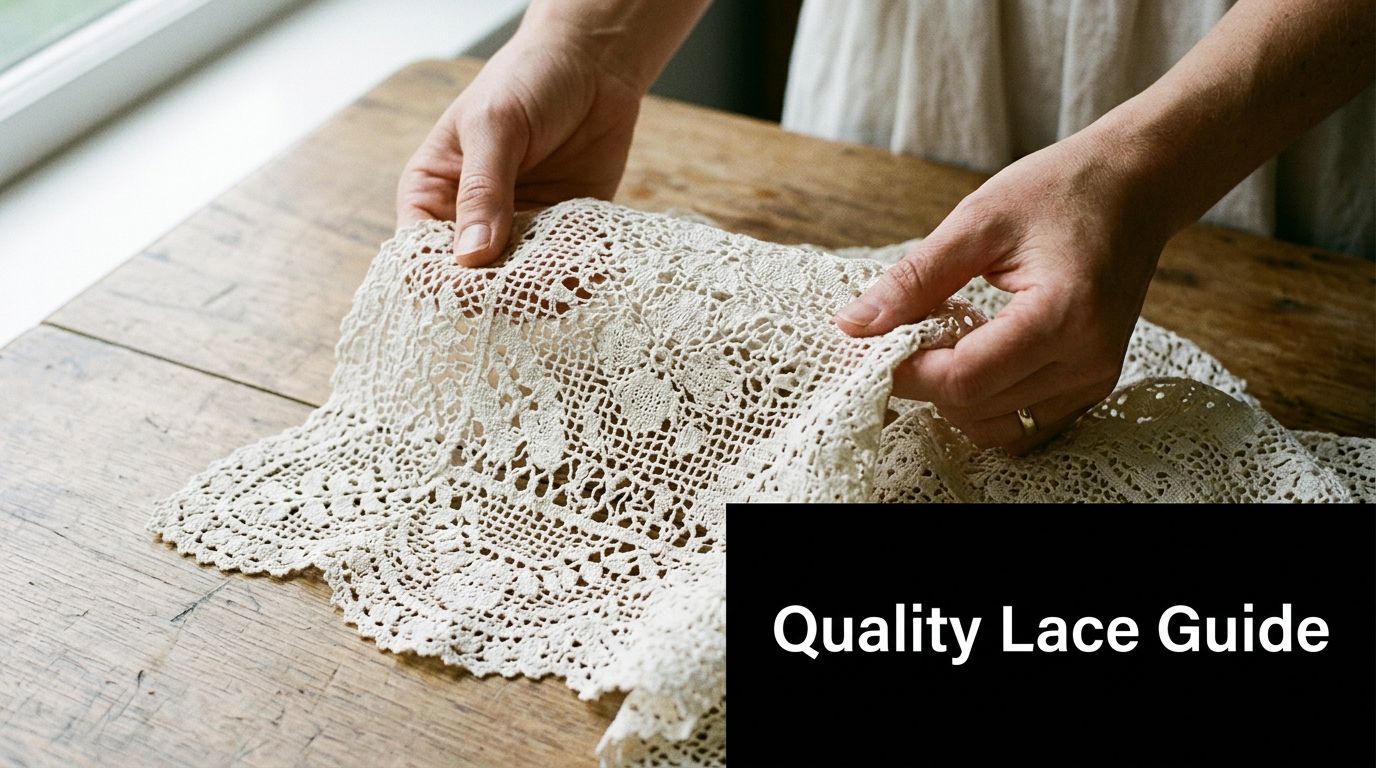
Good cotton lace doesn't have to be heavy, but it should feel coherent. The pattern should look balanced. Threads should sit evenly. Motifs should read clearly rather than dissolving into fuzziness.
Watch for warning signs:
Loose joins between motifs
A harsh hand that feels brittle
Edges that ripple before washing
Obvious distortion across the width
Patchy dye or inconsistent colour depth
If the lace has a border or repeat, ask yourself a layout question before you buy: can you use the best part of the design where you want it? A dramatic scallop is wasted if your pattern pieces don't allow it to land on hem, cuff, or neckline.
Origin, price, and value
Origin can matter, but not in a simplistic way. “Made in England” may be meaningful to you for provenance, handling, or preference. Imported lace may still be excellent. What matters is whether the listing gives enough information to judge what you're paying for.
A sensible buying approach is:
Sample first when the project is important
Compare fabric role, not just price. A trim lace and a full-width garment lace aren't equivalent
Check returns terms before ordering yardage
Factor in support fabrics. A cheap lace that needs an expensive lining may not be the bargain it seems
Look at deadstock options if you want something less common
Deadstock lace can be a particularly smart buy for experienced sewists. You may find unusual patterns, better handle, or more distinctive finishes than mass-market basics. The trade-off is that repeat ordering may not be possible, so buy enough for the whole project if you commit.
Buy lace for the garment you're making, not for the fantasy version of the garment in your head.
That one habit avoids a lot of disappointment. A crisp border lace may be perfect for a skirt hem and completely wrong for a soft gathered sleeve. A tender, airy eyelet may be lovely for a blouse and hopeless for a fitted bodice without support. Match the cloth to the job.
Caring for Your Beautiful Lace Creations
Once you've made a cotton lace garment well, care is the final piece of the job. Treat it gently and it will keep its shape and detail far better.
For most pieces, hand-washing or a gentle cycle is the safer option. Use a mild detergent and avoid rough loads with zips, hooks, or heavy denim. If the garment has particularly open areas, wash it in a mesh bag.
Drying matters just as much. Air-dry rather than tumble-dry. Reshape seams, scallops, and edges while damp, then dry flat or hang carefully if the garment's weight allows it. Heavy wet lace can stretch if it hangs unsupported.
For pressing, use low to moderate heat and a pressing cloth. Press from the wrong side when possible, and don't grind the iron into textured motifs. Lift, press, move.
A handmade lace garment asks for a little more care than a T-shirt, but not much more. If you've chosen the right cotton lace, supported it properly, and sewn it with clean finishes, you'll end up with something both pretty and wearable. That's what brings satisfaction to sewing with lace. It looks special, but it can still fit into everyday life.
If you're looking for cotton lace fabric, linings, haberdashery, or sample swatches for your next project, More Sewing is a practical place to start. The shop offers dressmaking fabrics, sewing supplies, and ready-to-sew options for UK makers, along with fabric sampling and support that help when you want to test colour, handle, and suitability before buying for a full garment.
