
Guides
Sewing Patterns for Ladies Tops: A Practical Guide
You've found a lovely fabric, opened a dozen tabs, and somehow every top pattern now looks either too plain, too fussy, or likely to end in a wadder. That's a very normal place to start. Choosing among sewing patterns for ladies tops can feel harder than sewing the garment.
The problem usually isn't lack of choice. It's too much choice without a clear filter. A top that looks great on the envelope might be wrong for your fabric, your proportions, or how you dress day to day. A pattern described as “easy” can still give a poor result if the fabric is too stiff, too clingy, or lacks recovery.
Good top sewing starts by narrowing the decision properly. Look at silhouette, fabric behaviour, fit points, and construction details in that order. Once those line up, the sewing becomes far more enjoyable.
Your Starting Point for Sewing the Perfect Top
Most sewists don't struggle because they can't sew a top. They struggle because they're trying to pick a pattern before deciding what job the top needs to do.
Start there. Is this top for work under a cardigan, for weekends with jeans, for layering in cooler weather, or for warm days when you still want enough coverage to feel comfortable? The answer changes everything. A floaty blouse, a close-fitting jersey tee, and a boxy woven shell may all count as “tops”, but they behave very differently in the wardrobe.
Ask these questions before you buy
- Where will you wear it most often. A top for daily use needs to wash well, layer easily, and feel comfortable through a full day.
- What fabric do you already have. A drapey viscose won't behave like cotton lawn, and a stable ponte won't act like a soft single jersey.
- How much fitting are you willing to do. Some patterns are forgiving. Others rely on precise dart placement, shoulder width, and bust shaping.
- What sewing details do you enjoy. If you hate collars and button plackets, don't pick a shirt pattern just because the line drawing looks polished.
That quick check saves a lot of disappointment.
Practical rule: If you can't picture the finished top with at least three outfits you already own, keep looking.
There's also a useful mindset shift here. Don't chase the most fashionable pattern first. Chase the pattern you'll wear most. In a handmade wardrobe, a simple top that fits well and suits the fabric will outperform a dramatic design that hangs awkwardly or sits unworn.
If you approach sewing patterns for ladies tops this way, the process becomes much clearer. You're not asking, “Which pattern is nicest?” You're asking, “Which pattern, in this fabric, will become a top I reach for again and again?”
Decoding the Different Types of Top Patterns
The top patterns we use now didn't appear out of nowhere. The move from bespoke tailoring to home sewing accelerated in the 1860s, when Ebenezer Butterick introduced graded paper patterns, helping make dressmaking accessible at home and shaping the pattern types still used today, many rooted in basic bodice constructions from earlier centuries, as outlined in this history of sewing paper patterns.
That history matters because most modern tops still come from a few core shapes. Once you recognise them, you can tell a lot from the line drawing before you ever cut fabric.
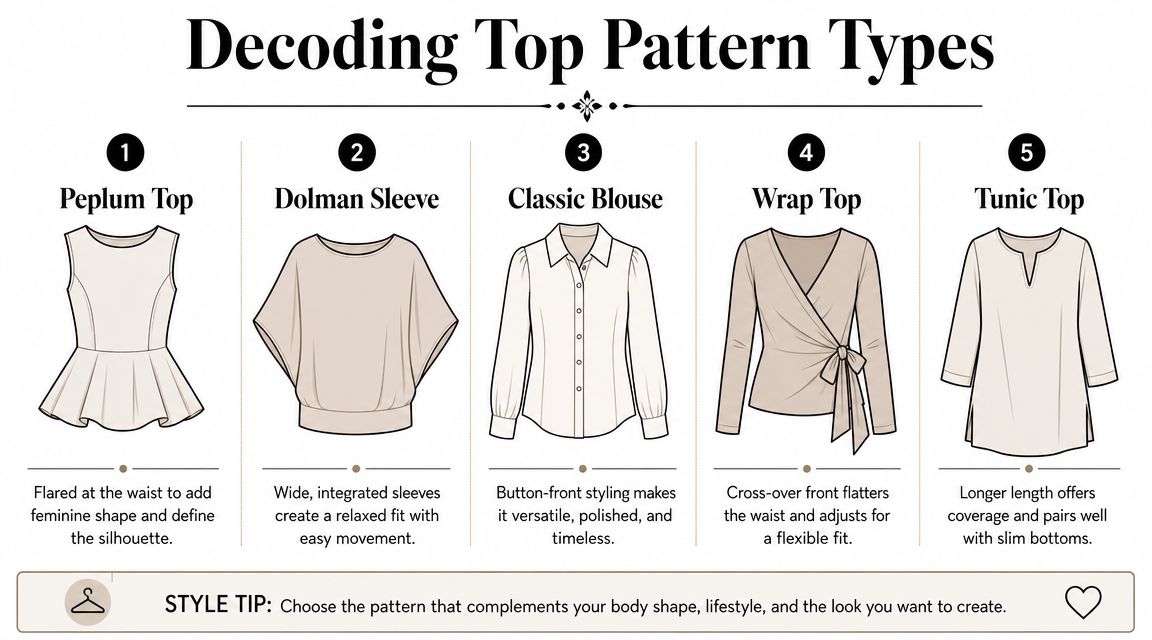
Blouse patterns
A blouse usually relies on woven fabric and some degree of shaping. That shaping might come from bust darts, back darts, gathers, pleats, or a yoke. The result is often smarter and a bit more polished than a basic tee.
What works well:
- Soft fabrics with movement for styles with gathers or softer sleeves
- Crisp fabrics for shirts with collars, stands, and button plackets
- Patterns with enough shaping to avoid a tent-like fit
What often goes wrong:
- Using a stiff woven in a design that needs drape
- Ignoring bust level and ending up with darts that point too high or too low
- Choosing an oversized style and then using bulky fabric, which can make the whole top look heavy
T-shirt and jersey top patterns
These are drafted for knit fabrics and usually depend on stretch and recovery rather than darts for comfort. A classic set-in sleeve tee looks different from a dolman or batwing style, even if both are simple to sew.
A dolman sleeve is cut as part of the bodice, so it gives easy movement and a relaxed look. A set-in sleeve has a defined armhole and often looks neater under jackets and cardigans.
Tunics and relaxed woven tops
Tunics, smocks, and loose shells prioritise wearing ease. They can be brilliant everyday garments, especially if you like tops that skim rather than cling.
These patterns suit:
- Layering over slim trousers or jeans
- Fabrics with enough softness to fall close to the body
- Sewists who want fewer close-fit issues at the waist
They don't suit every fabric. If the cloth is too firm, the garment can stand away from the body and look boxy rather than easy.
Structured shirts and button-front tops
These are the most detail-heavy option. Think collar, collar stand, cuffs, sleeve plackets, front bands, or classic shirt shaping.
A good shirt pattern asks more from both the fabric and the maker. In return, it gives one of the most hard-working garments in a handmade wardrobe.
If you're learning, it's often better to start with a collarless blouse or simple camp shirt before going straight to a traditional shirt with every tailoring detail.
Useful pattern terms to recognise
| Term | What it means in practice | Why it matters |
|---|---|---|
| Dart | Folded shaping stitched into the garment | Controls fit at bust, waist, or shoulder |
| Set-in sleeve | Separate sleeve inserted into an armhole | Gives a cleaner shoulder line |
| Dolman sleeve | Sleeve cut as part of the bodice | Easier fit through upper arm, softer shape |
| Placket | Finished opening, often at centre front or sleeve | Adds access and structure |
| Yoke | Separate upper section, often at shoulders | Helps shape and supports gathers |
When you can read those details from the line drawing, pattern shopping gets much easier.
Choosing a Flattering Pattern for Your Body Shape
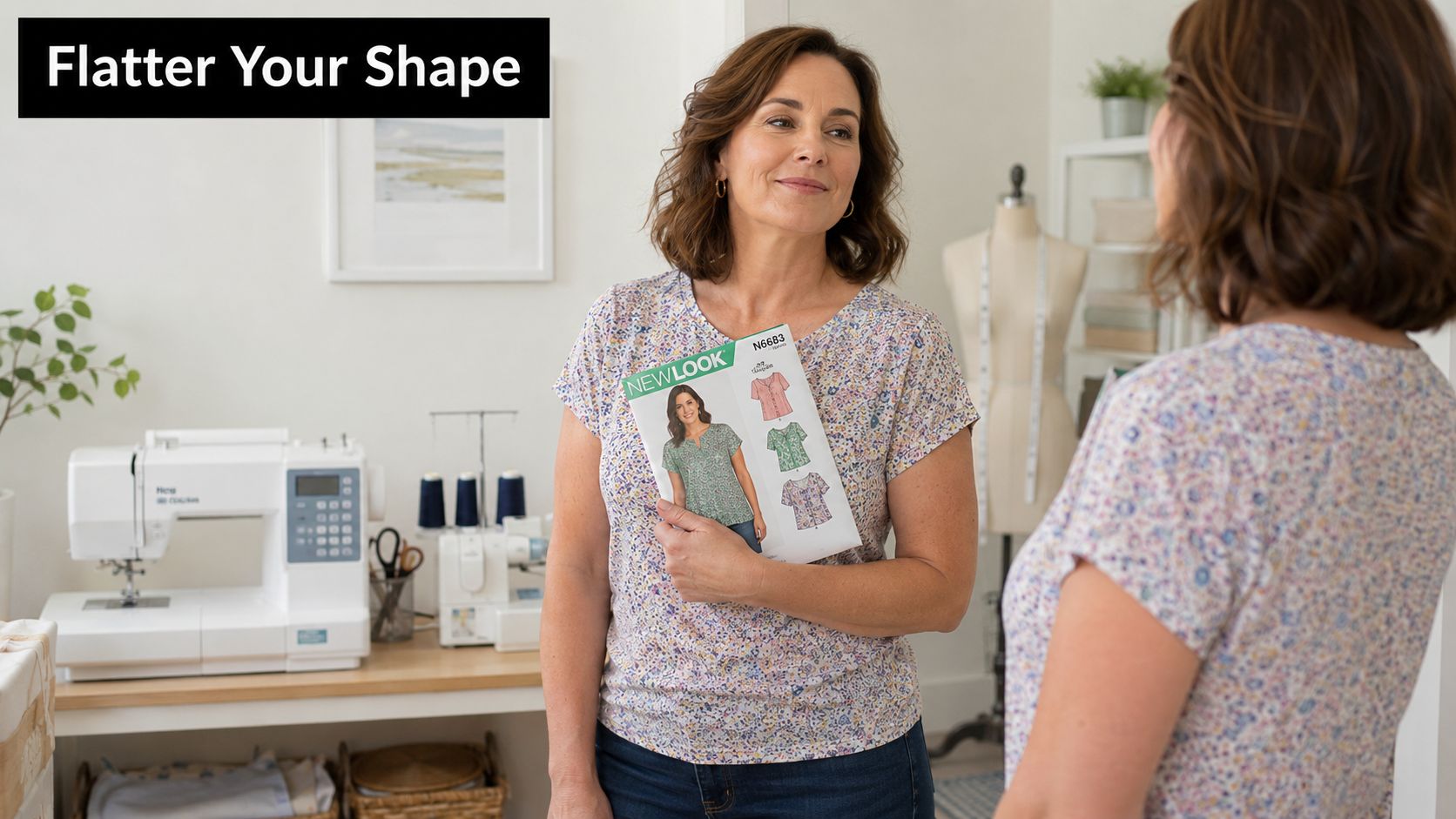
A flattering top isn't the one everyone else is sewing. It's the one that gives you the balance you like when you put it on. That may mean more structure, more drape, more waist definition, or less of all three.
Many UK sewists run into the same problem. Patterns often need adjustment for bust darts, shoulder width, and sleeve ease, and finding brands with better grading across UK sizes can cut down the amount of toile-making and alteration needed, as discussed in this overview of fit issues in women's top patterns.
Focus on proportion, not rules
A few design features make a big difference:
- V-necks and open necklines draw the eye vertically. They can feel less crowded on a fuller bust or broader shoulder.
- Peplums and shaped waists create definition if you like your waist to read clearly.
- A-line and swing tops skim over the midsection and hip. They can feel easy and comfortable, especially in drapey fabric.
- Dropped shoulders and dolman sleeves soften the upper body but can add visual width if the fabric is bulky.
- Vertical seams or button fronts often look tidier and longer than one uninterrupted block of fabric.
If you're not sure where to begin, stand in front of the mirror with your favourite ready-to-wear tops and ask what they share. Neckline? Shoulder shape? Hem length? Ease through the waist? That tells you more than trend round-ups ever will.
Common fit clues from the line drawing
A line drawing gives away a lot.
If the bust dart is long and strong, expect more shaping through the front. If the shoulder seam sits back, the style may suit narrower shoulders better than broad ones. If the sleeve is slim and high, check whether you'll want extra room through the bicep.
For readers who also want broader styling ideas once the top is finished, this guide on how to create flattering outfits is useful because it looks at proportion in a wearable, everyday way.
The best pattern for your shape is usually the one that echoes the tops you already wear well, not the one that asks you to become a different dresser.
A better way to choose
Instead of saying “I'm pear-shaped, so I need X,” ask more practical questions:
- Do I like tops that follow my shape or skim over it?
- Do I need room at the bust, shoulder, or upper arm first?
- Where do I prefer the hem to finish?
- Will I wear this tucked, loose, or layered?
That approach leads to better sewing choices than any rigid body-shape formula.
How to Pair Patterns with the Perfect Fabric
Fabric choice decides whether a top looks intentional or homemade in the wrong way. Two sewists can use the same pattern and get completely different results because one chose a cloth with the right drape and the other didn't.
For UK sewists, fabric behaviour matters as much as style. A top's success often depends on whether a jersey has enough recovery to avoid sagging, or whether a woven has enough drape to stop the garment turning boxy. That performance-first approach also fits the growing interest in making durable wardrobe pieces, as noted in this discussion of fabric behaviour and wearability.
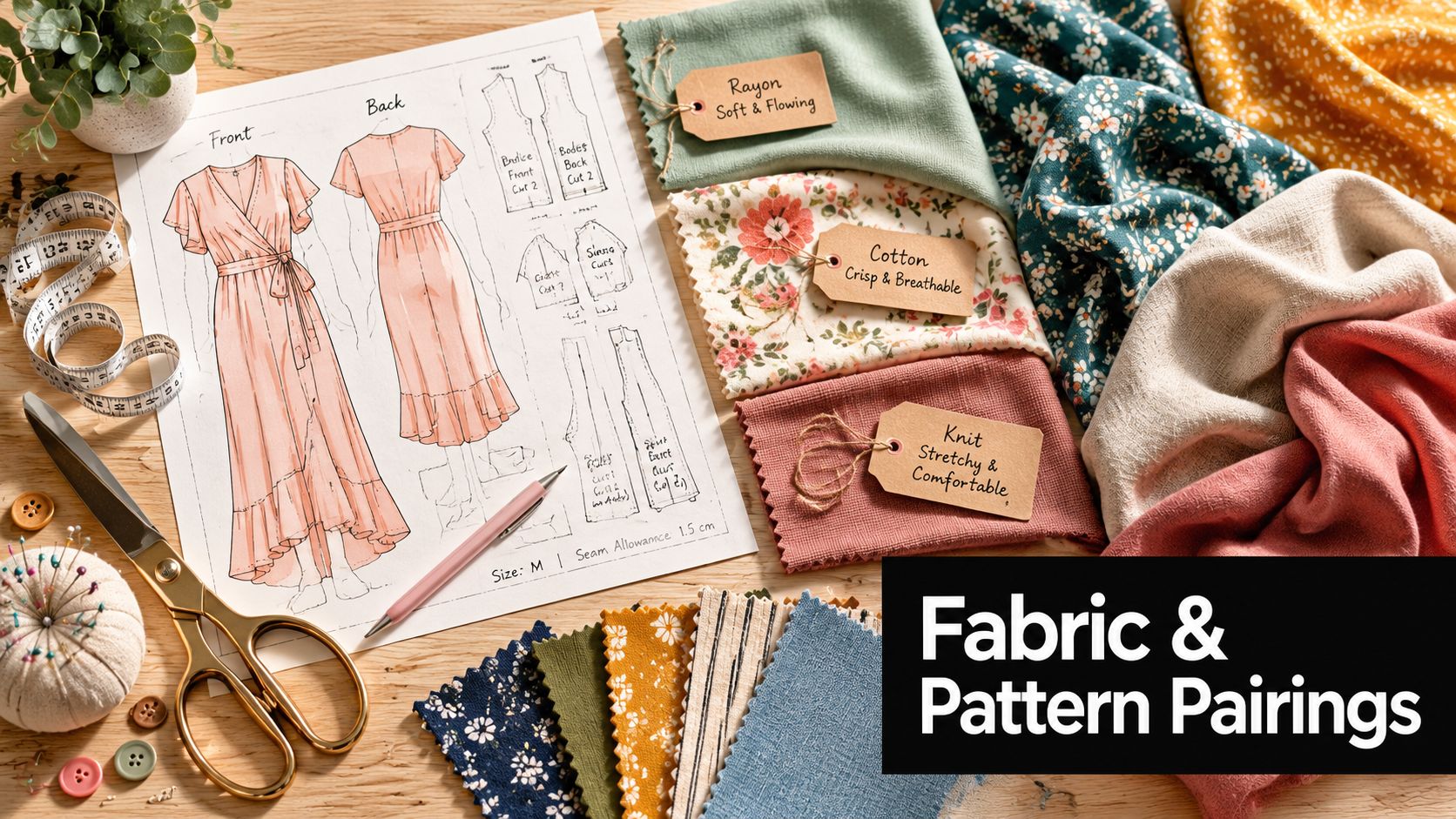
Read the fabric, not just the label
“Viscose”, “cotton”, or “jersey” only tells you part of the story. You need to judge four things:
- Drape. Does it fall close to the body or hold its own shape?
- Weight. Is it airy, medium, or substantial?
- Recovery. If it stretches, does it spring back?
- Opacity. Will the top need layering, facings, or careful finishing?
A soft viscose or Tencel can make a gathered blouse look elegant and fluid. Put that same pattern into a crisp cotton poplin and the gathers may puff outward instead of falling neatly. The opposite happens too. A structured shirt pattern can lose its sharpness in a slinky fabric that won't support the collar or placket cleanly.
What works with what
| Top Style | Best For | Fabric Suggestions (from More Sewing) | Skill Level |
|---|---|---|---|
| Classic blouse | Workwear, layering, everyday polish | Viscose, Tencel blend, cotton lawn | Intermediate |
| Boxy woven shell | Simple wardrobe basics, summer layering | Linen blend, cotton poplin, light deadstock woven | Beginner |
| Jersey tee | Casual wear, layering under knitwear | Cotton jersey, viscose jersey, stretch deadstock knit | Beginner |
| Peplum top | Waist definition, dressed-up separates | Soft cotton lawn, viscose, light Tencel | Intermediate |
| Relaxed tunic | Easy fit, weekend wear, leggings or slim trousers | Washed linen blend, drapey viscose, soft deadstock woven | Beginner to intermediate |
Fabric pairings that usually succeed
Some pairings are reliable because the fabric supports the design idea.
- Drapey blouse + viscose or Tencel. Good for soft gathers, flutter sleeves, and tops that need movement.
- Classic shirt + cotton lawn or poplin. Better for collars, cuffs, and crisp topstitching.
- Casual tee + jersey with good recovery. Better for neckbands that don't collapse and hems that keep their shape.
- Relaxed shell + deadstock woven with a soft hand. Good if you want simplicity without a stiff silhouette.
And some pairings are notorious for disappointing results.
- A boxy shell in a heavy, springy linen can look square.
- A clingy jersey in a very fitted top can emphasise every line if that's not the effect you want.
- A peplum in fabric with too much body can stick out from the waist rather than fall nicely.
This video gives a helpful visual sense of how fabric choice changes a project in practice:
Think about a UK wardrobe, not a single outfit
A successful handmade top usually has to do more than look nice on its own. It needs to work under a cardigan, under a jacket, and across changing weather.
Fabric check: Before cutting, scrunch the fabric in your hand, let it hang, and drape it across your shoulder. That quick test tells you more than the fibre label alone.
If you want a blouse for year-round use, choose a fabric that layers well and isn't so sheer that it becomes awkward. If you want a summer top, think about whether it will still work with light knitwear or a denim jacket. That's how you end up with tops you wear often, not just once.
Nailing the Fit Your Essential Guide to Adjustments
Fit starts before the first seam. If the starting size is wrong, every later adjustment becomes harder than it needs to be.
For tops in UK dressmaking, choose your pattern by bust measurement, not by hip measurement or high street size, and remember that most commercial patterns include a 15 mm (5/8 inch) seam allowance, which affects how you sew and finish the garment, as explained in this guide to understanding sewing pattern sizing and seam allowances.
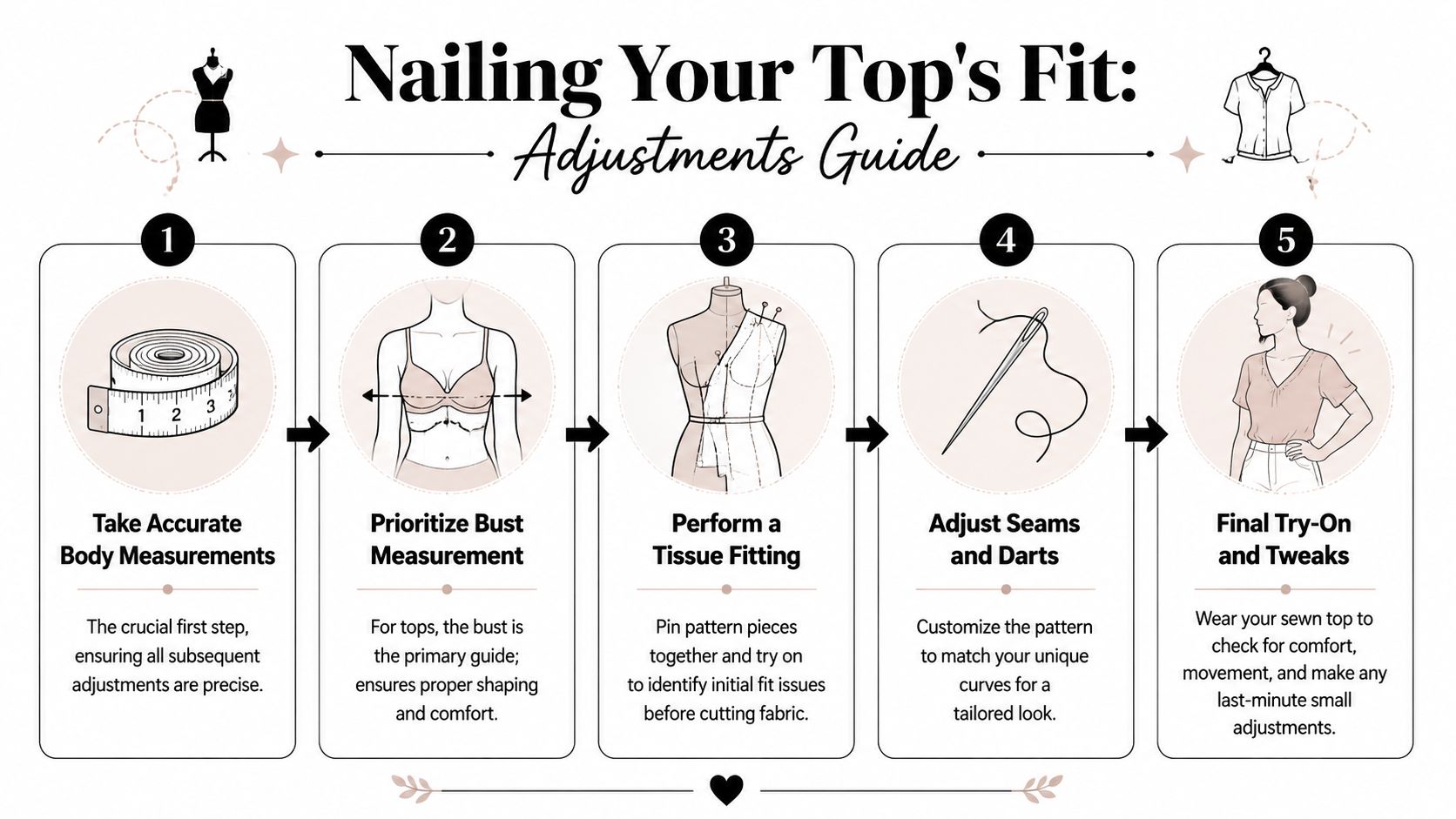
Measure with purpose
For a top, the bust is the anchor point. That's because the bust controls how the front of the garment hangs, where darts land, and whether the armhole sits correctly.
Take these measurements before choosing a size:
- Full bust
- High bust
- Waist
- Shoulder width
- Bicep
- Back waist length
Keep them written on a card or in your phone. Once you know your own pattern adjustments, repeat sewing becomes far easier.
The adjustments that matter most
You do not need to alter everything. Start with the changes that affect wearability most.
Full bust adjustment or small bust adjustment
If the pattern fits your shoulders but strains or bags at the bust, change the front piece rather than sizing up or down. That keeps the neckline and shoulder closer to your frame.Lengthen or shorten the bodice
If the waist seam, dart point, or peplum seam sits in the wrong place, bodice length is often the issue. Adjust at the marked lengthen/shorten line if the pattern includes one.Grade between sizes
Many sewists need one size at the bust and another at the waist or hip. Blend smoothly between cutting lines rather than choosing one size all over.Adjust sleeve width
If woven sleeves feel tight across the upper arm, add width at the bicep rather than jumping to a much larger size.
Make the seam allowance work for you
That standard 15 mm seam allowance is useful. It gives you room to overlock, use a zigzag, or finish seams with a twin needle or another method without changing the intended fit if you sew accurately.
If you're unsure about fit, baste the side seams first and try the top on before final finishing. That one habit prevents a lot of regret.
Tissue fitting or pinning the main pattern pieces together before cutting fabric won't solve every problem, but it quickly shows whether the neckline, shoulder, and overall width look sensible on your frame.
A sensible fitting order
| Step | What to check first | Why first |
|---|---|---|
| 1 | Shoulders and neckline | They affect the whole upper garment |
| 2 | Bust level and dart position | Front shaping depends on this |
| 3 | Armhole and sleeve comfort | Movement matters more than a perfect flat fit |
| 4 | Bodice length | Stops waist shaping sitting in the wrong place |
| 5 | Side seams and hem | Fine-tuning comes last |
The goal isn't perfection on the first toile. The goal is a top that feels right when you sit, lift your arms, and wear it for a day.
Working with PDF and Paper Sewing Patterns
Pattern format changes the prep, not the principles. Both PDF and paper can work brilliantly if you use them in the right way for your space and habits.
Why sewists choose PDF
PDF patterns are convenient. You can buy one in the evening and print it the same night. They're especially useful if you want access to layered sizing, projector files, or quick reprints after making alterations.
A few habits make PDF patterns much easier:
- Print the test square first. If that's off, every size line will be off.
- Use layers if the file includes them. Printing only your size cuts visual clutter.
- Choose one assembly method and stick to it. Some people trim two sides and overlap. Others cut nothing and match edge to edge. Consistency matters more than which method you pick.
- Save files in named folders. Pattern, instructions, print shop copy, and altered copy should not all float loose on your desktop.
If you regularly reorganise large files or separate pattern sheets from instruction booklets, a guide on PDF splitting for any workflow can be very handy.
Why sewists still love paper
Printed paper patterns are still easier for many people to visualise. There's no assembly, and tissue can be quick to pin, fold, and compare.
The main tip is simple. Trace, don't cut, if you think you may need another size later or want to keep the original intact. Tracing paper, a felt-tip pen, and a ruler are often all you need. Mark your alterations on the traced copy, not the master.
Storage and usability
| Format | Best point | Main nuisance |
|---|---|---|
| Fast access and reprinting | Printing and assembly time | |
| Paper | Immediate use and easy overview | Storage and preserving multiple sizes |
If you've got limited space, PDFs can be easier to archive. If you prefer spreading everything over a large table and seeing the whole pattern at once, paper may suit you better. Neither format is superior for everyone. The better choice is the one that gets you sewing instead of procrastinating.
Simple Hacks to Make Any Top Pattern Your Own
A good pattern doesn't have to stay exactly as drafted. Small changes often give the biggest payoff, especially once you've already sewn the pattern once and understand how it fits.
Easy changes with a big visual effect
- Change the neckline. A round neck can often become a gentle V-neck if you redraw the front neckline and adjust the facing or binding to match.
- Swap the sleeve. Shorten a full sleeve, remove it entirely, or borrow a sleeve from another pattern you've already fitted.
- Alter the hem shape. Straight hems look clean. Curved hems soften a basic top and often layer well.
- Add a feature fabric. Contrast cuffs, a collar, a pocket, or a back yoke can use smaller cuts of special fabric.
- Play with colour blocking. Split front or sleeve sections are a practical way to use leftovers and create a more designed look.
Keep the first hack simple
Don't change neckline, sleeve, length, and fit all at once. Make one design change on a pattern you already understand. That way, if something doesn't work, you know what caused it.
A reliable pattern with one thoughtful tweak is usually more stylish than an overcomplicated pattern with five untested changes.
Good places to start
If you're new to hacking sewing patterns for ladies tops, begin with changes that don't disturb the armhole or shoulder. Hem shape, sleeve length, neck depth, and patch pockets are safer than redrafting the entire upper bodice.
This is also where a small stash of quality fabric pays off. A plain top pattern can look completely different in a soft drapey woven, a lively printed jersey, or a contrast deadstock remnant used for detail pieces. Once you've got the fit sorted, those creative choices are what make the garment feel like yours.
If you're ready to turn a pattern into a top you'll love wearing, have a look at More Sewing for dressmaking fabrics, haberdashery, and practical supplies. It's a useful place to source viscose, Tencel blends, jersey, cottons, and deadstock options when you want to match the right fabric to the right pattern with confidence.
