You've found a denim fabric you like, opened three tabs, and now everything sounds the same. One listing says rigid. Another says washed. A third says stretch, soft handle, ideal for jeans, skirts, jackets, bags, and apparently half your life.
That's usually the point where a project stalls.
Denim is one of the most useful fabrics you can sew, but it only behaves well when you match the cloth to the job. The right denim fabric feels cooperative under the needle, presses cleanly, and gives you the finish you had in mind. The wrong one fights every step, from cutting to topstitching to the first wash.
We talk customers through this choice all the time, and the same questions keep coming up. What makes denim different from other cottons? How heavy is too heavy for a home machine? Is stretch denim worth it? And what should you buy if you want jeans that last, not jeans that bag out at the knees after a few wears?
Understanding Denim's DNA Weave Dye and Selvedge
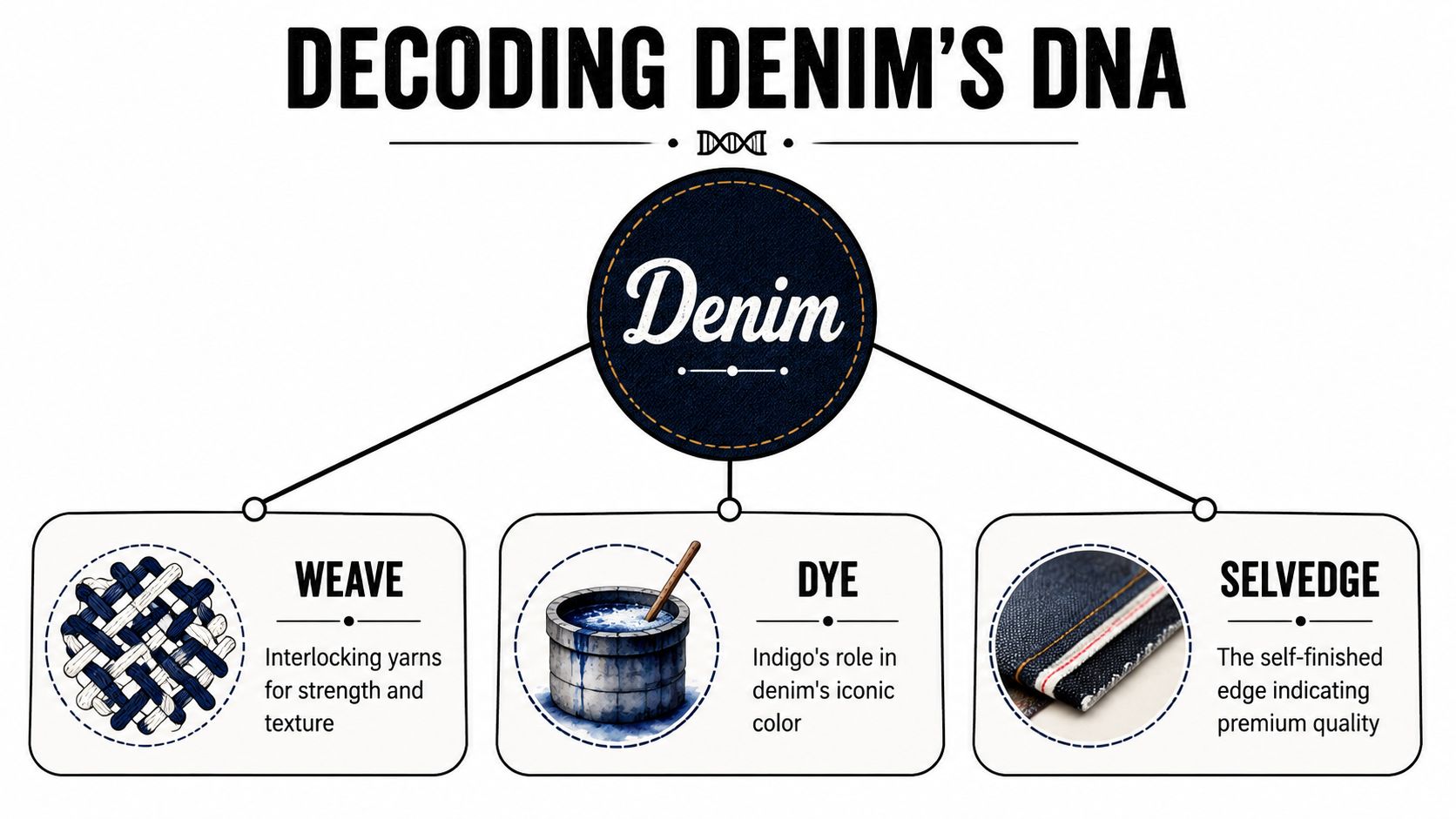
Denim isn't just “blue cotton”. Its character comes from three things working together. The weave, the dye, and the edge finish tell you most of what you need to know before you ever cut into it.
Twill weave gives denim its strength
At the heart of denim is a twill weave. If you look closely, you'll see faint diagonal lines running across the cloth. Those lines come from the way the threads pass over and under each other in a staggered pattern.
A simple way to think about it is a tiny staircase. Plain weave goes up and down in a strict grid. Twill steps across the fabric on the diagonal. That shift changes how the cloth feels and performs.
For the home sewist, that means a few practical things:
- More durability: Twill stands up well to abrasion, which is why denim works for jeans, aprons, and hard-wearing jackets.
- Better drape than you might expect: Even firm denim can bend and mould in a way that flat canvas often doesn't.
- A clear right and wrong side: One side usually shows the indigo face more strongly, while the reverse often reveals lighter weft threads.
If you've ever compared denim with upholstery cloth, the weave structure explains a lot. Fabrics for interiors can also rely on weave for pattern and performance. If you're curious how decorative structure changes a fabric's surface in a completely different category, this guide to jacquard fabric for sofa covers is a useful contrast.
Practical rule: If you can see the diagonal twill line clearly, you can usually predict a more classic denim look and a firmer, more durable finish.
Indigo dye is why denim fades so well
Classic denim fabric is known for its indigo-dyed warp yarns and lighter weft yarns. You don't need to memorise the chemistry to use this knowledge well. What matters is that indigo tends to sit differently on the yarn than many solid garment dyes.
That's why denim often fades at seams, pocket edges, hems, and stress points. The wear pattern becomes part of the garment. On a handmade piece, that can be beautiful, but it also means every pressing mark, every topstitched line, and every crease becomes more visible over time.
This affects sewing decisions more than people realise. If you unpick dark denim repeatedly, the needle marks may remain. If you press a hem in the wrong place and then change it, the crease can linger. Chalk and washable markers should always be tested first, especially on deep indigo.
Selvedge changes the edge, not the rules of sewing
Selvedge denim has a self-finished woven edge created on narrow looms. You'll often spot it by the neat edge, sometimes with a coloured line running along the side. People often treat selvedge as a completely separate world, but for most home dressmakers it's one more fabric characteristic to use well.
What selvedge means in practice:
- Cleaner cut edges on the selvedge side: Useful for design details such as turned-up hems, exposed seam allowances, or pocket accents.
- Narrower usable width: Layout matters more, especially for wide pattern pieces.
- Usually a firmer hand: Not always, but often enough that it's worth checking before buying for close-fitting styles.
Selvedge doesn't automatically make a project better. If you're making wide-leg trousers, a dress with large panels, or anything that needs broad pattern pieces, a standard non-selvedge denim may be more practical and less wasteful.
A Practical Guide to Denim Types and Weights
Walk into any fabric shop and you'll meet a small family of denims that all look related but behave quite differently. The best choice comes down to how much structure you want, how much ease you need, and how patient you are willing to be while sewing and wearing it.
Raw and washed denim
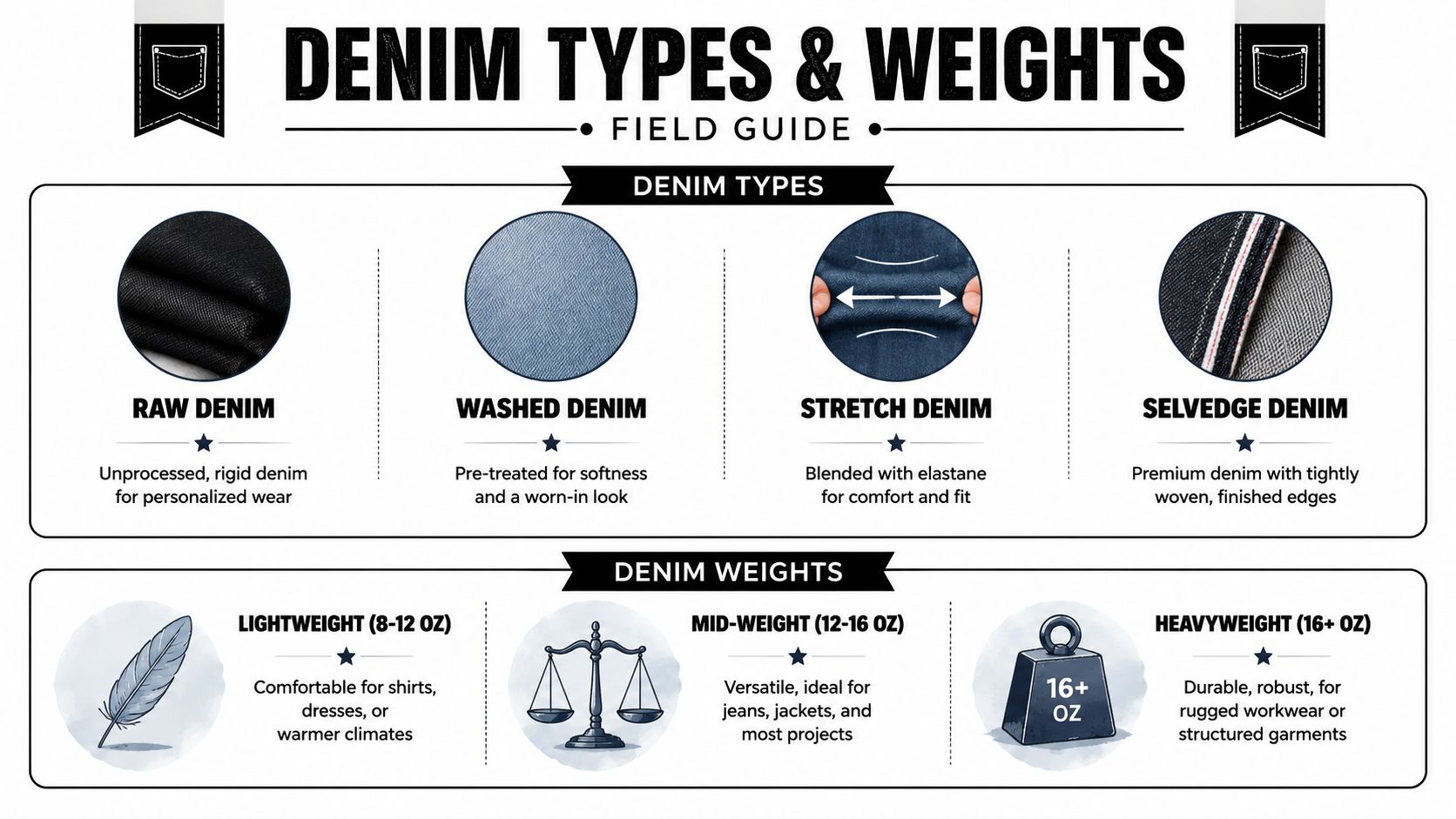
Raw denim is unwashed and usually feels crisp, dry, and a bit stubborn at first. It gives you sharp seams, strong structure, and a garment that gradually softens through wear. For classic jeans or a workwear-style jacket, that firmness is often exactly the point.
Washed denim has already been softened. It's easier to cut, easier to press, and less likely to feel board-like when you first wear it. If you're making a shirt dress, relaxed trousers, or a child's pinafore, washed denim often saves time and frustration.
The trade-off is simple. Raw denim gives more structure and a more personalised break-in. Washed denim gives quicker comfort and easier handling.
A quick visual walkthrough helps when fabric names start blurring together:
Stretch and non-stretch denim
Many projects succeed or fail here.
Stretch denim can make fitted jeans, slim skirts, and close-cut trousers far more wearable. A little give through the hip and thigh is lovely in daily life. It also helps if your pattern is designed for negative ease or a body-skimming fit.
But stretch isn't automatically better. Consumer-facing guidance notes complaints around pilling, shrinking, fading, static cling, and loss of shape in non-cotton denim blends, while 100% cotton denim is often valued for durability and repairability according to consumer feedback on non-cotton fibres in denim.
That lines up with what many sewists notice at home. Stretch denim can feel wonderful on day one, then slowly relax in the seat or knees. Non-stretch cotton denim can feel firmer at first, but it usually holds up better to hard wear, patching, and visible mending.
Choose stretch when fit and movement matter most. Choose non-stretch when longevity, crisp structure, and repairability matter most.
What weight means under the needle
Denim weight is often given in oz, and some shops also use GSM. Whatever the label says, the practical question is this. How thick, stiff, and heavy does it feel once folded, topstitched, and pressed?
Use this field guide:
- Lightweight denim: Best for shirts, dresses, soft skirts, and loose trousers. It drapes more, gathers more easily, and won't build as much bulk at seams.
- Mid-weight denim: The all-rounder. Good for most jeans, overshirts, pinafores, boiler suits, and casual jackets.
- Heavyweight denim: Best for structured jackets, bags, aprons, and durable jeans if your machine can handle thick seam intersections.
How each weight behaves in real sewing
| Denim type | How it feels to sew | Best for | Common frustration |
|---|---|---|---|
| Lightweight | Feeds smoothly, presses easily | Shirts, dresses, skirts | Can stretch out on curved edges |
| Mid-weight | Stable and versatile | Jeans, jackets, dungarees | Bulk at waistband or flat-felled seams |
| Heavyweight | Very durable but demanding | Bags, outerwear, workwear | Needle strain and thick hump seams |
If you're unsure, mid-weight denim fabric is usually the safest first purchase. It gives enough body to feel like denim, but it won't punish every small mistake.
Matching Denim Fabric to Your Sewing Project
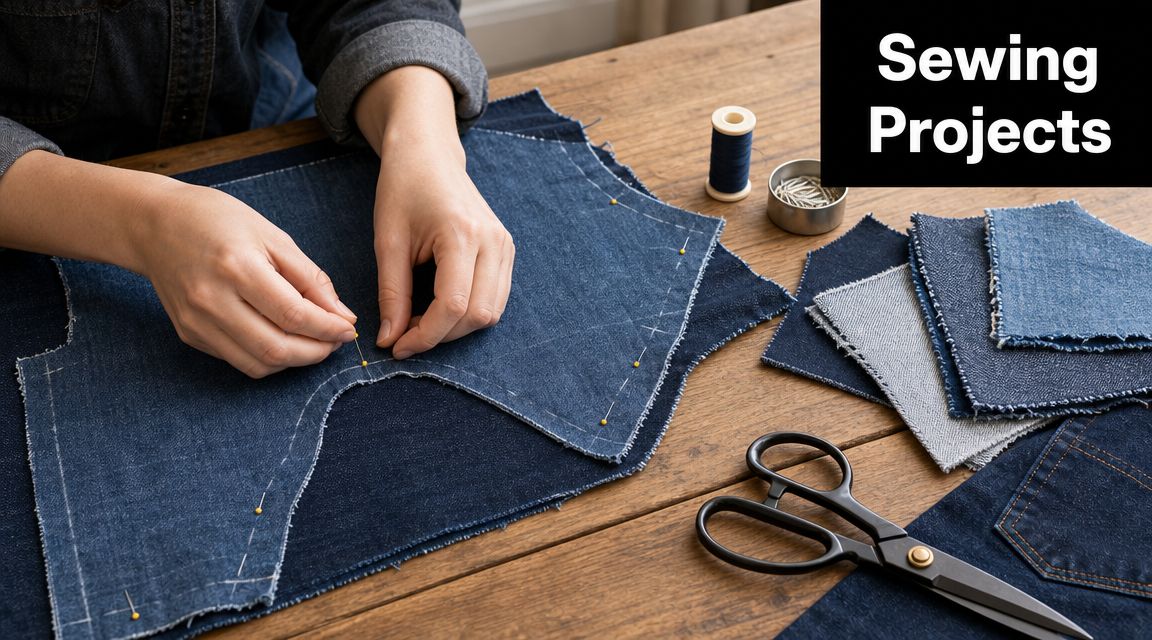
Good project matching saves more disappointment than any expensive tool. A denim fabric can be beautiful on the bolt and still be wrong for the garment in your head.
For classic jeans
If you want that traditional jeans look, reach for a mid-weight to heavier non-stretch denim with enough body to support topstitching, belt loops, and a proper zip fly. This is the fabric that gives a clean waistband, a crisp back yoke, and pockets that don't sag immediately.
For a first pair, don't choose the stiffest cloth in the shop. A denim that has some body but can still fold without feeling like cardboard will be easier to manage. Your machine, your hands, and your seam ripper will all thank you.
If you prefer very fitted jeans, a stretch denim makes more sense. It's more forgiving through the hip and calf and easier to wear for long days. The trick is choosing a pattern drafted for stretch. Using a rigid jeans pattern with stretch denim can leave you with a saggy fit, and using a stretch pattern with rigid cloth can leave you unable to sit down.
For jackets, skirts, and dresses
A mid-weight denim suits most jackets because it holds a collar, cuff, placket, and pocket flap nicely. It gives shape without turning every seam into a wrestling match. For chore coats and overshirts, this is often the sweet spot.
Skirts are more varied. A straight skirt or A-line can take a firmer denim well, especially if you want visible topstitching and a neat structured shape. A gathered skirt, shirt dress, or softer pinafore works better in a lighter denim with movement.
Here's the easiest way to decide:
- Want structure: choose firmer denim with less drape.
- Want swing or softness: choose lighter washed denim.
- Want close fit: choose a suitable stretch denim.
- Want longevity and easy mending: choose mostly cotton or fully cotton denim.
If a pattern includes gathers, facings, and curved seams all in one project, don't make your life harder with overly heavy denim.
For bags, aprons, and utility makes
Heavy denim shines in projects that benefit from toughness. Tote bags, tool rolls, market aprons, floor cushions, and storage baskets all suit a more rigid cloth. The fabric stands upright better, carries weight more confidently, and survives rough handling.
This is also where scraps become useful. Pocket facings, bag bases, hanging loops, and reinforcement patches can all come from leftover denim pieces. A small remnant rarely goes to waste.
When denim isn't the best choice
Sometimes the right answer is not denim.
If you want a summer shirt, a softly pleated dress, or trousers with lots of fluid movement, chambray or a lighter cotton twill may suit the project better. Chambray gives a denim-like look but feels lighter and flatter because it isn't built in the same way. A soft twill can also mimic some of denim's practicality without the same bulk.
Choose denim when you want visible structure, durability, and that classic twill personality. Choose its lighter cousins when drape matters more than grit.
Essential Techniques for Flawless Denim Sewing
Denim doesn't need a heroic sewing machine or industrial setup. It does need the right toolkit and a bit of discipline. Most problems come from using the wrong needle, forcing thick seams, or treating denim like ordinary quilting cotton.
Needles and thread that actually work
Start with a jeans or denim needle. For many projects, a 90/14 or 100/16 works well. For heavier denim or bulky topstitching areas, move up to 110/18 if your machine supports it. The stronger shaft helps the needle push through dense twill without deflecting.
Thread matters just as much. Standard all-purpose polyester thread works for construction seams on many projects. For visible topstitching, use a dedicated topstitching thread in the needle and test your tension first. If your machine dislikes thicker thread in the bobbin, keep regular thread underneath and topstitching thread only on top.
A few habits prevent trouble fast:
- Change the needle early: Denim blunts needles faster than lighter dressmaking fabrics.
- Test on layered scraps: Use the same number of folds you'll meet at hems or waistbands.
- Match thread to the look: Gold topstitching thread highlights every line. A tonal thread is more forgiving.
Machine setup for smoother stitching
Denim likes a slightly longer stitch than very light fabrics. Tiny stitches can look cramped and can make thick seams feel stiff. Test your stitch length on scraps until your seam looks balanced and the fabric feeds evenly.
A walking foot can help when layers shift, especially on washed denim, stretch denim, or projects with long seams. If you don't have one, reduce pressure on the presser foot if your machine allows it, and avoid pulling the fabric from front or back.
Sew over bulky seams slowly. Hand-turn the wheel if needed. Speed breaks more needles than thickness does.
Seam finishes that suit denim
You don't always need a fancy finish, but denim rewards strong seam choices.
Flat-felled seams are the classic option for jeans and workwear. They enclose the raw edge, add strength, and create that unmistakable double-stitched look. They take more handling, but they're worth learning.
Basic method for a flat-felled seam:
- Sew the seam with one seam allowance slightly wider than the other.
- Trim the narrower allowance.
- Press both allowances to one side.
- Fold the wider allowance around the trimmed one.
- Topstitch close to the fold to secure it.
For lighter denim shirts, an overlocked seam or a neatly zigzagged seam can be perfectly suitable. On unlined jackets, binding the seam allowance can look beautiful and reduce bulk better than folding everything into a fell.
Getting neat topstitching
Topstitching is where a handmade denim project starts to look polished. It's also where wobble shows.
Use these tricks:
- Mark guide lines: Especially on pockets, fly fronts, and belt loops.
- Lengthen the stitch slightly: Decorative topstitching usually looks better when it isn't too short.
- Start where it shows least: Test your rhythm on less visible seams before the front pockets.
- Use a hump jumper or folded scrap: This helps the presser foot stay level over thick transitions.
If a line goes wrong, unpick carefully and accept that dark indigo may keep a memory of the old stitches. On some denims, that's unavoidable. Precision at the first pass is easier than repair.
Hardware and bulky corners
Jeans buttons, rivets, and bar tacks give denim garments their finished feel, but they should go in last, once fit is confirmed. There's no joy in removing hardware from a waistband you need to alter.
For thick seam intersections, trim layers aggressively where they won't be seen. Grade seam allowances so they step down instead of stacking equally. A wooden point presser, clapper, or even a firm tailor's block can help flatten seams after steam pressing.
Here's a quick reference worth keeping beside the machine.
| Denim Weight | Recommended Needle Size | Recommended Thread | Stitch Length (mm) |
|---|---|---|---|
| Lightweight | 90/14 | Polyester all-purpose | 2.5 to 3.0 |
| Mid-weight | 90/14 or 100/16 | Polyester all-purpose or topstitching thread for visible seams | 3.0 to 3.5 |
| Heavyweight | 100/16 or 110/18 | Strong polyester or topstitching thread | 3.5 to 4.0 |
A final note on confidence. Denim can look intimidating because the finished garments are so familiar. Everyone knows what a pair of jeans should look like. But once you break the process down into needle choice, seam management, and careful pressing, it becomes very manageable.
Finishing Caring and Sourcing Your Denim
The job isn't done when the last seam is sewn. Denim changes with washing, wearing, pressing, and repair, so a good result starts before cutting and carries on long after the garment is finished.
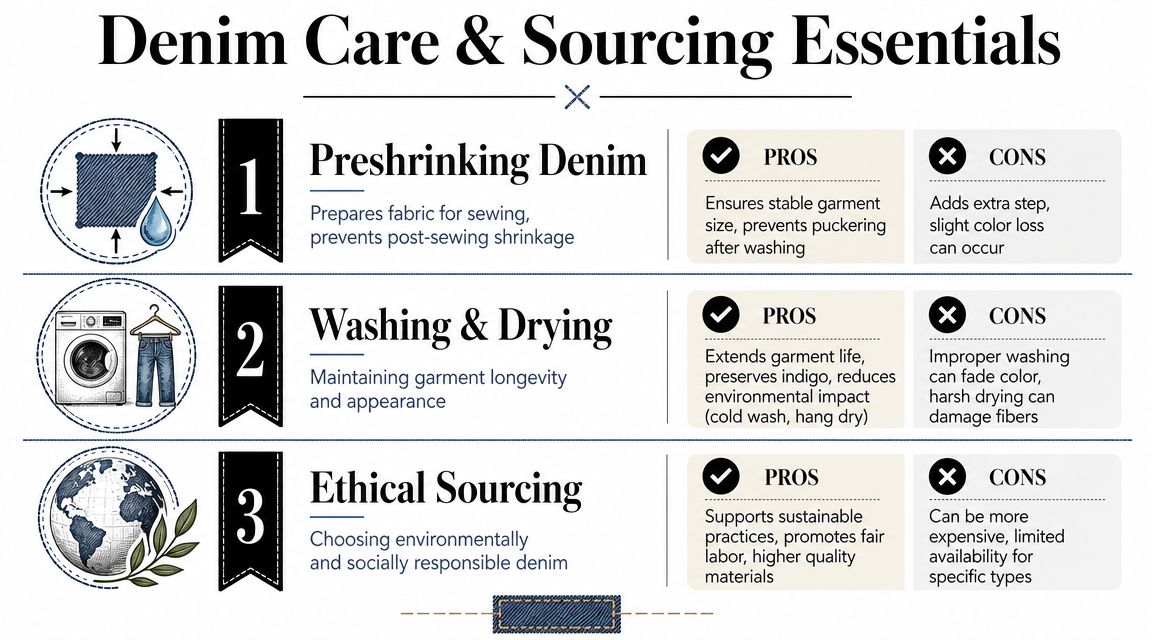
Preshrink before you cut
If your denim fabric is washable, preshrink it in the way you plan to care for the finished garment. This is especially important for cotton-rich denims. Even a beautifully sewn waistband can twist or tighten if the fabric settles after sewing instead of before.
A practical routine is simple:
- Wash the fabric as you'll wash the garment: Especially important for trousers, skirts, and fitted jackets.
- Dry it in a consistent way: If you plan to line dry later, line dry now.
- Press before layout: Denim often relaxes and creases in the wash.
For very dark denim, expect some colour movement during prewash. Wash it separately at first and keep your pressing cloth nearby.
Caring for the finished garment
Denim usually benefits from a measured approach to washing rather than constant laundering. If the garment isn't dirty, spot cleaning and airing can go a long way. Turn garments inside out before washing if you want to preserve the face colour and reduce abrasion on visible seams.
For long-lasting results:
- Wash cool and gently: This helps preserve colour and reduces stress on seams.
- Skip harsh drying: Hang drying is kinder to both fabric and fit.
- Press with intention: Steam and a clapper can restore shape after washing.
Simple repairs are worth learning because denim responds well to them. Knee patches, pocket reinforcement, hem repairs, and sashiko-style visible mending can all extend a garment's life without trying to hide every sign of wear.
A repaired denim garment often looks better than one that was thrown away too early. Denim wears in. It doesn't need to stay pristine to stay useful.
Sourcing denim more thoughtfully
Sourcing matters because denim sits inside a much larger textile pipeline. The UK imported 64,000 tonnes of woven cotton fabric in 2023, valued at £548 million, and China was the largest source by value, according to UK trade context for denim and woven cotton fabric. Denim is a major subset of that broader woven-cotton category, which is one reason informed buying matters.
For home sewists, that doesn't mean sourcing has to become complicated. It means asking better questions before buying.
What to look for when shopping
- Buy a swatch first: Check drape, recovery, opacity, and how the surface feels against the skin.
- Consider deadstock: It can be a strong choice when you want to reduce waste and work with existing fabric stocks.
- Ask about fibre content: This gives you a better clue about wear, repairability, and end-of-life options.
Another area worth thinking about is finishing and sustainability. Industry coverage has highlighted hazardous chemicals and unsustainable practices as major denim supply-chain challenges in reporting on denim's biggest challenges. That's why broad labels like “eco denim” don't tell you much on their own.
Useful sourcing questions
When you're deciding between options, these questions help:
- Is the fibre content mostly cotton, or is it a heavy blend?
- Does the fabric feel stable enough for the project I've chosen?
- Will I be able to repair this garment easily in a year or two?
- Has the supplier shared anything meaningful about finishing, dyeing, or provenance?
Those questions won't give you perfect certainty, but they push you towards better denim fabric choices and away from vague marketing language.
Your Denim Sewing Journey Starts Here
Denim gets easier the moment you stop treating it as one single fabric. A soft washed denim dress, a rigid pair of jeans, and a sturdy tote bag may all fall under the same label, but they need different choices in weight, stretch, and finish.
That's the key. Match the fabric to the project, not to the name on the shelf.
If you're new to sewing denim, start with something forgiving. A skirt, overshirt, or simple workwear-style jacket is often a better first step than a fully featured pair of jeans. Once you've sewn a few tidy topstitched seams and handled a couple of bulky corners, denim stops feeling difficult and starts feeling satisfying.
And once your garment is made, styling it is part of the fun. If you're looking for outfit inspiration beyond the sewing table, this roundup of denim and faux fur outfit ideas offers a fresh way to think about wearing denim in colder weather.
A good denim project earns its place in your wardrobe. It softens, fades, repairs well, and keeps telling the story of how you made it.
If you're ready to start, explore the curated range of denim fabric, sewing tools, and dressmaking supplies at More Sewing. We stock practical fabrics for real home sewing, and we're here to help you choose something that will work beautifully for your project.
