
You’ve probably had this moment at the cutting table. You’ve found a pattern for a breezy blouse or a summer dress with soft gathers, but the fabric choices feel annoyingly close to each other. Lawn looks promising. Batiste sounds delicate. Chiffon looks beautiful until you remember how slippery it can be.
Then you pick up cotton voile fabric.
It has that lovely in-between quality that makes experienced sewists smile. Light but not lifeless. Crisp enough to hold a gathered seam neatly, soft enough to skim the body, sheer enough to feel airy without automatically becoming difficult. If you want a fabric that feels cool in the hand and moves gently when you walk, voile often lands in exactly the right spot.
Why Sewists Love Cotton Voile
Cotton voile tends to win people over the first time they handle it properly. Not when it’s folded on a shelf, but when it’s opened out, lifted to the light, and allowed to fall. It doesn’t drop like a heavy viscose and it doesn’t sit stiffly like a shirting. It floats.
That’s why it suits the kinds of garments many home dressmakers want to wear. A blouse with a soft sleeve. A sundress that doesn’t cling. A skirt with a little movement. The sensory part matters here. Cotton voile feels cool against the skin, doesn’t overwhelm the body, and gives you that lightly dressed feeling that’s especially welcome in warm weather.
What many sewists also love is that it looks more refined than the effort might suggest. A simple gathered neckline in voile can look romantic. A basic tiered skirt can look considered rather than bulky. The fabric does a lot of visual work for you.
Cotton voile rewards simple shapes. You don’t need a complicated pattern to make it look good.
Beginners often get on well with it too, as long as they respect its lightness. It’s more forgiving than very slippery sheers, and it responds beautifully to careful pressing, neat seam finishes, and straightforward silhouettes. Experienced makers like it for another reason. It gives detail room to breathe. Pintucks, gathers, narrow hems, and delicate facings all read clearly without becoming heavy.
If your aim is clothing that feels airy, feminine, and comfortable, cotton voile fabric is often the fabric people were trying to describe all along.
What Exactly Is Cotton Voile Fabric
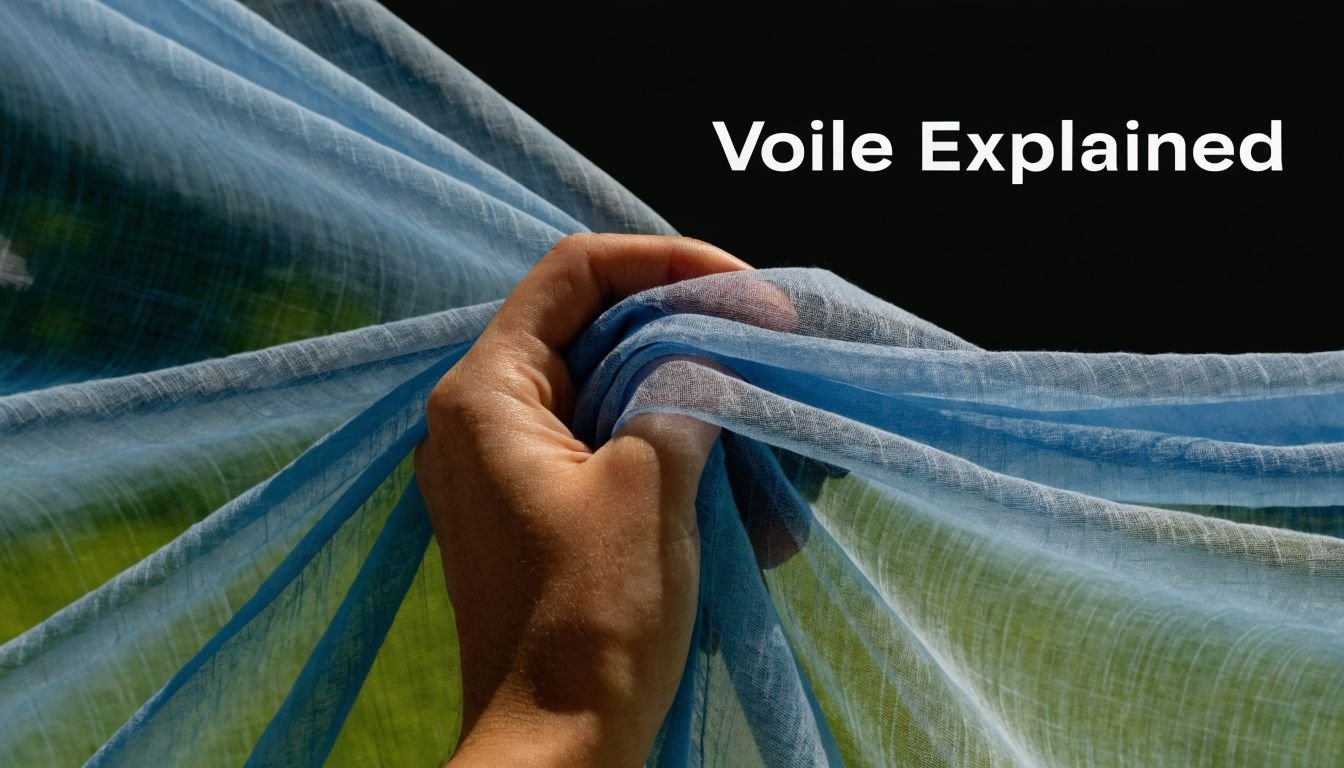
Cotton voile fabric is a lightweight, plain-woven cotton made with fine, tightly twisted yarns. That combination gives it the airy look people notice first, but the more useful detail for a sewist is the hand. Voile feels cool, light, and slightly crisp between the fingers, with enough body to feed through a machine more predictably than many slippery sheers.
How the weave changes the feel
In a plain weave, the warp and weft pass over and under each other in a simple grid. With voile, the yarns are fine and twisted tightly, so the finished cloth has a gentle springiness. You feel that the moment you scrunch a corner in your hand and let it fall. It drops softly, but it does not collapse into a limp puddle.
That balance is what makes voile so useful at the cutting table. It gathers cleanly, presses into shape well, and still looks delicate. If I am sewing a blouse with a yoke, a soft sleeve head, or a narrow standing ruffle, voile usually behaves better than beginners expect.
It also explains why finishing matters. A fabric this light shows every bulky seam and every skipped press. French seams, narrow hems, and a little spray starch during cutting usually give a cleaner result than quick overlocking.
Where it sits on the weight spectrum
Voile sits firmly in the lightweight camp. In practical terms, it is lighter than standard dress cotton, airier than many shirtings, and usually more manageable than synthetic sheer fabrics.
What matters at the machine is how that weight translates into handling. Voile can hold a tuck, a small pleat, or a gathered neckline, but it will not build structure on its own. If you want a crisp collar, a sculpted puff sleeve, or a bodice that stands away from the body, you will need interfacing, lining, or a pattern designed to create that support.
For home sewists, that trade-off is usually a good one. You get breathability and movement, but you need to sew with a lighter touch.
Why it has such a long dressmaking history
Voile has lasted in dressmaking for a simple reason. It suits real clothes. It is comfortable in warm weather, easy to layer, and refined without asking for a complicated pattern to look good.
It also rewards careful sewing. A row of pintucks stays visible. A gathered cuff looks soft instead of bulky. A bias-bound neckline can look beautifully tidy because the fabric is light enough to fold neatly, but stable enough to cooperate if you press as you go.
Practical rule: Choose cotton voile when you want airflow, softness, and gentle movement. If the design depends on firmness or sharp structure, add support or choose a different fabric.
Voile vs Lawn Batiste and Chiffon
The confusion is understandable. These fabrics often sit near each other on shelves, and they can all be used for warm-weather clothing. But they don’t behave the same way under the presser foot, and they don’t produce the same finished look.
Voile vs lawn
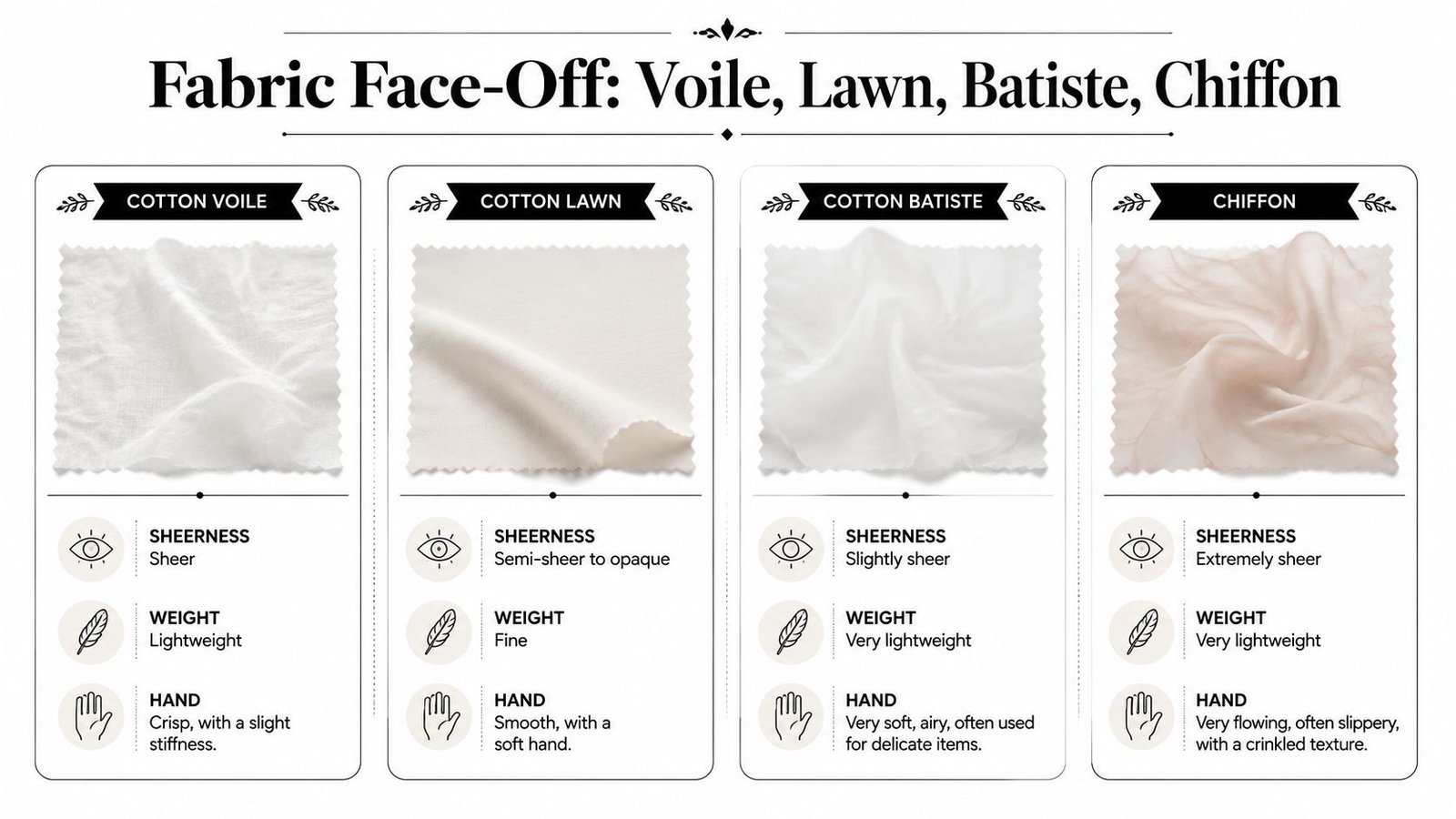
Cotton lawn usually feels smoother and a touch more polished. It often has a denser, more opaque look than voile, so it’s excellent for shirts, pyjama sets, and dresses where you want lightness without much transparency.
Voile is the better choice when you want visible airiness. It lets gathers puff gently rather than sitting flat, and it gives sleeves and skirt tiers a more delicate look. If a customer asks me for a summer blouse with pintucks and a soft sleeve, I ask one question first: do you want it crisp and polished, or light and floaty? Crisp points towards lawn. Floaty points towards voile.
Voile vs batiste
Batiste is usually softer and more tender in hand. It can feel almost whisper-light, which makes it lovely for delicate blouses, baby clothes, heirloom sewing, and very soft linings. It often reads more subtle and understated than voile.
Voile usually has a little more body. Not much, but enough to matter. That tiny bit of extra crispness is what helps a gathered skirt panel hang with shape instead of looking limp. If you like detail that still feels airy, voile often gives a more expressive result.
If your project relies on gathers, ruffles, or volume through lightness, voile usually performs better than a very soft batiste.
Voile vs chiffon
This is the comparison that saves people the most frustration. Chiffon can be gorgeous, but it’s a very different sewing experience. It’s typically much more slippery, more translucent, and less beginner-friendly. It shifts while cutting, creeps while stitching, and often wants narrower seam allowances and more deliberate handling.
Voile is far easier to control. You can press it. You can pin it sensibly. You can mark it with more confidence. It still needs care, but it doesn’t behave like it’s trying to leave the table.
Here’s the simplest buying guide:
| Fabric | Best when you want | Watch out for |
|---|---|---|
| Cotton voile | Soft volume, lightness, semi-sheer dresses and blouses | Sheerness, fraying, limited structure |
| Cotton lawn | Smooth shirts, neat dresses, cleaner opacity | Less airy look |
| Batiste | Delicate softness, heirloom feel, subtle drape | Can feel too limp for some gathered styles |
| Chiffon | High sheerness, fluid movement, dressy layering | Slipperiness, tricky cutting, seam visibility |
A quick decision test
Use this mental flowchart when you’re choosing:
- Need an everyday summer blouse with less transparency? Choose lawn.
- Want a soft, slightly romantic dress with movement? Choose voile.
- Making a delicate heirloom-style piece? Try batiste.
- After a very dressy, translucent overlay? That’s chiffon territory.
Cotton voile fabric sits in a sweet spot. It gives the visual lightness people often want from chiffon, but with the practical friendliness of cotton.
The Best Garments to Sew with Voile
A good voile project feels cool in your hands before you even cut the first piece. The fabric flutters, gathers softly, and presses into delicate folds without turning stiff or bulky. That tactile quality is the clue. Choose patterns that let voile skim, drape, and move.
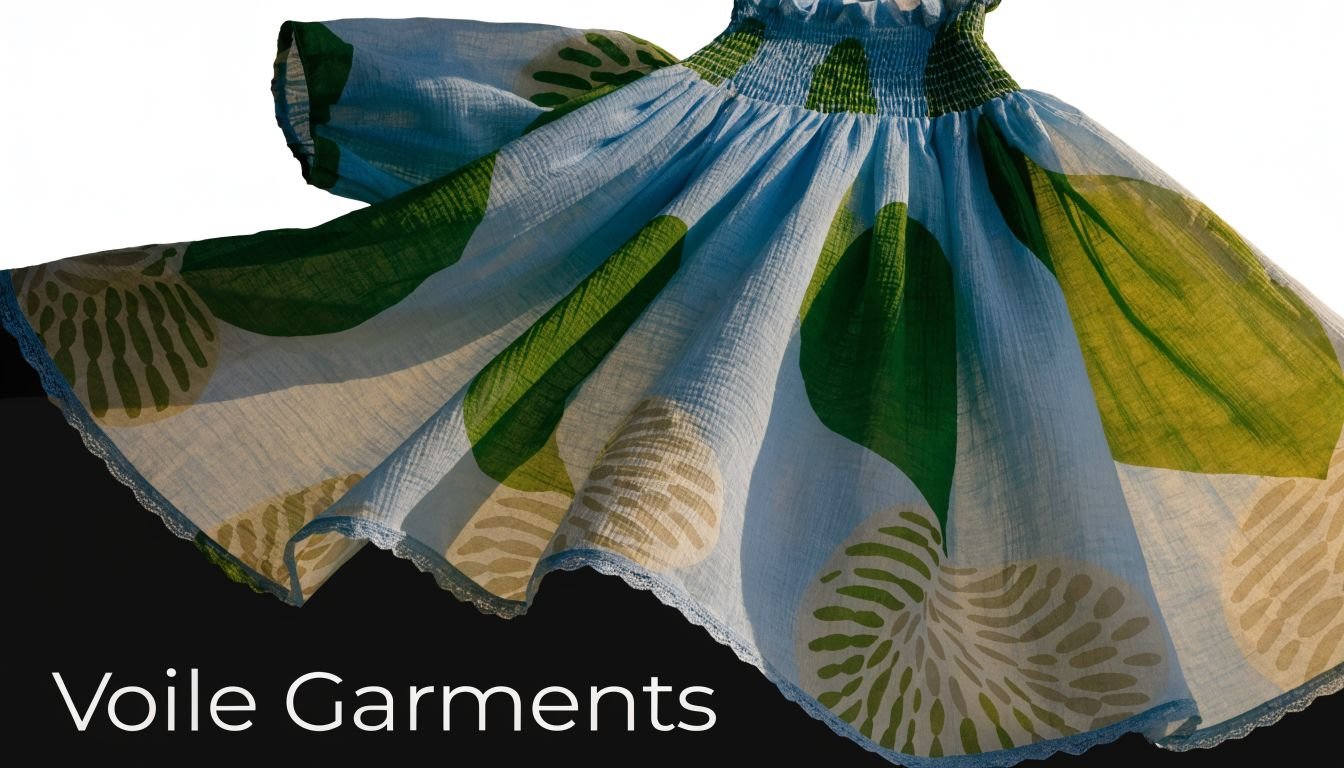
The best garments for cotton voile are the ones that feel light on the body and look soft at the seams. I usually point sewists toward styles with gathers, easy volume, and clean finishes. French seams suit voile especially well because they control fraying without adding much weight, and a lightly starched voile is much easier to shape into neat collars, sleeve hems, and narrow bindings.
Blouses that feel airy, not flimsy
Voile makes excellent blouses, especially styles with gathered yokes, tie necks, pintucks, frilled collars, and gentle puff sleeves. Those details stay graceful instead of turning dense and puffy the way they can in quilting cotton or linen.
Peasant blouses are an easy win. So are relaxed button-front shirts, sleeveless shells, and simple tunics with a back keyhole or a narrow band collar. If you want a more polished blouse, use small buttons, fine topstitching, and light interfacing only where it is beneficial. If you need support at a placket or collar stand, spend a minute on choosing the right garment interfacing so the fabric keeps its softness instead of turning papery.
Dresses and skirts that come alive in motion
Voile shines in garments that move as you walk. Tiered dresses, elastic-waist skirts, wrap skirts, and sundresses all benefit from that soft swish and slight sheerness. The fabric gives volume without the heavy feeling that can make summer clothes tiresome to wear.
A few especially good pattern types are:
- Tiered maxi skirts with a slip, partial lining, or separate underskirt
- Sundresses with shirring, soft gathers, or a loose waist seam
- Smock dresses with simple shaping and room through the body
- Wrap skirts with narrow waist ties and a light hem
- Sleepwear and robe-style pieces that need breathability and a soft hand
One insider tip. If a pattern includes deep facings, wide waistbands, or large patch pockets, check whether those features will drag the garment down. On voile, lighter construction usually looks better and feels better.
Details that suit voile
Voile handles small, refined details beautifully. Ruffles, neck ties, flutter sleeves, and tucked panels all benefit from the fabric’s light touch. It is also a lovely choice for children’s dresses, blouse overlays, and soft summer nightwear because it feels gentle against the skin.
Patterns with too much built-in structure are a harder sell. Sharp shirt collars, sculpted bodices, and structured shapes often need more body than voile naturally has. You can line it, underline it, or stabilize selected areas, but the fabric is at its best when the design works with its softness rather than trying to force crispness everywhere.
Best pattern match in one sentence
If the pattern looks better with drape, gathers, light layering, or a barely-there feel, voile is probably a strong choice.
Your Guide to Sewing Cotton Voile
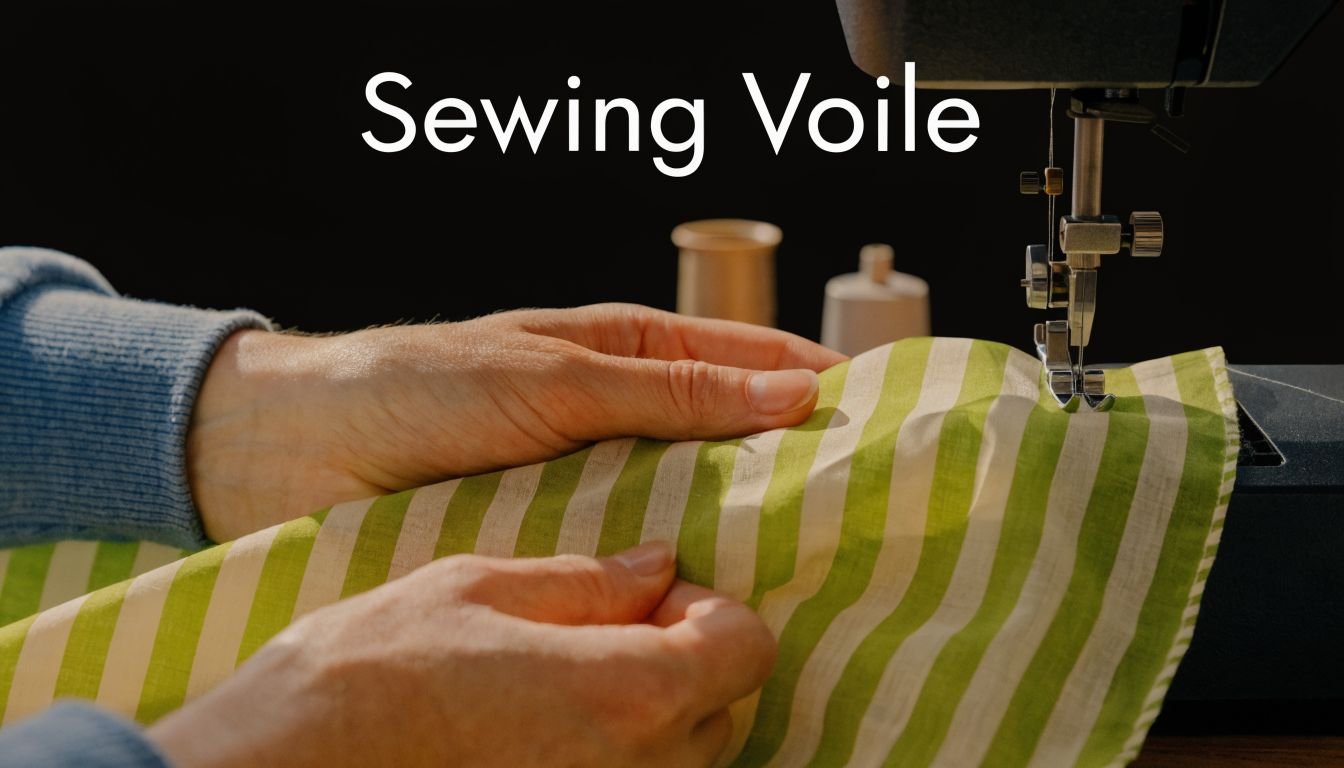
Sewing cotton voile fabric is much easier when you treat it like a lightweight specialist fabric rather than an ordinary cotton. It isn’t difficult in a dramatic way. It’s precise. Small choices matter, and the good news is that those choices are easy to learn.
Start with preparation, not stitching
The first success point happens before you thread the machine. Pre-wash the fabric, let it dry gently, and press it flat. If the voile feels especially lively on the table, use a light mist of spray starch before cutting. That temporary crispness can make a huge difference.
You don’t need to soak it in starch. Just enough to calm the flutter. I also like to leave voile on the cutting table for a little while after pressing so it relaxes fully before pattern placement.
A few helpful prep tools:
- Spray starch for cleaner cutting and easier seam matching
- Large cutting mat so the fabric stays supported
- Fine glass-head pins or fabric clips used sparingly
- Pattern weights to avoid lifting and shifting
Cut with control
Use a rotary cutter and weights if you can. That’s usually better than lifting the fabric repeatedly with dressmaking shears. Shears can work, but they’re more likely to nudge the layers out of alignment, especially on curved edges or narrow pieces like facings.
If a pattern piece is small and fiddly, cut in a single layer instead of on the fold. It takes longer, but the accuracy is worth it. Voile can shift just enough to leave you with mismatched notches and uneven hems.
Shop-floor habit: If the fabric slides when you breathe near it, cut single layer.
Marking matters too. Tailor’s tacks are often safer than aggressive chalk wheels on very fine voile. A washable fabric pen can be useful, but always test it first on an offcut.
Pair the right needle and thread
Choose a fine, sharp needle. Many sewists get the best results with a 60/8 or 70/10 machine needle. For thread, a good quality all-purpose polyester thread is usually reliable, though some makers prefer fine cotton thread for a softer finish on lightweight cottons.
If stitches look puckered, don’t immediately blame your tension. First check the needle, then reduce handling, then test stitch length on a scrap. Voile likes a balanced, neat stitch rather than a heavy one.
Here’s a quick reference:
| Step | Do this | Not that |
|---|---|---|
| Cutting | Rotary cutter and weights | Letting the fabric hang off the table |
| Needle | Fine sharp needle | Universal needle that’s already done several projects |
| Seams | French seams or clean narrow finishes | Bulky overlocked seams everywhere |
| Hems | Narrow double-turn hem | Deep heavy hem that drags |
Choose seam finishes that suit a sheer fabric
Voile frays, and because it’s semi-sheer, the inside of the garment often shows. That’s why French seams are such a strong choice. They keep the inside tidy, reduce fraying, and look appropriate through the fabric.
For curved areas where a full French seam feels awkward, try a very neat plain seam with trimmed allowances, or a narrow overlocked finish if your machine handles fine fabric cleanly. Test first. Some overlockers can chew lightweight voile if the settings are too aggressive.
A few techniques worth keeping in your regular toolkit:
- French seams for side seams and straight seams
- Narrow hems on skirts, sleeves, and ruffles
- Rolled hems if your machine does them neatly
- Staystitching on necklines immediately after cutting
- Understitching on facings to keep edges crisp
Interfacing needs care too. Heavy fusible interfacing can flatten voile and make the supported area look clumsy. If you’re unsure about weights and applications, this guide to choosing the right garment interfacing is a helpful practical read.
After you’ve got the basics in place, it helps to watch the fabric in motion under the needle.
Know when to line it
Some cotton voile fabric works well unlined in tops, especially with looser shapes and lighter colours worn over suitable undergarments. Dresses and skirts often benefit from a lining or separate slip. The aim isn’t always full opacity. Sometimes you just want the garment to feel finished and wearable in daylight.
Use a lightweight lining that doesn’t compete with the outer fabric. If the lining is too heavy, the garment loses its easy movement. If it’s too static, the layers won’t work together.
The nicest voile garments usually come from restraint. Fine tools, light handling, narrow finishes, and patterns that don’t ask the fabric to behave like poplin.
How to Choose and Buy Quality Voile
You spot a voile print online, fall for the colour, and then the parcel arrives. The pattern is lovely, but the fabric feels drier, stiffer, or more transparent than you expected. That is the moment buying habits matter.
Good cotton voile should feel light and airy in the hand, but not weak. It often has a soft, cool touch with a faint crispness that helps it feed through the machine. If it feels brittle, overly papery, or rough against the inside of your wrist, I would pass. Those qualities tend to show up again in the finished garment.
What to check first
In person, I start with movement. Let a length hang from your hand and give it a small shake. Quality voile has fluid motion, but it should not collapse into nothing. Then hold it up to the light and look for a weave that stays even across the width. Uneven openness can cause trouble later, especially on seams, facings, and areas that take strain.
If you can, scrunch a corner and release it. You want recovery, not a tired-looking crumple.
A quick buying check helps:
- Look at the weave: Even threads and a consistent surface matter more than a dramatic print
- Feel both sides: Better voile usually feels pleasant on the skin, which matters in sleeves, necklines, and summer tops
- Test the drape vertically: Folded fabric hides stiffness. Hanging fabric tells the truth
- Check the opacity in daylight: Pale shades can read very differently indoors and near a window
- Buy lining or slip fabric at the same time: It saves guesswork and helps you match weight properly
Match the voile to the pattern
Many home sewists waste money. They buy voile for a pattern that really wants a crisper cloth.
Voile shines in garments that move. Peasant blouses, softly gathered tops, tiered skirts, loose summer dresses, and simple children's wear all suit it well. For a practical test, pinch a little fold near the selvedge. If the fold looks soft and rounded, choose patterns with gathers, gentle volume, or easy shaping. If your pattern depends on a sharp collar, firm button placket, or sculpted shirt dress details, use something with more body.
I also suggest checking seam finishes before you buy. If the fabric is very sheer, plan on French seams and narrow hems from the start. If it feels a touch lively under the fingers, a light mist of spray starch during cutting and seam prep can make the whole project calmer and cleaner.
Why deadstock can be a smart buy
Deadstock voile often has the most personality. You may find unusual florals, richer colours, and finer finishes than standard seasonal ranges. It is also a practical route if you like buying fabric that has already been produced and needs a good project.
The trade-off is consistency. Deadstock can be limited in quantity, and you may not get a second chance to order more for a sleeve recut or matching binding. I tell customers to buy their full meterage, plus a little extra if the fabric is sheer, printed, or likely to fray.
If garment care is part of your decision, these LaundryRun Gold Coast dry cleaning insights give a useful outside view on handling delicate clothing and why fabric choice affects maintenance later.
Buy voile with your hands as much as your eyes. The best piece is the one that feels right for the pattern, presses well, and still looks good when daylight hits it.
Laundering and Caring for Your Voile Garments
You finish a soft voile blouse, wear it once, then wash it a bit too warm and the whole piece feels different. The hem sits higher, the neckline loses its easy drape, and the fabric no longer has that light, airy hand. That is why care starts before the garment is ever worn.
Pre-wash your voile before cutting. Wash it the same way you plan to wash the finished garment later, ideally in cool or lukewarm water with a gentle detergent. I like to press it once it is dry so I am sewing with the fabric in its settled state, not guessing how it will behave after the first laundry day.
If you skip pre-washing, you usually see the trouble in fit and proportion. A blouse can turn slightly shorter. A sleeve can lose that relaxed length. On gathered styles, even a small change can make the garment feel less balanced.
The care routine that works
Cotton voile holds up well when the routine stays light and consistent. Treat it more like a favourite summer blouse than a load of towels.
A practical routine looks like this:
- Wash in cool or lukewarm water: Hot water is harder on fine cottons and can change the hand of the fabric
- Use a mild detergent: Strong formulas can leave the cloth feeling harsher than it started
- Choose a gentle cycle or hand wash: Less agitation helps seams, hems, and delicate finishes last longer
- Air dry when possible: Hang dry or lay flat to avoid the roughness and shrink risk that can come with high dryer heat
- Press with low to medium heat: Start lower than you think, then increase only if needed
A small shop tip. If the garment has French seams, pintucks, or a narrow hem, turn it inside out before washing. It reduces surface wear and helps the outside stay fresh longer.
Ironing without crushing the softness
Voile likes a careful press. It does not like a hot iron parked in one spot.
Press while the fabric is still slightly damp, or use a little steam and a press cloth. That gives you crisp seams without flattening the fabric so much that it loses its softness. If you want to refresh a voile blouse after line drying, a quick light press at the collar, placket, and cuffs is usually enough. You do not need to iron every inch.
For pieces with special finishes, lace inserts, or very fine stitching, occasional professional cleaning can be a sensible choice. If you want a practical overview of handling delicate garments professionally, these LaundryRun Gold Coast dry cleaning insights offer useful reminders about fabric-safe care habits.
Store voile with a little space around it. Crowding it under heavy knits or denim can leave hard creases that take more heat to remove later. Gentle washing, gentle drying, and gentle pressing keep voile feeling the way you bought it. Light, soft, and easy to wear.
Quick Project Ideas for Every Skill Level
The nicest thing about cotton voile fabric is that you don’t need to be an advanced dressmaker to enjoy it. You just need a project that respects what the fabric does well.
If you’re a beginner
Start with pieces that are simple in shape and light in handling. A rectangle scarf, a pull-on camisole, or a very basic elastic-waist skirt are all sensible first projects. They let you practise narrow hems, careful pressing, and clean stitching without wrestling with complex fit.
A loose summer top with minimal darts can also work well. Choose one with straightforward armholes and a simple neckline finish. You’ll learn a lot about handling the fabric without turning the project into a marathon.
If you’re an intermediate sewist
Voile lends itself to especially fun projects. Try a gathered blouse, a tiered skirt, or a simple lined sundress. These projects make the most of the fabric’s lightness and let you practise techniques that really suit it, especially French seams, staystitching, and narrow hems.
Good intermediate projects often include one point of interest rather than five. A sleeve with volume. A softly gathered yoke. A ruffled hem. Let the fabric do the decorative work.
If you’re more advanced
Voile can look beautiful in projects with refined detail. A lined dress with a button placket, a blouse with pintucks, or a multi-tier dress with careful seam finishing all make sense here. Advanced sewing with voile is mostly about precision and restraint.
A few strong combinations of project and technique:
- Sheer blouse with French seams
- Tiered maxi dress with a lightweight lining
- Summer robe or cover-up with narrow hems
- Delicate nightwear with fine straps and clean inside finishes
The unifying idea is simple. Pick a pattern that wants softness, movement, and light. That’s when cotton voile feels easy rather than fussy.
If you’re ready to try cotton voile fabric for yourself, More Sewing is a lovely place to browse quality dressmaking fabrics, haberdashery, and beginner-friendly kits. Whether you want a floaty summer print, a practical lining option, or the tools to sew it neatly, you’ll find carefully chosen supplies that make starting your next project much easier.
