Guides
Organic Cotton Fabric: Your Guide to Sustainable Sewing
You’re probably here because you’ve spotted organic cotton fabric on a bolt end, in an online listing, or on a pattern shop’s fabric suggestions, and you’re wondering whether it’s different or just more expensive.
That’s a sensible question. Most sewists don’t choose fabric by ideology alone. We choose it by touch, drape, budget, colour, washability, and whether it’ll behave itself once the scissors come out. If a fabric claims to be the better choice, it still has to sew well and earn its place in the project.
Organic cotton is one of those materials that can sound more complicated than it is. In practice, it isn’t a mysterious “special occasion” cloth. It’s still cotton. The useful part is knowing what the label means, which certifications are worth paying attention to, and when the extra spend makes sense for the garment you’re making.
What Is Organic Cotton Fabric Really
You pick up a bolt marked organic cotton, rub it between your fingers, and wait for it to feel different enough to justify the higher price. Most of the time, it won’t. At the cutting table, organic cotton is still cotton.
In practical terms, organic cotton fabric is cotton made from fibres grown under certified organic farming rules rather than standard conventional methods. For sewists, that matters less in the handling and more in the supply chain behind the cloth. If two fabrics have a similar weave, weight, staple quality, and finish, they are likely to behave much the same in cutting, pressing, and stitching.
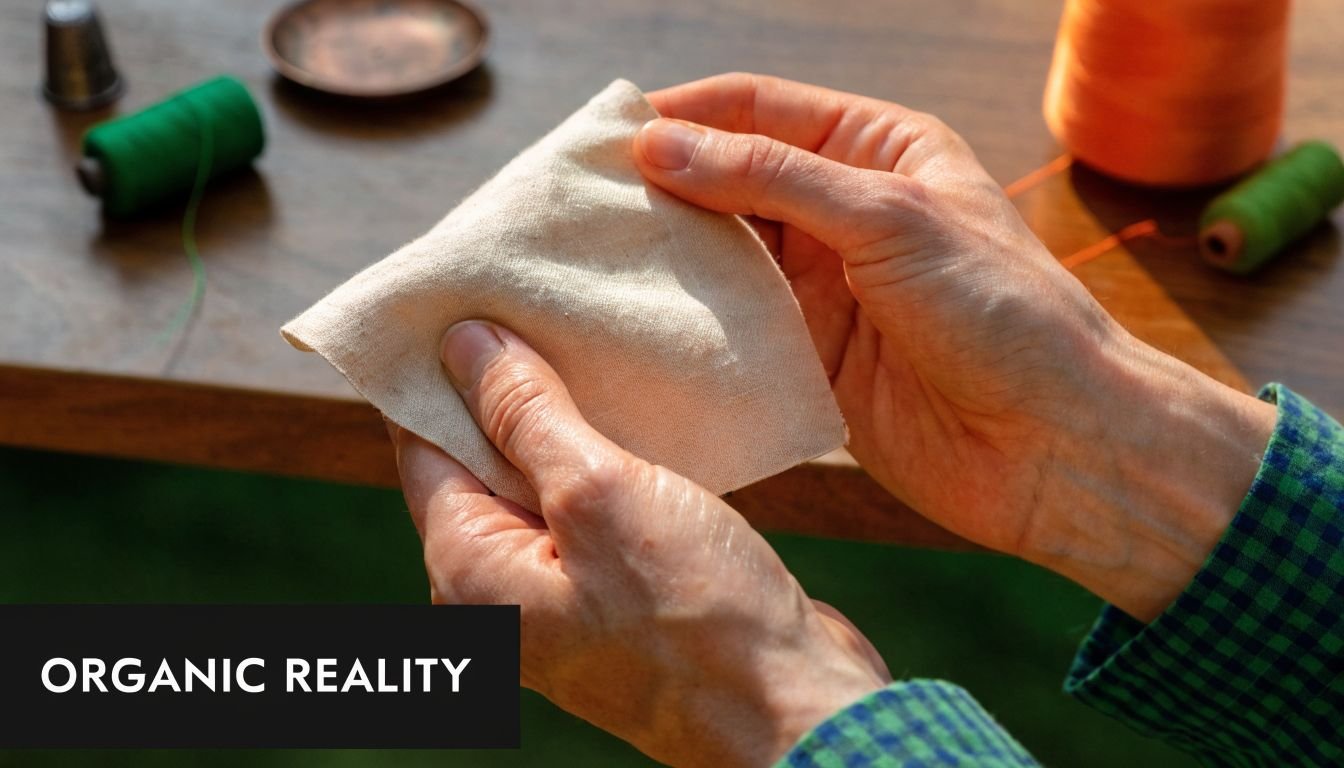
What you’ll notice at the sewing table
The biggest difference isn’t under the needle. It’s in what you are paying for before the fabric reaches your sewing room.
An organic cotton poplin can still crease, a lawn can still shift while cutting, and a canvas can still need softening in the wash. Your usual cotton settings often still work. A universal needle, a good press, and pre-washing based on the fabric type are usually enough. I tell customers to judge it the same way they would any other cotton first. Check the weight, the density of the weave, the finish, and whether it suits the pattern.
That matters because some sewists expect organic cotton to sew better by default. It doesn’t. A well-made conventional cotton can outperform a mediocre organic one if the yarns are finer, the weave is cleaner, or the finishing is better. Organic refers to how the fibre was grown. It does not guarantee luxury quality, perfect drape, or extra durability.
Practical rule: Buy organic cotton for the right project, not just for the label. For babywear, quilts, tops worn close to the skin, and items washed often, many sewists feel the extra cost is easier to justify. For a quick toile, pocket lining, or a one-off novelty make, it may not be the best place to stretch the budget.
Why the label still matters
The label matters because farming and processing choices sit behind the finished cloth, even if the fabric in your hand looks familiar. That is often the point where organic cotton starts to make sense for UK sewists. Not as a magic fabric, but as one option in a wider buying decision.
It can also explain why choice is narrower and prices are often higher. Organic cotton remains a smaller part of the cotton market, so shops do not always have the same breadth of prints, weights, and finishes that you will find in conventional ranges. In my experience, that is the trade-off customers notice first. You may need to be more flexible on colour, print scale, or exact fabric base if organic content is high on your list.
If you branch into textile art, printed panels, or home projects, cotton’s surface is also part of the appeal. Guides on transforming digital photos into art can give useful ideas for sewists experimenting with cotton canvas in wall hangings, memory projects, or mixed-media work.
Decoding the Labels GOTS OCS and Fairtrade
Most confusion around organic cotton fabric starts with the labels. A fabric may say organic, made with organic, certified organic, responsibly sourced, or Fairtrade. Those phrases don’t all mean the same thing.
When I’m helping someone make sense of a fabric description, I use a kitchen analogy. One label tells you about the ingredient. Another tells you about the whole recipe and the conditions in the kitchen. That distinction matters.
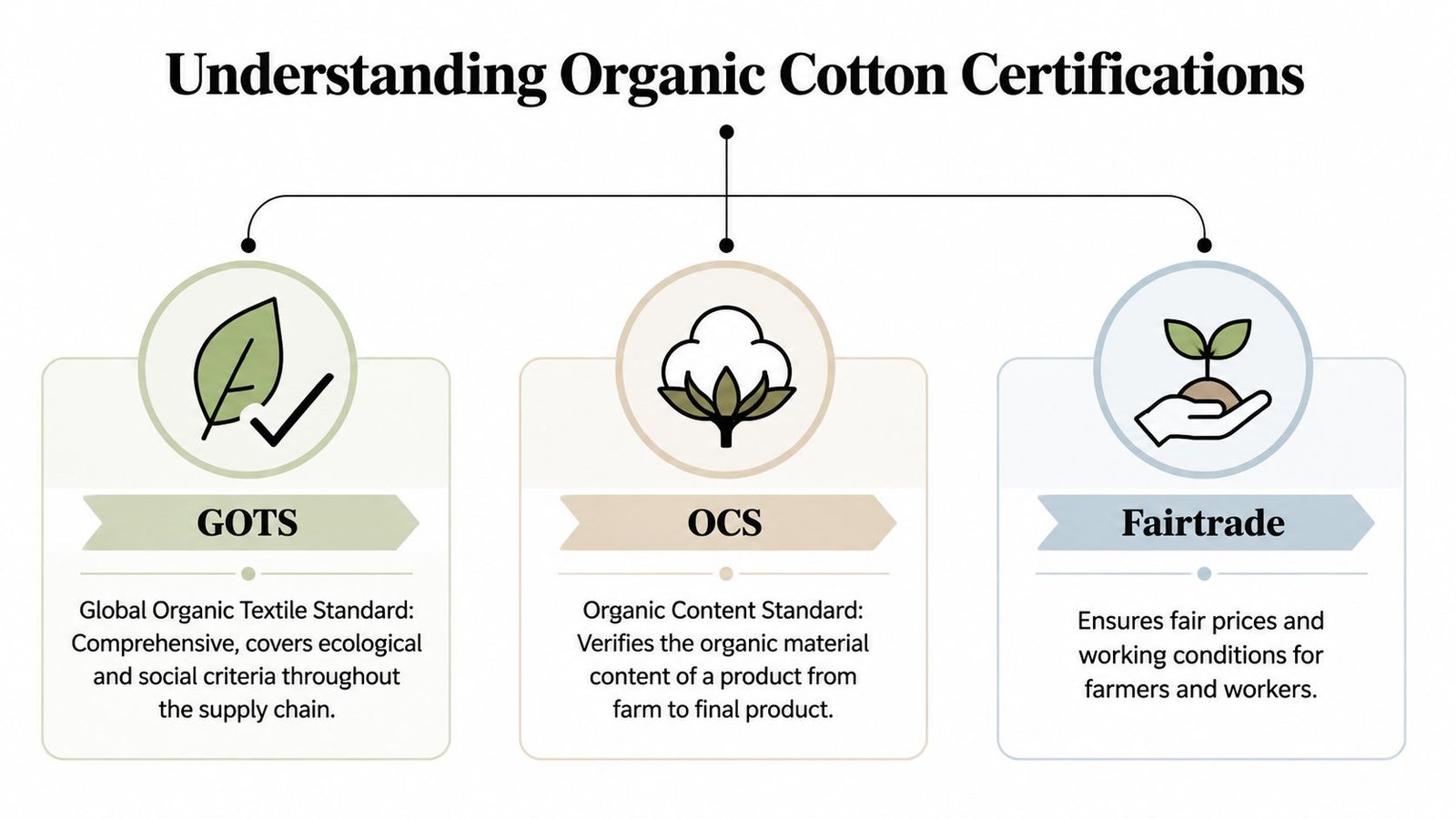
GOTS is the one most sewists should learn first
For fabric buying, GOTS is usually the clearest benchmark. The GOTS organic fibres standard states that a finished product must contain at least 70% certified organic fibres to be labelled “made with organic”, and 95% to carry the “organic” label grade. The same standard also requires limits on heavy metals, azo dyes, PFAS and other hazardous substances.
For a sewist, that translates into something practical. GOTS doesn’t only tell you the cotton fibre began as organic. It also tells you the processing standards matter.
How OCS and Fairtrade fit in
You may also see OCS, which stands for Organic Content Standard. In plain language, OCS focuses on verifying the presence and tracking of organic material content through the supply chain. It’s useful, but it isn’t doing the exact same job as GOTS.
Fairtrade speaks to another part of the picture. It focuses on the people involved in production, especially farming communities and trading conditions. That makes it complementary rather than interchangeable with fibre or processing standards.
A simple way to read them is this:
| Label | What it helps tell you |
|---|---|
| GOTS | The fibre content and the textile processing standards both matter |
| OCS | The product contains verified organic material |
| Fairtrade | The trading relationship and farmer conditions are part of the claim |
If you want one label to remember for dressmaking fabric, remember GOTS first. It’s the most useful shortcut when you need confidence in both fibre claims and processing standards.
What to check on a product listing
Don’t stop at the word “organic” in the title. Check the details.
Look for the exact certification wording. “Organic cotton” is less helpful than a clear mention of GOTS or another recognised standard.
Read fibre content carefully. A cotton-elastane sateen may include organic cotton, but that doesn’t mean the finished fabric qualifies for the highest label grade.
Check whether the claim refers to fibre only or the whole textile. That’s where the difference between OCS-style claims and GOTS-style claims becomes important.
If you sew for the home as well as for dressmaking, reading up on eco-friendly bedding standards can sharpen your eye for label language more broadly. Many of the same habits apply when you assess pyjama fabric, sheeting, quilt backs or nursery makes.
Why Choosing Organic Cotton Matters
You are choosing fabric for a child’s pyjama set, a shirt you plan to wear every week, or a quick test version of a new pattern. Those three projects do not deserve the same budget, and that is exactly why organic cotton needs a more practical test than “it’s better”.
Organic cotton matters because it changes the supply chain behind the cloth. For some sewists, that matters most when the fabric sits close to skin, gets washed often, or is being made as a gift or keepsake that carries more weight than an ordinary make. For other projects, the extra cost brings very little benefit.
That distinction is useful at the cutting table.
Where the extra spend often makes sense
In the shop, I usually see organic cotton make the most sense for projects that get hard wear and repeated laundering, or for makes where the buyer wants stronger reassurance about fibre and processing standards.
Good candidates include:
Baby and children’s clothes. Sleepsuits, bibs, pyjamas and soft quilts are handled, washed and worn constantly.
Sleepwear and close-fitting basics. Pyjama bottoms, camisoles, simple tops and underwear linings sit against the skin for hours at a time.
Everyday garments with a long life. Shirts, day dresses and workwear-style pieces can justify a better fabric choice because they earn their keep.
Gift sewing. If you are putting time into a christening gift, a new baby bundle, or a special set of pillowcases, many sewists prefer the clearer chain of custody that comes with certified organic cloth.
One practical point often gets missed. Organic cotton is still cotton. It can wrinkle, shrink, fade in strong sun, and wear out at stress points if the cloth is too light for the job. The benefit is not magic performance. The benefit is that, for the right project, you may feel better about where the fibre came from and how the finished textile was handled.
When standard cotton is the sensible choice
I would not tell anyone to use organic cotton for everything.
If you are sewing a toile, a one-off costume, bunting for a party, or a craft project that needs a very specific print, standard cotton is often the better buy. You may need a certain colour, finish or price point more than you need an organic certification. Organic ranges are improving, but the choice is still narrower in many weights and prints, especially if you are trying to match an exact brief.
Budget matters too. Many UK sewists would rather buy one excellent organic fabric for a blouse they will wear for years than stretch the budget across three mediocre purchases. That is a sound approach.
Use organic cotton where the long-term value is clear. Skip it where the project is temporary, experimental, or so specific that the right fabric simply is not available.
For More Sewing customers, that usually means choosing organic cotton with intention rather than by default. Put the money where you will notice it most: next-to-skin garments, frequently washed basics, and pieces you expect to mend, keep and wear again.
Matching Fabric Weight to Your Sewing Pattern
“Organic cotton” tells you how the fibre was produced. It doesn’t tell you whether the fabric is floaty, crisp, sturdy, sheer, rigid or soft. That’s where weight and weave take over.
A better way to shop is to ignore the eco label for a moment and sort the fabric into the category you’d use anyway. Lawn behaves like lawn. Poplin behaves like poplin. Canvas behaves like canvas.
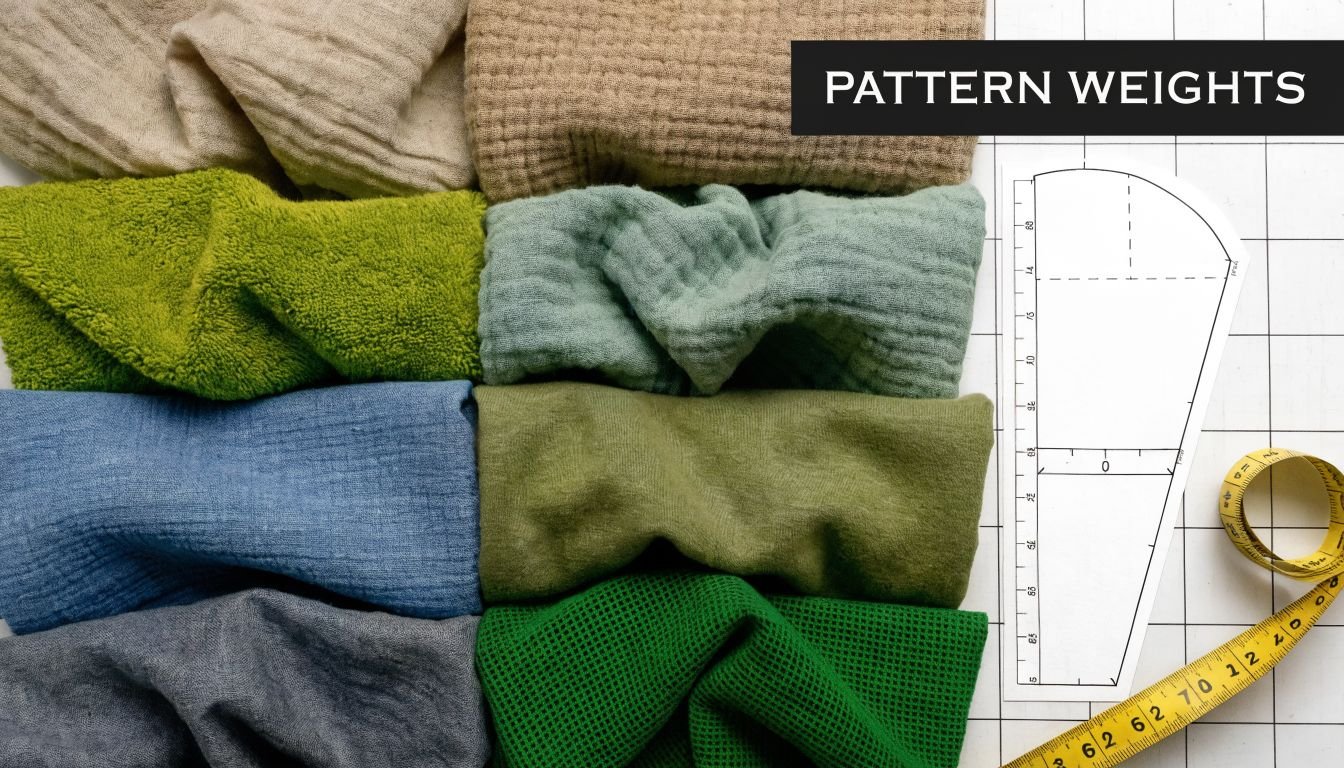
Lightweight cottons for blouses and summer pieces
Organic cotton lawn and voile suit garments that need airiness and a soft hand. Think simple tops, loose summer shirts, lined gathered skirts, and lightweight children’s dresses. They’re also lovely for facings, pocket linings and soft binding.
For these fabrics, technique matters more than force.
Use a fine sharp needle to reduce snagging and puckering.
Cut in a single layer if the fabric wants to slide.
Choose French seams for sheer or semi-sheer projects where the inside may show.
Stabilise necklines and button bands with a lightweight interfacing so the garment doesn’t stretch out as you handle it.
If you’re sewing a boxy top, a sleeveless shell, or a loose pyjama shirt, lightweight organic cotton fabric can feel polished without being fussy. The trade-off is opacity. Some lawns and voiles need a camisole or lining.
Medium weights for everyday dressmaking
This is the category most home sewists end up using most often. Organic cotton poplin, shirting, chambray and many brushed cottons sit comfortably here.
These fabrics are dependable for:
| Fabric type | Good uses | Helpful technique |
|---|---|---|
| Poplin | Shirts, shirt dresses, gathered skirts, children’s wear | Press every seam as you go for a crisp finish |
| Chambray | Workwear-inspired tops, casual dresses, skirts | Topstitch with a slightly longer stitch length |
| Brushed cotton | Pyjamas, relaxed shirts, soft winter dresses | Reduce presser foot pressure if the nap drags |
Medium-weight organic cotton is often the easiest entry point if you’re trying the fibre for the first time. It behaves predictably, presses well and usually doesn’t require special handling beyond sensible pre-washing and accurate pressing.
A quick visual guide can help if you’re comparing hand, drape and structure before cutting into your fabric:
Heavier cottons for structure and durability
Organic cotton canvas, twill and denim-weight fabrics are best when you want shape. Tote bags, aprons, overshirts, utility skirts, trousers with some body, and home accessories all fit here.
These fabrics reward sturdy tools and patient sewing.
Switch to a stronger needle. A denim or jeans needle is often the better choice for dense twills and canvases.
Grade bulky seam allowances. Don’t leave four identical layers stacked inside a waistband or strap tab.
Use a clapper or firm press after steaming. Heavy cotton holds a crease better when you let it cool flat.
Lengthen your stitch slightly for topstitching so seams look balanced against the weight of the cloth.
Heavy organic cotton can look deceptively soft on the bolt. Fold it, scrunch it and test the recovery before you match it to a trouser or bag pattern. Structure shows itself quickly in the hand.
Pre-Washing Finishing and Long-Term Care Tips
If you skip pre-washing, you’re gambling. It doesn’t matter whether the cotton is organic or conventional. Cotton can move, soften, relax and shift after washing, and you want that to happen before the garment is cut and sewn.
The good news is that caring for organic cotton fabric is straightforward. It doesn’t need ceremonial treatment. It needs sensible treatment.
Pre-washing without drama
For most dressmaking cottons, a cool or moderate wash on a gentle cycle is a safe starting point. Wash it the way you expect to wash the finished garment, not the way you wish you would.
A practical routine looks like this:
Finish the raw edge first if the fabric frays badly. A quick zigzag or overlock around the cut edge can save a knotty mess in the drum.
Wash dark colours separately the first time if you suspect excess dye.
Dry it in a consistent way. If you’ll line-dry the garment later, line-dry the fabric now. If you know you tumble dry household makes, be honest and pre-treat it the same way.
Press before cutting. Wrinkles distort grain and lead to lazy cutting.
Needles threads and seam finishes
Different organic cottons still need different tools. Match the tool to the weave.
For lawn, voile and fine shirting use a finer needle and light, neat seam finishes. French seams and narrow hems are usually worth the effort.
For poplin and chambray a standard universal needle often works well, and overlocking or clean-finished seams keep the inside tidy without bulk.
For canvas and twill use a stronger needle, test thread tension on scraps, and trim or grade seams where layers build up.
A good quality polyester thread is often the most reliable general-purpose choice for home dressmaking because it handles strain and repeated laundering well. If you prefer cotton thread for a specific finish or pressing behaviour, test it on scraps first.
Finishing choices that suit the fabric
The nicest finish is the one that matches both the project and the cloth.
| Fabric behaviour | Finish that often works best |
|---|---|
| Sheer or semi-sheer | French seams or narrow rolled hems |
| Crisp and medium weight | Overlocked seams, pinked allowances, or flat-felled seams for shirts |
| Dense and structured | Overlocked seams, bound seams, or trimmed open seams with topstitching |
Don’t overbuild the inside of a simple cotton garment. A bulky finish in the wrong fabric can spoil the drape more than a plain, neat seam ever would.
Long-term care that keeps garments in rotation
Once the garment is made, longevity comes from habits rather than complicated products. Wash less often when a simple airing-out will do. Spot clean where possible. Press with steam instead of rewashing a whole garment for one crease.
For everyday care, line drying is gentler on fibres and helps preserve shape. Store cotton garments clean and fully dry, especially if they’ll be packed away between seasons. If a seam starts to strain or a hem drops, repair it early. Cotton rewards maintenance.
How to Buy Smart at More Sewing
You have a pattern ready, three fabrics open in separate tabs, and one of them costs noticeably more because it is organic. That is the point where a sensible buying decision matters most. For UK home sewists, the right question is not whether organic cotton is the “best” option in the abstract. It is whether this particular project will repay the extra spend in wear, comfort, and longevity.
At the cutting table, I usually sort purchases into two groups. There are fabrics for testing, learning, and getting a pattern right. Then there are fabrics for the version you want to keep. Organic cotton often earns its place in the second group, especially if the finished piece will be worn often or handled hard in regular washing.
When the premium usually makes sense
The extra cost tends to feel justified when the fabric has a long working life.
That usually includes baby items, pyjamas, shirts, everyday dresses, simple tops, and children’s clothes that are washed again and again. In those projects, comfort matters, the fabric spends plenty of time against skin, and the make often gets enough use for fabric quality to show itself over time.
It can also make sense for a slower, more considered project. If you are sewing a classic blouse or a dress you expect to rotate for several seasons, paying more for a fabric you enjoy wearing is often money better spent than adding another average make to the wardrobe.
The premium makes less sense for a toile, a fitting shell, a school costume, a one-off themed project, or a craft trial where the main goal is testing technique. In those cases, standard cotton or a good deadstock can be the smarter choice.
A practical way to decide
Before buying, ask four plain questions.
Is this a test version or the final one?
If it is still a pattern experiment, save the better fabric for later.Will it be worn close to the skin or washed often?
If yes, organic cotton is easier to justify.Do I expect to wear or use it regularly for more than one season?
If yes, long-term value matters more than the ticket price alone.Would I rather spend the difference on a better zip, buttons, lining, or more fabric for mistakes?
Sometimes the project improves more from the right notions than from a fibre upgrade.
That last point gets missed. A beautiful fabric cannot rescue a poor pattern choice, and a tight fabric budget sometimes goes further if you buy a reliable non-organic cotton plus the extras needed to finish the project properly.
How to avoid expensive buying mistakes
The most useful habit is simple. Slow the purchase down by one step.
Order a swatch first if softness, opacity, drape, or colour accuracy will make or break the project.
Read the fabric description for structure, not just fibre content. Organic cotton poplin, jersey, double gauze, and canvas behave very differently.
Compare organic cotton with deadstock objectively. Deadstock can be excellent value if your priority is budget, limited-run prints, or making use of existing surplus.
Check fabric quantity with shrinkage and layout in mind before ordering. A narrow fabric or directional print can turn a good deal into a false economy.
Use a kit if you are new to dressmaking or quilting and want fewer variables to manage.
Buying well at More Sewing comes down to matching the cloth to the job. Some projects deserve the upgrade. Some do not. Sewists who make that distinction usually end up with fewer regrets, better-finished garments, and a fabric cupboard full of materials they use.
Frequently Asked Questions About Organic Cotton
Does organic cotton shrink more than regular cotton
Not necessarily. As covered earlier, organic and conventional cotton with comparable fibre length and yarn count behave very similarly in use, so shrinkage is more about the specific fabric construction and finish than the word “organic”. Pre-wash every time, then cut.
Are the colours less vibrant or less durable
Not necessarily. Colour strength depends on dyeing and finishing quality, not on the idea that organic cotton must look muted. The sensible approach is to wash a test swatch if you’re worried about bleeding, especially with dark shades, reds, navies and blacks.
Can I use organic cotton fabric for quilting
Yes, absolutely. Organic quilting cottons, poplins and lighter canvases can all work well depending on the project. For piecing, the key checks are the same as with any quilting fabric. Stability, accurate grain, enough body for clean seams, and reliable pressing.
If you quilt with organic cotton, test how the fabric handles repeated pressing before cutting the whole quilt. Some softer weaves feel lovely in the hand but can shift more during piecing.
Is it worth using organic cotton for every project
No. A toile doesn’t need moral perfection. A costume mock-up, a pattern test or a temporary seasonal make may be better served by a lower-cost cotton. Save the investment for the projects where it adds comfort, confidence or lasting value.
If you’re ready to try organic cotton fabric for a real project, More Sewing is a practical place to start. You can compare fabric types, order swatches, explore dressmaking kits, and balance premium organic options with deadstock and everyday staples so you buy for the project you’re making, not the one you imagine in theory.
