
Guides
Dry Clean Silk: Your 2026 Guide to Care
You’ve sewn the last seam, clipped the threads, pressed the hem, and hung your silk garment up to admire it. Then the next thought lands almost immediately. How on earth do I clean this without undoing all that careful work?
That worry is sensible. Silk can feel high-stakes, especially when it’s no longer just fabric on the bolt but a finished blouse, slip dress, camisole, skirt, or lining that you made yourself. You know where the bias sections are. You know which seams were a little more delicate. You know whether that collar is underlined, whether the zip area needed extra handling, and whether the fabric behaved beautifully or fought you all the way through.
Home sewists often get stuck between two unhelpful extremes. One says every silk garment must go straight to the dry cleaner. The other says all “dry clean only” labels are overcautious and can be ignored. Neither is good enough if you’ve spent hours making something properly.
What works is a more customized approach. Some silk garments really should be professionally cleaned. Some are perfectly manageable by hand at home. Some can be freshened between wears without either full washing or full dry cleaning. The trick is understanding the fabric, the structure, the dyes, and the finish, then choosing the least risky method.
Your Beautiful Silk Garment Is Finished Now What
The first clean is often a source of apprehension. A silk crepe de chine blouse can look airy and forgiving on the hanger, but once you start thinking about water marks, seam puckering, or a neckline stretching out, it suddenly feels less forgiving. A bias-cut charmeuse dress can be even more nerve-racking because the garment is already doing so much work through drape alone.
That’s why I always treat silk care as part of the making process, not an afterthought. The cleaning decision starts with the garment you made. A loose shell top with simple facings is a different proposition from a fitted dress with lining, interfacing, covered buttons, and topstitching.
A few examples make this easier:
- Simple silk camisole. Usually a good candidate for careful hand washing if the dye is stable and the construction is straightforward.
- Structured silk jacket. Better sent to a professional because the shape relies on structure, pressing, and internal support.
- Silk dress with mixed fibres. Needs caution because the shell, lining, and interfacing may react differently.
- Ex-designer deadstock silk with unknown finish. Test first. These fabrics can be wonderful, but they sometimes come with surprises.
Practical rule: If the garment would be difficult to reshape after washing, pause before you wash it at home.
The reassuring part is this. You don’t need to guess blindly. You already know more about your garment than any generic care label ever could, because you made it. That gives you a real advantage when deciding whether to dry clean silk professionally, hand wash it, spot clean it, or steam and air it between wears.
Decoding the Dry Clean Silk Label A Sewist's Perspective
A care label on ready-to-wear clothing is written for the broadest possible audience. It’s designed to reduce brand risk, not to reflect the decisions you made at the cutting table. As a maker, you can read that label more intelligently.

What the label means in practice
“Dry clean” often reads like a recommendation. It usually means the manufacturer believes professional cleaning is the safest all-round method.
“Dry clean only” should make you stop and inspect the garment more closely. That wording matters more when shape, dye stability, lining, or finish are part of the design.
A useful way to judge it is by asking what would fail first.
| Garment type | Main risk | Better choice |
|---|---|---|
| Unstructured silk top | Water spotting or minor shrinkage | Hand wash may work |
| Bias-cut slip dress | Distortion and stretching | Usually professional care |
| Tailored silk blazer | Loss of structure | Dry cleaning |
| Silk with contrast lining or trims | Uneven reaction between materials | Dry cleaning |
What you know that the label doesn’t
You know whether you pre-washed the fabric. You know if the seam allowances were overlocked, French seamed, or pinked. You know whether the garment contains fusible interfacing that might bubble or shift. Those details matter more than the wording alone.
Silk itself is not damaged because it goes through a proper dry cleaning process. A US National Bureau of Standards silk study found that dry cleaning solvents caused no measurable strength loss in silk. In that same study, strength loss came from sunlight exposure instead. After 100 hours of sunlight exposure, unweighted silk lost about 25% of its strength and tin-weighted silk lost 50 to 75%.
A silk garment left in direct sun can face more risk than one sent to a competent dry cleaner.
A better label-reading habit
Before you decide to dry clean silk or wash it yourself, check these points:
- Fabric hand and finish. Charmeuse and sandwashed silk behave differently.
- Construction complexity. Facings, linings, boning, and shoulder pads raise the stakes.
- Colour intensity. Deep jewel tones and saturated prints deserve extra caution.
- Visible water sensitivity. If a drop of water marks the fabric, don’t ignore that warning.
The label is one clue. Your sewing knowledge is the other half of the answer.
When to Trust a Professional The Dry Cleaning Process Explained
Professional cleaning earns its place when the garment is complex, the stain is awkward, or the silk is too precious to experiment on. Good dry cleaning is not just “putting it in a machine.” It’s a controlled process with several points where skill matters.
What happens in a quality dry cleaner
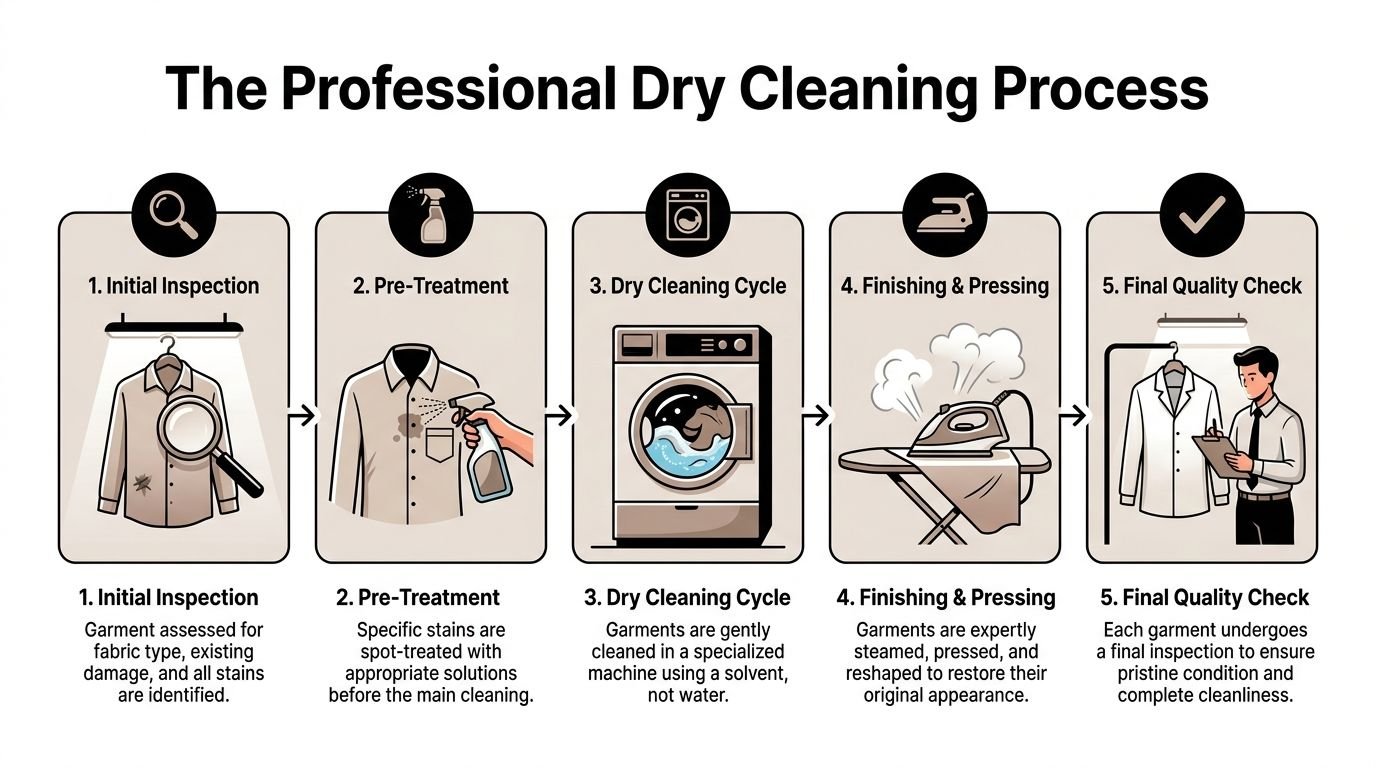
The professional sequence for silk typically includes inspection, pH-neutral pre-treatment, a 15 to 20 minute solvent cycle at 30 to 40°C, low-speed extraction, deodorising, and low-heat drying, with over 98% dimensional stability and less than 2% shrinkage reported for this method in the cited guide on silk garment care from Sudsies.
That matters for home sewists because each stage addresses a different risk:
Inspection first
Staff identify stains, weak areas, loose trims, broken stitching, and any construction details that need gentle handling.Pre-treatment before the main cycle
A good cleaner earns their fee by carefully addressing pre-treatment needs. Oily marks, make-up, food splashes, and perspiration need different treatment. Silk doesn’t forgive rough stain work.Solvent cleaning instead of water washing
The point isn’t magic. It’s control. Solvent cleaning can remove soil while avoiding the swelling and distortion that water can cause in some silk garments.Measured finishing
Pressing and reshaping are part of the service. A silk garment can come back clean but still look wrong if finishing is clumsy.
When professional care is the sensible choice
Not every handmade silk piece needs this route, but some clearly do.
- Structured garments such as jackets, fitted bodices, or waisted dresses with interfacing.
- Lined pieces where the shell and lining may respond differently.
- Strong colour or printed silk where you haven’t tested dye behaviour.
- Old or unknown silk including vintage lengths and some deadstock fabrics.
- Set-in stains such as body oil at the collar, foundation, or food stains that have dried.
What to ask before handing over your garment
A short conversation can prevent expensive disappointment. Ask whether they regularly clean silk, whether they can note handmade construction on the ticket, and whether they’ll avoid over-pressing delicate areas such as bust darts, soft gathers, and fine pleats.
Tell the cleaner it’s handmade. That small detail changes how a careful shop handles buttons, seam allowances, trims, and shaping.
If you’ve made a dress from silk charmeuse, for instance, mention bias sections. If you’ve made a dupion skirt, mention any fused waistband or hem tape. If there’s contrast piping or covered buttons, point those out as well. Handmade garments often need less generic processing and more observation.
The trade-off
Dry cleaning is strongest when the garment’s shape is part of its beauty. It’s less compelling when the item is a simple washable top that only needs a light refresh. If your silk item is uncomplicated and you’ve tested it, hand washing may be more practical. But if the garment’s value sits in structure, cut, or finish, professional care is usually the safer bet.
How to Hand Wash Silk Safely at Home
Hand washing silk at home can work very well, but only when you’re deliberate. Success relies on patience over force. The goal isn’t to scrub the garment clean. The goal is to let water and a suitable detergent lift light soil while you disturb the fabric as little as possible.

Start with a test, not the whole garment
Before the first wash, test an inside seam allowance, hem turn-up, or another hidden area. Check for three things:
- Colour movement onto a white cloth
- Texture change after drying
- Water marking once the spot is fully dry
If the test looks good, move on. If it darkens oddly, roughens, or leaves a tide mark, stop and reconsider.
Professional dry cleaning remains the benchmark for dimensional stability. ISO 3175 testing protocols report less than 1.5% shrinkage for modern mulberry silks after five cycles. Home washing can still be successful, but it won’t give you the same level of controlled consistency.
The basin method that works
Use a clean basin, sink, or washing-up bowl that’s free from bleach, detergent residue, or kitchen grease. Fill it with cool to lukewarm water. Add a small amount of pH-neutral, enzyme-free detergent or a wash designed for silk.
Then wash like this:
- Lower the garment into the water fully supported.
- Press the water through the fabric gently.
- Swish softly for a short period.
- Let it sit briefly if needed.
- Rinse in fresh cool water until the detergent is gone.
Don’t scrub. Don’t twist. Don’t bunch one section against another and rub. That’s how shine marks, abrasion, and seam stress appear.
Good technique matters more than time
Silk doesn’t need aggressive handling to come clean from normal wear. Light perspiration, skin oils, and everyday use usually release with gentle washing.
A few examples:
- Silk camisole worn under a cardigan. Usually easy to hand wash.
- Loose pyjama-style silk shirt. Often manageable if the dye is stable.
- Charmeuse blouse with dramatic gathers. Washable in some cases, but support the wet fabric carefully when lifting.
- Bias skirt. Riskier. Wet silk can stretch under its own weight.
If you want a broader refresher on handling delicates by hand, A Modern Guide to Hand Washing Laundry is a useful companion piece. The general principles are sound, especially around gentle motion and reducing stress while wet.
A simple vinegar rinse
Many sewists swear by a vinegar rinse because it helps remove lingering detergent and can leave silk feeling cleaner and less dull. Use only a little in a basin of cool water. The aim is a mild finishing rinse, not a soak that leaves the garment smelling sharp.
If silk feels stiff after washing, residue is often the problem. A light vinegar rinse can help restore softness and a cleaner surface feel.
Use this especially when:
- your water is hard
- you suspect soap hasn’t rinsed out fully
- the fabric feels slightly flat after rinsing
After that, rinse once more in plain cool water if you prefer.
A visual demonstration can help if silk washing still feels intimidating:
What not to do
This matters just as much as the washing method.
- Avoid biological detergents. Enzymes are too harsh for protein fibres like silk.
- Avoid hot water. Heat increases the chance of distortion and colour trouble.
- Avoid wringing. That’s a fast route to creases and stretched areas.
- Avoid hanging a dripping bias garment. The weight of water can pull it out of shape.
- Avoid panic-washing after every wear. Often a steam, an air, or a spot clean is enough.
The best home results come from restraint. Clean what needs cleaning, handle the garment like it matters, and stop before “thorough” turns into rough.
Removing Stains and Using At-Home Kits
Stains are where silk care gets more technical. A garment that washes beautifully overall can still be spoiled by one badly handled mark. The best stain treatment is usually quick, gentle, and very specific.
Match the treatment to the stain
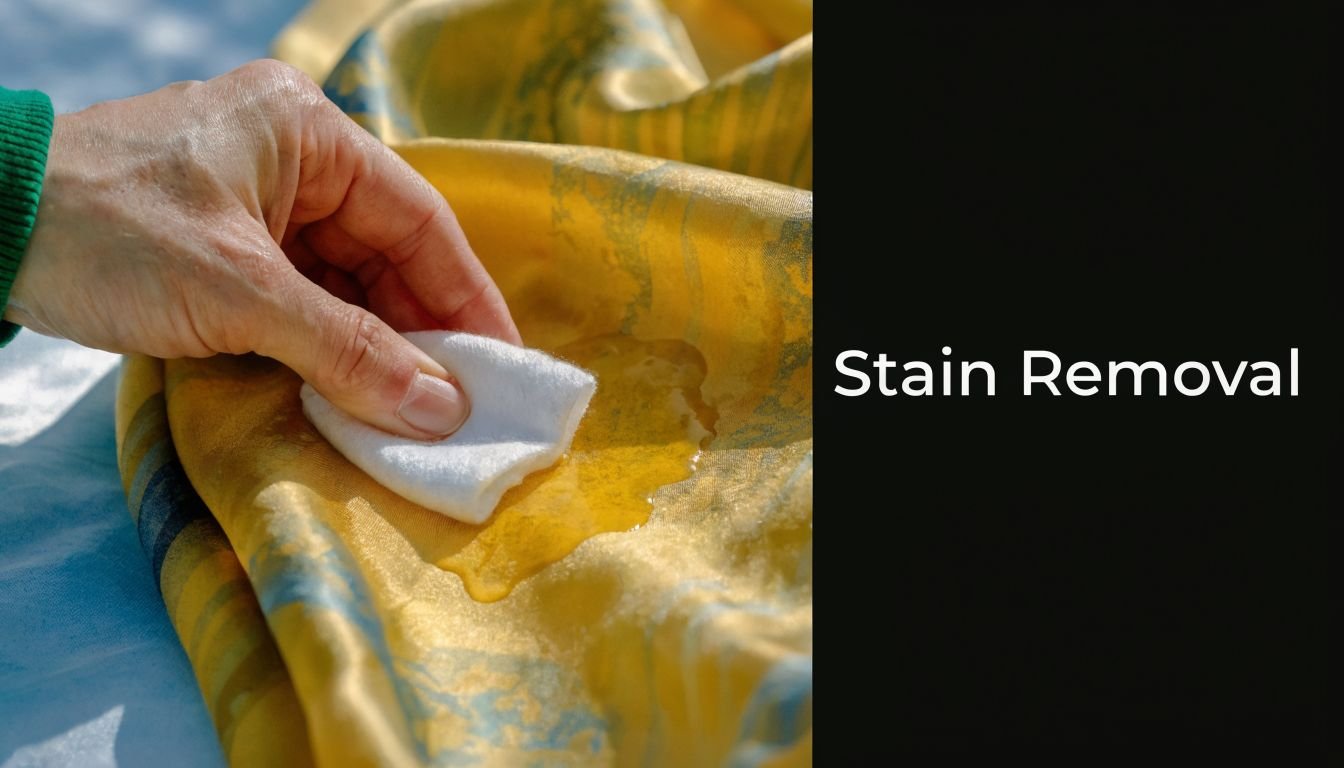
Fresh stains are easier than old ones. If something lands on silk, blot first with a clean white cloth or cotton pad. Don’t rub it in.
Try these practical responses:
- Oil or butter. Blot, then use an absorbent powder such as talc or cornflour to draw out the grease before washing.
- Water spots. Re-wet the area evenly with clean water and dry carefully so you don’t create a ring.
- Make-up at the collar. Spot clean gently and don’t iron until you know the mark is gone.
- Sugary spills. Treat promptly. These are the ones that often seem invisible, then show up later.
Why stains come back after cleaning
One of the most frustrating silk problems is the “ghost stain.” A mark seems gone, then reappears after pressing or after the garment dries. According to guidance on common silk care questions, 40% of silk garment complaints in the UK involve ghost stains after cleaning. The usual culprit is an invisible sugar-based residue that gets set by heat.
That changes how you should approach stain removal. If there’s any chance a stain remains, avoid ironing the area. Heat can turn a manageable mark into a stubborn one.
Don’t press a stain to “see if it’s gone.” Pressing can be the step that fixes it in place.
The truth about at-home dry cleaning kits
Most at-home dry cleaning kits are really refreshing kits, not true cleaning systems. They can be handy, but only if you use them for the right job.
They tend to work best for:
- Light odour removal
- Freshening a blouse between wears
- Reducing minor creasing
- Giving a garment a short-term lift before proper cleaning
They don’t do a great job with:
- oily stains
- set-in marks
- ground-in dirt
- construction-related reshaping
If you’ve worn a silk shirt for an evening and it just needs a refresh, a kit can be useful. If there’s a neckline ring, spilled food, or body oil in the underarm area, the kit won’t solve the problem.
A sensible home strategy
Keep three levels of care in mind:
| Situation | Best first move |
|---|---|
| Lightly worn, no stains | Air and steam |
| Small fresh stain | Spot treat carefully |
| Visible soiling or unknown stain | Hand wash or professional clean |
That stops you from over-cleaning silk while still acting fast when something needs attention.
The Art of Drying Pressing and Storing Silk
A lot of silk damage happens after washing, not during it. Drying and pressing decide whether the garment comes back smooth and elegant or ends up twisted, shiny, and slightly off.
Dry it with support
After rinsing, press water out gently with your hands. Don’t wring. Then roll the garment inside a clean white towel and press again to remove more moisture.
For many handmade silk pieces, the safest next step is to lay them flat. Mesh racks are especially useful because air reaches both sides, and they reduce the drag that can happen on a hanger while the garment is still damp. If you’re sorting out your setup for delicates, this guide on how to ensure proper drying techniques is a good reminder that support during drying matters as much as the wash itself.
Press with a light hand
Silk is easiest to press when slightly damp or lightly re-steamed. Use a low heat setting and press on the wrong side where possible. A pressing cloth is helpful on fabrics that mark easily, especially satin-faced silk.
A few fabric-specific habits help:
- Charmeuse. Press on the reverse to avoid shine.
- Crepe de chine. Usually more forgiving, but don’t drag the iron.
- Dupion. Test first because texture can flatten if over-pressed.
- Bias-cut silk. Lift and place the iron rather than sliding it.
Store it so it can breathe
Silk dislikes direct sunlight, trapped moisture, and sharp hanger edges. Store clean garments in a cool, dry wardrobe. Use padded hangers for dresses and blouses with shape, and fold heavier or cut-on-bias items if hanging would strain them.
Choose breathable storage over plastic. Cotton garment bags are far kinder for long-term storage because they let moisture escape.
- Keep it clean before storing. Body oils attract trouble over time.
- Keep it out of sunlight. Colour and fibre strength both suffer.
- Keep sharp clips off delicate silk. They leave marks more easily than people expect.
Good storage is quiet work. You don’t notice it day to day, but you absolutely notice when it hasn’t been done well.
Frequently Asked Questions From the Sewing Room
Should I pre-wash silk before sewing
Sometimes yes, sometimes no. If you know you’ll hand wash the finished garment, pre-washing the fabric can remove uncertainty early. If the silk is structured, crisp, heavily finished, or intended for a garment you’ll professionally clean, I’d usually skip pre-washing and keep the care method consistent from fabric to finished piece.
Is a silk-cotton blend treated the same as pure silk
No. Blends need you to think about both fibres, not just the word “silk.” Silk-cotton often tolerates home washing better than satin-faced pure silk, but the weave and finish still matter. Test first, especially if the surface is smooth and dressy rather than matte and casual.
What’s the best eco-friendlier option if I don’t want traditional solvents
Ask local cleaners whether they offer professional wet cleaning or use newer solvent systems suited to delicates. This is becoming more relevant because UK REACH restrictions on perchloroethylene and growing interest in alternatives have helped drive a 25% increase in the use of gentler hydrocarbon solvents in some regions, alongside more interest in PERC-free wet cleaning for suitable silks.
Can I dry clean silk too often
Any cleaning method is best used when needed, not by habit. Frequent cleaning adds handling, pressing, and wear. If the garment isn’t stained, often a good steam, an airing, and a short rest on a padded hanger is enough.
What’s the safest care routine for handmade silk
For most home-sewn silk wardrobes, this works well:
- After wearing. Air it out.
- If lightly creased. Steam gently.
- If lightly soiled and tested. Hand wash carefully.
- If structured, lined, or stain-heavy. Use a professional cleaner.
If you're planning your next silk make, or you want fabric, tools, patterns, or sewing essentials from a shop that understands how handmade garments are used and cared for, explore More Sewing. It’s a reliable place to find quality dressmaking fabrics and practical sewing supplies for projects you’ll want to wear, keep, and care for properly.
