
Fabric
What Is Cotton Poplin Fabric Used for? Guide
You’re probably standing there with a pattern in one hand and far too many fabric tabs open, wondering which cotton will behave the way you want. You want something that’s easy to sew, neat to wear, washable, and not so floppy that your collar looks tired before you’ve even finished the buttons.
That’s exactly where cotton poplin earns its place. If you’ve ever asked what is cotton poplin fabric used for, the short answer is: a lot. It’s one of those fabrics that works hard in an ordinary sewing room. Shirts, blouses, dresses, skirts, children’s clothes, pyjamas, aprons, light home décor, patchwork, and even some linings all sit comfortably in poplin’s range.
What I like about it most is that it doesn’t fight you. It presses well, cuts cleanly, feeds nicely through a home machine, and gives projects a tidy, professional look without needing specialist skills. Beginners usually find it reassuring. More experienced sewists like it because it rewards accuracy.
What Makes Cotton Poplin a Sewist's Favourite
You see this happen all the time in fabric shops. Someone comes in wanting one fabric that can handle a first blouse, a school shirt, a summer dress, and maybe a set of pillowcases if there’s enough left. They touch linen, worry it may crease too much. They hold up lawn, then wonder if it’s too light. They look at quilting cotton and aren’t sure if it will feel right for clothing.
Then they pick up cotton poplin.
It has that smooth, crisp hand that immediately says, “I’ll hold a collar properly.” But it also feels light enough for warm-weather clothes and everyday wear. That balance is why so many home dressmakers come back to it again and again.
Why it feels familiar so quickly
Poplin is approachable. It doesn’t slide around like some silky fabrics, and it doesn’t feel bulky under the presser foot. If you’re learning to sew button plackets, sleeve cuffs, facings, or gathered waists, it gives you enough structure to see what you’re doing.
A lot of sewists also like that it suits both plain and printed designs. A crisp stripe can look wonderfully classic in a shirt. A floral print can make a simple gathered dress feel cheerful without needing complicated styling.
Practical rule: If you want a fabric that helps you sew accurately and still feels pleasant to wear, poplin is often a safe starting point.
A fabric with a long history
Poplin isn’t new at all. It originated in 15th-century Avignon, France, where it was produced at the Papal residence, giving rise to the name from “papalin”, and it later evolved into the lightweight cotton versions we use today, which average around 100 g/m² for breathable summer wear, as described in this history of poplin fabric.
That long history makes sense once you’ve sewn with it. Some fabrics come and go with fashion. Poplin stays because it solves practical problems.
The Feel and Structure of Cotton Poplin
Cotton poplin looks simple, but its behaviour comes from the way it’s woven. If you think of fabric as a neat grid of threads crossing over and under one another, poplin is a plain weave done tightly and evenly enough to create a smooth surface with a faint crosswise rib.
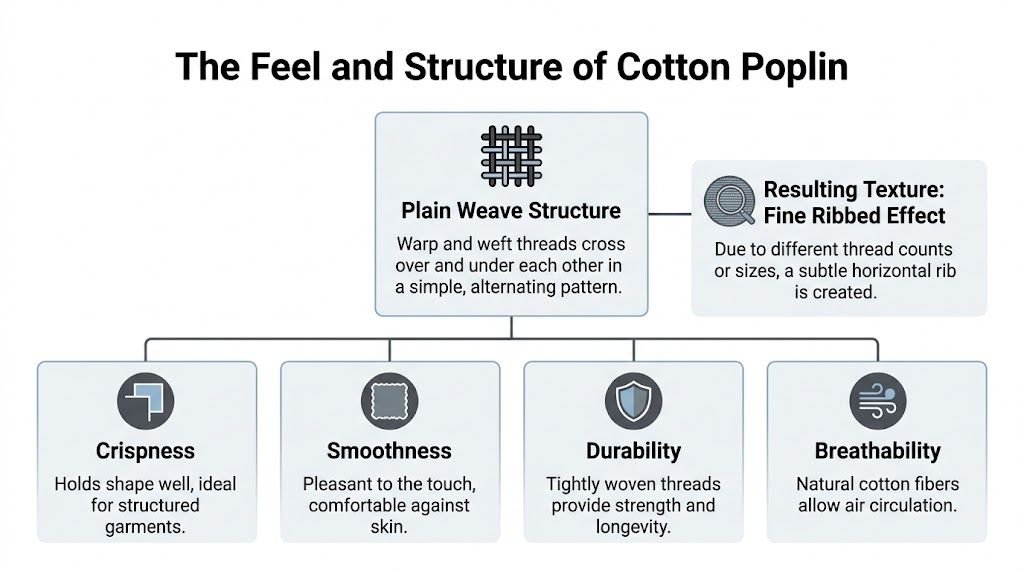
That’s why it often feels crisp in the hand rather than limp. It has body, but not heaviness. When beginners say, “This feels like proper shirt fabric,” they’re usually describing poplin or something close to it.
What the weave means in practice
The easiest way to understand poplin is to connect each feature to what happens at the machine and on the body.
- Smooth surface means your chalk lines and pressed folds are easier to see.
- Crisp handle helps collars, cuffs, waistbands, and pleats keep their shape.
- Tight weave gives a clean finish and helps the fabric feel durable.
- Cotton fibre keeps it comfortable against the skin.
That mix is especially useful for garments that need a tidy outline. A shirt front looks sharper in poplin than in a fabric with too much slouch. A gathered skirt looks full and fresh rather than droopy.
Why it works for warm weather
Cotton poplin is often used for spring and summer sewing because the cloth stays breathable while still looking polished. A common specification is 90 to 130 g/m², with thread count often exceeding 200 threads per inch, which supports moisture-wicking and makes it a strong choice for breathable summer garments, according to this guide to cotton poplin properties.
If you print on fabric or choose printed cloth often, poplin is also worth your attention because its smooth surface shows pattern clearly. If you’re comparing fibres for custom prints and transfers, Cotton vs Polyester: The Ultimate DTF Printing Guide is a helpful background read.
Poplin is one of those fabrics that looks plain until you sew it. Then you notice how neatly it presses, folds, and topstitches.
What sewists sometimes misunderstand
People sometimes expect poplin to drape like viscose. It won’t. It has movement, but it’s a more structured movement. That’s why it’s excellent for a shirt dress, but not usually the first choice if you want a clingy bias-cut shape.
It’s also easy to mix up with other cottons. Quilting cotton can feel more papery. Lawn is usually softer and finer. Broadcloth can be similar, but poplin tends to be the fabric people reach for when they want crispness without stiffness.
What Garments Should You Make with Cotton Poplin
If you’re asking what is cotton poplin fabric used for, clothing is the first place most sewists meet it. It’s especially strong for garments that need a clean line, a bit of shape, and enough comfort for everyday wear.
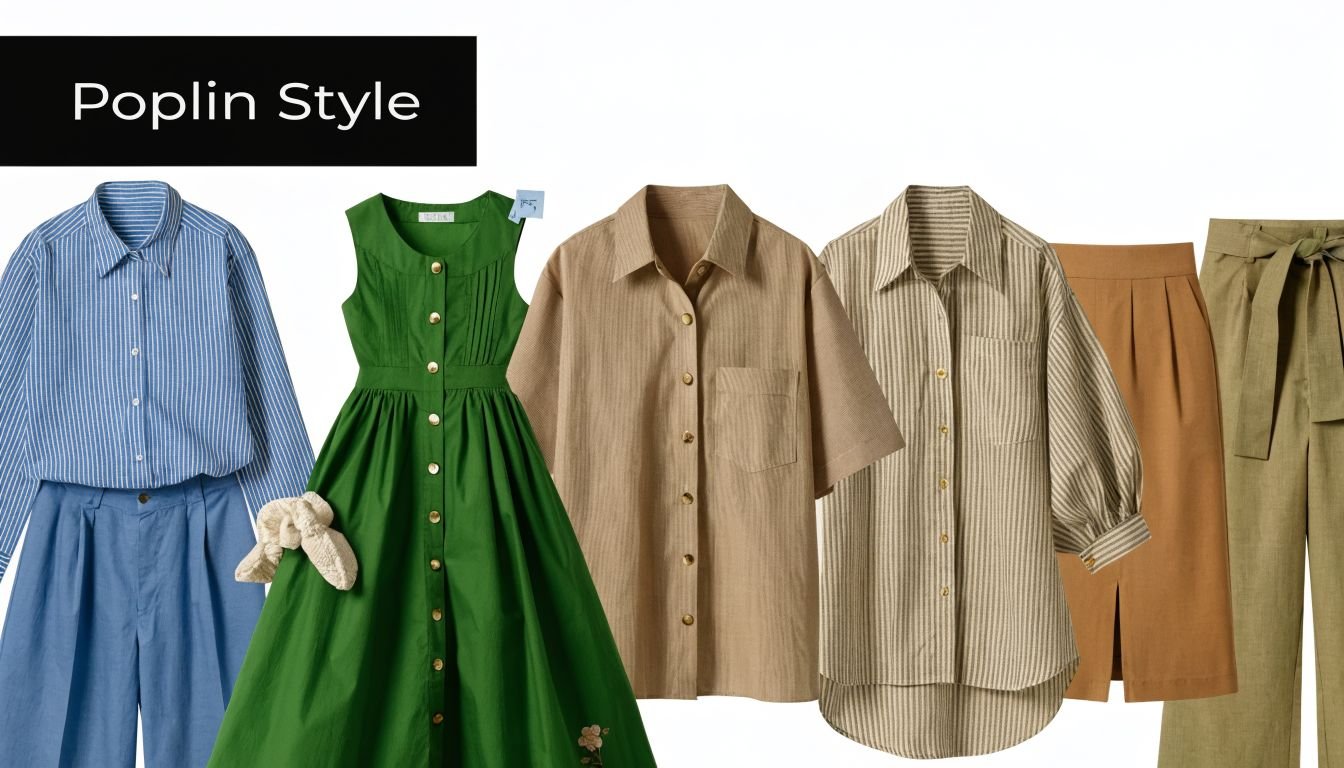
Shirts and blouses
This is poplin’s natural home. If you’re making a classic button-up, a camp shirt, a school blouse, or a simple sleeveless shell, poplin gives you crisp seam lines and neat edges.
It’s particularly good for:
- Collars and stands because they press flat and keep definition
- Button plackets because the front stays tidy instead of buckling
- Sleeve cuffs because topstitching shows cleanly
- Back yokes because the fabric layers don’t become too bulky
For a first shirt, choose a plain or small-scale print. Stripes look beautiful, but they ask more from your cutting and matching.
Dresses and skirts
Poplin makes lovely day dresses. It suits shirt dresses, waisted dresses, gathered styles, simple fit-and-flare shapes, and A-line skirts. The fabric has enough body to support waist seams, pockets, facings, and soft gathers without collapsing.
If you want examples, think of:
- a sleeveless summer dress with a button back
- a tiered skirt that keeps a nice bell shape
- a shirt dress with a belt and side seams pockets
- a child’s party dress with a lined bodice
Poplin also behaves well for pleats. Knife pleats, box pleats, and gentle waist gathers all read clearly because the fabric has structure.
Children’s clothes and practical makes
Children’s wear is another very good use for poplin. It’s comfortable, washable, and stable enough for details like small collars, patch pockets, sleeve tabs, and little elastic casings. If you sew for school events, birthdays, or everyday clothes, it’s a fabric you’ll probably keep reaching for.
It also works well for practical household sewing:
- Pyjama bottoms
- Aprons
- Simple tote linings
- Pillowcases
- Light curtains
- Tablecloths and napkins
That’s part of its appeal. If you buy extra for a dress, the leftovers rarely go to waste.
A few project matches that work especially well
A crisp cotton poplin with a floral print is often perfect for a beginner’s gathered dress because the seams behave and the finished shape still feels lively.
Try pairing project types with poplin like this:
- Beginner project. Elastic waist skirt, pull-on pyjama shorts, simple sleeveless top.
- Intermediate make. Button-front blouse, shirt dress, pleated skirt, child’s dress with facings.
- More advanced sewing. Classic shirt with stand collar, concealed placket dress, matching set with piped finish.
If you’d like to see the kind of garments people often make from this fabric, this quick visual overview is useful:
When poplin isn’t the best choice
It helps to know where poplin is less ideal too. If you want fluid cowl necks, swishy wrap dresses with lots of drape, or soft loungewear with stretch, another fabric may serve you better.
Poplin shines when the pattern asks for shape. If the line drawing shows collars, cuffs, facings, tucks, pleats, button fronts, or a silhouette with a clear outline, that’s a good sign.
How Poplin Weight Affects Your Sewing Project
Two poplins can both be called “cotton poplin” and still behave quite differently. Weight changes the feel, drape, opacity, and the sort of project the fabric wants to become.
If you ignore weight, you can end up with a blouse that feels too firm or a dress that turns out thinner than you expected. Checking the listing carefully really pays off.
Choosing Your Cotton Poplin by Weight
| Weight (GSM) | Feel & Drape | Best For |
|---|---|---|
| 90 to 110 | Light, airy, crisp rather than floaty | Blouses, summer tops, children’s clothing, linings, lightweight pyjamas |
| 110 to 135 | Balanced, structured, easy to handle | Shirts, shirt dresses, skirts, day dresses, aprons |
| Above 135 or stretch poplin | Firmer hand, more body, sometimes a closer fit if elastane is added | Structured skirts, fitted garments, light trousers, utility-style pieces |
How to judge the right one
A lighter poplin feels cooler and easier for hot-weather sewing. It’s good when you want comfort without too much bulk. This sort of poplin works especially well for sleeveless tops, soft pyjamas, and children’s summer outfits.
A medium poplin is the all-rounder. If you only buy one for general dressmaking, this is usually the safest category. It supports collars, plackets, pockets, and gathered seams well.
Heavier or stretch versions come into their own when you want a more sculpted result. Think fitted skirts, utility dresses, or garments where you want the fabric to hold a more definite outline.
Three quick matching rules
- If the pattern has lots of details, choose a poplin with enough body to show them.
- If the garment sits close to the body, check whether you’d prefer pure cotton or a little stretch.
- If the colour is very pale, hold the fabric to the light if possible. Some lighter poplins may need lining in skirts or dresses.
A swatch helps enormously here. Weight is one of those things that sounds technical until you feel two samples side by side. Then it becomes obvious.
Sewing and Finishing Cotton Poplin Like a Pro
Poplin is friendly, but it still rewards good habits. If you prep it properly and use neat finishing techniques, the final garment looks far more expensive than the effort involved.
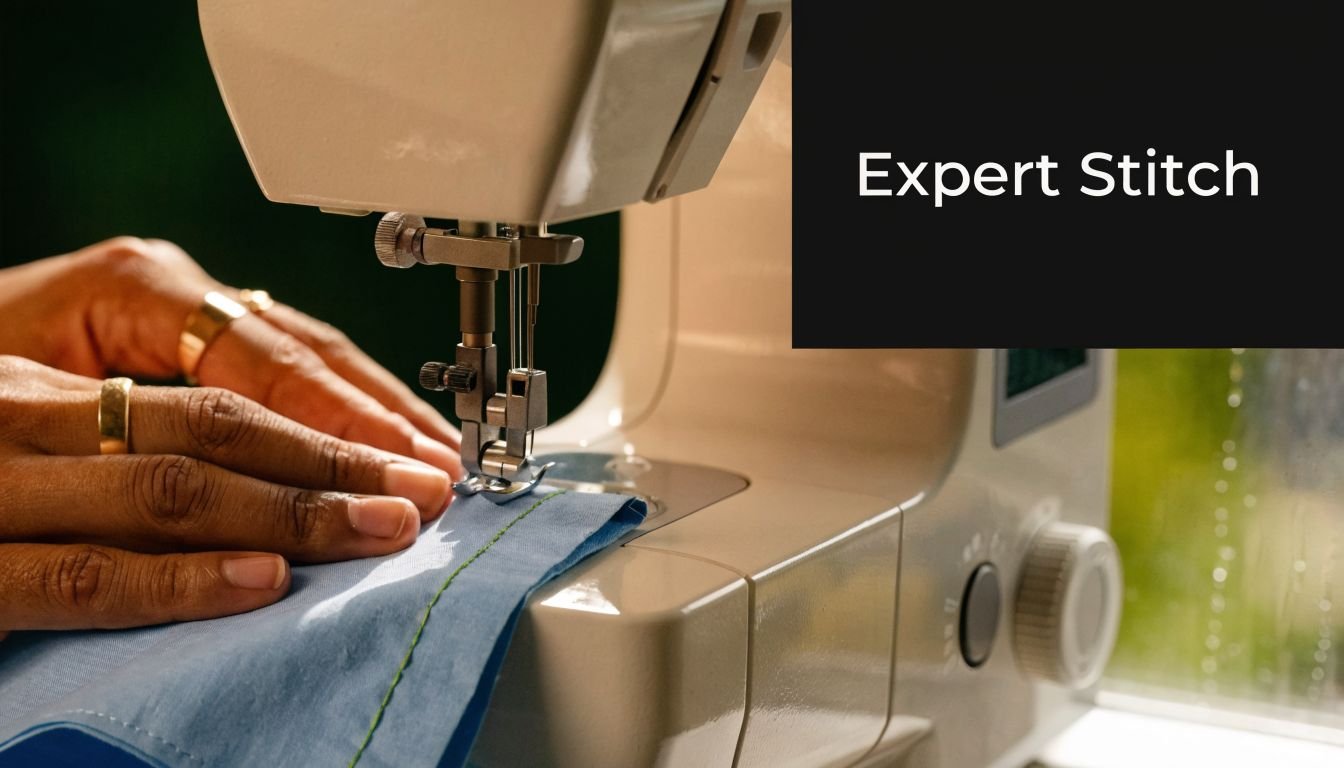
Start with pre-washing and pressing
This is not optional. Because of its tight plain weave and roughly 2:1 warp-to-weft density, cotton poplin is durable but can be prone to longitudinal cracks under stress if key areas like button bands aren’t properly interfaced, and pre-washing helps keep shrinkage below the typical 3 to 5% benchmark, as explained in this cotton poplin care and construction guide.
Wash the fabric the way you expect to wash the finished garment. Then press it thoroughly before cutting. Poplin likes a flat, orderly start.
Tools that usually give the best result
For most home sewing, these are good choices:
- Needle. A sharp universal 70/10 or 80/12 usually handles poplin neatly.
- Thread. A good all-purpose polyester thread is reliable for seams and topstitching.
- Pins. Fine, sharp pins help avoid visible distortion in tightly woven cloth.
- Marking tools. Chalk pencil, washable pen, or tailor’s tacks all work well because the surface is smooth.
- Iron. Keep it nearby. Pressing during construction matters just as much as stitching.
Finishes that suit poplin beautifully
Poplin responds very well to precise finishing. You don’t need to use every technique at once. Just choose the one that matches the garment.
French seams for light garments
French seams are lovely in blouses, pyjamas, and children’s wear. They hide the raw edge and look especially tidy in unlined garments.
Use them where the seam is mostly straight or gently curved. They’re less convenient in bulky junctions, but wonderful along side seams.
Topstitching for definition
This fabric really shows topstitching well. A row of neat stitching along a collar edge, cuff, pocket, or placket gives a garment that crisp shirtmaking look.
Shorten your stitch slightly if you want a polished finish, and test on scraps first. Matching thread gives a clean effect. Contrasting thread makes the detail stand out.
Shop-floor advice: If your collar points or button band look soft, the issue is often support, not skill. Add the right interfacing and press carefully.
Overlocking, zigzagging, or pinking
If you’re sewing everyday garments and want a straightforward inside finish, overlocking is perfect. A zigzag works well too. Pinking can be fine for some stable seams if the garment won’t get heavy wear, though enclosed seams usually look better.
Small techniques that prevent common problems
- Interface stress points such as collars, cuffs, button bands, and waistbands.
- Staystitch curved edges like necklines before handling them too much.
- Grade seam allowances where several layers meet so the edge doesn’t become bulky.
- Clip corners carefully before turning collars or ties.
- Press on a seam roll or point presser if you have one. It helps keep edges crisp.
A simple poplin garment can look wonderfully refined when the details are handled neatly. That’s one reason so many sewists use it to practise good technique.
Keeping Your Cotton Poplin Creations Looking Crisp
Poplin is one of the easier fabrics to live with, which is good news if you want to wear what you sew rather than admire it on a hanger. Most pieces do well with gentle machine washing, line drying, and a proper press afterwards.
Best habits for everyday care
A few habits make a real difference:
- Wash gently if the garment has careful topstitching, collars, or delicate trims.
- Reshape while damp so plackets, cuffs, waistbands, and hems dry neatly.
- Line dry when possible to reduce unnecessary creasing.
- Iron with steam for the cleanest finish, especially on shirts and dresses.
If you dry a shirt or dress until it is bone dry and crumpled in a basket, you’ll create more work for yourself. Poplin is easiest to press when it still holds a touch of moisture.
UK care issue that catches people out
In some UK hard water areas, mineral build-up can gradually reduce poplin’s breathability. An occasional vinegar rinse can help with that, as noted in this article on what makes cotton poplin special.
That same source notes that stretch poplins with 2 to 5% elastane are prone to 3 to 5% shrinkage in 60°C dryer cycles. If you’re sewing fitted garments from stretch poplin, avoid aggressive tumble drying.
If a poplin garment starts feeling a bit dull or less fresh after repeated washing, look at your water and drying routine before blaming the fabric.
A good ironing routine
Press the inside first where needed, then the outside. For shirts, work in sections: collar, cuffs, sleeves, shoulders, then body. For dresses and skirts, press seams first, then hems and facings.
Good care keeps poplin looking smart. That’s a big part of why it stays in regular rotation.
How to Choose and Buy the Best Cotton Poplin
Buying poplin well is mostly about looking past the print for a moment and judging how the fabric will behave. A lovely design won’t rescue a poor match between cloth and pattern.
Start with feel, weave, and purpose
If you can get a swatch, do. A swatch tells you more than a product photo ever can. You’ll notice the crispness, the thickness, the smoothness, and whether the print suits the project in your head.
Check for:
- An even weave with no obvious slubs or thin patches
- A smooth surface that feels tidy rather than rough
- Good print clarity if it’s patterned
- Enough body for the pattern details you want to sew
If you’re making a shirt, think about cuffs and collar first. If you’re making a dress, think about skirt shape and whether you want gathers, pleats, or a cleaner line.
Don’t overlook sustainable choices
For many home dressmakers, fibre choice now matters as much as colour. In the UK, 62% of fashion buyers prioritise sustainable materials, and organic cotton production uses up to 91% less water than conventional cotton, according to this guide discussing cotton poplin and ethical sourcing.
That makes organic or deadstock cotton poplin worth considering if you want a lower-impact project. Deadstock can also give you access to unusual colours, prints, and designer-quality cloth that doesn’t feel generic.
Buy the notions at the same time
One of the easiest mistakes is buying fabric but forgetting the finishing pieces. For poplin garments, check whether you also need:
- Buttons
- Lightweight fusible interfacing
- Matching thread
- Elastic
- Bias binding
- A suitable pattern needle
Buying with the whole project in mind saves frustration later. Nothing stalls a shirt faster than realising you’ve no interfacing for the button band.
Your Cotton Poplin Questions Answered
Is cotton poplin good for beginners
Yes, it usually is. It’s stable, easy to cut, and much less slippery than many dress fabrics. If you’re sewing your first blouse, skirt, or simple dress, poplin gives you a clear view of what your hands and machine are doing.
It also presses obediently, which helps beginners correct small mistakes as they go.
Is cotton poplin the same as lawn or broadcloth
Not quite. Poplin is usually crisper and more structured than lawn. Lawn tends to feel finer, softer, and more delicate. If you want a shirt with a bit of shape, poplin is often the better pick. If you want something very light and soft, lawn may suit you more.
Broadcloth sits closer to poplin in spirit. In everyday sewing talk, people sometimes blur the two. The useful distinction is behaviour. Poplin is the one many sewists choose when they want that smooth, lightly crisp shirt feel.
Can you quilt with cotton poplin
You can. It’s stable enough for piecing and can work for quilt backs, quilted accessories, cushion covers, and patchwork projects. The finish is smoother than some quilting cottons, so the look can be slightly different, but it’s absolutely usable.
Is it good for summer clothes
Yes. It’s a popular choice for warm-weather blouses, dresses, skirts, and pyjamas because it feels breathable and neat rather than heavy.
Does it crease badly
Less than some other natural fibres, but it still benefits from pressing. If you like a very relaxed, rumpled look, linen may appeal more. If you want clothes that read cleaner and smarter, poplin is often the better fit.
What is cotton poplin fabric used for most often
The most common answer is shirts, blouses, and dresses, but it also works beautifully for skirts, children’s wear, pyjamas, aprons, pillowcases, craft sewing, and light home furnishings. It’s one of the most practical fabrics a home sewist can keep on the shelf.
If you’re ready to try cotton poplin for yourself, More Sewing is a great place to start. You’ll find quality fabrics, swatches, haberdashery, dressmaking kits, and ex-designer deadstock options that make it easier to choose the right poplin for your next shirt, dress, or home sewing project.
